2027 What Is the Lowest GPA You Can Graduate With: What Students Need to Know for Admissions

Co-Founder and Chief Data Scientist
A low GPA can affect more than graduation day; it can influence financial aid, transfer options, graduate admissions, and early career opportunities. College Board reported average published in-state tuition and fees of $11,610 at public four-year colleges for 2024-25, so repeating courses or delaying graduation can become expensive quickly. This guide is for students, parents, transfer applicants, and returning adults who need a clear answer on minimum GPA rules. You will learn what colleges usually require, what happens below the cutoff, and how to make a practical recovery plan.
Key Things You Should Know
- Most U.S. colleges set a 2.0 cumulative GPA, or C average, as the minimum undergraduate graduation standard, while many graduate programs require about a 3.0 GPA.
- A GPA below 2.0 usually triggers probation, academic recovery requirements, or loss of good standing; it can also threaten federal aid eligibility under satisfactory academic progress rules.
- Admissions and career impact depends on context. BLS 2024 data shows bachelor's degree holders had median weekly earnings of $1,543, so protecting degree completion often matters more than the exact final GPA.
What is the lowest GPA most colleges require to graduate in the United States?
The lowest GPA most U.S. colleges require for undergraduate graduation is a 2.0 cumulative GPA on a 4.0 scale. This is commonly called a C average. However, students should not assume that one number covers every requirement, because schools may calculate several GPAs at the same time: cumulative GPA, institutional GPA, major GPA, upper-division GPA, and sometimes program-specific GPA.
A student can pass individual courses with D grades at many colleges, but too many low grades may still keep the cumulative GPA below the graduation threshold. Some majors also require a C or higher in prerequisite or core courses, even when the college allows lower grades for general electives.
The table below summarizes the GPA measures students most often see on a degree audit. Understanding which GPA is below the cutoff helps you decide whether you need to repeat a course, change your major plan, or appeal to graduate.
| GPA measure | What it usually means | Why it matters for graduation |
| Cumulative GPA | Average across all college-level courses included by the institution | Often must be at least 2.0 for associate and bachelor's degrees |
| Institutional GPA | Average for courses taken at the degree-granting school | Some colleges require this to meet the same minimum as cumulative GPA |
| Major GPA | Average for courses in the student's major or program | Selective majors may require a higher minimum than the college-wide rule |
| Graduate GPA | Average in master's or doctoral coursework | Often must stay near 3.0 to remain in good standing and graduate |
For most undergraduates, the practical answer is this: if your cumulative GPA is below 2.0, you should assume you are not yet eligible to graduate until your academic advisor confirms otherwise in writing.
Can you still graduate college with a GPA below 2.0, and what happens academically?
In most cases, you cannot graduate from a U.S. college with a cumulative GPA below 2.0 if the catalog requires a 2.0 minimum. Colleges must follow their published degree requirements, and the registrar's office normally checks GPA before conferring the degree.
There are limited exceptions, but they are not something students should count on. A school may have unusual rounding rules, forgiveness policies, grade replacement rules, or program-specific standards, but these must be stated in the catalog or approved through a formal appeal. A verbal reassurance from a professor or advisor is not enough.
Academically, falling below the minimum can create several consequences. The most serious issue is that one low GPA can affect enrollment status, graduation timing, and aid eligibility at the same time.
- Academic warning or probation: The school may allow continued enrollment but require GPA improvement by a specific term.
- Registration limits: Students may be restricted to fewer credits, required advising, or mandatory tutoring.
- Program removal: Competitive majors such as nursing, education, engineering, or business may dismiss students from the major before the college dismisses them from the institution.
- Financial aid risk: Federal satisfactory academic progress rules require schools to monitor GPA, completion pace, and maximum timeframe; failure can put aid such as the Pell Grant, with a 2024-25 maximum award of $7,395, at risk.
- Delayed graduation: Students may need to repeat courses or add a term, which can increase total cost and delay employment or graduate school plans.
If you are below 2.0 close to graduation, the best next step is to ask the registrar or advising office for a degree audit that shows exactly how many quality points you need to reach the minimum.
What is the minimum GPA colleges require to stay in good academic standing?
Good academic standing usually means a student is meeting the GPA and course-completion standards required to continue normally at the institution. For undergraduates, the common benchmark is a 2.0 cumulative GPA. For graduate students, the common benchmark is closer to 3.0, because B-level work is often considered the minimum acceptable graduate performance.
Good standing is not the same as being on track for a competitive outcome. A 2.0 may be enough to remain enrolled or graduate, but it may not be enough for selective scholarships, honors, graduate programs, internships, or major admission.
The table below shows common academic standing categories. Exact names vary by college, but the progression is similar at many institutions.
| Status | Typical GPA situation | What it means for the student |
| Good standing | Meets minimum GPA and completion standards | Student can usually register, receive aid if otherwise eligible, and progress normally |
| Academic warning | First sign of falling below expectations | Student may be advised to reduce credits or use support services |
| Academic probation | Below the required GPA after review | Student must improve by a deadline to avoid suspension or dismissal |
| Academic suspension | Failure to recover after probation | Student may be required to sit out before returning |
| Academic dismissal | Repeated or severe failure to meet standards | Student may need an appeal, reinstatement plan, or transfer option |
The key decision point is whether your GPA problem is temporary or structural. One bad semester can often be repaired. A repeated pattern of low grades may signal that you need a different major, course load, schedule, or support system.
How do graduation GPA requirements differ between associate, bachelor's, and master's degrees?
GPA requirements become stricter as the degree level rises. Associate and bachelor's degrees often use 2.0 as the minimum graduation standard, while master's programs commonly require about 3.0 and may not allow more than a small number of C grades to count toward the degree.
Cost also changes the decision. College Board reported average published tuition and fees of $4,050 at public two-year colleges for 2024-25, making community college a lower-cost place to rebuild academic momentum before attempting a bachelor's degree or transfer pathway.
The table below compares common GPA expectations by degree level. Use it to understand whether you are trying to meet a basic graduation rule or a more competitive academic standard.
| Degree level | Common minimum graduation GPA | Important GPA differences | Best fit for students who need GPA recovery |
| Associate degree | Usually 2.0 | Some career programs require minimum grades in technical courses | Good option for students who want a lower-cost restart or transfer base |
| Bachelor's degree | Usually 2.0 | Major GPA may be higher than college-wide GPA, especially in selective programs | Best when the student can finish with enough GPA strength for career or graduate goals |
| Master's degree | Often around 3.0 | C grades may be limited, and probation can happen quickly | Best after the student has proof of stronger recent academic performance |
Students sometimes look for the easiest degree to get when their GPA is low. That can be reasonable if the new major still matches career goals, but it is a mistake to choose a program only because it appears less demanding. The better question is whether the degree requirements, grading structure, transfer rules, and career outcomes fit your strengths.
What GPA do colleges look for in transfer and graduate admissions decisions?
Transfer and graduate admissions decisions usually require a higher GPA than the minimum needed to graduate. Many transfer pathways begin with a 2.0 minimum, but selective universities, impacted majors, and competitive scholarships often expect stronger records. Graduate programs commonly use 3.0 as a screening benchmark, though some consider applicants with lower GPAs if they have strong recent coursework, work experience, test scores, recommendations, or a compelling explanation.
Admissions committees do not always treat all GPAs equally. A 2.7 earned mostly in difficult upper-division science courses may be read differently from a 2.7 caused by repeated withdrawals or failed prerequisites. Trend also matters: a student who moved from poor early grades to A and B grades in the final 60 credits may have a stronger case than the cumulative number suggests.
The table below shows how GPA is commonly used in admissions. It does not replace individual school requirements, but it helps students estimate whether they are likely to need a stronger application strategy.
| Admissions goal | Common GPA floor | What makes an applicant more competitive |
| Community college transfer | Often 2.0 | Completed general education courses and steady recent grades |
| Public university transfer | Often 2.0 to 2.5 or higher by major | Major prerequisites completed with C or better, and a rising GPA trend |
| Selective bachelor's major | Often 2.5 to 3.0 or higher | Strong grades in prerequisite courses and limited repeated attempts |
| Master's program | Often around 3.0 | Relevant work experience, strong recommendations, and recent A or B coursework |
If graduate school is your goal, compare programs carefully instead of assuming a low undergraduate GPA closes every door. Some of the masters degrees that are worth it may still require evidence that you can handle advanced coursework, so a post-baccalaureate course, certificate, or strong final-year GPA can be useful.
How does a low graduation GPA affect career options, salary potential, and job outlook?
A low graduation GPA can affect career options, but its impact depends heavily on the field. Some employers ask for a minimum GPA, especially for internships, rotational programs, accounting, engineering, consulting, finance, and federal pathways. Many other employers focus more on the completed degree, portfolio, license eligibility, technical skills, experience, references, and interview performance.
BLS 2024 data reported median weekly earnings of $1,543 for workers with a bachelor's degree, compared with $930 for workers whose highest credential was a high school diploma. This does not mean every bachelor's graduate earns more, but it does show why finishing the degree can still be economically important even if the final GPA is not ideal.
AI and automated hiring tools have made GPA context more important. Applicant tracking systems may filter for a stated GPA minimum when employers use one, but they may also scan for skills, software, certifications, project keywords, and experience. Students with low GPAs should therefore build evidence that is visible outside the transcript.
Students can reduce the career impact of a low GPA by emphasizing proof of ability. The following steps are most useful when your GPA is below the cutoff often used by competitive employers.
- Build a portfolio: Include writing samples, code repositories, design projects, lab work, business analyses, lesson plans, or case studies relevant to the field.
- Earn role-specific credentials: Short credentials can help show current skills, especially in technology, healthcare support, business operations, and data tools.
- Use internships and part-time work strategically: A supervisor reference can offset a weak academic number better than another generic elective.
- Explain the GPA briefly and honestly: Focus on the recovery pattern, what changed, and what evidence now proves readiness.
- Target employers that use skills-first hiring: Smaller employers, nonprofits, public agencies, startups, and local firms may weigh experience more than GPA screens.
If you need a faster skills signal, explore certificate programs that pay well and match them to job postings in your region. A certificate will not erase a transcript, but it can strengthen your resume when paired with a completed degree and practical experience.
Do professional licenses or certifications set minimum GPA requirements for eligibility?
Professional licenses and certifications usually do not set a simple graduation GPA requirement by themselves, but the pathway to eligibility often includes GPA-related checkpoints. The licensing board may require an accredited degree, specific coursework, supervised experience, and an exam. The school or program, however, may require minimum grades before allowing students to continue, enter clinical placements, complete student teaching, or receive a program endorsement.
This distinction matters because a student can meet the college's overall graduation GPA but still miss a professional requirement. For example, a nursing student may need minimum grades in clinical courses, and an education student may need program approval for student teaching.
The table below shows how GPA can appear indirectly in common licensed or certified fields. Always confirm requirements with the state board, certifying body, and program handbook.
| Field | Does the license usually set a GPA? | Where GPA or grades may still matter |
| Nursing | Often no single license GPA rule | Admission to nursing program, clinical progression, course minimum grades, and NCLEX eligibility documentation |
| Teaching | Varies by state and program | Teacher preparation admission, student teaching approval, and institutional recommendation |
| Accounting and CPA pathway | State boards focus on credits, coursework, and exams | Graduate accounting admissions, employer screening, and scholarship eligibility |
| Counseling and social work | Licensure focuses on accredited degree and supervised hours | Graduate program GPA standards and field placement continuation |
| Engineering | Licensure focuses on education, exams, and experience | Internship hiring, major admission, and employer GPA screens |
The safest approach is to work backward from the credential. Before choosing courses or retaking classes, ask whether your target license requires a specific accredited program, minimum course grades, supervised hours, exam eligibility, or state approval.
How do online and campus programs compare in GPA policies and academic support?
Online and campus programs at accredited colleges generally use the same GPA policies when they lead to the same degree. A bachelor's degree earned online from the same institution usually has the same graduation GPA requirement as the campus version. The bigger differences are course format, advising access, pacing, tutoring delivery, and how quickly struggling students receive intervention.
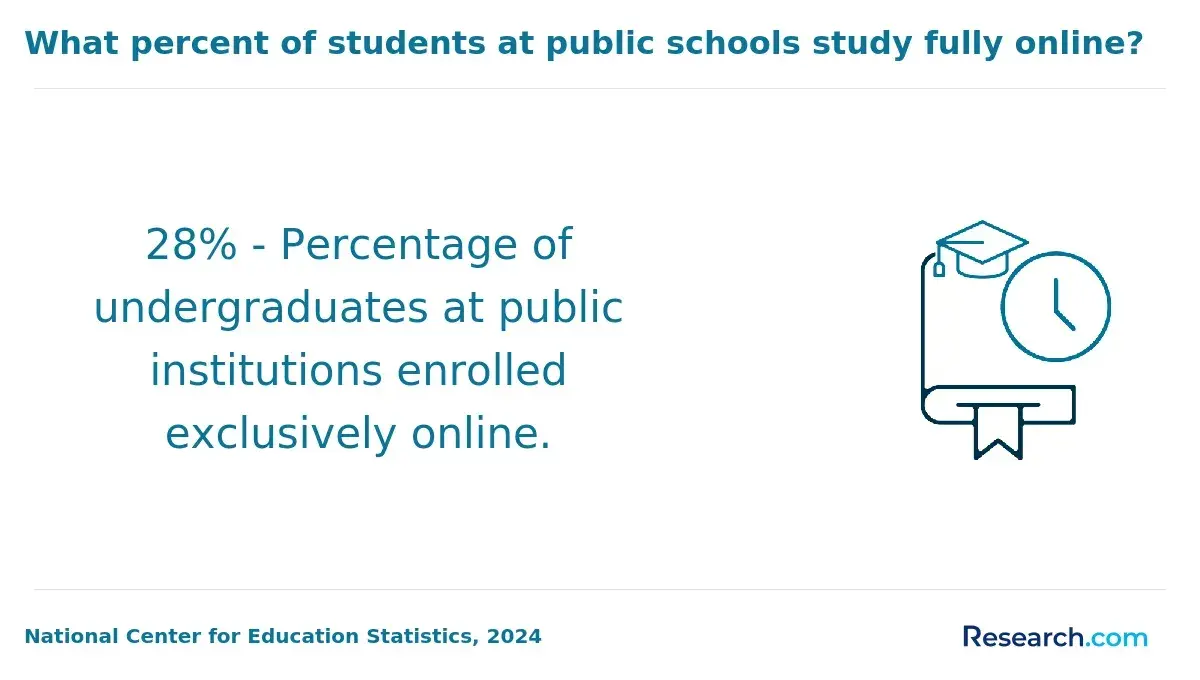
NCES reported in 2024 that more than half of postsecondary students had taken at least one distance education course in recent federal data. That matters because online learning is no longer unusual, but students still need to evaluate whether the format supports their academic recovery style.
The table below compares online and campus formats through the lens of GPA risk. The best option is the one that helps you attend consistently, get feedback quickly, and complete courses successfully.
| Program format | GPA policy | Academic support strengths | Potential GPA risks |
| Online asynchronous | Usually same as campus if the degree is equivalent | Flexible schedule, recorded materials, easier fit for working adults | Requires self-management; late work can accumulate quickly |
| Online synchronous | Usually same as campus | Live interaction, structured meeting times, remote access | Less flexible if work or family duties conflict with class times |
| Campus | Standard institutional policy | Face-to-face advising, labs, study groups, and visible routine | Commute, scheduling, and attendance barriers can hurt performance |
| Hybrid | Usually same as the degree program policy | Mix of structure and flexibility | Students must track both online and in-person expectations |
Students comparing prestigious online universities should look beyond reputation. Ask whether the school offers proactive alerts, online tutoring, advisor check-ins, disability accommodations, writing support, and clear grade-replacement policies.
What strategies help students raise their GPA enough to meet graduation requirements?
Raising a GPA is a math problem and a behavior problem. The math tells you how many stronger grades you need; the behavior plan helps you earn them. Students often waste time taking random electives when a targeted course-repeat strategy would raise the GPA faster.
Start with an exact degree audit before making decisions. Then use the following sequence to build a realistic recovery plan.
- Calculate the gap: Ask an advisor or registrar how many quality points you need to reach the required GPA, not just how many credits remain.
- Check repeat and forgiveness rules: Some schools replace the old grade, while others average both attempts, so the same retake can have very different GPA effects.
- Prioritize courses with the biggest impact: Retaking a failed four-credit course usually helps more than adding a new one-credit elective.
- Reduce the course load if needed: A lighter schedule with A and B grades is usually better than a full schedule that repeats the same pattern.
- Use support before the first exam: Tutoring, office hours, writing centers, accessibility services, and advising work best before grades become unrecoverable.
- Protect financial aid status: If you are on aid probation, follow the academic plan exactly and document every required meeting or appeal condition.
- Choose the right major path: If repeated low grades are concentrated in one subject, consider whether a related major would preserve credits while improving performance.
Common mistakes include waiting until the final semester to check GPA, assuming all D grades count toward the major, taking too many credits while on probation, and ignoring withdrawal deadlines. The better alternative is to review the syllabus, grading scale, exam dates, and tutoring schedule during the first week of each course.
How should students evaluate schools' GPA policies, accreditation, and academic rigor before enrolling?
Before enrolling or transferring, students should evaluate GPA policies with the same seriousness they give to tuition or location. A school can be affordable and legitimate but still have rules that make GPA recovery difficult, such as limited grade replacement, strict major admission gates, or transfer credit policies that do not help the cumulative GPA.
Accreditation is especially important. Institutional accreditation affects credit transfer, graduate school recognition, employer acceptance, and access to federal student aid. If affordability is part of your decision, compare colleges online that accept FAFSA, then confirm that the program's GPA rules and academic support match your needs.
Use the following questions when speaking with admissions, advising, financial aid, or the registrar. The answers should be available in the catalog, handbook, or written policy.
- What cumulative GPA is required to graduate from this specific degree program?
- Is there a separate major GPA, institutional GPA, upper-division GPA, or prerequisite grade requirement?
- How are repeated courses calculated: grade replacement, grade averaging, or limited forgiveness?
- Do transfer credits affect the GPA, or do they only count as completed credits?
- What GPA is required to stay in good academic standing and keep financial aid?
- What happens after one semester below the minimum: warning, probation, suspension, or dismissal?
- Are tutoring, writing support, advising, and early alerts available to online and part-time students?
- Does the program meet licensure or certification requirements in the state where you plan to work?
Red flags include vague answers about accreditation, pressure to enroll before you see the catalog, unclear transfer evaluations, promises that a low GPA "will not matter," and programs that advertise fast completion without explaining academic standards. A trustworthy school can explain both the opportunity and the rules.
Other Things You Should Know About
For most U.S. associate and bachelor's degrees, the lowest GPA is a 2.0 cumulative GPA. Some majors require higher grades in core courses, and graduate programs often require about a 3.0 GPA.
Usually no. If your college requires a 2.0, a 1.9 typically means you must raise your GPA before the degree can be awarded. Ask for a degree audit to see the exact courses or grades needed.
No, but it can limit some internships, entry-level programs, scholarships, and graduate school options. You can reduce the impact by completing the degree, gaining experience, earning relevant credentials, and showing stronger recent performance.
Some do, especially for internships, early-career programs, finance, consulting, engineering, and accounting roles. Many employers do not ask after you have experience and instead focus on skills, work history, references, and credentials.
References
- What is a Good College GPA: A Complete Guide - Tutorchase https://www.tutorchase.com/blog/what-is-a-good-college-gpa-a-complete-guide
- Colleges That Accept Low GPA Scores | Find Options https://www.educationconnection.com/resources/colleges-that-accept-low-gpa/
- Unlocking the Mystery: What GPA is Required for College Transfers https://transfercreditguide.com/unlocking-the-mystery-what-gpa-is-required-for-college-transfers/
- NCAA Initial Eligibility Requirements - NCAA.org https://www.ncaa.org/eligibility-center/initial-eligibility-requirements/
- Does GPA matter after graduation? https://talk.collegeconfidential.com/t/does-gpa-matter-after-graduation/2054711
- Professional Licensure Disclosures | King's College https://www.kings.edu/aboutkings/consumer-information/professional-licensure-disclosures.html
- How To Raise Your High School GPA: 7 Proven Strategies https://www.c2educate.com/how-to-raise-your-gpa/
- Life After ‘F’: How to Raise Your GPA in High School if You’ve Failed a Course https://www.theamericanacademy.com/blogs/articles/how-to-raise-gpa-in-high-school
- Academic Support Services: Equal Access to Education Guide. https://impakter.com/the-role-of-academic-support-services-in-promoting-equal-access-to-education/
- General Schedule Qualification Policies https://www.opm.gov/policy-data-oversight/classification-qualifications/general-schedule-qualification-policies/