2027 IS a 2 8 GPA Good: What Students Need to Know for Admissions

Co-Founder and Chief Data Scientist
A 2.8 GPA puts many students in a gray area: not disqualifying, but not automatically competitive everywhere. That matters because college choices carry real financial stakes; the College Board reports average published tuition and fees of $11,610 at in-state public four-year colleges and $43,350 at private nonprofit four-year colleges for 2024-25.
This guide is for high school students, transfers, adult learners, and parents who want to understand what a 2.8 GPA means, which admissions options are realistic, and how to build a stronger college plan.
Key Things You Should Know
- A 2.8 GPA is usually around a B-/C+ average on a 4.0 scale; it is below the common 3.0 benchmark but can still be acceptable at many community colleges, open-admission colleges, regional public universities, and some online programs.
- Cost should shape the admissions strategy: College Board 2024-25 data shows average published tuition and fees of $4,050 at public two-year colleges compared with $11,610 at in-state, public four-year colleges.
- A 2.8 GPA does not determine long-term outcomes by itself; BLS 2024 data shows workers with a bachelor's degree had median weekly earnings of about $1,543, but earnings vary by major, skills, experience, location, and career field.
Is a 2.8 GPA considered good for college admissions in the United States?
A 2.8 GPA is not usually considered "good" in the sense of being highly competitive, but it is also not a failing admissions profile. On a standard 4.0 scale, a 2.8 GPA typically reflects mostly B- and C+ grades. For admissions, the more useful question is not whether 2.8 is good in isolation, but whether it is strong enough for the schools and majors you are targeting.
Colleges read GPA in context. A 2.8 earned in advanced, honors, AP, IB, or dual-enrollment courses may be viewed differently from a 2.8 in less rigorous coursework. Admissions offices may also consider whether grades improved over time, whether the student had outside responsibilities, and whether the applicant meets minimum course requirements in English, math, science, social studies, and world language.
The table below summarizes how a 2.8 GPA is commonly interpreted. It is a general guide, not a rule, because every college sets its own admissions standards and may recalculate GPA differently.
| GPA factor | What it usually means | Why it matters for admissions |
| Unweighted 2.8 GPA | Roughly B-/C+ average | May be acceptable at less selective colleges but below the profile of many selective universities |
| Weighted 2.8 GPA | May indicate lower performance if advanced courses added extra points | Students should check whether colleges review weighted, unweighted, or recalculated GPA |
| Upward grade trend | Recent grades are stronger than earlier grades | Can help show academic growth and college readiness |
| Strong senior-year schedule | Student is taking appropriate college-prep courses | Can reduce concern that the GPA reflects weak preparation |
For many students, a 2.8 GPA is best treated as a workable but improvement-focused profile. It calls for a balanced college list, strong supporting materials, and a practical backup plan such as a community college transfer or an accredited online program.
How does a 2.8 GPA affect chances at different types of colleges?
A 2.8 GPA affects admissions differently depending on institutional selectivity. Highly selective colleges often receive applications from students with much higher GPAs, while open-admission and broad-access colleges may focus more on high school completion, prerequisite courses, placement testing, and readiness supports.
The table below helps students compare realistic admissions options. It is not meant to discourage applications to reach schools; it is meant to help build a college list that includes reach, match, and likely options.
| College type | How a 2.8 GPA may be viewed | Best use of this option |
| Highly selective private or public universities | Usually below the typical admitted-student profile | Reach option only if other factors are exceptional |
| Moderately selective regional universities | May be considered if the rest of the application is strong | Good match if test scores, essay, recommendations, or grade trend help |
| Less selective four-year colleges | Often within a possible admissions range | Strong option for students who meet course requirements and show readiness |
| Community colleges | Usually not a barrier for admission | Cost-effective route to rebuild GPA and transfer later |
| Online colleges and adult-serving universities | Often evaluated with flexible or holistic criteria | Useful for working adults, military-connected students, and students needing flexible schedules |
A balanced application list is especially important with a 2.8 GPA. Students should avoid applying only to dream schools, but they should also avoid assuming that every four-year college is out of reach. A practical list often includes several accessible four-year schools, at least one community college transfer pathway, and one or two reach schools if the student has strong non-GPA evidence.
Can you get into online degree programs with a 2.8 GPA?
Yes, many students can get into online degree programs with a 2.8 GPA, especially at institutions designed for adult learners, transfer students, military-connected learners, and students who need flexible scheduling. Online programs vary widely, however. Some have open or broad-access admissions, while others follow the same selective standards as their on-campus programs.
Online degree programs can make sense when the student needs to work, has family obligations, lives far from campus, or wants to avoid relocation costs. They may not be the best fit for students who need a highly structured daily environment, frequent in-person support, or a major that requires extensive campus-based labs or clinical placements.
Students comparing online programs should look beyond whether a 2.8 GPA meets the minimum. The following checks help separate flexible, reputable options from risky ones:
- Confirm that the institution is accredited by an agency recognized by the U.S. Department of Education or the Council for Higher Education Accreditation.
- Ask whether online students receive the same transcript, faculty access, academic advising, tutoring, and career services as campus students.
- Check whether the program requires internships, labs, practicums, student teaching, or clinical placements and whether those can be completed near home.
- Review transfer credit policies before enrolling, especially if community college credits or previous college coursework may apply.
- Compare total cost, not just tuition, including technology fees, books, proctoring fees, travel requirements, and graduation fees.
Military spouses and dependents often need portable, flexible options because relocation can interrupt traditional enrollment. In that case, comparing online universities for military spouses can help identify programs built around mobility, transfer support, and schedule flexibility.
What admission requirements besides GPA can strengthen a 2.8 GPA application?
A 2.8 GPA application becomes stronger when it gives admissions officers evidence that the student can handle college-level work. GPA is important, but it is only one part of the file at many institutions, especially those using holistic review.
The most valuable supporting materials are the ones that directly answer the concern behind a 2.8 GPA: academic readiness. Students should focus on evidence that is recent, specific, and connected to college success.
- Upward grade trend: Strong junior- and senior-year grades can show that earlier academic struggles no longer define the student's readiness.
- Course rigor: Solid grades in challenging courses may carry more weight than easier courses with slightly higher marks.
- Standardized test scores: At test-optional schools, submitting scores can help if they are stronger than the GPA suggests; withholding scores may make sense if they do not add value.
- Personal statement: A focused essay can explain growth, responsibility, motivation, or circumstances without making excuses.
- Recommendation letters: Teachers or counselors can confirm work ethic, improvement, maturity, and readiness for college expectations.
- Extracurricular depth: Leadership, employment, caregiving, service, athletics, or creative work can show discipline and time management.
- Dual enrollment or college coursework: A strong grade in a college-level course can be powerful evidence of readiness.
Students should avoid overexplaining the GPA in every part of the application. A short, honest explanation is appropriate if there were real circumstances, but the strongest application shifts quickly to what changed, what the student learned, and why the student is ready now.
How do community colleges and transfer pathways work for students with a 2.8 GPA?
Community colleges are often one of the strongest options for students with a 2.8 GPA because they provide access, lower cost, academic rebuilding, and transfer pathways. For many students, this route is not a fallback; it is a strategic way to earn college credits, improve academic standing, and transfer to a four-year institution with a stronger record.
College Board 2024-25 data places average published tuition and fees at $4,050 for public two-year colleges. That lower starting cost can reduce financial pressure while giving students time to clarify their major, build study habits, and earn transferable credits.
A smart transfer plan should be intentional from the first semester. Students should take these steps before and during community college enrollment:
- Identify the four-year colleges and majors you may want to transfer into before choosing courses.
- Ask whether your state has guaranteed transfer, articulation, or common course numbering agreements.
- Meet with both a community college advisor and, if possible, a transfer advisor at the target university.
- Prioritize general education and prerequisite courses that apply to the intended bachelor's degree.
- Track the GPA required for transfer admission and for the specific major, because these may be different.
- Avoid taking random electives that do not apply to the transfer plan, even if they seem easy.
The biggest mistake is assuming that all credits transfer automatically. Credits may transfer as electives but not count toward major requirements, which can delay graduation and increase total cost. Students should keep syllabi, course descriptions, and advising notes in case the receiving institution needs them for evaluation.
Does a 2.8 GPA limit access to competitive majors or professional programs?
A 2.8 GPA can limit access to some competitive majors, even when the student is admitted to the college. This is common in fields where programs have limited seats, clinical placements, lab capacity, accreditation requirements, or high demand.
Examples may include nursing, engineering, computer science, architecture, education licensure tracks, business honors programs, and pre-professional pathways such as pre-med or pre-dental advising. Requirements vary by institution, but these programs may set higher GPA thresholds for direct admission, progression, or upper-division entry.
The table below shows how GPA pressure can differ by academic pathway. Students should use it to identify where they may need a backup major, preparatory coursework, or a transfer strategy.
| Pathway | Potential issue with a 2.8 GPA | Practical interpretation |
| Nursing and allied health | Programs may require strong science grades and competitive prerequisite GPA | Admission to the college may not equal admission to the clinical program |
| Engineering | Math and physics readiness may be closely reviewed | Students may need placement support or a pre-engineering route |
| Computer science | High-demand departments may restrict direct entry | Related majors such as information systems or data analytics may be options |
| Business | Selective business schools may require internal admission after prerequisites | Early grades in accounting, economics, and statistics can matter |
| Pre-med or pre-dental | Professional schools later expect very strong science performance | A 2.8 high school GPA is not final, but college science grades must improve significantly |
Students who are not ready for a competitive major should not automatically abandon the career goal. They can start with prerequisites, retake weak foundation courses, use tutoring early, or consider related credentials. Shorter online certifications may also help students build marketable skills while deciding whether a full degree path still fits.
How does a 2.8 GPA affect eligibility for financial aid and scholarships?
A 2.8 GPA does not prevent students from applying for federal financial aid, but it may affect merit scholarships, institutional awards, and renewal requirements after enrollment. Need-based federal aid is primarily determined through the FAFSA, not high school GPA, although students must make satisfactory academic progress once in college.
For 2024-25, the maximum Federal Pell Grant is $7,395. That figure matters because students with financial need may still have meaningful aid options even if a 2.8 GPA limits access to some merit scholarships.
The table below separates common aid types so students can see where GPA matters most. Award rules vary by school and state, so students should confirm requirements directly with each financial aid office.
| Aid type | Does a 2.8 GPA matter? | What students should check |
| Federal Pell Grant | Not for initial high school GPA eligibility | FAFSA results, enrollment level, and satisfactory academic progress rules |
| Federal student loans | Not usually based on high school GPA | Annual loan limits, interest, repayment obligations, and total borrowing |
| State grants | Sometimes | Residency rules, GPA minimums, FAFSA deadlines, and renewal standards |
| Institutional merit scholarships | Often | Minimum GPA, test score ranges, deadlines, and whether awards are automatic or competitive |
| Private scholarships | Varies widely | Some prioritize GPA, while others focus on service, identity, field of study, essays, or financial need |
Students with a 2.8 GPA should not skip scholarship applications, but they should target awards carefully. Local scholarships, employer-sponsored awards, community foundation scholarships, first-generation student awards, and major-specific awards may be more realistic than highly competitive national merit awards.
What strategies can students use to raise a 2.8 GPA before applying?
Students can raise a 2.8 GPA, but the amount of change depends on how many credits or semesters remain. The later a student is in high school, the harder it is to move the cumulative number dramatically. Even so, colleges often value recent improvement, so the goal is not only to raise the average but also to prove readiness.
The most effective GPA strategy is focused, not frantic. Students should prioritize courses that affect graduation, college prerequisites, and core academic readiness.
- Calculate the current unweighted and weighted GPA, then estimate how different grades in remaining courses would change the cumulative GPA.
- Meet with a counselor to identify any missing college-prep requirements before applications are due.
- Focus first on core classes such as English, math, science, social studies, and world language because admissions offices often review them closely.
- Ask teachers what specific assignments, assessments, or skills are pulling grades down and address those first.
- Use tutoring before failing a test or course, not after the grade is already difficult to repair.
- Consider retaking a course only if the school's grade replacement policy and target colleges' recalculation methods make it worthwhile.
- Keep senior-year grades strong after applying because colleges can request midyear and final transcripts.
Adult learners and students who need a faster reset may also consider structured pathways that reduce time to completion. Some accelerated programs for career changers are designed for students who already have credits, work experience, or a clear professional goal, but students should still check accreditation, workload, and transfer policies carefully.
How does a 2.8 GPA influence long-term career and salary prospects?
A 2.8 high school GPA does not permanently limit career or salary prospects. Employers generally care more about completed credentials, skills, experience, portfolio quality, internships, certifications, references, and job performance than high school GPA. Some first jobs and internships may ask for college GPA, but high school GPA usually becomes less relevant after a student builds a stronger college record.
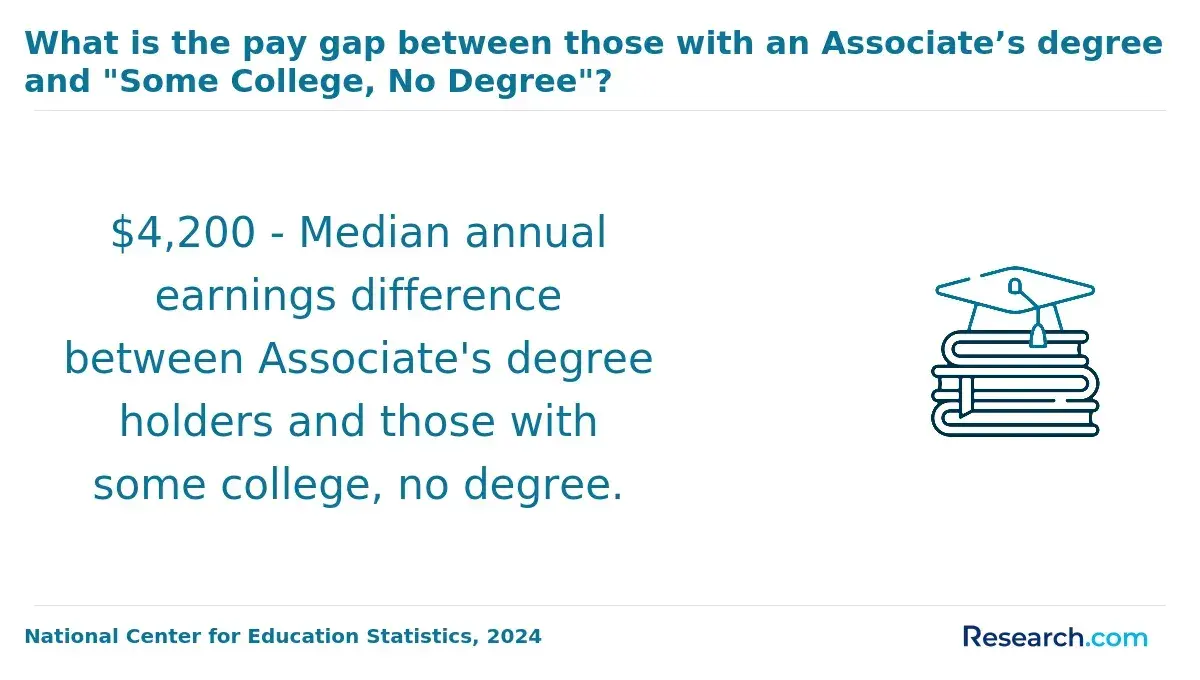
BLS 2024 data shows that workers with a bachelor's degree had median weekly earnings of about $1,543, compared with about $1,099 for workers with an associate degree. This does not mean a bachelor's degree is automatically the right choice for every student, but it shows why the pathway after a 2.8 GPA can still matter economically.
Students should evaluate career ROI by connecting the academic path to a realistic job market. The following questions help keep the decision practical:
- Does the intended career require a bachelor's degree, associate degree, license, apprenticeship, certificate, or portfolio?
- Will the program provide internships, clinical experience, projects, labs, or employer connections?
- Are graduates prepared for a specific occupation, or is the degree broad enough to require additional credentials?
- How much debt would be needed, and is the monthly payment realistic for entry-level wages in the field?
- Can the student start at community college, transfer, or study part time without delaying the career goal too much?
Graduate school is also possible later if the student builds a strong undergraduate record. For some fields, 1-year online master's programs may help working adults advance or pivot, but admission usually depends on college performance, prerequisites, recommendations, and professional goals rather than high school GPA.
How should students with a 2.8 GPA evaluate accredited and reputable schools?
Students with a 2.8 GPA should evaluate schools carefully because accessibility is not the same as quality. A school that admits students with lower GPAs can be a strong choice if it is accredited, transparent about costs, supportive academically, and aligned with the student's goals.
Accreditation is the first filter. Institutional accreditation affects credit transfer, graduate school eligibility, employer recognition, and access to federal financial aid. Programmatic accreditation may also matter in fields such as nursing, education, counseling, engineering, business, and allied health.
Before enrolling, students should ask direct questions that reveal whether the school is a good fit and a responsible investment:
- Is the institution accredited by a recognized accreditor, and does my program need separate programmatic accreditation?
- What GPA is required for admission, progression in the major, internships, clinical placements, or graduation?
- What percentage of students transfer credits successfully into this program, and how will my credits apply to my degree plan?
- What is the total estimated cost through graduation, including fees, books, supplies, travel, and repeated courses?
- What academic support is available for students entering with a GPA below 3.0?
- Does the program publish completion, licensure, certification, or job placement information where applicable?
- If the program is online, are exams, labs, practicums, or campus visits required?
Common red flags include vague accreditation claims, pressure to enroll immediately, unclear transfer policies, missing cost details, and promises about guaranteed jobs or salaries. Students comparing flexible options can start by reviewing nationally accredited online colleges, then confirm each school's current accreditation status and program fit before applying.
Other Things You Should Know About
A 2.8 GPA is below the common 3.0 benchmark, so it may limit access to selective colleges and merit scholarships. However, it is not "bad" in the sense of ending college options. Many community colleges, regional universities, online programs, and less selective four-year schools may still be realistic.
Yes, but the odds depend on the college, major, course rigor, grade trend, test scores if submitted, and supporting materials. Students should build a balanced list with likely, match, and reach schools instead of applying only to highly selective institutions.
Explain it briefly only if there is useful context, such as illness, family responsibilities, school disruption, or a clear academic turnaround. The explanation should focus on what changed and why you are prepared for college now.
Yes, but highly competitive merit scholarships may be harder to win. Look for need-based aid, local scholarships, community foundation awards, employer scholarships, first-generation student awards, and scholarships based on service, leadership, field of study, or personal background.
References
- Rethinking Transfer Pathways http://perspectives.acct.org/stories/rethinking-transfer-pathways
- Does GPA Determine Post-Grad Success? - Madonna https://absn.madonna.edu/gpa-grad-sucess/
- Is a 2.8 a Good GPA Score? Colleges That Accept a 2.8 GPA https://testbook.com/en-us/college/is-two-point-eight-a-good-gpa
- Losing Financial Aid for Unsatisfactory Academic Progress https://www.fastweb.com/financial-aid/articles/students-lose-financial-aid-for-failure-to-make-satisfactory-academic-progress
- 2.8 GPA looking into gradschool https://talk.collegeconfidential.com/t/2-8-gpa-looking-into-gradschool/1188158
- Competitive Requirements https://www.ualberta.ca/en/admissions/how-to-apply/admission-requirements/competitive-requirements.html
- How To Raise Your High School GPA: 7 Proven Strategies https://www.c2educate.com/how-to-raise-your-gpa/
- UNDERSTANDING GPA: WHAT DOES A 2.8 MEAN? https://empowerly.com/faq/understanding-gpa-what-does-a-2-8-mean/
- Guide To Low GPA Transfer Strategies For College | Learning At College Strategy Blog https://www.learning.collegestrategyblog.com/low-gpa-transfer-strategies-for-college/
- How I Boosted My NYP GPA from 2.8 to 3.9: Real Tips That Worked https://www.lemon8-app.com/@alenangsy/7222581106413994498