2027 Rice Supplemental Essays: Examples, Tips, and Common Mistakes

Co-Founder and Chief Data Scientist
Rice essays are high-stakes because they ask applicants to prove fit, curiosity, and community impact in very limited space. Rice University reported a first-year admit rate below 8% for its Class of 2028, which means strong grades alone rarely tell the whole story.
This guide is for first-year, transfer, international, and nontraditional applicants who want practical direction. You will learn what Rice is asking, how to shape specific responses, how to avoid predictable mistakes, and how to decide whether your essays support your academic and career goals.
Key Things You Should Know
- Rice supplemental essays are not optional polish; they are where applicants show academic fit, community fit, and evidence that they understand Rice beyond prestige.
- Recent Rice applications have commonly included short "why major" and "why Rice" responses, a longer community-focused essay, and the visual "Rice Box," with additional writing for architecture applicants.
- Because Rice's recent admit rate has been below 8%, the strongest essays use specific proof, not broad claims, to show how the applicant would contribute to a highly selective residential research university.
What are the Rice supplemental essays and how do they affect your application?
Rice supplemental essays are school-specific writing responses submitted in addition to the main Common Application or Coalition Application essay. Their purpose is different from a general personal statement: they help Rice University evaluate how you think, what you value, how you might use the university's resources, and whether you understand the campus culture.
At a highly selective university, supplemental essays can clarify the parts of your application that numbers cannot. A transcript may show that you are prepared for rigorous work, but a Rice essay can show why a particular lab, residential college system, course sequence, community initiative, or interdisciplinary pathway matters to you.
The table below summarizes the main pieces of the Rice supplement and what each one usually helps admissions officers evaluate. Use it to see which parts of your application need evidence, personality, and research.
| Supplement component | What it usually evaluates | What a strong response shows |
| Academic interest essay | Major readiness and intellectual direction | A clear academic question, experience, or problem you want to explore at Rice University |
| Why Rice essay | Institutional fit | Specific knowledge of Rice programs, culture, faculty, research, or campus opportunities |
| Community or perspective essay | Character, values, and contribution | How your background, choices, or commitments would shape the Rice community |
| Rice Box image | Creativity and personal identity | A visual clue that adds dimension without repeating the written essays |
| Architecture supplement, if applicable | Program fit and creative purpose | Serious interest in design, built environments, portfolios, and Rice's architecture pathway |
Think of the rice supplement as a fit test. A good answer does not simply say, "Rice is collaborative" or "I love research." It shows the reader what you have already done, what you want to do next, and why Rice University is the right environment for that next step.
What Rice supplemental essay prompts are required for different applicant types?
Rice prompt wording can change by admission cycle, so applicants should always confirm the current requirements inside the application portal and on Rice's admissions site. Still, the core categories have remained consistent enough that you can begin preparing around academic fit, campus fit, community contribution, and, for some programs, specialized interest.
The table below compares the types of Rice supplemental writing different applicants may encounter. It is designed to help you identify which essays deserve the most planning time before you draft.
| Applicant type | Common Rice supplement focus | What to prepare before writing |
| First-year applicants | Academic interests, why Rice University, community perspective, Rice Box image | Major interests, specific Rice resources, meaningful community experiences, and a visual identity choice |
| School of Architecture applicants | Additional architecture-specific writing and creative materials | Design motivation, portfolio themes, built-environment interests, and evidence of sustained creative curiosity |
| Transfer applicants | Reason for transfer, academic fit, goals, and preparation | Clear explanation of why your current institution no longer fits and why Rice does |
| International applicants | Same core prompts, with optional context where relevant | Academic preparation, educational context, language or cultural perspective, and specific reasons for studying at Rice |
| Nontraditional applicants | Academic continuity, life experience, and readiness | Work, military, caregiving, gap-year, or community experiences that connect logically to your Rice goals |
For most applicants, the short essays are harder than they look. A 150-word response leaves little room for background, so each sentence must do a job: name the interest, provide evidence, connect to Rice, and reveal something about how you think.
When planning, separate your answers by function. The academic essay should not repeat the "why Rice" essay, and the community essay should not become a résumé in paragraph form. Repetition is one of the fastest ways to waste limited word count.
How do you write a strong Rice supplemental essay that stands out to admissions?
A strong Rice supplemental essay usually has three qualities: it is specific to Rice, specific to you, and specific about what happens next. Admissions readers do not need a brochure summary. They need evidence that you can connect your past experiences to the opportunities Rice University offers.
Before drafting, collect details that prove fit rather than decorate the essay. The following process helps you move from vague enthusiasm to a focused response.
- Choose one central idea for each essay, such as a research question, community value, creative habit, or academic problem you want to solve.
- List two or three concrete experiences that show why that idea is authentic, such as a project, family responsibility, job, lab activity, performance, debate, or volunteer role.
- Identify Rice-specific connections, including courses, centers, residential college culture, student organizations, faculty work, research opportunities, or interdisciplinary programs.
- Write the first draft without trying to sound impressive; focus first on clarity, evidence, and movement from past experience to future contribution.
- Cut any sentence that could appear in an essay for another university without changing the meaning.
The best "why Rice University" essays usually name fewer resources but explain them better. For example, mentioning one research center and explaining how it connects to a question you have already explored is stronger than listing five clubs, two professors, and a dining hall fact with no personal link.
AI tools are also changing the essay process. They can help you brainstorm angles or check grammar, but they can flatten your voice if you let them write for you. Rice essays should sound like a thoughtful applicant, not like a polished institutional paragraph.
What are successful Rice supplemental essay examples and why do they work?
Successful Rice supplemental essay examples are not successful because they use dramatic topics. They work because they reveal judgment, curiosity, and fit in a compressed space. Below are sample excerpts, not full essays, meant to show the kind of specificity and reflection that can strengthen a Rice University response.
Example for an academic interest prompt: "My interest in computational biology began when I tried to model how antibiotic resistance spread through a small set of public data. The model was imperfect, but the question stayed with me: how can code help physicians make decisions before a crisis grows? At Rice, I would want to build that question through biosciences coursework, data science, and undergraduate research that treats biology as both a living system and a computational challenge."
This works because it starts with a real intellectual problem, not a generic love of science. It also shows that the applicant understands interdisciplinary study, which is especially relevant at a research university.
Example for a "why Rice University" prompt: "I am drawn to Rice because collaboration there seems structured rather than accidental. The residential college system matters to me because I learn best when academic life and community life overlap: when a physics problem can become a dinner conversation, or when a public policy debate continues after class. I want a campus where rigorous work does not require isolation."
This response is effective because it interprets a Rice feature rather than simply naming it. The applicant explains why the residential college system fits their learning style and social values.
Example for a community prompt: "In my family, translation was not only language work; it was responsibility. I translated lease notices, medical instructions, and school emails before I had the vocabulary to understand why they mattered. That experience made me attentive to who is included in a conversation and who is expected to remain silent. At Rice, I would bring that habit of noticing access gaps into classrooms, student organizations, and service work."
This works because the applicant connects identity to action. The essay does not ask for sympathy; it shows a perspective that could shape how the student participates in the Rice community.
Use examples like these as models of structure, not as templates. Your strongest essay may come from a quiet but specific experience: a failed experiment, a family routine, a neighborhood problem, a book that changed your questions, or a role you took seriously when no one was grading you.
How should you tailor Rice supplemental essays for specific majors and degree pathways?
Rice University asks about academic interests because major fit matters. You do not need to have your entire career mapped out, but you should show that your chosen field is connected to real curiosity, preparation, and a plausible next step.
The table below shows how different academic pathways can shape the evidence you include. It is not a script; it is a way to choose the right details for your major-specific essay.
| Academic pathway | Useful evidence to include | Weak angle to avoid |
| Engineering | Design projects, robotics, coding, physics, community problem-solving, prototyping, or systems thinking | Only saying you like building things or want a high-paying job |
| Natural sciences | Lab work, independent questions, science fairs, field observations, data analysis, or research curiosity | Listing advanced classes without explaining what questions they raised |
| Social sciences | Policy interests, field research, debate, community work, statistics, history, or human behavior questions | Using broad claims about helping society without a specific issue |
| Humanities | Writing, languages, archives, philosophy, cultural analysis, ethics, performance, or interpretation | Apologizing for the major or treating it as less practical than STEM |
| Business or economics interests | Market questions, entrepreneurship, finance exposure, social impact, analytics, or organizational leadership | Equating business interest only with prestige or income |
| Architecture | Portfolio choices, spatial awareness, drawing, urban issues, design critique, or interest in how people use space | Focusing only on aesthetics without discussing function, context, or users |
If you are undecided, you can still write a strong answer. Frame your uncertainty as an intellectual pattern: perhaps you are drawn to systems, storytelling, public health, design, or the ethics of technology. Rice does not need you to pretend certainty; it needs to see that your exploration has direction.
Rice is an intensive residential university, so it may not be the right fit for every learner. If your main priority is maximum flexibility or reducing academic complexity, comparing the easiest online bachelor degree may help you decide whether a different format better matches your current goals.
How can you connect Rice supplemental essays to your long-term career and education goals?
Rice University essays become stronger when your goals are ambitious but not vague. You do not need to promise a single career outcome, but you should explain how Rice would help you build the knowledge, skills, and judgment needed for the direction you are considering.
For career-oriented applicants, one useful approach is to connect your major to a problem rather than a job title. For example, a computer science applicant might focus on trustworthy AI in healthcare, while a sociology applicant might focus on housing access. This makes the essay more intellectually mature and less like a résumé objective.
U.S. labor data can help you understand why some academic pathways are especially competitive. The Bureau of Labor Statistics reported a May 2024 median annual wage of $105,990 for computer and information technology occupations, far above the median for all occupations.
That does not mean a Rice degree guarantees an outcome, but it helps explain why applicants in tech-adjacent fields need essays that show depth beyond "I like coding."
To connect Rice essays to long-term goals without sounding transactional, use the following structure.
- Start with a question, problem, or responsibility that genuinely motivates you.
- Show what you have already done to explore it through coursework, projects, work, service, family experience, or independent learning.
- Name the Rice environment that would help you go further, such as research, advising, interdisciplinary coursework, entrepreneurship, civic engagement, or residential college life.
- Explain the kind of contribution you hope to make at Rice before discussing what you hope to do after graduation.
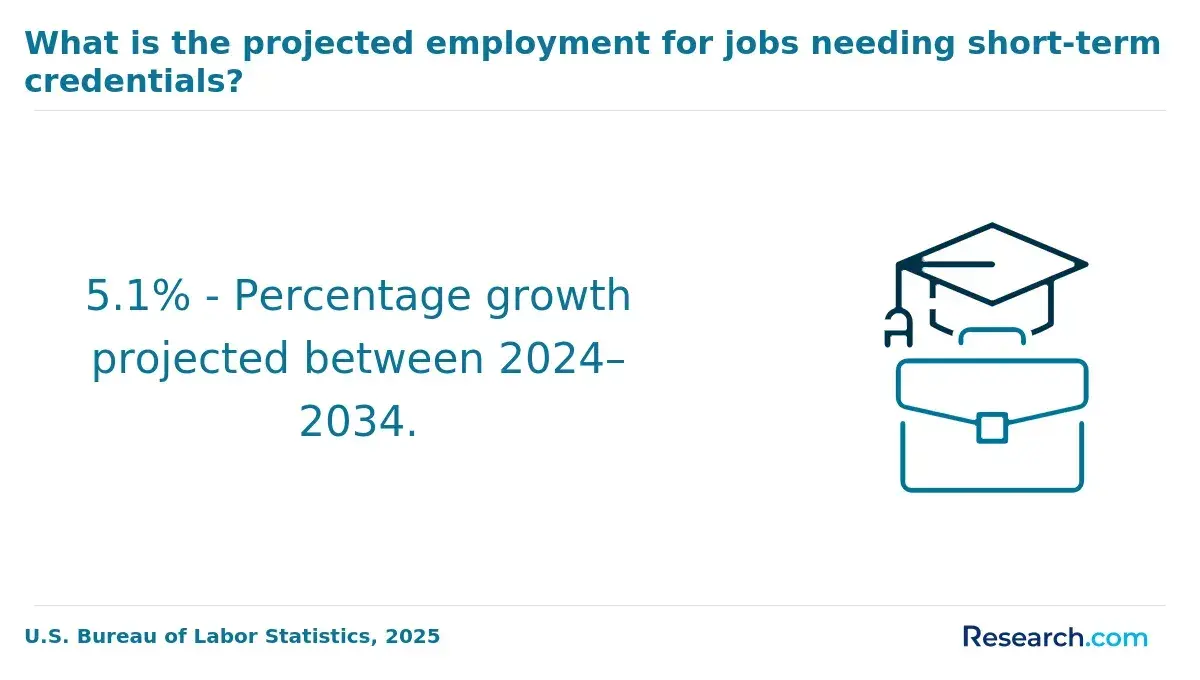
If your goal is faster workforce entry rather than a four-year residential degree, it may be worth comparing short term certificate programs before investing energy in a highly selective undergraduate application. The best choice depends on timeline, cost, academic fit, and the credential required for your target role.
What common mistakes do applicants make on Rice supplemental essays and how can you avoid them?
Most weak Rice essays fail for predictable reasons: they are too general, too résumé-like, too focused on prestige, or too disconnected from Rice University. The good news is that these mistakes are fixable if you revise for evidence and fit. Here are the most common mistakes and how to avoid them while keeping your own voice intact:
- Mistake: Writing a brochure paragraph. Avoid this by explaining why a Rice feature matters to your learning style, values, or goals rather than simply naming it.
- Mistake: Repeating the personal statement. Use the supplement to add new information, such as academic fit, community contribution, or a Rice-specific opportunity.
- Mistake: Listing too many resources. Choose one or two Rice details and analyze them deeply instead of creating a crowded name-drop list.
- Mistake: Treating the community essay as a hardship essay only. Focus on perspective, agency, values, and contribution, whether or not your topic involves adversity.
- Mistake: Sounding like every other high-achieving applicant. Replace abstract traits such as "passionate," "curious," and "collaborative" with scenes that prove those qualities.
- Mistake: Letting AI erase your voice. Use tools only for brainstorming or proofreading, and make sure the final essay includes details only you could write.
- Mistake: Ignoring the Rice Box. Choose an image that adds a new dimension to your application instead of repeating an award, headshot, or obvious major symbol.
A strong final check is the "school swap" test. If you can replace "Rice" with another university and the paragraph still works, the essay is not specific enough.
How do Rice supplemental essays differ from personal statements and other college essays?
Rice University supplemental essays differ from personal statements because they answer a narrower question. The personal statement usually tells a broader story about who you are, while the supplement shows how that identity, curiosity, and preparation fit Rice specifically.
The table below clarifies how to divide content across different college essays so you do not repeat yourself or waste limited word count.
| Essay type | Main purpose | Best content to include |
| Personal statement | Reveal a central story, value, identity, or turning point | A personal narrative that helps admissions understand your character and context |
| Rice academic essay | Explain intellectual fit | Major interests, academic questions, preparation, and Rice-specific learning opportunities |
| Rice why-us essay | Show institutional fit | Specific Rice resources connected to how you learn, collaborate, and contribute |
| Rice community essay | Show perspective and contribution | Values, lived experiences, communities, responsibilities, or viewpoints that shape how you engage with others |
| Activities description | Summarize involvement | Concrete roles, impact, leadership, and time commitment |
Applicants sometimes discover during essay writing that their goals do not require a traditional residential campus experience. If speed and career alignment are bigger priorities than campus life, researching fast degrees online can provide a useful comparison point before committing to a selective college application strategy.
For Rice specifically, your supplement should add dimension. If your personal statement is about caring for a sibling, your community essay might focus on how that experience changed your view of accessibility, patience, or responsibility. If your personal statement is about robotics, your academic essay might focus on a different layer, such as ethical design or human-centered engineering.
How should transfer, international, and nontraditional applicants approach Rice supplemental essays?
Transfer, international, and nontraditional applicants should not try to sound like traditional high school seniors. Their strongest Rice University essays usually explain context clearly and then show readiness for the institution's academic and community environment.
Different applicant backgrounds call for different essay priorities. Use the following guidance to decide what your supplement needs to clarify.
- Transfer applicants: Explain why Rice is not just "better," but better aligned with your academic path, advising needs, research goals, or campus environment.
- International applicants: Give context where it helps, especially if your curriculum, grading system, educational access, language background, or community responsibilities shaped your preparation.
- Military-connected applicants: Translate leadership, discipline, service, and technical experience into academic goals without relying only on titles or rank.
- Adult or returning students: Show how work, caregiving, service, or time away from school clarified your goals and strengthened your readiness.
- Gap-year applicants: Explain what changed during the gap year and how the experience made your Rice goals more specific.
For military-connected students, Rice may be one option among several depending on benefits, relocation, deployment history, and desired format. Comparing online military colleges can help applicants decide whether a flexible, military-friendly pathway or a residential Rice experience is the better fit.
Nontraditional applicants should be especially careful not to over-explain every life event. Select the experiences that directly support your academic direction, maturity, and contribution to Rice. The goal is not to justify being different; it is to show how your path has prepared you to use Rice well.
How can you revise, proofread, and get feedback on Rice supplemental essays effectively?
Revision is where most Rice University essays become competitive. A first draft often explains what you care about; a strong final draft proves why Rice should care too. Because the word limits are tight, revision should focus on precision, not just grammar.
Use this revision sequence after you have a complete draft. It helps you improve substance before polishing sentences.
- Check the prompt answer first and make sure the essay directly responds to what Rice asked, not what you hoped it asked.
- Highlight every Rice-specific detail and remove any that are not connected to your own goals, values, or experiences.
- Underline the sentences that reveal something new about you and cut sentences that repeat your activities list or personal statement.
- Read the essay aloud to catch stiff phrasing, inflated language, and sentences that sound unlike you.
- Ask one trusted reader to summarize your main point in one sentence; if they cannot, revise for focus.
- Ask a second reader to mark any sentence that feels generic, exaggerated, or unclear.
- Proofread last for grammar, punctuation, word count, names of Rice programs, and accidental references to another school.
Good feedback should make your essay more like you, not more like the reviewer. Avoid letting too many adults rewrite your language. Admissions readers are used to student voices, and over-polished essays can feel less authentic.
Cost can also affect how many applications and essay-heavy schools you pursue. If affordability is a major factor in your college plan, comparing an affordable online bachelor's degree can help you weigh Rice against lower-cost or more flexible degree options before finalizing your list.
Other Things You Should Know About
Rice commonly requires several supplemental responses, including academic interest, why Rice, community-focused writing, and the Rice Box image. Requirements can vary by applicant type and admission cycle, so always confirm in the application portal.
Choose an image that reveals something not already obvious from your essays or activities list. It could reflect a hobby, place, object, tradition, creative interest, or personal perspective, but it should feel intentional rather than random.
You can reuse the underlying idea, but not the final essay. A strong Rice response should include details that would not make sense for another university, such as Rice's residential college system, academic structure, research opportunities, or campus culture.
Yes, if the goals connect naturally to your academic interests and Rice resources. Avoid sounding as if Rice is only a stepping stone to a job; show how you plan to learn, contribute, and grow while you are there.
References
- Rice Supplemental Essay Prompts & The Box | 2025-2026 | Ivy Coach https://www.ivycoach.com/the-ivy-coach-blog/college-essays/rice-university-essay-prompts/
- Tips and Examples for the Rice University Supplements — Tex Admissions https://www.texadmissions.com/blog/2020/7/28/tips-and-examples-for-writing-your-rice-university-supplements
- How to Get Into Rice University: Strategies and Essays That Worked — Shemmassian Academic Consulting https://www.shemmassianconsulting.com/blog/how-to-get-into-rice-university
- How to Write the Best Supplemental Essays for Rice University Admissions https://ingeniusprep.com/blog/how-to-write-the-rice-supplemental-essays/
- Need help on "Why Us?" Essay: What exactly makes Rice students so collaborative and supportive? https://talk.collegeconfidential.com/t/need-help-on-why-us-essay-what-exactly-makes-rice-students-so-collaborative-and-supportive/3672624
- Rice University Supplemental Essays: 2025-26 Prompt Guide and Expert Tips https://www.collegeessayadvisors.com/supplemental-essay/rice-university-supplemental-essay-prompt-guide/
- Rice Supplemental Essays Strategy: Prompts, Approach, and Strategy for 2025-2026 https://orieladmissions.com/rice-supplemental-essays-strategy/
- How to Write the Rice University Supplemental Essays: Examples + Guide 2025/2026 https://www.collegeessayguy.com/blog/rice-university-supplemental-essays
- Rice University Supplemental Essay & Rice Essay - Expert Guide https://www.collegeadvisor.com/essay-guides/rice-university-supplemental-essays/
- “What Are The Most Common College Essay Mistakes?” https://northstaradmissions.com/what-are-the-most-common-college-essay-mistakes/