2027 Low GPA: What Students Need to Know for Admissions

Co-Founder and Chief Data Scientist
A low GPA can feel like a closed door, but admissions decisions are usually more flexible than students expect. The National Center for Education Statistics reported in 2024 that 62% of recent high school completers enrolled in college soon after graduation, showing that many paths remain open even in a competitive market. This guide is for high school students, transfer applicants, adult learners, and future graduate students who need realistic options. You will learn how GPA is evaluated, where flexibility exists, and what steps can make an application stronger.
Key Things You Should Know
- A "low GPA" usually means below 3.0 for many four-year colleges, but open-admission community colleges, some accredited online programs, and conditional admission pathways may accept students below that level.
- College Board's 2024 pricing data shows average published tuition and fees of $4,050 at public two-year colleges versus $11,610 for in-state public four-year colleges, making transfer pathways a lower-cost way to rebuild an academic record.
- GPA matters most when a program is selective, major-specific, or graduate-level; students can offset weaker grades with stronger recent coursework, transfer credits, test scores when useful, work experience, essays, recommendations, and a clear academic plan.
How does a low GPA affect your chances of getting into college?
A low GPA affects college admissions by increasing perceived academic risk. Admissions teams use GPA as evidence of consistency, course difficulty, and readiness for college-level work. A 2.4 GPA in rigorous courses with an upward trend may be read differently from a 2.9 GPA with declining grades, so context matters.
For the reader, the most important point is that GPA is not a universal cutoff at every school. It becomes more restrictive as selectivity rises, especially for programs in nursing, engineering, business, computer science, and education, where departments may have their own standards after general admission.
The table below summarizes how GPA is commonly interpreted. These are practical planning categories, not national rules, because each institution sets its own admissions standards.
| GPA range | How colleges may read it | Best-fit admissions strategy |
| Below 2.0 | Often considered high risk for direct admission to selective four-year programs | Start with community college, adult degree completion, academic renewal, or conditional admission |
| 2.0 to 2.49 | May meet minimum standards at some access-focused schools but can limit major choices | Target colleges with support services, explain circumstances, and show recent improvement |
| 2.5 to 2.99 | Competitive at some less-selective schools but below the average at many four-year institutions | Apply broadly, use essays and recommendations strategically, and consider test scores if strong |
| 3.0 and above | Often meets basic GPA expectations at many colleges, though selective programs may require more | Focus on academic fit, major requirements, affordability, and outcomes |
A common mistake is applying only to reach schools and then assuming rejection means college is impossible. A better approach is to build a balanced list: one or two reach schools, several realistic schools, and at least one affordable access pathway where admission is likely.
What minimum GPA do colleges and universities typically require for admission?
Minimum GPA requirements vary widely. Some colleges publish hard minimums, some use recommended GPA ranges, and others review applicants without a formal GPA floor. Public universities may also have state-system eligibility rules, while private colleges often set their own institutional standards.
Many students hear "3.0" as if it is a universal admissions rule, but that is not accurate. A 3.0 is a common benchmark for scholarships, honors programs, graduate school eligibility, and some major-specific admissions, yet many undergraduate options exist below that level.
The table below shows typical GPA expectations by pathway so you can compare realistic options instead of relying on one number.
| Institution or pathway | Typical GPA expectation | Important note |
| Open-admission community college | High school diploma, GED, or equivalent is often enough | Placement tests or advising may determine course level |
| Less-selective four-year college | Often around 2.0 to 2.5 minimum | Admission may be conditional if grades are weak |
| Moderately selective university | Often closer to 2.75 to 3.25 for competitive applicants | Course rigor and grade trends matter |
| Highly selective college | No simple minimum, but admitted students often have very strong records | A low GPA is difficult to overcome without exceptional context or achievements |
| Major with separate admission | Often higher than general admission | Nursing, engineering, business, and teacher preparation may require prerequisite grades |
If your GPA is below a posted minimum, contact admissions before applying. Ask whether the school allows conditional admission, appeals, summer bridge programs, non-degree enrollment, or admission after completing college-level credits elsewhere.
Can you get into accredited online degree programs with a low GPA?
Yes, some accredited online degree programs accept students with low GPAs, especially programs designed for adult learners, transfer students, military-affiliated students, and working professionals. However, "online" does not automatically mean easier admission or lower quality. Accreditation, transfer policy, student support, and major requirements matter more than format.
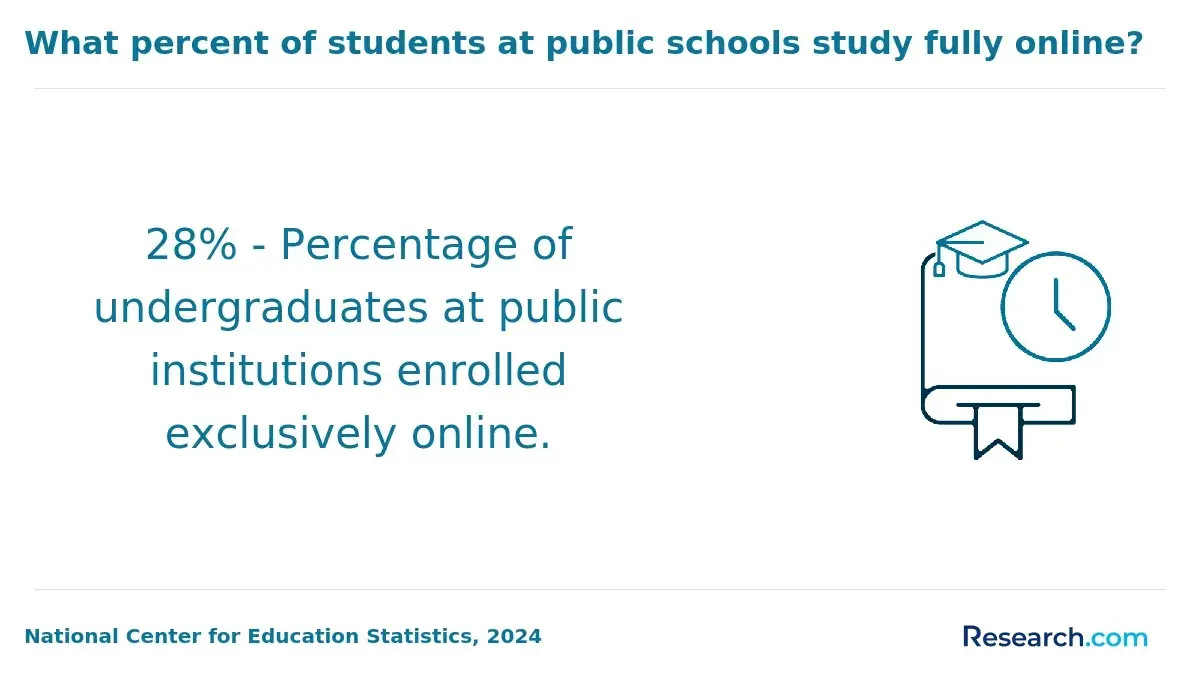
NCES distance education data released in 2024 shows that online learning remains a mainstream part of U.S. higher education rather than a niche option. For low-GPA applicants, that matters because online programs often offer multiple start dates, part-time pacing, and credit for prior college work, which can make rebuilding an academic record more manageable.
When comparing the top online colleges, focus first on accreditation and student outcomes, not advertising claims. Regional or recognized national accreditation affects credit transfer, federal aid eligibility, employer acceptance, and graduate school options.
Before applying to an online program with a low GPA, check these items carefully:
- Whether the institution is accredited by an agency recognized by the U.S. Department of Education or the Council for Higher Education Accreditation.
- Whether the specific major has programmatic accreditation if your career requires it, such as nursing, education, social work, counseling, or accounting.
- Whether low-GPA applicants are admitted fully, conditionally, provisionally, or as non-degree students first.
- Whether failed or repeated courses can be replaced, averaged, or excluded under academic renewal policies.
- Whether transfer credits, prior learning assessment, or military credits can shorten the timeline and reduce cost.
A major red flag is a school that downplays accreditation questions or pressures you to enroll before reviewing transfer credits. A reputable online college should provide clear admissions terms, total cost estimates, academic support details, and written transfer evaluations.
How do holistic and test-optional admissions policies treat low GPAs?
Holistic admissions means a college reviews more than grades alone. The application may include curriculum rigor, grade trends, essays, recommendations, activities, work experience, family responsibilities, community involvement, and personal context. A low GPA can still hurt, but holistic review gives you room to explain what changed and why you are now prepared.
Test-optional admissions means applicants may choose whether to submit SAT or ACT scores. It does not mean GPA no longer matters. In many test-optional reviews, the transcript becomes even more important because it is the longest record of academic performance. If your test score is stronger than your GPA, submitting it may help; if it is weaker, withholding it may be reasonable.
The table below shows how different application elements can influence the way a low GPA is interpreted.
| Application element | How it can help a low-GPA applicant | Limitation |
| Upward grade trend | Shows improved maturity, study habits, or stability | One strong semester may not be enough for selective programs |
| Rigorous coursework | Can show readiness if grades improved in harder classes | Low grades in core academic courses still raise concern |
| Essay or personal statement | Explains context and demonstrates self-awareness | Excuses without evidence of improvement are weak |
| Recommendation letters | Can confirm work ethic, resilience, and classroom readiness | Generic letters rarely offset poor grades |
| Test scores | May support academic readiness when scores are above the school's middle range | Many schools still weigh transcript performance more heavily |
The best explanation for a low GPA is specific, brief, and forward-looking. Explain the obstacle, show what changed, and point to evidence such as better recent grades, tutoring, reduced work hours, medical stability, or successful college-level coursework.
What strategies can you use to strengthen your application beyond GPA?
The strongest low-GPA applications do not simply ask admissions officers to overlook grades. They provide evidence that the applicant is now ready to succeed. Your goal is to reduce uncertainty for the school.
Use the following steps to strengthen the parts of your application you can still control:
- Build a balanced school list with access-focused colleges, realistic four-year options, and transfer-friendly programs rather than applying only to highly selective institutions.
- Show an upward trend by earning strong grades in the most recent semester, summer courses, dual enrollment, or community college classes.
- Use the additional information section or essay to explain unusual circumstances without blaming teachers, schools, or personal setbacks.
- Ask for recommendations from instructors, supervisors, counselors, or mentors who can describe specific examples of discipline and improvement.
- Submit test scores only if they strengthen your academic profile under the school's test-optional policy.
- Choose a major thoughtfully, especially if your first-choice major has higher GPA requirements than the university's general admission standard.
- Prepare a short academic success plan that names the tutoring, advising, time-management, and mental health resources you will use if admitted.
If you are undecided, reviewing the top degrees in demand for the future can help you connect your application to a realistic academic and career plan. That does not mean choosing a major only for salary; it means showing admissions teams that you understand the coursework and career direction you are entering.
A common mistake is writing a dramatic essay that explains the past but says little about the future. Admissions readers need to know what will be different this time, not only what went wrong before.
Are community college and transfer pathways good options for students with low GPAs?
Community college is often one of the best options for students with low high school GPAs because it can reset the academic conversation. Instead of being judged mainly on high school performance, you can build a college transcript, complete general education courses, and transfer with stronger evidence of readiness.
Cost is another major advantage. College Board's 2024 data lists average published tuition and fees at public two-year colleges at $4,050, compared with $11,610 for in-state students at public four-year colleges. That difference can reduce financial risk while you prove you can succeed in college-level coursework.
An online associates degree may also work well for students who need flexibility because of work, caregiving, transportation, or health needs. The key is to confirm that credits transfer cleanly into the bachelor's program you eventually want.
Community college and transfer pathways make the most sense when:
- You need to raise your academic record before applying to a selective four-year program.
- You want a lower-cost start before committing to a bachelor's degree.
- You are unsure about your major and need time to explore requirements.
- You can follow a transfer agreement, articulation pathway, or guaranteed admission program.
- You are willing to meet regularly with advisors to avoid taking credits that do not apply to your target degree.
The main risk is poor transfer planning. Before enrolling, ask the four-year institution which community college courses satisfy major prerequisites, whether grades transfer into the GPA calculation, and whether there is a minimum transfer GPA for your intended major.
How does a low undergraduate GPA impact graduate school admissions?
A low undergraduate GPA can make graduate school admission harder because graduate programs use GPA to estimate whether applicants can handle advanced, independent, and writing-intensive work. The impact depends heavily on the field. Competitive programs in psychology, physician assistant studies, nursing, engineering, data science, and business analytics may screen more aggressively than some professional or part-time master's programs.
Many graduate programs use 3.0 as a common benchmark, but that is not universal. Some schools allow conditional admission, probationary admission, graduate certificates, non-degree coursework, or last-60-credit GPA review. This is especially helpful if your overall GPA is low but your recent academic performance is much stronger.
The table below compares graduate school options for applicants whose undergraduate GPA is below the usual target.
| Option | When it may help | What to verify |
| Conditional admission | You meet most requirements but fall short on GPA | Minimum grades required in the first term |
| Graduate certificate | You need recent graduate-level grades before applying to a full degree | Whether certificate credits transfer into the master's program |
| Post-baccalaureate coursework | You need prerequisite courses or science GPA repair | Whether the target program values post-bacc grades |
| Professional experience-based program | Your work record is stronger than your transcript | How much experience can offset GPA weakness |
| Standardized test submission | Your GRE, GMAT, or other score is notably stronger than your GPA | Whether the program accepts or values scores |
For graduate applicants, the best strategy is evidence-based repair. Take relevant coursework, earn strong grades, secure recommendations from instructors or supervisors, and write a focused statement of purpose that connects your goals to the program's curriculum.
What financial aid, scholarships, and tuition options exist for low-GPA students?
Low-GPA students can still qualify for many forms of financial aid, especially need-based aid. Federal Pell Grants, federal student loans, state grants, employer tuition assistance, payment plans, and institutional aid may not require the same GPA level as merit scholarships. However, students must usually maintain satisfactory academic progress after enrolling to keep receiving aid.
College Board's 2024 pricing report shows why this matters: published tuition and fees vary sharply by institution type, with private nonprofit four-year colleges averaging $43,350. For a student trying to recover academically, choosing a lower-cost or more flexible pathway can reduce pressure and make persistence more realistic.
Financial options for low-GPA students often include:
- Need-based federal and state aid, which may depend more on financial circumstances than high school GPA.
- Community college tuition savings before transferring to a bachelor's program.
- Institutional grants at colleges that prioritize access, adult learners, or local students.
- Employer tuition reimbursement for working students pursuing job-relevant credentials.
- Payment plans that spread tuition across the term instead of requiring one large payment.
- Departmental scholarships after you establish stronger college grades.
Students who need a faster workforce option before or during college may also compare easy licenses and certifications to get. Shorter credentials are not substitutes for every degree, but they can help build skills, income, and confidence while you work toward a longer academic goal.
A common mistake is focusing only on whether you can get in and ignoring whether you can afford to stay enrolled. Before committing, compare total cost of attendance, aid renewal rules, loan amounts, transfer credit, expected work hours, and academic support.
How can you improve your academic record before reapplying to programs?
You improve a weak academic record by creating newer, stronger evidence. Admissions teams are often more persuaded by recent college-level performance than by promises. The goal is to show that the factors behind the low GPA have been addressed and that your current habits match college expectations.
Follow this sequence if you plan to reapply or transfer:
- Request your unofficial transcript and identify the courses causing the most GPA damage, especially failed core classes and prerequisites for your intended major.
- Ask schools whether they offer grade replacement, academic renewal, forgiveness policies, or recalculated GPAs for repeated courses.
- Retake essential courses only when a higher grade will improve admissions eligibility or satisfy a prerequisite.
- Take a manageable course load so you can earn strong grades rather than repeating the same overload pattern.
- Use tutoring, writing centers, disability services, advising, and counseling early instead of waiting until midterm grades are poor.
- Document improvement with official grades, instructor feedback, completed certificates, or work achievements related to your field.
- Reapply when you can show a clear upward trend, not simply after time has passed.
Some adult learners also consider competency-based universities, where progress may depend on demonstrating mastery rather than spending a fixed number of weeks in each class. This format can fit disciplined students with work experience, but it is not ideal for learners who need frequent deadlines, live instruction, or heavy structure.
The biggest red flag is enrolling in random courses without checking whether they improve your target application. Every class should serve a purpose: GPA repair, prerequisite completion, transfer progress, skill development, or career exploration.
Does having a low GPA limit long-term career prospects and salary potential?
A low GPA can affect early opportunities, especially internships, first jobs, graduate programs, and employers that use GPA screens. Over time, however, career prospects usually depend more on completed credentials, skills, work experience, portfolio quality, professional references, certifications, and performance on the job.
BLS education-pay data published in 2024 shows that workers with a bachelor's degree had median weekly earnings of $1,543, compared with $1,099 for workers with an associate degree. This does not mean every bachelor's degree produces the same outcome, but it shows why completing the right credential can still matter even if the path starts with a low GPA.
Students with low GPAs should think in terms of employability, not just admission. For many fields, employers want evidence that you can solve problems, communicate clearly, use relevant technology, collaborate, and keep learning. AI and automation are also raising expectations: students in business, technology, healthcare administration, design, and data-heavy roles increasingly benefit from practical software skills and project experience.
The table below shows how GPA tends to matter at different career stages.
| Career stage | How much GPA may matter | What matters more over time |
| Internships and first job | Can matter if employers use GPA cutoffs | Relevant projects, referrals, work experience, and interview performance |
| Graduate or professional school | Often important, especially for competitive programs | Recent coursework, test scores when accepted, recommendations, and field experience |
| Mid-career roles | Usually less important unless required by a specific employer or program | Skills, achievements, leadership, licenses, and measurable results |
| Career change | May matter if returning to school | Transferable skills, certificates, portfolio, and recent training |
A low GPA should influence your strategy, not define your ceiling. Choose programs with strong support, build marketable skills early, seek internships or applied projects, and create evidence of competence that employers can evaluate directly.
Other Things You Should Know About
For many four-year colleges, a GPA below 3.0 may be considered low, but the meaning depends on the school, major, course rigor, and applicant pool. Some colleges admit students with GPAs below 2.5, while selective programs may expect much stronger records.
A strong essay can help, but it rarely cancels out weak grades by itself. The best essay explains context briefly, shows accountability, and points to evidence of improvement such as better recent grades, tutoring, work discipline, or successful college coursework.
Submit scores only if they strengthen your application. If your scores are above the school's typical admitted range, they may support academic readiness. If they are average or weak, a test-optional application may be better.
Apply now if you have realistic schools on your list and can show improvement. Wait or use a transfer pathway if your GPA is below minimum requirements, your recent grades are still weak, or your target major has strict prerequisite standards.
References
- Community college students don’t always benefit from transferring to a 4-year college | Brookings https://www.brookings.edu/articles/community-college-students-dont-always-benefit-from-transferring-to-a-4-year-college/
- Improve Your Chance of College Admission — JRA Educational Consulting https://www.jraeducationalconsulting.com/blog/improve-your-chance-of-college-admission
- Financial Aid for Undergraduate International Students https://www.nafsa.org/about/about-international-education/financial-aid-undergraduate-international-students
- How to Improve Student Transcripts for College Admissions https://www.panoramaed.com/blog/how-to-improve-student-transcripts-for-college-admissions
- Test-optional policies make college admissions more holistic, equitable - The Tufts Daily https://www.tuftsdaily.com/article/2021/02/test-optional-policies-make-college-admissions-more-holistic-equitable
- How Much Does GPA Matter When Applying to College? | SoFi https://www.sofi.com/learn/content/does-gpa-matter-for-college-admission/
- Can You Get Into Online College With a Low GPA? 2026 Guide https://www.collegetransitions.com/blog/can-you-get-into-online-college-with-a-low-gpa/
- The Impact of GPA on Future Career Opportunities https://middleschoolgpacalculator.com/impact-of-gpa-on-future-career-opportunities/
- Scholarships - Finaid https://finaid.org/scholarships/
- What GPA Do International Students Need for Top US Universities? https://www.amerigoeducation.com/news/what-gpa-do-international-students-need-for-top-us-universities