2027 Bentley Acceptance Rate: Complete Guide for College Applicants

Co-Founder and Chief Data Scientist
Bentley applicants are usually deciding whether a business-centered private university is worth a competitive admissions process and a major financial commitment. Bentley's recent acceptance rate is about 58%, making it selective but not out of reach for well-prepared students. This guide is for first-year, transfer, international, and graduate-focused applicants who want clear admissions benchmarks, cost context, program options, and career outcomes. You will learn how Bentley compares with similar schools and how to decide whether applying makes sense for your goals.
Key Things You Should Know
- Bentley University's acceptance rate is roughly 58% in recent reported admissions data, so applicants should treat it as a moderately selective school where grades, course rigor, and fit matter.
- Competitive applicants often present strong business, math, writing, and analytics preparation; test-optional policies mean SAT or ACT scores can help when they strengthen the file but are not always required.
- Bentley's published annual cost of attendance is in the low-$80,000 range before aid, so applicants should compare net price, scholarships, career outcomes, and alternatives before enrolling.
What is the Bentley University acceptance rate and how competitive are admissions?
Bentley University's acceptance rate is best understood as moderately selective. Recent public admissions reporting places the admit rate at about 58%, which means more than half of applicants are admitted, but the admitted group is still academically strong. For applicants, the practical takeaway is that Bentley is not an "easy admit," especially for students applying to competitive business, finance, analytics, or honors-style opportunities.
An acceptance rate measures the share of applicants who receive an offer of admission. It does not tell you your personal odds by itself. Your chances depend on your high school curriculum, grades, recommendations, essay quality, demonstrated interest, extracurricular involvement, and whether your academic record matches Bentley's business-focused environment.
The admissions process also reflects a broader trend: many colleges are still using test-optional review, while employers are placing more value on applied analytics, communication, and technology skills. That makes Bentley's fit-focused review important.
The university is looking not only for students who can handle college-level business coursework, but also for students who can work with data, write clearly, collaborate, and connect classroom learning to internships and career goals.
This table summarizes what the acceptance rate means in practical terms for applicants. Use it to decide whether Bentley should be a likely, target, or reach school in your college list.
| Admissions factor | What it means for Bentley applicants | How to use it |
| Acceptance rate | About 58% in recent reported data | Treat Bentley as a target school only if your grades and course rigor are close to the admitted-student profile |
| Selectivity level | Moderately selective | Apply with a balanced college list that includes safer and more selective options |
| Academic emphasis | Business, liberal arts, analytics, technology, and communication | Show readiness in quantitative courses, writing, and leadership or work experience |
| Application review | Holistic and test-optional for many applicants | Submit scores only if they strengthen your profile under Bentley's current policy |
The most common mistake is reading the acceptance rate as a guarantee. A student with weak grades in core courses may still face a difficult review, while a student with strong grades, rigorous coursework, and a clear reason for choosing Bentley may be more competitive than the overall rate suggests.
How does Bentley's acceptance rate compare with other business-focused universities?
Bentley is more selective than many broad-access business programs but generally less selective than the most competitive private business colleges in the Boston area. That middle position is important: applicants can get a career-oriented business education without facing the extremely low admit rates associated with some elite institutions, but they still need a polished application.
The comparison below uses recent publicly reported admissions patterns and selectivity bands rather than treating every school as identical. Business-focused universities differ in size, applicant pool, academic model, and whether students apply directly to a business school or to the institution overall.
| School or program type | Recent selectivity pattern | How it compares with Bentley | Best fit for |
| Bentley University | About 58% acceptance rate | Moderately selective with a strong business and analytics identity | Students who want a business-centered campus with liberal arts and technology integration |
| Babson College | More selective | Typically harder to enter than Bentley | Students focused heavily on entrepreneurship and startup culture |
| Bryant University | Similar to somewhat less selective | Often comparable for business-oriented applicants | Students seeking business, communication, and leadership programs in a smaller-campus setting |
| Suffolk University business programs | Generally less selective | Usually more accessible than Bentley | Students who want an urban Boston business environment and broader admissions flexibility |
| Large public university business schools | Varies widely by campus and major | May be cheaper in-state but not always easier for direct business admission | Students prioritizing lower tuition, larger networks, or public-university options |
The key decision is not simply "which school has the lowest acceptance rate?" A lower acceptance rate does not automatically mean a better fit, stronger return on investment, or better career outcome for every student. Compare curriculum, internship access, employer relationships, location, net price, and whether you want a highly specialized business environment from the first year.
A practical application strategy is to place Bentley in context. If your profile is close to or above Bentley's admitted-student academic range, it may be a strong target. If your GPA is below the typical range or your coursework lacks rigor in math, writing, or economics, consider Bentley a reach and add less selective business programs to your list.
What GPA, test scores, and academic profile do Bentley applicants typically need?
Bentley does not admit students by one number alone, but successful applicants usually show consistent performance in college-preparatory courses. Because Bentley's curriculum blends business, quantitative analysis, communication, and liberal arts, admissions readers pay attention to both academic strength and the way applicants connect their interests to Bentley's programs.
A strong academic profile typically includes a solid GPA in rigorous classes, especially in math, English, social science, business-related electives, computer science, or statistics when available. Advanced Placement, International Baccalaureate, honors, dual-enrollment, or other challenging courses can help show readiness, but Bentley also considers what was available at your school.
Applicants should use the following checklist to evaluate whether their profile is ready for Bentley-level review. These are not guarantees; they are practical signals that your application may align well with the university's academic expectations.
- Take the strongest realistic schedule available, especially in math, writing-intensive courses, economics, statistics, computer science, or business-related electives.
- Show an upward academic trend if your early high school grades were uneven, and explain major disruptions only when they add useful context.
- Use optional test scores strategically if Bentley's current policy allows it and your SAT or ACT results strengthen your academic story.
- Connect extracurricular activities to impact, not just titles; admissions readers often value work experience, family responsibilities, entrepreneurship, volunteering, athletics, and leadership.
- Write essays that explain why Bentley's blend of business, analytics, liberal arts, and career preparation fits your goals.
Students whose grades are not yet competitive should avoid rushing into an application without a backup plan. One option is to strengthen the academic record elsewhere first, including through community college or flexible online pathways; students exploring that route can compare associates degrees online before deciding whether a transfer path is more realistic.
The biggest red flag is an application that says "I want business" but does not show preparation for quantitative or communication-heavy work. Even future marketing, management, or entrepreneurship students benefit from evidence that they can handle spreadsheets, presentations, research, writing, and teamwork.
What are Bentley's admission requirements for first-year, transfer, and international students?
Bentley's admission requirements vary by applicant type, but most students should expect to submit an application, academic records, recommendations, essays or personal statements, and any required language or transfer documents. Always verify the current application checklist directly with Bentley before submitting because policies can change by term, program, and applicant category.
The table below gives a practical overview of common requirements by applicant type. It is designed to help you identify what to prepare early, not to replace Bentley's official admissions instructions.
| Applicant type | Common materials | Decision factors to watch |
| First-year applicants | Application form, high school transcript, school report, recommendation, essay, optional or required test scores depending on current policy | Course rigor, GPA trend, writing quality, activities, and fit with a business-focused university |
| Transfer applicants | College transcript, high school transcript if required, course descriptions or syllabi when requested, recommendation, application essay | College GPA, transferable credits, business prerequisites, and reason for transferring |
| International applicants | Academic records, English proficiency documentation if required, financial documentation, passport or visa-related materials after admission | Credential evaluation, English readiness, funding plan, and timing for immigration documents |
| Graduate applicants | Program-specific application, transcripts, resume, statement of purpose, recommendations, and test scores if required by the program | Work experience, quantitative readiness, career goals, and fit with the selected graduate program |
Military-connected students, veterans, and dependents should ask admissions and financial aid offices about transfer credit, Yellow Ribbon participation if applicable, housing flexibility, and support services. If you are comparing schools beyond Bentley, a guide to choosing an online military college can help you evaluate policies that affect scheduling, benefits, and credit mobility.
Before applying, take these practical steps to avoid delays and weak submissions.
- Check the exact deadline for your applicant type and term, including early action, regular decision, transfer, and graduate deadlines.
- Request transcripts early, especially if you attended more than one school or completed college courses during high school.
- Confirm whether standardized tests are optional, recommended, or required for your specific applicant category.
- Ask recommenders who can speak to your academic habits, maturity, leadership, and readiness for business coursework.
- Review transfer-credit rules before enrolling elsewhere if Bentley is your eventual goal.
A common mistake is assuming that transfer admission is automatically easier than first-year admission. Transfer applicants may face additional scrutiny around course equivalency, grades in college-level work, and whether they can still complete Bentley requirements on time.
Does Bentley offer online, hybrid, or part-time program options alongside its campus programs?
Bentley is primarily known for its campus-based undergraduate experience in Waltham, Massachusetts, but students may also find flexible options at the graduate, professional, or continuing education level. The most important distinction is that an undergraduate student seeking the full Bentley residential experience should not assume it can be replicated fully online.
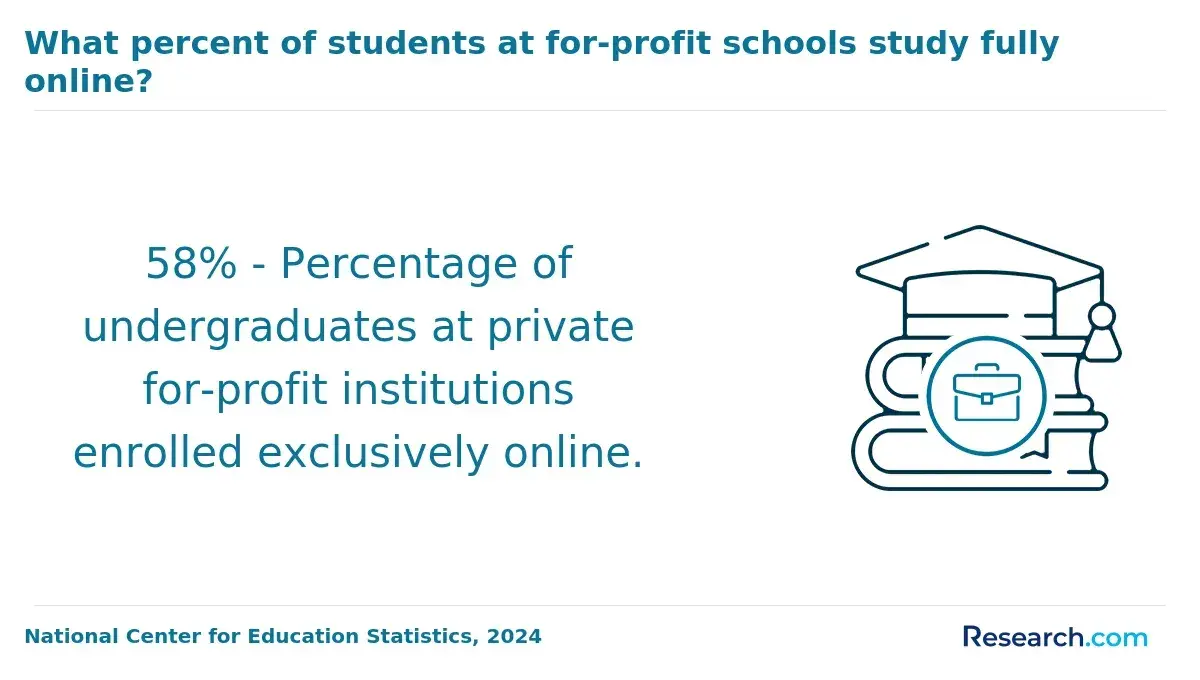
Online and hybrid learning have expanded across U.S. higher education, especially for working adults and graduate students. The National Center for Education Statistics reported in 2024 that distance education remains a major part of college enrollment after the pandemic-era shift. For Bentley applicants, that trend matters because it creates more ways to earn credentials, but it also makes format comparison more important.
The table below compares format choices from a decision-making perspective. It can help you decide whether Bentley's campus model, a graduate hybrid option, or another online program better matches your life and career timeline.
| Format | Typical fit | Advantages | Trade-offs |
| Full-time campus undergraduate study | Traditional first-year students seeking a business-centered college experience | Campus community, career events, student organizations, and structured academic support | Higher total cost and less scheduling flexibility |
| Transfer campus study | Students who begin elsewhere and later move into Bentley | Potential cost savings before transfer and access to Bentley career resources after enrollment | Credit loss risk and less time to build campus relationships |
| Graduate or professional hybrid study | Working professionals seeking advanced business credentials | More flexibility while maintaining faculty and peer interaction | Program availability varies and may still require scheduled sessions |
| Fully online alternatives | Students who need maximum flexibility or lower cost | Broader program choice and easier scheduling around work or family | May not provide the same campus network or Bentley-specific employer access |
Students who want speed and flexibility should compare Bentley's graduate options with broader online alternatives. For example, professionals trying to finish quickly may want to research one-year master's programs online and then weigh speed against brand fit, curriculum depth, networking, and employer recognition.
Do not choose an online, hybrid, or campus format based only on convenience. Ask whether the format gives you access to internships, faculty, career coaching, alumni networks, group projects, and recruiting events in the way your target career requires.
Is Bentley University accredited, and how does accreditation affect degrees and careers?
Bentley University is institutionally accredited, which is a critical trust signal for students, employers, graduate schools, and financial aid eligibility. Institutional accreditation means an approved accreditor has reviewed the university's academic quality, governance, student support, financial stability, and continuous-improvement processes.
Accreditation matters because it can affect whether your credits transfer, whether you qualify for federal financial aid, whether graduate schools recognize your degree, and how employers view your credential. It does not guarantee a job or salary, but it helps confirm that the institution meets recognized standards for U.S. higher education.
Applicants should understand the difference between institutional and programmatic accreditation. Institutional accreditation covers the university overall. Programmatic accreditation, when available, applies to specific programs or professional fields. In business education, specialized accreditation can be useful, but students should evaluate it alongside curriculum quality, faculty expertise, internship access, and career placement support.
Use this quick review process before committing to any institution, including Bentley or an alternative school.
- Verify the institution's accreditation status through the accreditor or the U.S. Department of Education's recognized accreditation database.
- Check whether your specific program has any additional accreditation, licensure, or employer-recognition requirements.
- Ask how credits transfer in and out, especially if you may change schools or pursue graduate study later.
- Confirm that the program format you choose, including online or hybrid delivery, is covered under the institution's approved offerings.
- Be cautious of schools that avoid clear accreditation answers or pressure you to enroll before you can verify credentials.
The red flag to avoid is assuming all "accredited" claims mean the same thing. Accreditation should be recognized, current, and relevant to the credential you plan to earn.
What majors and business-focused academic programs does Bentley offer undergraduate and graduate students?
Bentley's academic identity is built around business education integrated with arts and sciences, analytics, technology, ethics, and communication. That structure appeals to students who want a business degree but also want broader preparation for leadership, consulting, data-driven decision-making, entrepreneurship, or graduate study.
At the undergraduate level, Bentley offers business-focused majors and liberal arts-connected programs. Exact names and concentrations can change, but common areas include accounting, finance, economics, management, marketing, information systems, data analytics, actuarial science, business analytics, entrepreneurship, corporate finance, and communication-related fields. Students may also combine majors, minors, and electives to build a more specialized path.
At the graduate level, Bentley offers advanced business and professional programs such as MBA options and specialized master's degrees in areas commonly associated with accounting, analytics, finance, taxation, human factors, and technology-oriented business fields. Applicants should compare each program's prerequisites, delivery format, work-experience expectations, and career outcomes.
This table explains how different academic directions at Bentley usually connect to career goals. It can help applicants avoid choosing a major based only on popularity or perceived prestige.
| Academic direction | Typical coursework focus | Career alignment | Best-fit student |
| Accounting and taxation | Financial reporting, auditing, tax, regulation, accounting systems | Public accounting, corporate accounting, audit, tax advisory, compliance | Detail-oriented students comfortable with rules, deadlines, and analytical problem-solving |
| Finance and economics | Investments, corporate finance, markets, modeling, economic analysis | Financial analyst roles, banking, asset management, corporate finance, consulting | Students who like quantitative analysis, markets, and business strategy |
| Analytics and information systems | Data analysis, systems, databases, business intelligence, technology strategy | Business analyst, data analyst, systems analyst, product operations, tech consulting | Students who want to connect business decisions with technology and data |
| Marketing and management | Consumer behavior, branding, leadership, operations, organizational behavior | Marketing, sales strategy, project management, operations, human resources | Students who enjoy communication, teamwork, creativity, and people-centered business problems |
| Entrepreneurship and innovation | Venture creation, strategy, product development, finance, market research | Startup roles, family business, product development, consulting, innovation teams | Students who are comfortable with ambiguity, experimentation, and cross-functional work |
Applicants should also consider how artificial intelligence is changing business education. AI tools are increasingly used in analytics, finance, marketing, operations, and accounting workflows. A strong program should teach students not only how to use tools, but how to question outputs, protect data, communicate insights, and make ethical decisions.
The most practical way to choose a major is to work backward from job postings. Look at entry-level roles you might want, note the required skills, and then check whether Bentley's curriculum, electives, internships, and clubs help you build those skills before graduation.
How much does it cost to attend Bentley, and what financial aid is available?
Bentley is a private university, so the sticker price can be high. Recent published undergraduate cost of attendance figures place annual costs in the low-$80,000 range before grants, scholarships, loans, work-study, or family contributions. The more important number for most families is net price, which is the cost after gift aid that does not need to be repaid.
For national context, the College Board's 2024 pricing report lists average tuition and fees at private nonprofit four-year colleges at $43,350 for the 2024-25 academic year. Bentley's billed costs are above that tuition benchmark, so applicants should be especially careful to compare aid offers and career outcomes rather than focusing only on admission.
Published cost categories typically include the following types of expenses. Use these figures as planning categories and confirm the exact current amount through Bentley's official cost of attendance page.
- Tuition and required fees: Commonly the largest direct billed expense at Bentley.
- Housing and food: a major cost for residential students and an important comparison point for commuters or transfer students.
- Books, course materials, technology, and supplies: Variable costs that can increase in quantitative, analytics, or technology-heavy courses.
- Personal and transportation expenses: Often underestimated, especially for students traveling to and from Massachusetts.
- Health insurance or health-related charges: May apply unless waived under qualifying coverage rules.
Financial aid may include merit scholarships, need-based grants, federal student loans, parent loans, work-study, private scholarships, and payment plans. Students should complete the FAFSA when eligible and any institutional aid forms Bentley requires. International students should ask specifically about scholarship availability, because aid rules often differ from domestic aid policies.
When comparing Bentley with alternatives, do not assume that the cheapest sticker price is always the best value or that the highest-cost school has the best ROI. Instead, compare net price, debt, graduation timeline, internship access, major fit, and realistic career paths. Families building a lower-cost college list can also review cheap online degrees as a benchmark for affordability and flexibility.
Avoid these common financial mistakes before enrolling.
- Comparing schools by sticker price instead of net price after grants and scholarships.
- Ignoring four-year total cost, especially if credit transfer, major changes, or delayed graduation are possible.
- Borrowing based on expected salary without checking entry-level roles, location, and repayment estimates.
- Assuming merit aid will increase later without asking about renewal rules, GPA requirements, and appeal policies.
- Overlooking travel, internship clothing, software, club fees, and unpaid or low-paid summer opportunities.
What careers, job roles, and industries do Bentley graduates commonly pursue?
Bentley graduates commonly pursue business, finance, accounting, analytics, consulting, technology, marketing, operations, sales, human resources, and entrepreneurial roles. The university's location near Boston is also relevant because the region has employers in financial services, healthcare, technology, consulting, education, biotech, and professional services.
The U.S. Bureau of Labor Statistics' 2024 Occupational Outlook Handbook projects that business and financial occupations will grow faster than the average for all occupations over the 2023-2033 period. For Bentley students, this means the broader labor market supports business career preparation, but individual outcomes still depend on internships, skills, networking, location, and economic conditions.
This table connects common Bentley academic paths to roles applicants may want to research. It is not a placement guarantee; it is a practical career-mapping tool.
| Career area | Common entry-level roles | Skills employers often expect | Industries that hire |
| Accounting | Audit associate, tax associate, staff accountant, compliance analyst | Accounting systems, Excel, attention to detail, regulatory awareness, written communication | Public accounting, corporate finance, government, nonprofit, consulting |
| Finance | Financial analyst, investment operations analyst, credit analyst, corporate finance analyst | Financial modeling, Excel, valuation basics, market research, presentation skills | Banking, asset management, insurance, corporate finance, fintech |
| Analytics and technology | Business analyst, data analyst, systems analyst, product operations analyst | SQL, dashboards, statistics, process mapping, stakeholder communication | Technology, healthcare, retail, consulting, logistics, financial services |
| Marketing and sales | Marketing coordinator, digital marketing analyst, sales development representative, brand assistant | Market research, CRM tools, analytics, writing, campaign measurement | Consumer products, software, agencies, media, healthcare, professional services |
| Management and consulting | Consulting analyst, operations analyst, project coordinator, rotational program associate | Problem-solving, slide writing, data interpretation, teamwork, client communication | Consulting firms, corporations, startups, healthcare, supply chain, financial services |
Students should prepare early because business hiring is increasingly skill-based. Employers often expect applicants to show evidence of internships, project work, software competence, leadership, and the ability to communicate analysis clearly. AI tools can speed up research and reporting, but they also raise expectations: graduates need judgment, ethical reasoning, and the ability to verify data rather than simply produce outputs.
Not every business career requires constant public-facing work. Students who prefer analysis, independent problem-solving, or quieter work environments can explore good jobs for introverts while still pursuing business, finance, accounting, analytics, or technology-oriented paths.
The smartest career strategy is to build proof of skills before senior year. Complete at least one internship if possible, join a career-relevant club, build a portfolio of analytics or business projects, attend employer events, and practice interviewing with real job descriptions in mind.
What are typical starting salaries and long-term earning potential for Bentley alumni?
Starting salaries for Bentley alumni vary by major, role, employer, location, internship experience, and economic conditions. Business, finance, accounting, analytics, and technology-related roles often have stronger entry-level salary potential than many general bachelor's pathways, but no university can guarantee a specific outcome.
For broader U.S. context, the Bureau of Labor Statistics reported in its 2024 occupational data that the median annual wage for business and financial occupations was substantially above the median for all occupations. This matters because Bentley's academic strengths align with several roles in that category, but students still need to compare likely debt payments with realistic first-job compensation.
The table below summarizes salary context by career direction without promising individual outcomes. Use it to frame ROI questions before borrowing heavily or choosing a major.
| Career direction | Salary potential pattern | What affects earnings most | ROI consideration |
| Accounting | Often stable entry-level demand with growth tied to CPA eligibility, experience, and specialization | CPA track, firm size, industry, location, busy-season expectations | Check whether your course plan supports CPA requirements in your intended state |
| Finance | Can offer strong upside, especially in competitive analyst roles | Internships, technical modeling skills, employer type, market conditions, networking | High earnings potential may come with competitive recruiting and long hours |
| Analytics and information systems | Strong potential when business knowledge is paired with technical skills | SQL, Python or analytics tools, project experience, industry knowledge, communication | Compare curriculum depth with employer skill requirements, not just degree title |
| Marketing and sales | Wide variation by industry, performance incentives, and digital skills | CRM tools, analytics, writing, sales metrics, portfolio quality | Ask how graduates enter paid roles and whether internships are common |
| Consulting and management | Can be attractive but highly dependent on employer selectivity | Case interview skill, internships, GPA, leadership, communication, travel flexibility | Prepare early because consulting recruiting can begin well before graduation |
Long-term earning potential usually improves when graduates combine a strong degree with experience, credentials, and adaptable skills. For accounting students, CPA eligibility may matter. For analytics students, technical tools and project evidence can matter. For finance students, internships and modeling skills can matter. For marketing students, measurable campaign results and digital fluency can matter.
Applicants should evaluate value with a simple ROI test: estimate four-year net cost, likely debt, monthly repayment, realistic entry-level salary range for your target role, and the strength of Bentley's recruiting support in that field. If the numbers only work under the most optimistic scenario, consider lower-cost schools, transfer options, or scholarships before committing.
Other Things You Should Know About
Bentley is moderately selective, with a recent acceptance rate of about 58%. It is realistic for strong students, but applicants should still present solid grades, rigorous coursework, clear essays, and a strong fit with Bentley's business-focused curriculum.
Bentley has used test-optional admissions policies for many applicants, but requirements can change by cycle and applicant type. Check the current admissions policy before applying, and submit scores only if they strengthen your application.
Bentley is best known for business education, but its model blends business with arts and sciences, analytics, technology, communication, and ethics. That makes it a good fit for students who want career-focused business preparation with broader academic context.
Bentley may be worth it for students who receive a manageable net price and plan to use its business curriculum, internships, employer connections, and career services. It may be less practical if the debt required is high compared with your realistic career path and salary expectations.
References
- Bentley Part-Time Vs. Full-Time MBA Programs: An In-Depth Comparison https://www.bentley.edu/news/part-time-vs-full-time-mba-programs-depth-comparison
- Bentley Acceptance Rate | Study in Waltham https://www.academicjobs.com/employers/bentley-university/3699/acceptance-rate
- Bentley University SAT Scores and GPA https://www.prepscholar.com/sat/s/colleges/Bentley-University-sat-scores-GPA
- Bentley News 2024 : Bentley opens early careers programme for 2025 with product development focus https://www.bentleymedia.com/it/newsitem/1632-bentley-opens-early-careers-programme-for-2025-with-product-development-focus
- Reach HIGH Scholars https://www.reachhighscholars.org/salary_potential.html
- Bentley University: Acceptance Rate, Admissions & Cost Guide – AcceptanceRate.com https://www.acceptancerate.com/schools/bentley-university/
- How to Get Into Bentley https://talk.collegeconfidential.com/t/how-to-get-into-bentley/2062315
- Bentley University Acceptance, Tuition Costs, & Financial Aid https://www.savingforcollege.com/college/massachusetts/bentley-university
- Careers | Bentley Systems | Infrastructure Engineering Software Company https://www.bentley.com/company/careers/
- Bentley University https://www.chea.org/bentley-university