2027 Sample Synthesis Essay: Examples, Tips, and Common Mistakes

Co-Founder and Chief Data Scientist
A synthesis essay asks you to turn multiple sources into one clear, defensible argument, not just summarize what others said. That skill matters because the College Board's current AP English Language synthesis task gives students six or seven sources and a limited reading period, mirroring the fast evidence evaluation expected in college. This guide is for high school, AP, dual-enrollment, and college students who need a practical way to plan, write, revise, and score better while building research habits that transfer to college and career decisions.
Key Things You Should Know
- A strong synthesis essay makes one arguable claim, uses sources as evidence, and explains the relationship among sources rather than arranging body paragraphs as source-by-source summaries.
- AP-style synthesis prompts commonly provide six or seven sources and a short reading period, so the best exam strategy is to sort sources by position, credibility, and usefulness before drafting.
- The U.S. Bureau of Labor Statistics' 2024 Occupational Outlook Handbook projects 5% employment growth for writers and authors from 2023 to 2033, showing why evidence-based writing remains a practical academic and workplace skill.
What is a synthesis essay, and how does it differ from other academic essays?
A synthesis essay is an argumentative academic essay that combines information from several sources to support a single controlling idea. The word synthesis means "putting together," but in writing it means more than stacking quotations. You are expected to find patterns, disagreements, assumptions, and gaps across sources, then use that evidence to develop your own argument.
The easiest way to understand the difference is to compare the purpose of each essay type. A summary asks, "What did the source say?" An analysis asks, "How does this source work?" A research paper may ask, "What does the broader evidence show?" A synthesis essay asks, "What position can I defend when these sources are considered together?"
The table below clarifies how synthesis essays differ from other common academic essay types. Use it to decide what your instructor is really asking you to produce before you outline.
| Essay type | Main task | Role of sources | Common mistake |
| Summary essay | Condense another writer's main ideas | Sources are the subject | Adding too much personal opinion |
| Analytical essay | Explain how something works or why it matters | Sources are examined closely | Describing instead of interpreting |
| Argument essay | Defend a debatable claim | Sources may support the writer's position | Making claims without enough evidence |
| Synthesis essay | Build an argument from multiple sources | Sources are compared, connected, and evaluated | Listing sources without showing relationships |
In college, synthesis writing appears in first-year composition, literature, history, sociology, public policy, education, business, nursing, and many other courses. It is also useful in accelerated graduate study, where students may need to process research quickly; for example, learners considering a 1-year masters degree should expect reading-heavy assignments that reward efficient synthesis rather than simple note collection.
What are the key parts of a strong synthesis essay thesis and argument?
A strong synthesis essay begins with a thesis that is specific, arguable, and source-aware. It should not simply announce the topic. Instead, it should identify your position, signal the reasoning behind that position, and leave room for evidence from multiple sources.
A weak thesis says: "Social media affects education in many ways." That statement is broad and obvious. A stronger thesis says: "Although social media can distract students, schools should teach structured academic uses of social platforms because guided use can improve audience awareness, civic participation, and digital source evaluation." This version takes a position, acknowledges complexity, and creates a roadmap for body paragraphs.
Most strong synthesis arguments include a few predictable parts. The following list shows what to check before you commit to a thesis and draft the essay.
- A debatable claim: The thesis should invite reasonable disagreement rather than state a fact everyone already accepts.
- A clear line of reasoning: Each body paragraph should advance one reason that helps prove the thesis.
- Source relationships: The essay should show whether sources agree, disagree, qualify each other, or reveal a pattern.
- Context and stakes: The argument should explain why the issue matters for a real audience, policy, classroom, community, or decision.
- A counterargument or qualification: Strong synthesis writing often recognizes limits instead of pretending the issue is simple.
Think of your thesis as a decision tool. If a sentence does not help you decide which sources to use, how to organize paragraphs, or what conclusion to reach, it is probably too vague. If it tells you what evidence you need next, it is doing its job.
How do you choose, read, and evaluate sources for a synthesis essay?
Source selection determines the quality of the final essay. In an AP exam, the sources are provided, so your job is to read strategically. In a college course, you may need to find sources yourself, which adds another layer of responsibility: credibility.
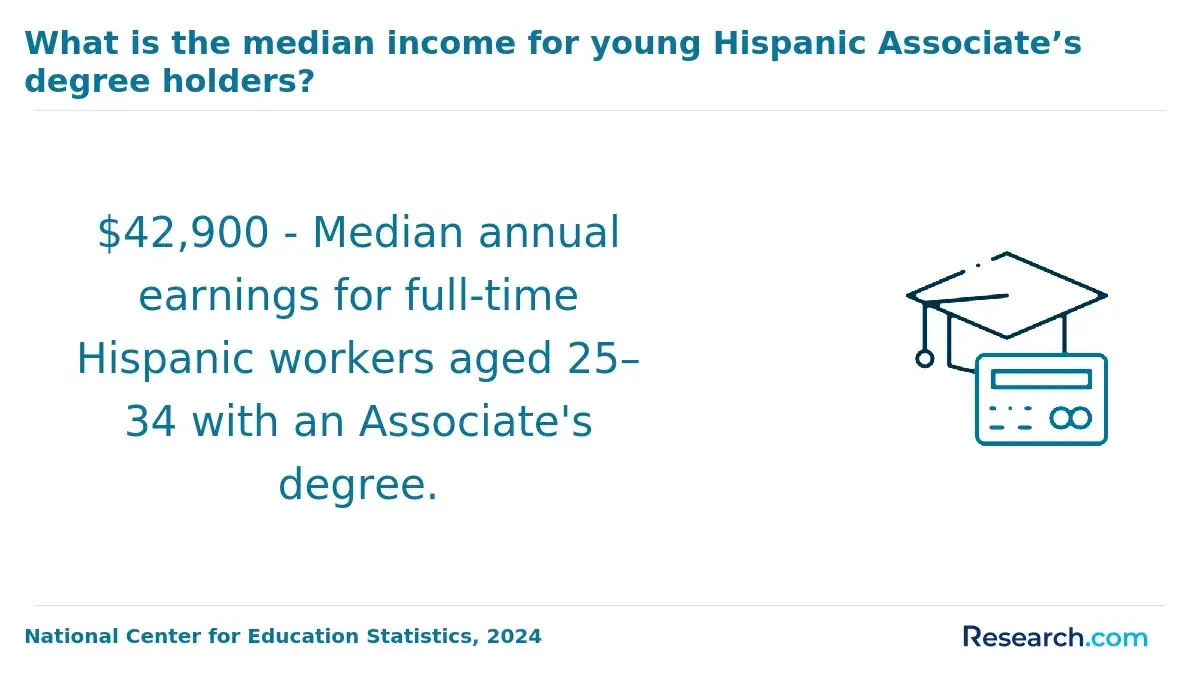
Students in introductory composition courses, including those starting through an associate's degree online, often struggle less with finding sources than with deciding which ones deserve space in the essay. A shorter, stronger source list usually beats a long list of weakly connected articles.
Use a two-pass reading method. First, identify each source's position, evidence type, and credibility. Second, reread only the sources that help you build a line of reasoning. This prevents you from highlighting everything and understanding little.
When evaluating sources, focus on the features that affect whether the evidence can support a serious academic argument.
- Authority: Check who created the source, what expertise they have, and whether the publisher has editorial standards.
- Currency: Use recent evidence when the topic changes quickly, such as technology, labor markets, public health, or education policy.
- Evidence quality: Prefer sources that provide data, documented examples, transparent methods, or verifiable reasoning.
- Purpose: Notice whether the source aims to inform, persuade, sell, entertain, advocate, or provoke.
- Bias and limitation: A biased source is not always useless, but you must understand how its perspective shapes its claims.
The table below gives a practical way to categorize sources after your first read. This helps you avoid treating all sources as equally useful.
| Source role | What it does for your essay | When to use it |
| Background source | Defines the issue or gives context | Use briefly in the introduction or early body paragraph |
| Evidence source | Provides data, examples, or expert support | Use when proving a main reason |
| Counterargument source | Challenges your position or complicates it | Use to show balance and respond thoughtfully |
| Lens source | Offers a concept or framework for interpreting other evidence | Use when your argument needs deeper analysis |
| Weak or limited source | Has bias, thin evidence, or narrow relevance | Use cautiously or leave it out |
What is the standard synthesis essay structure and recommended outline?
The standard synthesis essay structure is simple: introduction, thesis, body paragraphs organized by reasons, counterargument or qualification, and conclusion. The quality comes from how well each paragraph connects sources to your claim.
Students comparing degree paths, including those looking for a cheap bachelor degree online, should pay attention to writing expectations because lower cost does not mean lighter academic work. Online and on-campus courses alike often require evidence-based essays, discussion posts, literature reviews, and research projects.
Before drafting, create an outline that organizes ideas by argument, not by source. The following sequence works for most high school, AP, and college synthesis assignments.
- Read the prompt carefully: Identify the task verb, topic, audience, and any required source minimum.
- Group sources by position: Sort them into support, opposition, qualification, background, or example categories.
- Write a working thesis: Make a claim that can be supported by at least two or three source groups.
- Plan body paragraphs by reason: Each paragraph should prove one part of your argument.
- Choose evidence strategically: Use the source that best supports the paragraph's point, not the longest or easiest quotation.
- Explain the connection: After each quotation or paraphrase, show how the evidence proves your claim.
- Address complexity: Include a counterargument, limitation, or qualification if the prompt invites debate.
- Conclude with significance: Explain what your argument means beyond repeating the thesis.
A practical outline for a synthesis essay might look like this: introduction with context and thesis; body paragraph one establishing the main problem; body paragraph two explaining the strongest reason for your position; body paragraph three using a contrasting source to refine your claim; body paragraph four addressing a counterargument; conclusion explaining the implications for the audience.
Here is a short sample prompt and thesis to show the structure in action. Prompt: "Should high schools require students to complete a media literacy course before graduation?" Sample thesis: "High schools should require a media literacy course because students need structured practice evaluating digital evidence, recognizing algorithmic influence, and communicating responsibly online, although schools should integrate the requirement flexibly to avoid crowding out electives."
How do you integrate quotations, paraphrases, and citations without plagiarizing?
Source integration is where many synthesis essays succeed or fail. A quotation does not speak for itself. A paraphrase still needs a citation. A citation does not replace analysis. Your job is to make the evidence usable for your reader.
Use quotations when the original wording is especially precise, memorable, controversial, or authoritative. Use paraphrase when the idea matters more than the exact wording. Use summary when you need to condense a source's broader position in a sentence or two.
The safest pattern is to introduce the source, present the evidence, cite it, and explain its relevance. This approach keeps your voice in control.
- Introduce: Name the source or context so the reader understands where the evidence comes from.
- Present: Quote, paraphrase, or summarize only the portion that supports your point.
- Cite: Follow the citation style required by your instructor, such as MLA, APA, Chicago, or AP exam source labels.
- Explain: Connect the evidence directly to your thesis and paragraph claim.
- Synthesize: Show how this source confirms, challenges, extends, or complicates another source.
For example, a weak integration might say: "Source C says students use phones too much." A stronger integration would say: "Source C frames phone use as a classroom management problem, but Source E suggests the deeper issue is untrained digital judgment; together, the sources imply that banning devices may reduce distraction without teaching students how to evaluate information."
To avoid plagiarism, keep source notes clearly separated from your own ideas. When taking notes, mark direct quotations with quotation marks immediately, record page numbers or source labels, and write paraphrases without looking at the original sentence structure. If your wording, structure, or idea comes from a source, cite it.
What are common synthesis essay prompts in college and AP-level courses?
Synthesis essay prompts usually focus on debatable public issues, education questions, technology, culture, environmental choices, work, community life, or ethics. The prompt often asks whether a policy should be adopted, whether a trend is beneficial, or how a problem should be addressed.
The College Board's current AP English Language free-response section includes a synthesis essay, a rhetorical analysis essay, and an argument essay. For the synthesis task, students are expected to use evidence from provided sources while developing their own position. The key is not to agree with every source but to use sources as part of a reasoned argument.
Common synthesis prompt categories include the following. Reviewing categories, not memorized topics, helps you prepare for unfamiliar exam questions.
- Education policy: School start times, standardized testing, digital textbooks, homework limits, college admissions, or career-focused coursework.
- Technology and society: Artificial intelligence, screen time, social media regulation, privacy, misinformation, or automation.
- Environment and infrastructure: Public transportation, renewable energy, water use, urban planning, or conservation policy.
- Work and economy: Remote work, gig labor, minimum wage debates, unpaid internships, or credential requirements.
- Community and civic life: Public art, volunteering, voting access, libraries, local journalism, or public health campaigns.
- Culture and identity: Language use, sports, advertising, representation, consumer behavior, or the role of tradition.
A good response narrows the issue. If the prompt asks whether schools should adopt AI tutoring tools, do not write broadly about whether AI is good or bad. A more focused argument might compare supervised academic support, privacy concerns, unequal access, and the risk of overreliance.
What are the most frequent synthesis essay mistakes students make, and how to avoid them?
The most common synthesis essay mistakes come from misunderstanding the task. Students often think more sources automatically mean a stronger essay, but a paper with six shallow references can be weaker than a paper with three well-integrated sources.
Cost-conscious students sometimes make a similar mistake when choosing schools: they focus on one visible factor and ignore fit, support, and requirements. If application costs are a barrier, looking for a university with free application fee can help, but academic expectations such as research writing, citation, and revision still matter when comparing programs.
The table below summarizes frequent synthesis writing problems and the better alternative. Use it as a revision checklist before submitting an essay.
| Mistake | Why it weakens the essay | Better approach |
| Summarizing one source per paragraph | The essay becomes a report instead of an argument | Organize paragraphs by reasons, not sources |
| Using quotations without analysis | The reader must guess why the evidence matters | Explain how each source supports, limits, or complicates the claim |
| Ignoring counterarguments | The argument can seem one-sided or naïve | Address an opposing view and respond with evidence |
| Choosing weak evidence | The claim rests on opinion or thin examples | Use credible, relevant, and specific evidence |
| Overloading the introduction | The essay delays the thesis and loses focus | Give only enough context to frame the issue |
| Copying source language too closely | The essay risks plagiarism even with a citation | Use quotation marks for exact language and paraphrase genuinely |
When revising, ask one question after every paragraph: "What does this paragraph prove?" If the answer is only "it talks about Source B," the paragraph needs a clearer argumentative purpose.
How do you write a synthesis essay under timed exam conditions?
Timed synthesis essays reward preparation, not panic. Under exam conditions, your goal is not to produce a perfect research paper. Your goal is to make a defensible claim, use sources accurately, and explain your reasoning clearly within the time limit.
The best exam writers use a repeatable routine. The following timed-writing sequence helps you move from prompt to draft without wasting minutes rereading every source equally.
- Minutes 1-3: Read the prompt twice and underline the exact decision or question you must answer.
- Minutes 4-10: Skim all sources and mark each one as supporting, opposing, qualifying, or providing background.
- Minutes 11-15: Choose your position and draft a thesis that allows complexity.
- Minutes 16-20: Outline two or three body paragraphs by reason and assign sources to each paragraph.
- Minutes 21-35: Draft body paragraphs with topic sentences, evidence, citation, and analysis.
- Minutes 36-40: Add a counterargument, qualification, or final paragraph that deepens the argument.
- Final minutes: Check that every source reference is accurate and every paragraph connects to the thesis.
If you run short on time, prioritize thesis, paragraph claims, and analysis over a long introduction. A concise opening with a clear thesis usually scores better than a polished introduction followed by underdeveloped evidence.
Timed writing is also good training for compressed college formats. Students in accelerated courses, winter sessions, summer terms, and intensive online programs often need to read, decide, and write quickly without sacrificing academic integrity.
How are synthesis essays graded, and what do rubrics typically look for?
Synthesis essays are usually graded on argument, evidence use, organization, analysis, and language control. Rubrics vary by school and exam, but most reward the same core behaviors: taking a clear position, using sources purposefully, and explaining why the evidence supports the claim.
AP-style rubrics often separate scoring into thesis, evidence and commentary, and sophistication. College rubrics may use categories such as purpose, source integration, citation, organization, grammar, and revision. The labels differ, but the underlying expectations are similar.
The table below translates common rubric language into practical student goals. Use it to understand what graders are looking for beyond surface-level correctness.
| Rubric category | What graders typically look for | What strong writing shows |
| Thesis | A defensible position that responds to the prompt | A specific claim with a clear line of reasoning |
| Evidence | Relevant use of multiple sources | Evidence selected because it advances the argument |
| Commentary | Explanation of how evidence supports the claim | Analysis that connects sources to each other and to the thesis |
| Organization | Logical paragraph sequence and transitions | Paragraphs arranged by ideas, not source order |
| Complexity | Recognition of nuance, limits, or counterarguments | A qualified argument that avoids oversimplification |
| Style and mechanics | Readable prose with appropriate academic tone | Clear sentences, accurate citations, and few distracting errors |
Do not assume a grammar-perfect essay will earn a high score if the argument is thin. Likewise, a few minor sentence-level errors usually matter less than unclear reasoning, missing source connections, or inaccurate citation.
How can practicing synthesis essays support college success and career skills?
Practicing synthesis essays supports more than English class. It builds the ability to compare evidence, make decisions under uncertainty, explain trade-offs, and communicate recommendations. Those skills matter in college majors, workplace reports, grant proposals, policy briefs, business cases, healthcare documentation, and legal or public service writing.
The economic context also matters. College Board's 2024 Trends in College Pricing reported average published tuition and fees of $11,610 for in-state students at public four-year institutions and $43,350 at private nonprofit four-year institutions for the 2024-25 academic year. Because college is a major investment, students benefit from writing skills that help them evaluate programs, scholarships, policies, and career options with evidence instead of assumptions.
Synthesis practice is especially useful for students making complex education choices, including those asking what can a felon go to college for, because the best path often depends on admissions policies, licensing limits, employer expectations, support services, and long-term goals. Evidence-based comparison can prevent costly mismatches.
To turn synthesis practice into a college and career advantage, use it outside essay assignments. These habits can help you make better decisions in academic and professional settings.
- Compare evidence before deciding: Look for agreement, disagreement, missing information, and the strongest available source.
- Write with an audience in mind: Adjust examples and explanations for instructors, employers, clients, or community readers.
- Separate facts from recommendations: Make clear what the evidence shows and what action you believe should follow.
- Document sources carefully: Good citation habits protect your credibility in school and at work.
- Practice concise reasoning: Many professional settings value short, evidence-backed recommendations more than long summaries.
AI tools make synthesis skills more important, not less. Generative AI can summarize text quickly, but students still need to verify accuracy, detect weak reasoning, avoid fabricated citations, follow course policies, and produce original analysis. The safest approach is to use technology for brainstorming or organization only when allowed, while keeping the argument, source judgment, and final wording your own.
Other Things You Should Know About
A synthesis essay is an argument that uses multiple sources to support one main claim. Instead of summarizing each source separately, you connect sources to show patterns, disagreements, and evidence for your position.
Use the number required by your assignment or exam. If no number is given, quality matters more than quantity. A strong essay usually uses enough sources to support the argument, address complexity, and avoid relying on one viewpoint.
It depends on the assignment. Many academic synthesis essays avoid first person and present claims directly, but some instructors allow "I" when reflection is part of the task. When in doubt, ask your instructor or follow the rubric.
Revise the body paragraphs. Make sure each paragraph has a clear claim, uses evidence from sources, and explains how the sources relate to each other. Most weak synthesis essays improve quickly when they stop summarizing and start analyzing connections.
References
- 7 Common Essay Writing Mistakes to Avoid - Rescrito https://rescrito.com/en/common-essay-writing-mistakes-7/
- Synthesis Essay Guide: How to write your AP Lang essay | College Essay Guy https://www.collegeessayguy.com/blog/synthesis-essay-guide
- Buy and Sell study notes by the Top Tier of Students https://www.oxbridgenotes.co.uk/articles/mastering-exam-essays-under-time-pressure-writing-full-essays-in-45-minutes
- Common Errors in Essay Conclusions Explained | Epic Essay https://www.epic-essay.com/blogs/common-errors-in-essay-conclusions-what-university-students-should-avoid/
- Integrating Sources - WAC https://wacclearinghouse.org/repository/writing/guides-old/integrating/
- Decoding the AP Language and Composition Exam Rubric https://www.esmprep.com/articles/decoding-the-ap-language-and-composition-exam-rubric
- Synthesis Essay vs Research Paper: Key Differences https://jenni.ai/blog/synthesis-essay-vs-research-paper
- Synthesis Essays: A Step-by-Step How- To Guide https://writingcenterofprinceton.com/synthesis-essays-a-step-by-step-how-to-guide/
- How to Write a Synthesis Essay https://www.chegg.com/writing/guides/writing-types/write-a-synthesis-essay/
- College Writing https://courses.lumenlearning.com/suny-esc-wm-englishcomposition1/chapter/text-synthesizing-sources/