2027 IS a 2 6 GPA Good: What Students Need to Know for Admissions

Co-Founder and Chief Data Scientist
A 2.6 GPA can feel limiting, but it does not end your college options. The real question is which schools, programs, and strategies fit your record. College Board data for 2024-25 shows published tuition and fees average $4,050 at public two-year colleges and $11,610 for in-state public four-year colleges, so choosing the right pathway also affects cost. This guide is for high school students, transfer students, and adults comparing admissions options, financial aid, online programs, and ways to improve future opportunities.
Key Things You Should Know
- A 2.6 GPA is usually below the competitive range for selective four-year colleges, but it can meet minimum admission standards at many community colleges, open-admission institutions, and less selective regional universities.
- Cost matters when choosing a pathway: College Board's 2024-25 figures show average published tuition and fees of $4,050 at public two-year colleges versus $11,610 for in-state public four-year colleges.
- Students can improve their odds by showing an upward grade trend, earning strong test scores where accepted, completing transferable college credits, and choosing accredited programs with clear transfer and aid policies.
Is a 2.6 GPA considered good for college admissions in the United States?
A 2.6 GPA is generally considered below average for competitive college admissions, but it is not automatically "bad." On a 4.0 scale, a 2.6 usually falls around a C+ to B- average, depending on the school's grading scale. For highly selective colleges, it will usually be a serious disadvantage unless the applicant has unusually strong achievements, a documented hardship, exceptional talent, or a clear upward trend. For less selective colleges, it may still be workable.
The important distinction is between admissibility and competitiveness. A student may meet the minimum GPA for a school but still be less competitive than applicants with stronger grades. Admissions offices often consider GPA alongside course rigor, test scores if submitted, essays, recommendations, extracurriculars, work experience, and context such as family responsibilities or health challenges.
The table below summarizes how a 2.6 GPA is commonly viewed across different types of U.S. colleges. These are general patterns, not universal rules, because every institution sets its own standards.
| College type | How a 2.6 GPA is usually viewed | Most realistic admissions outlook |
| Highly selective universities | Well below typical admitted-student profile | Unlikely without major strengths elsewhere |
| Moderately selective public or private colleges | Below average but sometimes reviewable | Possible if the application shows improvement, rigor, or strong non-GPA factors |
| Less selective regional universities | Often near or above minimum consideration level | Realistic, especially with a strong senior year or test scores |
| Community colleges | Usually not a barrier to admission | Very realistic, though placement tests or remedial courses may apply |
| Some online undergraduate programs | May meet minimum GPA requirements | Realistic if the school is accredited and the student meets documentation requirements |
A practical way to evaluate your position is to compare your GPA with each school's published admitted-student profile, not just its minimum requirement. If a school says admitted students commonly have GPAs closer to 3.2 or higher, a 2.6 applicant should treat that college as a reach unless other parts of the application are strong.
How does a 2.6 GPA affect chances at community colleges and less selective universities?
A 2.6 GPA is often much less limiting at community colleges and less selective universities than it is at selective four-year colleges. Community colleges are commonly designed to provide broad access, which means high school completion or an equivalent credential may matter more than GPA for general admission. However, selective programs inside a community college, such as nursing, radiologic technology, dental hygiene, or competitive allied health tracks, may have higher GPA requirements.
Community college can be especially strategic for students who want to reset their academic record. A student can complete general education courses, build a stronger college GPA, and then apply to transfer. This route can also reduce cost, since the 2024-25 average published tuition and fees at public two-year colleges is $4,050, according to College Board. For students worried about paying for college, starting at a two-year institution may create financial breathing room while preserving the option to earn a bachelor's degree later.
Students who need a faster or more flexible starting point can also compare transfer-friendly online associate degrees, especially if work, transportation, or family responsibilities make campus attendance difficult.
The table below compares common routes for students with a 2.6 GPA. Use it to decide whether your first priority should be admission access, cost control, program selectivity, or transfer momentum.
| Pathway | Best fit | Main advantage | Main caution |
| Community college | Students who want open access, lower cost, or a transfer reset | Strong chance of admission and lower tuition | Competitive majors may require higher grades after enrollment |
| Less selective public university | Students ready for a four-year campus but below selective-school averages | Direct bachelor's degree pathway | May require strong senior-year grades or supplemental materials |
| Online undergraduate program | Working adults, caregivers, military-affiliated learners, or students needing flexibility | Flexible scheduling and sometimes rolling admissions | Accreditation and transfer policies must be checked carefully |
| Gap term with academic repair | Students with weak junior-year grades or missing prerequisites | Time to retake courses or earn college credits | Requires discipline and a clear plan, not just time away |
Less selective universities may use a broader review process. They might admit students with a 2.6 GPA if the transcript shows college-prep courses, improvement in later semesters, or readiness for the intended major. The safest approach is to apply to a balanced list that includes likely-admission schools, realistic targets, and a few reaches.
Can students with a 2.6 GPA get into online degree programs, and what do schools look for?
Yes, students with a 2.6 GPA can often get into online degree programs, but they should not assume all online programs have easy admission or equal value. Reputable online colleges still verify transcripts, evaluate readiness, and apply program-specific standards. Some online bachelor's programs accept students with a minimum GPA around the low-to-mid 2.0 range, while others require a stronger record, prior college credit, or proof of work experience.
Online programs may be especially helpful for students whose GPA was affected by scheduling conflicts, caregiving, illness, employment, or a poor fit with traditional classroom learning. However, online study requires self-management. A lower GPA does not automatically mean a student cannot succeed online, but it does mean the student should look closely at tutoring, advising, course pacing, and academic support.
Admissions teams at reputable online schools commonly review several factors beyond GPA. These factors help them judge whether the student is likely to persist and complete the program.
- Official high school or college transcripts showing completed coursework and GPA trends.
- Proof of graduation, GED, or equivalent credential for undergraduate admission.
- Transfer credits, especially completed general education courses with grades of C or better.
- Placement requirements for math, writing, or reading if the student's transcript shows weak preparation.
- Program-specific prerequisites for fields such as nursing, education, engineering technology, or business analytics.
- Personal statements or admissions conversations explaining academic challenges and readiness to improve.
One mistake to avoid is choosing an online school only because it admits students quickly. Fast admission is not the same as a strong program. Before enrolling, confirm that the institution is accredited by an agency recognized by the U.S. Department of Education or the Council for Higher Education Accreditation, that credits are transferable, and that the program aligns with your career or transfer goal.
What admission strategies can help strengthen an application with a 2.6 GPA?
A 2.6 GPA application is strongest when it gives admissions officers evidence that the number does not tell the whole story. The goal is not to excuse weak grades but to show readiness, direction, and improvement. A student with a 2.6 GPA and a strong senior year may look more promising than a student whose grades are declining.
Use the steps below to strengthen the application in a way that directly addresses academic concerns.
- Show an upward trend by earning stronger grades in the most recent semester or grading period.
- Choose senior-year or final-year courses that are appropriately rigorous without overloading yourself.
- Write a focused personal statement that explains what changed, what you learned, and how you now manage school responsibilities.
- Ask for recommendations from teachers, counselors, supervisors, or mentors who can speak to improvement, reliability, and persistence.
- Submit test scores only when they strengthen the application and the college allows or encourages them.
- Apply early enough to meet priority deadlines for admission, housing, scholarships, and financial aid.
- Contact admissions counselors to ask whether the school offers conditional admission, summer bridge programs, or academic support pathways.
Students who want to show career direction before or during college may also consider short certificate programs that pay well online, but certificates should complement-not replace-an accredited degree plan when the goal requires a college credential.
Common application mistakes include applying only to reach schools, ignoring optional essays, submitting a vague explanation for low grades, and choosing a major with strict admission requirements without a backup plan. A smarter strategy is to build a balanced college list and show that you understand the academic expectations of your intended program.
Which types of majors or programs are most realistic with a 2.6 GPA?
With a 2.6 GPA, the most realistic majors are usually those with broad access at the institution level and no highly competitive secondary admission process. This does not mean students must choose an "easy" major. It means they should understand which programs admit students directly and which require a higher college GPA after prerequisite courses.
The table below shows how realistic different program areas may be for a student entering college with a 2.6 GPA. Requirements vary widely by institution, so always check the specific catalog and admissions page.
| Program area | Realism with a 2.6 GPA | What to check before applying |
| General studies or liberal arts | Often realistic | Transfer pathways, advising quality, and concentration options |
| Business administration | Often realistic at less selective schools | Whether upper-division business admission requires a higher GPA |
| Criminal justice, communications, psychology, or sociology | Often realistic | Internship access, graduate school expectations, and career planning support |
| Information technology or applied computing | Possible, depending on math readiness | Placement requirements, lab support, certifications, and portfolio opportunities |
| Nursing, dental hygiene, radiologic technology, or other allied health | More competitive | Prerequisite GPA, entrance exams, clinical placement rules, and waitlists |
| Engineering, architecture, or highly quantitative STEM majors | Often challenging but not impossible | Math sequence, physics readiness, minimum GPA gates, and alternate entry routes |
Students should choose a major based on both access and fit. A program that admits you but does not match your strengths can lead to more GPA problems. Conversely, a more challenging major may still be realistic if you start with prerequisites, tutoring, and a lighter course load. For high-demand fields, it may be better to begin in a related pathway, such as health sciences before applying to nursing or information systems before moving into advanced computing.
How do standardized test scores and dual-enrollment or AP courses offset a 2.6 GPA?
Standardized test scores, AP courses, dual-enrollment classes, and honors coursework can help offset a 2.6 GPA, but they rarely erase it completely. Their value depends on whether they show college readiness. For example, a strong math score may help an applicant targeting business, technology, or science programs, while a dual-enrollment English course with a solid grade may reassure colleges about writing readiness.
Test-optional admissions have changed the strategy. Many colleges allow applicants to decide whether to submit SAT or ACT scores. If your score is stronger than your GPA suggests, submitting it may help. If the score is also weak, withholding it at test-optional schools may be better. Test-blind schools will not consider scores at all, so transcript improvement and other materials matter more.
Use these guidelines to decide whether academic add-ons strengthen your application.
- Submit standardized test scores when they are clearly at or above the school's typical admitted-student range.
- Highlight dual-enrollment courses where you earned strong grades, because they provide direct evidence of college-level performance.
- Explain AP or honors courses in context if the grades were lower but the course load was rigorous and improved over time.
- Use summer courses or community college classes to repair weak subject areas, especially math and English.
- Avoid overloading on advanced courses if doing so risks another weak semester; a manageable schedule with strong grades is usually more helpful.
The main principle is simple: colleges want evidence that you can handle the next level. A 2.6 GPA paired with recent A and B grades in core classes looks different from a 2.6 GPA with continuing academic decline.
What are the implications of a 2.6 GPA for financial aid, scholarships, and grants?
A 2.6 GPA can affect merit scholarships more than federal need-based aid. Many institutional merit awards require a minimum GPA, and competitive scholarships often favor students with stronger grades. However, federal grants and loans are generally based on financial need, enrollment status, citizenship or eligible noncitizenship, and satisfactory academic progress after enrollment, not just high school GPA.
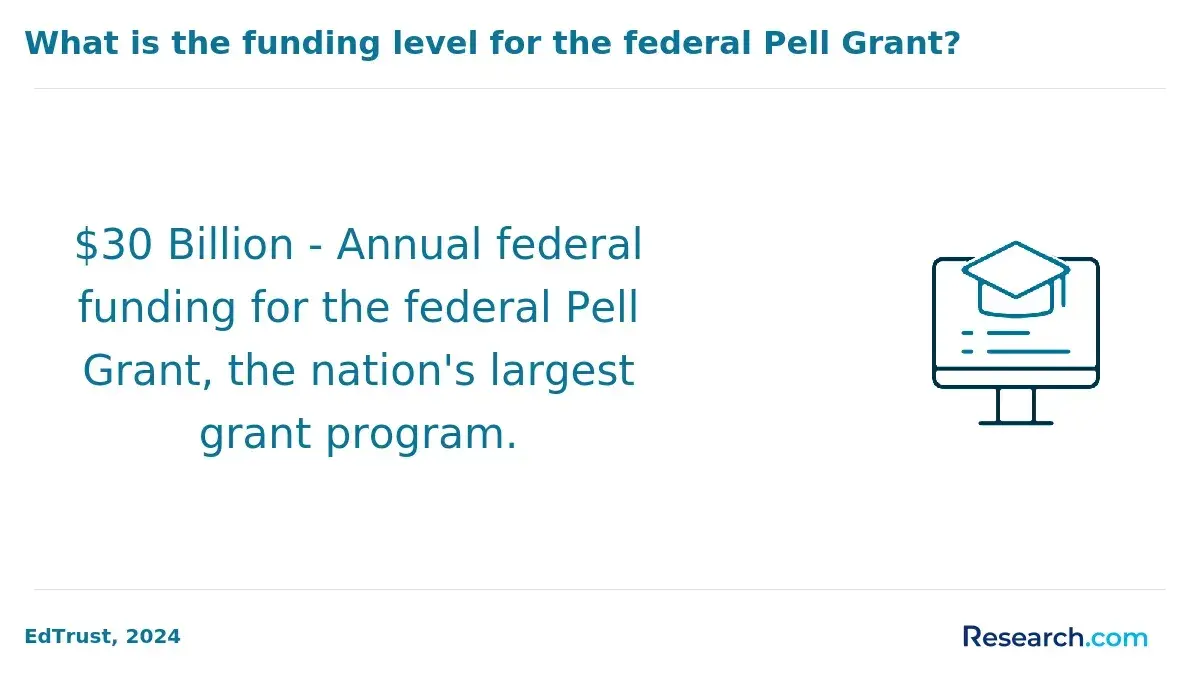
For the 2024-25 award year, the maximum Federal Pell Grant is $7,395. That figure matters because students with a 2.6 GPA may still qualify for substantial need-based aid if their financial circumstances meet eligibility rules. The practical takeaway is that students should complete the FAFSA even if they assume their grades are too low for aid.
Cost planning should include the full pathway, not just the first semester. Students who later aim for graduate school should compare affordable options early, including pathways such as the cheapest online master's degree options when graduate credentials are necessary for the intended career.
The table below separates common aid types by how much GPA usually matters at the entry point. Policies vary, so students should confirm details with each school's financial aid office.
| Aid type | How a 2.6 GPA may affect eligibility | What to do next |
| Federal Pell Grant | High school GPA is usually not the deciding factor | Submit the FAFSA and monitor satisfactory academic progress after enrollment |
| Federal student loans | GPA is generally less important than enrollment and eligibility status | Borrow only what is needed and compare total program cost |
| Institutional merit scholarships | May be limited if GPA minimums are above 2.6 | Ask about awards for improvement, leadership, service, or first-generation students |
| State grants | Rules vary by state and program | Check state deadlines and GPA renewal requirements |
| Private scholarships | Some require higher GPAs, while others emphasize essays, identity, service, or career goals | Search for scholarships with non-GPA criteria and submit strong essays |
A common mistake is ignoring scholarships because of one GPA number. Students with a 2.6 GPA should look for awards based on financial need, community service, intended major, employer partnerships, military affiliation, local organizations, or personal background.
How can students raise a 2.6 GPA and improve their transfer or future graduate school prospects?
Raising a 2.6 GPA takes planning because the more credits a student has completed, the harder it becomes to move the cumulative number quickly. Still, even small improvements can matter. Admissions committees and transfer evaluators often pay close attention to the most recent academic work, especially if it shows better habits and stronger performance in core courses.
The most effective GPA-repair plan focuses on courses that carry the most weight and are most relevant to the next academic goal. Students should avoid random course-taking and instead build a sequence that supports transfer, major admission, or future graduate study.
- Meet with an academic advisor to calculate what grades are needed to reach specific GPA targets, such as 2.8, 3.0, or a program minimum.
- Retake failed or very low-grade courses if the school's repeat policy allows grade replacement or recalculation.
- Prioritize core classes required for transfer or the intended major, because strong grades in these courses carry extra meaning.
- Use tutoring, writing centers, office hours, and study groups before problems become emergencies.
- Take a manageable credit load; earning A and B grades in fewer courses is usually better than overloading and repeating past mistakes.
- Track deadlines for withdrawal, pass/fail options, and academic forgiveness policies so you understand the consequences before making changes.
Students thinking ahead to graduate school should know that many master's programs prefer applicants with stronger undergraduate records, often around a 3.0 or higher depending on the field. If your early GPA is weak, later upper-division grades, relevant work experience, and strong prerequisite performance can help. Flexible formats such as a competency-based master's may be worth exploring later, but only after confirming accreditation, admission standards, employer recognition, and whether the format fits your learning style.
The main goal is to create a documented recovery story. "I had a 2.6 GPA" is less persuasive than "I had a 2.6 GPA, then earned mostly A and B grades in transferable courses while using tutoring and managing a realistic course load."
Does a 2.6 GPA limit long-term career options, salary potential, or job outlook?
A 2.6 GPA can affect early admissions options, internships, scholarships, and entry into competitive majors, but it does not permanently define career potential. Employers usually care most about skills, experience, credentials, reliability, communication, and job performance after a student has gained work experience. GPA may matter more for first jobs, internships, graduate school, and highly competitive fields such as consulting, finance, engineering, and some healthcare pathways.
Education still has a strong relationship with labor-market outcomes. The U.S. Bureau of Labor Statistics reported 2024 median weekly earnings of $1,543 for workers with a bachelor's degree, compared with $930 for workers with only a high school diploma. This does not mean any degree automatically produces a high salary, but it shows why completing a credible credential can improve long-term options.
Students with a 2.6 GPA can protect career prospects by building evidence beyond the transcript. That evidence may include internships, portfolios, licenses, certifications, apprenticeships, work experience, leadership roles, and strong references. In fields influenced by AI and automation, employers increasingly value practical skills such as data literacy, digital communication, problem-solving, and the ability to learn new tools.
Long-term academic goals are still possible, but they may require a staged approach. A student may begin at community college, transfer to a bachelor's program, build a stronger upper-division GPA, complete a master's degree if needed, and eventually consider advanced routes such as PhD programs if research, university teaching, or specialized leadership becomes the goal.
Career outcomes vary by major, region, industry, school reputation, work experience, and economic conditions. The best response to a 2.6 GPA is not panic; it is building a stronger record of performance in the settings that matter next.
How should students with a 2.6 GPA evaluate accredited, reputable schools and programs?
Students with a 2.6 GPA should be especially careful when evaluating schools, because some institutions market heavily to applicants who feel they have limited choices. A school being willing to admit you is not enough. The program should be accredited, affordable, transparent, and aligned with your intended outcome.
Before applying or enrolling, use the following checklist to evaluate whether a school is reputable and whether it fits your academic situation.
- Confirm institutional accreditation through an agency recognized by the U.S. Department of Education or the Council for Higher Education Accreditation.
- Check programmatic accreditation when required for fields such as nursing, education, counseling, social work, engineering, or allied health.
- Ask whether credits transfer to public universities or partner institutions, especially if you plan to start at a community college.
- Review total cost, including tuition, fees, books, technology, transportation, housing, and required clinical or lab expenses.
- Ask about academic support, tutoring, advising availability, career services, and early-alert systems for students at risk of failing.
- Confirm whether your intended major has a separate admission process after general university admission.
- Review graduation, retention, loan repayment, and career outcomes when the school publishes them.
Red flags include pressure to enroll immediately, vague accreditation claims, unclear tuition and fee pages, promises of guaranteed jobs or salaries, poor transfer-credit transparency, and admissions representatives who avoid answering direct questions. A reputable school should help you understand both your opportunity and your risk.
The best-fit school is not always the most famous one. For a student with a 2.6 GPA, the strongest choice is often the institution that offers realistic admission, strong support, manageable cost, clear transfer or career pathways, and a structure that helps the student perform better than before.
Other Things You Should Know About
Yes, but your options will likely be strongest at less selective four-year colleges, regional public universities, and schools with holistic or conditional admission. Highly selective colleges will usually be difficult unless other parts of your application are unusually strong.
Community college can be a smart choice if you want lower costs, a stronger transfer GPA, or time to improve academically. It is especially useful if your target bachelor's program admits transfer students based mainly on college-level coursework.
Some scholarships require a higher GPA, but not all do. Look for awards based on financial need, essays, community service, leadership, intended major, local organizations, or personal background, and complete the FAFSA to check federal and state aid eligibility.
Yes, but how quickly depends on how many credits you have already completed. The fewer completed credits you have, the easier it is to raise the cumulative GPA. Retaking low-grade courses, earning A and B grades, and taking a manageable course load can help.
References
- Does GPA Determine Post-Grad Success? - Madonna https://absn.madonna.edu/gpa-grad-sucess/
- Complete List of College Majors & Degrees | How to Choose https://www.act.org/content/act/en/students-and-parents/college-planning-resources/choosing-a-college/how-to-choose-a-major.html
- Do Community Colleges Care About My GPA? (Requirements) - Unmudl https://unmudl.com/blog/community-college-gpa
- 7 Things You Can Do Now to Strengthen Your College Application| Suwanee Magazine https://suwaneemagazine.com/7-things-you-can-do-now-to-strengthen-your-college-application/
- Can You Get Into Online College With a Low GPA? 2026 Guide https://www.collegetransitions.com/blog/can-you-get-into-online-college-with-a-low-gpa/
- low GPA want to apply to graduate school(online program?) https://talk.collegeconfidential.com/t/low-gpa-want-to-apply-to-graduate-school-online-program/1948010
- How does a college degree improve graduates’ employment and earnings potential? - APLU https://www.aplu.org/our-work/4-policy-and-advocacy/publicuvalues/employment-earnings/
- Top 2.0 GPA Scholarships to Apply for in December 2025 https://bold.org/scholarships/by-type/merit-based/2.0-gpa-scholarships
- Can I Get Into College With a Low GPA? https://www.onlineu.com/resources/college-planning/can-i-get-into-college-with-a-low-gpa
- Colleges That Accept Low GPA Scores | Find Options https://www.educationconnection.com/resources/colleges-that-accept-low-gpa/