2027 Top Colleges with Rolling Admissions: Complete Guide for College Applicants

Co-Founder and Chief Data Scientist
Rolling admissions can help applicants who missed early deadlines, need faster decisions, or want more college options. Common App reported that first-year applicant volume for the 2023-24 cycle was 7% higher than the prior cycle as of March 1, which means timing and application strategy matter. This guide is for high school seniors, transfer students, adult learners, and online students comparing U. S. colleges with rolling admissions. You will learn how rolling admissions work, which schools are known for them, what they cost, and how to apply strategically.
Key Things You Should Know
- Rolling admissions schools review applications as they arrive, but earlier applicants often have better access to seats, scholarships, housing, and popular majors.
- Application volume remains high; Common App reported a 7% year-over-year increase in first-year applicants for the 2023-24 cycle as of March 1, making early submission useful even when no fixed deadline exists.
- Cost differences are large: College Board's 2024-25 averages show published tuition and fees of $11,610 for in-state public four-year colleges and $43,350 for private nonprofit four-year colleges.
What are rolling admissions and how do they work at U.S. colleges?
Rolling admissions is an application policy in which a college reviews completed applications continuously instead of waiting for one regular decision deadline. In most cases, the admissions office evaluates files in the order they become complete, then sends decisions within a few weeks or months depending on volume, program requirements, and whether the applicant is first-year, transfer, international, or graduate.
The key phrase is "completed application." A student may submit the application form early, but review usually does not begin until the school receives required transcripts, test scores if applicable, essays, recommendations, portfolio materials, or program-specific documents. Some colleges also require a separate financial aid form, scholarship application, or honors college application.
Rolling admissions does not always mean unlimited time. Many schools keep accepting applications until a final date, until a class fills, or until specific programs close. Nursing, engineering, computer science, education, and selective business programs may fill earlier than general admission because they have limited clinical placements, labs, faculty capacity, or cohort sizes.
Here is how rolling admissions usually differs from other admission plans. The comparison matters because applicants often confuse "rolling" with "easy," when the real advantage is timing and flexibility.
| Admission plan | How decisions are released | Best fit for applicants | Main caution |
| Rolling admissions | Applications are reviewed as they become complete | Students who want flexible timing, faster decisions, or additional options | Seats, aid, housing, and selective majors can run out before the final date |
| Early action | Applications are due early, and decisions arrive earlier than regular decision | Students with strong applications ready in the fall | Missing the early date may reduce access to priority scholarships or honors review |
| Regular decision | Applications are reviewed after a fixed deadline | Students who need more time to compare colleges and finish materials | Applicants wait longer and compete in a single review pool |
| Open admission | Most applicants with a high school diploma or equivalent are admitted | Community college, workforce, and access-focused students | Specific programs may still require prerequisites, placement tests, or limited seats |
A practical way to think about rolling admissions is this: the deadline may be flexible, but the opportunity is not. Applying early gives the admissions office more time to evaluate you and gives you more time to compare financial aid, transfer credit, housing, and program fit.
Which U.S. colleges are best known for rolling admissions policies?
The best-known U.S. colleges with rolling admissions tend to be large public universities, regional universities, online universities, and career-focused institutions that review applications across a long cycle. Policies change, so applicants should verify the current admissions page for each school before applying, especially for selective majors and scholarship deadlines.
The schools below are commonly associated with rolling admissions, priority rolling review, or rolling review after an early priority date. They are not ranked by prestige; instead, they are grouped by practical fit so applicants can compare options more clearly.
| College or university | Common applicant fit | Rolling admissions note | Decision factor to check |
| Arizona State University | Students seeking a large public university with many campus and online options | Known for broad access and rolling-style review for many undergraduate applicants | Major-specific requirements, scholarship priority dates, and online program format |
| Pennsylvania State University | Applicants interested in a major public research university with multiple campuses | Uses a rolling admissions process after priority filing periods for many applicants | Campus choice, major availability, and early action or priority review dates |
| University of Pittsburgh | Students who want an urban research university and are ready to apply early | Frequently cited for rolling admissions, with some programs becoming competitive early | Program capacity, test policy, and scholarship timing |
| Michigan State University | Applicants seeking a large Big Ten public university with many majors | Often uses rolling review after priority deadlines | Early action deadlines, competitive majors, and housing timelines |
| University of Alabama | Students comparing merit scholarships, honors options, and a large campus experience | Known for rolling admissions and scholarship consideration tied to timing | Merit aid criteria, honors college requirements, and final enrollment dates |
| Indiana University Bloomington | Students considering business, arts and sciences, education, or public affairs pathways | Uses priority dates, with later review often depending on space | Direct admission rules for selective schools and scholarship deadlines |
| University of Iowa | Students seeking a public university with many undergraduate majors and transfer pathways | Reviews many applications on a rolling basis | Automatic admission criteria, major requirements, and residency cost |
| University of Minnesota Twin Cities | Applicants interested in a large public research university in the Midwest | Uses deadlines and space-available review for some applicants | College-specific competitiveness and priority deadlines |
| Rutgers University | Students comparing public research options in New Jersey | Has priority deadlines and later review depending on program and space | Campus selection, school-specific review, and financial aid timing |
| Western Governors University | Adult learners seeking online, competency-based programs | Offers frequent start dates rather than a traditional fall-only admissions cycle | Program accreditation, self-paced fit, and employer alignment |
A "top" rolling admissions college is not simply the most famous one. The better choice is the college that still has space in your intended major, offers a realistic net price, holds recognized accreditation, supports your preferred format, and gives you a credible path to graduation.
How do rolling admissions deadlines affect your chances of acceptance?
Rolling admissions can improve flexibility, but it does not remove competition. Your chances are usually strongest when your application arrives before priority scholarship dates, before limited programs fill, and before the admissions office shifts from building a class to filling remaining spaces.
Applicants should treat rolling admissions as a sequence, not a single deadline. The following steps help preserve choices while avoiding last-minute pressure.
- Submit the strongest ready application early instead of waiting for perfect timing that may never come.
- Check whether your intended major has a separate deadline, prerequisite, audition, portfolio, or capacity limit.
- File the FAFSA and any institutional aid forms as soon as possible because admissions and financial aid timelines are not always the same.
- Ask whether scholarship, honors college, housing, orientation, and course registration dates are earlier than the final application date.
- Keep at least one rolling admissions option on your list until you have an affordable admission offer in hand.
The 2024-25 FAFSA rollout showed why timing matters beyond admissions. Many families experienced delayed financial aid information, which made comparison shopping harder. For rolling admissions applicants, an early acceptance can be useful, but it should not become a rushed enrollment decision before the full aid package is available.
Common mistakes include assuming rolling admissions means automatic admission, applying late to a capacity-limited major, ignoring scholarship deadlines, and submitting incomplete materials. A better approach is to build a calendar with four separate dates: application submission, file completion, financial aid priority, and enrollment deposit.
What admission requirements do colleges with rolling admissions typically expect?
Colleges with rolling admissions usually expect the same core materials as colleges with fixed deadlines. The difference is not the standard; it is the review timeline. A strong rolling admissions application still needs to show academic readiness, program fit, and the ability to succeed in college-level coursework.
Most undergraduate applicants should prepare the following materials before submitting, because missing items can delay review and weaken the timing advantage of rolling admissions.
- Official high school transcript or college transcript for transfer applicants
- Application form with accurate personal, academic, and residency information
- Application fee or approved fee waiver
- Standardized test scores if required or if optional scores strengthen the application
- Personal statement, short answers, or major-specific essays when required
- Letters of recommendation for selective programs, honors colleges, or scholarships when requested
- Portfolio, audition, prerequisite, or certification documentation for specialized programs
Test-optional policies remain common, but "optional" does not always mean irrelevant. Applicants with strong scores may still submit them if the college confirms that scores can help with admission, merit aid, or course placement. Applicants without scores should focus on transcript strength, senior-year course rigor, essays, recommendations, and evidence of sustained involvement.
Adult learners and career changers should also compare whether a full degree is necessary for their goals. Some students use easy certifications to get online as a faster skills-based step while they evaluate degree programs, especially when they need a short-term credential for promotion or entry-level employment.
For transfer students, the most important requirement is often not admission itself but credit acceptance. Ask for a preliminary transfer evaluation before enrolling, and confirm whether credits apply to your major, general education, electives, or only total credit count. Losing credits can make a flexible rolling admissions offer much more expensive than it first appears.
How do online and campus-based programs differ under rolling admissions?
Online and campus-based programs can both use rolling admissions, but the student experience is different. Online programs often have multiple start dates, shorter terms, asynchronous coursework, and admissions cycles that run year-round. Campus programs are more likely to follow fall and spring starts, housing calendars, orientation sessions, and course sequencing tied to the academic year.
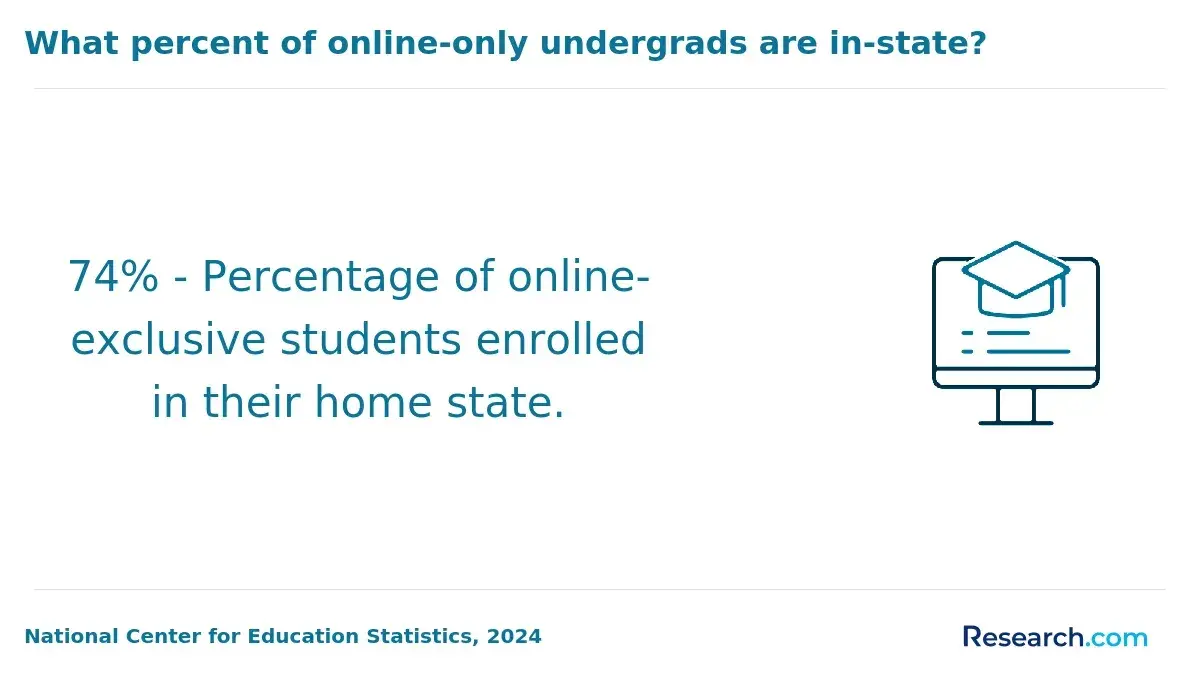
NCES data published in 2024 showed that distance education remained a major part of U.S. higher education after the pandemic-era shift. For applicants, that means online rolling admissions is no longer a niche option, but it still requires careful screening for quality, support, and program outcomes.
The table below summarizes the main differences applicants should compare before choosing a format. The best option depends on schedule, learning style, program requirements, and career goals.
| Factor | Online rolling admissions | Campus-based rolling admissions |
| Start dates | Often monthly, every term, or several times per year | Usually fall, spring, or summer depending on the institution |
| Best for | Working adults, military students, parents, remote learners, and students needing flexibility | Students who want residence life, labs, campus activities, athletics, or face-to-face advising |
| Academic pacing | May be accelerated, asynchronous, or competency-based | Usually follows semester or quarter course schedules |
| Program limits | Clinical, student teaching, lab, or licensure placements may require local approval | Space may be limited by classrooms, housing, labs, and cohort size |
| Student support | Advising, tutoring, and library services may be virtual | Support may include in-person tutoring, faculty office hours, and campus centers |
Online programs can be a strong fit when flexibility matters more than campus life. Campus programs may be better when the major depends on labs, studio work, clinical placements, research access, or local internships. Applicants should avoid choosing online solely because it seems faster; the right question is whether the format supports completion and the career outcome you want.
Are rolling admissions colleges accredited, and why does accreditation matter?
Many rolling admissions colleges are fully accredited, but applicants should never assume accreditation based on name recognition, online format, or marketing language. Accreditation is a quality review process that helps determine whether a college meets recognized academic and administrative standards. It can affect federal financial aid eligibility, transfer credit, graduate school admission, licensure, and employer recognition.
For U.S. colleges, institutional accreditation should come from an accreditor recognized by the U.S. Department of Education or the Council for Higher Education Accreditation. Programmatic accreditation may also matter in fields such as nursing, education, social work, business, engineering, counseling, and allied health.
Use this checklist before applying or depositing. It is especially important for online, accelerated, career-focused, and out-of-state programs.
- Confirm the college's institutional accreditor through an official federal or accreditor database, not only the school's homepage.
- Check whether your specific program has programmatic accreditation if your field commonly requires it.
- Ask whether the program meets licensure or certification requirements in your state.
- Verify that credits are likely to transfer if you plan to move from a community college to a university or from one university to another.
- Be cautious if a school pressures you to enroll immediately, avoids accreditation questions, or promises employment outcomes that sound guaranteed.
Institution type can matter, but it should not be oversimplified. Public, private nonprofit, and private for-profit colleges can all have rolling admissions, and private does not mean for-profit. Students comparing institution models can start with lists of accredited non profit universities in USA, then verify each school's program fit, costs, transfer policies, and student outcomes.
What tuition, fees, and financial aid options exist at rolling admissions schools?
Tuition at rolling admissions colleges varies widely because the policy is used by community colleges, public universities, private nonprofit universities, online institutions, and career-focused schools. College Board's 2024-25 averages provide a useful baseline for comparing published tuition and fees before grants, scholarships, housing, books, and personal expenses.
- Public two-year in-district tuition and fees averaged $4,050 in 2024-25.
- Public four-year in-state tuition and fees averaged $11,610 in 2024-25.
- Public four-year out-of-state tuition and fees averaged $30,780 in 2024-25.
- Private nonprofit four-year tuition and fees averaged $43,350 in 2024-25.
Published price is not the same as net price. The more useful number is what you pay after grants and scholarships, plus the amount you may need to borrow. For federal aid, the maximum Pell Grant for the 2024-25 award year is $7,395, but eligibility depends on financial need, enrollment intensity, cost of attendance, and federal rules.
Applicants comparing affordability should look beyond tuition alone. The table below shows major cost factors that can change the real price of a rolling admissions offer.
| Cost factor | Why it matters | Question to ask |
| Net price | Shows estimated cost after grants and scholarships | What is my net price after all gift aid? |
| Fees | Online, technology, lab, clinical, and course fees can add up | Which fees are mandatory for my program? |
| Transfer credits | Accepted credits can shorten time to degree | How many credits apply to my major requirements? |
| Housing and transportation | Campus attendance can increase total cost | Can I commute, live off campus, or choose an online section? |
| Scholarship timing | Late applicants may miss priority awards | What scholarship deadlines are earlier than admission deadlines? |
| Loan terms | Borrowed funds must be repaid with interest | How much would I borrow over the full program? |
Students who need a lower-cost online path should compare accredited options carefully, including whether the school accepts FAFSA and whether credits transfer. A practical starting point is a list of the cheapest online college options that accept federal aid, followed by a school-by-school net price review.
How can applicants strategically plan applications to multiple rolling admissions colleges?
Applying to multiple rolling admissions colleges works best when you organize schools by timing, affordability, and academic fit. Because decisions may arrive at different times, the risk is not just rejection; it is accepting too quickly, missing a better aid offer, or applying late to the program that fits you best.
Use this planning sequence to manage applications without losing track of deadlines and documents.
- Build a balanced list with at least one likely admission option, one strong academic fit, and one affordable backup that still offers your intended major.
- Sort schools by priority scholarship date rather than final application date.
- Request transcripts and recommendations early because third-party delays can keep your file incomplete.
- Submit applications in waves, starting with schools that offer faster decisions or limited-capacity majors.
- Create a comparison sheet for admission status, net price, housing, transfer credit, major availability, and deposit deadline.
- Wait for full financial aid details before making a deposit unless the school clearly explains the refund and extension policy.
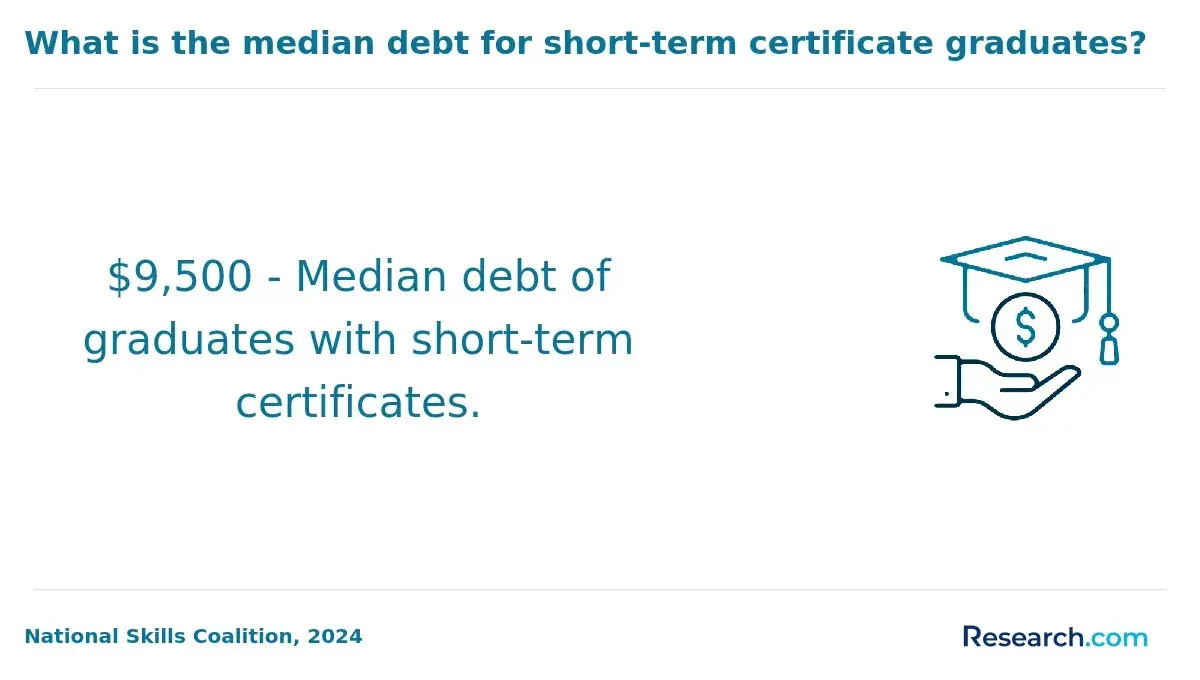
Students should also think in terms of pathways, not just admissions offers. If the bachelor's route is too expensive or slow, a community college transfer plan, employer tuition benefit, certificate, apprenticeship, or part-time online program may be a better first step. Applicants exploring shorter credentials can compare degree programs with the best certifications for jobs to see whether a credential could support near-term employment while they continue planning a degree.
Red flags include schools that cannot explain transfer credit rules, push enrollment before aid is finalized, avoid questions about accreditation, or advertise unrealistic salary outcomes. A strong admissions office should be able to explain deadlines, costs, credit policies, student support, and program outcomes in plain language.
What degree and career pathways are common at colleges with rolling admissions?
Rolling admissions colleges cover nearly every degree level and career field. The most common pathways include associate degrees, bachelor's degrees, degree-completion programs, certificates, master's programs, and professional preparation programs. The best choice depends on how much education your target role requires and whether licensure, certification, or graduate study is part of the path.
The table below connects common degree pathways with applicant goals. It helps clarify when a shorter or longer program makes sense.
| Pathway | Typical student goal | Common fields | Decision point |
| Certificate | Gain a focused skill quickly | IT support, medical billing, project management, bookkeeping, data analytics | Best when employers value the credential and a full degree is not required |
| Associate degree | Start college affordably or prepare for transfer | Business, liberal arts, nursing prerequisites, criminal justice, allied health | Best when credits transfer cleanly into a bachelor's program |
| Bachelor's degree | Qualify for broad professional roles or graduate study | Business, psychology, education, computer science, biology, communications | Best when the degree aligns with a specific career or graduate pathway |
| Degree-completion program | Finish a bachelor's degree with prior credits | Organizational leadership, healthcare administration, general studies, management | Best when the school accepts substantial transfer credit |
| Master's degree | Advance, specialize, or meet professional requirements | Education, counseling, public health, business, data science, social work | Best when the role rewards graduate training or requires it for licensure |
Popular rolling-admission fields include business, healthcare administration, nursing pathways, psychology, computer science, education, criminal justice, communications, and information technology. Some of these lead directly to entry-level roles, while others are stepping stones. For example, psychology may require graduate study for counseling or clinical practice, and education programs must meet state licensure rules.
Applicants who want a manageable path to degree completion should compare major requirements, course difficulty, transfer flexibility, and career alignment rather than choosing a program only because it sounds simple. If flexibility is the top priority, reviewing easy bachelor degrees can help students identify programs that may fit their strengths, but the final choice should still connect to a realistic academic and career goal.
How do graduates from rolling admissions colleges fare in salary and job outlook?
Graduates from colleges with rolling admissions do not have a separate labor market category. Their outcomes depend on the school's accreditation, program quality, field of study, internships, location, prior experience, licensing rules, and the student's ability to build marketable skills. A rolling admissions policy can improve access, but it does not by itself determine salary or job placement.
BLS May 2024 wage data show why program choice matters more than admissions format. The median annual wage for all U.S. workers was $49,500, while many degree-linked occupations had higher medians, though requirements and competition vary by field.
| Career area | Example role | Typical education context | BLS May 2024 median annual wage |
| Technology | Software developer | Bachelor's degree is common, with strong portfolio and technical skills | $133,080 |
| Healthcare | Registered nurse | Associate or bachelor's pathway plus state licensure | $93,600 |
| Business | Accountant or auditor | Bachelor's degree is common; CPA requirements vary by state | $81,680 |
| Management | Medical and health services manager | Bachelor's degree is common; graduate education may help advancement | $117,960 |
| Education | Elementary school teacher | Bachelor's degree and state licensure are typically required | $62,340 |
These figures should be used as context, not promises. New graduates may start below the median, while experienced professionals in high-demand regions or specialized roles may earn more. The smarter way to evaluate return on investment is to compare total program cost, time to completion, debt, transfer credit, internship access, licensing requirements, and likely entry-level opportunities in your region.
Current labor market trends also favor applicants who combine degrees with practical skills. Employers increasingly look for data literacy, communication, AI tool awareness, cybersecurity basics, project coordination, and industry-specific software experience.
Rolling admissions can help students start sooner, but career outcomes improve when students use the program to build experience through internships, projects, clinical placements, student teaching, research, or employer partnerships.
Other Things You Should Know About
Not necessarily. Rolling admissions affects timing, not academic standards. Some schools are accessible, while others become competitive when seats, scholarships, or selective majors fill early.
Apply as early as you can submit a complete, strong application. Ideally, apply before priority scholarship, honors, housing, and major-specific deadlines rather than relying on the final application date.
Yes, if the school participates in federal aid and you meet eligibility rules. However, some institutional scholarships and grants have priority deadlines, so late applicants may have fewer funding options.
Many do. Online rolling admissions programs may offer multiple start dates, but applicants should verify accreditation, transfer credit rules, licensure alignment, student support, and total cost before enrolling.
References
- What is Rolling Admission in College? https://collegewise.com/blog/what-is-rolling-admission
- Ultimate List of Colleges with Rolling Admissions in U.S. https://www.ivywise.com/blog/top-colleges-rolling-admissions-us/
- Rolling Admissions Colleges: Pros, Cons and Top Schools - East Coast Scholars https://www.eastcoastscholars.com/rolling-admissions-colleges-pros-cons-and-top-schools/
- Colleges with Rolling Admissions | What is Rolling Admission? https://www.collegeadvisor.com/resources/colleges-with-rolling-admissions/
- Career Outlook for College Graduates in 2025 https://www.fastweb.com/student-news/articles/career-outlook-recent-college-graduates
- Rolling Admission and Why It Matters - OnToCollege https://www.ontocollege.com/rolling-admission/
- Rolling Admissions Definition & Benefits https://www.act.org/content/act/en/students-and-parents/college-planning-resources/applying-to-college/rolling-admissions.html
- Rolling Admissions Explained: How It Works and When You Should Apply https://riseglobaleducation.com/blogs/rolling-admissions-explained-how-it-works-and-when-you-should-apply
- What is Rolling Admission? https://www.princetonreview.com/college-advice/rolling-admission
- What Does Rolling Admissions Mean? https://www.c2educate.com/what-does-rolling-admissions-mean/