2027 How to Transfer Colleges: Complete Guide for College Applicants

Co-Founder and Chief Data Scientist
Transferring colleges can save money, improve academic fit, or open access to a stronger major, but it can also cost time if credits do not apply. The decision matters because transfer activity is rising again: the National Student Clearinghouse Research Center reported that fall transfer enrollment increased 4.4% in 2024.
This guide is for community college students, four-year students, online learners, and returning adults. You will learn how the transfer process works, how credits are reviewed, what schools look for, and how to compare cost, quality, and graduation timelines before you apply.
Key Things You Should Know
- Transfer success depends less on admission alone and more on whether your completed credits apply to the new degree; ask for a degree audit before committing.
- Cost differences can be significant: College Board's 2024 pricing data lists average published tuition and fees at $4,050 for public two-year colleges and $11,610 for in-state public four-year colleges for 2024-25.
- Most colleges require official transcripts, a minimum GPA, and good academic standing, but competitive programs may review prerequisites, major capacity, essays, conduct history, and completed college-level credits.
How does the college transfer process work from start to finish?
The college transfer process is the set of steps you follow to move from one accredited college to another while carrying over eligible academic credit. It usually starts with researching schools and ends with enrolling, registering for classes, and confirming how your prior coursework applies to your new degree.
For most students, the biggest mistake is treating transfer admission as the finish line. A transfer offer means the school is willing to admit you; it does not automatically mean every course will count toward your major, general education requirements, or graduation total.
Use this sequence to manage the process from start to finish without missing the decisions that affect cost and time to graduation:
- Clarify your reason for transferring, such as lower cost, a stronger major, location, online flexibility, campus culture, athletic eligibility, or better career outcomes.
- Build a shortlist of schools that offer your intended major, accept transfer students into that major, and publish clear transfer credit policies.
- Check accreditation, state authorization for online programs, major-specific approval, and any licensure requirements tied to your career goal.
- Request unofficial transfer credit guidance before applying if the school offers it, especially if you have many credits or specialized courses.
- Prepare official transcripts from every college attended, even if you withdrew, failed courses, or earned only a few credits.
- Complete the transfer application, essay, recommendations if required, and any supplemental application for selective majors such as nursing, engineering, business, education, or computer science.
- File or update the FAFSA and compare financial aid packages only after reviewing net cost, transfer scholarships, and remaining eligibility.
- Review the official credit evaluation and degree audit before paying an enrollment deposit whenever possible.
- Meet with an academic advisor, register for courses, and confirm your graduation plan for the first two terms at the new college.
A clean transfer plan should answer three questions: Can you get in, can you afford it, and can you graduate on a reasonable timeline? If one of those answers is unclear, pause before committing and ask the admissions or registrar's office for written clarification.
What credits will transfer to a new college and how are they evaluated?
Transfer credits are evaluated by the receiving college, not by the school where you originally earned them. A course may transfer as a direct equivalent, count as an elective, satisfy a general education category, or be rejected if it does not meet the new institution's standards.
Colleges commonly review accreditation, course level, grade earned, syllabus content, credit hours, age of the coursework, and whether the course fits the new degree. Regionally accredited college courses with grades of C or higher are often more portable, but policies vary, especially for technical, clinical, studio, lab, and upper-division major courses.
The table below summarizes how common types of prior learning are usually treated. Use it to identify which credits need extra documentation before you apply or enroll.
| Credit type | How colleges often evaluate it | What to verify before enrolling |
| General education courses | Often transferable if the content matches broad requirements such as writing, math, social science, humanities, or natural science. | Whether the course satisfies a required category or only counts as elective credit. |
| Major prerequisites | Reviewed more strictly because sequencing and content must match the program curriculum. | Whether the course clears a prerequisite for upper-division courses in your major. |
| Career or technical courses | May transfer as electives or may not apply to a bachelor's degree if they are considered occupational rather than academic. | Whether the program has a formal articulation agreement for those courses. |
| AP, IB, CLEP, or military credit | Accepted according to institutional score tables, ACE recommendations, or campus-specific policies. | Whether credit applies to the degree or only reduces total elective credits needed. |
| Older coursework | May be accepted for general requirements but restricted for fast-changing fields such as technology, healthcare, accounting, or science. | Whether the major has a time limit on prerequisite or technical courses. |
Ask for the official credit evaluation in writing and compare it with the catalog requirements for your intended degree. If a course transfers only as an elective, it may still help you reach the minimum credits for graduation, but it may not reduce the number of major courses you must still complete.
When a course is denied or downgraded, you may be able to appeal. A strong appeal usually includes a syllabus, course description, textbook list, major assignments, lab hours, and proof of learning outcomes. Do not rely on course titles alone, because two classes with similar titles can cover very different material.
How do you decide whether to transfer colleges and if it's the right choice?
You should consider transferring if your current college no longer supports your academic, financial, personal, or career goals. You should be cautious if the transfer would add significant debt, delay graduation, or move you into a program without a clear advantage.
A transfer can be the right choice when the new school offers a major your current school lacks, a better clinical or internship pipeline, lower net cost, a more supportive learning environment, or a format that fits work and family responsibilities. It may not be worth it if you are close to graduation and the new college will not accept key major credits.
The table below compares common transfer motivations with the main trade-off to examine. This helps you separate a strong reason to transfer from a temporary frustration that may be solvable at your current school.
| Reason for transferring | When it can make sense | Main risk to check |
| Lower total cost | The new college offers lower net price, stronger aid, or lets you live at home. | Lost credits can erase savings by adding extra semesters. |
| Better major fit | Your intended program is unavailable, weak, waitlisted, or not aligned with your career goal. | Selective majors may require separate admission after the university admits you. |
| Academic environment | You need smaller classes, stronger advising, tutoring, disability support, or a different pace. | Support services vary widely and should be confirmed before enrollment. |
| Online or flexible format | You need to work, parent, relocate, or attend asynchronously. | Some online programs have in-person labs, exams, practicums, or state restrictions. |
| Career opportunities | The new school has better employer connections, internship access, or alumni networks. | Career outcomes should be verified by program, not assumed from the school brand. |
Before applying broadly, estimate whether the move improves your overall return. Students trying to keep application costs low can start with schools that offer a free online college application, but the application fee should never be the only reason to choose a school.
A practical rule is to compare your current path with your best transfer option side by side: remaining credits, total cost, likely graduation date, major access, support services, and career preparation. If the transfer school improves at least two or three of those areas without creating a serious credit loss, it may be worth pursuing.
What admission requirements and GPA do colleges look for in transfer applicants?
Transfer admission requirements vary by college, major, and number of credits completed. A student with 12 college credits may be reviewed partly like a first-year applicant, while a student with 60 credits may be reviewed mainly on college performance and prerequisite readiness.
Many colleges publish a minimum transfer GPA, often around 2.0 for general admission, but a minimum is not the same as a competitive GPA. Selective universities and capacity-limited majors may expect stronger grades, especially in prerequisite courses.
Nursing, engineering, computer science, business, education, and architecture programs may also require separate applications, portfolio reviews, background checks, entrance exams, or minimum grades in specific courses.
Most transfer applications require several core items. Review each school's transfer page carefully because missing one transcript or supplemental form can delay your decision:
- Official transcripts from every college or university attended, including dual-enrollment credits and colleges where you did not complete a degree.
- High school transcript or test scores if you have completed only a small number of college credits or if the school requires them for all transfers.
- Minimum college GPA, usually calculated from all attempted college-level coursework rather than only your most recent institution.
- Proof of good academic and conduct standing, especially if you were dismissed, suspended, or placed on probation.
- Major prerequisites, such as calculus for engineering, anatomy and physiology for nursing, or accounting foundations for business.
- Essay or personal statement explaining why you want to transfer and how the new program fits your goals.
- Recommendations, portfolio, audition, resume, or interview if required by the institution or program.
If your GPA is below the target range, you still have options. You can retake key courses if the new school's policy allows grade replacement, complete a strong semester before applying, choose a less selective transfer pathway, or apply to a related major with a realistic internal-transfer plan. Be careful with the last option: entering a college in one major does not guarantee you can later switch into a capped program.
Applicants with withdrawals, repeated courses, or academic probation should use the essay to show context and improvement. Colleges generally respond better to a clear record of recovery than to vague explanations. Focus on what changed, such as improved study systems, reduced work hours, tutoring, health support, or a better academic direction.
How do you compare potential transfer schools, including accreditation and program quality?
Comparing transfer schools requires more than checking rankings or brand names. The best transfer college is the one that is accredited, affordable after aid, strong in your intended program, transparent about transfer credits, and realistic for your academic profile.
Accreditation matters because it affects credit transfer, federal financial aid eligibility, employer recognition, and graduate school admission. Institutional accreditation is the baseline; programmatic accreditation may also be important in fields such as nursing, social work, counseling, business, engineering, education, architecture, and public health.
The table below shows what to evaluate before you apply or deposit. It is designed to help you compare quality indicators that directly affect transfer students.
| Factor | Why it matters for transfer students | Reliable place to check |
| Institutional accreditation | Supports financial aid eligibility and increases the chance that prior and future credits will be recognized. | College website, accreditor directory, and U.S. Department of Education databases. |
| Programmatic accreditation | May be required for licensure, certification, graduate study, or employer acceptance in regulated fields. | Program page and the relevant professional accrediting body. |
| Transfer credit transparency | Determines whether you can estimate time to graduation before enrolling. | Transfer equivalency tool, articulation agreements, registrar, and degree audit. |
| Major capacity | Some schools admit students to the university but not automatically to the intended major. | Department admissions page and transfer major requirements. |
| Student support | Advising, tutoring, career services, veteran support, and disability services can affect persistence after transfer. | Transfer student office, orientation materials, and student success center. |
| Outcomes by program | Graduation rates, licensure pass rates, employment reports, and internship access help you evaluate practical value. | Program disclosures, College Scorecard, state licensure reports, and career center data. |
Online programs deserve the same level of scrutiny as campus programs. Confirm that the school is accredited, that online students receive equivalent advising and career support, and that your state is authorized for enrollment if the program includes regulated professional preparation.
Red flags include vague credit promises, pressure to enroll before a credit review, no clear program faculty listing, unclear accreditation language, very limited course availability, or a refusal to explain how transfer credits apply to a specific degree. A school that accepts many credits but applies them mostly as electives may still extend your completion time.
What is the step-by-step timeline for applying as a transfer student?
A strong transfer timeline starts earlier than many students expect. Some colleges have priority deadlines for scholarships, housing, honors programs, selective majors, and transfer orientation, so waiting until the final application date can limit your options.
Use the timeline below as a practical planning sequence. Adjust it for spring or summer transfer, quarter systems, military schedules, or programs with special deadlines.
- 12 to 15 months before transfer: identify your target major, review degree maps, meet with your current advisor, and compare articulation agreements.
- 9 to 12 months before transfer: create a shortlist of schools, check accreditation and transfer GPA requirements, and request unofficial credit guidance if available.
- 6 to 9 months before transfer: gather transcripts, syllabi, test score reports, military records, and prerequisite documentation.
- 4 to 6 months before transfer: submit applications, major supplements, essays, recommendations, portfolios, and FAFSA updates before priority deadlines.
- 2 to 4 months before transfer: compare admission decisions, financial aid offers, housing options, and official or preliminary credit evaluations.
- 1 to 2 months before transfer: pay the deposit only after reviewing the degree audit, schedule advising, complete orientation, and register for courses.
- First term after transfer: meet early with an academic advisor, confirm your degree plan, connect with career services, and resolve any credit appeal quickly.
The most important deadline is not always the application deadline. For transfer students, the scholarship deadline, major deadline, transcript deadline, and housing deadline may matter just as much. Build a calendar for each school so you do not compare offers that are incomplete.
If you are trying to transfer from a community college to a four-year university, ask whether completing an associate degree first improves your credit transfer. In some states, a completed transferable associate degree can satisfy lower-division general education requirements, but this depends on the state system and the receiving institution.
How do transfer scholarships, financial aid, and total costs differ from first-year admission?
Transfer financial aid can differ from first-year aid because some scholarships are reserved for new freshmen, while other awards are designed specifically for transfers. Your aid package may include federal grants, state grants, institutional scholarships, work-study, loans, and outside scholarships, but eligibility depends on your FAFSA, enrollment level, satisfactory academic progress, and remaining lifetime aid limits.
Cost should be evaluated as the total cost of attendance, not just tuition. College Board's 2024 data shows average published tuition and fees for 2024-25 at several institution types, which helps explain why many students start at a community college before transferring.
- Public two-year college in district: $4,050 average published tuition and fees for 2024-25.
- Public four-year college, in state: $11,610 average published tuition and fees for 2024-25.
- Public four-year college, out of state: $30,780 average published tuition and fees for 2024-25.
- Private nonprofit four-year college: $43,350 average published tuition and fees for 2024-25.
These figures are sticker prices, not what every student pays after grants and scholarships. Still, they show why credit loss can be expensive: one extra year at a four-year college may cost far more than the application fee or transcript fee you focused on earlier.
Financial aid also has rules that can surprise transfer students. The maximum Federal Pell Grant for 2024-25 is $7,395, but your actual award depends on eligibility and enrollment intensity. Federal loan limits also follow annual and aggregate caps, so students who have already borrowed for several years should check remaining eligibility before transferring.
To compare offers fairly, ask each school for the same cost details:
- Estimated net price after grants and scholarships, not just tuition before aid.
- Whether transfer scholarships are renewable and what GPA is required to keep them.
- How many accepted credits apply to your degree and how many semesters remain.
- Whether summer courses are needed and whether aid is available for summer enrollment.
- Fees for online courses, labs, clinical placements, technology, parking, housing, or professional equipment.
- Whether changing majors after transfer could affect scholarships or extend your aid timeline.
If the cost of finishing a degree is too high right now, it may be worth comparing shorter skill-based options alongside college transfer plans. Some students use certifications online to build job skills while they continue planning a degree pathway, although certificates are not substitutes for careers that require a bachelor's degree or licensure.
How does transferring affect your major, degree completion time, and graduation plan?
Transferring can affect your major in three major ways: some credits may not apply, some prerequisites may need to be repeated, and some programs may require a fixed course sequence that starts only once per year. These issues can add time even when a college accepts most of your credits.
Degree completion time depends on the difference between "credits accepted" and "credits applied." A college might accept 70 credits from your previous school but apply only 48 toward the degree you want. The remaining credits may appear on your transcript as electives but not reduce major, residency, or upper-division requirements.
Build a graduation plan before enrolling. It should identify the remaining courses, term-by-term sequence, prerequisites, minimum grade requirements, residency credits, and whether courses are offered every semester. This is especially important in nursing, engineering, education, accounting, computer science, social work, and lab sciences.
Common degree-planning mistakes include the following. Each one can delay graduation even when the admission process goes smoothly:
- Assuming an associate degree automatically covers all lower-division requirements at every four-year college.
- Changing majors after transfer without checking whether completed courses still apply.
- Ignoring residency requirements that require a minimum number of credits to be completed at the new institution.
- Taking electives to stay full time while postponing required prerequisites.
- Missing course sequencing, such as a fall-only class that is required before a spring-only class.
- Overlooking minimum grades for major courses, which may be higher than the grade needed for general transfer credit.
If you are thinking beyond the bachelor's degree, transfer choices can also affect graduate school readiness. Students planning an online master degree later should check whether the transfer school offers the prerequisites, research experience, GPA support, and faculty recommendations needed for competitive graduate admission.
The safest approach is to ask for a written degree audit and then review it with both a transfer advisor and a department advisor. Admissions staff can explain how to enter the university, but the academic department usually knows whether you are truly on track for the major.
What should you know about transferring between community colleges, four-year schools, and online programs?
Different transfer routes create different opportunities and risks. The best path depends on your starting point, target credential, academic record, budget, and need for flexibility.
Community college to four-year transfer is often the most cost-conscious route. It can work especially well when the community college has an articulation agreement with a state university or when the student completes a transferable associate degree. The risk is taking courses that do not match the intended bachelor's program, especially if you choose electives without checking a degree map.
A four-year-to-four-year transfer can make sense when you need a different major, location, campus culture, or academic environment. It may be more complex because upper-division major courses are harder to match than lower-division general education courses. Housing, scholarships, and competitive major access can also be more limited for incoming transfers than for first-year students.
Online transfer programs can be a strong fit for working adults, parents, military-affiliated students, and students who need geographic flexibility. However, online does not automatically mean self-paced or less expensive. Some programs require synchronous class meetings, local field placements, in-person exams, labs, or campus visits.
The table below compares common transfer pathways. Use it to identify which option fits your situation before building your school list.
| Transfer pathway | Best fit | Key caution |
| Community college to public university | Students seeking lower cost and a structured path to a bachelor's degree. | Credit transfer works best when courses match an approved transfer plan. |
| Community college to private college | Students who receive strong institutional aid or want a specific private program. | General education and elective policies may differ from public transfer systems. |
| Four-year to four-year | Students changing major, location, campus environment, or academic level. | Upper-division and major credits may be difficult to apply directly. |
| Campus to online | Students who need flexibility due to work, family, relocation, health, or military service. | State authorization, practicum rules, and online student support should be verified. |
| Online to campus | Students who want labs, studio work, athletics, residential life, or in-person networking. | Course formats and credit equivalencies may not align exactly. |
Students with long-term academic goals should also think several steps ahead. If you hope to move from bachelor's study into research, teaching, leadership, or advanced professional practice, later options such as PhD online programs may have prerequisite, accreditation, GPA, and research-experience expectations that start during the undergraduate years.
How can transfer students plan for internships, careers, and job outcomes after graduation?
Transfer students should begin career planning before the first term at the new school. Because transfers may have fewer semesters on campus, they have less time to build faculty relationships, complete internships, join professional organizations, and use career services.
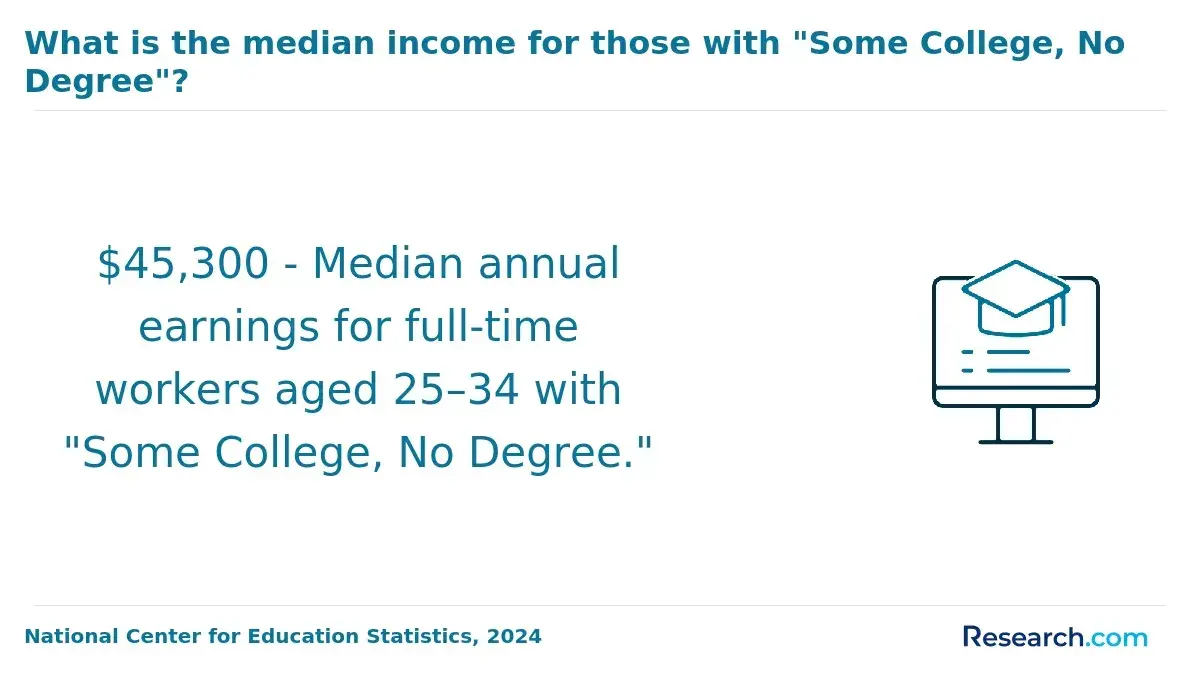
The labor market still rewards degree completion, but outcomes vary by major, region, experience, and occupation. The U.S. Bureau of Labor Statistics reported in 2024 that workers age 25 and older with a bachelor's degree had median weekly earnings of $1,543, compared with $992 for those with some college but no degree. This does not mean a bachelor's degree guarantees a specific salary; it shows why finishing a well-chosen degree can matter for long-term earning potential.
Use your transfer plan to create a career plan, not just a course plan. The following steps are especially important if you are entering as a junior or have only two years left:
- Meet with career services during your first month, not your final semester.
- Ask the department which internships, clinical placements, co-ops, research roles, or field experiences are typical for transfer students.
- Build a resume that explains your full academic path, including community college achievements, work experience, military experience, or adult learner strengths.
- Join at least one major-related student organization or professional association to build a network quickly.
- Use faculty office hours early so you can develop relationships for recommendations, research opportunities, or graduate school references.
- Check whether your target career requires licensure, certification, background checks, supervised hours, or a graduate degree.
Technology and AI are also changing expectations in many entry-level roles. Employers increasingly value students who can use digital tools, analyze information, communicate clearly, and adapt to new software. Transfer students can stand out by pairing the major with practical experience, portfolio work, data skills, writing samples, clinical competencies, or industry-recognized credentials.
If your long-term goal involves advanced practice or leadership, ask whether your undergraduate transfer school prepares students for graduate pathways. Some professional fields now offer flexible doctoral formats, and researching options such as a doctorate without dissertation can help you understand how capstones, applied projects, and traditional dissertations differ before you commit to a long academic path.
The best transfer outcome is not simply admission to a new college. It is finishing a credential that fits your goals, keeps debt manageable, and gives you enough experience to compete for jobs or graduate study after graduation.
Other Things You Should Know About
It depends on your credits, major, and state transfer system. Earning an associate degree can improve transferability in some public systems, but transferring earlier may be better if your intended major has strict prerequisites or limited space.
Your new college may calculate a new institutional GPA after you enroll, but your prior grades usually remain part of your academic history. Graduate schools, scholarship committees, and some programs may review all college transcripts.
Possibly, but options may be limited. Some colleges require good academic standing, while others consider students with probation if they show improvement, explain the circumstances, and meet minimum GPA or reinstatement conditions.
You can apply before receiving a final credit evaluation, but you should avoid committing until you understand how credits apply to your degree. Admission without usable credits can lead to extra semesters and higher total cost.
References
- Guide to Transferring Colleges https://www.princetonreview.com/college-advice/transferring-colleges
- How to Choose a Major As a Transfer | University of Bridgeport https://www.bridgeport.edu/news/choose-major-as-a-transfer-student/
- How to Transfer Colleges (Step-by-Step Guide for 2025) from Spark Admissions https://www.sparkadmissions.com/blog/transferring-colleges-guide/
- How College Credit Transfer Really Works: A Practical Guide https://www.straighterline.com/blog/transfer-how-college-credit-transfer-really-works-a-practical-guide
- How to Transfer Colleges + Common App Transfer Guide https://www.collegeessayguy.com/blog/how-to-transfer-colleges
- Applying as a Transfer Student - GECP https://www.gecollegeprep.com/post/applying-as-a-transfer-student
- HOW Definition & Meaning | Dictionary.com https://www.dictionary.com/browse/how
- Transfer Credits https://www.ontariocolleges.ca/en/applying/transfer-credits
- Should I Transfer Colleges? 6 Reasons You Should https://www.edvisorly.com/student-guides/should-i-transfer-colleges
- Community college transfer processes discourage degree completion https://journalistsresource.org/education/community-college-transfer-bachelors-degree-barriers-research/