# 1 position
Pima Community College - Dental Assisting/Assistant.
certificate or diploma

Audited and Verified:
Our Editorial and Data Verification Process
Research.com uses government datasets, official education statistics and primary institutional information to support its career and degree guides. Our review process checks factual accuracy, occupational definitions, source dates and the requirements associated with the credentials discussed.
How This Article Was Fact-Checked
Our editorial team verifies salary estimates, employment projections, education requirements and program information against original data providers and official organizations. Salary figures are checked against the relevant occupational definitions and reporting periods. Information about licensure, accreditation and required in-person training is reviewed separately.
Fact-checked and verified on:

Co-Founder and Chief Data Scientist

Reviewed by Karolina Broda
Fact-Checker and Data Verification
Which dental assistant program is affordable and prepares you for the work you want to do? For Tucson students planning for 2027, tuition alone cannot answer that question: clinical practice, commuting, and Arizona's rules for certain duties also matter. The U.S. Bureau of Labor Statistics projects 7.4% national growth in dental assistant employment from 2025 to 2035. The Research.com team of data scientists created the Most Affordable Dental Assistant Trade Schools in Tucson for 2027 ranking to help students make an informed choice about programs worth considering. This guide explains how to compare their real costs and career-entry value.
Expect instruction in chairside assisting, infection control, instrument handling, patient communication, dental materials, and office procedures, followed by supervised practice. Ask whether practice takes place in simulated labs, a working clinic, or an externship - and who arranges any placement. Similar-sounding certificates can offer substantially different opportunities to practice with patients.
These pathways suit different budgets and schedules. Program names, availability, and requirements can change, so confirm the current offering directly with Pima Community College, Pima Medical Institute-Tucson, or Carrington College-Tucson before treating any as a comparable option.
The comparison below separates a school credential from work-based entry. It does not imply that every provider offers every pathway.
| Pathway | Typical outcome | Most useful when | Key check |
| Career-school certificate or diploma | School-issued occupational credential | You want structured, focused preparation | Confirm clinical practice, full price, and any certification eligibility |
| Community-college certificate | College-issued occupational certificate | You want to compare public-college pricing and scheduling | Check prerequisites, availability, and required in-person hours |
| Employer-sponsored, on-the-job training | Work experience; a school credential is not assured | An office will hire and train you for entry-level duties | Ask who teaches each skill and how you will qualify for restricted duties |
Unlike some trades, dental assisting does not generally require a registered apprenticeship for entry in Arizona. If an employer offers paid training, compare the wages earned while learning with a school program's added practice and credential - not just the time until your first day of work.
Dental offices are the principal workplace for dental assistants, according to the U.S. Bureau of Labor Statistics. In Tucson, that makes general practices and specialty offices - such as orthodontic or oral-surgery practices - more relevant to a job search than hospitals alone. The duties can differ by office: one role may emphasize chairside care and sterilization, while another includes scheduling or insurance tasks.
Before choosing an externship, ask whether its office type matches your goal. Specialty experience can be useful, but it does not replace any Arizona authorization required for a particular duty.
The U.S. Bureau of Labor Statistics reports a $48,070 national median annual wage for dental assistants in May 2025. A median divides workers across experience levels; it is neither an entry-level offer nor a Tucson-specific salary. For a local decision, compare recent Tucson-area job postings by duties, schedule, benefits, and required credentials, and consult the BLS metropolitan-area wage release for the same occupation and reference period when available.
When estimating whether training will pay off, use the pay you could realistically obtain without the program as your baseline. A higher advertised wage for an experienced assistant or a restricted-function role is not evidence that a new graduate will receive it.
Dental-assisting certificate and diploma programs are generally designed as shorter occupational routes than an associate-degree program, but calendar length alone is a poor comparison. A part-time schedule, prerequisite, or delayed externship can extend the time until you can apply for jobs. Request each program's current calendar, total classroom and lab hours, required clinical or externship hours, and policy for making up missed practice.
Arizona does not impose one universal school-hour requirement for every entry-level dental assistant. Hours or approved training may matter for particular functions under Arizona State Board of Dental Examiners rules. If fast entry is your priority, compare the date you can complete all required hands-on work - not merely the last online lesson. Readers considering other short occupational routes can also compare 6 month certificate programs that lead to high paying careers.
Online delivery can make terminology, anatomy, office systems, and some safety instruction easier to fit around work. It cannot substitute for learning to position instruments, maintain infection-control procedures, communicate chairside, and perform permitted clinical tasks under supervision. A hybrid option is useful only if its local labs and clinical arrangements fit your schedule and transportation budget.
Ask an online provider to identify every required in-person session, its Tucson-area location, who secures the clinical site, and whether completion meets the relevant Arizona requirements. Do not assume a fully online certificate establishes radiography eligibility or qualifies you for DANB certification. If flexibility is your main concern, compare best online certificate programs that pay well while checking each occupation's practical-training rules separately.
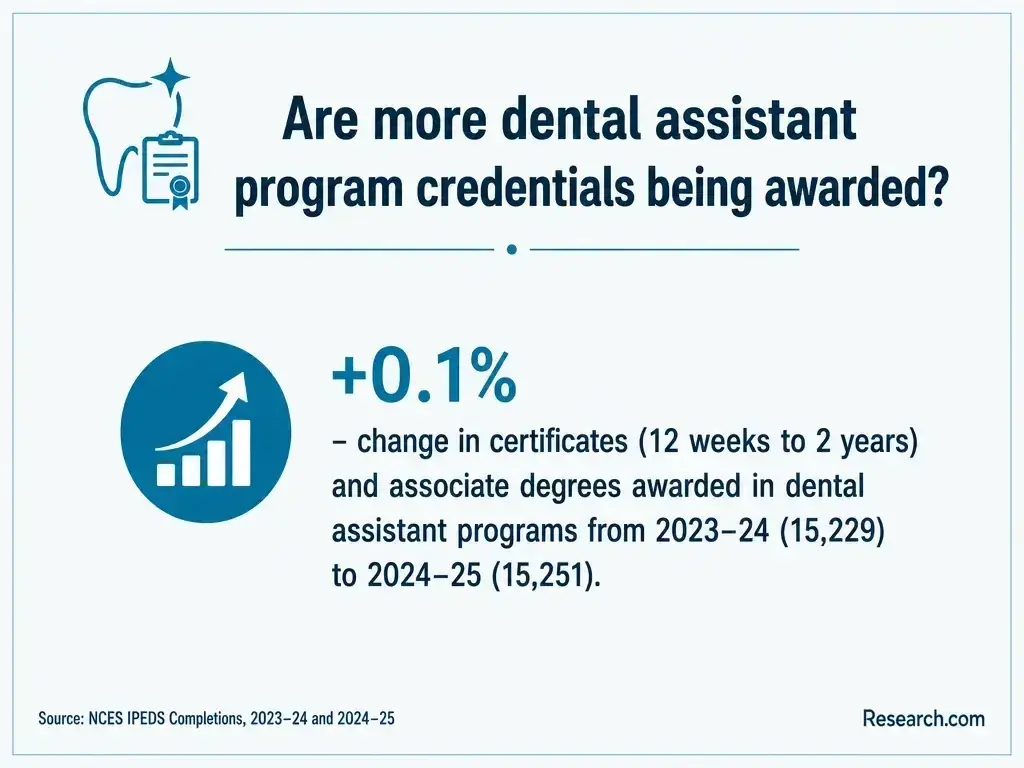
There is no verified, comparable Tucson-wide average price here that would make a responsible 2027 budget figure. Published tuition may exclude essential expenses, and an average would obscure differences between programs and employer training. Ask each provider for a current, itemized cost to become job-ready.
For a meaningful comparison, include tuition and mandatory fees; textbooks, instruments, consumables, protective equipment, and uniforms; any required health checks or background screening; certification exam or application fees; travel to labs and clinical sites; and earnings you may forgo while training. Subtract only aid or employer support for which you actually qualify. Federal aid eligibility depends on the student, institution, and program, according to Federal Student Aid; institutional accreditation by itself does not establish that a particular program qualifies.
An affordable program is one whose likely benefits justify its net cost for you. Compare completion likelihood, debt, time out of work, and plausible post-training earnings over the same time horizon; discounting future earnings also matters for a rigorous return-on-investment comparison. If you are weighing longer education routes as well, affordable college degrees answer a different cost question than a dental-assisting certificate.
The award depends on the program: it may be a certificate, diploma, or, where offered, an associate degree. That school-issued credential is distinct from Certified Dental Assistant (CDA), a professional certification administered by the Dental Assisting National Board, and from any Arizona authorization for restricted duties. DANB has multiple CDA eligibility routes; verify the route, examinations, and documentation that apply to you before enrolling.
Check institutional accreditation, any Commission on Dental Accreditation recognition of the specific program, and Arizona school authorization separately. None automatically confers CDA certification or permission to perform every dental-assisting task. Ask whether completed coursework can transfer or count toward another credential, and get the receiving program's policy in writing. Searches such as which colleges offer dual degree concern a different credential structure; do not mistake it for a dental-assisting certification pathway.
Requirements vary by provider. Ask about a high school diploma or equivalent, placement or prerequisite courses, minimum age policies, and documentation needed before clinical participation. A school may also require immunization records, a health screening, background check, or CPR training for a clinical site; do not assume every program has the same conditions.
Before paying a deposit, request the written admissions checklist and the separate externship checklist. A student can meet classroom admission rules yet face a clinical-placement barrier that delays completion. For an employer-training route, ask whether the office hires beginners, provides supervised instruction, and pays during training.
A useful curriculum connects dental anatomy and terminology to real chairside tasks: preparing rooms, managing instruments, assisting during procedures, maintaining infection control, documenting care, and interacting with patients. Programs may also teach dental materials, radiography concepts, scheduling, and records. The U.S. Bureau of Labor Statistics describes both clinical and administrative duties in the occupation.
Look beyond a course-title list. Ask how students demonstrate safe instrument handling, how much supervised practice they receive, and whether radiography instruction aligns with Arizona's rules. Digital imaging and practice-management systems are worth asking about because they affect daily workflow, but software exposure is not a substitute for clinical competence or authorization to take images.
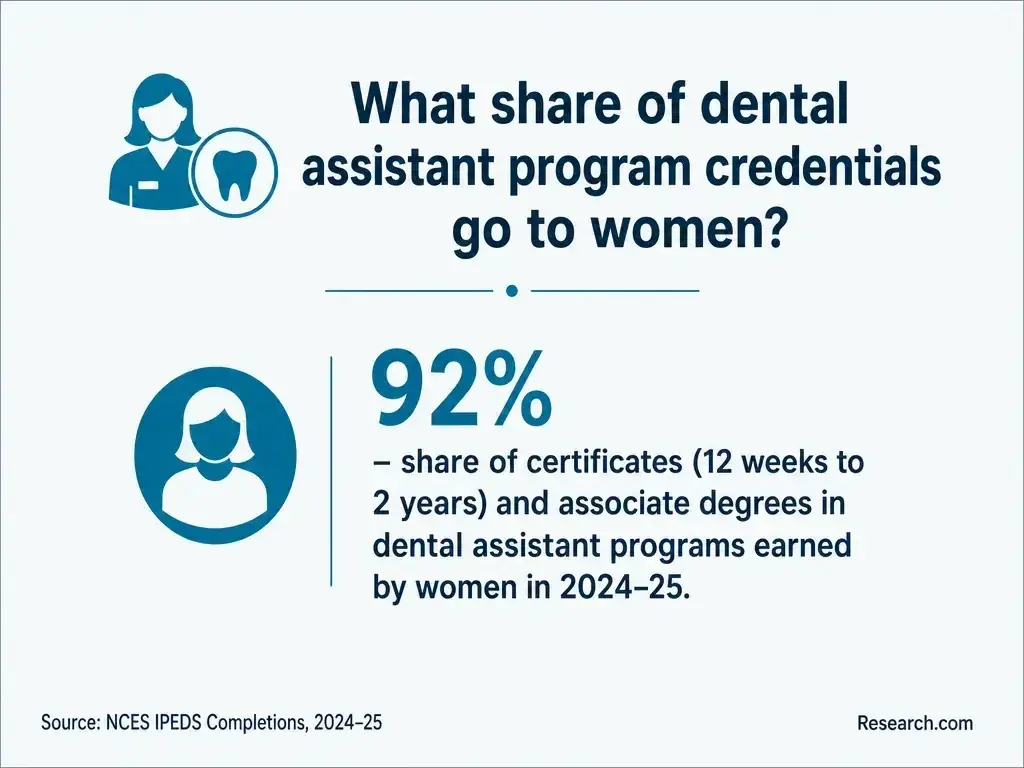
Arizona does not require a general occupational license for every entry-level dental assistant. That does not mean every task is open to an uncredentialed worker. The Arizona State Board of Dental Examiners sets requirements for specific functions, including dental radiography. Check the board's current rules for the duties you want to perform, rather than relying on a school's broad claim that graduates are "certified."
DANB's CDA is a professional certification, not an Arizona dental-assistant license. CODA programmatic accreditation, institutional accreditation, state school authorization, and DANB certification also answer different questions. Ask a prospective program to identify the exact Arizona function or DANB eligibility route it prepares you for and what additional examination or application you must complete.
Start with the job duties you want, then compare programs on the evidence that gets you there. An affordability ranking is a useful shortlist, but its cost-and-debt score does not measure clinical quality, certification eligibility, or your commuting burden. A cheaper program that cannot deliver needed practice may be the more expensive career decision.
Use the following checks when speaking with Pima Community College, Pima Medical Institute-Tucson, or Carrington College-Tucson. Request answers for the specific program and start date, not the institution generally.
A red flag is a promise of automatic certification, unrestricted radiography duties, or guaranteed employment. Get eligibility claims in writing and check them with the Arizona State Board of Dental Examiners or DANB, as appropriate.
Training can lead to entry-level chairside or administrative assisting, followed by more specialized work as experience and permitted skills develop. An assistant may seek radiography eligibility, pursue optional DANB certification, or move toward lead-assistant or office-coordination responsibilities. Each step depends on employer needs and the requirements for its particular duties; a certificate does not automatically confer a promotion.
If your goal is independent clinical practice rather than assisting a dentist, verify that you are researching the right occupation before enrolling: dental-assistant training is not a shortcut into a different licensed role. Likewise, a doctoral degree without dissertation is not an advancement requirement for dental assistants. Choose the shortest legitimate pathway that actually reaches your intended role.
The U.S. Bureau of Labor Statistics projects 7.4% growth nationally from 2025 to 2035 for dental assistants. That projection suggests continuing demand across the occupation, but it is not a Tucson job-opening count or a guarantee that every new assistant will find work quickly.
For a Tucson-specific decision, review current openings across general and specialty dental offices and note how often they ask for experience, radiography eligibility, or a particular schedule. If postings require skills a program does not teach, that gap matters more to your immediate job search than a national growth figure.
Investing in training is a consequential decision, so Research.com evaluates affordable programs against other programs in the same occupation and location - not against unrelated schools nationwide. The affordability ranking considers tuition, cost of attendance, median student debt, and federal loan default rates. An entropy-based method gives more weight to cost and debt indicators that differ more across eligible programs. Only programs with completions reported to IPEDS are included; the absence of a program does not mean it lacks quality or authorization.
The Research.com team uses multiple sources to check the credibility and accuracy of its rankings. These sources serve different purposes: some provide cost or outcome data, while others help identify recognition or training pathways. They do not all supply dental-assisting affordability scores.
Research.com's separate best programs methodology also considers completion, retention, earnings, accreditation or industry recognition, and student support. Its published weights assign 20% to relevant programmatic recognition, 10% to institutional accreditation, 10% to support services, and 60% to outcomes, earnings, and costs using entropy-based weighting. Those quality measures are not part of the most-affordable score. Readers can use this ranking to narrow a cost-conscious shortlist, then verify hands-on training and Arizona eligibility themselves. More detail is available in the Research.com methodology.
# 1 position
# 2 position

# 3 position
Compare the net, job-ready cost of school programs with entry-level positions offering paid training. Include supplies, travel, foregone earnings, and any later training needed for the duties you want; the lowest tuition is not necessarily the lowest total cost.
Yes, entry-level employer training can be a route into dental assisting. Certain duties have additional Arizona requirements, so ask the employer how you would learn and qualify for the work it expects you to perform.
No. A certificate is awarded by a school; Certified Dental Assistant is a professional certification awarded by DANB to applicants who meet an eligibility route and examination requirements.
Some coursework can be online, but chairside skills require in-person practice. Confirm the location and supervision of labs or clinical work before enrolling, especially if the provider advertises an online program.
It might if you already have a credible supervised-training arrangement. Otherwise, ask how the program provides practical experience and whether local employers will consider its graduates before treating the price difference as a saving.