2026 Sustainability Degree Internship Outcomes Report: Paid Experience, Placement Rates, and Career Impact

Co-Founder and Chief Data Scientist
Sustainability students face a practical question: which internship will actually lead to paid experience, stronger placement odds, and a credible first job? The stakes are rising as entry-level roles become more skill-screened; the U. S. Bureau of Labor Statistics reports a $80,060 median annual wage for environmental scientists and specialists in May 2024, with faster-than-average projected growth. This guide is for undergraduates, graduate students, and career changers comparing sustainability internships. You will learn how pay, conversion rates, work format, employer type, and portfolio-building affect career value.
Key Things to Know About Internship Outcomes in Sustainability Industry
- Paid sustainability internships generally carry stronger career ROI than unpaid roles because they reduce financial pressure and are more likely to be tied to structured employer pipelines; NACE's 2024 internship research shows employers convert more than half of interns and co-ops into full-time hires.
- The best internship outcomes come from roles with measurable deliverables, such as greenhouse gas inventories, ESG data tracking, waste audits, supplier assessments, climate-risk research, or community resilience projects, rather than vague "green office" support work.
- Students should begin searching 6 to 9 months before the target internship term because large employers, utilities, consulting firms, and government-related programs often recruit earlier than small nonprofits and campus sustainability offices.
- Key Things to Know About Internship Outcomes in Sustainability Industry
- How important are internships for Sustainability degree students?
- How early should a Sustainability student look for internship opportunities?
- What kinds of internship programs should Sustainability look for?
- What skills or experiences should Sustainability students expect to learn from internships?
- How does a remote Sustainability internship compare to an in-person experience?
- Are there paid internships available for Sustainability degree students?
- How often do Sustainability internships convert directly into full-time job offers?
- What is the impact of Sustainability internships on long-term career outcomes?
- Do Sustainability internships have an effect on starting salaries after graduation?
- Top Trending Sustainability Rankings
How important are internships for Sustainability degree students?
Internships matter in sustainability because the field is broad, applied, and increasingly evidence-driven. A sustainability degree may cover climate science, policy, economics, environmental justice, reporting frameworks, operations, and stakeholder engagement, but employers usually want proof that a candidate can turn that knowledge into usable work products.
In practice, internships help students test where they fit: corporate sustainability, environmental consulting, renewable energy, public-sector planning, supply chain responsibility, nonprofit advocacy, campus operations, or ESG data analysis. They also give hiring teams a low-risk way to evaluate communication, spreadsheet discipline, project follow-through, and judgment around incomplete data.
The table below summarizes common outcome benchmarks. These are not guarantees; they are decision signals students can use when comparing internship formats and employers.
| Outcome area | What strong programs usually provide | Why it matters for sustainability students |
| Paid experience | Hourly pay, stipend, or co-op compensation tied to defined duties | Paid roles often indicate that the employer treats the intern as part of the work pipeline, not as informal help |
| Full-time conversion | Manager feedback, return-internship pathway, or entry-level job consideration | NACE's 2024 employer research shows internships remain a major channel for full-time hiring |
| Portfolio value | Work samples such as dashboards, audit summaries, policy memos, or emissions calculations | Recruiters can evaluate actual skills instead of relying only on coursework |
| Career direction | Exposure to one or more functions, such as compliance, reporting, operations, or community engagement | Students can identify a realistic first job target before graduation |
Students whose sustainability interests overlap with workforce policy, employee engagement, or organizational change may also compare adjacent graduate pathways such as masters human resources, especially if they want to work on green workforce development or internal sustainability adoption.
How early should a Sustainability student look for internship opportunities?
Sustainability students should start looking earlier than they think, especially if they want corporate, consulting, energy, transportation, or public-sector placements. Many competitive summer internships are filled before spring, while smaller nonprofits, municipal offices, and campus sustainability teams may post later and hire faster.
The table below shows how timing affects opportunity type and competition. Use it to understand the market rhythm before building an application plan.
| Timing | Typical opportunity pattern | Main trade-off |
| Late summer to early fall | Large companies, consulting firms, utilities, and formal rotational internship programs begin posting | More structured roles, but more competition and earlier deadlines |
| Mid-fall to winter | Government-related programs, research labs, and some climate-tech employers continue hiring | Good fit for students with stronger technical or policy preparation |
| Spring | Local nonprofits, campus offices, municipal sustainability teams, and smaller organizations post remaining roles | More flexibility, but fewer large paid pipelines may remain |
| Rolling year-round | Micro-internships, research assistantships, part-time ESG data roles, and remote project work | Useful for portfolio-building, though not always tied to full-time conversion |
A practical search plan should combine early applications with a backup pipeline. This prevents the common mistake of waiting for one ideal listing and missing dozens of viable sustainability roles.
- Build a target list by employer type: corporate sustainability teams, environmental consultancies, utilities, clean-energy firms, universities, local governments, and nonprofits.
- Prepare one core resume and three tailored versions for ESG/data, policy/community, and operations/facilities roles.
- Apply early to structured programs, then continue applying to smaller employers as spring openings appear.
- Track deadlines, interview dates, pay details, supervisor names, and expected deliverables in one spreadsheet.
- Ask about offer deadlines before accepting interviews so you can manage competing decisions professionally.
Career changers and older students often have compressed timelines, so they may benefit from comparing flexible pathways such as one year degrees for seniors while also seeking project-based sustainability experience that can quickly demonstrate applied skills.
What kinds of internship programs should Sustainability look for?
Sustainability students should look for internships that match a realistic first job target, not just a broad interest in the environment. A strong internship has a defined supervisor, clear deliverables, access to data or fieldwork, and a final project that can be discussed in interviews without violating confidentiality.
The table below compares common sustainability internship settings. It highlights what each environment tends to teach and where students should be cautious.
| Internship type | Typical responsibilities | Best fit | Watch for |
| Corporate sustainability or ESG | Emissions data collection, ESG reporting support, supplier questionnaires, internal engagement | Students interested in business, reporting, operations, or investor-facing sustainability | Roles that are mostly event planning without measurable analysis |
| Environmental consulting | Research, permitting support, field documentation, environmental impact summaries, client memos | Students who like technical work, deadlines, and client-facing documentation | Travel expectations, billable-hour pressure, and limited mentorship |
| Public sector or planning | Climate action plan support, public engagement, grant research, resilience mapping | Students interested in local government, policy, transportation, or community resilience | Slow hiring timelines and unpaid or low-stipend roles |
| Nonprofit or advocacy | Program coordination, environmental justice research, outreach, campaign support | Students motivated by mission-driven work and community engagement | Vague responsibilities or limited data exposure |
| Campus sustainability office | Waste audits, energy dashboards, behavior-change campaigns, procurement research | Students seeking accessible first experience while still enrolled | Projects that do not translate into external employer language |
| Climate tech or clean energy | Market research, lifecycle analysis support, customer sustainability data, policy tracking | Students comfortable with ambiguity, startups, and fast-changing tools | Unclear supervision or unpaid "startup experience" promises |
Students drawn to community resilience, family systems, or the human impact of climate disruption may also explore whether an LMFT program online fits their broader service goals, but sustainability internships themselves should still be evaluated by the relevance of the work, supervision quality, and career pathway.
A useful rule is to choose the internship that gives you the most defensible evidence of skill. If two offers look similar, the stronger choice is usually the one that lets you produce a concrete deliverable, receive feedback from a knowledgeable supervisor, and explain your contribution in numbers or clear outcomes.
How can Sustainability students land competitive internship programs?
Competitive sustainability internships are usually won by students who can show both mission commitment and practical execution. Passion helps, but hiring teams need evidence that you can analyze data, write clearly, work with stakeholders, and manage a project without constant direction.
The steps below focus on actions that improve interview odds and reduce common application mistakes.
- Translate coursework into employer language by using terms such as emissions inventory, climate-risk assessment, waste diversion, supplier sustainability, environmental compliance, lifecycle thinking, and stakeholder engagement.
- Create a small portfolio with 2 to 4 work samples, such as a greenhouse gas calculation, GIS map, policy memo, dashboard screenshot, audit summary, or capstone abstract.
- Tailor each resume to the role type instead of sending one generic sustainability resume to every employer.
- Use campus career fairs, alumni databases, professor referrals, and LinkedIn outreach to identify hiring managers before postings close.
- Prepare interview stories that show how you handled messy data, conflicting stakeholder priorities, field constraints, or ambiguous project goals.
- Ask employers how intern performance is evaluated, whether return offers are possible, and what deliverables interns completed in prior years.
Common mistakes include applying too late, focusing only on paid listings while ignoring mentorship quality, accepting vague roles, and failing to ask for feedback during the internship. A paid internship with no supervisor, no data access, and no usable project may be less valuable than a modestly paid or campus-based role with strong deliverables and a manager who will advocate for you.
Students should also prepare for AI-assisted screening. Many employers now use applicant tracking systems, structured rubrics, or skills-based filters, so resumes should contain the exact tools and methods used in sustainability work, such as Excel, Power BI, Tableau, ArcGIS, R, Python, greenhouse gas accounting, materiality research, or survey analysis, when those skills are truthful.
What skills or experiences should Sustainability students expect to learn from internships?
Sustainability internships should teach students how sustainability decisions are actually made inside organizations. That means interns often spend less time on abstract environmental values and more time collecting data, validating assumptions, writing summaries, coordinating stakeholders, and explaining trade-offs to people with different priorities.
The table below connects common internship roles with the skills and work products employers often value. It can help students decide which roles support their desired career path.
| Role focus | Day-to-day intern responsibilities | Skills developed | Useful work sample |
| ESG and reporting | Gather metrics, review disclosures, support supplier or departmental data requests | Spreadsheet accuracy, reporting frameworks, data validation, business writing | Cleaned dataset, ESG metric tracker, disclosure research summary |
| Climate and emissions | Collect utility, travel, fleet, or procurement data for greenhouse gas inventories | Carbon accounting basics, data documentation, estimation methods, quality control | Emissions calculation workbook or methodology memo |
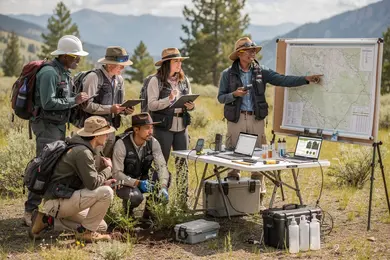
| Operations and facilities | Support waste audits, energy-efficiency projects, recycling programs, or procurement reviews | Process mapping, site observation, vendor coordination, cost-benefit thinking | Waste audit report or efficiency recommendation brief |
| Policy and community | Research climate plans, prepare outreach materials, analyze public comments, support meetings | Policy analysis, facilitation, equity framing, public communication | Policy memo, engagement summary, resilience resource map |
| Research and analytics | Review literature, build dashboards, map risks, compare technologies or regulations | GIS, visualization, statistical reasoning, source evaluation | Dashboard, map, annotated research brief, technical slide deck |
AI and automation are changing what entry-level sustainability interns do. Tools can draft summaries, classify documents, clean datasets, or support scenario research, but interns still need to check assumptions, verify sources, understand measurement boundaries, and communicate uncertainty responsibly.
A strong intern should leave with three kinds of evidence: a technical artifact, a communication artifact, and a supervisor reference. For example, a student might finish with an emissions spreadsheet, a slide deck for leadership, and a manager who can confirm the student's reliability and analytical judgment.
How does a remote Sustainability internship compare to an in-person experience?
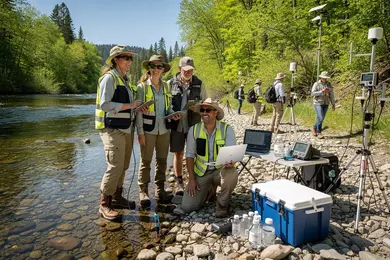
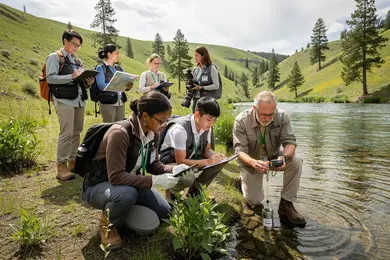
Remote sustainability internships can be valuable, but the format changes what students learn. Remote roles often work well for ESG research, data analysis, reporting support, policy tracking, and dashboard building. In-person roles are usually stronger for field observation, facilities work, waste audits, stakeholder meetings, environmental sampling support, and operations exposure.
The comparison below helps students evaluate format by learning value, not just convenience.
| Format | Strengths | Limitations | Best fit |
| Remote | Flexible schedule, access to employers outside the student's region, strong fit for research and data tasks | Less informal mentoring, fewer site observations, higher risk of isolation | ESG research, policy tracking, climate disclosure support, dashboard work |
| In-person | Better exposure to operations, field conditions, workplace culture, and supervisor feedback | Commuting and housing costs can reduce net value | Facilities, waste, energy, field consulting, public meetings, environmental operations |
| Hybrid | Balances flexibility with periodic mentoring, site visits, and team integration | Requires clear expectations about which tasks happen onsite | Corporate sustainability, local government, consulting, campus sustainability offices |
Remote is not automatically weaker, and in-person is not automatically better. The stronger option is the one with clear deliverables, regular feedback, access to relevant tools, and meaningful interaction with professionals who do the work you want to do after graduation.
Before accepting a remote or hybrid offer, students should ask specific questions so they do not end up with isolated busywork.
- How often will I meet with my supervisor, and will feedback be scheduled or informal?
- What software, datasets, or internal systems will I be allowed to use?
- Will I attend team meetings, client meetings, public meetings, or project reviews?
- What final work product should I expect to complete by the end of the internship?
- Have previous interns received return offers, references, or extended project work?
Are there paid internships available for Sustainability degree students?
Yes, paid internships are available for sustainability degree students, especially in corporate sustainability, consulting, utilities, clean energy, transportation, manufacturing, finance, technology, and some government-related programs. Unpaid roles still exist, particularly in small nonprofits, advocacy groups, and local community organizations, but students should evaluate them carefully.
NACE's 2024 compensation research reported an average hourly wage of $23.04 for bachelor's-level interns across responding employers. Sustainability-specific pay can vary by employer, region, technical skill level, and whether the role is funded as a formal internship, co-op, grant position, or temporary assistantship.
When comparing paid, stipend, and unpaid offers, students should calculate the real economic value rather than looking only at the headline hourly rate. The IRS standard mileage rate of $0.70 per mile for 2025 is a useful reminder that commuting can materially reduce take-home value for in-person internships.
- Hourly paid internship: strongest for students who need predictable income and want evidence that the employer has budgeted for intern labor.
- Stipend-based internship: potentially worthwhile if the stipend covers expected hours, commuting, and project costs at a reasonable effective hourly rate.
- Unpaid internship: only worth considering when the role provides exceptional mentorship, portfolio-quality deliverables, academic credit that the student already needs, or access to a hard-to-enter sector.
Students should be cautious about unpaid roles that require long hours, independent travel, expensive relocation, or specialized deliverables without training. If an employer cannot explain supervision, schedule, learning goals, and expected outputs, the opportunity may carry more risk than value.
How often do Sustainability internships convert directly into full-time job offers?
Sustainability internships can convert directly into full-time offers, but conversion depends heavily on employer type, budget, timing, and the student's fit with open roles. Large employers with formal intern classes are more likely to have defined conversion processes, while nonprofits and public-sector offices may provide strong experience without immediate hiring authority.
NACE's 2024 internship research indicates that employers converted more than 50% of interns and co-ops into full-time hires. For sustainability students, that figure is best used as a broad benchmark rather than a sustainability-specific guarantee because many green roles are spread across operations, finance, compliance, marketing, facilities, and public policy teams.
The table below shows common signs that an internship has higher or lower return-offer potential.
| Conversion signal | Higher return-offer potential | Lower return-offer potential |
| Program structure | Formal intern cohort, manager evaluations, return-internship pathway, entry-level openings | One-off role created without a hiring plan |
| Manager involvement | Weekly check-ins, performance feedback, access to team meetings | Supervisor is unavailable or unclear about intern responsibilities |
| Work relevance | Projects tied to current business, compliance, reporting, operations, or grant priorities | Tasks are peripheral, promotional, or disconnected from staff roles |
| Budget visibility | Employer discusses future roles, headcount, or return timelines | Employer praises interns but cannot discuss hiring authority |
Students who want a return offer should treat the internship like a long interview. That means clarifying expectations early, documenting progress, asking for mid-point feedback, and making it easy for a supervisor to explain why the student should be hired.
- During week one, ask what excellent performance looks like by the end of the internship.
- By the midpoint, request feedback on both technical work and professional habits.
- Before the final month, ask whether the organization hires former interns and what timeline they use.
- At the end, provide a concise summary of completed projects, measurable outputs, and remaining recommendations.
What is the impact of Sustainability internships on long-term career outcomes?
The long-term impact of a sustainability internship is strongest when it helps a student choose a focused career lane. Sustainability is not a single job title; it is a labor market spanning environmental science, ESG, compliance, public policy, planning, operations, procurement, energy, transportation, and corporate strategy.
BLS projects employment for environmental scientists and specialists to grow 7% from 2023 to 2033, faster than the average for all occupations. For students, that growth suggests opportunity, but not automatic placement; candidates still need applied evidence that matches the role they want.
Internships can influence long-term outcomes in several practical ways. They help students build references, learn employer language, identify preferred sectors, and avoid spending years pursuing a career path that does not fit their work style.
- Corporate or ESG internships can lead toward analyst, coordinator, reporting associate, supplier responsibility, or sustainability operations roles.
- Consulting internships can lead toward environmental analyst, climate analyst, permitting assistant, field technician, or junior consultant roles.
- Public-sector internships can lead toward sustainability coordinator, climate planning assistant, resilience analyst, transportation program assistant, or grant support roles.
- Nonprofit internships can lead toward program associate, outreach coordinator, environmental justice analyst, campaign assistant, or community engagement roles.
- Research internships can lead toward lab, policy research, data analytics, GIS, or graduate study pathways.
Students considering senior-level research, university teaching, or advanced policy leadership later in their careers may eventually compare options such as shortest doctoral programs, but early-career sustainability hiring usually depends more on internships, projects, tools, and references than on advanced credentials alone.
Do Sustainability internships have an effect on starting salaries after graduation?
Sustainability internships can affect starting salaries, but usually indirectly. They improve a student's ability to compete for stronger entry-level roles, negotiate from evidence, and avoid underemployment in loosely related jobs. The salary effect depends on the role, region, employer budget, technical skill level, and whether the internship converts into a full-time offer.
The BLS May 2024 median wage of $80,060 for environmental scientists and specialists is useful context, but it is not a starting salary estimate for new sustainability graduates. Entry-level pay may be lower, especially in nonprofits, local government, or roles requiring additional field experience, while data-heavy corporate, consulting, or energy roles may pay more competitively.
The table below shows how different internship experiences can influence salary positioning after graduation.
| Internship evidence | How it can support salary outcomes | Limitation |
| Paid internship with defined deliverables | Shows the employer valued the work and gives the student concrete examples for interviews | Pay level may reflect intern budget rather than full-time role value |
| Technical portfolio | Helps candidates qualify for analyst roles that require data, GIS, reporting, or emissions skills | Portfolio must be explainable and free of confidential information |
| Return offer | Can reduce job-search uncertainty and give the student a market reference point | First offer is not always the best long-term fit |
| Recognized employer or sector experience | Signals familiarity with industry workflows, compliance expectations, or reporting cycles | Brand name does not replace strong work samples or references |
Students should avoid assuming that any sustainability internship will raise starting pay. The strongest salary impact usually comes from internships that build scarce, verifiable skills: greenhouse gas accounting, data visualization, regulatory research, lifecycle assessment support, GIS, financial analysis for sustainability projects, or supplier data management.
When comparing offers, students should consider both immediate pay and long-term leverage. A higher hourly wage is attractive, but an internship that produces a strong portfolio, a credible reference, and a realistic return-offer path may have greater career value than a slightly better-paid role with little mentorship or skill development.
Other Things You Should Know About Sustainability
Sometimes, but only when the learning value is unusually strong. An unpaid role may be worth considering if it provides academic credit you need, close mentorship, a portfolio-quality project, or access to a sector that is difficult to enter. Avoid unpaid roles with vague duties, long hours, high commuting costs, or no supervisor.
Include 2 to 4 concise samples, such as an emissions calculation, ESG metric tracker, GIS map, policy memo, waste audit summary, dashboard screenshot, or capstone project abstract. Remove confidential information and add a short note explaining the problem, method, tools used, and result.
A long co-op can be better for technical depth, return-offer potential, and stronger supervisor references. Several shorter internships can be better for exploring sectors. Choose the long co-op if you already know your target path; choose varied experiences if you are still deciding between corporate, consulting, public-sector, nonprofit, or research roles.
The biggest red flag is a vague job description that uses broad mission language but does not name responsibilities, tools, supervisor support, schedule, or deliverables. Before accepting, ask what you will produce, who will review your work, and whether past interns moved into jobs or stronger references.
Top Trending Sustainability Rankings
References
- 10 Skills You'll Gain From Interning Abroad - World Endeavors https://www.worldendeavors.com/blog/skills-gained-from-internships/
- Your Career Guide Blog | Jobs & Tips https://www.jobcliff.com/blogs/10-skills-you-can-learn-from-an-internship-that-employers-actually-value
- Paid vs Unpaid Internships http://opiniojuris.org/2019/08/12/paid-vs-unpaid-internships/
- How an internship will help you to develop the 8 NACE competencies https://theinterngroup.com/our-blog/internships-and-8-nace-competencies
- Environment & Sustainability Placements/Internships | Gradcracker - Careers for STEM Students https://www.gradcracker.com/search/civil-building/environment-and-sustainability-work-placements-internships
- FEE Internship Scheme — EcoCampus https://www.ecocampus.global/internship-scheme
- The Impact of Unpaid Internships on the Labor Market https://msufcufin40.evergreen3c.com/blogs/the-impact-of-unpaid-internships-on-the-labor-market
- The Long-Term Impact of Internships on Your Career https://absoluteinternship.com/blog/the-long-term-impact-of-internships-on-your-career/
- The Professional Skills and Values of an Internship - Workplace Options https://www.workplaceoptions.com/blog/the-professional-skills-and-values-of-an-internship/
- Student & Graduate Internships https://www.brightgreenbusiness.org.uk/placements/overview