2026 Sustainability Degree Transfer Efficiency Report: Which Programs Reduce Time to Graduation the Most

Co-Founder and Chief Data Scientist
Transfer students choosing a sustainability degree face a practical question: which program will count the most prior coursework without slowing graduation? That matters because College Board's 2024 pricing report lists average published tuition and fees at $11,610 for in-state public four-year colleges, while public two-year colleges average $4,050. For community college students, returning adults, veterans, and career changers, transfer efficiency can change both cost and timeline. This guide explains credit caps, policies, timelines, ROI, and questions to ask before enrolling.
Key Things You Should Know
- The most transfer-efficient sustainability bachelor's programs usually allow up to 75 to 90 semester credits toward a 120-credit degree, but only credits that meet general education, major, elective, and residency rules reduce time to graduation.
- Based on 2024-25 College Board pricing, completing lower-division credits at a public two-year college can cost far less than taking the same credits at a four-year institution, making articulation agreements especially valuable.
- Environmental scientist and specialist roles had a BLS-reported median pay of $78,980 and 7% projected employment growth for 2023-2033, so transfer efficiency matters most when it helps students finish a relevant, accredited degree without unnecessary debt.
- Key Things You Should Know
- Which Sustainability Degree Programs Accept the Most Transfer Credits?
- How Much Can Transfer Credits Reduce the Time Needed to Complete a Sustainability Degree?
- What Types of Credits Transfer Most Easily Into a Sustainability Degree Program?
- Which Policies Reduce Transfer Credit Loss in Sustainability Degree Programs?
- Can Prior Learning, Military Training, or Work Experience Count Toward a Sustainability Degree?
- How Do Transfer Credits Affect the Cost and ROI of a Sustainability Degree?
- What Common Transfer Mistakes Delay Sustainability Degree Completion?
- Which Sustainability Programs Offer the Most Efficient Transfer Pathways?
- How Should Students Compare Sustainability Programs Based on Transfer Efficiency?
- Top Trending Sustainability Rankings
Which Sustainability Degree Programs Accept the Most Transfer Credits?
The sustainability programs that accept the most transfer credits are usually bachelor's completion, applied science, interdisciplinary environmental studies, and online adult learner programs. The key distinction is between credits accepted by the college and credits applied to the degree; a school may accept 90 credits but still require additional sustainability core courses if your previous classes do not match the curriculum.
The table below compares common sustainability degree formats by transfer capacity and fit. Use it to identify which structure is most likely to shorten your path rather than simply store extra elective credits on your transcript.
| Program type | Typical transfer-credit ceiling | Best fit | Transfer-efficiency risk |
| Bachelor's degree completion in sustainability | Often up to 90 credits | Students with an associate degree or substantial prior college work | Major prerequisites may still need to be completed in sequence |
| Applied sustainability or environmental management bachelor's | Often 60 to 90 credits | Students with technical, business, public policy, or environmental coursework | Science labs and upper-division requirements may not transfer cleanly |
| Traditional environmental studies bachelor's | Often 60 to 75 credits | Students transferring from liberal arts or science-heavy associate programs | Campus residency and major-course limits can reduce usable credits |
| Environmental science bachelor's | Often 60 to 75 credits | Students who completed biology, chemistry, geology, statistics, or calculus | Lab recency rules and course equivalencies can delay progress |
| Online sustainability bachelor's | Often up to 90 credits in adult-focused programs | Working adults, military learners, and students needing flexible pacing | Some online programs require prior credits before admission to the major |
Programs with the highest transfer ceilings are not automatically the fastest. A 90-credit transfer policy is valuable only if the school maps your previous courses into degree requirements instead of placing them mostly into free electives.
How Much Can Transfer Credits Reduce the Time Needed to Complete a Sustainability Degree?
Transfer credits reduce time to graduation by replacing courses you would otherwise need to retake. For a standard 120-credit bachelor's degree, the practical time savings depend on enrollment intensity, course sequencing, and whether transferred credits satisfy prerequisites for upper-division sustainability courses.
The table below shows realistic time-to-completion ranges for students entering a 120-credit sustainability bachelor's program. It assumes the credits are usable toward the degree, not merely accepted by the institution.
| Usable transfer credits | Credits remaining | Estimated full-time completion pace | Estimated part-time completion pace |
| 0 to 15 | 105 to 120 | About 3.5 to 4 years | Often 5 years or more |
| 30 | 90 | About 3 years | Often 4 to 5 years |
| 60 | 60 | About 2 years | Often 3 to 4 years |
| 75 | 45 | About 1.5 years | Often 2.5 to 3 years |
| 90 | 30 | About 1 year | Often 1.5 to 2.5 years |
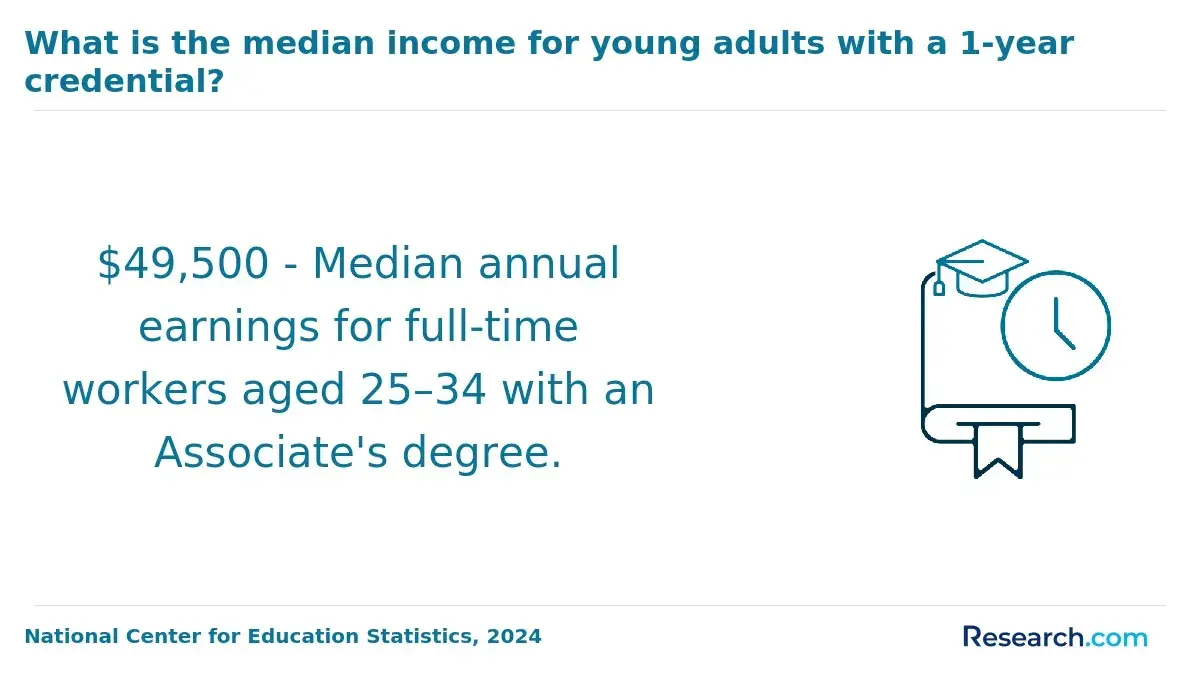
Students should also consider the long-term academic plan. If you expect to pursue graduate study later, the same timeline logic applies when comparing accelerated credentials, including shortest doctoral programs, because admission prerequisites and residency rules can matter as much as total credits earned.
The fastest sustainability transfer pathway usually combines three elements: a completed associate degree, a formal articulation agreement, and a bachelor's program that accepts lower-division work as a block. Without those protections, a student may transfer many credits but still need extra semesters to complete sustainability methods, capstone, lab, internship, or policy courses.
What Types of Credits Transfer Most Easily Into a Sustainability Degree Program?
Sustainability degrees are interdisciplinary, so they can accept credits from environmental science, biology, chemistry, economics, public policy, business, statistics, geography, communications, and social science. The easiest credits to transfer are usually general education and lower-division courses from regionally accredited institutions.
The table below summarizes common credit sources and how they usually apply. It is especially useful for students with mixed transcripts from community college, military training, testing programs, or prior majors.
| Credit source | How it may apply | Common limitation |
| General education courses | Writing, math, humanities, social science, and natural science requirements | Minimum grade rules may apply |
| Environmental science or biology courses | Major foundation or science distribution requirements | Lab components may need to match exactly |
| Statistics, calculus, or quantitative reasoning | Research, data analysis, or methods requirements | Some programs require a specific statistics course |
| Business, economics, or policy courses | Sustainability management, public policy, or elective requirements | May not replace upper-division sustainability courses |
| AP, IB, CLEP, or DSST exams | General education or elective credit | Score thresholds vary by school |
| Military training | Electives, leadership, technical, or general education credit | Evaluation depends on ACE recommendations and school policy |
| Portfolio or prior learning assessment | Elective or applied-learning credit | Rarely replaces core major requirements automatically |
To maximize usable credits, students should focus on course alignment rather than course quantity. Before applying, gather syllabi, lab descriptions, catalog entries, and learning outcomes for any course that might satisfy a sustainability major requirement.
How Do Sustainability Schools Evaluate and Award Transfer Credits?
Sustainability schools evaluate transfer credits through a formal review of accreditation, grades, course level, content match, credit hours, and degree applicability. Admissions offices may provide an initial estimate, but the most important document is a written degree audit showing exactly how each course applies.
Most evaluations follow a sequence like the one below. Understanding this process helps you know when a credit is truly counted toward graduation.
- The admissions or registrar's office verifies that each sending institution is properly accredited or otherwise eligible under school policy.
- The evaluator checks whether each course meets the minimum grade requirement, often a C or higher for undergraduate transfer.
- General education courses are matched first because they are usually the easiest to apply across institutions.
- Major faculty or department evaluators review sustainability, science, policy, and methods courses for content equivalency.
- The school applies residency rules that specify how many credits must be completed at the receiving institution.
- The student receives a transfer credit evaluation or degree audit showing accepted credits, applied credits, remaining requirements, and estimated graduation path.
A strong evaluation should answer four questions: how many credits were accepted, how many apply to the sustainability degree, which requirements remain, and whether any remaining courses must be taken in a specific order. If the evaluation does not answer those questions, ask for clarification before committing.
Which Policies Reduce Transfer Credit Loss in Sustainability Degree Programs?
The policies that reduce transfer credit loss are the ones that protect how credits apply, not just whether they appear on the transcript. In sustainability programs, the most helpful policies are block transfer, major-to-major articulation, transparent equivalency databases, generous elective application, and clear residency limits.
Look for the following transfer-friendly policies when comparing schools. These features are especially important if you are entering with 45 or more credits.
- Associate degree block transfer that satisfies lower-division general education requirements automatically.
- Published articulation agreements between community colleges and four-year sustainability, environmental studies, or environmental management programs.
- Course equivalency tools that show how prior courses apply before you enroll.
- Low residency requirements that do not force students with high credit counts to retake unnecessary coursework.
- Acceptance of applied, technical, business, or policy courses as sustainability electives when appropriate.
- Catalog-rights protections that let transfer students follow the degree plan in effect when they enroll.
- Reverse transfer options that allow students to complete an associate degree after moving to the four-year institution.
These policies can also shape academic strategy. For example, if your community college has a guaranteed pathway into a sustainability bachelor's program, finishing the associate degree before transferring may protect more credits than moving early with an incomplete transcript.
Can Prior Learning, Military Training, or Work Experience Count Toward a Sustainability Degree?
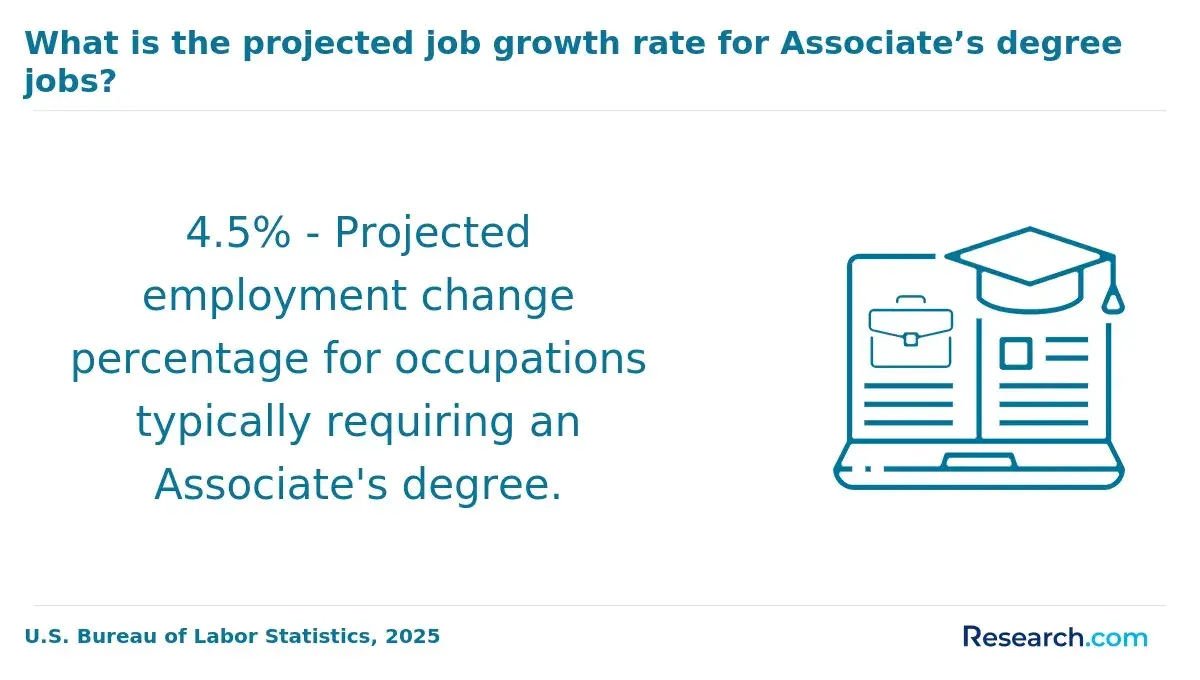
Prior learning, military training, and work experience can sometimes count toward a sustainability degree, but they are rarely automatic. Schools usually award these credits through standardized exams, ACE-reviewed military or workplace training, credit for professional certifications, or portfolio assessment.
The strongest candidates for prior learning credit are students whose experience connects clearly to sustainability competencies. Examples include environmental compliance, energy auditing, GIS mapping, corporate social responsibility, facilities management, conservation work, supply chain reporting, public health, emergency management, or military environmental operations.
Before paying for a portfolio or assessment, ask the school how the credit will apply. Prior learning credit that counts only as free elective credit may still be useful, but it will not shorten the degree if your elective area is already full.
- Ask whether prior learning credit can satisfy major, concentration, elective, or general education requirements.
- Confirm whether there is a cap on nontraditional credits such as exams, military training, and portfolio assessment.
- Request examples of sustainability-related experiences that have previously earned credit.
- Check whether professional certifications must be current to qualify.
- Get the evaluation result in writing before building your graduation plan around it.
How Do Transfer Credits Affect the Cost and ROI of a Sustainability Degree?
Transfer credits affect ROI by reducing tuition, fees, living costs, borrowing, and time away from full-time work. The financial value is strongest when credits replace required courses at the receiving institution and help you graduate earlier.
College Board's 2024-25 pricing data shows why this matters: average published tuition and fees are $4,050 at public two-year colleges and $11,610 for in-state students at public four-year colleges. For students who can complete transferable lower-division work at a community college, the savings can be meaningful, but only if the receiving sustainability program applies those credits efficiently.
The table below illustrates the main cost trade-offs. It does not predict an individual student's final cost, but it shows how transfer strategy affects the expenses students should compare.
| Transfer scenario | Potential financial advantage | Possible cost risk |
| Complete an associate degree before transfer | Lower-division tuition may be lower and block transfer may protect credits | Some major prerequisites may still need to be taken after transfer |
| Transfer early from community college | Earlier access to sustainability faculty, internships, and research | Unfinished general education credits may transfer less cleanly |
| Choose an online bachelor's completion program | May reduce relocation, commuting, and scheduling costs | Tuition may be higher than local public options depending on residency |
| Choose a private transfer-friendly program | May offer generous credit acceptance and faster completion | Higher tuition can offset time savings if aid is limited |
| Use prior learning assessment | Can reduce credits remaining for experienced adults | Assessment fees may not pay off if credits apply only as electives |
Career ROI also depends on job target. The BLS reports a median salary of $78,980 for environmental scientists and specialists and 7% projected employment growth for 2023-2033, but sustainability graduates may also pursue roles in operations, compliance, ESG reporting, policy analysis, energy, consulting, and nonprofit management. Students comparing sustainability management with broader organizational roles may also want to benchmark curricula against a masters human resources pathway, especially if their goal is workforce strategy, compliance, or organizational change.
What Common Transfer Mistakes Delay Sustainability Degree Completion?
The most common transfer mistakes happen before enrollment, when students assume a high credit count automatically means a shorter degree. In reality, graduation depends on how credits apply to the exact sustainability curriculum.
Use the following checklist to avoid delays. Each item addresses a common problem that can add semesters or increase cost.
- Do not enroll before receiving a written transfer credit evaluation or degree audit.
- Do not assume all credits from an accredited college will satisfy degree requirements.
- Check whether science courses need matching lab components to count for the sustainability major.
- Ask whether older credits in science, technology, statistics, or GIS are subject to recency limits.
- Review residency requirements before transferring with more than 75 credits.
- Confirm whether AP, CLEP, DSST, military, and portfolio credits count toward the major or only electives.
- Compare course sequencing so you do not discover that one missing prerequisite delays the capstone or internship.
- Verify accreditation and state authorization for online programs before sending transcripts or paying deposits.
Also be careful when comparing sustainability with regulated professional programs. For example, an LMFT program online may have clinical, accreditation, and licensure sequencing rules that are much stricter than a sustainability bachelor's program, so transfer expectations do not always carry across fields.
Which Sustainability Programs Offer the Most Efficient Transfer Pathways?
The most efficient sustainability programs are not always the ones advertising the largest transfer maximum. They are the programs that combine generous credit acceptance with a curriculum designed for transfer students, especially adults who already have general education, technical, military, or associate-degree credits.
When comparing program types, look for the model that best matches your academic history. The table below summarizes which pathways tend to produce the cleanest transfer experience.
| Efficient pathway | Why it can reduce time | Who should consider it |
| 2+2 community college articulation | Lower-division courses are preapproved for a specific bachelor's plan | Students starting at community college or finishing an associate degree |
| Online bachelor's completion in sustainability | Designed around upper-division coursework after transfer | Working adults with 60 to 90 prior credits |
| Environmental management or sustainability management major | May accept business, policy, operations, and applied technical credits | Students with career-focused or interdisciplinary transcripts |
| Public university transfer pathway | Often has published equivalencies and statewide general education rules | In-state students seeking predictable credit transfer |
| Competency-based or prior-learning-friendly program | May recognize professional experience and self-paced progress | Experienced adults with documented workplace learning |
Adult learners and retirees should also consider pacing, support, and credit use. If speed and flexibility are top priorities, comparing sustainability pathways with broader options such as one year degrees for seniors can help clarify whether a full sustainability major, certificate, or shorter credential best fits the goal.
A student with an environmental science associate degree may do best in a lab-aligned environmental studies program. A student with business, logistics, or public administration credits may finish faster in sustainability management. A student with military environmental operations experience may benefit from a school that evaluates ACE credit and portfolios.
How Should Students Compare Sustainability Programs Based on Transfer Efficiency?
Students should compare sustainability programs based on usable credits, remaining requirements, total cost, academic fit, and career relevance. A transfer-efficient program should make your path shorter without weakening access to internships, fieldwork, research, data tools, or employer-recognized skills.
Use this step-by-step process before choosing a program. It turns transfer policy from a marketing claim into a measurable decision.
- List every prior course, exam, military training record, certification, and work-based learning experience that might qualify for credit.
- Request unofficial pre-evaluations from multiple sustainability programs before submitting deposits.
- Ask each school to separate accepted credits from credits that apply to general education, major, concentration, elective, and residency requirements.
- Calculate credits remaining, not credits transferred, because remaining credits determine time and cost.
- Check whether required sustainability courses are offered every term, once per year, online, or only on campus.
- Compare total net price after grants, scholarships, employer tuition assistance, transfer scholarships, and fees.
- Review career alignment by checking whether the curriculum includes data analysis, environmental policy, climate risk, GIS, systems thinking, project management, communication, and applied capstone work.
- Ask whether transfer students can access internships, undergraduate research, career services, and faculty advising immediately after enrollment.
The best choice is the program that gives you the shortest credible path to a relevant credential at a cost you can justify. Avoid choosing solely by transfer maximum, tuition sticker price, or online convenience; the strongest ROI usually comes from the best combination of applied credits, affordable remaining coursework, academic support, and career fit.
Other Things You Should Know About Sustainability
Many transfer-friendly sustainability bachelor's programs allow 60 to 90 semester credits, especially degree completion programs. The important number is how many credits apply to the degree requirements, not just how many the school accepts.
Often, yes, if the associate degree is covered by a block-transfer or articulation agreement. Transferring before finishing can work well too, but it may leave more general education or prerequisite requirements unresolved.
Some do, usually through prior learning assessment, portfolios, ACE-reviewed training, military credit, or exams. Ask whether those credits apply to the major, electives, or only general credit before relying on them.
Yes. Delays can happen when major prerequisites do not transfer, lab courses do not match, credits exceed residency limits, or required sustainability courses are offered infrequently. A written degree audit is the best way to identify these risks before enrolling.
Top Trending Sustainability Rankings
References
- Why Transfer Students Should Know About Articulation Agreements https://transferca.org/should-transfer-students-know-about-articulation-agreements/
- Sustainability A.S. - Transfer Degree https://www.clcillinois.edu/programs/biodv/sustainability/sustainability-as-transfer-degree
- 3 ways community colleges should be communicating credit articulation agreements | EAB https://eab.com/resources/tool/3-ways-community-colleges-should-be-communicating-credit-articulation-agreements/
- Factors Influencing the Graduation Time Among Undergraduates at University of Khartoum http://article.sapub.org/10.5923.j.edu.20251501.02.html
- Types of Sustainability Degrees https://www.sustainabilitydegrees.com/degrees/
- Top Masters in Sustainable Development https://ehef.id/post/top-masters-sustainable-development/en
- Why Students Who Transfer Usually Take Longer to Graduate - Your College-Bound Kid https://yourcollegeboundkid.com/2022/11/07/why-students-who-transfer-usually-take-longer-to-graduate/