2026 Sustainability Degree Value by Institution Type: Public, Private, Nonprofit, and Online Models Compared

Co-Founder and Chief Data Scientist
Choosing a sustainability degree is not just about the major; it is about the institution model behind it. Public, private nonprofit, private for-profit, and online programs can differ sharply in net cost, support, flexibility, employer recognition, and time to completion.
College Board's 2024 pricing data lists average published tuition and fees at $11,610 for in-state public four-year students versus $43,350 at private nonprofit four-year institutions, making institution type a major ROI variable. This guide helps prospective students, working adults, and career changers compare options before committing tuition, time, and borrowing.
Key Things You Should Know
- Public universities often offer the lowest published tuition for in-state students, with College Board's 2024 data showing $11,610 in average in-state tuition and fees at public four-year colleges versus $43,350 at private nonprofit four-year institutions.
- Online sustainability degrees can be credible when the institution is properly accredited, but students should compare graduation rates, internship access, employer partnerships, and total fees rather than assuming online automatically means cheaper.
- Long-term value depends less on school type alone and more on net price, debt, transfer credits, time to completion, accreditation, career services, and alignment with roles such as sustainability analyst, environmental specialist, ESG associate, energy analyst, or corporate responsibility manager.
- Key Things You Should Know
- Is a Public University Sustainability Degree More Cost-Effective Than a Private One?
- How Do Employers View the Credibility of an Online Sustainability Degree?
- Do Private Nonprofit Universities Offer Better Career Networking for Sustainability Students?
- Are There Hidden Fees Associated with an Online Sustainability Degree Program?
- Do Recruiters Prefer Sustainability Graduates From Prestigious Private Nonprofit Universities?
- How Do Graduation Rates Impact the Perceived Value of a Sustainability Degree Across School Types?
- Does a Private University Sustainability Degree Provide Better Long-Term Salary Growth?
- How Do Alumni Networks of Nonprofit vs. Online Sustainability Programs Compare in Long-Term Support?
- How Can You Choose the Right Sustainability Degree Pathway Based on Your Financial and Career Goals?
- Top Trending Sustainability Rankings
Is a Public University Sustainability Degree More Cost-Effective Than a Private One?
A public university sustainability degree is often more cost-effective for in-state students, but it is not automatically the best value for every learner. The right comparison is not public versus private in isolation; it is net price, completion likelihood, available aid, local job access, and how well the curriculum supports the sustainability career you want.
College Board's 2024 pricing figures show why many students begin with public institutions when comparing affordability. Published tuition is only the starting point, but it gives a useful baseline for understanding the scale of the price gap.
| Institution model | Typical sustainability degree value profile | Cost consideration using 2024 U.S. pricing context | Best fit |
| Public university, in-state | Usually strong value when accredited, well connected to state agencies, utilities, planning offices, and regional employers | College Board reports average published tuition and fees of $11,610 for in-state public four-year students | Students who can attend in-state, use state aid, commute, or transfer from community college |
| Public university, out-of-state | Can be worth it for a highly specialized sustainability, environmental science, or climate policy program | College Board reports average published tuition and fees of $30,780 for out-of-state public four-year students | Students targeting a specific faculty lab, research center, or regional job market |
| Private nonprofit university | May offer smaller classes, strong alumni networks, and mission-driven sustainability centers | College Board reports average published tuition and fees of $43,350 at private nonprofit four-year institutions | Students receiving large grants, scholarships, or strong career-network benefits |
| Private for-profit institution | May offer flexible scheduling, but quality, outcomes, and employer perception vary widely | Students should scrutinize total borrowing, completion rates, and accreditation before enrolling | Working adults who need flexibility and have verified program outcomes |
| Online program | Delivery format rather than institution type; can be public, private nonprofit, or for-profit | May reduce relocation and commuting costs but can include technology, proctoring, or residency fees | Working professionals, caregivers, military students, and students far from campus programs |
For many undergraduates, the strongest value path is a regionally accredited public university combined with transfer credits, state grants, internships, and a sustainability concentration tied to environmental science, business, engineering, public policy, or urban planning. A private nonprofit can still be the better investment if institutional grants reduce the net price or if the program provides unusually strong placement into climate consulting, ESG reporting, clean energy, corporate sustainability, or government roles.
Before deciding, compare the full cost structure rather than the sticker price. Sustainability programs may include fieldwork, lab courses, GIS software, travel, capstone projects, or unpaid internship expectations, all of which affect affordability.
- Ask each school for a net price estimate after grants and scholarships, not just tuition.
- Check whether transfer credits apply to major requirements or only electives.
- Compare the number of credits required for graduation because excess credits increase both tuition and opportunity cost.
- Review whether internships are built into the program or left entirely to the student.
- Estimate lost earnings if a campus program requires reducing work hours.
How Do Employers View the Credibility of an Online Sustainability Degree?
Employers usually view an online sustainability degree as credible when it comes from an accredited institution with a rigorous curriculum, clear learning outcomes, and evidence of applied experience. The word "online" matters less than whether the program teaches relevant skills such as carbon accounting, environmental compliance, life-cycle assessment, energy systems, GIS, data analysis, stakeholder communication, and sustainability reporting.
Online education has also become mainstream across many professional fields. Students comparing flexible education models can see similar acceptance patterns in other career-aligned programs, such as an LMFT program online, where credibility depends heavily on accreditation, supervised experience, and employer or licensure expectations rather than delivery format alone.
For sustainability, employer confidence is strongest when online students can show applied work. A transcript alone may not be enough for competitive roles in ESG, climate risk, environmental consulting, or energy management.
- Choose a regionally accredited institution and verify any specialized accreditation relevant to environmental science, business, engineering, planning, or public administration.
- Look for project-based courses using current tools, such as emissions inventories, ESG frameworks, environmental impact analysis, or geospatial mapping.
- Confirm access to internships, employer-sponsored projects, faculty references, and career services for online students.
- Build a portfolio with capstone reports, dashboards, policy briefs, audits, or sustainability plans that can be shown to employers.
- Avoid programs that advertise flexibility but provide little detail about faculty qualifications, student outcomes, or employer connections.
The main limitation of online sustainability education is not credibility by itself; it is access to field experience. If your target role requires lab work, environmental sampling, ecological assessment, or in-person stakeholder engagement, ask how the online program replaces or arranges those experiences.
Do Private Nonprofit Universities Offer Better Career Networking for Sustainability Students?
Private nonprofit universities can offer better career networking for some sustainability students, especially when the school has an active alumni base, employer advisory boards, research centers, and strong ties to consulting firms, nonprofits, utilities, foundations, or corporate sustainability teams. However, nonprofit status alone does not prove better networking; the value depends on how often students actually interact with employers and alumni.
Networking matters because sustainability is a cross-functional field. Graduates may work in operations, supply chain, facilities management, finance, compliance, communications, urban planning, or environmental programs. A school that helps students connect across sectors can improve career clarity and access to internships.
| Networking factor | Public university strength | Private nonprofit strength | Online program consideration |
| Regional employer access | Often strong with state agencies, public utilities, local governments, and regional employers | Can be strong in urban markets or mission-focused sectors | Depends on virtual career services and employer reach outside campus location |
| Alumni engagement | Large alumni base can help, but connections may be less personalized | Smaller alumni networks may be more responsive when actively managed | Requires structured alumni events, mentoring platforms, and online networking support |
| Internship placement | Often tied to public agencies, research labs, extension programs, or local sustainability offices | May be tied to nonprofits, consulting, corporate responsibility, or foundation-funded projects | Must be evaluated carefully because remote students may need to secure local placements |
| Career coaching | Quality varies by department and campus career center capacity | May be more individualized at smaller institutions | Should include remote appointments, resume review, mock interviews, and employer events |
A private nonprofit may justify a higher net price when networking is specific, measurable, and relevant. Look for named employer partners, internship placement examples, alumni panels, mentorship programs, and capstone sponsors. If a school only makes broad claims about "strong connections" without showing how students use them, treat that as a weak value signal.
Do Private Colleges Offer More Personalized Faculty Mentorship for Sustainability Students?
Private colleges may provide more personalized faculty mentorship in sustainability programs, especially when classes are smaller and faculty are expected to advise undergraduates closely. This can be valuable in an interdisciplinary field where students need help choosing between environmental science, sustainable business, climate policy, renewable energy, conservation, public health, and urban planning pathways.
Mentorship has practical value when it helps students secure research roles, refine a capstone project, publish or present work, apply for internships, or choose a graduate pathway. It is less valuable when it is informal, inconsistent, or limited to general academic advising.
Students comparing public and private programs should ask direct questions about faculty access before assuming one model is better. The answers below can reveal whether mentorship is built into the program or left to chance.
- How many students does each sustainability faculty advisor typically advise?
- Are faculty available to online, transfer, part-time, and working students at flexible times?
- Do students complete faculty-supervised research, consulting projects, fieldwork, or community sustainability plans?
- Can faculty connect students with internships, conferences, labs, agencies, or employer-sponsored capstones?
- Are adjunct instructors used mainly for professional expertise, or does the program rely on them because full-time faculty capacity is limited?
Public universities can also offer excellent mentorship, particularly in departments with funded research, environmental institutes, extension offices, or honors programs. The trade-off is that students may need to be more proactive in larger departments. Private colleges may make access easier, but the higher price only makes sense if mentorship improves completion, skill development, and career readiness.
Are There Hidden Fees Associated with an Online Sustainability Degree Program?
Online sustainability programs can include hidden or easy-to-miss fees, even when advertised tuition looks affordable. These costs matter because online students often choose the format to control total cost while balancing work, family, or location constraints.
The most important fee categories are not always obvious on program landing pages. Ask for a complete cost sheet that separates tuition from required fees and one-time expenses.
- Technology fees for learning platforms, digital services, or online course access.
- Proctoring fees for monitored exams or identity verification.
- Software or data tools for GIS, statistics, sustainability reporting, energy modeling, or life-cycle assessment.
- Residency, fieldwork, lab, or campus immersion costs that require travel.
- Graduation, transcript, portfolio, internship, or clinical-placement-style administrative fees.
- Course material costs for digital textbooks, case packets, simulations, or professional standards.
- Out-of-state tuition rules that may still apply to online students at some public institutions.
The biggest online cost mistake is comparing per-credit tuition without multiplying by total required credits and adding fees. Another common mistake is ignoring time-to-completion. A lower-priced program can become more expensive if limited course availability delays graduation or if credits do not transfer efficiently.
Working adults should also consider opportunity cost. A program with asynchronous courses may allow students to keep full-time employment, which can make a slightly higher tuition price more manageable than a cheaper program with rigid meeting times.
Do Recruiters Prefer Sustainability Graduates From Prestigious Private Nonprofit Universities?
Some recruiters may respond positively to graduates from prestigious private nonprofit universities, especially in competitive consulting, finance-adjacent ESG, climate risk, policy, and corporate leadership pipelines. Still, prestige is rarely the only hiring factor. In sustainability, employers often prioritize applied skills, sector knowledge, communication ability, data literacy, and evidence that the candidate can solve real operational or environmental problems.
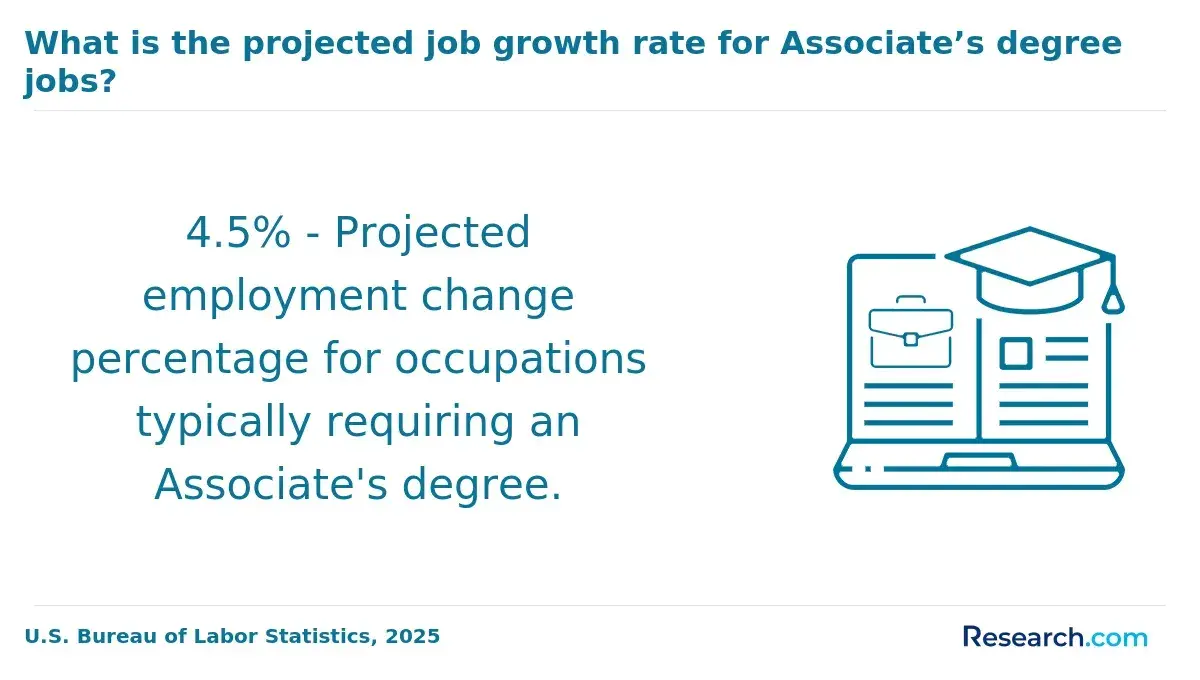
The U.S. Bureau of Labor Statistics' May 2024 Occupational Employment and Wage Statistics reported a median annual wage of $80,060 for environmental scientists and specialists. That figure is useful because it shows that sustainability-adjacent work can support solid earnings, but it does not mean any specific degree or school brand will produce that salary; role, location, experience, and technical skill level matter.
Institutional prestige is most valuable when it combines with tangible advantages. Students should separate brand reputation from actual career preparation.
- A prestigious private nonprofit may be worth the cost if it offers strong employer pipelines, funded internships, alumni access, and specialized sustainability labs or centers.
- A public university may outperform a private option if it has stronger regional hiring relationships, lower debt, and better access to agencies or environmental employers.
- An online degree may compete well when the student already has professional experience and can add sustainability credentials without leaving the workforce.
- A less selective institution may still provide high value if it has transparent outcomes, strong advising, low net cost, and applied projects aligned with the student's target role.
Recruiters often use school reputation as a quick signal, but it is not a substitute for proof of competence. Students can strengthen any institution type by completing internships, earning relevant certificates, learning data tools, joining professional associations, and producing a strong sustainability portfolio.
How Do Graduation Rates Impact the Perceived Value of a Sustainability Degree Across School Types?
Graduation rates affect the perceived value of a sustainability degree because a degree only produces potential career value if the student completes it. A low sticker price can become a poor investment if students are unlikely to finish, lose credits during transfer, or leave with debt but no credential.
NCES reporting released in 2024 continues to show major completion differences across institutional sectors, with public and private nonprofit four-year institutions generally posting much stronger bachelor's completion outcomes than private for-profit four-year institutions. For sustainability students, that means completion support should be evaluated as part of ROI, not treated as a secondary detail.
| Completion factor | Why it matters for sustainability degree value | What to check before enrolling |
| Six-year graduation rate | Shows whether students commonly complete within a reasonable timeframe | Use the school's student consumer information page or College Scorecard profile |
| Transfer-credit acceptance | Can reduce cost and time, especially for students starting at community college | Request a written transfer evaluation before committing |
| Course availability | Delayed required courses can extend graduation and increase costs | Ask whether major courses are offered every term, annually, or less often |
| Online student support | Remote learners need advising, tutoring, library access, and career support that works outside business hours | Confirm services are available to online and part-time students |
| Internship and capstone completion | Sustainability employers often value applied experience | Ask how many students complete internships, fieldwork, or employer-sponsored projects |
Graduation data should be interpreted carefully. A school serving many transfer, part-time, first-generation, or working students may have different completion patterns than a residential college. Instead of using one number alone, compare graduation rates with advising quality, student demographics, transfer policies, and your own ability to attend consistently.
Students considering longer academic pathways should be especially attentive to completion risk. If a sustainability career goal may eventually require graduate research or leadership training, it can be useful to understand how accelerated options such as the shortest doctoral programs differ from traditional timelines, though doctoral study is not required for most sustainability roles.
Does a Private University Sustainability Degree Provide Better Long-Term Salary Growth?
A private university sustainability degree does not automatically provide better long-term salary growth. Salary growth usually depends on role progression, technical skills, industry, geographic market, management responsibility, and the student's ability to move from entry-level sustainability tasks into higher-value strategy, analytics, compliance, or leadership work.
The strongest salary-growth pathways often combine sustainability knowledge with another functional skill. Examples include finance for climate risk, accounting for emissions reporting, supply chain for responsible sourcing, data analytics for ESG metrics, engineering for energy systems, or human resources for workforce sustainability and organizational change. Students comparing sustainability with people-focused business paths may also review options such as master's human resources programs if their career goal is workplace policy, employee engagement, or corporate social responsibility.
Private universities can support long-term salary growth when they provide selective employer access, graduate-school advising, leadership development, and alumni mentorship. Public universities can support the same outcome when they offer strong research, public-sector partnerships, technical electives, and lower student debt. Online programs can support salary growth when they allow working professionals to add sustainability expertise without stepping away from their current career track.
To evaluate salary-growth potential, focus on the program's connection to roles rather than the institution label alone.
- For corporate sustainability or ESG roles, look for coursework in reporting frameworks, data analysis, finance, risk, and stakeholder communication.
- For environmental compliance roles, look for environmental law, permitting, environmental science, toxicology, and regulatory coursework.
- For clean energy roles, look for energy systems, economics, project management, engineering basics, and utility-sector partnerships.
- For planning or policy roles, look for urban planning, public administration, GIS, climate adaptation, and community engagement.
- For consulting roles, look for client-based projects, writing-intensive assignments, presentations, and quantitative analysis.
The best long-term ROI often comes from paying the lowest net price for a credible program that gives you the skills and experiences needed for your target sector. A prestigious private institution may help at career launch, but excessive debt can reduce financial flexibility if early-career salaries are moderate.
How Do Alumni Networks of Nonprofit vs. Online Sustainability Programs Compare in Long-Term Support?
Alumni networks at nonprofit and online sustainability programs can both provide long-term support, but they work differently. Nonprofit campus-based programs may offer stronger identity, recurring events, and local employer relationships. Online programs may offer broader geographic reach and stronger access for working adults if the school intentionally invests in virtual networking.
The key question is not whether the network exists; it is whether students can use it. A large alumni database has limited value if students cannot contact mentors, attend events, or get referrals. A smaller online network can be highly useful if it is active, professionally moderated, and connected to sustainability employers.
| Alumni network feature | Private nonprofit or public campus program | Online sustainability program |
| Local employer density | Often stronger near campus and regional industry clusters | Can be weaker locally unless the student lives near partner employers |
| Geographic flexibility | May be strongest in the school's home region | Can connect students across states and industries |
| Mentorship access | May include in-person events, alumni panels, and department contacts | Works best through virtual mentoring platforms and scheduled networking events |
| Career-change support | Often available through career centers, but hours may favor full-time students | Can be strong for working adults if coaching is designed for remote learners |
| Long-term engagement | Often tied to institutional loyalty and campus traditions | Depends on intentional community building and active program management |
Students should ask how alumni are involved in the sustainability program specifically. General university alumni strength is helpful, but a relevant network in climate, energy, ESG, conservation, policy, or environmental consulting is more valuable than a broad directory with few sustainability contacts.
How Can You Choose the Right Sustainability Degree Pathway Based on Your Financial and Career Goals?
The right sustainability degree pathway depends on your financial ceiling, current obligations, career target, and need for flexibility. Because "online" is a delivery format and public, private nonprofit, and private for-profit describe institutional control and mission, you may be comparing overlapping models such as an online public university, an online private nonprofit, or a campus-based public program.
Use a structured decision process rather than relying on reputation, advertised tuition, or convenience alone. The following steps help you compare value in a way that connects cost to career outcomes.
- Define your target role first, such as sustainability analyst, environmental compliance specialist, ESG associate, energy analyst, climate policy assistant, urban planning aide, or corporate responsibility coordinator.
- Verify institutional accreditation and check whether the degree field needs specialized accreditation, state authorization, licensure preparation, or professional certification alignment.
- Calculate total cost using tuition, required credits, fees, books, software, travel, residency requirements, lost work hours, and expected borrowing.
- Compare net price after grants, scholarships, employer tuition assistance, military benefits, and transfer credits.
- Review completion indicators, including graduation rates, retention, course availability, advising access, and support for transfer or part-time students.
- Evaluate career infrastructure, including internships, capstones, employer projects, alumni mentors, resume support, and job-placement transparency.
- Check whether online students receive the same faculty access, library resources, career coaching, and internship support as campus students.
- Compare debt against realistic early-career roles and avoid borrowing based on best-case salary assumptions.
Different students will reach different conclusions. An in-state public university may be the best value for a traditional undergraduate who can use state aid and local internships. A private nonprofit may be worth it for a student receiving significant institutional grants and access to a strong sustainability network. An online public or nonprofit program may be best for a working professional who needs flexibility. A private for-profit program should be evaluated with extra care around accreditation, debt, completion rates, and employer recognition.
Older adults and career changers should pay special attention to time-to-completion and whether the degree is necessary for the intended goal. Some learners may find that shorter credentials, transfer-friendly programs, or options such as one-year degrees for seniors better match their financial timeline and career needs.
Avoid the most common mistake: choosing the school type first and the career strategy second. The better approach is to identify the role you want, find the lowest-risk accredited pathway that teaches the required skills, and choose the institution model that lets you complete the degree with manageable debt and credible career support.
Other Things You Should Know About Sustainability
Yes, it can be respected when it comes from an accredited institution and includes rigorous coursework, applied projects, and career support. Employers usually care more about skills, experience, accreditation, and portfolio evidence than whether courses were online.
For in-state students, public universities often have the lowest published tuition. However, the cheapest real option depends on net price after aid, transfer credits, fees, housing, commuting, and time to completion.
They can be worth it if grants reduce the net cost or if the program offers strong mentorship, internships, alumni access, and employer connections. They are harder to justify when the higher price leads to heavy debt without clear career advantages.
Check accreditation, total cost, transfer policies, graduation rates, faculty expertise, internship access, online student support, career outcomes, and whether the curriculum matches your target role in areas such as ESG, compliance, energy, planning, or environmental analysis.
Top Trending Sustainability Rankings
References
- Labor Market | ELA https://ela.nauka.gov.pl/en/labor-market/who_earns_more_after_studies
- Global Trends in Education Quality Standards: What Institutions Need to Know https://www.ieac.org.uk/43-Global-Trends-in-Education-Quality-Standards-What-Institutions-Need-to-Know-blog.php
- For-Profit Colleges: What Every Student Should Know | OnlineColleges.net https://www.onlinecolleges.net/for-students/for-profit-colleges-student-guide/
- Do graduate outcomes reflect universities’ work on sustainability? https://eua.eu/our-work/expert-voices/do-graduate-outcomes-reflect-universities-work-on-sustainability.html
- Private vs. Public Colleges: Differences, Pros & Cons https://collegewise.com/blog/private-vs.-public-colleges-differences
- Best Practices — Sustainability Education Accreditation Commission https://www.sustedu.org/best-practices
- Where are they now? https://www.sciencespo.fr/carrieres/en/recruit/recruit-students-graduates/graduates-survey/