2026 Sustainability Degree Clinical Placement Report: Hours, Site Access, and Completion Bottlenecks

Co-Founder and Chief Data Scientist
Sustainability students often discover that the hardest part of finishing a degree is not the coursework; it is securing and completing supervised field experience. The U.S. Bureau of Labor Statistics reports a May 2024 median annual pay of $80,060 for environmental scientists and specialists, which makes practical preparation important for students aiming at applied sustainability careers.
This guide explains expected placement hours, site access, online and local options, costs, delays, and program-selection questions so prospective students can choose a degree with realistic completion support.
Key Things You Should Know
- Sustainability "clinical placement" usually means supervised fieldwork, practicum, internship, applied project, or capstone experience rather than patient-care clinicals; many programs require roughly 120 to 300 hours, while some public health, environmental health, or intensive graduate tracks may require more.
- Site access is a major completion risk because placements depend on employer capacity, supervisor availability, liability rules, background checks, transportation, and seasonal project cycles.
- College Board's 2024-25 published tuition and fees averages were $11,610 for in-state public four-year students and $43,350 for private nonprofit four-year students, before placement-related travel, onboarding, lost work time, or relocation costs.
- Key Things You Should Know
- What Clinical Placement Requirements Do Sustainability Degree Programs Have?
- How Are Clinical Placement Sites Assigned in Sustainability Degree Programs?
- Which Factors Create Clinical Placement Bottlenecks in Sustainability Degree Programs?
- What Supervision and Evaluation Standards Apply During Sustainability Clinical Placements?
- Can Sustainability Students Complete Clinical Placements Part-Time, Online, or Near Home?
- What Costs Are Associated With Sustainability Clinical Placements?
- How Do Clinical Placements Affect Career Readiness for Sustainability Graduates?
- How Are Clinical Placement Opportunities Changing for Sustainability Students?
- How Should Students Compare Sustainability Degree Programs Based on Clinical Placement Quality?
- Top Trending Sustainability Rankings
What Clinical Placement Requirements Do Sustainability Degree Programs Have?
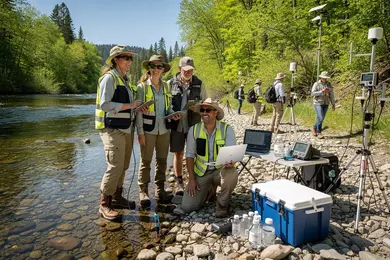
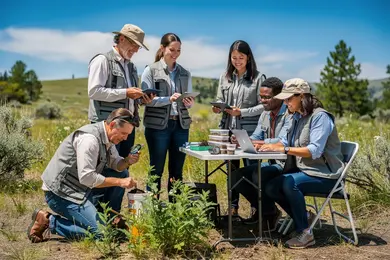
In sustainability education, a clinical placement is best understood as a structured, supervised learning experience in a real organization. It may be called an internship, practicum, field placement, cooperative education experience, service-learning project, applied practice experience, studio project, or capstone consulting assignment. Unlike nursing or allied health clinicals, sustainability placements are not governed by one national hour standard across all degree types.
The exact requirement depends on the program's academic level, professional focus, accreditation expectations, and whether the degree is housed in environmental science, public health, business, engineering, urban planning, agriculture, policy, or interdisciplinary sustainability studies. Students should treat the hour requirement as a graduation-critical requirement, not as an optional resume booster.
The table below summarizes common sustainability placement models. The hour ranges are planning ranges students often encounter, not universal rules; always verify the catalog, handbook, and placement agreement before enrolling.
| Program type | Common placement format | Typical hour planning range | What students usually produce |
| Associate or certificate program | Local internship, service-learning project, or employer-based project | 60 to 150 hours | Site reflection, supervisor evaluation, project log, or skills portfolio |
| Bachelor's in sustainability or environmental studies | Internship, field practicum, capstone partner project, or cooperative education | 120 to 300 hours | Project report, presentation, field journal, dataset, audit, or implementation plan |
| Master's in sustainability, climate policy, or environmental management | Consulting project, practicum, research partnership, or professional internship | 150 to 400 hours | Client deliverable, policy brief, sustainability plan, emissions inventory, or applied research product |
| Public health, environmental health, or occupational safety track | Applied practice or field experience with a public agency, health department, nonprofit, or regulated employer | Varies by accreditation and school policy | Competency-based deliverables, site evaluation, public health product, or supervisor assessment |
Students should also distinguish required hours from required competencies. Some programs care most about the number of hours completed, while others require evidence that students can perform tasks such as stakeholder analysis, environmental assessment, ESG reporting, community engagement, lifecycle analysis, or compliance documentation.
Before applying, ask the program for its most recent placement handbook and confirm these requirements in writing:
- Minimum and maximum allowable placement hours by term
- Whether paid internships can satisfy the requirement
- Whether current employment can be used as a placement site
- Whether remote project work counts toward required hours
- Whether evening, weekend, summer, or compressed placements are permitted
- Whether placements must be approved before hours begin
- What happens if a site cancels or cannot provide enough hours
How Are Clinical Placement Sites Assigned in Sustainability Degree Programs?
Sustainability placements are assigned in three main ways: school-arranged, student-arranged, or jointly developed. The best model depends on the student's location, schedule, career goal, and tolerance for administrative risk.
The table below compares the placement assignment models most prospective students should evaluate. It is especially useful for online, hybrid, and working-adult students who may live far from the campus's strongest employer network.
| Placement model | How it works | Best fit | Main risk |
| School-arranged placement | The program identifies approved sites, coordinates agreements, and matches students to available supervisors. | Students who want lower administrative burden or are entering a field with limited contacts. | Students may have less control over site location, schedule, or project type. |
| Student-arranged placement | The student finds a site, then the program reviews and approves it before hours begin. | Students with employer contacts, a target organization, or a need to stay near home. | Graduation can be delayed if the site is not approved, lacks a qualified supervisor, or misses paperwork deadlines. |
| Hybrid placement support | The school provides leads, templates, affiliation requirements, and coordinator support while the student helps secure the site. | Online and regional students who need flexibility but still want guardrails. | Support quality varies widely by program and coordinator workload. |
School-arranged placements are often strongest when a program has long-standing relationships with local governments, utilities, hospital systems, universities, sustainability offices, environmental consulting firms, or community organizations. Student-arranged placements can be excellent when a learner already works in facilities, operations, environmental compliance, logistics, agriculture, planning, or corporate social responsibility and can build a project around their workplace.
A common mistake is assuming that "placement assistance" means "guaranteed placement." Many schools help with leads and paperwork but do not promise a site that fits every location, schedule, or specialization. Students should ask for plain-language answers, not marketing phrases.
Use this sequence to reduce placement-assignment risk before and after enrollment:
- Ask whether placements are guaranteed, school-arranged, student-arranged, or conditional on site availability.
- Request examples of recent placement sites for your concentration, not just the department's overall partner list.
- Confirm whether your state or region has approved sites if you are enrolling online.
- Ask who signs affiliation agreements and how long approvals usually take.
- Verify whether the program has backup sites if your original placement falls through.
- Start site conversations at least one term before the placement begins, even if the school says formal matching occurs later.
Which Factors Create Clinical Placement Bottlenecks in Sustainability Degree Programs?
Placement bottlenecks occur when students are academically ready for fieldwork but cannot start, continue, or finish the required hours. In sustainability programs, bottlenecks are usually caused by limited site capacity, uneven project timing, documentation delays, and mismatches between student schedules and employer needs.
Some bottlenecks are predictable. For example, climate adaptation, watershed monitoring, campus energy audits, and agricultural sustainability projects may follow seasonal cycles. Others are administrative, such as delayed background checks, unsigned memoranda of understanding, missing insurance language, or site onboarding portals that close before the student completes requirements.
The table below shows common bottlenecks and how they may affect completion timelines. Use it to identify questions to ask before paying a deposit or registering for the practicum term.
| Bottleneck | Why it happens | Possible completion impact | Warning sign |
| Limited site capacity | Employers can supervise only a small number of students at a time. | Student may need to wait for a later term or accept a less convenient site. | The program cannot name recent placement partners in your concentration. |
| Supervisor shortage | Qualified staff may be too busy to mentor, review deliverables, and sign evaluations. | Hours may be interrupted or project scope may be reduced. | The site has not hosted students before or lacks a designated supervisor. |
| Paperwork and affiliation delays | Legal, insurance, data privacy, or risk-management review takes longer than expected. | Student cannot count hours until approval is finalized. | The school allows students to search but gives vague approval timelines. |
| Scheduling conflict | Most site activity occurs during weekday business hours. | Working students may need to reduce employment hours or extend the program. | The program advertises flexibility but cannot confirm evening or weekend options. |
| Transportation or travel burden | Sites may be far from campus or unavailable in the student's home region. | Added costs or relocation may become necessary. | The program's partner network is concentrated in one metro area. |
| Project mismatch | The site offers general office tasks rather than sustainability competencies. | The placement may be rejected or require additional deliverables. | The role description does not mention measurable sustainability, environmental, policy, or operational work. |
Students can reduce bottlenecks by treating placement preparation like a course with deadlines. The most effective habits are simple but time-sensitive:
- Save every placement email, approval form, onboarding task, and supervisor contact in one folder.
- Complete background checks, immunization forms, safety training, or confidentiality modules as soon as they are released.
- Ask whether hours completed before formal approval will count; in many programs, they will not.
- Keep a weekly hour log signed or acknowledged by the supervisor instead of reconstructing hours at the end.
- Notify the placement coordinator immediately if the site changes your duties, schedule, supervisor, or project scope.
- Have a backup site category in mind, such as municipal sustainability, nonprofit climate work, facilities operations, environmental consulting, or campus operations.
How Do Clinical Hour Requirements Affect Sustainability Degree Completion?
Clinical hour requirements affect degree completion because they add a second timetable on top of academic coursework. A student may pass every class but still be unable to graduate until supervised hours, evaluations, and deliverables are approved.
Hour requirements are especially important for working adults, caregivers, commuters, military-connected students, and online learners who cannot easily attend weekday fieldwork. A 150-hour requirement may sound manageable, but it becomes difficult if the site only allows 10 hours per week during normal business hours. At that pace, the placement takes about a full semester before accounting for onboarding delays or missed weeks.
The table below illustrates how weekly availability changes the practical completion timeline. It does not replace school policy, but it helps students test whether a placement requirement fits their real schedule.
| Required hours | 10 hours per week | 15 hours per week | 20 hours per week | Best scheduling fit |
| 120 hours | About 12 weeks | About 8 weeks | About 6 weeks | One semester or summer term |
| 180 hours | About 18 weeks | About 12 weeks | About 9 weeks | Semester plus early start, or structured summer |
| 240 hours | About 24 weeks | About 16 weeks | About 12 weeks | Two-term plan or high-availability internship |
| 300 hours | About 30 weeks | About 20 weeks | About 15 weeks | Extended practicum, co-op, or reduced outside work |
Completion risk rises when students enroll in an accelerated program without confirming how field hours fit into the calendar. Students comparing sustainability degrees with accelerated graduate options, including the shortest doctoral programs, should pay close attention to non-course requirements because fieldwork can limit how much a program can realistically be compressed.
The safest approach is to map placement hours before the final year. Students should know the earliest term they can begin, the latest term they can finish, whether summer placements are allowed, and whether there are prerequisites such as research methods, environmental policy, GIS, statistics, occupational safety, or professional communication.
Red flags include a program that lists a placement requirement but does not publish hour expectations, approval steps, site criteria, or a named coordinator. Another red flag is a program that markets itself as fully online but requires in-person hours without explaining how distance students secure approved sites.
What Supervision and Evaluation Standards Apply During Sustainability Clinical Placements?
Supervision and evaluation standards exist to make sure the placement is educational, safe, and aligned with degree outcomes. A good placement is not simply unpaid labor; it should give students supervised responsibility for tasks connected to sustainability practice.
Typical supervision includes a site supervisor and an academic supervisor or practicum coordinator. The site supervisor verifies attendance, assigns day-to-day work, provides feedback, and evaluates professional behavior. The academic supervisor ensures that the work satisfies program outcomes and that deliverables are appropriate for college credit.
The table below explains the most common supervision and evaluation elements. Students should compare these elements across programs because weak supervision can reduce the value of the placement even when the hour requirement is met.
| Standard | What it means | Why it matters |
| Approved learning agreement | The student, school, and site agree on duties, hours, supervision, and deliverables before the placement starts. | It prevents students from completing hours that do not count toward graduation. |
| Qualified site supervisor | The site names a professional who can oversee sustainability-related work and complete evaluations. | It protects quality and helps students receive field-specific feedback. |
| Documented hours | The student tracks dates, tasks, and time worked according to program rules. | It provides evidence that the requirement was completed. |
| Competency-based deliverables | The student submits products such as audits, plans, reports, policy memos, dashboards, or presentations. | It demonstrates applied skill rather than mere attendance. |
| Midpoint and final evaluation | The supervisor reviews performance during and after the placement. | It allows problems to be corrected before the end of the term. |
| Professional conduct standards | The student follows site rules for safety, confidentiality, data use, communication, and attendance. | It protects the site relationship and can affect whether hours are accepted. |
Students should pay special attention to data and confidentiality rules. Sustainability work may involve utility bills, emissions data, environmental samples, employee travel records, procurement information, community health indicators, or facility plans. A site may require confidentiality training even if the placement is not clinical in the healthcare sense.
Common mistakes include starting work before the learning agreement is approved, failing to document hours weekly, treating the placement like a casual volunteer role, or waiting until the final week to ask for a supervisor evaluation. These errors can delay graduation even when the student performed useful work.
Can Sustainability Students Complete Clinical Placements Part-Time, Online, or Near Home?
Many sustainability students can complete placements part-time, online, or near home, but only if the program and site approve the format. Online coursework does not automatically mean online fieldwork. Some sustainability tasks can be completed remotely, while others require field visits, lab work, facility tours, community meetings, or in-person audits.
Remote-friendly placements are most common in policy analysis, ESG reporting, carbon accounting support, grant research, sustainability communications, data dashboarding, climate risk research, procurement analysis, and nonprofit program evaluation.
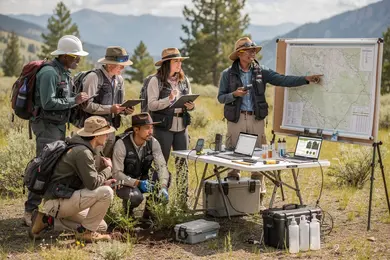
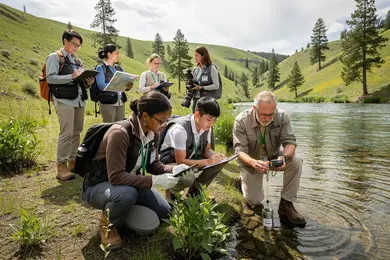
In-person placements are more common in environmental sampling, facilities energy audits, waste audits, occupational safety, habitat restoration, agriculture, transportation planning, and community engagement events.
The table below compares common scheduling formats. It can help students decide whether to prioritize a campus program with local partners, a hybrid program, or an online program with strong local-site approval support.
| Format | How it usually works | Best fit | Potential limitation |
| Part-time placement | Student completes hours across a longer term while taking classes or working. | Working adults and caregivers. | May extend the calendar if weekly site hours are low. |
| Full-time internship or co-op | Student concentrates field hours into a summer, semester, or paid internship block. | Students who can reduce coursework or outside employment temporarily. | May require relocation, unpaid time, or a delayed course sequence. |
| Remote placement | Student completes approved project work online with virtual supervision. | Students in data, policy, reporting, communications, or research-focused tracks. | May not satisfy programs that require field observation or direct site experience. |
| Near-home placement | Distance student identifies a local organization and obtains school approval. | Online students outside the campus region. | Approval can take longer if the site lacks an existing affiliation agreement. |
| Hybrid placement | Student combines remote project work with periodic site visits or campus intensives. | Students who need flexibility but want hands-on exposure. | Travel dates may be fixed and difficult to reschedule. |
Students researching an LMFT program online will see a useful parallel: online coursework can expand access, but supervised practice requirements still depend on approved sites, qualified supervisors, and state or institutional rules. Sustainability students should apply the same caution when comparing online options.
To evaluate flexibility, ask the school for examples rather than general assurances. Good questions include whether recent online students completed placements in their home states, whether remote work counted toward hours, whether paid employment was approved, and whether the coordinator helps negotiate site agreements outside the campus region.
If staying near home is essential, prioritize programs that publish a clear local-site approval process, allow employer-based projects when appropriate, and maintain responsive placement advising. Avoid assuming that a prestigious campus network will help if all partner sites are far from where you live.
What Costs Are Associated With Sustainability Clinical Placements?
Placement costs can be direct, indirect, or opportunity-based. Direct costs include tuition for practicum credits, background checks, safety training, transportation, parking, supplies, professional clothing, software, and sometimes housing. Indirect costs include reduced work hours, childcare, schedule changes, or commuting time.
Tuition is usually the largest cost driver. College Board's 2024-25 figures show wide differences in published tuition and fees by institution type, which means students should compare the total degree cost and not just the practicum fee. A lower-tuition program with weak placement support can still become expensive if delays add another term.
The table below separates common placement-related costs from regular tuition. It can help students build a more realistic budget before the placement term begins.
| Cost category | Examples | When it becomes significant |
| Practicum tuition or credit fees | Internship credits, capstone credits, field supervision course | When the placement requires paid credits during a separate term. |
| Onboarding and compliance | Background check, drug screen, immunization record, safety modules, identification badge | When the site is a health system, government agency, lab, school district, or regulated workplace. |
| Transportation | Fuel, public transit, parking, tolls, rideshare, vehicle wear | When approved sites are far from campus or home. |
| Housing or relocation | Short-term lease, summer housing, temporary relocation | When the strongest placement option is outside the student's region. |
| Equipment and software | Field gear, safety boots, hard hat, GIS access, statistical tools, laptop requirements | When the placement involves fieldwork, facilities, mapping, or data analysis. |
| Lost wages or reduced hours | Unpaid daytime hours replacing paid work time | When site schedules conflict with the student's job. |
Students should ask whether placements are usually paid. Some sustainability internships are paid, especially in consulting, utilities, corporate operations, and government fellowship programs. Others, particularly nonprofit or community-based projects, may be unpaid but offer strong mission fit and portfolio value.
It can be worth paying more for a program with stronger placement infrastructure if that support reduces the risk of delayed graduation, relocation, or weak supervision. However, higher tuition is not proof of better placement quality. Ask for concrete evidence: coordinator caseloads, recent site examples, student-arranged approval timelines, and policies for placement disruption.
How Do Clinical Placements Affect Career Readiness for Sustainability Graduates?
Clinical placements can improve career readiness because they convert sustainability coursework into evidence of applied skill. Employers often want proof that candidates can work with real constraints: incomplete data, budget limits, stakeholder disagreements, regulatory requirements, and competing organizational priorities.
The BLS May 2024 median annual pay of $80,060 for environmental scientists and specialists provides useful salary context, but sustainability career outcomes vary by role, sector, degree level, technical skill, and location. A placement does not guarantee a job; it helps students build work samples, references, and clearer evidence of fit for applied roles.
The table below connects placement settings with career-relevant skills. Students should use it to choose sites that match their target roles rather than accepting any available placement without considering long-term value.
| Placement setting | Typical learning experience | Career-relevant roles it may support |
| Municipal sustainability office | Climate action planning, community engagement, grant support, resilience projects | Sustainability coordinator, climate analyst, policy assistant |
| Environmental consulting firm | Assessment support, compliance documentation, field reports, client communication | Environmental consultant, compliance analyst, project assistant |
| Corporate sustainability or ESG team | Emissions tracking, reporting, supplier questionnaires, internal communications | ESG analyst, sustainability reporting associate, operations sustainability specialist |
| Facilities or campus operations | Energy audits, waste diversion, procurement review, utility data analysis | Energy analyst, facilities sustainability specialist, resource conservation coordinator |
| Public health or environmental health agency | Community exposure issues, inspection support, environmental health education | Environmental health specialist, public health program assistant |
| Nonprofit or community organization | Program evaluation, outreach, environmental justice projects, grant deliverables | Program coordinator, community resilience associate, nonprofit sustainability analyst |
Students aiming for corporate sustainability should also understand adjacent business functions. For example, workforce policy, training, employee engagement, and organizational change often intersect with ESG goals; students comparing business-aligned pathways may find masters human resources options relevant if their goal is people-centered sustainability work.
The most valuable placements produce portfolio-ready evidence. Strong deliverables include a greenhouse gas inventory, waste audit, climate vulnerability memo, environmental compliance checklist, stakeholder engagement summary, grant proposal section, GIS map, procurement dashboard, or sustainability performance report.
Students should avoid placements that offer only general office support with no clear sustainability output. If the project description does not include measurable responsibilities, ask the academic coordinator whether the placement will satisfy program outcomes before accepting it.
How Are Clinical Placement Opportunities Changing for Sustainability Students?
Sustainability placement opportunities are changing as employers respond to climate risk, energy costs, reporting expectations, infrastructure funding, and public pressure for measurable environmental performance. Students are increasingly likely to encounter projects involving carbon accounting, climate adaptation, resilience planning, environmental justice, circular economy work, and sustainability data systems.
AI and automation are also changing placement tasks. Students may use software for emissions estimation, building analytics, geospatial analysis, document review, or sustainability reporting workflows. The strongest programs do not simply teach tools; they teach students how to verify data quality, explain assumptions, and communicate limitations to decision-makers.
Another trend is the rise of project-based remote work. Some organizations can supervise a student who analyzes datasets, drafts policy memos, reviews supplier practices, or builds dashboards from a distance. Still, field-based work remains essential in areas such as environmental monitoring, facilities, land use, waste systems, and community engagement.
Students should look for programs that update placement partnerships as the field changes. A program that relied only on traditional environmental education sites a decade ago may not provide enough exposure to current employer needs in ESG reporting, resilience planning, energy management, compliance analytics, or cross-functional sustainability operations.
Good signs include active employer advisory boards, recent capstone partners, faculty with applied consulting or public-sector experience, and examples of student projects tied to current sustainability challenges. Weak signs include outdated placement lists, vague descriptions of "green careers," or no explanation of how students learn modern reporting, data, and stakeholder skills.
How Should Students Compare Sustainability Degree Programs Based on Clinical Placement Quality?
Students should compare sustainability degree programs based on placement quality as carefully as they compare tuition, rankings, and course lists. A program with strong placement systems can reduce the risk of delayed graduation and produce better career evidence. A program with weak systems may leave students scrambling for sites at the end.
The table below gives a practical comparison framework. Use it when talking with admissions counselors, program directors, current students, alumni, and financial aid staff.
| Program feature | Strong signal | Weak signal |
| Placement transparency | Published handbook explains hours, site approval, deadlines, supervision, and deliverables. | Admissions staff gives general reassurance but no written policy. |
| Site network | Recent partners match your concentration and location needs. | Partner list is outdated, generic, or concentrated far from where you live. |
| Coordinator support | Named staff member helps with approvals, site issues, and backup planning. | No clear contact owns placement problems. |
| Online student support | Clear process for approving near-home or remote placements. | Online students must find sites alone with limited guidance. |
| Schedule flexibility | Program allows part-time, summer, employer-based, or remote options when academically appropriate. | Required hours are available mostly during weekday business hours with no alternatives. |
| Career alignment | Placement deliverables match target roles such as ESG analyst, environmental planner, or sustainability coordinator. | Placements are treated as generic service hours rather than professional preparation. |
Students should ask direct questions before choosing a program. The best answers are specific, documented, and tied to recent student experience:
- How many hours are required, and can they be completed across more than one term?
- Who is responsible for finding the site: the school, the student, or both?
- What recent sites have hosted students in my concentration?
- Can I complete the placement near my home if I enroll online or commute?
- What percentage of recent students had to delay graduation because of placement issues?
- Are paid internships, current employment, or remote projects eligible?
- What happens if my supervisor leaves or the site cancels the placement?
- What onboarding items must be completed before hours count?
- How are supervisors trained or briefed on program expectations?
- What final products will I be able to use in a career portfolio?
Adult learners and career changers should be especially cautious about speed-focused programs. If you are comparing flexible credentials, including one year degrees for seniors, remember that a sustainability program's practical experience requirement may be the least flexible part of the degree.
The best choice is not always the cheapest or most prestigious program. It is the program whose placement model fits your location, schedule, career goal, and risk tolerance. If clinical or field placement is required for graduation, placement support should be a core enrollment criterion.
Other Things You Should Know About Sustainability Clinical Placement
No. Some require internships, practicums, fieldwork, or capstones, while others make them optional. Requirements vary by school, degree level, concentration, and accreditation context.
Many programs fall around 120 to 300 hours, but some require fewer and some intensive graduate, environmental health, or public health tracks may require more. Always verify the official program handbook.
Often yes, but the site usually must be approved before hours begin. Students should confirm whether the program has a process for local, remote, employer-based, or out-of-state placements.
The most common risks are limited site availability, late paperwork, supervisor changes, weekday scheduling conflicts, and students starting too late. Early planning and written approval reduce the risk.
Top Trending Sustainability Rankings
References
- Clinical Placements Abroad https://www.worktheworld.com.au/clinical-placements
- Embedding Environmental Sustainability in Healthcare-Related Higher Education: A Clinical and Laboratory Approach | RGU https://www.rgu.ac.uk/research/our-research-degrees/research-degrees/embedding-environmental-sustainability-in-healthcare-related-higher-education-a-clinical-and-laboratory-approach
- Clinical Placements for Graduate Students: Challenges and Best Practices https://eimpartnerships.com/articles/clinical-placements-for-graduate-students-challenges-and-best-practices