2026 Sustainability Degree Specialization Pay Report: Which Academic Tracks Lead to the Highest Earnings

Co-Founder and Chief Data Scientist
Choosing a sustainability specialization is really a pay, purpose, and career-direction decision. U.S. wage data shows why the track matters: in May 2024, the median pay for environmental engineers was $104,170, while natural sciences managers reached $161,180, according to BLS occupational data.
This guide is for students comparing sustainability, environmental science, ESG, energy, policy, climate, business, and engineering pathways. You will learn which tracks tend to align with stronger earnings, where pay varies, and how to weigh salary potential against cost, skills, credentials, and long-term fit.
Key Things You Should Know
- Highest-paying sustainability paths usually connect to technical, quantitative, regulated, or management roles; BLS May 2024 wage data lists natural sciences managers at a $161,180 median and environmental engineers at a $104,170 median.
- Broad sustainability or environmental studies tracks can be flexible, but earnings often depend on pairing the major with marketable skills such as data analytics, carbon accounting, GIS, finance, engineering fundamentals, compliance, or project management.
- Pay comparisons are not salary guarantees; degree level, industry, location, experience, licensure, internships, employer type, and graduate credentials can matter as much as the specialization name printed on the diploma.
- Key Things You Should Know
- Which Sustainability Degree Specializations Lead to the Highest Earnings?
- How Does Sustainability Specialization Pay Vary by Degree Level?
- Which Industries Pay the Most for Different Sustainability Academic Tracks?
- Which Sustainability Degree Tracks Have the Strongest Long-Term Advancement Potential?
- How Do Location and Remote Work Affect Sustainability Specialization Pay?
- What Skills and Courses Make a Sustainability Specialization More Marketable?
- How Should Students Compare Sustainability Specialization Pay Against Program Cost?
- Do Certifications, Licensure, or Graduate Study Change Sustainability Specialization Earnings?
- How Should Students Choose the Best Sustainability Degree Specialization for Their Career Goals?
- Top Trending Sustainability Rankings
Which Sustainability Degree Specializations Lead to the Highest Earnings?
The highest-earning sustainability specializations are usually those that prepare students for roles with measurable business, engineering, regulatory, or financial impact. A sustainability concentration by itself is often broad; the stronger salary signals appear when the academic track maps clearly to occupations employers already pay well for.
The table below compares common sustainability academic tracks using U.S. occupational wage proxies. These figures should be read as role-based labor-market signals, not as guaranteed graduate outcomes, because schools do not all report salaries by concentration in a standardized way:
| Likely earnings tier | Sustainability specialization | Common career direction | Relevant 2024 U.S. wage signal | Best fit for |
| Very high | Sustainability management, climate strategy, ESG leadership | Sustainability manager, ESG program lead, natural sciences manager, operations leader | Natural sciences managers had a May 2024 median wage of $161,180 | Students who want leadership, budgeting, stakeholder management, and measurable organizational impact |
| High | Environmental engineering, water systems, pollution control | Environmental engineer, remediation engineer, water resources specialist | Environmental engineers had a May 2024 median wage of $104,170 | Students strong in math, science, design, regulation, and technical problem solving |
| High | Sustainable finance, carbon markets, ESG analytics | ESG analyst, sustainable investment analyst, climate risk analyst | Finance and analyst roles often pay more than general environmental roles, especially in asset management, banking, and consulting | Students who like data, markets, reporting standards, and risk analysis |
| Moderate to high | Energy systems, renewable energy, building performance | Energy analyst, energy manager, building performance consultant | Pay improves when the track includes engineering, modeling, energy auditing, or project finance | Students interested in energy transition, utilities, facilities, or clean technology |
| Moderate | Environmental science, ecology, conservation science | Environmental scientist, conservation scientist, field specialist | Environmental scientists and specialists had a May 2024 median wage of $80,060 | Students who value fieldwork, research, permitting, ecology, or public-sector environmental work |
| Variable | Sustainability policy, urban sustainability, public administration | Policy analyst, planner, resilience coordinator, nonprofit program manager | Urban and regional planners had a May 2024 median wage of $83,720 | Students interested in cities, climate adaptation, community resilience, and government decision-making |
The strongest pay pattern is not simply "STEM pays more." Rather, employers tend to pay more when a sustainability graduate can reduce risk, meet compliance requirements, manage capital projects, improve operational efficiency, or interpret complex data for executive decisions.
Students should also be careful with advertised "green job" salary claims. A sustainability management graduate working in corporate strategy may have a very different pay path from a graduate with the same degree title working in local nonprofit programming, even if both jobs are mission-aligned.
How Does Sustainability Specialization Pay Vary by Degree Level?
Degree level changes both the roles available and the kind of sustainability work a graduate can credibly pursue. A bachelor's degree may be enough for analyst, coordinator, field, or associate roles, while higher-paying strategy, engineering, finance, research, and leadership tracks often reward graduate study or specialized technical preparation.
The table below summarizes how degree level can shape sustainability specialization pay and career mobility. Use it to compare whether a higher degree is likely to expand your target role options enough to justify the added cost and time:
| Degree level | Typical sustainability tracks | Common outcomes | Pay implications | Admissions or preparation notes |
| Associate degree or certificate | Energy technology, environmental technology, water quality, solar installation support | Technician, field assistant, energy auditing support, compliance aide | Can be cost-effective for hands-on roles but may have a lower ceiling without additional credentials | Often open-access or career-focused; math and lab readiness may matter |
| Bachelor's degree | Environmental science, sustainability studies, environmental policy, sustainable business, GIS | Sustainability coordinator, environmental analyst, ESG reporting associate, field scientist | Good entry point, but earnings vary widely by internships, software skills, and industry | Typical admissions include high school transcript, test-optional policies at many schools, and prerequisite math or science courses for technical tracks |
| Master's degree | Sustainability management, environmental engineering, climate analytics, sustainable finance, public policy | Manager, consultant, engineer, climate risk analyst, policy specialist | Often strongest when the program builds technical or managerial depth that employers explicitly request | May require a relevant bachelor's degree, quantitative coursework, professional experience, or portfolio projects |
| Doctoral degree | Environmental science research, climate science, engineering research, sustainability systems | Research scientist, professor, senior technical expert, advanced modeling specialist | Best for research-intensive or academic paths; not always necessary for corporate sustainability leadership | Usually requires research fit, faculty alignment, and substantial time commitment |
A practical rule is to match the degree level to the labor market you want to enter. If the target job descriptions mention life-cycle assessment, greenhouse gas inventories, engineering design, financial modeling, or regulatory reporting, a more specialized or graduate-level program may have stronger value than a general sustainability degree alone.
Which Industries Pay the Most for Different Sustainability Academic Tracks?
Industry can change sustainability pay as much as the specialization itself. The same climate analytics skill set may be compensated differently in consulting, government, utilities, manufacturing, higher education, or nonprofit work because each sector has different budgets, risk exposure, and performance metrics.
The table below shows how sustainability academic tracks commonly align with higher-paying industries. It is meant to help you look beyond the major name and ask where that specialization is most valued by employers:
| Academic track | Industries where pay may be stronger | Why employers pay for it | Roles to research |
| Environmental engineering | Engineering services, utilities, construction, manufacturing, remediation | Regulatory compliance, infrastructure reliability, water quality, waste reduction, permitting risk | Environmental engineer, remediation engineer, water resources engineer |
| ESG and sustainability management | Corporate headquarters, consulting, technology, consumer goods, energy, finance | Investor reporting, supply-chain risk, carbon reduction, governance, executive accountability | ESG manager, sustainability program manager, corporate responsibility lead |
| Sustainable finance and climate risk | Asset management, banking, insurance, consulting, fintech | Capital allocation, risk modeling, disclosure, portfolio analysis, transition planning | Climate risk analyst, sustainable investment analyst, ESG data analyst |
| Energy and decarbonization | Utilities, clean energy developers, real estate, manufacturing, facilities management | Energy cost savings, emissions targets, resilience, electrification, building efficiency | Energy analyst, energy manager, renewable project analyst |
| Environmental science and conservation | Government agencies, consulting, land management, research organizations | Environmental assessment, field data, habitat protection, compliance monitoring | Environmental scientist, conservation scientist, ecological consultant |
| Urban sustainability and policy | Local government, planning firms, transportation, infrastructure consulting, nonprofits | Climate adaptation, land use, grant implementation, public engagement, resilience planning | Resilience planner, sustainability policy analyst, urban planner |
The highest-paying industries are often those where sustainability work is tied to financial risk, regulation, infrastructure, or revenue. Mission-driven roles can still be rewarding, but students should compare employer type carefully if income growth is a priority.
Which Sustainability Specializations Offer the Best Entry-Level Earnings?
Entry-level sustainability pay is usually strongest when a graduate can contribute a hard skill on day one. Employers hiring new graduates often look for evidence of internships, capstone projects, software fluency, lab or field experience, quantitative analysis, and familiarity with reporting frameworks.
The following comparison focuses on early-career earning signals rather than long-term leadership potential. It can help students decide whether they want a technical entry point, a business-oriented entry point, or a policy and community-focused pathway:
| Entry-level strength | Specialization | Why it can start stronger | Early roles to target | Main caution |
| Strong | Environmental engineering | Technical coursework maps directly to regulated infrastructure, design, permitting, and remediation work | Junior environmental engineer, water resources analyst, remediation associate | Many roles require engineering accreditation, math readiness, and eventual licensure for advancement |
| Strong | ESG data analytics or carbon accounting | Employers need graduates who can organize emissions data, vendor data, and disclosure inputs | ESG reporting analyst, carbon accounting associate, sustainability data analyst | Generic sustainability coursework without analytics may not be enough |
| Moderate to strong | Energy systems and building performance | Energy savings are measurable, which can make early analyst work valuable to employers | Energy analyst, building performance associate, utility program coordinator | Pay depends heavily on modeling tools, auditing skills, and local energy markets |
| Moderate | Environmental science with GIS or compliance | Field, mapping, permitting, and sampling skills support consulting and agency roles | Environmental technician, GIS assistant, compliance analyst | Field-heavy jobs can vary by season, region, and project pipeline |
| Variable | Policy, nonprofit sustainability, community resilience | Strong fit for public service, grants, outreach, and planning support | Program coordinator, policy assistant, resilience associate | Early salaries may be lower unless paired with planning, budgeting, grant, or data skills |
Students aiming for stronger entry-level earnings should not rely only on the specialization label. A sustainability studies major with carbon inventory experience, SQL or Python exposure, GIS, internships, and a portfolio may compete better than a narrowly titled program with limited applied work.
Which Sustainability Degree Tracks Have the Strongest Long-Term Advancement Potential?
Long-term advancement is usually strongest in tracks that can move from "doing the work" to "owning the system." That means leading teams, managing budgets, setting strategy, handling regulatory exposure, advising executives, or overseeing capital-intensive projects.
For students comparing long-term pay potential, the most important question is whether the specialization leads to scalable responsibility. The tracks below often create clearer paths into management or senior expert roles when paired with experience:
- Sustainability management and ESG strategy: Strong advancement potential because senior roles often involve enterprise-wide reporting, decarbonization plans, supplier engagement, investor communication, and executive decision support.
- Environmental engineering: Strong long-term upside when graduates build licensure, project management, client-facing consulting skills, and expertise in water, remediation, infrastructure, or industrial compliance.
- Sustainable finance and climate risk: High ceiling in finance, insurance, consulting, and corporate risk because the work connects sustainability data to capital, disclosure, and investment decisions.
- Energy systems and decarbonization: Strong potential as organizations invest in electrification, efficiency, renewables, resilience, and emissions reduction projects.
- Environmental science and policy: Advancement can be meaningful, especially in government, consulting, planning, and research, but pay growth often depends on specialization, graduate study, supervisory responsibility, or technical expertise.
A common mistake is assuming that the best entry-level track is automatically the best long-term track. For example, a field-based environmental science role may be a good first job, but the highest later earnings may require moving into consulting management, compliance leadership, data-driven environmental risk analysis, or policy administration.
How Do Location and Remote Work Affect Sustainability Specialization Pay?
Location matters because sustainability hiring is tied to local industry clusters. Energy-heavy regions, coastal resilience markets, major consulting hubs, state capitals, technology corridors, manufacturing regions, and finance centers may offer very different opportunities for the same degree track.
Remote work also affects pay, but unevenly. ESG reporting, carbon accounting, climate risk analysis, and sustainability data roles may offer more hybrid or remote options than field sampling, facilities energy management, environmental compliance inspections, or engineering site work.
Students should evaluate geography through a labor-market lens before choosing a specialization. These factors are especially important when comparing advertised salaries across cities or states:
- Cost of living: A higher salary in a high-cost metro may not produce a higher standard of living than a lower salary in a lower-cost region.
- Industry concentration: Finance centers may favor sustainable finance, manufacturing regions may value compliance and waste reduction, and fast-growing metros may need urban resilience and planning talent.
- State regulation: Stronger environmental, energy, or disclosure requirements can increase demand for compliance, reporting, and technical specialists.
- Fieldwork requirements: Environmental science, engineering, and conservation roles often require site access, which can limit fully remote options.
- Employer pay philosophy: Some remote employers adjust pay by worker location, while others set pay by role or headquarters market.
The practical takeaway is to compare specialization pay against the places you are willing to work. A sustainable finance track may be more portable for remote or hybrid work, while environmental engineering and field science may offer stronger opportunities near infrastructure, consulting, industrial, or public-sector employers.
What Skills and Courses Make a Sustainability Specialization More Marketable?
The most marketable sustainability specializations combine subject knowledge with employer-ready skills. A student who can translate sustainability goals into data, compliance, budgets, reports, or operational changes will usually have more options than a student who has only broad awareness of environmental issues.
The following skill areas are worth looking for in a curriculum because they connect classroom learning to paid work. They are especially useful when comparing two programs with similar concentration names:
- Data analytics: Courses using Excel, SQL, Python, R, Power BI, Tableau, or statistical methods can strengthen ESG, carbon accounting, climate risk, and operations roles.
- Carbon accounting and greenhouse gas inventories: Students should look for applied work with Scope 1, Scope 2, and Scope 3 emissions concepts, activity data, and disclosure preparation.
- GIS and spatial analysis: Mapping skills support environmental assessment, conservation, climate adaptation, infrastructure planning, and community resilience work.
- Finance and cost-benefit analysis: Sustainable finance, energy project evaluation, and corporate decarbonization roles often require comfort with budgets, ROI, risk, and capital planning.
- Environmental law and compliance: Regulatory literacy matters in consulting, manufacturing, government, engineering, and permitting roles.
- Project management: Sustainability work often involves timelines, vendors, stakeholders, reporting deadlines, and cross-functional implementation.
- Communication and change management: Graduates need to explain complex data to executives, operations teams, community groups, and regulators.
Students interested in workforce sustainability, employee engagement, or corporate change roles may also compare sustainability management coursework with a masters human resources pathway, since many ESG initiatives depend on training, culture, labor practices, and organizational policy.
How Should Students Compare Sustainability Specialization Pay Against Program Cost?
Salary potential is only one side of the return-on-investment question. Students also need to compare tuition, fees, living costs, debt, time out of the workforce, internship access, transfer credits, and the likelihood that the program's curriculum matches the roles they want.
Recent tuition data shows why this matters: the College Board's 2024 pricing report listed average published tuition and fees of $11,610 for in-state public four-year institutions and $43,350 for private nonprofit four-year institutions. The same sustainability career goal can therefore produce very different ROI depending on school choice, aid, and program format.
Use the following steps to compare cost against expected value before committing to a specialization:
- Identify three target roles for the specialization, then review job postings to see whether employers ask for that degree, a related degree, a master's degree, software skills, licensure, or certifications.
- Compare the program's total cost, not just tuition, including fees, books, commuting, housing, technology, internship travel, and any required field or lab expenses.
- Ask the school for outcome data by program or department, including internship placement, employer partners, graduate school placement, and alumni job titles.
- Check whether the curriculum includes portfolio-building work such as emissions inventories, GIS projects, environmental impact analysis, energy audits, policy memos, or consulting-style capstones.
- Estimate opportunity cost, especially for graduate programs, by considering whether you can study part time, online, or while employed.
- Compare scholarships, assistantships, employer tuition support, transfer credits, and public in-state options before choosing a higher-priced program.
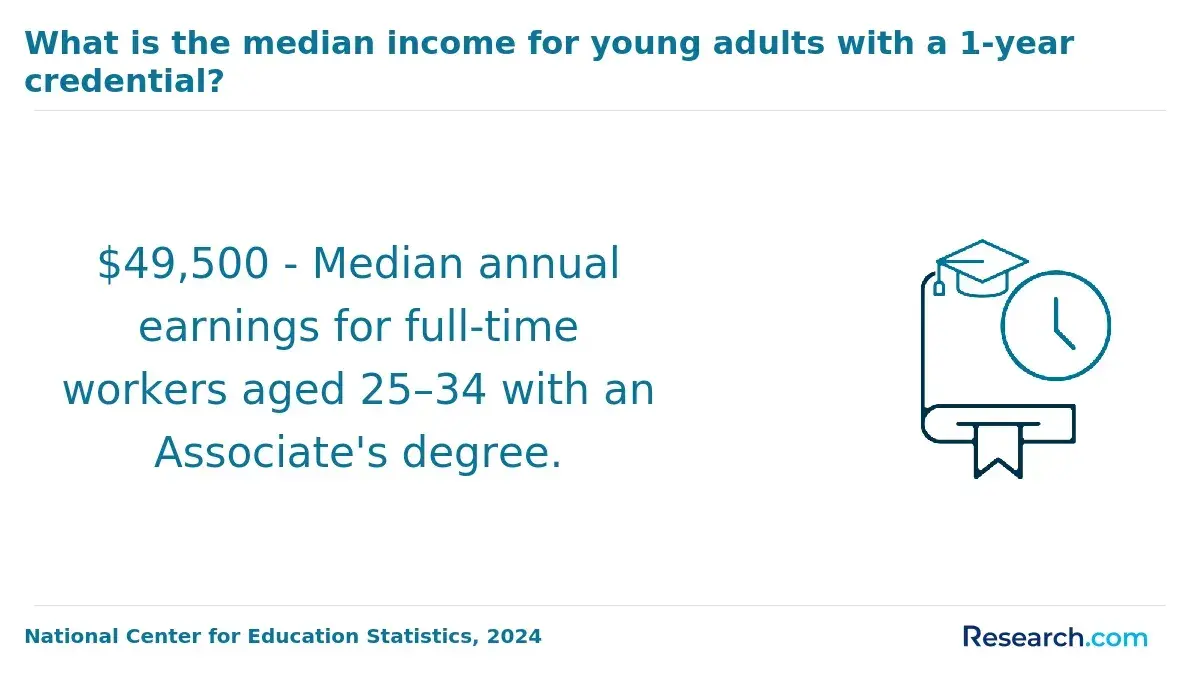
Nontraditional learners should be especially cautious about overpaying for a broad credential when a shorter, targeted program fits their goals. Those exploring later-life career changes may find it useful to compare sustainability pathways with flexible options such as one year degrees for seniors when speed, cost, and schedule matter.
Do Certifications, Licensure, or Graduate Study Change Sustainability Specialization Earnings?
Credentials can improve marketability, but they work best when they match a specific career path. A certification rarely replaces experience or a strong degree, but it can signal job-ready knowledge in areas such as green building, energy management, emissions accounting, safety, finance, or project management.
The table below separates credentials by the kind of sustainability work they support. Requirements can vary by employer, state, and role, so students should confirm expectations in current job postings before investing:
| Credential or education option | Most relevant tracks | How it may affect earnings | Important limitation |
| Professional Engineer licensure | Environmental engineering, water resources, infrastructure, remediation | Can support advancement into responsible engineering, project leadership, and consulting roles | Requires an engineering pathway, exams, experience, and state-specific rules |
| LEED Green Associate or LEED AP | Green building, sustainable design, facilities, real estate, construction | Can strengthen building-performance and sustainability consulting applications | Most valuable when paired with project experience |
| Certified Energy Manager or energy auditing credentials | Energy systems, facilities, utilities, decarbonization | Can support roles tied to measurable energy savings and building performance | Eligibility may require experience or technical background |
| ESG, climate risk, or sustainable finance credentials | Sustainable finance, ESG analytics, reporting, risk | Can help candidates demonstrate familiarity with disclosure, investment, or risk concepts | Credential quality and employer recognition vary |
| Master's degree | Sustainability management, engineering, policy, finance, analytics | Can open doors to specialized analyst, manager, consulting, or technical roles | ROI depends on cost, employer demand, experience, and curriculum depth |
| Doctoral degree | Research, academia, advanced science, modeling, technical leadership | Can support research-intensive careers, but is not required for many corporate sustainability roles | Time-to-completion and opportunity cost can be substantial |
Students considering advanced study should choose based on the role they want, not the prestige of the credential alone. If speed is a major concern, comparing traditional doctorates with shortest doctoral programs can help clarify format and timeline trade-offs, though sustainability research careers still require strong faculty fit and rigorous methods training.
How Should Students Choose the Best Sustainability Degree Specialization for Their Career Goals?
The best sustainability specialization is the one that fits your target role, strengths, budget, and preferred work environment. A higher-paying track can be a poor choice if you dislike the coursework, lack the prerequisites, or want a career that is more community-centered than technical or corporate.
Use this decision process to compare tracks without overvaluing headline salary numbers:
- Start with roles, not majors: Choose three jobs you would realistically want, then work backward to the degree, courses, internships, and credentials they require.
- Separate entry-level access from long-term ceiling: A track that gets you employed quickly may not have the same advancement path as one that requires graduate study or licensure.
- Check the curriculum for job-ready evidence: Look for applied projects, employer partnerships, software, lab work, fieldwork, finance, compliance, or reporting practice.
- Compare industry fit: Decide whether you want corporate ESG, engineering consulting, finance, government, nonprofits, conservation, planning, or energy work.
- Account for location: Make sure the specialization matches the regional or remote job market you are willing to enter.
- Calculate ROI conservatively: Compare total cost with realistic role-based wage data, not the highest salary shown in marketing materials.
- Ask about outcomes: Request alumni job titles, internship placement, employer partners, graduate school placement, and career services support for your specific track.
One red flag is choosing a specialization because it sounds meaningful without testing whether it matches the work you want to do every day. For example, students drawn to family resilience, community wellbeing, and direct service may compare sustainability policy with an LMFT program online, because both can support people-centered goals but lead to very different licensure, salary, and daily-work realities.
If you want the strongest earning potential, prioritize technical, quantitative, regulated, finance-linked, or management-oriented tracks. If you want the broadest mission flexibility, a general sustainability, policy, or environmental studies track can still be valuable, but it should be paired with concrete skills and a clear career plan.
Other Things You Should Know About Sustainability
Sustainability management, environmental engineering, sustainable finance, climate risk, and ESG analytics tend to have the strongest pay signals because they connect sustainability work to regulation, infrastructure, capital, risk, or executive decision-making. Actual pay still depends on employer, location, experience, credentials, and degree level.
It can be worth it if the program includes applied skills, internships, and a clear career pathway. A broad sustainability degree is weaker when it lacks data, finance, compliance, science, GIS, policy, or project-based training that employers can evaluate.
Not always. Some technical, engineering, energy, and analyst roles are accessible with a strong bachelor's degree and relevant experience. A master's degree may help more for sustainability management, climate analytics, policy leadership, sustainable finance, or career changers who need specialized preparation.
Not automatically. Higher-paying tracks often require specific strengths, such as advanced math, engineering, finance, coding, or management. The better choice is a specialization that balances earning potential with your skills, interests, program cost, preferred industry, and long-term career fit.
Top Trending Sustainability Rankings
References
- Discover our global guide to sustainability recruitment https://enable.green/news/a-global-guide-to-sustainability-recruitment-top-jobs-skills-and-salaries/
- Careers in Sustainability: A 2026 Guide to Sectors, Roles, Salaries and How to Start https://sumas.ch/blog/careers-in-sustainability/
- What Skills Power US Sustainability Careers? Part 2 https://cse-net.org/what-skills-power-us-sustainability-careers-part-2/
- College Majors That Produce The Lowest Earnings After Graduation https://poetsandquantsforundergrads.com/news/college-majors-that-produce-the-lowest-earnings-after-graduation/
- CSRD jobs: Which 7 skills are in demand now - CSR Tools https://csr-tools.com/en/blog-en/csrd-jobs-which-7-skills-are-in-demand-now/
- ESG jobs and salaries https://www.thecorporategovernanceinstitute.com/insights/guides/esg-jobs-salaries-pay/
- ROI Of College Majors By Early And Mid-Career Salaries | Bankrate https://www.bankrate.com/loans/student-loans/roi-mid-career-by-major/
- Agriculture and Environmental Science Degree Careers and Salary in Europe - StudyinEurope.eu https://www.studyineurope.eu/agriculture-environment/agriculture-environment-degree-careers-salary-europe/
- 10 green jobs with strong growth potential | U.S. Green Building Council https://www.usgbc.org/articles/10-green-jobs-strong-growth-potential
- Top 10 Skills to Build A Successful Career in Sustainability https://www.imd.org/blog/sustainability/career-in-sustainability/