Choosing a speech pathology degree in Tennessee means balancing licensure eligibility, clinical training, cost, and access to employers in schools and health systems. This guide is for prospective students and career changers comparing undergraduate preparation and graduate SLP pathways. It will feature the 2027 Most Valuable Speech Pathology Degree Programs Ranking in Tennessee, created by the Research.com team of data scientists to help students make an informed choice about which programs are worth considering. Use it to compare program fit, investment, timeline, and career outcomes before applying.
Key findings about speech pathology degrees in Tennessee
Professional practice as a speech-language pathologist generally requires a graduate degree, supervised clinical experience, an examination, and Tennessee licensure; an undergraduate communication sciences and disorders degree alone is usually a preparation pathway rather than independent SLP licensure.
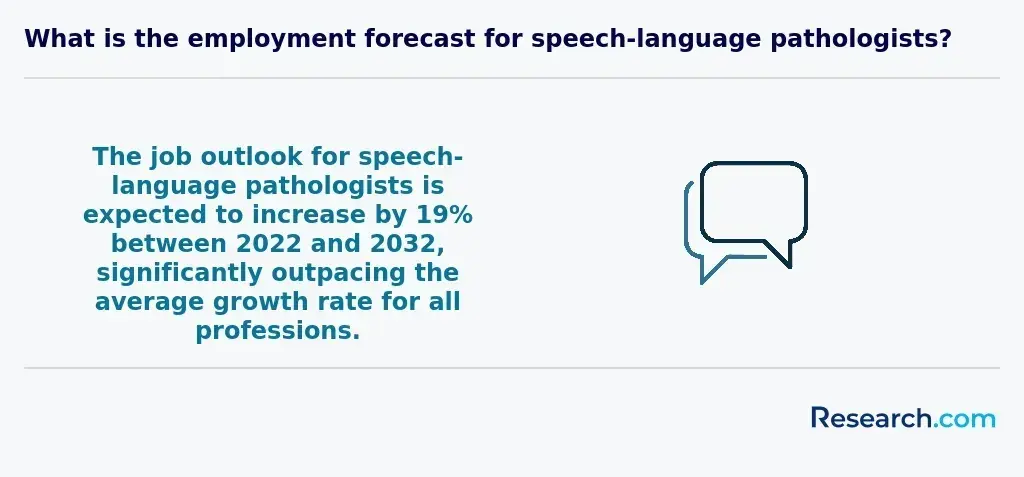
The national median annual wage for speech-language pathologists was $97,870 in May 2025, and BLS projects 17% employment growth from 2025 to 2035; these figures support demand but do not predict an individual graduate's pay or placement.
For most applicants, the best-value Tennessee program is the one that combines CAA accreditation, manageable debt, reliable clinical placements, and a schedule that preserves completion probability - not necessarily the lowest published tuition.
What can I expect from a speech pathology degree in Tennessee?
A speech pathology education path usually has two stages. Students first complete a bachelor's degree in communication sciences and disorders, speech and hearing science, or a related field with required prerequisite courses. They then earn a master's degree in speech-language pathology (SLP), the usual entry credential for clinical practice in schools, hospitals, rehabilitation settings, and private practice.
Tennessee applicants should distinguish between an undergraduate degree that prepares them to apply to graduate school and a clinical master's degree that can support licensure. Career changers can apply to many master's programs, but they may need leveling coursework in phonetics, language development, anatomy, audiology, and speech science before or during admission.
This comparison helps clarify which credential fits a particular goal.
Education option
Best fit
Typical result
Important limitation
Bachelor's in communication sciences and disorders
Students beginning the field or building prerequisites
Preparation for SLP graduate admission and support roles
Usually does not qualify a graduate for independent SLP licensure
Master's in speech-language pathology
Applicants seeking clinical SLP practice
Academic and clinical preparation for licensure steps
Must meet state requirements after graduation
Post-baccalaureate leveling coursework
Career changers without CSD prerequisites
Eligibility to apply to selected master's programs
Adds time and cost; requirements differ by school
For Tennessee practice, verify that a prospective master's program is accredited by the Council on Academic Accreditation in Audiology and Speech-Language Pathology (CAA) or otherwise meets the Tennessee Board of Communication Disorders and Sciences requirements. Accreditation is not a substitute for licensure, but choosing a nonqualifying program can create a costly barrier later.
Where can I work with a speech pathology degree in Tennessee?
Speech-language pathologists work wherever communication, swallowing, cognition, voice, or feeding needs are assessed and treated. Tennessee's mix of large health systems, public schools, pediatric providers, rehabilitation facilities, and rural communities creates different placement and employment patterns across the state.
Metro areas such as Nashville, Memphis, Knoxville, Chattanooga, and the Tri-Cities can offer concentrated hospital, specialty-clinic, and school-district opportunities. Rural communities may offer broad generalist caseloads and can make clinical-placement logistics especially important; ask whether the program arranges placements close to where you live or expects students to travel.
The settings below require different strengths and should influence the clinical experiences you seek while enrolled.
Setting
Common work
Program feature to prioritize
Public schools
Language, speech sound, fluency, and educational-access services
School-based practicum exposure and knowledge of special education collaboration
Hospitals and rehabilitation
Adult neurogenic communication, dysphagia, voice, and acute-care evaluation
Medical placements and dysphagia-focused supervision
Early intervention and pediatric clinics
Developmental language, feeding, autism-related communication support, family coaching
Pediatric clinical experiences and caregiver-centered practice
Skilled nursing and home health
Swallowing, cognitive-communication, and functional communication services
Adult and geriatric practicum experience
Private practice and telepractice
Outpatient assessment and treatment, often across age groups
Business, documentation, telepractice, and varied-case experience
If your goal is a particular medical specialty, do not assume every program can provide that placement. Clinical availability changes by affiliation agreements, patient volume, supervisor capacity, and cohort needs.
The most comparable national earnings benchmark is the U.S. Bureau of Labor Statistics median annual wage of $97,870, or $47.05 per hour, for speech-language pathologists in May 2025 (BLS Occupational Outlook Handbook). This is a national occupation-wide median, not a starting-salary estimate, Tennessee-specific wage figure, or guarantee for a new clinician.
Actual pay can vary substantially by setting, experience, clinical specialization, employer, productivity expectations, geographic area, and whether the role is school-calendar based or year-round. A school role may have a different salary schedule and benefits structure than a hospital or contract position, so compare total compensation rather than annual pay alone.
When judging return on investment, compare likely debt and lost earnings during study against your expected completion date, aid package, work flexibility, baseline earnings, and preferred setting. Students exploring advanced or niche roles can review highest paying speech pathology jobs and careers, but should treat higher-paying paths as competitive options rather than automatic outcomes.
The programs represented in this ranking serve different geographic areas and professional goals. Their most useful differences are not broad institutional reputation claims; they are the academic home, clinical orientation, and student access points that can shape your preparation for Tennessee practice.
Tennessee State University: TSU provides an in-state public-university option in Nashville, a major Tennessee health care and education market. It may be especially relevant for students who want to build local professional connections while comparing public-university costs, prerequisite sequencing, and clinical-placement support.
East Tennessee State University: ETSU's program is housed within its College of Health Sciences and is positioned in the Tri-Cities region. That health-sciences setting can be a practical differentiator for applicants seeking an eastern Tennessee pathway and opportunities to learn alongside other health professions.
University of Memphis: Memphis places communication sciences and disorders education in a large urban environment with access to school, medical, and community-service populations. Applicants interested in varied metropolitan clinical populations should ask specifically how assignments are matched to pediatric, adult medical, and school-based interests.
The University of Tennessee Health Science Center: UTHSC is a health-sciences-focused campus, making its applied clinical and medical context a clear distinction from a traditional undergraduate residential setting. It can suit applicants who want graduate preparation connected closely to health-profession education and who are prepared for a professional-campus model.
Vanderbilt University: Vanderbilt's hearing and speech program sits within its medical-school environment, a structure that may appeal to applicants drawn to research, specialty clinical work, and interdisciplinary health care. Prospective students should compare its financial-aid offer carefully with public options because a medical-center environment alone does not determine affordability.
Before treating any feature as decisive, request current information on CAA accreditation status, cohort size, required clinical hours, placement locations, Praxis preparation, completion rates, and estimated total charges. The right fit depends on whether the program's clinical network matches your desired age group and practice setting.
For a student who already has the required communication sciences and disorders background, a full-time SLP master's program commonly takes about two academic years, including clinical education. A career changer may need additional prerequisite or leveling coursework first, which can extend the pathway.
Completion time is more than a calendar issue: delaying graduation delays eligibility for the supervised experience, examination, certification, and Tennessee licensure steps needed for independent practice. Ask each program whether clinical placements occur in summers, whether students can work during externships, and what happens if a placement must be rescheduled.
An accelerated SLP master's program can make sense for well-prepared students able to handle an intensive sequence. It is usually a weaker fit for applicants needing multiple prerequisites, substantial paid work hours, or a highly predictable local placement schedule.
Online and on-campus SLP degrees can both include rigorous academic content, but clinical training cannot be completed entirely online. Even a distance-oriented program generally requires in-person skills practice, supervised clinical experiences, and placements that meet program and licensure standards.
This comparison identifies the trade-off that matters most: flexibility in coursework versus control over clinical access and campus-based resources.
Factor
Online or hybrid format
On-campus format
Course access
May reduce relocation needs and support working students
Usually offers a fixed in-person schedule and direct campus access
Clinical placements
May require placement coordination near the student's location
May draw more directly on local university-affiliated networks
Peer and faculty interaction
Often uses scheduled virtual meetings and intensive sessions
Usually provides frequent in-person lab and cohort contact
Best fit
Students who can verify local placement feasibility before enrolling
Students who value predictable local clinical infrastructure
Do not enroll based on asynchronous-course marketing alone. Confirm whether the school accepts Tennessee residents, whether it has placed students in Tennessee settings, who secures sites, travel expectations, and whether the degree meets Tennessee licensure requirements. Compare these details with online masters speech pathology programs if flexibility is central to your decision.
There is no single reliable statewide average cost for a speech pathology degree because Tennessee programs differ by institution type, residency classification, prerequisite needs, fees, clinical travel, and housing. Published tuition is only one part of the investment, particularly for clinical master's students who may have limited capacity for paid work during placements.
Use this cost framework to compare offers on the same basis rather than comparing a per-credit figure at one school with a semester total at another.
Cost component
Why it changes the total
What to request
Tuition and mandatory fees
Public institutions may charge different resident and nonresident rates; private institutions may use a different published-price model
Program-specific total tuition through completion
Prerequisites
Leveling courses can add credits before graduate coursework begins
Written evaluation of missing prerequisites
Clinical expenses
Travel, parking, screening, immunizations, background checks, and professional supplies may be required
Typical annual out-of-pocket clinical costs
Living and opportunity costs
Relocation and reduced work hours can outweigh a modest tuition difference
Expected schedule and placement geography
A lower sticker price is valuable only if the program has a realistic completion path and does not create unexpected travel or extension costs. Applicants also considering another market can use speech pathology programs in arizona as a separate affordability comparison, but should not assume Arizona tuition, residency rules, or licensure processes transfer to Tennessee.
Graduate SLP students commonly combine institutional scholarships, assistantships where available, federal aid, savings, and employer support. Aid availability and terms differ sharply by school, so a program's net price and clinical schedule matter more than an advertised scholarship alone.
Students should complete the FAFSA and ask each program's financial-aid office about graduate scholarships, assistantships, tuition waivers, payment plans, and whether clinical placements limit assistantship eligibility. Federal Direct Unsubsidized Loans are available to eligible graduate students within federal limits. Eligible graduate or professional students enrolled at least half-time may also apply for a federal Grad PLUS Loan, which requires a credit check; borrowers should review current terms and borrowing limits before relying on it (Federal Student Aid).
Tennessee residents should also check state-administered aid rules directly, because many widely known Tennessee programs are designed for undergraduate study and may not apply to graduate SLP enrollment. Treat private scholarships as supplemental funding, not as a substitute for a complete financing plan.
A practical approach is to compare each offer using the same sequence:
Calculate tuition, fees, estimated clinical expenses, and living costs through the expected graduation date.
Subtract grants, scholarships, assistantships, and employer support that are confirmed in writing.
Compare the remaining borrowing need with the program's completion structure and your likely ability to work.
Ask whether aid can continue if a required clinical placement extends your program timeline.
View the chart data as a table
SLP annual wage spread - Tennessee (May 2025) (Source: U.S. Bureau of Labor Statistics (OEWS May 2025))
Category
Value
10th percentile
$58,550
25th percentile
$64,730
Median
$84,630
75th percentile
$101,760
90th percentile
$116,790
Admissions prerequisites depend on whether you are applying to an undergraduate major, a post-baccalaureate sequence, or a clinical master's program. Master's applicants commonly need a bachelor's degree, required communication-sciences coursework, transcripts, recommendation letters, a statement of purpose, and evidence that they can succeed in science-heavy and clinically oriented study.
Programs may require or strongly prefer coursework in areas such as phonetics, speech and hearing science, anatomy and physiology of speech and hearing mechanisms, language development, audiology, statistics, and research methods. Requirements are not uniform, so do not assume a psychology, education, linguistics, or health degree automatically covers all prerequisites.
For clinical practice, the key enrollment check is whether the degree and clinical sequence support Tennessee licensure. The Tennessee Board of Communication Disorders and Sciences sets state requirements; applicants should verify degree, supervised-experience, and examination requirements before committing to a program. Students seeking lower-barrier admissions information can consult easiest SLP grad schools to get into, while remembering that admission accessibility does not replace accreditation or clinical-quality review.
SLP curricula combine scientific foundations, assessment, intervention planning, ethics, and supervised clinical practice. Course titles vary, but a qualifying master's degree should progressively connect classroom knowledge to work with real clients under supervision.
Students should look for a balanced sequence rather than choosing a program based on one appealing elective. The core areas below are especially relevant to future Tennessee clinical practice.
Speech and hearing science, phonetics, anatomy, neuroanatomy, and research methods build the scientific basis for clinical decisions.
Language development, speech sound disorders, fluency, voice, motor speech, and augmentative and alternative communication address common communication conditions.
Adult neurogenic disorders, dysphagia, and cognitive-communication coursework supports work in medical, rehabilitation, and aging-service settings.
Assessment, clinical methods, counseling, ethics, cultural and linguistic responsiveness, and documentation prepare students for accountable professional practice.
Practicum and externship experiences translate coursework into supervised clinical competence across populations and settings.
Ask whether placements provide exposure to the populations you expect to serve. A student targeting hospital dysphagia work should seek evidence of adult medical training, while a future school clinician should prioritize pediatric language and school-based experiences.
Most entry-to-practice master's programs prepare students as broad generalists because licensure requires competence across the profession's scope. Specialization is usually built through electives, clinical placements, faculty research, continuing education, and early-career choices rather than a separate license at graduation.
Common focus areas include pediatric language and speech sound disorders, autism-related communication support, bilingual or multilingual service delivery, adult neurogenic communication disorders, voice, fluency, dysphagia, augmentative and alternative communication, and hearing-related communication needs. Availability varies by faculty expertise and clinical affiliates.
Choose a focus only after confirming the program can support it through actual coursework and placements. A program that offers a strong medical elective but no consistent adult medical practicum may not be the best fit for a student whose goal is acute care or swallowing treatment.
The best program is the one that supports a realistic route from admission to Tennessee licensure with debt you can manage. Rankings are useful for narrowing choices, but they cannot replace reviewing the current catalog, accreditation status, clinical-placement policies, and aid offer for your own situation.
Use these questions when comparing Tennessee programs:
Is the graduate SLP program CAA-accredited, and does the school confirm that its curriculum supports Tennessee licensure requirements?
What is the full estimated cost through graduation, including fees, travel, screenings, and likely living costs?
Who arranges clinical placements, where have recent placements occurred, and what travel or relocation may be required?
How are students supported if a clinical placement is delayed or unavailable?
What prerequisite courses do I still need, and can they be completed without delaying the graduate sequence?
What recent outcomes can the school share for completion, Praxis performance, and employment, with the reporting period clearly identified?
Common mistakes include choosing a program without confirming CAA accreditation, focusing on tuition while ignoring clinical-travel costs, and assuming an online format eliminates in-person obligations. Also avoid treating an institutional ranking as a promise of admission, licensure, salary, or placement. Compare the total path, not one metric.
View the chart data as a table
On-time completion rate (Source: ASHA EdFind / program reports)
Category
Value
<85%
0
85–<90%
1
90–<95%
0
95–<100%
3
100%
1
A master's degree in speech-language pathology can lead to direct clinical roles after required licensure steps are completed. The degree also builds transferable skills in assessment, counseling, documentation, interdisciplinary collaboration, and evidence-based intervention.
The most direct path is speech-language pathologist work in schools, hospitals, outpatient clinics, rehabilitation, early intervention, home health, and skilled nursing. Some professionals later move into clinical supervision, private-practice ownership, program coordination, university teaching with additional qualifications, research, or health care administration.
An undergraduate speech pathology-related degree is a different career position. It may support communication-focused support roles or strengthen applications to graduate programs, but it generally does not authorize independent diagnosis and treatment as an SLP. Students who want to work sooner should compare the scope, pay, and supervision requirements of assistant or support roles rather than assuming they are interchangeable with licensed SLP work.
View the chart data as a table
Where speech-language pathologists work - United States, 2025 (Source: U.S. Bureau of Labor Statistics (OOH, May 2025))
Category
Value
Educational services (schools)
39%
Offices of therapists & audiologists
25%
Hospitals
13%
Nursing & residential care
5%
Self-employed
5%
Other settings
13%
The national job market for speech-language pathologists is favorable by long-range standards. BLS projects employment growth of 17% from 2025 to 2035 and about 12,500 openings per year on average nationwide over that decade (BLS Occupational Outlook Handbook). This projection reflects replacement needs as well as growth and should be used as a planning signal, not a guarantee of a job in a specific Tennessee city or specialty.
In Tennessee, demand can look different by region and employer. Large metro areas may offer more specialized medical and pediatric roles, while school systems and rural providers may value clinicians willing to serve broad caseloads or travel. Clinical placements are therefore more than a graduation requirement: they can help students test a setting, build references, and understand local hiring expectations.
Prospective students should monitor job postings during school - not just in their final semester - to identify commonly requested skills, schedules, and settings. If your intended location has limited specialty roles, choose a program with transferable generalist preparation and consider whether geographic mobility is acceptable after graduation.
2027 Most Valuable Speech Pathology Degree Programs Ranking in Tennessee
Investing in graduate education can affect your finances, career timeline, and professional licensure options for years. Research.com developed this ranking to help applicants look beyond marketing claims and compare programs using consistent, source-verifiable indicators. Rankings score programs on academic and research strength, cost, graduate outcomes, student profile, and institutional quality, then rank programs according to the dimension named in the ranking.
For campus-based programs, Research.com uses data-driven, entropy-based weights tailored to the ranking. Online-program evaluations use a distance-learning methodology that excludes campus-dependent indicators and emphasizes program structure and student support, with fixed weights for graduation rate (30%), research (25%), institutional profile (15%), and students, cost, and course factors (10% each).
The ranking draws on the following established education datasets:
IPEDS database, which provides institution-level enrollment, completion, finance, and aid information.
Readers can use the ranking as a starting point for a shorter, more defensible application list: compare value indicators, then confirm CAA accreditation, clinical-placement arrangements, total costs, and Tennessee licensure alignment directly with each school. For a fuller explanation of the approach, review Research.com's methodology.
Master of Science (M.S.) in Speech and Hearing Science, concentration in Speech-Language Pathology
69.78
/ 100
Final score
Program length
Full-time, typically ~2 years (5-6 semesters)
Required credits
53
Acceptance rate
28% (97 of 349 applications)
GPA range
2.52 - 4.00
Offers with funding
~9% (9 of 97 offers)
Application deadline
Fall admission: February 1st Spring admission: June 1st of even years
Class size
44
Degrees granted
36
Application process
CSDCAS University online application
Prerequisites
Undergraduate prerequisites required: Yes; prerequisite courses offered; available online
Additional requirements
Comprehensive exam; Thesis
Accreditation
Council on Academic Accreditation in Audiology and Speech-Language Pathology (CAA) of ASHA
Status AccreditedID 63c00ee8-b39f-4d28-b4eb-5b9065124ef9Valid 2019-2027
Last known review scheduled for 2026
Verify accreditation
Tennessee State University earned a Research.com Value Score of 69.78/100, supported by $24,408 total tuition + mandatory fees and 95% Praxis pass rate. Its Master of Science (M.S.) in Speech and Hearing Science, concentration in Speech-Language Pathology is listed by ASHA EdFind as CAA-accredited through 2027, with the most recently listed accreditation review scheduled for 2026.
Admissions data from
ASHA EdFind
(updated 11/01/2025)
Undergraduate prerequisites required: Yes; prerequisite courses offered; available online
Additional requirements
Comprehensive exam; Thesis
Accreditation
Council on Academic Accreditation in Audiology and Speech-Language Pathology (CAA) of ASHA
Status AccreditedID 4b903095-35ac-47bf-a90f-bd5731157fd1Valid 2020-2028
Last known review scheduled for February 2027
Verify accreditation
East Tennessee State University earned a Research.com Value Score of 61.62/100, supported by $30,996 total tuition + mandatory fees and 99% Praxis pass rate. Its Master of Science in Speech-Language Pathology is listed by ASHA EdFind as CAA-accredited through 2028, with the most recently listed accreditation review scheduled for 2027.
Admissions data from
ASHA EdFind
(updated 09/24/2025)
Council on Academic Accreditation in Audiology and Speech-Language Pathology (CAA) of ASHA
Status AccreditedID 8fcf4d3e-ec88-4d23-818c-228e39068566Valid 2026-2034
Last known review scheduled for August 2033
Verify accreditation
University of Memphis earned a Research.com Value Score of 59.91/100, supported by $34,980 total tuition + mandatory fees and 98% Praxis pass rate. Its Master of Arts (MA) in Speech-Language Pathology is listed by ASHA EdFind as CAA-accredited through 2034, with the most recently listed accreditation review scheduled for 2033.
Admissions data from
ASHA EdFind
(updated 09/16/2025)
# 4 position
The University of Tennessee Health Science Center
Master
Master of Science in Speech-Language Pathology
56.19
/ 100
Final score
Program length
2 years / 6 semesters full-time (fall, spring, summer, fall, spring, summer); extended to ~4 years for students without a CSD bachelor's (leveling year)
Council on Academic Accreditation in Audiology and Speech-Language Pathology (CAA) of ASHA
Status AccreditedID cf3b2052-48ec-4351-8193-536be4df30d1Valid 2022-2030
Last known review scheduled for August 2029
Verify accreditation
The University of Tennessee Health Science Center earned a Research.com Value Score of 56.19/100, supported by $39,696 total tuition + mandatory fees and 100% Praxis pass rate. Its Master of Science in Speech-Language Pathology is listed by ASHA EdFind as CAA-accredited through 2030, with the most recently listed accreditation review scheduled for 2029.
Admissions data from
ASHA EdFind
(updated 09/02/2025)
Master of Science in Speech-Language Pathology (MS-SLP)
45.47
/ 100
Final score
Program length
5 to 6 full-time semesters depending on academic background (5 for in-field, 6 for non-background students); approximately 2 years
Required credits
54 (semester credit hours, ASHA EdFind)
Acceptance rate
28% (46 of 163 applications)
GPA range
3.75 - 4.00
Offers with funding
~22% (10 of 46 offers)
Application deadline
Fall admission: January 15th
Class size
34
Degrees granted
21
Application process
University online application
Prerequisites
Undergraduate prerequisites required: No
Accreditation
Council on Academic Accreditation in Audiology and Speech-Language Pathology (CAA) of ASHA
Status AccreditedID 46a3335b-d69d-4229-b1ff-b001ec0c53a0Valid 2021-2029
Last known review scheduled for August 2028
Verify accreditation
Vanderbilt University earned a Research.com Value Score of 45.47/100, supported by $87,158 total tuition + mandatory fees and 100% Praxis pass rate. Its Master of Science in Speech-Language Pathology (MS-SLP) is listed by ASHA EdFind as CAA-accredited through 2029, with the most recently listed accreditation review scheduled for 2028.
Admissions data from
ASHA EdFind
(updated 10/19/2025)
Frequently asked questions about speech pathology degree in Tennessee
Do I need a master's degree to become a speech-language pathologist in Tennessee?
Yes, clinical SLP practice typically requires a qualifying graduate degree plus supervised experience, examination, and state licensure steps. Confirm current requirements with the Tennessee Board of Communication Disorders and Sciences.
Does a bachelor's degree in speech pathology qualify me for licensure?
Usually no. A bachelor's degree is commonly preparation for graduate SLP study and may support certain supervised or support roles, but it is not the standard independent-practice credential.
Are online speech pathology degrees accepted in Tennessee?
They can be, provided the specific program meets applicable accreditation, clinical-training, and Tennessee licensure requirements. Verify Tennessee authorization, local clinical-placement arrangements, and eligibility in writing before enrolling.
How long does an SLP master's take?
Students who have completed prerequisites often finish in about two academic years of full-time study. Missing prerequisite courses, part-time enrollment, or placement delays can extend that timeline.
Is speech pathology a good career investment?
It can be for students committed to clinical communication and swallowing care who can complete an eligible program with manageable borrowing. National BLS data show a $97,870 median annual wage in May 2025 and projected 17% growth from 2025 to 2035, but personal ROI depends on debt, completion, location, and employment setting.
What should I verify before applying?
Confirm CAA accreditation, prerequisite requirements, total program cost, clinical-placement process, Tennessee licensure alignment, and recent student outcomes with clear reporting dates.
See What Experts Have To Say About Studying Speech Pathology
ASHA EdFind - Accredited Speech-Language Pathology Programs Used to verify CAA accreditation or candidacy status for graduate SLP programs. https://find.asha.org/ed/
Audiology and Speech-Language Pathology Interstate Compact Used to verify interstate practice privileges and participating states for speech-language pathologists. https://aslpcompact.com/compact-map/
Tennessee State University - Master of Science (M.S.) in Speech and Hearing Science, concentration in Speech-Language Pathology Official program page (curriculum, tuition, and admissions). https://www.tnstate.edu/speechpath/degrees/graduate.aspx
The University of Tennessee Health Science Center - Master of Science in Speech-Language Pathology Official program page (curriculum, tuition, and admissions). https://www.uthsc.edu/asp/programs/ms/index.php