
2027 Most Valuable Online Master's in Social Work Degree Programs Ranking in Texas

Co-Founder and Chief Data Scientist
Choosing the right online master's in social work program in Texas can feel overwhelming. To help you navigate your options, this article presents the 2027 Most Valuable Online Master's in Social Work Degree Programs Ranking in Texas created by the Research.com team of data scientists.
By exploring this ranking, you'll gain valuable insights that make your decision easier and more informed. A social work degree opens doors to meaningful, impactful careers that truly change lives, including your own.
Whether you're starting fresh or advancing your career, this guide is here to support your journey.
Key benefits of getting online social work degree in Texas
- Salary Benefits: Graduates with a social work degree in Texas can earn competitive wages, such as Clinical Social Workers with a mean annual salary of $68,800 and Medical Social Workers earning around $67,430.
- Career Opportunities: Many Texas graduates from top universities pursue diverse roles like School Social Workers making $59,190 annually or Policy Analysts earning approximately $102,210, offering varied paths to make a meaningful impact.
- Online Degree Advantages: Completing a social work degree online provides flexible learning that fits busy lifestyles, allowing students to gain skills conveniently while benefiting from quality education similar to traditional programs at popular Texas institutions.
- 2027 Most Valuable Online Master's in Social Work Degree Programs Ranking in Texas
- What can I expect from online social work degree in Texas?
- Where can I work with online social work degree in Texas?
What can I expect from online social work degree in Texas?
The average cost of an online social work degree in Texas varies, but many students find programs at public universities like Texas State University or the University of Houston offer tuition rates ranging from $8,000 to $15,000 for the entire degree. Graduates often describe feeling relieved by these more affordable options compared to traditional campus programs, especially since online formats reduce extra fees like housing or commuting. One graduate shared how balancing work and study became manageable without sacrificing quality education, thanks to the flexibility and lower costs.
Financial aid and scholarships frequently ease the financial burden, making it possible for students from diverse backgrounds to pursue their passion for social justice. The investment feels personal when a student imagines their practicum experiences-advocating for vulnerable populations in Houston's urban communities or rural areas in West Texas-knowing they can earn a respected degree without overwhelming debt.
Where can I work with online social work degree in Texas?
Graduates from online social work programs at Texas universities often find themselves stepping into roles that profoundly impact their communities, far beyond what they initially imagined. Working in organizations like the Texas Health and Human Services Commission, many enter child welfare or mental health services, supporting vulnerable populations. One graduate from a well-known Texas public university shared how aiding children in foster care became a deeply rewarding part of their day-to-day life.
Others pursue careers in healthcare settings-hospitals and behavioral health centers across Texas employ social workers to assist patients through discharge planning and counseling. The collaborative environment in large medical teams in Houston or Dallas offers a unique chance to grow professionally while making tangible differences.
Texas social work graduates from prominent online programs also frequently join school districts like Houston ISD, helping students navigate complex social and emotional hurdles. These roles turn theory into practice by addressing real challenges faced by families daily.
For many, employment in nonprofits or private practice brings a profound sense of purpose, driving efforts in homelessness prevention or addiction treatment. Online graduate degrees from Texas institutions provide the foundation for licensure required to lead these vital community services.
- Texas employs about 24,000 social workers with a projected job growth rate of 13% from 2022 to 2032, which is faster than the national average.
- In-state tuition for a bachelor's degree at public universities ranges from $8,000 to $12,000 per year, while online MSW programs typically cost between $20,000 and $40,000 total.
- Starting salaries for social work graduates average around $47,000 annually, with long-term averages between $60,000 and $65,000 depending on location and role.
- Licensure is required to practice clinically in Texas, with common credentials being LBSW, LMSW, and LCSW, which require completing accredited programs and supervised clinical hours.
- Major cities like Houston, Dallas, and Austin offer the most jobs, but there is also a growing need for social workers in rural areas.
Calculating the return on investment (ROI) of an online Master’s in Social Work (MSW) in Texas involves comparing total program costs against expected salary increases and career advancement opportunities. On average, Texas online MSW programs range from $30,000 to $60,000 in tuition. When graduates secure entry-level positions with salaries between $45,000 and $55,000, they typically recoup 50% of their tuition within the first three years, thanks to higher earning potential and licensure credentials. Key factors influencing ROI include: • Tuition-to-Salary Ratio: A program costing $40,000 that leads to a $50,000 starting salary yields a 1.25 tuition-to-salary ratio, making it a high-value investment compared to national averages. • Time to Break Even: Assuming a 3% annual salary increase, graduates often break even on tuition within five to seven years-a relatively short time frame in higher education. • Career Advancement: Earning an LMSW or LCSW credential can boost mid-career salaries by 15–20%, further reducing the payback period and increasing lifetime earnings. Beyond quantitative metrics, qualitative returns include professional networking, mentorship opportunities, and specialized skill development. Graduates who leverage practicum placements and alumni networks often find accelerated career trajectories in clinical, administrative, or policy-making roles. For prospective students seeking cost-effective alternatives, explore our Low Cost Social Work Degree Programs Ranking in the Midwest, which highlights programs with exceptional value and affordability. By weighing both financial and professional outcomes, you can select an online MSW program in Texas that maximizes your ROI and positions you for long-term success in the social work field.
After earning your online Master’s in Social Work (MSW) from a CSWE-accredited program in Texas, you must navigate a structured licensure process to practice clinically or independently. First, obtain the Licensed Master Social Worker (LMSW) credential by submitting your official transcripts, completing the 3,000-hour supervised work experience (or 100 hours of clinical supervision), and passing the ASWB master’s examination. Most candidates complete this supervision under a Licensed Clinical Social Worker (LCSW) within 18–24 months, often working in healthcare, schools, or community agencies. Once you hold the LMSW, you may pursue the LCSW license. Requirements include: • 3,000 additional supervised clinical hours (totaling 6,000 post-graduate hours) • 150 hours of direct clinical supervision by an LCSW • Passing the ASWB clinical examination • Submitting a licensure application and fee to the Texas State Board of Social Worker Examiners Typical expenses include exam fees (~$230), application fees (~$104), and supervision costs (varies by site). To maintain licensure, Texas mandates 30 continuing education hours every two years, with specific credits in ethics and cultural competence. For social work professionals aiming to diversify their credentials, exploring advanced study options can be valuable. Many graduates compare affordable doctorate pathways through cheap doctoral degree programs for social work, which often feature flexible online formats and scholarship opportunities. By understanding each step of the licensing journey and planning for ongoing education, you can confidently transition from student to licensed practitioner in Texas.
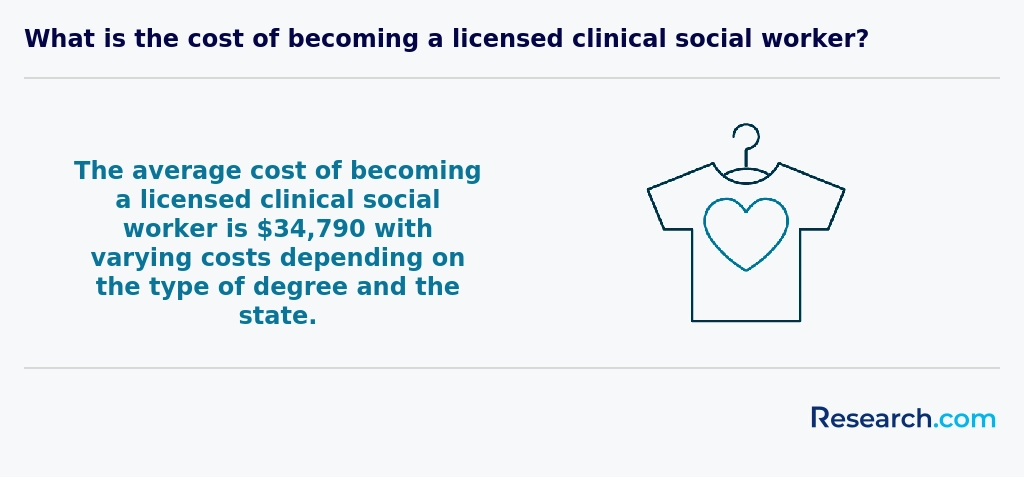
The average cost of an online social work degree in Texas, particularly for a master's level program, is about $33,428 for in-state students. This figure reflects a median total cost that many graduates from public universities experience, especially those enrolled in Texas A&M University-Commerce or similar institutions. These graduates often share how the manageable tuition fees allowed them to focus more on their passion for helping others rather than worrying excessively about financial burdens. However, costs can vary widely: private universities may charge well over $60,000, putting a heavier strain on students who do not have access to scholarships or financial aid.
For students exploring Texas online master's in social work tuition fees, understanding this range is crucial. The variation between public, private, and community college options means decisions about value and affordability must account for long-term career goals as much as immediate expenses. Graduates from smaller colleges often recall appreciating their lower tuition costs-sometimes between $10,000 and $20,000 for bachelor's degrees-even if those programs are stepping stones rather than final clinical qualifications.
Fieldwork, textbooks, and licensing exams add unseen layers of expense, prompting many students to carefully weigh their options. Prospective enrollees are encouraged to look beyond initial tuition numbers and consider comprehensive costs. For those searching for an affordable social work school in Texas, exploring all available public and private choices and financial aid options is a step toward making an informed, sustainable investment in their future careers.

For many prospective social work professionals in Texas, understanding the pathway from earning an online degree to obtaining full licensure is a critical step. This section outlines the essential steps and options available after graduation, ensuring that students are well-prepared to start their careers with strong credentials and a clear roadmap to success. After completing an online Master’s in Social Work (MSW), graduates typically pursue licensure through the Licensed Master Social Worker (LMSW) or move forward to become Licensed Clinical Social Workers (LCSW), depending on their career goals. Many programs integrate academic preparation with practical experiences, such as field placements and internships, which not only enhance clinical skills but also simplify the transition to licensure examinations. Students should review state-specific requirements carefully as Texas may have distinct criteria for supervised hours, examination formats, and continuing education needs. It is important to note that choosing between a broader MSW credential and a more specialized LCSW status can have a significant impact on career trajectories. For valuable insights on these differences, explore how is it better to become a msw or lcsw can guide your decision. By mapping out a clear licensure plan and understanding the credential framework, students can build a foundation of expertise and trust, aligning with both industry standards and Google’s quality benchmarks. This proactive approach not only boosts professional credibility but also opens doors to diverse career opportunities in healthcare, education, community services, and beyond.
To ensure your online MSW is recognized in Texas, select a program accredited by the Council on Social Work Education (CSWE). After graduation, follow these licensure steps set by the Texas State Board of Social Worker Examiners:
- Complete a minimum of 900 supervised practicum hours through your online program.
- Pass the Association of Social Work Boards (ASWB) Master’s level exam to qualify for Licensed Master Social Worker (LMSW) status.
- Accumulate post-master’s clinical hours and pass the ASWB Clinical exam to become a Licensed Clinical Social Worker (LCSW).
- Submit your LMSW or LCSW application with the Texas State Board, including official transcripts and exam scores.
- Maintain licensure with 30 hours of continuing education every two years.
For an expedited pathway that blends coursework with clinical training, explore msw accelerated programs designed to align closely with Texas requirements.
Enrolling in an online social work degree in Texas demands more than just a high school diploma or an undergraduate degree; it challenges you to prove readiness for a deeply impactful profession. Many undergraduates aiming for programs at universities like the University of Texas at Austin or Texas State University find that maintaining a GPA around 2.5 to 3.0 is not merely a number but a reflection of their commitment and ability to handle rigorous coursework.
Graduate hopefuls face a nuanced path. For MSW programs, such as those offered at Texas A&M or the University of Houston, holding a bachelor's degree-often in social work or a related field-is just the start. Admissions panels expect official transcripts, heartfelt letters of recommendation, and personal statements that express genuine motivation, not generic ambitions.
Graduates often recall how sharing stories of volunteer work or human services experience during applications allowed them to connect personally with admissions committees. These real-world experiences become proof of ethical decision-making and communication skills, crucial for success in Texas's diverse communities and reflective of the standards set by the Council on Social Work Education.

When exploring online social work degree programs in Texas, affordability is a crucial factor to consider. Prospective students often seek programs that offer quality education without excessive financial burden. To find the most affordable options, it's essential to research and compare the tuition costs, financial aid opportunities, and scholarship availability across different institutions. For instance, looking into an affordable social work school in Texas can provide valuable insights into how to manage educational expenses while pursuing a degree in social work. By weighing these factors, students can make informed decisions that align with their financial situation and career goals, ultimately leading to a more sustainable and successful educational journey.
Choosing the best online social work degree Texas offers means looking beyond flashy marketing and focusing on real-world impact. Graduates from popular colleges in Texas often reflect on how accreditation by the Council on Social Work Education (CSWE) made their licensing process smoother and opened doors in local agencies. It's not just about checking a box; it's about aligning with programs designed to meet Texas's specific licensure requirements, ensuring you're ready to serve communities meaningfully.
Many students find that affordable social work master's programs Texas public universities provide help balance quality education with manageable debt, easing long-term stress. For example, graduates recall how field practicum placements arranged through online programs linked them directly to Texas nonprofit agencies, enriching their hands-on experience despite studying remotely.
Don't underestimate the value of a flexible curriculum-some graduates thrived by tailoring their studies to clinical practice or child welfare themes. Others highlight the benefit of exploring options like cheap doctoral degree programs for social work to deepen expertise. Ultimately, choosing your program is about envisioning the career path you want and confirming that your chosen university supports it fully.
2027 Most Valuable Online Master's in Social Work Degree Programs Ranking in Texas
Investing in your education is a significant decision that can shape your future, and the Research.com team understands the importance of making informed choices. To assist prospective students in Texas, we have meticulously crafted the "2027 Most Valuable Online Master's in Social Work Degree Programs Ranking in Texas." Our commitment to quality, credibility, and accuracy is demonstrated through rigorous research and comprehensive analysis underpinning this ranking.
We utilized the following reputable data sources to ensure a thorough evaluation of online social work master's programs:
By consulting this ranking, readers will gain valuable insights into the most worthwhile online programs in Texas, empowering them to choose an educational path aligned with their career goals. For more information on how this ranking was developed, please visit our Research.com methodology page.


Frequently Asked Questions About social work
Online social work degree students in Texas can maximize their learning experience by engaging actively with course materials and faculty. Texas features several accredited programs that align with the Council on Social Work Education (CSWE) standards, ensuring high-quality education. Students should take advantage of virtual office hours and discussion boards to connect with professors and peers.
Practical experience is vital; seeking local internships or field placements approved by Texas State Board of Social Worker Examiners enhances skills and licensure prospects. According to the Texas Workforce Commission, social work employment in the state is projected to grow 17% by 2030, underscoring the value of relevant hands-on training.
Additionally, staying informed about Texas-specific social policies through state resources can deepen understanding of the community context, improving professional readiness in this field.
The social work field in Texas is evolving with several emerging niches that reflect the state's diverse population and social challenges. One rapidly growing area is geriatric social work, driven by Texas's expanding senior population, which is expected to increase by over 50% by 2030 according to the Texas Demographic Center. Specialists in this niche focus on aging-related issues, including healthcare, housing, and elder abuse prevention.
Behavioral health social work also continues to expand, addressing mental health and substance abuse disorders prevalent across Texas. Furthermore, digital social work, integrating technology to reach clients remotely, is gaining traction, especially in rural areas underserved by traditional services.
After completing an online social work degree in Texas, preparing for the job market requires strategic steps. First, graduates should obtain licensure through the Texas State Board of Social Worker Examiners, which usually involves passing the ASWB exam and completing supervised hours. According to the Texas Workforce Commission, social work jobs are expected to grow by 12% through 2030, signaling positive opportunities.
Networking is essential-joining groups like the National Association of Social Workers Texas Chapter can connect candidates with employers. Additionally, gaining experience through internships or volunteer work strengthens resumes. Developing skills in mental health, child welfare, or healthcare social work can also improve job prospects in Texas.
Employers in Texas prioritize several key skills when hiring graduates with online social work degrees. Strong communication skills are essential, as social workers must effectively engage with clients and multidisciplinary teams. Critical thinking and problem-solving abilities help professionals navigate complex case situations.
Texas social service agencies also emphasize cultural competence, reflecting the state's diverse population. According to the Texas Department of State Health Services, social workers who understand different cultural backgrounds provide better support and advocacy.
Additionally, ethical decision-making and knowledge of Texas social welfare policies are highly valued. Familiarity with evidence-based practice and proficiency in technology for case management are increasingly important as digital tools become standard in the field.
Finding internships in Texas that align with a social work degree involves several practical steps. Start by contacting the internship coordinator at the Texas university offering your online program, as many maintain partnerships with local agencies. The Texas Department of State Health Services and the Texas Health and Human Services Commission both facilitate placements in social services organizations across the state.
Additionally, explore internships listed on the National Association of Social Workers (NASW) Texas Chapter website, which often features state-specific opportunities. Given Texas's growing demand for social workers, especially in child welfare and behavioral health sectors, internships in these areas are plentiful. Networking with licensed social workers via LinkedIn or local professional groups can also lead to valuable placements.
Completing an online social work degree in Texas can significantly enhance career mobility and advancement opportunities. The Texas Workforce Commission highlights a consistent demand for licensed social workers, with employment projected to grow 15% through 2030. This growth is driven by expanding healthcare, mental health, and child welfare services across the state.
Online degrees accredited by the Council on Social Work Education (CSWE) meet state licensure requirements, enabling graduates to pursue the Licensed Master Social Worker (LMSW) credential. Holding an LMSW improves eligibility for specialized roles and supervisory positions.
Additionally, flexibility of online programs allows working professionals in Texas to upskill without interrupting employment, supporting career transitions and higher earning potential.
Studying for a social work degree in Texas equips students with skills essential for interdisciplinary collaboration. Texas programs emphasize working with professionals from healthcare, education, and criminal justice fields. This approach reflects the statewide need to address complex social issues through teamwork, as reported by the Texas Workforce Commission.
Online degrees often include coursework on communication, ethics, and policy, fostering a broad understanding of multiple disciplines. The Texas Department of State Health Services highlights that social workers frequently coordinate care with medical and mental health providers, reinforcing interdisciplinary roles.
Field placements provide practical experience, allowing students to engage with diverse agencies. According to the Council on Social Work Education, accredited Texas programs maintain standards ensuring graduates are prepared for these collaborative environments.
Choosing between a thesis and a non-thesis social work degree program in Texas primarily depends on your career goals and learning preferences. Thesis options are research-focused, ideal for students interested in advanced studies or academic roles. These programs typically require extensive writing and a formal research project.
Non-thesis tracks are more practice-oriented, emphasizing fieldwork and applied skills, suitable for students aiming at clinical or direct practice jobs. According to the Texas Higher Education Coordinating Board, many accredited Texas programs offer both options, allowing flexibility based on professional objectives.
Consider your timeline and interest in research, as thesis programs may take longer to complete.
Students based in Texas who pursue online social work degrees often explore study abroad options through partnership programs offered by universities. These programs typically allow students to complete coursework remotely while participating in international field practica or cultural exchanges during short-term visits. Texas institutions accredited by the Council on Social Work Education (CSWE) may facilitate these global learning experiences, enhancing cultural competence, a crucial skill in social work.
Though fully enrolling abroad is uncommon for online students, Texas students benefit from hybrid models blending online education with international immersion.
According to the Texas Higher Education Coordinating Board, about 15% of social work students in Texas engage in study abroad options linked to their degree programs.
These opportunities range from service-learning trips to collaborative research projects with global organizations. However, students should verify credit transferability and licensure implications before choosing such paths.
Part-time job opportunities that complement social work degree education in Texas often involve direct community engagement and client support. Roles such as mental health aides, case management assistants, and crisis hotline responders provide practical experience relevant to social work practices. According to the Texas Workforce Commission, the demand for social service workers in Texas is projected to grow by over 15% through 2030, reflecting expanding opportunities.
These positions allow students to apply theoretical knowledge gained in online courses to real-world settings, enhancing both skills and resumes. Additionally, positions in nonprofit organizations, schools, and healthcare facilities are common, offering exposure to diverse populations and social issues.
Online social work students in Texas have several valuable networking opportunities despite the virtual learning environment. Many Texas schools offering online social work degrees facilitate connections through virtual meetups, discussion forums, and group projects. These platforms help students engage with peers and faculty across the state.
Students can also participate in Texas-based professional organizations such as the Texas Chapter of the National Association of Social Workers (NASW-TX). This group hosts conferences, webinars, and local events, providing chances to connect with licensed social workers and potential employers.
Field placements often take place in Texas communities, allowing students to build real-world connections while fulfilling practicum requirements. This practical experience is crucial for networking and career advancement within Texas's social work sector.
Alumni networks provide valuable support and opportunities for online social work degree students in Texas. Graduates often offer mentorship, sharing insights on navigating licensure requirements specific to Texas, such as those outlined by the Texas State Board of Social Work Examiners. This guidance helps students prepare for the Licensed Master Social Worker (LMSW) exam and fulfill fieldwork requirements.
Networking within these communities can lead to job referrals in Texas's large social services sector, which employs over 30,000 social workers statewide according to the Bureau of Labor Statistics (2023). Access to regional job fairs and continuing education events is another benefit.
Additionally, alumni connections foster collaboration and knowledge-sharing that enhances professional growth beyond graduation.
Customizing an online social work degree program in Texas allows students to align their education with specific career goals. Many Texas universities offer elective courses emphasizing areas like clinical social work, community advocacy, or healthcare. Students may select practicum placements in settings such as child welfare, mental health, or gerontology to gain relevant hands-on experience.
Texas students can also pursue dual degrees or certificates alongside their social work program to enhance expertise, such as public health or counseling certifications. Accredited programs follow Council on Social Work Education (CSWE) standards, ensuring quality and eligibility for Texas state licensure.
Research from the Texas Workforce Commission highlights growing demand for specialists in substance abuse and mental health, making focused curricula highly beneficial.
Online social work students in Texas often face challenges related to balancing rigorous coursework with professional and personal responsibilities. Many juggle full-time jobs or family care while completing field practicums, which require in-person hours despite the degree's online format. This hybrid aspect can complicate scheduling and commute times.
Texas students must also ensure their programs meet the Texas State Board of Social Worker Examiners' licensure requirements, which vary and may cause confusion. Access to quality field placements in rural or underserved areas is another common hurdle, limiting hands-on experience opportunities.
Furthermore, students may encounter technological challenges, such as unreliable internet or limited access to academic resources, impacting learning.
With an online social work degree in Texas, graduates can pursue several professional certifications to advance their careers. The most common credential is the Licensed Master Social Worker (LMSW), which allows individuals to practice clinical social work under supervision. According to the Texas Behavioral Health Executive Council, over 24,000 social workers hold an LMSW or Licensed Clinical Social Worker (LCSW) license in Texas as of 2023.
After obtaining the LMSW, many professionals aim for the Licensed Clinical Social Worker (LCSW) certification. The LCSW enables independent clinical practice and requires additional supervised experience and exam passage. Certifications like the Certified School Social Work Specialist (C-SSWS) are also available for those focusing on education environments. These credentials demonstrate expertise and improve job prospects statewide.
Applying to an online social work program in Texas requires clear, well-organized documents that demonstrate your commitment and readiness. Texas consistently ranks among states with strong demand for social workers, emphasizing practical experience and academic excellence in admissions. Start by carefully reviewing each program's prerequisites, as many require a bachelor's degree in social work or related fields.
Highlight any relevant volunteer or work experience in social services, as Texas social work employers value applied skills strongly. A compelling personal statement should reflect your understanding of community needs and your goal to support diverse populations in Texas, supported by data from the Texas Department of State Health Services.
Ensure all transcripts and test scores are current and official. Letters of recommendation from professionals familiar with your abilities offer credibility and can significantly strengthen your application. Proofread thoroughly to present a polished, professional application packet.
Social work careers are increasingly viewed through a global lens, emphasizing the interconnectedness of social issues. Professionals trained in Texas can address challenges such as poverty, mental health, and child welfare, which are prevalent worldwide. According to the National Association of Social Workers, about 60,000 licensed social workers practice in Texas, reflecting the state's significant role in shaping social services.
Globally, there is growing recognition of social work's contribution to sustainable development goals, including equality and social justice. For Texas students, an online social work degree aligns well with these values by offering skills applicable both locally and internationally.
Understanding diverse cultural contexts is critical, as Texas itself is a multicultural hub, fostering awareness valuable in global social work careers.
Students pursuing an online social work degree in Texas must complete supervised field education to gain practical experience. Most accredited programs require 900 to 1,200 hours of fieldwork, which can be completed locally. Texas social service agencies, hospitals, and nonprofit organizations often collaborate with universities to offer placements. According to the Texas State Board of Social Worker Examiners, this hands-on training is essential for eligibility for licensure in the state. Many schools assist students in finding suitable field sites near their homes, allowing flexibility while meeting state and accreditation requirements. These experiences develop skills in real-world social work practice.
Choosing the right concentration in an online social work degree in Texas starts with assessing your career goals and interests. Texas offers diverse specializations such as clinical social work, child welfare, and gerontology, reflecting the state's broad population needs. The Texas Workforce Commission reports growth in healthcare and social assistance jobs, highlighting demand for clinical and behavioral health expertise.
Consider licensure requirements too. Texas mandates specific coursework for Licensed Master Social Worker (LMSW) and Licensed Clinical Social Worker (LCSW) credentials, especially in clinical fields. Check if your program aligns with the Texas State Board of Social Worker Examiners guidelines.
Look for concentrations that offer practical training options within your schedule. Some programs provide field experiences focusing on Texas communities, which enhances job readiness. Research accredited schools verified by the Council on Social Work Education for quality assurance.
- 2027 Most Valuable Online Master's in Social Work Degree Programs Ranking in Alabama
- 2027 Most Valuable Online Master's in Social Work Degree Programs Ranking in Iowa
- 2027 Most Valuable Online Master's in Social Work Degree Programs Ranking in Pennsylvania
- 2027 Most Valuable Online Master's in Social Work Degree Programs Ranking in Massachusetts
- 2027 Most Valuable Online Master's in Social Work Degree Programs Ranking in California
- 2027 Most Valuable Online Master's in Social Work Degree Programs Ranking in Maine
See What Experts Have To Say About Studying Social Work
Read our interview with Social Work experts

- Global Definition of Social Work https://www.ifsw.org/what-is-social-work/global-definition-of-social-work/
- The Best International Social Work Internships for Undergrads and Grads https://www.internhq.com/fields/social-work/
- Types of MSW Degrees in Texas https://www.texassocialworkedu.org/types-of-msw-degree/
- MSW Programs in Texas https://socialworklicensemap.com/social-work-degrees/master-of-social-work-programs/msw-programs-texas/
- Global Perspectives in Social Work https://www.gu.se/en/study-in-gothenburg/exchange-student/courses/sw1118
- Social Work Education: Interdisciplinary teams a growing area of training https://www.socialworkblog.org/featured-articles/2018/04/social-work-education-interdisciplinary-teams-a-growing-area-of-training/
- Study Social Work Abroad | Go Overseas https://www.gooverseas.com/study-abroad/social-work
- Social Work Internships: Find 92 Social Work Intern Jobs https://internshala.com/internships/social-work-internship/
- Best Online MSW Programs in Texas https://www.onlinemastersdegrees.org/best-programs/social-work-msw/texas-tx/
- The Pros and Cons of Online MSW Programs – Should I Pursue an MSW Online? https://www.masterofsocialwork.com/resources/pros-and-cons-online-msw-programs


