2027 Most Valuable Online Public Health Degree Programs Ranking in the USA

Co-Founder and Chief Data Scientist
Choosing the right public health degree can be overwhelming, especially with so many options available online. This article presents the 2027 Most Valuable Online Public Health Degree Programs Ranking in the USA, developed by the Research.com team of data scientists. Their careful analysis helps you identify programs that offer the best value for your investment.
Reading this ranking empowers you to make informed decisions about your education and future career. A public health degree opens the door to meaningful work that improves communities and lives. Explore the programs that align with your goals and start your journey today.
Key benefits of getting online public health degree in America
- Graduates with a public health degree can pursue rewarding careers such as Community Health Worker with an average annual wage of $52,610 or Health Educator earning about $69,790, showcasing strong earning potential in the field.
- Public health degree holders often find diverse career paths in education, safety, and environmental health, as exemplified by alumni from popular universities who work as Environmental Health Specialists or Occupational Health and Safety Specialists.
- Online public health degrees provide flexibility and convenience, allowing students from any location to balance work and study, as demonstrated by successful graduates of well-known programs who appreciate learning at their own pace.
- 2027 Most Valuable Online Public Health Degree Programs Ranking in the USA
- What can I expect from online public health degree in America?
- Where can I work with online public health degree in America?
What can I expect from online public health degree in America?
The average cost of an online public health degree in America varies but typically ranges between $15,000 and $40,000 for a master's program such as the Master of Public Health (MPH). Graduates from well-regarded universities emphasize that this investment often feels justified given the flexibility of learning and the career advancement opportunities it unlocks. Many students appreciate programs that offer interactive coursework combined with virtual group projects, allowing them to continue full-time jobs while studying.
For instance, graduates from popular public health schools at state universities report that practicum requirements provide invaluable hands-on experience within local health departments or community organizations, connecting theory with real-world applications. Such practical elements enhance confidence and skill development, reinforcing the value gained relative to tuition costs.
This price point typically covers comprehensive curricula accredited by the Council on Education for Public Health (CEPH), focused on essential disciplines like epidemiology, biostatistics, and health policy. Students often perceive these programs as a sound financial and professional investment, supported by strong job growth forecasts in health education and related fields.
Where can I work with online public health degree in America?
An online public health degree in America opens diverse career paths across government, healthcare, nonprofit, and research sectors. Graduates from universities like Johns Hopkins and the University of Michigan often find roles in federal, state, or local health departments, where they design public health programs and analyze data to improve community health. For example, many alumni contribute to CDC initiatives or state vaccination campaigns, reflecting a real-world impact driven by their education.
Health systems, including hospitals and clinics, also employ graduates to manage infection control and patient education. This sector has seen a surge in demand since COVID-19 highlighted the importance of skilled public health professionals. Graduates commonly express satisfaction in helping to shape health policies that protect vulnerable populations.
Nonprofits focused on maternal health or chronic disease prevention rely on public health workers to run outreach initiatives and secure funding. Research institutions and universities offer opportunities to conduct studies influencing health policy nationwide. Strong analytical skills developed at institutions like Harvard School of Public Health equip graduates to thrive in evidence-based roles.
Graduates with an online public health degree in America can expect varying earning potentials based on their chosen career paths. For instance, community health workers earn an average annual wage of $52,610, according to the U.S. Bureau of Labor Statistics. Health educators, a common role for many graduates from institutions like the University of North Carolina or Johns Hopkins University, see higher salaries averaging $69,790 per year.
Those entering specialized roles can anticipate even greater earnings. Environmental health specialists and occupational health and safety specialists command mean annual wages of $86,710 and $85,570, respectively. These figures reflect robust demand in sectors like government agencies and healthcare organizations.
Graduates often share that pursuing further certifications or advanced degrees enhances their salary prospects significantly, mirroring real-life examples from public health alumni at popular universities in California and Massachusetts. The salary growth is not only a reflection of academic achievement but also of gaining practical experience in diverse and meaningful public health environments.
- Annual tuition for accredited online public health programs ranges from $10,000 to $25,000, with public universities often offering lower rates than private ones.
- Employment for health educators and community health workers is expected to grow by around 16% from 2021 to 2031, which is faster than the average for all jobs.
- Entry-level salaries for public health graduates average between $50,000 and $60,000 annually, with advanced degrees leading to salaries over $90,000 in specialized fields.
- Many programs include internships and research opportunities to provide practical experience alongside flexible online formats for working professionals.
- Curriculums typically focus on data analysis, health communication, and program planning to prepare students for addressing public health issues like pandemics and health disparities.
Online public health degrees in America typically require between two and four years to complete, depending on the level and enrollment status. For example, bachelor's programs at well-known institutions like the University of North Carolina or Arizona State University generally take around four years for full-time students. Graduates often appreciate the flexible pace when balancing work and study, especially with part-time options extending timelines.
Master of Public Health (MPH) degrees usually demand about two years of full-time study. However, many working professionals enrolled in online MPH programs at schools such as Johns Hopkins or Tulane find part-time options extend this period to three to five years. Accelerated tracks available at some universities allow motivated students to finish in just 12 to 18 months, though this requires significant time commitment and focus.
Doctoral candidates pursuing a DrPH or PhD generally spend three to six years completing their degrees. Online formats at institutions like Harvard or Emory provide asynchronous coursework to accommodate busy schedules but still require multi-year dedication. Graduates describe the experience as challenging yet deeply rewarding, reflecting their positive investment in public health careers.
Online public health degree programs in America provide significant flexibility, ideal for working professionals or parents balancing multiple responsibilities. Graduates from universities like the University of North Carolina or Johns Hopkins often describe completing coursework asynchronously, accessing lectures and assignments on their own schedules, which helps maintain work-life balance without relocating.
Conversely, on-campus programs at institutions such as the University of Michigan and UCLA require physical attendance and fixed schedules. Students value direct interaction with professors and peers, describing rich networking opportunities and spontaneous discussions that enhance teamwork and leadership skills.
Cost differences are notable. The National Center for Education Statistics notes that annual tuition at public universities ranges from $15,000 to $30,000 for in-state on-campus students. Online options may reduce expenses by eliminating housing and commuting but may have comparable tuition depending on the school.
Both formats follow CEPH-accredited curricula covering epidemiology, health policy, and community health, ensuring rigorous and consistent academic standards across delivery methods.
Embarking on your online public health degree journey involves not only selecting the right program but also preparing a compelling application that showcases your strengths and readiness for a rewarding career in public health. Start by researching accreditation, reviewing application deadlines, and gathering essential documents such as transcripts, recommendation letters, and personal statements that highlight your passion for community health. Before applying, take time to build relevant experience through internships, volunteer work, or related projects to strengthen your profile. It’s also beneficial to compare tuition costs and financial aid options to ensure that you’re choosing a program that aligns with your budget. For instance, if you’re exploring cost-effective choices, our detailed guide on the best affordable public health school options provides valuable insights and comparisons. Finally, prepare for potential interviews by articulating clear career goals and demonstrating how your background and skills will contribute to solving public health challenges. Taking these actionable steps will streamline your application process and pave the way for a successful entry into the world of public health.
The average cost of an online public health degree in America varies based on residency and institution, but the median total expense hovers around $32,760. For many students, particularly those attending public universities, the financial burden can be considerably lower if they qualify as in-state residents, with a median total cost of approximately $25,751. Out-of-state students often face higher fees, averaging near $31,430. These figures reflect tuition, fees, and additional academic expenses typical for a full online MPH or related public health degree program.
Graduates from several popular public health programs across the U.S. share that managing these costs becomes feasible when factoring in scholarships, employer assistance, and financial aid options. For example, some students enrolled in well-regarded public universities have found that maintaining residency status significantly reduces their total expenses, making the investment feel more rewarding and attainable. Conversely, students from private institutions commonly encounter higher per-credit tuition but benefit from extensive support mechanisms that ease their financial load.
When calculating total expenses for public health degree online 2027, prospective students should also consider program length, which often ranges from 40 to 50 credit hours, as well as ancillary costs like technology fees and learning materials. Those committed to obtaining a high-quality education have reported satisfaction with their decision, especially when enrolling in programs recognized for affordability and quality.
Prospective applicants seeking an affordable yet credible pathway may explore options listed at affordable public health school, a resource highlighting cost-effective choices nationwide. Understanding these dynamics is crucial for making an informed educational investment aligned with career goals and financial realities.

Accreditation from the Council on Education for Public Health (CEPH) validates program rigor, ensures quality, and protects your investment.
- CEPH-accredited programs meet national standards for curriculum, faculty expertise, and student outcomes
- Federal financial aid and scholarships require enrollment in accredited schools
- Employers and licensing boards recognize CEPH approval for career advancement
- Regular program reviews keep coursework aligned with evolving public health challenges
Compare costs in related fields by exploring the cheapest medical billing and coding program.
Students pursuing online public health degrees in America commonly access federal financial aid, primarily through the FAFSA process, which grants eligibility for Pell Grants, federal loans, and work-study programs. For instance, Pell Grants can provide up to $7,395 annually to undergraduates with demonstrated financial need. Graduates attending institutions like the University of North Carolina or Johns Hopkins often report relying on Direct Unsubsidized Loans and Graduate PLUS Loans, despite their higher borrowing limits and accruing interest.
Many public health students benefit from institutional scholarships tailored to merit or financial need, often available at schools like Arizona State University or the University of Michigan. These awards not only ease financial strain but also inspire confidence and commitment in the field.
- State grants supporting in-state students at public universities.
- Private scholarships from entities such as the American Public Health Association.
- Employer tuition assistance for working professionals advancing their careers.
Additionally, loan forgiveness through programs like Public Service Loan Forgiveness motivates graduates employed in underserved communities, echoing the experiences of alumni working in public health roles at hospitals and nonprofit organizations nationwide.
As the public health landscape evolves, graduates must stay ahead of emerging trends to maximize impact and career growth. One notable shift is the rise of digital health and health informatics, where data-driven decision-making enhances population-level interventions. Professionals skilled in electronic health record (EHR) analytics, predictive modeling, and machine learning are increasingly in demand, reflecting the growing integration of technology in disease surveillance and program evaluation. Climate change and environmental health have also gained prominence, with employers seeking specialists who can assess pollution exposure, develop resilience strategies, and advocate for sustainable policies. Similarly, global health security and emergency preparedness-sparked by recent pandemics-underscore the need for rapid response teams adept at outbreak investigation and risk communication. Another key area is health equity and social determinants of health, where public health experts design community-based initiatives to address disparities in access, education, and outcomes. This focus aligns with the trend toward interdisciplinary collaboration, merging public policy, sociology, and behavioral science to craft holistic solutions. As professionals pivot into these high-impact areas, many explore the industry’s highest paying public health specialties, such as health informatics and global epidemiology, to combine passion with financial reward. Staying current with certifications-like Certified in Public Health (CPH) or specialized informatics credentials-and participating in professional networks (e.g., APHA, ISPOR) can position graduates at the forefront of innovation. By embracing these future directions, online Public Health degree holders can not only elevate their careers but also drive meaningful change in communities worldwide.
Enrolling in online public health degree programs in America typically requires specific academic and experiential prerequisites tailored to the degree level. For undergraduate degrees, most universities expect applicants to have a high school diploma or equivalent and value strong records in science, math, and English. Many institutions, including those at large public universities, have adopted test-optional policies, making the process more accessible while emphasizing academic readiness.
Graduates from prominent public health colleges recall that for master's programs such as the MPH, a completed bachelor's degree is essential, preferably in health sciences or related fields. A minimum GPA of around 3.0 is commonly expected, with some programs also requesting professional healthcare or research experience to enrich student perspectives and classroom discussions.
Applicants often find GRE requirements waived, especially if they bring relevant work experience, which reflects a practical approach embraced by top online programs at universities known for public health.
At the doctoral level, having a master's degree and demonstrated research skills is crucial, often involving thesis work or published research, supported by letters of recommendation and a clear statement of purpose that outlines career goals in the public health arena.

Accreditation validates program quality, ensures transferability of credits, and unlocks eligibility for financial aid and professional certifications. Employers and licensing boards often require degrees from properly accredited institutions.
- CEPH Accreditation: Guarantees your MPH or related degree meets rigorous Public Health standards.
- Regional Accreditation: Confirms overall institutional quality and acceptance by employers and other universities.
- Certification Eligibility: Graduates from accredited programs can sit for the Certified in Public Health (CPH) exam and other credentialing bodies.
- Employer Confidence: Hiring managers prioritize candidates with degrees recognized by both CEPH and regional accrediting agencies.
For those exploring cost-effective accredited healthcare credentials, consider the cheapest medical billing and coding program.
Online public health degrees in America consistently include foundational courses such as Introduction to Public Health and Foundations of Epidemiology, which provide graduates from universities like the University of North Carolina with a clear grasp of disease trends and community health strategies. Graduates often recall how these classes helped them connect classroom learning to real-world health challenges.
Quantitative courses, including Biostatistics and Health Data Analysis, are integral, training students to interpret complex datasets that inform public health policies. For example, students at Johns Hopkins University describe how skillfully analyzing health data boosted their confidence in shaping local health interventions.
Environmental factors and system management are covered in courses like Environmental Health and Health Policy and Management. Graduates from schools such as Boston University appreciate learning to navigate health systems and environmental risks that affect entire populations.
Programs also prioritize Social and Behavioral Health Sciences, helping students design community-focused interventions. Many students from the University of California report a sense of fulfillment when applying these behavioral insights during practicum projects.
Additional offerings such as Global Health and Occupational Health prepare students for diverse challenges, rounding out the practical, career-ready education typical of America's leading online public health programs.
Online public health degree specializations USA commonly include epidemiology, health policy and management, environmental health, community health education, and global health. Graduates from top American universities often share how epidemiology enables them to analyze disease patterns and respond effectively to outbreaks, a skill highly sought after in public health careers. Those focusing on health policy report satisfaction in influencing healthcare regulations and leading programs with tangible community impact. Environmental health students gain hands-on insights into pollution control and occupational safety, particularly valued by professionals working in urban areas.
Public health concentration options in America allow students at institutions like Johns Hopkins and the University of North Carolina to tailor their degrees to specific health challenges. For example, a community health education specialization equips students to design wellness programs for diverse populations, reflecting real-world health promotion needs. Many graduates emphasize the flexibility of online programs accredited by CEPH, which balances rigorous academics with personal and professional responsibilities.
Students also benefit from alignment with job market demands, as illustrated by the U.S. Bureau of Labor Statistics' projection of 17% growth in the field. For those seeking career advancement, examining the highest paying public health specialties can guide specialization choices and optimize educational investment.
Choosing the best online public health degree in America requires a focus on accreditation, curriculum, flexibility, and cost. Graduates from popular universities emphasize the importance of CEPH accreditation, which assures program quality and employer recognition. Programs offering specializations like epidemiology or health policy allow students to tailor learning to career goals, enhancing engagement and practical skills through capstone projects or practicums.
Flexibility is critical for working professionals. Many online public health degree programs in America provide asynchronous courses, letting students balance studies with jobs and family. Graduates often praise academic advising and career services that connect them to job opportunities post-graduation.
Cost considerations vary; the annual tuition ranges from about $7,000 to $30,000 depending on residency and institution. Some schools offer in-state tuition regardless of location, easing financial burdens. Those seeking affordable online public health degrees in America can explore Affordable Online Master's in Public Health Degree Programs Ranking in Baltimore, MD for budget-conscious options.
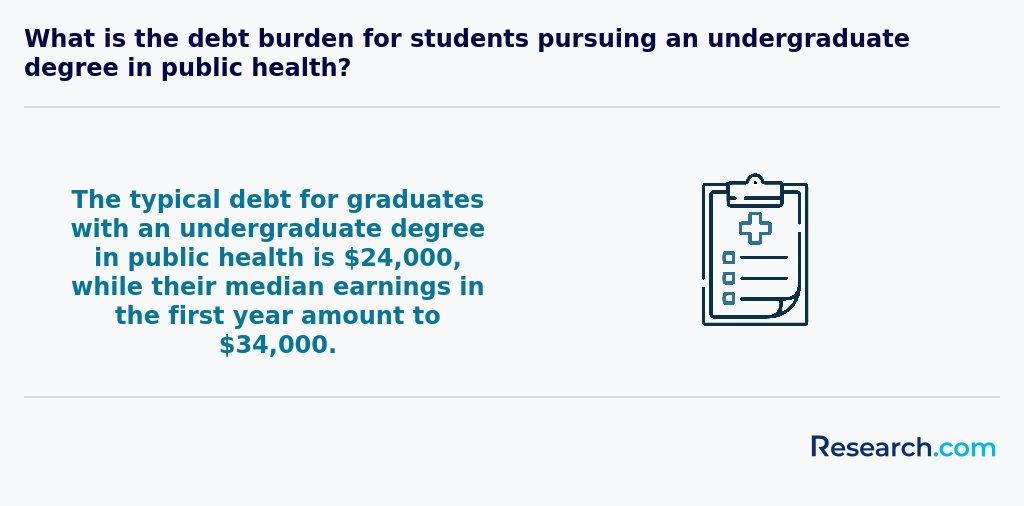
Graduates holding an online public health degree in America access diverse career paths addressing critical health challenges nationwide. Epidemiology remains a key role; these professionals analyze disease patterns with a median 2022 salary of $78,830 and a positive 5% job growth projection. Alumni from respected institutions pursuing epidemiology frequently express satisfaction in contributing to population health through data-driven impact.
Other significant positions include health educators and community health workers who design lifestyle programs to improve wellbeing. The field's expected 11% growth and a median wage around $49,860 underscore promising prospects for public health job opportunities America offers. Environmental health specialists also attract graduates focused on analyzing risks like pollution, reflecting increasing environmental regulations and awareness.
Leadership roles in health policy analysis and administration provide pathways for graduates aiming to influence healthcare systems, often earning over $100,000 depending on experience. Global health specialists engage internationally, addressing pandemics and equity concerns. Prospective students should consider that the cost of degrees varies widely and explore what 6 month certificate course can lead to a higher salary online to complement their career plans.
The job market for online public health degree graduates in America remains robust, driven by growing demand in health education, disease prevention, and policy development. Graduates from well-known institutions like Johns Hopkins and the University of North Carolina often find opportunities across government agencies, nonprofit groups, and healthcare providers. Employment opportunities for public health graduates America-wide are projected to grow by 17% through 2032, outpacing many other fields.
Many graduates report excitement about entering roles such as health educators and community health officers, where they apply knowledge gained online to real-world public health challenges. Salaries vary - health educators earn a median of $48,140 annually, with administrators and epidemiologists reaching above $80,000 depending on location and experience. Popular metropolitan areas like Napa, CA, or San Francisco offer some of the highest wages, enhancing job outlook appeal.
For those balancing work and study, an online public health degree's flexibility is invaluable, allowing students to advance careers without relocating or quitting jobs. Considering cost and ease, many compare options such as what's the easiest masters degree to get in their pursuit of advanced credentials and better employment opportunities.
2027 Most Valuable Online Public Health Degree Programs Ranking in the USA
Investing in your education is a significant decision that can shape your future, and the Research.com team understands the importance of making informed choices. To assist prospective students, we have meticulously crafted the "2027 Most Valuable Online Public Health Degree Programs Ranking in the USA." Our commitment to quality, credibility, and accuracy is reflected in the extensive research and analysis conducted to compile this ranking.
We utilized the following reputable data sources to ensure a comprehensive evaluation of online public health degree programs:
By exploring this ranking, readers will gain valuable insights into the most valuable online public health degree programs across the USA, empowering them to make well-informed decisions about their education and career paths. For a detailed explanation of our ranking process, please visit our Research.com methodology page.


# 4 position
University of Maryland, Baltimore
Master of Health Science

# 5 position
Columbia Southern University
Master of Public Health


# 14 position
University of Illinois Chicago
Master of Concentration in Community Health Practice and Methods


# 16 position
Walden University
Master of Public Health

# 17 position
A.T. Still University
Master of Public Health

# 18 position
University of Maryland-College Park
Master of Public Health Practice and Policy, Online


Frequently Asked Questions About public health
Online public health degree students in America can maximize their learning experience by engaging actively with course materials and participating in virtual discussions. Research from the Association of Schools and Programs of Public Health (ASPPH) highlights that students who interact regularly with peers and instructors tend to retain information better.
Leveraging university resources such as virtual libraries, academic advising, and career services is vital. The Centers for Disease Control and Prevention (CDC) offers extensive open-access public health data that students can use for projects. Additionally, pursuing internships or volunteering remotely with local health departments can provide practical experience.
Time management and setting a dedicated study schedule are essential to balance coursework and personal responsibilities effectively.
Emerging niches within the public health field reflect growing challenges and technological advances in the United States. One significant area is *health informatics*, which uses data analytics to improve healthcare delivery and track disease outbreaks efficiently. According to the U.S. Bureau of Labor Statistics, jobs in this sector are expected to grow 17% from 2022 to 2032.
Another expanding niche is *environmental public health*, addressing climate change impacts and pollution on community health. The Centers for Disease Control and Prevention (CDC) emphasize its importance due to rising natural disasters and pollution-related diseases.
Additionally, *global health security* is gaining focus as pandemics highlight the need for rapid response systems. Online public health degrees now often include these specialized topics to meet workforce demands in 2027 and beyond.
After completing an online public health degree in America, job market preparation is crucial to leverage your education effectively. Start by gaining practical experience through internships or volunteering with organizations like local health departments or the CDC. According to the Bureau of Labor Statistics, public health jobs are expected to grow 17% from 2021 to 2031, indicating strong demand.
Networking is vital-connect with alumni and attend virtual public health conferences to build professional relationships. Also, obtaining certifications such as Certified in Public Health (CPH) can enhance your credentials. Tailor your resume to highlight skills in data analysis, epidemiology, and health communication valued by employers in this field.
Employers in the United States highly value critical skills in public health degree graduates. Analytical abilities are essential, as interpreting complex health data guides community and policy decisions. Communication skills are also crucial; graduates must clearly share findings with diverse populations and stakeholders. Project management experience is increasingly sought after to lead and coordinate health initiatives efficiently.
Understanding health policy and regulations forms a key foundation, enabling graduates to navigate U.S. healthcare systems and influence effective programs. According to the Bureau of Labor Statistics, skills in data analysis and program evaluation are linked to higher employment rates in public health roles. Familiarity with health equity and cultural competence is equally important, reflecting America's diverse population and focus on reducing disparities.
Finding internships relevant to a public health degree in America often begins with leveraging university career services. Many schools with accredited online public health programs partner with local health departments and organizations to offer internship placements. According to the Council on Education for Public Health (CEPH), internships are integral for practical experience and are frequently required for program completion.
Students should also explore federal opportunities such as those offered by the Centers for Disease Control and Prevention (CDC), which provides internships focused on epidemiology and health promotion. Additionally, platforms like the Public Health Internship Connection and USAJobs list numerous internships nationally, with some offering stipends.
Networking through professional public health associations, such as the American Public Health Association (APHA), can also aid in discovering internships that align with career goals.
Obtaining an online public health degree in America can significantly enhance career mobility and advancement. According to the U.S. Bureau of Labor Statistics, the public health sector is expected to grow by 11% from 2020 to 2030, faster than the average for all occupations. This growth creates increased demand for qualified professionals.
Online degrees offer flexibility, allowing working professionals to upskill without leaving their jobs. Many employers in health agencies and nonprofits recognize online public health education as equivalent to traditional programs, supporting promotions and higher salaries.
The degree often opens doors to leadership roles, epidemiology, health policy, and community health management, expanding career options.
Studying for a public health degree in America equips students with skills tailored for interdisciplinary roles. Programs emphasize collaboration across fields such as epidemiology, health policy, environmental science, and behavioral health. According to the Association of Schools and Programs of Public Health (ASPPH), over 80% of graduates work in multidisciplinary teams addressing complex health challenges.
The curriculum integrates data analysis, communication, and leadership, fostering abilities to navigate diverse professional environments. Online programs often include practical projects with community partners, enhancing real-world application. This approach prepares graduates to engage with medical professionals, policymakers, and social workers effectively.
American public health degrees also stress cultural competence, enabling graduates to address health disparities in varied populations, a crucial element amid evolving national demographics documented by the CDC.
Choosing between a thesis and a non-thesis online public health degree in America depends largely on your career goals and learning preferences. A thesis program requires conducting original research, which is ideal for students aiming for academic or research roles. These programs often take longer to complete due to the intensive research component.
Non-thesis options focus on coursework and practical skills, appealing to professionals seeking direct application in public health practice or leadership. According to the Council on Education for Public Health, nearly 40% of MPH graduates pursue non-thesis tracks for faster completion and workforce entry.
Consider your interest in research, time availability, and career path when deciding between the two formats.
Students based in America interested in studying public health abroad have several options through US universities offering international partnerships and exchange programs. Many accredited schools, such as those accredited by the Council on Education for Public Health (CEPH), provide joint online degrees with institutions in Europe, Asia, and Australia. These programs allow students to gain global perspectives while earning a US-recognized degree. According to the Association of Schools and Programs of Public Health, over 60% of accredited US public health schools now participate in some form of international collaboration.
Such programs often include virtual global internships and cross-cultural research opportunities, giving American students international experience without relocating. This structure benefits those balancing work and study commitments. Additionally, some universities offer study abroad residencies lasting a few weeks to enhance global networking. The U.S. Department of Education highlights that these flexible pathways are increasingly popular for online public health learners seeking global credentials.
Part-time jobs that complement online public health degrees in America often include roles such as community health worker, health educator, or research assistant. These positions provide practical experience, enhancing understanding of public health systems and outreach.
Community health workers, for instance, help bridge gaps between healthcare providers and populations, often earning around $20 per hour according to the U.S. Bureau of Labor Statistics (BLS, 2023). Health educators support wellness programs and can be employed part-time by non-profits or local health departments.
Research assistant positions at universities or public agencies also build analytic skills relevant to public health practice. Such jobs enable students to apply theoretical knowledge to real-world data.
Engaging in these roles alongside studies helps students build a network and gain insights into U.S. health policies and population health trends, essential for careers post-graduation.
Online public health students in America have access to diverse networking opportunities that connect them with professionals and peers despite the distance. Many universities offer virtual networking events, such as webinars, panel discussions, and career fairs focused on public health careers. These events often feature experts from organizations like the CDC, WHO, and local health departments.
Students can join national organizations such as the American Public Health Association (APHA), which provides mentorship programs, special interest groups, and annual conferences-some accessible virtually. Online platforms like LinkedIn also serve as valuable tools for connecting with alumni and public health professionals.
According to the U.S. Bureau of Labor Statistics, networking is crucial for job placement in public health fields, where approximately 250,000 new jobs are projected by 2030. Thus, active engagement in these networks enhances career prospects.
Alumni networks offer significant advantages to online public health degree students in America. These networks connect current students with graduates working in diverse public health roles nationwide, fostering mentorship and career guidance. According to the Association of Schools and Programs of Public Health (ASPPH), 85% of public health graduates find jobs through professional connections, highlighting the importance of networking.
Through alumni events and online platforms, students gain access to job postings, internships, and research opportunities specific to the U.S. health sector. This support helps bridge the gap between academic learning and real-world public health challenges.
Moreover, alumni can provide insights into evolving policies and innovations within American public health, supporting lifelong career development for graduates.
Customizing an online public health degree in America allows students to align their education with specific career goals. Many programs offer concentrations such as epidemiology, health policy, or community health, enabling focused study in areas with growing job demand, according to the Bureau of Labor Statistics.
Students can often select electives that match their interests, enhancing skills in data analysis, communication, or program management. Internship and practicum opportunities integrated into online programs provide practical experience relevant to various public health roles.
Additionally, some schools offer flexible pacing and certificate add-ons, allowing learners to build expertise progressively. This personalized approach helps graduates meet the needs of employers in federal agencies, nonprofits, and healthcare organizations.
Online public health students in America often face challenges such as limited access to hands-on field experiences, which are crucial for practical learning. Many programs require internships or practicums that can be difficult to arrange remotely. According to the Council on Education for Public Health, 57% of online students report difficulties coordinating these placements locally.
Another common challenge is maintaining motivation and time management, especially for those balancing work and family responsibilities. A 2023 survey by the National Center for Education Statistics found that 45% of online learners struggled with self-paced study demands.
Technical issues and varying quality of virtual instruction also impact student success in these programs.
With an online public health degree in the United States, graduates can pursue several professional certifications that enhance their career prospects. The most recognized certification is the Certified in Public Health (CPH) credential, offered by the National Board of Public Health Examiners (NBPHE). It requires candidates to have a degree from an accredited CEPH program or relevant work experience. Another key certification is the Certified Health Education Specialist (CHES), provided by the National Commission for Health Education Credentialing, Inc. Both certifications demonstrate expertise and commitment to public health standards.
Additional options include certifications in Epidemiology, Public Health Informatics, and Health Administration, often requiring further specialized training or experience. These credentials are valuable for roles in government agencies, healthcare organizations, and non-profits across America.
When applying to an online public health program in America, start by carefully researching program requirements and aligning your application accordingly. Highlight relevant academic achievements, such as a bachelor's degree in a related field or coursework in biology, statistics, or social sciences. Programs often value applicants with professional experience in health care, community service, or research, so include clear examples of such work.
Strong personal statements should demonstrate your motivation, understanding of public health challenges, and career goals. According to the Council on Education for Public Health (CEPH), a clear alignment with public health values strengthens applications.
Submit all transcripts, letters of recommendation, and standardized test scores, if required, following strict deadlines. Attention to detail and completeness are crucial for success.
Public health careers hold significant value globally, and the United States plays a leading role in shaping this field. According to the U.S. Bureau of Labor Statistics, employment for health educators and community health workers is projected to grow by 17% from 2022 to 2032, reflecting strong demand domestically that aligns with global health priorities.
Worldwide, public health professionals address issues like pandemics, health equity, and chronic disease prevention. U.S. online public health degree programs often emphasize global health perspectives to prepare students for international challenges.
The World Health Organization highlights that public health expertise is vital for managing global health emergencies, an area where American-trained professionals frequently contribute.
Gaining practical experience while pursuing an online public health degree in America is essential for career readiness. Many programs incorporate virtual internships with health departments, nonprofits, or government agencies, allowing students to apply classroom knowledge to real-world challenges. According to the Association of Schools and Programs of Public Health (ASPPH), over 80% of accredited schools emphasize practicum or fieldwork components in their curricula.
Students can also participate in research projects remotely, often collaborating with faculty on current public health issues like epidemiology or health policy. Furthermore, volunteering for community health organizations offers hands-on experience and networking opportunities.
Choosing the right concentration within an online public health degree program in America requires careful consideration of your career goals and interests. Public health fields often include epidemiology, health policy, environmental health, and community health education. According to the Bureau of Labor Statistics, roles in public health are expected to grow 17% from 2021 to 2031, emphasizing the importance of specialized knowledge.
Researching each concentration's job prospects and required skills is crucial. For example, epidemiology focuses on disease patterns, suited for data-driven roles, while health policy prepares students for leadership and advocacy positions. Accreditation by CEPH ensures program quality, which is vital for employability.
Ultimately, align your choice with workforce demands and personal strengths for the best outcomes.
- Engaging students through service-learning opportunities in public health https://sneb.org/engaging-students-through-service-learning-opportunities-in-public-health/
- Public Health https://disabroad.org/program/public-health/
- The Interdisciplinary Nature of Public Health https://www.cune.edu/news/interdisciplinary-nature-public-health
- Public Health/Global perspective - Wikiversity https://en.wikiversity.org/wiki/Public_Health/Global_perspective
- For Academic Public Health https://globalnetworkpublichealth.org/
- Pre-Professional Health Experience Guide | PublicHealthOnline.org https://www.publichealthonline.org/pre-professional-experience/
- Highest Paid Public Health Careers https://www.publichealthdegrees.org/careers/highest-paid-public-health-jobs/
- Public Health Degrees & Careers | How To Work In Public Health https://www.learnhowtobecome.org/medical-health-careers/public-health/
- Why Public Health is the Ideal Career Path for Gen Z - Reach Out https://we-reachout.org/why-public-health-is-the-ideal-career-path-for-gen-z/
- Finding Fulfillment in Your Public Health Career Journey | PH SPOT https://phspot.org/finding-fulfillment-in-your-public-health-career-journey/