2027 Best Marketing Degree Programs Ranking in North Carolina

Co-Founder and Chief Data Scientist
Choosing the right marketing degree program is an important step for students in North Carolina looking to build a successful career. This article presents the 2027 Best Marketing Degree Programs Ranking in North Carolina, developed by the Research.com team of data scientists. It offers a clear guide to the top programs based on thorough data analysis.
Reading this article will help you make an informed decision about your education and future. A marketing degree opens doors to creative, dynamic opportunities that can inspire and challenge you. Explore your options with confidence and excitement.
Key benefits of getting marketing degree in North Carolina
- Salary for marketing degree graduates: Graduates can expect competitive salaries such as a Marketing Assistant earning about $83,190 annually and Public Relations Specialists making around $159,420. These figures reflect rewarding financial opportunities in North Carolina's marketing field.
- Career paths: A marketing graduate from the University of North Carolina might explore roles like Digital Marketing Specialist or Media Planner, showcasing diverse and creative job options. These paths offer growth and the chance to work in exciting industries.
- Online degree benefits: Earning a marketing degree online from NC State University allows flexible scheduling and the ability to balance work or family commitments. This flexibility often leads to greater student satisfaction and career readiness without sacrificing quality education.
- 2027 Best Marketing Degree Programs Ranking in North Carolina
- What can I expect from marketing degree in North Carolina?
- Where can I work with marketing degree in North Carolina?
What can I expect from marketing degree in North Carolina?
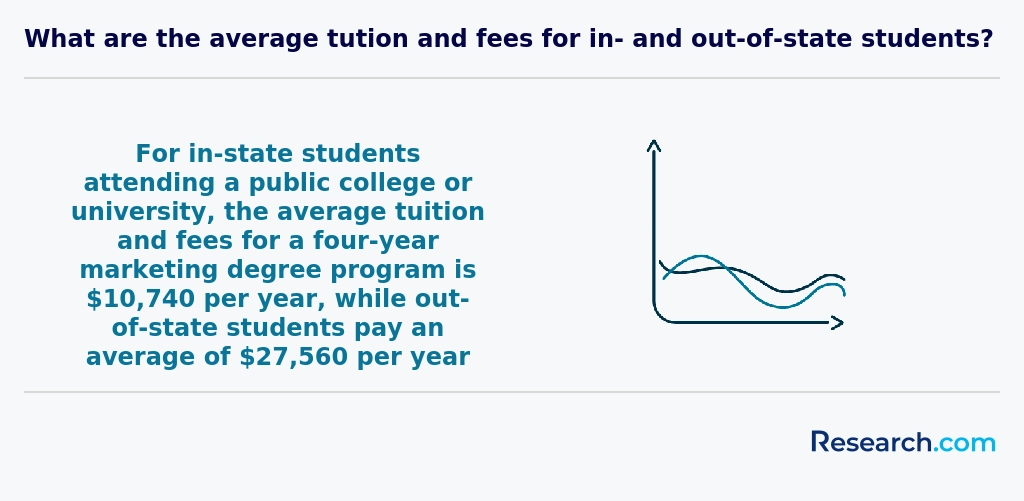
The average cost of a marketing degree in North Carolina varies significantly depending on the type of institution. Public universities like those in the University of North Carolina system offer more affordable tuition, generally ranging from $9,000 to $12,000 per year for in-state students. Graduates from these schools often describe their experience as a balance between quality education and manageable expenses, which allowed them to engage in internships without overwhelming financial stress.
In contrast, private universities such as Wake Forest can charge upwards of $30,000 annually. Students from these institutions frequently highlight the value of smaller class sizes and enhanced networking opportunities, though the higher cost can be a source of anxiety. Some find scholarships and work-study programs indispensable for navigating these expenses.
Many marketing students across North Carolina appreciate online program formats that provide flexibility, essential for balancing education with part-time jobs or family commitments. This variety in cost and format reflects broad options but requires careful budgeting and exploration to find the right fit for individual circumstances.
Where can I work with marketing degree in North Carolina?
Graduates with marketing degrees from institutions like the University of North Carolina at Chapel Hill and North Carolina State University find diverse job prospects across the state's varied economy. Many step into roles within corporate marketing departments at major companies such as Bank of America or Honeywell, where they apply digital marketing and branding skills learned during their studies to real-world campaigns.
Others experience the fast-paced environment of tech startups in Research Triangle Park, managing social media or crafting customer engagement strategies that reflect the region's cutting-edge innovation. Marketing students often mention how internships with these firms provide hands-on learning that bridges academic theory with practice.
Additionally, advertising agencies in Charlotte and Raleigh attract graduates who thrive on strategizing client campaigns and executing media plans. Some graduates channel their passion into healthcare marketing for organizations like UNC Health, focusing on community outreach and health promotion-tasks that feel meaningful, especially given North Carolina's demographic trends.
Small businesses and nonprofits also offer fulfilling roles where marketing graduates use digital analytics to boost local presence, often citing a sense of accomplishment in helping these organizations grow within their communities.
Graduates with a marketing degree in North Carolina commonly start their careers in roles such as marketing assistants or digital marketing specialists, where the mean annual wage is about $83,190 according to recent data. For example, a graduate from a well-regarded program at the University of North Carolina might begin working as a marketing assistant in Charlotte, enjoying not just a competitive salary but also opportunities to develop practical skills in digital campaigns and analytics.
Public relations specialists in the state earn significantly more, with an average annual salary of $159,420. These figures reflect the value placed on strategic communication skills, especially by employers in cities like Raleigh, where large corporations seek talented professionals to manage their brand image.
Sales associates with a marketing background typically earn around $53,280 annually. While this may be lower than specialist roles, it highlights entry points into the field where graduates can combine interpersonal skills and marketing knowledge effectively.
Graduates from schools like North Carolina State University often emphasize how the dynamic marketing field rewards continuous learning, such as earning certifications in digital marketing, which can further increase earning potential beyond these averages.
- In-state tuition for a bachelor's degree in marketing at public universities in North Carolina ranges from $7,000 to $10,000 per year.
- Private universities typically charge over $25,000 annually for marketing programs, while community colleges offer associate degrees for under $4,000 per year.
- Entry-level marketing salaries in North Carolina average between $45,000 and $55,000 annually, with potential to rise above $75,000 as experience grows.
- Strong job opportunities exist in metropolitan areas like Charlotte, Raleigh, and Durham, especially in sectors such as finance, technology, healthcare, and manufacturing.
- The marketing job market in North Carolina is expected to grow by about 8% from 2022 to 2032, matching national employment trends.
- Internship programs are widely available, providing important hands-on experience for marketing students across the state.
Completing a marketing degree in North Carolina typically takes around four years for a bachelor's degree when attending universities like the University of North Carolina at Chapel Hill or North Carolina State University as a full-time student. Many graduates recall balancing coursework with internships, which helped them stay engaged and finish on time.
Associate degrees offered at community colleges such as Wake Technical Community College generally require about two years, offering a quicker pathway to starting a marketing career or transferring to a four-year program. Graduates often appreciate this shorter timeline as it allows entry into the workforce sooner, especially with hands-on experience gained through local business partnerships.
For those pursuing a master's degree in marketing, like an MBA with a marketing focus at institutions like Duke University or UNC Charlotte, the duration usually ranges from one to two years. This depends heavily on whether students study full-time or juggle part-time enrollment with work, which many find rewarding but more time-consuming.
Factors such as enrollment status, transfer credits, and program format (online or hybrid) greatly affect duration, with many North Carolina students valuing flexibility to accommodate personal and professional commitments.
The field of marketing is evolving at an unprecedented pace, driven by rapid technological advancements and shifting consumer behaviors. Today's marketing degree students in North Carolina benefit not only from a strong academic foundation but also from programs that integrate emerging trends such as artificial intelligence in customer analytics, data-driven decision‑making, and innovative digital marketing strategies. As companies increasingly invest in digital transformation, graduates can expect to engage with cutting‑edge technologies and creative approaches that redefine how brands interact with consumers. This proactive alignment with industry trends ensures that programs remain relevant and prepare students for a dynamic job market. For example, programs that emphasize practical experience in areas like content creation, SEO, and social media strategy are increasingly popular; some even highlight resources showcasing the most affordable marketing programs in north carolina to help students balance quality education with financial investment. By staying informed about future market demands and technological innovations, prospective students can choose programs that not only deliver robust marketing fundamentals but also foster adaptability, creativity, and strategic thinking to thrive in tomorrow’s business landscape.
Choosing between online and on-campus marketing degrees in North Carolina often hinges on how students envision their learning journey. Graduates from the University of North Carolina at Chapel Hill recall the energy of in-person classes, where spontaneous discussions and campus networking events sparked fresh career ideas. This contrasts with online learners at North Carolina State University who appreciate the flexibility to watch lectures anytime, balancing coursework with jobs or family commitments without the stress of commuting.
Cost differences also shape decisions. On-campus students might face tuition ranging from about $9,000 to $22,000 yearly, plus housing in cities like Raleigh. Meanwhile, online programs generally lower tuition by nearly 20% nationally and remove commuting expenses, making them appealing for budget-conscious students.
Still, some report missing the immersive campus vibe that fuels collaboration during group projects. On-campus experiences offer direct access to career services and peer mentorship, valuable for marketing careers reliant on relationships. Online formats demand strong self-discipline but suit those seeking autonomy. Both routes in North Carolina maintain strong accreditation, ensuring quality education.
Determining the average cost of obtaining a marketing degree in North Carolina reveals a nuanced picture. Data shows that the median total expense is approximately $43,260, with in-state students paying a median of about $31,900. Graduates from well-known public universities such as those in the University of North Carolina System often find these figures reflective of their experience, balancing affordability with quality education. These schools offer in-state tuition rates that make pursuing a marketing degree more accessible while maintaining reputable programs.
Private institutions, on the other hand, can be a markedly different experience financially. Many marketing students from private universities report total costs well above the median overall figure, sometimes exceeding $100,000 for their degree. This highlights why personal budgeting is essential when considering total expenses for marketing degree programs NC, since tuition is only part of the financial commitment.
Beyond tuition, students commonly face additional yearly expenses such as books, supplies, housing, and fees. One graduate recalls budgeting carefully to cover about $13,000 annually in housing and living costs near their college campus, which added a significant layer to their overall cost consciousness. Many students also benefit from financial aid opportunities and state scholarships aimed at reducing the burden.
Prospective students should explore the most affordable marketing programs in north carolina to identify options that align with both academic goals and financial realities. Balancing cost while aiming for a program that fits personal and career aspirations requires research but pays off in the long run.

Earning industry-recognized certifications can set you apart in a competitive job market and demonstrate specialized expertise. Here are some of the most valuable credentials to consider: • Google Analytics Individual Qualification (GAIQ): Validates your ability to collect, analyze, and interpret website data. This certification is highly sought after by digital marketing teams aiming to optimize campaign performance. • Google Ads Certification: Offers proficiency in search, display, video, and shopping ads. Holding this certification signals to employers that you can manage paid-search campaigns effectively and drive ROI. • HubSpot Content Marketing and Inbound Marketing Certifications: Emphasize content strategy, SEO, and lead generation. These badges showcase your ability to attract, engage, and delight customers through data-driven storytelling. • Hootsuite Social Marketing Certification: Demonstrates mastery of social media strategy, community building, and platform best practices-essential skills for any social media manager. • Facebook Blueprint Certification: Focuses on advertising using Meta’s platforms. Earning this credential indicates you can craft targeted ad campaigns on Facebook and Instagram that meet key business objectives. • American Marketing Association Professional Certified Marketer (PCM): Provides a broad overview of marketing principles, ethics, and research methods. This credential reinforces your foundational knowledge and commitment to industry standards. Beyond marketing, many professionals expand their impact by pursuing roles in corporate communications. Exploring a communications career can deepen your strategic messaging skills and open doors to cross-functional leadership opportunities. By combining a strong academic background with targeted certifications, you’ll boost both your credibility and your career trajectory in the ever-evolving world of marketing.
Students pursuing marketing degrees in North Carolina often rely on a mix of federal, state, and institutional financial aid to make their education affordable. For instance, graduates from the University of North Carolina system recall how Pell Grants, offering up to $7,395, significantly lightened their tuition burden without the stress of repayment. Federal student loans also provided flexible options, though some found balancing loan debt with early career goals a challenge.
State programs like the North Carolina Need-Based Scholarship have been essential for many attending public colleges such as NC State University, where need-based grants helped manage costs that would otherwise feel overwhelming. Institutional scholarships, especially merit-based awards for marketing students, excite recipients by recognizing academic and leadership achievements, providing both financial relief and motivation.
Work-study roles and paid internships often go beyond finances, offering hands-on marketing experience that graduates cherish as career-launching opportunities. Early FAFSA submission is a common tip among successful students, reflecting how strategic financial planning can unlock access to these diverse aid sources.
Enrolling in a marketing degree program in North Carolina usually requires a high school diploma or equivalent, with standardized test scores like the SAT or ACT often expected, though some schools now embrace test-optional policies. For instance, graduates from universities such as UNC Charlotte reflect on the relief of flexible admissions criteria that recognize diverse student strengths beyond test scores.
A minimum GPA around 2.5 to 3.0 is commonly required, indicating academic preparedness. Many students at schools like North Carolina State University have found that completing foundational courses in math and English before beginning marketing coursework builds confidence and eases the transition into specialized subjects.
Graduate programs, such as an MBA with marketing at Duke University, generally demand a bachelor's degree and standardized test scores like the GRE or GMAT-though waivers and relevant work experience can broaden access. Graduates appreciate how these requirements balance academic rigor with practical experience, making admission processes feel fair and achievable.
Considering North Carolina's affordable tuition at public institutions, many students feel motivated knowing quality marketing education is accessible without overwhelming debt.
Students in North Carolina’s top marketing programs benefit from strong industry partnerships that translate classroom theory into real-world experience. Universities such as the University of North Carolina at Chapel Hill collaborate with leading brands like SAS and Bank of America to offer semester-long marketing practicums, while North Carolina State University’s co-op program places students at start-ups and Fortune 500 companies, allowing them to earn credit and build professional networks concurrently. These strategic alliances ensure that graduates not only master marketing fundamentals-such as consumer behavior analysis and campaign optimization-but also gain the hands-on skills employers seek. Many programs embed experiential learning directly into their curricula. For example, Appalachian State University’s Marketing Lab partners with local nonprofits for service-learning projects, enabling students to develop branding and outreach strategies that drive measurable impact in the community. At East Carolina University, digital marketing courses culminate in live client engagements, where teams conduct SEO audits and social media campaigns for small businesses, honing technical skills and fostering teamwork under real-time deadlines. Such immersive opportunities cultivate critical thinking, problem-solving, and adaptability-attributes that set North Carolina graduates apart in a competitive job market. Prospective students looking to balance quality with affordability can discover even more practical, budget-friendly programs through our Inexpensive Marketing Degree Programs Ranking in New Hampshire, which highlights institutions with robust internship offerings and low overall costs. By leveraging these experiential learning pathways, marketing majors graduate confident, connected, and ready to drive innovation in any business environment.
Marketing degree programs in North Carolina commonly include courses that blend theory with practical skills, crucial for thriving in vibrant markets like Charlotte and Raleigh. Graduates from institutions such as the University of North Carolina and NC State often reflect on how foundational courses like Marketing Principles and Consumer Behavior helped them understand real-world customer needs and develop targeted strategies.
Core classes like Market Research and Digital Marketing offer hands-on experience with data analysis and online campaign tools, which many found essential when interning with local companies in financial services or tech sectors. Advertising and Promotion classes encourage creativity in media planning, a skill graduates appreciated using during collaborative projects that mimicked actual agency work.
Sales Management and Business Communication components reinforce practical skills needed to negotiate, persuade, and build lasting client relationships-students often describe this as a confidence booster in professional settings. Electives such as entrepreneurship and marketing analytics allow tailoring the degree to emerging trends, giving students a competitive edge in North Carolina's expanding job market.
Marketing degree specializations in North Carolina often include Digital Marketing, Market Research and Analytics, and Sales and Brand Management, reflecting both national trends and local economic strengths. Graduates from universities like UNC Chapel Hill and NC State report enthusiasm about Digital Marketing programs, which leverage the growing tech scene in the Research Triangle Park to provide hands-on experiences in SEO, social media strategy, and data analytics. However, some question if such niche focus might limit broader business understanding.
Market Research and Analytics attract students interested in data-driven decision-making, a skill set highly valued in North Carolina's healthcare and manufacturing sectors. This specialization enables learners to interpret complex consumer behaviors but also requires strong quantitative skills that can be demanding.
Sales and Brand Management programs suit those aiming to engage with industries from Charlotte's banking to statewide manufacturing. Many students find these concentrations practical and emotionally rewarding, especially when working on real-world projects. Additional opportunities exist in International Marketing and Advertising, often combined with entrepreneurship or communication coursework, enhancing adaptability in a competitive job market. Interested students should consider how these paths might fit their future roles, possibly exploring careers through a communications career.
Choosing among the best marketing degree programs in North Carolina requires a clear-eyed look at accreditation, practical curriculum, and cost. Graduates from institutions like the University of North Carolina at Chapel Hill often highlight how accreditation by recognized bodies reassured them of academic quality and helped when applying for marketing roles. Yet, some students find that smaller programs with stronger local industry connections, such as those at North Carolina State University, provide superior internship opportunities that give hands-on experience.
How to choose a marketing degree North Carolina residents should remember also involves weighing tuition costs against actual learning outcomes. While private universities can charge over $30,000 annually, many find value in public schools' affordability. For those mindful of expenses, reviewing scholarships or considering Inexpensive Marketing Degree Programs Ranking in New Hampshire may inspire ideas on cost management despite regional differences.
Curriculum relevance matters greatly; graduates who thrived often praised programs balancing fundamental marketing concepts with digital analytics and consumer behavior. With North Carolina's evolving economy, including finance and healthcare sectors, programs involving experiential learning through co-ops or partnerships equip students to adapt quickly after graduation.
Graduates with a marketing degree in North Carolina find various career paths reflecting the state's diverse economy. Many pursue roles in advertising, brand management, or digital marketing within companies located in urban centers like Charlotte or Raleigh. Some graduates from well-known universities share how internships in the Research Triangle Park helped them secure positions as social media coordinators or market research assistants, giving them hands-on experience critical for advancement.
Although jobs with marketing degree in North Carolina often appear promising, it is important to consider the competitive nature of these fields. For instance, while digital marketing specialists benefit from the rise of e-commerce, not all graduates immediately land high-paying roles. Networking and practical experience gained through cooperative education programs at local colleges can be decisive factors.
Many students explore additional certifications or advanced studies to specialize, especially in trending areas like consumer behavior or data analytics. Those unsure about their options may benefit from resources like online open enrollment colleges, which provide flexible pathways to broaden their skillsets and improve job prospects.
The marketing degree job outlook North Carolina holds reflects a balanced mix of opportunity and competition. Graduates from universities such as the University of North Carolina at Chapel Hill and North Carolina State University often find that the state's diverse economy, including strong tech and healthcare sectors, supports a steady demand for marketing professionals. Many recent graduates report gaining practical experience through internships in Research Triangle Park, which enhances their employability in digital marketing and consumer analytics roles. However, job seekers should remain cautious as entry-level positions typically offer salaries ranging between $45,000 and $55,000 annually, which might feel modest given the cost of living in urban hubs like Charlotte and Raleigh.
North Carolina marketing degree employment prospects improve substantially with experience, especially in mid-career roles where salaries approach or exceed $70,000. Graduates highlight how cooperative education programs provided by local institutions sharpen their skills and expand networks, making the transition into competitive fields like brand development smoother.
Potential students should weigh the value of affordable public universities against private options, as cost of study can impact financial freedom post-graduation. For insights into fields that reward marketing skills most, consider exploring majors that make money.
2027 Best Marketing Degree Programs Ranking in North Carolina
Investing in your education is a significant decision that can profoundly impact your career, and the Research.com team recognizes the necessity of making informed and confident choices. To support prospective students in North Carolina, we have carefully developed the "2027 Best Marketing Degree Programs Ranking." Our dedication to quality, credibility, and accuracy is demonstrated through thorough research and analysis conducted to establish this ranking.
We utilized the following reputable data sources to ensure a comprehensive evaluation of marketing programs:
By exploring this ranking, readers will gain valuable insights into the top marketing degree programs available in North Carolina, empowering them to make well-informed decisions about their educational journeys. For more information about how this ranking was created, please visit our Research.com methodology page.


Frequently Asked Questions About marketing
Marketing degree students in North Carolina can maximize their learning experience by engaging in internships with local businesses and major corporations, such as Bank of America and SAS Institute, which have strong marketing departments. The state's growing economy offers diverse real-world opportunities to apply classroom knowledge.
It's also beneficial to participate in student organizations like the American Marketing Association (AMA) chapters at universities, fostering networking and practical skills development. Additionally, students should take advantage of online marketing data platforms and analytics tools commonly used in North Carolina's job market.
Attending workshops and seminars related to digital marketing trends can further enhance students' skill sets. The North Carolina Department of Commerce reports that positions related to marketing analytics are among the fastest-growing jobs in the state, emphasizing the value of technical expertise alongside foundational knowledge.
The marketing field is evolving rapidly, with several emerging niches gaining importance, especially for students pursuing degrees in North Carolina. One notable area is digital marketing analytics, which focuses on interpreting data to drive decisions. This niche aligns well with North Carolina's growing tech sector, as highlighted by the state's Department of Commerce.
Another rising area is influencer and social media marketing. Brands increasingly rely on social media platforms to reach younger audiences. North Carolina's vibrant startup community, particularly in cities like Raleigh and Charlotte, offers many opportunities in this space.
Content marketing and sustainable marketing are also gaining traction, as consumers demand authentic and eco-friendly brand messages. According to LinkedIn's 2023 Workforce Report, jobs related to these fields in North Carolina have grown by over 15% in recent years.
Graduates with marketing degrees in North Carolina should focus on building practical experience to stand out in a competitive job market. Internships, particularly with local businesses or companies in major cities like Charlotte and Raleigh, provide hands-on skills and networking opportunities. The North Carolina Department of Commerce reports a growing demand for marketing professionals, especially in digital marketing and data analysis roles.
Enhancing technical skills such as proficiency in CRM software, Google Analytics, and social media platforms is essential. Additionally, pursuing certifications related to digital marketing can improve employability. Joining professional associations like the American Marketing Association's NC chapter helps students connect with industry experts and stay updated on trends.
Employers in North Carolina seeking marketing degree graduates prioritize a blend of analytical, creative, and digital skills. According to the North Carolina Department of Commerce, proficiency in data analysis and customer insights is essential, as businesses increasingly rely on data-driven marketing strategies. Communication skills remain critical, especially in crafting clear messages and managing brand reputation.
Digital marketing skills, including familiarity with social media platforms, SEO, and content creation, are highly valued due to the region's growing tech industry. Additionally, problem-solving abilities and adaptability are crucial given the dynamic market conditions in cities like Charlotte and Raleigh.
Teamwork and project management also stand out, as marketing roles often require collaboration across departments.
Finding internships in North Carolina relevant to a marketing degree involves leveraging local resources and industry connections. The state hosts a growing marketing sector, particularly in cities like Charlotte and Raleigh, where over 15,000 marketing professionals work, according to the Bureau of Labor Statistics (2023).
Students should begin by exploring internship listings on university career portals, many of which partner with regional companies. Additionally, platforms such as the North Carolina Department of Commerce's job board provide local opportunities.
Networking through organizations like the American Marketing Association's local chapters is also essential. Attending industry events and workshops increases chances of securing competitive internships while building professional relationships in the state's marketing community.
A marketing degree in North Carolina significantly enhances career mobility and advancement opportunities. Graduates gain foundational skills in digital marketing, analytics, and consumer behavior, crucial in a competitive job market. According to the Bureau of Labor Statistics (BLS), the Charlotte metropolitan area, a major business hub, has seen marketing job growth of 8% over the past decade, higher than the national average.
Employers in industries like finance, technology, and healthcare actively seek candidates with marketing credentials for roles such as marketing coordinators, brand managers, and digital strategists. A degree also opens pathways to leadership positions by combining strategic thinking with practical experience.
Furthermore, North Carolina's marketing professionals earn median annual wages around $65,000, with senior roles exceeding $100,000, according to data from the North Carolina Department of Commerce. This reflects the degree's positive impact on earning potential and career advancement in the state.
Studying for a marketing degree in North Carolina offers strong preparation for interdisciplinary roles by integrating knowledge from business, communication, and data analytics. Programs often emphasize collaboration with fields like finance, psychology, and information technology to reflect real-world business environments. The state's growing economy, particularly in sectors like technology and healthcare, demands marketers who understand diverse disciplines.
Many North Carolina universities include courses on consumer behavior, digital marketing, and statistics, equipping students with skills in data-driven decision-making. According to the North Carolina Department of Commerce, marketing jobs requiring interdisciplinary skills are expected to grow by 8% through 2030.
This holistic approach readies graduates for varied roles across industries, making them adaptable and competitive in a changing job market.
Choosing between a thesis and a non-thesis marketing degree program in North Carolina depends on your career goals and academic interests. Thesis programs typically involve conducting original research, suitable for students considering doctoral studies or research-oriented careers.
Non-thesis programs often focus on coursework and practical skills, appealing to those aiming for immediate entry into marketing roles or business management.
North Carolina universities like UNC Chapel Hill and NC State offer both options, with thesis tracks usually requiring 6-9 credit hours of research. According to NC Department of Commerce, marketing job growth in the state is projected at about 7% by 2030, favoring practical skills training.
Consider your learning preference, career path, and timeline when deciding which program fits best.
Students based in North Carolina who wish to study marketing abroad have several pathways through their home institutions. Many universities in the state, such as the University of North Carolina system schools, offer exchange programs and faculty-led study abroad opportunities in global business hubs across Europe, Asia, and Latin America. These programs typically last a semester or summer term, allowing students to earn credit toward their marketing degree while gaining international experience.
The American Council on Education reports that about 10% of U.S. undergraduates participate in study abroad, and North Carolina universities actively support this through partnerships with accredited institutions overseas. Additionally, some programs emphasize global marketing strategies and cross-cultural communication, which are critical skills in today's interconnected market.
Costs and scholarships vary, so students are encouraged to consult their university's study abroad office for tailored guidance about eligibility, application deadlines, and financial aid options.
Part-time job opportunities that complement a marketing degree in North Carolina are diverse and meaningful for skill-building. Students often find roles in digital marketing, content creation, and social media management, especially in cities like Raleigh and Charlotte, where the marketing sector is growing.
Internships or part-time work in local marketing firms or corporate marketing departments provide hands-on experience. According to the North Carolina Department of Commerce, marketing-related occupations are expected to grow by about 5% through 2030, increasing part-time openings.
Freelance opportunities such as SEO consulting or event promotion also allow flexible schedules while applying classroom knowledge.
Marketing students in North Carolina benefit from robust networking opportunities through university-affiliated organizations such as the American Marketing Association (AMA) chapters at schools like the University of North Carolina and North Carolina State University. These groups regularly host events, guest lectures, and workshops that connect students with local marketing professionals.
Additionally, North Carolina's growing business hubs in cities like Charlotte and Raleigh provide students access to numerous internships and networking events. The Charlotte Regional Business Alliance reports that marketing roles in the area have grown by 8% over recent years, reflecting a dynamic market.
Students can also attend conferences like the MarketingEDGE Expo held in nearby areas, offering direct contact with industry leaders and recruiters. These venues are valuable for building connections, gaining mentorship, and exploring career pathways specifically within North Carolina's competitive marketing landscape.
Alumni networks play a crucial role for marketing degree students in North Carolina by offering connections to experienced professionals and local businesses. These networks often provide mentoring opportunities, internships, and job leads, helping students access the competitive marketing job market more easily.
In North Carolina, many universities have active alumni organizations that organize events and workshops tailored to marketing fields. According to the National Association of Colleges and Employers (NACE), 70% of jobs are found through networking, highlighting the value of these connections.
Additionally, alumni often share insights about industry trends specific to North Carolina's growing sectors like technology, healthcare, and consumer goods, which strengthens students' regional market understanding and career readiness.
Customizing a marketing degree program in North Carolina allows students to align their education with specific career goals. Many universities in the state offer elective courses in digital marketing, consumer behavior, and data analytics, enabling students to develop expertise in high-demand areas. For example, the University of North Carolina system provides varied concentrations that reflect the research-backed skills employers seek.
Students can also engage in internships or cooperative education programs with local businesses, gaining practical experience in industries such as technology, healthcare, and retail. According to the North Carolina Department of Commerce, marketing jobs in the state are projected to grow by 8% through 2030, emphasizing the need for adaptable skills.
Additionally, online and part-time options allow learners to balance work and study, tailoring schedules to fit professional ambitions. Taking advantage of networking events and marketing clubs at North Carolina schools can further help students refine career objectives and build valuable contacts.
Marketing students in North Carolina often face several challenges during their studies. One key difficulty is keeping up with the rapidly changing digital marketing landscape, which requires continuous learning of new tools and platforms. Additionally, competitive internship opportunities can be limited, especially in smaller cities outside of Charlotte and Raleigh, where most industry jobs are concentrated.
Students must also balance theoretical coursework with practical experience, which is essential for job readiness. According to the North Carolina Department of Commerce, marketing roles are expected to grow by 8% through 2030, increasing competition for quality positions. Finally, students often struggle with understanding data analytics, a skill increasingly demanded by employers in this region.
With a marketing degree in North Carolina, graduates can pursue several professional certifications to enhance their careers. Popular options include the American Marketing Association's Professional Certified Marketer (PCM), which validates knowledge in digital marketing, content marketing, and marketing management. Another key certification is the Google Ads Certification, important for roles involving paid search campaigns common in North Carolina's growing tech hubs like Charlotte and Raleigh.
Additionally, certificates like the HubSpot Content Marketing or Facebook Blueprint are valuable for mastering inbound marketing and social media strategies. These certifications help professionals stand out in North Carolina's competitive marketing job market, which has seen a 5% growth in marketing roles over the past five years, according to the North Carolina Department of Commerce.
To write a winning application for a marketing program in North Carolina, start by clearly demonstrating your interest in marketing and your career goals. Highlight relevant coursework, internships, or work experience related to marketing or business.
Many North Carolina universities value strong academic performance, so include your GPA and standardized test scores if required. Tailor your personal statement to explain why you want to study marketing specifically in North Carolina, mentioning local industries like technology and finance that drive marketing opportunities in the state, according to the North Carolina Department of Commerce.
Strong letters of recommendation from professionals or professors familiar with your skills can significantly boost your application. Be concise, professional, and make sure to proofread thoroughly.
Marketing careers have a global demand, with businesses worldwide seeking professionals skilled in digital strategies, consumer behavior, and data analysis. In the United States, including North Carolina, marketing roles are rapidly evolving due to technological advances and globalization. North Carolina ranks among the top states for marketing jobs, supported by robust industries like finance, healthcare, and technology.
According to the U.S. Bureau of Labor Statistics, marketing manager positions in North Carolina are projected to grow 9% from 2022 to 2032, aligning with national trends. This growth reflects a global shift towards data-driven marketing and international brand management.
Students in North Carolina pursuing marketing degrees can expect career opportunities not only locally but also in global corporations, as the state hosts many multinational companies. Understanding global markets and cultural nuances is increasingly vital, making international experience and language skills valuable assets for graduates.
Gaining practical experience while studying for a marketing degree in North Carolina is essential for building skills and increasing employability. Many universities in the state offer internship programs partnered with local businesses, allowing students to work on real marketing campaigns. For example, institutions like the University of North Carolina at Chapel Hill and North Carolina State University connect students with internships in nearby urban centers such as Raleigh and Charlotte, where marketing roles are growing.
Students can also join campus clubs focused on marketing and participate in case competitions to apply classroom knowledge.
According to the North Carolina Department of Commerce, the marketing and advertising industry in the state has seen steady growth, with over 40,000 jobs as of 2023, making internships valuable for networking and job placement.
Choosing the right concentration within a marketing degree program in North Carolina involves understanding your career goals and market demand. Popular specializations include digital marketing, brand management, and market research. North Carolina's strong presence in sectors like technology and finance creates opportunities for digital marketing experts with data analytics skills.
Consider programs that offer internships or partnerships with local companies. According to the North Carolina Department of Commerce, industries tied to marketing are growing faster than average, signaling strong employment prospects.
Evaluating faculty expertise and alumni outcomes at schools like UNC Chapel Hill or NC State can also guide your decision. Focus on concentrations aligned with current job trends to maximize your return on investment.
- 2027 Best Marketing Degree Programs Ranking in South Carolina
- 2027 Best Marketing Degree Programs Ranking in Georgia
- 2027 Best Marketing Degree Programs Ranking in Alabama
- 2027 Best Marketing Degree Programs Ranking in Ohio
- 2027 Best Marketing Degree Programs Ranking in Mississippi
- 2027 Best Marketing Degree Programs Ranking in New Jersey
- 2027 Best Marketing Degree Programs Ranking in Missouri
- 2027 Best Marketing Degree Programs Ranking in New York
- 2027 Best Marketing Degree Programs Ranking in Rhode Island
- 2027 Best Marketing Degree Programs Ranking in Massachusetts
See What Experts Have To Say About Studying Marketing
Read our interview with Marketing experts

Aidin Namin, Ph.D.
Marketing Expert
Associate Professor of Marketing Analytics
Loyola Marymount University

Sonya A. Grier, Ph.D.
Marketing Expert
Professor, Department of Marketing
American University

- 2025 Most Affordable Online Business Degrees in North Carolina https://www.onlineu.com/degrees/business/north-carolina
- Digital Marketing Major https://www.kozminski.edu.pl/en/digital-marketing-major
- Niche Digital Marketing Roles: Exploring Specialized Career Paths https://www.cellainc.com/insights/blog/niche-digital-marketing-roles-exploring-specialized-career-paths/
- Marketing personal statement examples and tips from applicants | Master's | Warwick Business School https://www.wbs.ac.uk/blogs/student/masters/marketing-personal-statement-examples-and-tips-from-applicants/
- How Niches Provide New Growth Opportunities for Business https://visionedgemarketing.com/niche-marketing-provides-new-growth-opportunities/
- How to Get a Summer Internship in Marketing in 2026 (Agency, In-House, and Startup) https://whali.co.uk/blog/summer-internship-marketing-guide
- Top Challenges in Digital Marketing Education and How LMS Solves Them https://dev.to/atrixware/top-challenges-in-digital-marketing-education-and-how-lms-solves-them-1adp
- What Jobs Can You Get with a Marketing Degree? https://www.global-business-school.org/content-type/blog/what-jobs-can-get-marketing-degree/
- Top 5 marketing skills employers are looking for in 2025 https://www.konkergroup.com/top-5-marketing-skills-employers-are-looking-for-in-2025/
- Marketing Manager Salaries State-by-State https://www.allbusinessschools.com/marketing/salary/