2027 Best Marketing Degree Programs Ranking in Michigan

Co-Founder and Chief Data Scientist
Choosing the right marketing degree program can be a game-changer for your future career. This article presents the 2027 Best Marketing Degree Programs Ranking in Michigan, developed by the Research.com team of data scientists to guide you through the options.
By exploring this ranking, you'll discover programs that align with your goals and interests, helping you make an informed decision. Earning a marketing degree opens doors to exciting opportunities and growth in a dynamic field. Dive in and find the program that's the perfect fit for you.
Key benefits of getting marketing degree in Michigan
- Marketing degree graduates in Michigan can earn competitive salaries, such as $83,190 annually for Marketing Assistants and Digital Marketing Specialists, and up to $159,420 for Public Relations Specialists, offering strong financial benefits.
- A marketing graduate from a top Michigan university can explore diverse career paths, including roles in sales, media planning, public relations, and digital marketing, ensuring flexible and exciting job opportunities.
- Obtaining a marketing degree online in Michigan provides convenience and flexibility, allowing graduates to balance work and study while gaining skills that are equally respected as those from traditional programs.
- 2027 Best Marketing Degree Programs Ranking in Michigan
- What can I expect from marketing degree in Michigan?
- Where can I work with marketing degree in Michigan?
What can I expect from marketing degree in Michigan?
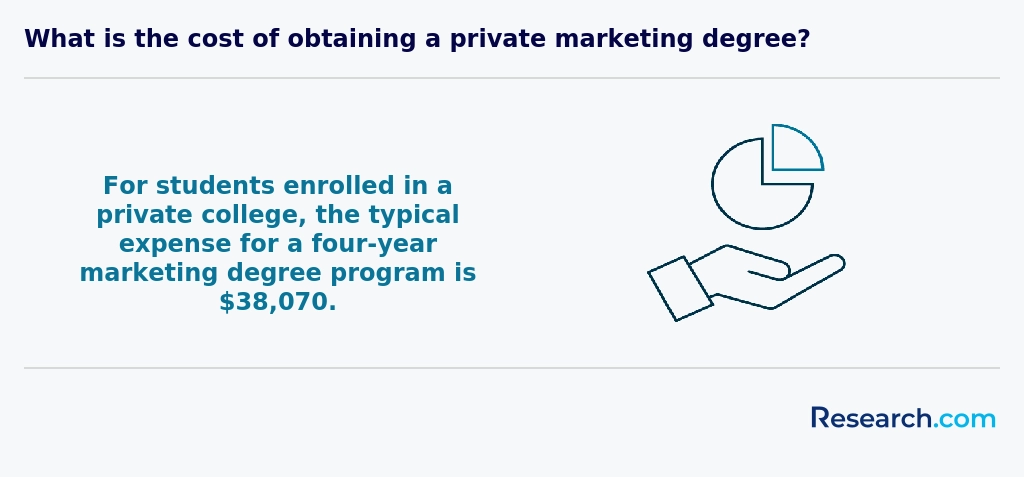
The average cost of earning a marketing degree in Michigan typically ranges between $20,000 and $50,000 for four years of undergraduate study, depending on whether you attend a public or private institution. Graduates recall balancing these expenses with opportunities like internships and cooperative education programs offered by universities such as the University of Michigan or Michigan State University, which often help offset costs through paid work experiences.
Many students find that investing in a Michigan marketing degree pays off, given the state's strong ties to industries like automotive and manufacturing, where marketing roles come with competitive salaries. One graduate shared how experiential learning projects at local businesses enhanced their resume and confidence, feelings echoed by peers who thrived on hands-on digital marketing challenges in campus labs.
Those pursuing specialized tracks, like digital marketing or analytics, often attest to the value of certifications integrated into their curriculum, contributing to higher employability and justifying tuition costs. In sum, while the sticker price may feel substantial, Michigan's marketing programs foster practical skills and local industry connections that make the investment tangible and rewarding.
Where can I work with marketing degree in Michigan?
Marketing graduates from universities like the University of Michigan and Michigan State University often find themselves at the crossroads of industries that define the state's economy. Imagine working alongside seasoned professionals at major automotive giants such as General Motors, shaping campaigns that launch the latest car models-not just selling vehicles, but telling stories that resonate with diverse consumers.
Many alumni recall their first digital marketing role at tech startups in Ann Arbor, where agile teams demand innovation and quick adaptation to shifting trends. These environments teach marketers to merge creativity with data analytics, crafting strategies that speak directly to online audiences.
Others step into healthcare marketing at institutions like the University of Michigan Health System, where the challenge goes beyond promotion-it involves simplifying complex medical information to empower communities. Retail marketing in Michigan offers vibrant opportunities too, from curating immersive customer experiences at bustling e-commerce shops to designing visual campaigns in local boutiques.
Finance sectors, including banks and insurance firms, present meaningful careers focusing on customer insights and retention strategies, offering marketers a chance to influence economic health while enjoying competitive salaries. These paths show that a marketing degree in Michigan opens doors to dynamic, fulfilling roles that go well beyond traditional expectations.
Graduates with a marketing degree from institutions like the University of Michigan or Michigan State University often enter the workforce with promising salary prospects that challenge common assumptions about starting pay. For instance, a marketing assistant in Michigan can expect a mean annual wage around $83,190, significantly higher than many anticipate for entry-level roles.
More specialized positions like digital marketing specialists or media planners also hover near this $83,000 figure, reflecting the state's demand for tech-savvy marketers in hubs like Detroit and Ann Arbor. Meanwhile, public relations specialists enjoy even greater earning power, with mean salaries reaching $159,420 annually, a figure that often surprises recent graduates.
Sales associates, often underestimated in their earning capacity, still bring in about $53,280, proving that marketing expertise transcends traditional office roles into dynamic, customer-facing opportunities. These evolving salary patterns reveal that investing in a Michigan marketing degree can open doors to diverse, financially rewarding career paths that grow as skills deepen and networks expand.
- Public universities in Michigan typically charge between $13,000 and $16,000 per year for in-state tuition for a bachelor's marketing degree, while private schools charge over $30,000 annually.
- Entry-level marketing professionals in Michigan earn around $50,000 to $55,000 per year, with experienced workers making $75,000 to $85,000 after five to ten years.
- The job market for marketing specialists is expected to grow by about 8% nationally, with opportunities in digital marketing, market research, advertising, and brand development in Michigan.
- Major corporations in Michigan offer internships and job opportunities, especially in urban areas like Detroit and Ann Arbor, where salaries tend to be higher.
- Networking with local businesses and earning certifications in digital marketing and data analytics can improve job prospects for marketing graduates in Michigan.
Completing a marketing degree in Michigan usually takes about four years of full-time study if you follow the traditional path at schools like the University of Michigan or Michigan State University. Imagine tackling core business courses alongside specialized marketing classes, spreading roughly 120 to 130 credit hours over eight semesters. This steady pace gives you time to really absorb concepts and grow your skills.
But what if you're eager to move faster? Some graduates share how summer courses at Michigan colleges helped them shave a year off, accelerating their journey to degree completion. Others, who transferred credits from community colleges, found they could finish in as little as two or three years-turning prior efforts into real advantage.
Graduate paths, including an MBA with marketing focus, often require just one to two years, but part-time options stretch that timeline, balancing work and study. This flexibility attracts many who want to keep earning without stalling their education dream.
Understanding the ROI of a marketing degree in Michigan is essential for students weighing educational costs against long-term earnings. On average, in-state tuition at public universities is $10,740 per year, while private institutions can exceed $32,825 annually. However, graduates report median starting salaries near $50,370 for sales roles and $78,880 for entry-level marketing assistants, with mid-career earnings climbing to $84,518 and senior positions averaging $131,125. Calculating payback periods reveals that most students recoup their investment within 5 to 7 years, especially when leveraging high-demand specializations like digital marketing or market research. For example, a graduate borrowing $40,000 in total tuition can expect to break even faster by targeting roles in fast-growing sectors such as e-commerce or automotive marketing, where average salaries often surpass $90,000 within a decade. To optimize ROI, prospective students should explore cost-effective program options. Institutions featured in our Most Affordable Marketing Degree Programs Ranking in the Midwest offer competitive tuition rates without compromising on accreditation or job placement services. Additionally, maximizing financial aid-through the Michigan Achievement Scholarship or federal grants-and completing paid internships can further reduce net debt and accelerate earnings growth. Ultimately, evaluating ROI involves more than upfront tuition; it requires analyzing career trajectories, average time to promotion, and access to industry networks. By focusing on programs with strong alumni outcomes and strategic financial planning, Michigan marketing graduates can secure both a robust education and a sustainable financial future.
Graduates from the University of Michigan recount how on-campus marketing programs immersed them in dynamic group projects and live discussions, sparking immediate feedback that deepened their understanding of real-world marketing challenges. This face-to-face environment, enriched by access to campus libraries and career services, often leads to meaningful networking and internships with local Detroit businesses-a critical bridge to career opportunities in Michigan's thriving economy.
Conversely, students from Michigan State University pursuing online marketing degrees appreciate the flexibility to juggle work and family commitments while studying. They engage through interactive platforms and virtual teamwork tools, which, although lacking the spontaneous energy of a classroom, offer digital mentoring and even virtual career fairs tailored to emerging fields like Detroit's digital marketing sector. The ability to study remotely mitigates relocation costs common in Michigan, making education more accessible.
Both paths demand discipline and connect learners to quality curricula accredited by nationally recognized bodies. Yet the choice hinges on whether you thrive in a bustling campus culture or prefer the autonomy of a screen-each shaping your marketing journey distinctly within Michigan's unique landscape.
The average cost of marketing degree in Michigan varies notably depending on residency and institution type, challenging the notion that all degrees carry similar price tags. Graduates from public universities such as Michigan State University often reflect on paying around $16,000 total for their degree as in-state students, a figure grounded in median data. This affordability is a relief for many, making their pursuit feasible without overwhelming debt. However, out-of-state students might face costs close to $45,000, an amount that demands serious financial planning and often motivates these students to seek scholarships or part-time work.
Private institutions like Hillsdale College present a different reality. Marketing students there might invest closer to $45,000 on average for their entire degree. Despite the higher price, many graduates express satisfaction with the smaller class sizes and personalized attention, which often translate into valuable internship opportunities and career networking. These experiences highlight how the average cost of a marketing degree in Michigan intertwines with distinct educational benefits that extend beyond tuition alone.
Prospective students should consider all expenses tied to their marketing degree tuition and fees Michigan, including fees and living costs, which add significantly to the total financial commitment. For those focused on balancing expenses with quality, exploring the cheapest marketing schools in michigan can reveal practical options that do not sacrifice educational outcomes.
A key aspect that prospective marketing students should consider is the overall student life and campus engagement offered by each program. Beyond rigorous academics and career preparation, the extracurricular environment plays a crucial role in shaping a well-rounded educational experience. Students benefit from vibrant student organizations, dedicated marketing clubs, career fairs, networking events, and internship opportunities that foster real-world connections and personal growth. Many programs also emphasize mentorship and peer-support systems, where experienced alumni share insights about navigating both academic challenges and professional opportunities. For those seeking a balance between affordability and a lively campus culture, exploring options like cheapest marketing schools in michigan can offer valuable insights. This supportive environment not only enriches the student experience but also cultivates skills in leadership, teamwork, and professional networking, making it a critical factor to consider when choosing the right marketing program in Michigan.
Many marketing students in Michigan quickly realize that financial aid isn't just a safety net-it's a strategic tool that can transform their educational journey. Graduates from Michigan State University often recall how federal Pell Grants and subsidized loans, accessible through early FAFSA submission, lightened their financial burden without adding stress. These dollars aren't handed out randomly; they reward those who act decisively to secure funding.
State-specific programs like the Michigan Competitive Scholarship resonate deeply with high-achieving students at the University of Michigan. One graduate described feeling a surge of pride knowing their academic dedication unlocked tangible support, making their marketing degree more attainable. The Tuition Incentive Program, too, offers community college students a vital stepping stone, prepaying tuition and opening doors to four-year schools.
Universities also spark motivation through merit scholarships tied directly to academic and leadership qualities. Many recipients appreciate how these scholarships recognize their unique contributions beyond grades, fostering a sense of belonging in the competitive business environment.
Working professionals earning their degree part-time often highlight employer tuition reimbursement as a game-changer, turning career advancement goals into realistic achievements.
Enrolling in a marketing degree program in Michigan demands more than just a diploma-it requires demonstrating readiness through academic and practical achievements. Many graduates from the University of Michigan recall that a solid high school GPA, usually around 2.5 to 3.0, opened doors for their undergraduate marketing journey. They often emphasize that coursework in mathematics and communication proved invaluable, preparing them to analyze market data and craft persuasive messaging.
At Michigan State University, aspiring marketers share how presenting SAT or ACT scores used to be routine, but with test-optional policies emerging, students felt a boost in confidence focusing on their unique strengths. Graduate hopefuls, eyeing MBA programs with marketing concentrations, realize that a bachelor's degree plus strong undergraduate transcripts-often with a GPA near 3.0-are baseline expectations. Experiences like submitting compelling statements of purpose or relevant work histories also make applications stand out.
These prerequisites challenge candidates to reflect on their preparedness, turning admission requirements into milestones that signal genuine potential rather than mere hurdles.

Marketing degrees in Michigan often dive deep into courses that equip students beyond typical textbook theory. Graduates from well-known schools like the University of Michigan or Michigan State frequently share how foundational classes such as Principles of Marketing opened their eyes to understanding real consumer habits-not just abstract concepts. Imagine analyzing data from local Detroit startups in a Marketing Research and Analytics course, where students don't just learn statistics but see firsthand how insights drive business decisions.
Courses like Consumer Behavior bring marketing to life by exploring why a friend might choose one brand over another, tapping into psychological and social triggers. Digital Marketing classes challenge students to create actual campaigns on social platforms, reflecting Michigan's evolving online market.
Many Michigan programs also integrate business essentials-finance and management-to show how marketing fits within larger company goals. The blend of traditional marketing, industry-specific classes, and applied learning helps students feel confident stepping into Michigan's competitive job market.
Exploring marketing degree specializations in Michigan reveals options far beyond the typical classroom theory. Graduates from universities like the University of Michigan or Michigan State frequently emphasize how specializations such as Digital Marketing, Market Research and Analytics, or Brand Management transformed their understanding of real-world business challenges. Imagine crafting a digital campaign that directly targets Michigan's booming automotive sector or analyzing consumer data to optimize sales strategies in Detroit's manufacturing hubs-these tracks aren't just academic; they're immersive experiences shaped by Michigan's economy.
Students often find these best marketing concentrations offered in Michigan colleges particularly rewarding because they combine theory with the state's unique industrial flavor. Sales and Sales Management specialties, for example, resonate deeply in regions with strong business-to-business communities, drawing learners eager to negotiate in competitive markets. Additionally, the Advertising and Promotions path invites creative thinkers to participate in fast-paced agency life or corporate marketing roles, often within Michigan's thriving tech and innovation centers.
The demand for such nimble, focused skills even powers the popularity of programs like the accelerated marketing degree online offered locally, helping students swiftly adapt to these evolving fields while connecting their studies to genuine regional opportunities.
Choosing the best marketing degree in Michigan requires more than scanning rankings or tuition fees. Graduates from prestigious Michigan institutions often highlight how programs with strong experiential learning-like real-world projects or internships in Detroit's vibrant marketing sector-greatly shaped their confidence and employability. It's not just about the degree name; it's about how deeply the curriculum immerses you in digital marketing trends or brand management nuances that resonate with your aspirations.
Many students find themselves questioning traditional assumptions about cost versus quality, especially when considering affordable marketing schools Michigan. Public universities may offer AACSB-accredited programs that balance reputation and value, but the key is to explore financial aid and cooperative education options that can alleviate financial burdens without compromising experience.
Portfolios built through hands-on internships in cities like Grand Rapids demonstrate to employers practical skills beyond classroom theory. Reflect on which program's delivery style-whether on-campus, hybrid, or online-fits your lifestyle and learning preferences, especially if you juggle work or family commitments. For a detailed comparison, explore the Most Affordable Marketing Degree Programs Ranking in the Midwest for insightful guidance.
Graduates from well-known Michigan universities often find themselves stepping into dynamic roles like Marketing Coordinator or Digital Marketing Analyst, where real-world challenges fuel their growth. Picture a graduate from a Detroit college managing social campaigns for a local automotive giant, gaining hands-on experience that textbook lessons alone couldn't provide. These roles transcend traditional boundaries, inviting graduates to become Brand Managers or Sales Managers who actively shape customer perceptions within Michigan's diverse economic landscape.
Exploring marketing career opportunities in Michigan reveals a landscape rich with options beyond the expected. Alumni from Grand Rapids and Ann Arbor institutions frequently land positions as Market Research Analysts or Public Relations Specialists, leveraging insights to navigate evolving consumer trends and media channels. Such roles often intertwine with rapidly growing sectors like technology and healthcare, demanding agility and creative problem-solving.
For those weighing investment against opportunity, some graduates even pursue top paying 6 month certificate programs as strategic launches. Ultimately, Michigan's marketing jobs offer not just employment but a chance to join a community thriving on innovation and connection.
Marketing degree jobs in Michigan reveal a dynamic landscape where graduates from well-regarded universities experience an encouraging blend of opportunity and challenge. Detroit and other cities with strong automotive and tech sectors are increasingly investing in marketing roles that demand fresh digital expertise and creative brand management. Graduates often share how internships and cooperative education programs helped them secure roles at local manufacturing and healthcare firms adapting to rapidly changing markets.
Graduates from Michigan's popular marketing programs report that their education-not just theory but hands-on experience-aligns well with the state's demand for versatile marketing professionals. The mix of competitive salaries, ranging from entry-level positions around $45,000 to managerial roles nearing six figures, offers motivation despite the typical costs of study. For those worried about expenses, exploring degrees for seniors can broaden access to effective, affordable education while balancing career goals.
Michigan marketing career opportunities seem particularly vibrant in digital advertising and data analytics, fields where many Michigan students find a natural fit. These graduates describe a gratifying sense of belonging to a community where their skills actively shape evolving industries and local economies.
2027 Best Marketing Degree Programs Ranking in Michigan
Investing in your education is a significant decision that can shape your future, and the Research.com team understands the importance of making informed choices. To assist prospective students, we have meticulously crafted the "2027 Best Marketing Degree Programs Ranking in Michigan." Our commitment to quality, credibility, and accuracy is reflected in the extensive research and analysis conducted to compile this ranking.
We utilized the following reputable data sources to ensure a comprehensive evaluation of marketing programs:
By exploring this ranking, readers will gain valuable insights into the best marketing degree programs available in Michigan, helping them make informed decisions about their educational paths. For more details on our methodology, please visit our Research.com methodology page.


# 8 position
Hillsdale College
Bachelor of Science in Marketing


# 15 position
Ferris State University
Bachelor of Business, Management, Marketing, and Technology Education


Frequently Asked Questions About marketing
Marketing degree students in Michigan can maximize their learning experience by engaging with both academic coursework and real-world opportunities. Many Michigan universities offer cooperative education (co-op) and internship programs that connect students with local businesses, providing practical experience in marketing strategies and campaigns.
Active participation in student organizations related to marketing helps develop leadership skills and professional networking. According to the Michigan Economic Development Corporation, the state's marketing sector grew by 4.3% in 2023, highlighting increasing job opportunities for graduates.
Additionally, students should leverage workshops, guest lectures, and case competitions hosted by universities, which reflect current industry trends and challenges.
Emerging niches in the marketing field are reshaping opportunities for students pursuing marketing degrees in Michigan. Digital marketing continues to expand rapidly, with specializations such as social media strategy and influencer marketing gaining strong traction. According to the U.S. Bureau of Labor Statistics, employment in advertising and promotions management is expected to grow by 10% nationally through 2031, reflecting a strong demand for digital-savvy marketers.
Data analytics and marketing automation are also vital growth areas. Marketers with skills in analyzing consumer behavior using big data tools are increasingly sought after by Michigan companies, particularly in Detroit's evolving tech sector.
Additionally, sustainability marketing is emerging as a niche, as more Michigan businesses emphasize corporate social responsibility.
After completing a marketing degree in Michigan, preparing for the job market involves a combination of practical experience and professional networking. Students should pursue internships, which are highly valued by Michigan employers and often lead to job offers. According to the Michigan Talent Dashboard, marketing roles in the state are projected to grow by 7% through 2028, highlighting the importance of relevant experience.
Building a strong online presence on platforms like LinkedIn helps graduates connect with local companies in Detroit and Grand Rapids, where marketing jobs are concentrated. Additionally, joining professional organizations such as the American Marketing Association's Michigan chapter offers access to workshops and networking events.
Finally, gaining certifications in digital marketing tools common in the state's industries, including SEO and Google Analytics, can enhance job prospects by aligning skills with employer needs.
Employers in Michigan highly value marketing graduates who combine strong analytical skills with creativity. According to the Michigan Department of Labor and Economic Opportunity, data-driven decision making ranks as one of the top competencies sought, reflecting the growing importance of digital marketing and market research in the state's economy.
Communication skills are also essential. Graduates must effectively convey brand messages across diverse platforms, including social media, which Michigan businesses increasingly rely on. Competency in tools like Google Analytics and CRM software is frequently requested.
Collaboration and adaptability are critical in the evolving marketing landscape. Employers prefer candidates who can work cross-functionally and adapt to rapid technological changes. This aligns with national trends reported by the American Marketing Association.
Finding internships in Michigan relevant to a marketing degree involves a strategic approach combining local resources and industry connections. Start by exploring university career centers, which often have partnerships with Michigan-based companies like General Motors and Steelcase. These centers can help students access exclusive internship listings suited to marketing majors.
The state's marketing sector benefits from Detroit's growing digital advertising scene and Grand Rapids' consumer goods industry, offering diverse opportunities. Leveraging platforms such as Handshake and LinkedIn specifically for Michigan employers can increase chances of securing an internship. According to the Michigan Economic Development Corporation, businesses here frequently seek interns to support marketing campaigns, brand management, and digital marketing projects.
Networking through Michigan marketing professional groups and attending local career fairs further supports internship searches. This engagement with industry professionals is vital for gaining practical experience and understanding the regional market dynamics.
A marketing degree in Michigan can significantly enhance career mobility and advancement opportunities. Graduates gain essential skills in digital marketing, consumer behavior, and data analysis that are highly valued across industries.
According to the U.S. Bureau of Labor Statistics, Michigan's marketing-related jobs are projected to grow by 8% from 2022 to 2032, which is above the national average for all occupations. This growth creates a favorable environment for degree holders seeking career advancement.
Employers in Michigan's automotive, technology, and retail sectors particularly prefer candidates with formal marketing education, as these skills drive competitive business strategies. Networking opportunities through university programs also foster connections that aid career moves.
Studying for a marketing degree in Michigan offers strong preparation for interdisciplinary roles by combining core marketing skills with knowledge from related fields such as business, communications, and data analytics. Many Michigan universities integrate courses in digital media, consumer behavior, and market research to equip students with versatile expertise.
Michigan's evolving economy, particularly its emphasis on automotive, technology, and healthcare sectors, demands marketers who understand multiple industries and can collaborate across departments. According to the Michigan Economic Development Corporation, effective marketing professionals often work closely with finance, IT, and design teams.
This interdisciplinary training enhances critical thinking and adaptability, key traits in today's competitive job market, benefiting graduates seeking dynamic roles beyond traditional marketing positions.
When deciding between a thesis and a non-thesis marketing degree program in Michigan, consider your career goals and learning style. Thesis programs require original research and are ideal if you plan to pursue a PhD or work in research-intensive roles. Non-thesis options focus more on practical skills and coursework, preparing students for immediate positions in marketing, sales, or advertising.
Michigan's workforce is growing in digital marketing and analytics, so hands-on experience is highly valued by employers like those in Detroit's tech and automotive sectors. According to the Michigan Economic Development Corporation, marketing analytics jobs are expected to grow by 12% by 2030.
Thesis tracks demand strong writing and research abilities, while non-thesis tracks often include internships or projects. Choose the format aligning best with your strengths and professional plans.
Students based in Michigan seeking to study marketing abroad have several avenues to explore through established U.S. higher education pathways. Many Michigan universities with marketing programs offer study abroad partnerships, allowing students to spend a semester or year in countries such as the United Kingdom, France, or Spain while earning credits toward their degrees. According to the Institute of International Education, around 10% of American business students participate in study abroad programs, often gaining valuable cross-cultural marketing insights.
Additionally, Michigan's strong network of public universities like the University of Michigan and Michigan State University provide tailored marketing-focused exchanges. These programs typically emphasize global business practices, digital marketing trends, and consumer behavior in international markets.
Financial aid and scholarships are often available to help Michigan students offset costs, making global marketing education more accessible. Accredited programs ensure that students maintain progress toward their degree while gaining valuable international experience.
Students pursuing marketing degrees in Michigan can benefit from various part-time job opportunities that enhance their education. Roles such as social media assistant, marketing intern, and content creator are common and allow practical application of classroom knowledge. According to the Bureau of Labor Statistics (2023), the Detroit metropolitan area supports a growing demand for marketing professionals, with job growth projected at 7% over the next decade.
Additionally, retail marketing positions and event coordination roles offer hands-on experience in consumer behavior and promotion strategies. Many Michigan businesses, especially within sectors like automotive and technology, actively seek part-time help to support local marketing campaigns.
Marketing students in Michigan benefit from numerous networking opportunities through university-sponsored events, local business partnerships, and professional organizations. Many universities, like the University of Michigan and Michigan State University, host career fairs and marketing-specific workshops connecting students with top regional employers. According to the American Marketing Association, Michigan has vibrant AMA chapters offering regular meetings, guest speakers, and local conferences where students can meet industry professionals.
Additionally, Detroit and Ann Arbor serve as marketing hubs with agencies and startups eager to engage interns and graduates. Joining these networks helps students build valuable connections and gain insights into real-world marketing challenges and trends.
Alumni networks play a significant role in supporting marketing degree students in Michigan. These networks connect current students with graduates who have real-world experience in marketing roles across Detroit, Grand Rapids, and other business hubs. According to the Michigan Workforce Development Agency, nearly 70% of job opportunities in marketing come through personal connections, highlighting the importance of networking.
The alumni provide mentorship, internship leads, and job referrals. Many Michigan universities host events where students can meet professionals, increasing their chances of employment post-graduation. Access to LinkedIn groups and alumni platforms also allows students to engage with marketing experts statewide.
Marketing degree programs in Michigan often offer flexible curriculum options to help students align their studies with specific career goals. Many universities allow learners to choose specializations such as digital marketing, consumer behavior, or marketing analytics. Students can also select electives related to data analysis, social media strategies, or sales management.
Internships and cooperative education experiences are highly valued, providing hands-on exposure in Michigan's diverse business sectors, including the automotive and technology industries. According to the Michigan Economic Development Corporation, demand for marketing professionals with digital skills is growing rapidly.
Online and part-time course options further support customization, enabling students to balance education with work or personal commitments. Academic advisors play a key role in helping students create personalized degree plans that fit their professional ambitions.
Marketing students in Michigan often face challenges related to rapidly changing industry trends and the need to stay updated with digital technologies. As the marketing field increasingly demands expertise in data analytics, social media, and content creation, students must continuously adapt their skills. According to the U.S. Bureau of Labor Statistics, marketing roles in Michigan are expected to grow by 7% between 2022 and 2032, indicating a competitive job market.
Additionally, balancing practical experience with academic knowledge can be demanding. Many programs encourage internships, but securing these opportunities amid economic fluctuations can be difficult. Financial concerns also affect some students, with in-state tuition averaging over $13,000 annually at public universities.
Finally, marketing students must navigate a multidisciplinary curriculum, which can include economics, psychology, and communication theory, requiring strong organizational abilities.
With a marketing degree in Michigan, graduates can enhance their credentials through several professional certifications. Popular options include the American Marketing Association's Professional Certified Marketer (PCM) and the HubSpot Content Marketing Certification. These certifications demonstrate expertise in key marketing skills and are valued by employers throughout the state.
Additionally, digital marketing certifications such as the Google Analytics Individual Qualification and the Facebook Blueprint Certification are highly regarded due to the growing demand for online marketing professionals in Michigan's evolving economy.
According to the Bureau of Labor Statistics, Michigan's marketing-related job market is expected to grow by 6% between 2022 and 2032, making certifications an important asset for competitive advantage.
Writing a winning application for a marketing program in Michigan begins with understanding the competitive nature of these programs. Highlight your academic achievements, especially in business-related courses, with a strong GPA often preferred above 3.0. Admissions committees value clear career goals, so articulate your interest in marketing careers tied to Michigan's robust automotive and digital sectors.
Incorporate relevant experience such as internships or projects related to marketing to demonstrate practical skills. According to the Michigan Association of Colleges, applicants with tangible marketing experience have a higher acceptance rate. Additionally, crafting a personalized statement explaining why you chose a specific Michigan school shows genuine interest and initiative.
Standardized test requirements vary; check the latest policies for each institution. Lastly, obtaining strong recommendation letters from professors or employers familiar with your marketing potential strengthens your application. Michigan schools often look for candidates ready to engage with local business ecosystems and internships for real-world learning.
The global perspective on a marketing career highlights its expanding role in today's interconnected economy. Marketing professionals increasingly need skills in digital technology, cultural awareness, and data analysis to succeed on an international stage. In the U.S., and specifically Michigan, marketing careers are growing, with the Bureau of Labor Statistics projecting a 10% growth in advertising, promotions, and marketing management jobs by 2031.
Michigan's diverse economy, which includes automotive, technology, and healthcare sectors, offers marketing graduates broad opportunities. According to Michigan State University's College of Communication Arts and Sciences, marketing programs often emphasize global case studies and multicultural market strategies to prepare students for worldwide careers.
Understanding global market trends and consumer behavior is essential, as companies aim to reach audiences beyond domestic borders. For Michigan students, this means training that blends traditional US marketing concepts with global business strategies.
Gaining practical experience while studying marketing in Michigan is essential for career readiness. Many Michigan universities, such as Michigan State University and the University of Michigan-Dearborn, offer cooperative education (co-op) programs. These programs combine classroom learning with paid work experience in local businesses, helping students build marketing skills in real-world settings.
Internships are another common route. According to the Michigan Economic Development Corporation, sectors like automotive, technology, and healthcare provide numerous marketing internship opportunities. These experiences allow students to apply concepts learned in class, network with professionals, and improve job prospects after graduation.
Additionally, student organizations and marketing competitions sponsored by Michigan colleges offer hands-on projects and leadership opportunities enhancing practical knowledge.
Choosing the right concentration within a marketing degree program in Michigan involves evaluating your career goals and the local job market. Popular marketing specialties include digital marketing, brand management, market research, and sales management. Michigan's growing industries, such as automotive, technology, and healthcare, heavily rely on digital marketing skills. According to the Michigan Department of Labor, digital marketing positions are expected to grow by 12% through 2028, above the national average.
Consider programs offering internships with Michigan-based companies, as hands-on experience is crucial. Research faculty expertise and course content, ensuring alignment with market trends. Also, prioritize concentrations emphasizing data analytics, a key skill in Michigan's evolving marketing landscape.
- 2027 Best Marketing Degree Programs Ranking in Ohio
- 2027 Best Marketing Degree Programs Ranking in Illinois
- 2027 Best Marketing Degree Programs Ranking in Iowa
- 2027 Best Marketing Degree Programs Ranking in Missouri
- 2027 Best Marketing Degree Programs Ranking in New York
- 2027 Best Marketing Degree Programs Ranking in North Carolina
- 2027 Best Marketing Degree Programs Ranking in New Jersey
- 2027 Best Marketing Degree Programs Ranking in Rhode Island
- 2027 Best Marketing Degree Programs Ranking in Massachusetts
- 2027 Best Marketing Degree Programs Ranking in Georgia
See What Experts Have To Say About Studying Marketing
Read our interview with Marketing experts

John R. Meindl
Marketing Expert
Adjunct Assistant Professor of Marketing
Hofstra University

Aidin Namin, Ph.D.
Marketing Expert
Associate Professor of Marketing Analytics
Loyola Marymount University

- The Importance of Networking for Students Entering the Marketing Industry https://moviamedia.com/moving-billboard-blog/the-importance-of-networking-for-students-entering-the-marketing-industry/
- Who Can Be an International Marketer? https://www.spencerstuart.com/research-and-insight/who-can-be-an-international-marketer
- A Sample of Personal Career Goals and Career Strategy for Marketing Manager https://research-methodology.net/a-sample-of-personal-career-goals-and-career-strategy-for-marketing-manager/
- Best Marketing Certifications for Your Marketing Career https://www.business.com/articles/guide-to-marketing-certifications/
- Digital Marketing Major https://www.kozminski.edu.pl/en/digital-marketing-major
- Master of Science (M.S.) Major in Marketing Research and Analysis (Non-thesis Option) https://mycatalog.txstate.edu/graduate/mccoy-business-administration/marketing/marketing-research-analysis-ms/
- How to Get a Summer Internship in Marketing in 2026 (Agency, In-House, and Startup) https://whali.co.uk/blog/summer-internship-marketing-guide
- How to Become an International Marketing Executive https://online.maryville.edu/online-bachelors-degrees/marketing/careers/international-marketing-executive/
- The guide to marketing and marketing jobs: Everything I wish I had known when I started | The Marketing Meetup https://themarketingmeetup.com/blog/the-guide-to-marketing/
- 15 Marketing Certifications to Build Must-Have 2025 Skills https://www.cmswire.com/digital-marketing/10-marketing-certifications-that-can-help-you-earn-a-better-salary/