2026 Geography Degree Earnings by Sector Report: Which Industries Reward Graduates the Most

Co-Founder and Chief Data Scientist
Geography graduates face a practical choice: pursue mapmaking, planning, environmental work, logistics, government, or data analytics. The pay gap can be large because geography skills now support climate risk, AI-enabled mapping, transportation, defense, and location intelligence. BLS May 2024 data shows data scientists had a median annual wage of $112,590, a useful benchmark for geography graduates who build strong spatial analytics skills.
This guide helps students, recent graduates, and career changers compare sectors by salary, hiring demand, growth, credentials, and long-term fit.
Key Things You Should Know
- Highest earnings usually come from geography-adjacent roles in technology, data science, defense, energy, and advanced geospatial analytics, while public planning and environmental roles often trade some salary upside for stability and mission fit.
- BLS May 2024 wage benchmarks show strong earning signals in related roles: data scientists at $112,590, urban and regional planners at $83,720, logisticians at $80,880, environmental scientists and specialists at $80,060, and cartographers and photogrammetrists at $78,380.
- The best sector depends on your skill stack: GIS alone is useful, but higher-paying paths usually reward Python, SQL, remote sensing, cloud geospatial tools, statistics, project management, and domain knowledge in climate, infrastructure, defense, or business operations.
- Key Things You Should Know
- Which Industries Pay Geography Graduates the Highest Salaries?
- How Do Salary Levels Compare Across Industries for Geography Graduates?
- Which Industries Hire the Most Geography Graduates?
- How Do Industry, Location, and Cost of Living Affect Geography Salaries?
- Which Skills Lead to Higher Earnings Across Geography Industries?
- Which Certifications and Credentials Increase Earnings in Different Industries?
- How Do Company Size and Organization Type Affect Geography Earnings?
- Which Emerging Industries Offer the Best Future Earnings for Geography Graduates?
- How Should Students Choose an Industry Based on Earnings and Career Goals?
- Top Trending Geography Rankings
Which Industries Pay Geography Graduates the Highest Salaries?
The highest-paying industries for geography graduates are usually not labeled "geography" in job postings. They are sectors that pay for spatial problem-solving: turning location data into decisions about customers, infrastructure, natural hazards, supply chains, property, or national security.
The table below uses BLS May 2024 national median wages for occupations that commonly use geography training. These figures are not a promise of pay for every geography graduate; they are salary benchmarks that help compare sectors and career directions.
| Industry or sector | Common geography-related roles | 2024 salary signal | Best fit for |
| Technology, AI, and location intelligence | Geospatial data scientist, location analytics specialist, spatial data engineer | Data scientists: $112,590 median annual wage | Graduates with coding, statistics, GIS, and business analytics skills |
| Federal government, defense, and intelligence | Geospatial intelligence analyst, cartographer, remote sensing analyst, geographer | Often competitive because roles may require security clearance and specialized technical skills | Graduates interested in public service, national security, and structured advancement |
| Urban planning, infrastructure, and transportation | Urban planner, transportation analyst, land-use analyst, GIS planner | Urban and regional planners: $83,720 median annual wage | Graduates who want community impact, policy work, and long-term public-sector pathways |
| Logistics, retail, and supply chain analytics | Site selection analyst, logistics analyst, market analyst, routing analyst | Logisticians: $80,880 median annual wage | Graduates who enjoy operations, optimization, and business decision-making |
| Environmental consulting, energy, and climate risk | Environmental GIS analyst, climate risk analyst, resource planner, field data analyst | Environmental scientists and specialists: $80,060 median annual wage | Graduates motivated by sustainability, risk assessment, and applied science |
| Mapping, surveying, and geospatial services | GIS analyst, cartographer, photogrammetrist, mapping technician | Cartographers and photogrammetrists: $78,380 median annual wage | Graduates who want a direct geospatial career path and strong technical specialization |
For maximum pay, geography graduates should look beyond job titles like "geographer" and search for roles that combine geography with analytics, software, infrastructure, finance, logistics, climate, or security. A geography major with Python, SQL, dashboarding, and remote sensing experience is competing in a different labor market than a graduate with only introductory GIS coursework.
How Do Salary Levels Compare Across Industries for Geography Graduates?
Geography salaries vary because employers value different outputs. A local government may pay for zoning analysis and public engagement, while a technology firm may pay for scalable models that influence millions of customer, logistics, or mapping decisions.
The comparison below shows how salary potential typically differs by sector when geography graduates build relevant experience. Use it as a decision tool, not as a fixed pay chart, because wages vary by region, employer, security clearance, union status, and technical depth.
| Sector | Typical salary ceiling | Why pay differs | Main trade-off |
| Technology and geospatial data science | High | Employers pay for data infrastructure, automation, predictive modeling, and product impact | Higher competition and stronger coding expectations |
| Defense and federal geospatial intelligence | High to strong | Specialized missions, clearance requirements, and advanced imagery skills can raise compensation | Hiring timelines and clearance rules can be slow |
| Energy, utilities, and climate risk | Moderate to high | Spatial analysis supports asset planning, hazard mitigation, permitting, and risk modeling | Work may require field knowledge or industry-specific regulation |
| Urban planning and local government | Moderate | Roles reward policy knowledge, GIS, public communication, and project coordination | Raises may be structured by public pay scales |
| Environmental nonprofits and education | Lower to moderate | Mission-driven organizations may have tighter budgets | Benefits, purpose, and work-life balance may offset lower pay |
A common mistake is comparing only starting salaries. Some sectors begin modestly but provide excellent benefits, retirement contributions, tuition support, union protections, or predictable promotion ladders. Others pay more early but demand stronger technical output, longer hours, or faster skill renewal.
Students should also separate degree earnings from occupation earnings. Employers usually pay for the job performed, not the major printed on the diploma. That means a geography graduate working as a data scientist will be paid according to the data labor market, while a graduate working in a small nonprofit GIS role will be paid according to that organization's budget and role level.
Which Industries Hire the Most Geography Graduates?
The broadest hiring markets are sectors that repeatedly need maps, spatial databases, land records, site analysis, environmental review, transportation models, and community data. These are often more accessible to new graduates than the very highest-paying geospatial AI or defense roles.
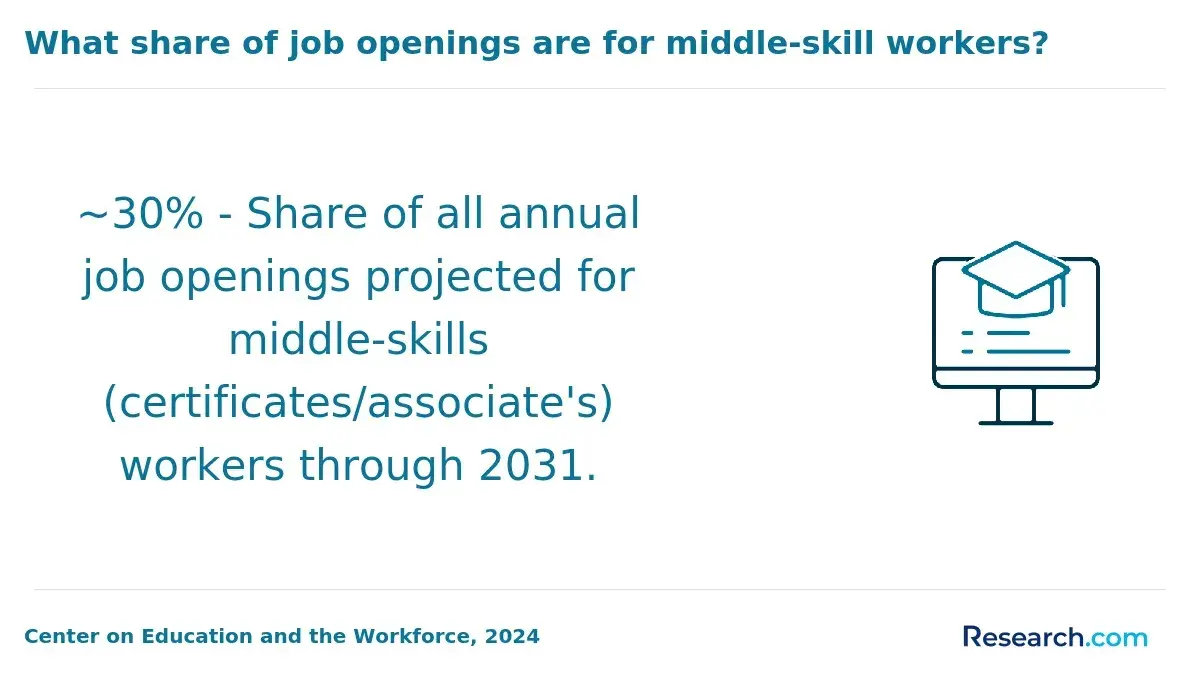
Geography graduates should prioritize industries that hire both entry-level analysts and experienced specialists. The strongest hiring pipelines usually include the following sectors:
- State and local government: planning departments, transportation agencies, emergency management offices, assessor offices, and public works departments hire GIS technicians, planners, and analysts.
- Engineering, architecture, and environmental consulting: firms need GIS, field data, permitting, environmental review, infrastructure mapping, and client-facing project support.
- Federal agencies and contractors: defense, natural resources, census, emergency response, and intelligence-related employers use spatial analysis at scale.
- Utilities, energy, and telecommunications: employers need asset mapping, route planning, risk monitoring, service-territory analysis, and infrastructure data management.
- Logistics, retail, real estate, and insurance: private employers use location data for site selection, delivery networks, market planning, flood risk, wildfire exposure, and customer analytics.
BLS projections published in 2024 show particularly strong growth in adjacent fields that geography graduates can enter with the right technical preparation. For example, data scientist employment is projected to grow 36% from 2023 to 2033, making analytics-heavy geography pathways more attractive than narrowly defined map production roles.
The practical takeaway: if you are a new graduate, apply broadly to GIS analyst, planning technician, environmental analyst, transportation analyst, and location intelligence roles. If you only search for "geographer," you may miss most of the actual job market.
Which Industries Offer the Best Long-Term Career Growth for Geography Graduates?
Long-term career growth depends on whether a sector has advancement ladders, budget stability, demand for advanced skills, and room to move from analyst work into project, product, or program leadership. The best sector is not always the one with the highest first salary.
The sectors below tend to offer the strongest long-term mobility for geography graduates who keep building technical and managerial skills:
- Geospatial data science and technology: strong upside for graduates who can move from GIS analysis into data engineering, machine learning, product analytics, or cloud-based spatial systems.
- Federal and defense contracting: advancement can come through security clearance, mission specialization, imagery analysis, project leadership, and contractor-to-agency mobility.
- Infrastructure, transportation, and utilities: long planning cycles create steady demand for GIS managers, asset data specialists, resilience planners, and capital-project analysts.
- Climate risk and environmental consulting: growth is tied to hazard modeling, regulatory compliance, insurance risk, renewable energy siting, and adaptation planning.
- Urban planning and public administration: graduates can progress from technician or assistant planner to senior planner, planning manager, department director, or policy consultant.
Management training can also change the earnings curve. Geography professionals who want to lead teams, budgets, or consulting practices may eventually compare technical graduate study with business pathways such as online executive MBA programs, especially if they are moving into senior operations, strategy, or public-private infrastructure roles.
When comparing growth, ask whether the sector rewards your next skill. If promotions require programming and cloud tools, a planning-only portfolio may stall. If promotions require public meetings and policy writing, technical GIS skills alone may not be enough.
How Do Industry, Location, and Cost of Living Affect Geography Salaries?
Location can change the real value of a geography salary as much as the industry itself. A higher salary in a high-cost metro may leave less disposable income than a lower salary in a smaller city with cheaper housing, lower commuting costs, and strong public benefits.
Before accepting an offer, geography graduates should compare compensation in a structured way. This is especially important because many geography careers cluster around government centers, coastal metros, energy regions, defense hubs, and fast-growing urban areas.
- Compare total compensation, not just base pay: include health insurance, retirement contributions, overtime rules, bonuses, tuition support, remote-work options, and paid leave.
- Adjust for housing and commuting: a role that requires daily field travel, long commutes, or living near an expensive downtown may reduce the value of a salary premium.
- Check local demand: planning jobs may be plentiful in fast-growing metros, while energy and environmental roles may be stronger in regions with major infrastructure, extraction, renewables, or hazard-risk work.
- Consider public pay scales: city, county, state, and federal roles may have transparent salary bands, which can make long-term earnings more predictable.
- Evaluate remote and hybrid options carefully: remote geospatial analytics roles can widen the job market, but some GIS, planning, surveying, and environmental jobs still require site visits, public meetings, or fieldwork.
A useful decision rule is to compare real career value: salary after living costs, advancement potential, benefits, skill growth, and fit with your preferred lifestyle. A lower-paying public-sector role can be a better choice if it provides excellent benefits, mentorship, and a route into senior planning or GIS management.
Which Skills Lead to Higher Earnings Across Geography Industries?
Higher earnings usually come from combining geographic thinking with technical execution. Employers value graduates who can collect spatial data, clean it, analyze it, explain it, and connect it to a business, policy, environmental, or infrastructure decision.
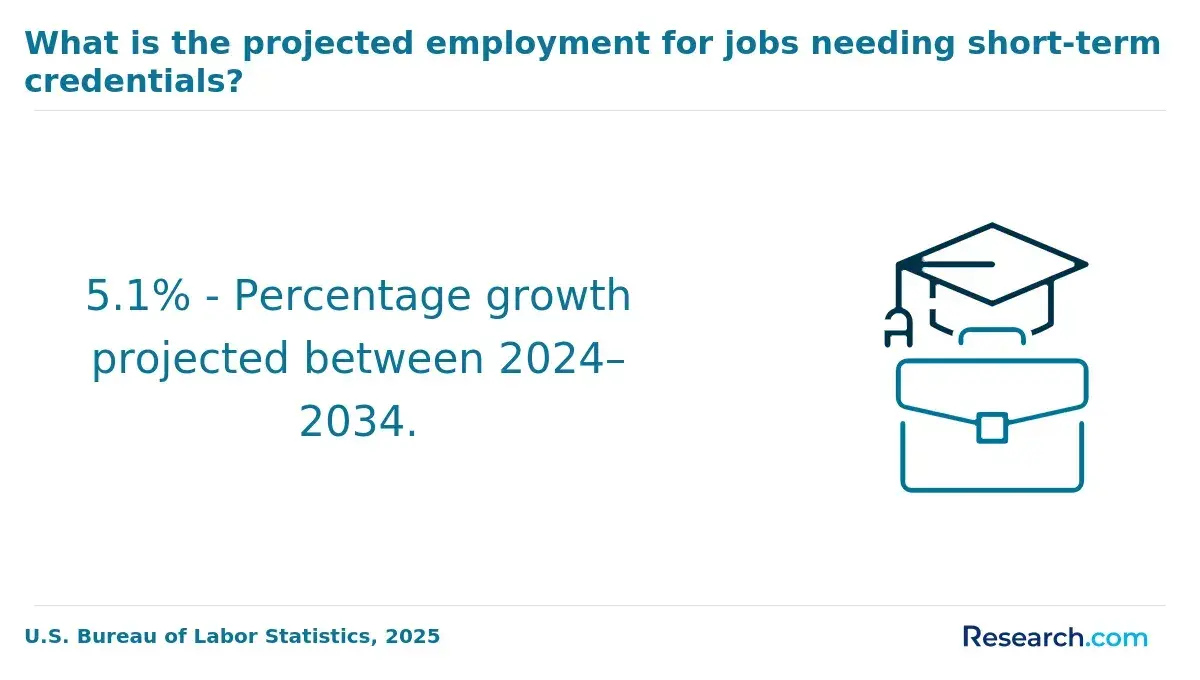
The most valuable skills vary by sector, but several appear repeatedly in higher-paying geography pathways:
- Advanced GIS: spatial databases, geoprocessing, network analysis, geocoding, topology, cartographic design, and enterprise GIS administration.
- Programming and automation: Python, SQL, R, JavaScript, APIs, reproducible workflows, and scripting for repetitive GIS tasks.
- Remote sensing and imagery: satellite imagery, LiDAR, drones, photogrammetry, land-cover classification, and change detection.
- Data science and statistics: predictive modeling, spatial statistics, machine learning, dashboarding, uncertainty analysis, and data storytelling.
- Cloud and enterprise tools: cloud GIS, spatial databases, data pipelines, version control, and collaboration across technical teams.
- Domain expertise: planning law, transportation, climate risk, emergency management, real estate, utilities, public health, or supply chain operations.
- Communication: writing reports, presenting maps to nontechnical audiences, explaining uncertainty, and translating spatial results into decisions.
The biggest red flag is treating GIS as a single software skill. Entry-level GIS can get you started, but higher-paying roles often require proof that you can solve problems independently. A strong portfolio should show before-and-after analysis, data sources, methods, limitations, maps, code, and decision recommendations.
Students should build projects that match target sectors. For example, a climate-risk portfolio might analyze flood exposure and infrastructure vulnerability, while a logistics portfolio might optimize delivery routes or evaluate warehouse locations.
Which Certifications and Credentials Increase Earnings in Different Industries?
Certifications can help, but they work best when they match the sector. A credential rarely substitutes for experience, but it can signal competence, improve promotion eligibility, or help applicants stand out when job titles are similar.
The following credentials are commonly relevant to geography-related careers. Requirements, costs, renewal rules, and employer preferences vary, so students should verify details before enrolling or applying.
| Credential or education path | Best-aligned sectors | How it can support earnings | Important limitation |
| GIS Professional certification | Government, utilities, consulting, enterprise GIS | Can support credibility for GIS analyst, senior analyst, or GIS manager roles | Most valuable when paired with strong project experience |
| Esri technical certifications | Local government, planning, utilities, consulting | Signals software-specific proficiency for employers using Esri systems | Does not prove broader data science or programming ability |
| American Institute of Certified Planners certification | Urban planning, transportation, public administration | Can support advancement for planners after meeting education and experience requirements | Eligibility depends on planning experience and professional standards |
| Remote sensing, drone, or LiDAR training | Environmental consulting, defense, surveying, energy, emergency management | Builds specialization in high-value imagery and field-data workflows | Some drone work may require FAA compliance |
| Graduate certificate or master's degree in GIS, data science, planning, or environmental science | Technical analytics, planning leadership, climate risk, research | Can improve access to specialized or senior roles | ROI depends on tuition, employer support, and career target |
Some geography graduates also move into law-adjacent roles involving land use, environmental compliance, property, or public records. If that direction interests you, comparing geography credentials with ABA paralegal programs can clarify whether you want a spatial analysis role or a legal-support role in land, zoning, or environmental matters.
The best credential strategy is sector-specific. For tech, prioritize coding and data portfolios. For planning, prioritize planning accreditation and public process experience. For defense or imagery, prioritize remote sensing, clearance-eligible roles, and careful documentation of technical projects.
How Do Company Size and Organization Type Affect Geography Earnings?
Company size and organization type affect pay because they shape budgets, promotion ladders, benefits, project scale, and specialization. Geography graduates should compare the whole employment package, not just the salary line.
The table below summarizes how different employer types usually compare for geography-related work. Individual employers can differ substantially, so use this as a screening framework before interviews and offer negotiations.
| Organization type | Earnings pattern | Career advantages | Possible drawbacks |
| Large technology or analytics company | Often higher for technical geospatial, data, and product roles | Large datasets, advanced tools, bonuses, and fast technical growth | Competitive hiring and pressure to maintain advanced coding skills |
| Federal agency or defense contractor | Often strong, especially for specialized or clearance-related roles | Mission scale, structured advancement, technical specialization | Lengthy hiring processes and eligibility constraints |
| State or local government | Moderate but often predictable | Benefits, stability, public impact, transparent pay bands | Salary growth may be slower than in private-sector analytics |
| Engineering or environmental consulting firm | Moderate to high depending on clients and specialization | Project variety, client exposure, advancement into project management | Deadlines, billable hours, and travel can affect work-life balance |
| Small nonprofit or research organization | Often lower to moderate | Mission alignment, broad responsibilities, hands-on learning | Limited budgets and fewer promotion layers |
In larger organizations, geography graduates may earn more by moving from analyst to manager, product owner, data lead, or program director. Those transitions require budgeting, leadership, and strategy skills, which is why some professionals later compare technical graduate degrees with business-focused options such as the easiest MBA program that still fits their schedule, goals, and employer expectations.
A common mistake is assuming a small organization is always worse for earnings. Smaller employers can offer faster responsibility, broader project ownership, and portfolio-building opportunities that help graduates move into higher-paying roles later.
Which Emerging Industries Offer the Best Future Earnings for Geography Graduates?
Emerging industries reward geography graduates when location data becomes central to risk, automation, infrastructure, or market strategy. The best future earnings are likely to come from sectors where spatial analysis is no longer a support function but part of the core product or decision system.
Several growth areas are especially relevant for students choosing electives, internships, and portfolio projects:
- Climate risk analytics: insurers, lenders, governments, and infrastructure owners need spatial models for flood, wildfire, heat, drought, and coastal exposure.
- Geospatial AI and computer vision: employers use satellite imagery, aerial imagery, and machine learning to detect land-use change, infrastructure conditions, crop patterns, and disaster damage.
- Renewable energy and grid planning: wind, solar, transmission, and battery projects require siting analysis, environmental constraints, land ownership review, and community-impact mapping.
- Autonomous mobility and smart infrastructure: mapping, routing, sensor networks, curb management, and transportation analytics all rely on location-aware data systems.
- Public health and emergency management analytics: agencies and contractors use spatial data to plan services, monitor hazards, allocate resources, and communicate risk.
- Real estate technology and retail location intelligence: companies use demographics, mobility patterns, zoning, hazards, and customer behavior to guide investment decisions.
BLS projections published in 2024 show that logisticians are projected to grow 19% from 2023 to 2033, which matters for geography graduates because supply chain and distribution networks are fundamentally spatial problems. Graduates who combine GIS with optimization, dashboards, and operations data can compete for roles beyond traditional mapping.
AI will not remove the need for geography skills, but it will change what employers expect. Routine map production is easier to automate, while judgment-heavy work-choosing data, interpreting spatial bias, validating models, explaining uncertainty, and making defensible recommendations-becomes more valuable.
How Should Students Choose an Industry Based on Earnings and Career Goals?
The smartest industry choice balances earnings, growth, stability, mission, and the kind of work you want to do every week. Geography is flexible, so the main risk is drifting into the first available GIS job without checking whether it builds toward your target sector.
Use the following process to compare industries before choosing internships, electives, graduate programs, or full-time offers:
- Define your target outcome: decide whether you want maximum salary, public impact, technical specialization, fieldwork, remote flexibility, policy influence, or management growth.
- Match roles to skills: list the job titles you want, then compare required tools, credentials, portfolios, and experience across several current postings.
- Use current wage benchmarks carefully: compare BLS occupational medians with local postings, but remember that wages are role-based and location-specific.
- Evaluate the full offer: compare salary, benefits, retirement, tuition support, schedule, travel, overtime, promotion rules, and cost of living.
- Check advancement paths: ask whether analysts can become senior analysts, project managers, data leads, planners, product managers, or directors.
- Avoid one-salary thinking: a high starting salary may be less attractive if the role offers weak mentoring, narrow responsibilities, or little skill growth.
- Build a sector-specific portfolio: create projects that mirror the work of your target industry, such as climate exposure, site selection, transit access, habitat change, or logistics routing.
If you are comparing geography with other career-oriented graduate paths, consider how much structure you want. For example, regulated fields such as healthcare may have clearer credential-to-role pathways, and students exploring that contrast may review options like a master's in speech pathology online to understand how licensure-driven careers differ from flexible geography pathways.
Choose a lower-paying sector when it gives you valuable experience, strong benefits, mentorship, or a mission you care about. Choose a higher-paying sector when you are willing to keep upgrading technical skills, compete in faster-moving markets, and translate geography into measurable business or operational value.
Other Things You Should Know About Geography
Geography can lead to high-paying work, but usually when paired with marketable skills such as GIS, Python, SQL, remote sensing, statistics, planning, or environmental analysis. The highest salaries often come from geography-adjacent roles in data science, defense, technology, energy, logistics, and consulting.
State and local government, federal agencies, utilities, transportation, and infrastructure planning often provide strong stability. These sectors may not always offer the highest starting salaries, but they can provide benefits, predictable pay bands, and long-term advancement.
Not always. A master's degree can help in planning, research, environmental science, GIS leadership, or data-focused roles, but experience and technical portfolios also matter. Before enrolling, compare tuition, employer support, target job requirements, and expected salary improvement.
The biggest mistake is choosing based only on average salary. Students should also compare job demand, cost of living, benefits, promotion paths, skill fit, work-life balance, and whether the role builds experience that transfers to better opportunities later.
Top Trending Geography Rankings
References
- Labour market value of higher and further education qualifications: a summary report https://www.gov.uk/government/publications/labour-market-value-of-higher-and-further-education-qualifications-a-summary-report/labour-market-value-of-higher-and-further-education-qualifications-a-summary-report
- How does a college degree improve graduates’ employment and earnings potential? - APLU https://www.aplu.org/our-work/4-policy-and-advocacy/publicuvalues/employment-earnings/
- Geography https://www.careerpilot.org.uk/job-sectors/subject/geography
- Jobs you can pursue with a geography degree https://www.openstudycollege.com/blog/jobs-you-can-pursue-geography-degree
- Benefits of a College Degree on Salary & Earning Potential | UMass Global https://www.umassglobal.edu/blog-news/how-college-impacts-salary-and-future-earning-potential