2027 Most Valuable Finance Degree Programs Ranking in Pittsburgh

Co-Founder and Chief Data Scientist
Choosing the right finance degree program can shape your future career and open doors to countless opportunities. This article introduces the 2027 Most Valuable Finance Degree Programs Ranking in Pittsburgh, developed by the Research.com team of data scientists to guide you in making a well-informed decision.
By exploring this ranking, you'll discover which programs offer the best value, helping you invest your time and resources wisely. Earning a finance degree can boost your confidence and set you on a path toward success in a thriving field.
Let's explore the top options together to find the best fit for your goals.
Key benefits of getting finance degree in Pittsburgh
- Finance degree graduates in Pittsburgh can earn strong salaries, such as Financial Advisors making around $150,670 annually and Credit Analysts earning approximately $94,750 per year.
- Career paths for finance graduates from local universities include roles like Investment Banking Analyst or Insurance Underwriter, offering diverse opportunities in finance, banking, and insurance sectors.
- Completing a finance degree online from reputable Pittsburgh institutions provides flexibility and convenience, allowing graduates to balance work and study while gaining skills employers value.
- 2027 Most Valuable Finance Degree Programs Ranking in Pittsburgh
- What can I expect from finance degree in Pittsburgh?
- Where can I work with finance degree in Pittsburgh?
What can I expect from finance degree in Pittsburgh?
The average cost of a finance degree in Pittsburgh depends largely on the institution and residency status. For example, graduates from the University of Pittsburgh, a popular choice for finance studies, often report tuition costs around $19,000 per year for in-state students. This figure provides a tangible benchmark but can vary if you attend private universities like Duquesne University, where tuition is generally higher and may not be as affordable without scholarships or financial aid.
Many students find that the investment in these programs feels worthwhile due to Pittsburgh's strong connection between education and industry. Graduates often speak positively about participating in internships and co-op placements facilitated by local banks and financial firms, such as PNC Financial Services, which help offset some financial burdens through stipends or job offers post-graduation.
Still, it is crucial to weigh these costs against expected earnings and career trajectories carefully. While public institutions offer more accessible pricing, private colleges might provide unique networking opportunities that justify the higher expense for some students. Exploring all options thoroughly can help maximize the value of a finance education in Pittsburgh.
Where can I work with finance degree in Pittsburgh?
Graduates with a finance degree from institutions like the University of Pittsburgh often find a varied job market right in their backyard. Pittsburgh's robust financial sector, anchored by giants such as PNC Financial Services Group and BNY Mellon, offers roles in corporate finance, risk management, and investment analysis that many alumni have shared as rewarding first steps in their careers.
However, employment isn't limited to traditional finance firms. For example, several graduates have leveraged opportunities in the region's expanding healthcare sector, joining organizations like UPMC to manage complex budgets or financial planning. This diversification reflects local economic trends, illustrating how students must remain adaptable to shifting demands.
Others pursue positions in insurance and advisory companies such as Highmark Health, or in government and nonprofit sectors, which require skills in grant management and real estate finance. Networking through groups like the Pittsburgh Financial Analysts Society consistently emerges as a key factor in landing roles.
The variety encourages optimism but also calls for strategic career planning, as competition in Pittsburgh's evolving market can be intense despite steady growth in finance-related fields.
Graduates with a finance degree from universities in Pittsburgh often enter the workforce with salaries ranging from $55,000 to $65,000 in entry-level roles like financial analysts or advisors. This aligns reasonably with the broader data: financial analysts nationally earn about $112,950 annually on average, while financial advisors make approximately $150,670, according to U.S. Bureau of Labor Statistics. Some Pittsburgh graduates have noted how the city's lower cost of living effectively increases their purchasing power compared to typical finance hubs.
For those advancing into specialized positions, salaries can exceed $100,000. For instance, credit analysts earn around $94,750 annually, and investment banking analysts also average about $112,950. Many graduates from schools such as the University of Pittsburgh appreciate how local financial institutions bridge academic knowledge with practical, well-paid opportunities.
While job seekers should be mindful of industry fluctuations, experience and certifications like CFA or CPA substantially boost earning potential. Pittsburgh's growing banking and insurance sectors support steady salary increases and enrich typical compensation packages with bonuses of 10-20%, enhancing overall earnings.
- Annual tuition for finance degrees in Pittsburgh ranges from $15,000 to $35,000 at public universities for in-state students and $40,000 to $50,000 at private institutions.
- Entry-level finance professionals typically earn between $55,000 and $65,000 annually in the Pittsburgh metro area.
- Mid-career finance salaries average between $90,000 and $110,000, reflecting strong local financial sectors.
- Pittsburgh's job market includes opportunities in banking, investment firms, insurance, financial technology, healthcare, and manufacturing.
- Many universities offer internships and cooperative education programs that connect students with local industries.
- The cost of living in Pittsburgh is lower than in larger cities like New York and San Francisco, benefiting students financially.
In Pittsburgh, completing a finance degree typically takes four years when enrolled full-time at local universities like the University of Pittsburgh or Duquesne University. Many graduates find this timeline manageable, balancing rigorous coursework with internship opportunities that deepen their understanding of the city's finance sector. However, some students choose accelerated programs, completing their bachelor's in as little as three years by taking extra credits or attending summer classes, which can be both challenging and rewarding.
Part-time students, often working professionals, may take five to six years or more, adapting their studies around job commitments. This path reflects a realistic approach for those valuing steady progress without sacrificing income or work experience. Graduate degrees in finance, such as a Master of Finance or MBA with a finance focus, generally require one to two years full-time, though part-time master's programs extend beyond three years, offering flexibility to many Pittsburgh students.
Graduates frequently mention that internship integration lengthens study time but creates valuable connections in Pittsburgh's dynamic finance industry, a trade-off that enriches both their skills and career prospects.
On-campus finance degrees in Pittsburgh, such as those offered by the University of Pittsburgh or Duquesne University, immerse students in a traditional classroom setting that encourages face-to-face interaction with professors and peers. Graduates often recall how immediate feedback and in-person networking in campus finance labs or guest lectures provided a motivating and community-driven environment. Many find value in tapping local financial professionals through internships accessible only because of their on-site presence.
Conversely, online finance programs offer flexibility that suits students balancing work and family, common among Pittsburgh's busy finance workers. These students appreciate the ability to study asynchronously using video lectures and digital discussions, though some mention needing strong self-discipline and time management to stay engaged without the structured campus routine. For those pursuing certifications like CFA amid full-time employment, online formats can be a practical path.
Cost differences also matter. Pittsburgh's universities reflect a trend where online tuition may be lower due to waived campus fees, making remote study more affordable. However, those who thrive on direct support and local connections often favor the on-campus experience despite higher expenses.
When weighing a Finance degree in Pittsburgh against an Economics major, it’s essential to understand how each pathway shapes your skill set and career trajectory. A Finance curriculum typically emphasizes corporate finance, investment analysis, and risk management-equipping graduates for roles like financial analyst, credit risk manager, or corporate treasurer. Conversely, an Economics degree dives deeper into macroeconomic theory, econometrics, and policy evaluation, preparing students for careers in economic research, public policy, or data-driven consultancy. To explore further opportunities beyond finance and discover what are some jobs you can get with economics degree, consider the distinct learning outcomes each program offers. Curriculum Structure and Skill Development Finance programs in Pittsburgh focus on applied projects-such as portfolio simulations and corporate case studies-that build proficiency in quantitative modeling and strategic decision-making. In contrast, Economics majors engage in statistical analysis of economic trends, cost–benefit evaluations, and theoretical modeling, fostering strong analytical and critical-thinking abilities. If your passion lies in interpreting big data to inform monetary policy or social programs, an Economics track may be best; if you thrive on real-world financial markets and corporate strategy, Finance could be your ideal match. Career Outlook and Earning Potential Both degrees offer robust employment prospects in Pittsburgh’s expanding financial ecosystem. Finance graduates often secure positions with average starting salaries ranging from $70,000 to $90,000, especially in banking, investment firms, and fintech startups. Economics alumni, with their advanced analytical toolkit, are in demand by government agencies, think tanks, and consulting firms-roles that typically begin around $60,000 to $80,000 but can grow rapidly with specialized expertise. By aligning your academic focus with industry demands, you ensure your degree leads to a fulfilling and high-impact career.
The average cost of obtaining a finance degree in Pittsburgh typically centers around $57,296, with in-state students paying closer to $21,926. This significant difference reflects the tuition strategies at prominent local universities such as the University of Pittsburgh, where in-state affordability contrasts notably with higher out-of-state rates. Graduates often share how budgeting carefully for tuition and fees, alongside living expenses, shapes their educational journey in meaningful ways. Understanding finance degree tuition and fees Pittsburgh demands exploring these numbers thoughtfully, keeping in mind that costs extend beyond tuition alone.
For many students attending Carnegie Mellon or Duquesne University, the overall expenses are higher, especially given the private school premiums that push total costs above the median for Pittsburgh. Yet, these schools offer access to extensive financial aid and scholarships that many graduates recall as pivotal in making the investment feel worthwhile. Such opportunities reflect the competitive funding that finance programs in Pittsburgh often provide, helping students balance cost and value.
Many finance students in Pittsburgh face the challenge of balancing tuition costs with living expenses, often requiring $15,000 to $20,000 more annually for housing and personal needs. Several graduates emphasize the importance of researching available financial aid and assistantships, which can lighten financial burdens. For those considering the broader economic picture of their education, this balance factors heavily into decisions about where and how to study finance.
Additionally, students curious about career trajectories after graduation can explore what are some jobs you can get with economics degree, which offers insights related to finance degrees as well, creating a useful resource when planning both education and employment.

As tuition costs continue to rise, pursuing an online master’s in finance can offer Pittsburgh-based students a flexible, budget-friendly path to career advancement. Online programs often feature lower per-credit fees, eliminate relocation and commuting expenses, and allow professionals to balance full-time work with rigorous graduate coursework. Key advantages include:
- Lower Total Cost: Many accredited online master’s programs charge between $800 and $1,200 per credit hour, compared to $1,500–$2,000 for on-campus alternatives.
- Flexible Scheduling: Evening and weekend course offerings enable students to maintain employment while completing assignments at their own pace.
- Rapid ROI: Graduates of online finance master’s programs often recoup tuition investments within two to three years, thanks to mid-career salary increases averaging 15–20%. For those seeking the most budget-friendly options statewide, consult the Most Affordable Online Master’s in Finance Degree Programs Ranking in Pennsylvania, which highlights programs with the lowest tuition and highest student satisfaction rates. In addition, many online curricula emphasize real-world case studies, advanced financial modeling software, and virtual networking events, ensuring graduates acquire both technical expertise and industry connections. By choosing an affordable online master’s option, Pittsburgh finance students can accelerate their career trajectories without compromising on academic quality or professional outcomes.
Financial aid for finance students in Pittsburgh commonly includes federal programs like the Pell Grant, which can grant up to around $7,500 annually to eligible undergraduates without the burden of repayment. Many finance students at the University of Pittsburgh and Duquesne University report that completing the FAFSA early opens doors to these federally backed grants, loans, and work-study opportunities, helping ease initial cost concerns.
State aid through Pennsylvania's State Grant Program also plays a crucial role, especially for students demonstrating financial need and academic progress. Local scholarships offered by Pittsburgh foundations add another layer, often directed specifically toward residents pursuing finance degrees.
- Institutional scholarships from Pittsburgh-area schools foster a sense of achievement and motivation by rewarding leadership and academic excellence within finance programs.
- Private scholarships tied to finance associations offer networking benefits alongside monetary support, something graduates often find invaluable for early career development.
- Federal Direct Loans provide manageable borrowing options; students appreciate the deferment of repayment until after graduation, reducing immediate stress.
- Work-study jobs at Pittsburgh universities enable hands-on experience in finance-related roles, supporting both income and skill-building.
While some students feel overwhelmed by rising tuition-especially at private institutions where annual costs may exceed $35,000-many testify that leveraging layered aid approaches significantly lightens the financial burden, making their finance education in Pittsburgh not only attainable but also rewarding.
Enrolling in a finance degree program in Pittsburgh typically requires a solid academic foundation, notably a high school diploma or GED. Graduates from institutions like the University of Pittsburgh often emphasize how their early focus on math courses such as algebra and statistics eased their transition into rigorous finance curricula. This strong quantitative background is crucial since finance relies heavily on numerical analysis and problem-solving.
Standardized test scores, while less universally mandatory due to some schools adopting test-optional policies, remain a factor at many campuses. Several students recount how submitting SAT or ACT scores strengthened their applications, even if not strictly required.
For non-native English speakers, demonstrating proficiency through TOEFL or IELTS is essential, ensuring effective communication within diverse classroom settings at places like Duquesne University.
Furthermore, practical documents-recommendation letters, personal statements, and resumes-play a pivotal role. Graduates highlight how these materials allowed them to convey genuine enthusiasm and relevant experiences, making their applications stand out in a competitive Pittsburgh market.
Some community colleges, such as the Community College of Allegheny County, provide preparatory options, offering a supportive pathway for students needing to build prerequisites before fully committing to a finance degree.
Finance degree programs in Pittsburgh commonly include core courses such as financial and managerial accounting, which graduates recall as essential for interpreting real-world corporate financial reports at local firms. Alongside these, economics classes help students grasp market dynamics, a skill often praised by those who intern in Pittsburgh's banking sector.
The curriculum typically advances into courses like Corporate Finance, focusing on capital budgeting and risk management-key topics that alumni found directly applicable when analyzing projects during internships at city investment firms. Investment Analysis and Portfolio Management also feature prominently, allowing students to simulate trading scenarios and evaluate risk-return tradeoffs, experiences frequently highlighted by graduates as exciting and practical.
Other courses include Financial Markets and Institutions, which delve into how banks and regulators operate within Pittsburgh's financial ecosystem, and Quantitative Methods for Finance, offering skills in statistics and financial modeling valued by employers in the local insurance industry. Some students appreciate International Finance for its broader perspective on currency exchange and global markets, preparing them for roles beyond Pittsburgh's borders.
Finance degree specializations in Pittsburgh commonly include options like Corporate Finance, Investment Analysis and Portfolio Management, Financial Planning and Wealth Management, Risk Management and Insurance, and Financial Technology (FinTech). Graduates from local universities often recount how focusing on Corporate Finance helped them grasp real-world budgeting and strategic planning challenges faced by Pittsburgh's diverse industries. Meanwhile, those who chose Investment Analysis found opportunities to engage with the city's wealth management sector, applying asset allocation theories in internships.
Some students at well-regarded colleges in Pittsburgh emphasize how the FinTech specialization opened doors to emerging fields involving blockchain and data analytics. However, the choice of specialization also requires weighing personal interests against the cost, which can vary notably between public and private institutions in the area. Considering the Most Affordable Online Master's in Finance Degree Programs Ranking in Pennsylvania may help balance expenses with career goals.
Prospective students should reflect thoughtfully on which finance concentration aligns best with Pittsburgh's job market dynamics, as this can influence their post-graduation prospects and financial satisfaction in a thriving economic environment.
Choosing the best finance degree programs Pittsburgh offers requires careful attention to accreditation and curricula that reflect local industry needs. Graduates from well-regarded universities near downtown often praise programs that integrate hands-on internships with firms in the city's financial district, providing both experience and networking opportunities. While some students emphasize cost savings through affordable finance degrees in Pittsburgh offered by public institutions, others find that private schools' specialized tracks justify higher tuition due to closer connections to fintech and asset management sectors.
Curriculum flexibility is crucial; students should seek programs covering fundamental topics like investment analysis and financial markets but that also allow focus on personal interests like financial planning. Some graduates share how active finance clubs and guest speakers from Pittsburgh's corporate headquarters enriched their learning beyond textbooks, highlighting the value of proximity to industry. For those balancing work and study, researching the best accelerated online degree completion programs for working adults in the area can also open doors without sacrificing career progress.

Graduates with a finance degree in Pittsburgh often find themselves navigating multiple career paths due to the city's diverse financial landscape. Many alumni from local universities report entering commercial banking roles at institutions like PNC Financial Services, drawn by opportunities in loan evaluation and branch management. This reflects strong finance career opportunities in Pittsburgh, given the city's established banking presence.
Others pursue investment management or financial advisory positions at firms such as BNY Mellon, where analytical skills honed through their education are essential. However, graduates also caution that competition can be steep, and practical experience often weighs heavily during hiring. Job prospects with finance degree Pittsburgh extend beyond traditional banking, with corporate finance positions in the city's manufacturing and tech companies offering roles in budgeting and financial strategy.
Some graduates highlight the rewarding nature of financial planning and wealth management careers, assisting families with retirement goals, though they note these roles demand strong interpersonal skills alongside finance expertise. For those considering alternative pathways, emerging fields like risk management and financial compliance also benefit from a solid finance foundation. Students thinking about expanding their qualifications might explore options such as easy online masters to strengthen their profiles further.
The finance degree job opportunities in Pittsburgh remain strong, benefiting from the city's economic shift toward diverse sectors like healthcare, technology, and finance itself. Graduates from institutions such as the University of Pittsburgh often find roles in major local employers like PNC Financial Services and BNY Mellon, where they engage in real-world financial analysis and investment management. These opportunities reflect a steady demand, supported by BLS data showing a 6% growth projection for finance professionals in the region.
While the average annual salary for financial analysts is about $87,000, graduates note that Pittsburgh's cost of living and tuition fees, roughly $12,000 for in-state public universities, create a balanced return on investment. Students sometimes weigh options like pursuing an online phd no dissertation to advance without interrupting their careers. This practical choice highlights the adaptability needed in today's evolving job market.
Many finance graduates feel encouraged by the competitive salaries and access to varied industries, though some caution that the market's competitiveness demands ongoing skill development beyond the classroom.
2027 Most Valuable Finance Degree Programs Ranking in Pittsburgh
Investing in your education is a significant decision that can shape your future, and the Research.com team understands the importance of making informed choices. To assist prospective students in Pittsburgh, we have meticulously crafted the "2027 Most Valuable Finance Degree Programs Ranking in Pittsburgh." Our commitment to quality, credibility, and accuracy is reflected in the extensive research and analysis conducted to compile this ranking.
We utilized the following reputable data sources to ensure a comprehensive evaluation of finance programs:
By exploring this ranking, readers will gain valuable insights into the most valuable finance degree programs available in Pittsburgh, helping them make well-informed decisions about their educational and career paths. For more details on our methodology, please visit our Research.com methodology page.


Frequently Asked Questions About finance
Finance degree students in Pittsburgh can enhance their learning by actively engaging with the city's robust financial sector. Pittsburgh hosts major banking institutions and investment firms, offering valuable internship opportunities that provide hands-on experience. According to the Pittsburgh Financial Workforce Report 2023, over 40% of finance graduates secure internships within their first year, significantly boosting career prospects.
Students should also leverage Pittsburgh's network of finance-related professional organizations, such as the CFA Society Pittsburgh, for networking and mentorship. Participation in local workshops and seminars helps students stay updated on industry trends.
Additionally, taking advantage of Pittsburgh's universities' partnerships with local businesses allows students to work on real-world projects, building practical skills that complement academic knowledge.
The finance field is evolving rapidly, with emerging niches that offer new career opportunities for students in Pittsburgh. One growing area is fintech, which combines finance and technology to create innovative financial services and products. Pittsburgh's strong tech ecosystem supports this niche, with startups and established firms working on blockchain, digital payments, and robo-advisory platforms.
Another expanding niche is sustainable finance, focusing on investments that consider environmental, social, and governance (ESG) factors. This aligns with national trends and Pittsburgh's increasing emphasis on green industries. According to the U.S. Bureau of Labor Statistics, demand for ESG analysts is expected to grow significantly through 2030.
Additionally, data analytics in finance offers roles involving big data to optimize investment strategies. Local universities provide specialized courses teaching these skills, reflecting employers' evolving needs in Pittsburgh's finance sector.
After completing a finance degree in Pittsburgh, it is important to gain practical experience to stand out in the competitive job market. Many students pursue internships or cooperative education programs with local financial institutions, such as PNC Financial Services or BNY Mellon, both headquartered in the city. According to the Bureau of Labor Statistics, the Pittsburgh area has a growing demand for financial analysts, with a projected 7% employment growth from 2022 to 2032.
Networking is also essential. Joining local finance clubs or groups, like the Pittsburgh Investment Group, offers opportunities to connect with industry professionals. Additionally, obtaining certifications such as CFA or CFP can boost your credentials and salary potential.
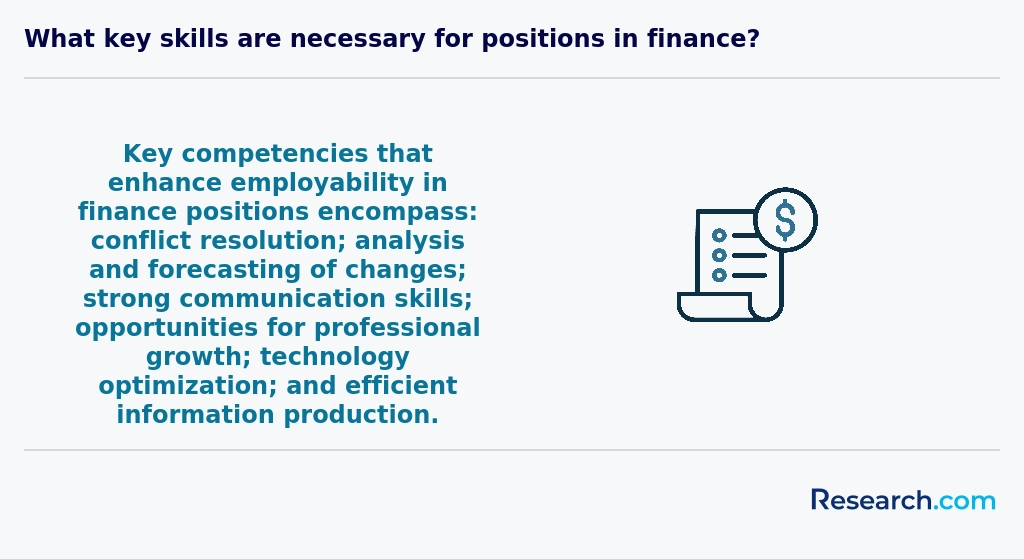
Employers in Pittsburgh seek finance degree graduates with strong analytical skills, critical for interpreting complex financial data. Proficiency in financial modeling and use of software like Excel and Python is highly valued, reflecting the growing role of technology in finance. According to a 2023 report by the Pittsburgh Regional Alliance, 68% of financial employers prioritize candidates who demonstrate problem-solving abilities and quantitative aptitude.
Communication skills also rank highly, as finance professionals must explain data insights clearly to stakeholders. Additionally, knowledge of regulatory compliance and risk management is essential due to Pittsburgh's expanding finance sector, which includes banking, insurance, and investment firms. Understanding local economic trends further strengthens a graduate's job prospects.
Finding internships in Pittsburgh relevant to a finance degree involves leveraging local university resources and industry connections. Many institutions, including the University of Pittsburgh and Duquesne University, offer dedicated career centers with internship listings tailored to finance students. These centers often collaborate with Pittsburgh's financial sector, which employs over 50,000 people, according to the Pittsburgh Economic Quarterly (2023).
Students should also explore internships through Pittsburgh-based financial firms such as PNC Financial Services and BNY Mellon. Networking events hosted by organizations like the Pittsburgh Finance Association can improve access to opportunities. Additionally, online platforms like Handshake and local job fairs provide valuable listings specifically for finance careers.
A finance degree significantly enhances career mobility and advancement opportunities in Pittsburgh's dynamic financial sector. According to Pittsburgh Technology Council, the region hosts over 3,500 financial services companies, ranging from banking to asset management, which actively seek professionals with formal finance education.
Graduates with a finance degree typically see faster promotions and higher salary potential. The U.S. Bureau of Labor Statistics reports that financial analysts and advisors in Pittsburgh earn a median annual wage above the national average, benefiting from local industry growth driven by corporate headquarters such as PNC Financial Services.
Additionally, a finance degree provides essential skills sought across multiple roles, allowing smoother transitions into specialized areas like risk management or financial consulting. Networking opportunities through Pittsburgh's strong alumni communities further boost career progression.
Studying for a finance degree in Pittsburgh offers unique interdisciplinary preparation due to the city's diverse economic landscape. Pittsburgh is home to a growing financial services sector alongside technology, healthcare, and manufacturing industries. This environment encourages finance programs to integrate coursework in data analytics, economics, and business management.
Students benefit from collaborations between universities and local firms, exposing them to real-world challenges that cross traditional finance boundaries. For example, the University of Pittsburgh emphasizes quantitative skills and strategic decision-making, equipping graduates to work effectively in roles that combine finance with IT or healthcare administration.
According to the Pittsburgh Technology Council, 25% of local finance jobs require proficiency in overlapping disciplines, reflecting an increasing demand for versatile professionals. This integration fosters adaptability, preparing students for careers beyond traditional finance roles.
Choosing between a thesis and a non-thesis finance degree program in Pittsburgh depends on your career goals and learning style. A thesis program involves conducting significant research and writing a detailed paper, which is ideal for students aiming at academic careers or specialized roles in financial analysis. Non-thesis options focus on coursework and practical skills, often preferred by those seeking immediate employment in Pittsburgh's growing finance sector.
According to the Pittsburgh Regional Alliance, finance jobs in the area are set to grow by 6% through 2028, emphasizing the value of practical skills. Universities like University of Pittsburgh offer both pathways, allowing flexibility based on your professional goals.
Students based in Pittsburgh who wish to study finance abroad have several options through exchange programs and partnered universities. Institutions like the University of Pittsburgh and Carnegie Mellon University offer finance students the opportunity to study in countries such as the United Kingdom, Germany, and Singapore. These programs often include coursework aligned with U.S. finance curricula to facilitate credit transfer.
According to the University of Pittsburgh's Global Studies Office, nearly 25% of business students participate in international study experiences, reflecting growing interest in global finance perspectives. Programs typically last one semester but can extend to a full academic year.
Many Pittsburgh institutions also collaborate with overseas universities with strong finance faculties, allowing students to gain firsthand experience in diverse financial markets while still benefiting from U.S. accreditation standards.
Students pursuing finance degrees in Pittsburgh can benefit from several part-time job opportunities that enhance their academic experience. Many select roles within local banks, credit unions, and financial service firms, where practical experience with transactions and client management aligns with coursework.
Internships and assistant positions in Pittsburgh's growing fintech startups provide exposure to financial technologies and data analytics, skills highly valued in the finance sector. According to the Pittsburgh Business Times, the city's fintech industry has seen a 15% employment growth in recent years.
Additionally, roles such as research assistants at universities or financial analysis support at nonprofit organizations offer meaningful experience while supporting studies.
Pittsburgh offers finance students numerous networking opportunities through its strong local economy and educational institutions. Universities like the University of Pittsburgh and Carnegie Mellon have active finance clubs and honor societies where students connect with peers and industry professionals.
The city's robust financial sector provides access to internships and job fairs hosted by firms such as PNC Financial Services and BNY Mellon, two major employers headquartered in Pittsburgh. According to the Pittsburgh Business Times, finance jobs in the region grew by 5% in recent years, increasing networking scope.
Additionally, organizations like the Pittsburgh Finance Network and local chapters of national finance groups hold events and workshops, fostering professional relationships. Students benefit from mentorship programs and guest lectures, integrating academic and real-world finance insights.
Alumni networks offer significant advantages for finance degree students in Pittsburgh. These networks connect current students with graduates who work in the city's robust financial sector, including banking, investment firms, and corporate finance roles. According to a 2023 report by the Pittsburgh Business Times, over 30% of finance professionals in the area were hired through referrals or alumni connections.
Students benefit from mentorship opportunities, gaining insights into local finance careers and guidance on navigating job searches. Alumni events and online platforms also provide exclusive access to internships and job openings, helping students build valuable professional relationships early in their careers.
Students pursuing a finance degree in Pittsburgh can customize their programs by selecting specialized electives aligned with their career goals. Many universities offer courses in areas such as corporate finance, investment management, or risk analysis, allowing students to build expertise in their preferred field. Pittsburgh's strong finance sector, including banking and asset management firms, supports internship opportunities that complement academic learning.
Additionally, some programs provide options for certificates or minors like data analytics or economics, enhancing marketability. According to U.S. News, customizable finance programs improve job placement rates, which is vital in a competitive city like Pittsburgh.
Finance students in Pittsburgh often face several key challenges during their academic journey. One common hurdle is balancing rigorous coursework with internship opportunities, which are crucial for gaining practical experience in the city's competitive financial sector. According to data from the National Association of Colleges and Employers, finance internships in Pittsburgh see high demand, making it difficult for some students to secure relevant positions.
Additionally, many students struggle with mastering complex quantitative skills, such as financial modeling and statistics, which are essential for success in finance careers. Local experts note that programs emphasize proficiency in software like Excel and Python, creating an initial learning curve.
Cost of education and limited financial aid options also pose concerns, as Pittsburgh's average annual tuition for finance programs ranges between $15,000 and $40,000 depending on the institution, per the College Board.
A finance degree from Pittsburgh opens pathways to several professional certifications that can enhance your career prospects. The most widely recognized is the Chartered Financial Analyst (CFA) credential, which is valuable for roles in investment management and financial analysis. The CFA Institute reports that Pennsylvania ranks among the top states for CFA charterholders, with a concentration in urban centers like Pittsburgh.
Another important certification is the Certified Public Accountant (CPA), especially relevant if your finance degree includes accounting courses. Pennsylvania's State Board of Accountancy governs CPA licensure, requiring education, exams, and experience. Pittsburgh hosts multiple firms that often require CPA certification for senior finance positions.
The Certified Financial Planner (CFP) designation is also popular among finance graduates aiming for careers in personal financial advising. Nationally, CFP professionals earn a median annual salary around $89,000, which aligns with Pittsburgh's growing demand for financial planners.
Additional certifications like the Financial Risk Manager (FRM) and Certified Management Accountant (CMA) can further bolster credentials, especially in risk analysis or corporate finance roles prevalent within Pittsburgh's financial sector.
To craft a winning application for a finance program in Pittsburgh, start by highlighting your strong quantitative skills and relevant coursework, such as economics and mathematics. Admissions committees value clear evidence of analytical thinking and problem-solving abilities. Include any internships or work experience in local financial sectors like banking or investment firms, which are prominent in Pittsburgh's economy, supported by data from the Pittsburgh Regional Alliance.
Be sure to express your understanding of Pittsburgh's unique market, where finance intersects with industries such as healthcare and technology. According to the U.S. Bureau of Labor Statistics, finance jobs in Pittsburgh grew by 5% over the past five years, indicating strong local demand.
Finally, tailor your personal statement to reflect your career goals and how the program will help you contribute to Pittsburgh's financial community.
The global perspective on a finance career increasingly values adaptability and cross-border expertise. Professionals with finance degrees in Pittsburgh benefit from the city's strong ties to international markets and banking sectors. According to the U.S. Bureau of Labor Statistics, financial analysts in the region earn a median annual wage above the national average, reflecting demand for skilled talent.
Finance careers now often require understanding global regulations, currency fluctuations, and international trade. Pittsburgh's growing financial services industry provides opportunities linked to multinational corporations and export businesses. Additionally, knowledge of emerging markets is becoming critical as companies diversify operations worldwide.
For prospective students, mastering global finance concepts enhances employability in firms that operate beyond U.S. borders. Schools in Pittsburgh frequently emphasize this global approach within their finance curricula, preparing graduates for diverse roles within corporate finance, investment banking, and risk management internationally.
Gaining practical experience while studying for a finance degree in Pittsburgh is essential for building career-ready skills. Many universities in the area, such as the University of Pittsburgh and Carnegie Mellon University, offer internship programs connected to the city's robust financial sector. Pittsburgh hosts a growing number of financial services firms, including PNC Financial Services, which frequently recruit interns for roles in banking, asset management, and risk analysis.
Students can also participate in on-campus investment clubs or finance labs, where they analyze real market data and manage simulated portfolios. Additionally, cooperative education programs allow students to alternate semesters between study and paid work experience.
According to the Pittsburgh Business Times, internships in finance fields here have a placement rate above 60%, reflecting strong industry engagement.
When choosing a concentration within a finance degree program in Pittsburgh, students should consider both their career goals and the local economic landscape. Pittsburgh's growing financial sector includes strong industries in banking, investment management, and energy finance, reflecting opportunities in these areas.
Reviewing program specialties at local schools like the University of Pittsburgh and Duquesne University can reveal concentrations such as financial analysis, corporate finance, or risk management. According to the Pittsburgh Business Times, demand for financial analysts in the region is expected to grow by 6% through 2030.
Students should also assess internship availability and alumni networks within their chosen concentration, which can be influential in gaining employment locally.
- 2027 Most Valuable Finance Degree Programs Ranking in Cleveland
- 2027 Most Valuable Finance Degree Programs Ranking in Columbus
- 2027 Most Valuable Finance Degree Programs Ranking in Washington
- 2027 Most Valuable Finance Degree Programs Ranking in Baltimore
- 2027 Most Valuable Finance Degree Programs Ranking in Rochester
- 2027 Most Valuable Finance Degree Programs Ranking in Scranton
- 2027 Most Valuable Finance Degree Programs Ranking in Philadelphia
- 2027 Most Valuable Finance Degree Programs Ranking in Cincinnati
- 2027 Most Valuable Finance Degree Programs Ranking in Jersey City
- 2027 Most Valuable Finance Degree Programs Ranking in New York
See What Experts Have To Say About Studying Finance
Read our interview with Finance experts

Jason James Sandvik
Finance Expert
Assistant Professor of Finance
University of Arizona

H. Kent Baker
Finance Expert
Professor at Department of Finance and Real Estate
American University

Andrew Karolyi
Finance Expert
Dean of the Cornell SC Johnson College of Business
Cornell University

- Finance Internships: Find 248 Finance Intern Jobs https://internshala.com/internships/finance-internship/
- Financial Literacy https://www.pointpark.edu/about/admindepts/studentfinancialservices/studentaccounts/financialliteracy
- 2024 Best Business Schools | How Alumni Rate Their Undergraduate Business Degrees https://poetsandquantsforundergrads.com/news/best-business-schools-alumni-rate-undergraduate-business-degrees/5/
- Undergraduate Finance Programs https://www.sru.edu/programs/undergrad-finance
- Top Accounting Skills to Land Finance and Accounting Jobs https://www.kbwfinancial.com/top-skills-for-accounting-and-finance/
- International Finance Careers: A Comprehensive Guide https://survey.moorlandassociation.org/moorlandassociation-news/international-finance-careers-a-comprehensive-guide-1767647521
- The Rise of Niche Jobs in Africa’s Finance Sector | CA Global https://www.caglobalint.com/post/the-rise-of-niche-jobs-in-africas-finance-sector/
- Online BBA in FinTech vs Traditional Finance - Which Is Better? https://www.onlinecu.in/blog/cu/online-bba-fintech-vs-traditional-finance
- Why Alumni Networks Matter in Business School: 7 Reasons https://europe.ceibs.edu/article/why-alumni-networks-matter-business-school
- Top 10 Accounting and Finance Skills Employers Want | Tamarack Recruiting | Tamarack Recruiting https://tamarackrecruiting.com/top-10-accounting-and-finance-skills-employers-want-tamarack-recruiting/