2027 Low-Cost Online Photography Associate Degree Programs with Financial Aid: FAFSA, Grants, and Scholarships

Co-Founder and Chief Data Scientist
Choosing an online photography associate degree is really a cost-and-outcomes decision: tuition matters, but net price after FAFSA, grants, scholarships, and fees matters more. The College Board reported average published tuition and fees of $4,050 at public two-year colleges for 2024-25, which shows why community-college-based options can be financially attractive. This guide is for students comparing affordable online photography, digital photography, or visual media associate programs. You will learn how aid works, how to compare offers, and when a low-cost degree is a smart next step.
Key Things You Should Know
- FAFSA-eligible photography associate programs must be offered by institutions that participate in federal student aid; FAFSA access does not guarantee a Pell Grant, scholarship, or low net price.
- The maximum Federal Pell Grant is $7,395 for the 2025-26 award year, so grant aid can cover a large share of a low-cost public two-year program but usually not all technology, equipment, and fee costs.
- The median annual wage for photographers was $42,520 in May 2024 according to the U.S. Bureau of Labor Statistics, so the best-value program is usually the one with the lowest debt, strongest portfolio support, and transferable credits.
Which Low-Cost Online Photography Associate Degree Programs Offer Financial Aid?
Low-cost online photography associate degree programs that offer financial aid are usually found at public community colleges, public technical colleges, and accredited nonprofit or private institutions that participate in Title IV federal student aid. The most important point is that FAFSA eligibility belongs to the school and eligible program, not simply to the fact that the degree is online.
An online photography associate degree may be called an Associate of Arts, Associate of Science, Associate of Applied Science, digital photography degree, photographic technology degree, or visual media degree with photography coursework.
AA and AS programs are often better for students planning to transfer to a bachelor's program, while AAS programs are usually more career-focused and may emphasize portfolio development, lighting, editing, studio workflow, and client-based projects.
The table below shows the main types of low-cost online photography-related associate programs and how they typically differ for financial-aid purposes. Use it to narrow your search before comparing individual schools.
| Program type | Typical provider | Financial aid potential | Best fit | Cost issue to check |
| Online AA or AS in Photography or Digital Media | Public community college or nonprofit college | Often FAFSA-eligible if the school participates in federal aid | Students who may transfer to a bachelor's degree | Whether photography courses transfer as major credits or electives |
| Online AAS in Photography, Photographic Technology, or Visual Communications | Public technical college or community college | Often FAFSA-eligible if the program is an eligible degree program | Students seeking portfolio-based employment after the associate degree | Equipment, software, print, and lab-fee requirements |
| Online associate degree at a private art or design school | Private nonprofit or private for-profit institution | May be FAFSA-eligible, but institutional aid and tuition vary widely | Students wanting intensive creative instruction and structured critique | Net price after grants, not advertised scholarship amount |
| Photography concentration within digital marketing, media, or communications | Community college or online college | Often FAFSA-eligible when embedded in an eligible associate degree | Students interested in content creation, social media, e-commerce, or branding | Whether the curriculum includes enough photography-specific studio work |
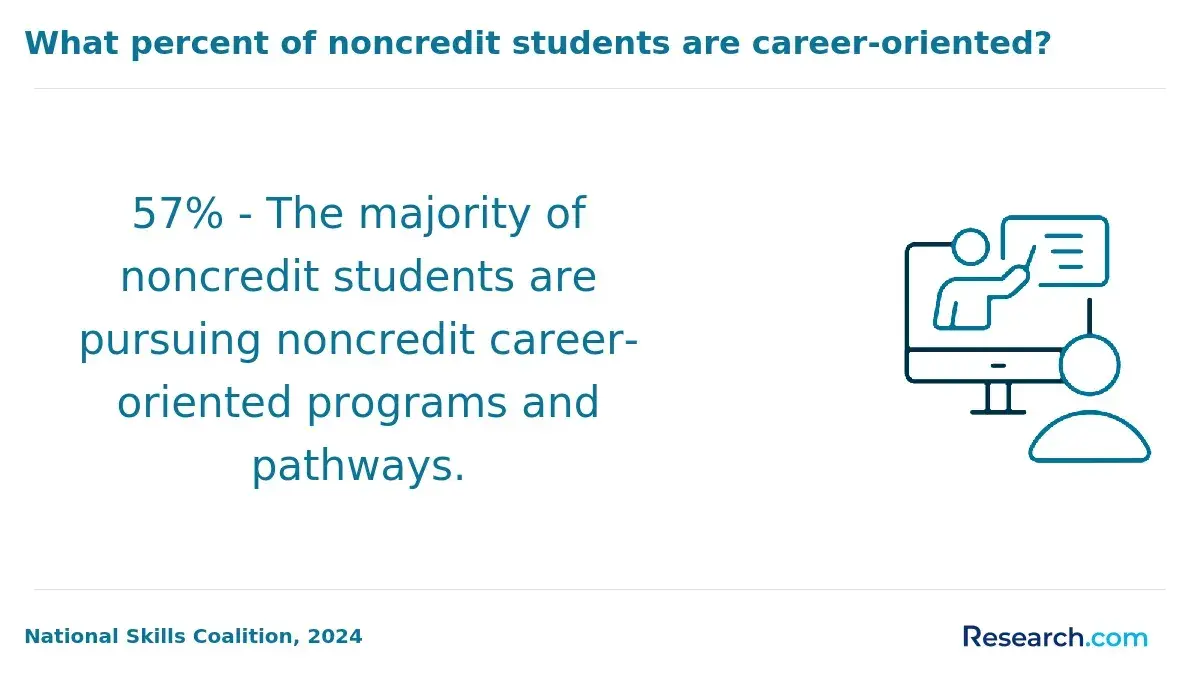
When a school advertises "financial aid available," confirm that the specific online associate program is eligible for degree-seeking federal aid. Short certificates, continuing education courses, and noncredit photography programs may be useful, but they often do not qualify for federal grants or loans.
A practical screening process can prevent expensive mistakes before you apply. Ask each school for the following details in writing so you can compare programs on the same basis.
- The school's federal school code and whether the online photography associate degree is Title IV eligible
- Total required credits, tuition per credit, mandatory online fees, and estimated equipment costs
- Whether students can enroll part time and still receive Pell Grant or loan eligibility
- Whether institutional scholarships apply to online associate students, transfer students, and part-time students
- Whether credits transfer into a bachelor's degree in photography, visual communication, marketing, media studies, or design
How Does FAFSA Work for Online Photography Associate Degree Programs?
FAFSA is the Free Application for Federal Student Aid. For online photography associate degree students, it is the gateway to federal Pell Grants, Federal Supplemental Educational Opportunity Grants when available, federal work-study at participating schools, and Federal Direct Loans.
The FAFSA does not automatically make a program affordable. It calculates aid eligibility based on federal rules, your income and assets, dependency status, family size, enrollment intensity, cost of attendance, and the school's aid policies. After you submit the FAFSA, each college creates a financial aid offer that may look very different from another school's offer.
The FAFSA process is easier if you treat it as a program-comparison tool rather than a one-time form. Follow these steps before making an enrollment decision.
- Create or access your StudentAid.gov account and complete the FAFSA using accurate tax and identity information.
- Add every photography associate degree program you are seriously considering, using each school's official federal school code.
- Confirm with the financial aid office that the online photography degree itself is eligible for federal aid.
- Review each school's cost of attendance, including tuition, online fees, books, software, camera equipment, lighting kits, storage, and printing costs.
- Compare grants and scholarships before loans, then calculate the remaining out-of-pocket cost for the full associate degree.
- Ask how your aid changes if you enroll half time, three-quarter time, full time, or take a break between terms.
Full-time enrollment can increase the amount of aid available in a term, but it can also create time pressure for working adults. Part-time enrollment may reduce the aid disbursement per term, yet it can be financially safer if it allows you to keep income and avoid borrowing more than necessary.
Common FAFSA mistakes include assuming every online photography program accepts FAFSA, entering the wrong school code, missing state grant deadlines, and focusing only on the first term's aid. Always ask for the full-program estimate, because associate degrees commonly require about 60 credits and can take two years full time or longer part time.
What Grants Can Help Pay for an Online Photography Associate Degree?
Grants are usually the strongest form of financial aid because they generally do not have to be repaid if you meet the program and enrollment requirements. For low-cost online photography associate degree students, grants can come from federal, state, institutional, and local sources.
The Pell Grant is especially important for students with high financial need. The maximum Federal Pell Grant is $7,395 for the 2025-26 award year, which can substantially reduce the cost of a public two-year online program when tuition is modest. However, your actual Pell Grant can be lower depending on your Student Aid Index, enrollment intensity, and remaining lifetime eligibility.
The table below summarizes grant categories that may apply to online associate degree students. Availability varies by state and school, so use this as a checklist for conversations with financial aid offices.
| Grant source | What it may cover | Who should check it first | Important limitation |
| Federal Pell Grant | Tuition, fees, books, and other education costs within the school's cost of attendance | Students with financial need in FAFSA-eligible degree programs | Amount depends on federal formula and enrollment intensity |
| Federal Supplemental Educational Opportunity Grant | Additional need-based aid at participating schools | Students with very high financial need | Funds are limited and not offered by every institution |
| State grant | Tuition or broader education costs, depending on state rules | Residents attending eligible in-state public or approved colleges | Deadlines and online-program eligibility vary by state |
| Institutional grant | Tuition discounts or need-based aid from the college | Students comparing public, nonprofit, and private programs | May require full-time enrollment or minimum GPA renewal |
| Local workforce or adult learner grant | Career training costs, fees, or supplies | Adult learners, displaced workers, and low-income students | Photography may need to fit an approved career pathway |
Students should ask whether grant funds can be used for photography-specific expenses. A low tuition price can still become difficult if the program requires a DSLR or mirrorless camera, lenses, Adobe software, external storage, calibration tools, lighting equipment, or portfolio printing.
The most valuable grant strategy is to file early and compare schools before committing. Some campus-based funds are awarded until the money runs out, so late applicants may receive only federal aid even when they would otherwise qualify for additional help.
Scholarships can reduce the out-of-pocket cost of an online photography associate degree, but they are usually more competitive and more restrictive than grants. Some are need-based, others are merit-based, and many require a portfolio, artist statement, recommendation, or enrollment in a visual arts program.
Photography students should look beyond scholarships that use the word "photography." Related awards may be listed under visual arts, design, journalism, media production, communications, advertising, digital content, or community college foundation scholarships.
Students interested in combining image-making with content strategy may also compare social media degree programs to see whether a broader digital media pathway better matches their goals.
The scholarship options below are worth checking because they align with common photography associate degree goals. Confirm deadlines, eligibility, and renewal rules before counting any award in your budget.
- College foundation scholarships for community college students in art, media, communications, or career-technical programs
- Institutional scholarships from art, design, or online colleges that apply to degree-seeking associate students
- Local arts council, camera club, community foundation, and civic organization scholarships
- Portfolio-based scholarships for students submitting photography, multimedia, journalism, or visual storytelling work
- Identity-based or adult learner scholarships for first-generation students, returning adults, veterans, single parents, and underrepresented artists
- Employer, union, military, or professional association scholarships that allow funds to be used for accredited online study
A common scholarship mistake is counting a one-time award as if it will apply every term. Ask whether the scholarship is renewable, whether it requires full-time enrollment, whether online students are eligible, and whether the money can pay for equipment or only tuition.
Students should also avoid paying scholarship search fees. Legitimate scholarships do not require payment to apply, and a school's financial aid office can usually point you toward approved institutional and local opportunities.
Financial aid can reduce the cost of an online photography associate degree dramatically, but the real impact depends on three numbers: total cost of attendance, gift aid, and remaining balance. Gift aid includes grants and scholarships. Loans can help with cash flow, but they do not reduce the price because they must be repaid with interest.
For a student choosing a low-cost public option, a Pell Grant may cover a meaningful share of tuition and fees. For a student choosing a higher-priced private online art program, the same grant may leave a much larger balance. This is why net price is a better comparison point than tuition alone.
The following example shows how the same aid amount can have different value depending on the program's total cost. The figures are illustrative only; use each school's official aid offer for a real decision.
| Cost factor | Lower-cost public online associate example | Higher-cost private online associate example | What it means |
| Estimated annual tuition and mandatory fees | $4,050 | $12,000 | A lower starting price gives grants more purchasing power |
| Estimated books, software, and equipment | $1,500 | $1,500 | Photography expenses can be similar even when tuition differs |
| Maximum Pell Grant scenario | $7,395 | $7,395 | The same federal grant stretches further at the lower-cost school |
| Possible remaining direct cost before loans | $0 if aid covers eligible costs within the school budget | $6,105 or more before other aid | A higher-priced program may need scholarships, savings, or loans |
The example does not mean every student receives the maximum Pell Grant, and it does not include housing or personal expenses. It does show why students should compare the full cost of attendance and ask how the school budgets required equipment.
When comparing affordability, separate aid into categories. Grants and scholarships lower the cost. Work income and employer tuition assistance can reduce what you need to borrow. Loans may make enrollment possible, but they shift today's cost into future repayment.
Financial aid packages can look generous while still leaving a large balance. The safest comparison is not "which school offered the most aid," but "which school leaves the lowest manageable net cost for the degree I actually want."
Use each aid offer to calculate direct charges, gift aid, loan amounts, and indirect expenses. Photography students should be especially careful with indirect costs because cameras, lenses, lighting, editing software, hard drives, memory cards, and portfolio materials may not appear clearly in advertised tuition.
The table below shows how to read aid offers across programs. It is designed to help you spot when a higher scholarship does not necessarily mean a better deal.
| Comparison point | Program A: low tuition, modest aid | Program B: higher tuition, larger scholarship | Decision question |
| Tuition and required fees | Lower | Higher | What is the total cost for all required credits? |
| Grants and scholarships | Smaller award | Larger award | Which program has the lower net price after gift aid? |
| Loans included in offer | May be lower or optional | May be larger | Is the school counting loans as "aid" in a way that hides debt? |
| Equipment and software budget | May be less visible | May be estimated in cost of attendance | Will aid disbursements realistically cover required supplies? |
| Transfer pathway | Often strong at public colleges if credits articulate | Varies by institution | Will credits reduce future bachelor's costs? |
| Career preparation | May focus on fundamentals and general education | May offer more critique, branding, or portfolio services | Does the added cost improve your portfolio and employability enough? |
Before accepting an aid package, ask the financial aid office to separate grants, scholarships, work-study, subsidized loans, unsubsidized loans, and payment-plan amounts. This makes the true price easier to see.
One red flag is an award letter that emphasizes the monthly payment but does not clearly show the total degree cost. Another is a scholarship that applies only to the first term, requires continuous full-time enrollment, or disappears if you take fewer credits because of work or family obligations.
Employer tuition assistance can help pay for an online photography associate degree, especially for students already working in marketing, e-commerce, communications, media production, real estate, healthcare communications, higher education, or small business operations.
Employers may support photography coursework when it improves job-related skills such as product imaging, social media content, event coverage, brand storytelling, or digital asset management.
Under current federal tax rules, employers may provide up to $5,250 in tax-free educational assistance per employee per year when the benefit meets IRS requirements. For a low-cost associate program, that amount can be highly valuable, especially when combined with grants or scholarships.
Employer benefits are not limited to photography-specific roles. If your company is more likely to fund business operations training than visual arts, comparing a project management degree online may help you decide whether a broader credential better fits your workplace reimbursement policy.
Before relying on employer assistance, review the policy carefully. These questions can help you avoid reimbursement surprises.
- Does the employer pay the school directly, reimburse you after grades are posted, or require you to pay upfront?
- Are associate degrees covered, or only bachelor's degrees, certificates, or job-specific courses?
- Does the policy cover online programs and regionally accredited colleges?
- Are photography, digital media, or visual communication courses considered job-related?
- Is there a grade requirement, annual cap, service commitment, or repayment rule if you leave the company?
- Can employer funds be combined with Pell Grants, state grants, scholarships, veterans benefits, or payment plans?
Other benefits may also reduce cost. Military education benefits, workforce board funding, vocational rehabilitation support, union education funds, AmeriCorps education awards, and camera-equipment discounts can all matter, depending on your background and eligibility.
Accreditation and enrollment status directly affect financial aid. To qualify for federal student aid, a school must be accredited by an agency recognized for federal aid purposes and must participate in Title IV programs. The student must also be admitted into an eligible program, meet basic federal eligibility rules, and maintain satisfactory academic progress.
For online photography associate degrees, regional accreditation is especially useful when transfer is part of the plan. Nationally accredited or specialized institutions may still be legitimate, but transfer acceptance can vary by receiving school.
Students who expect to pursue a bachelor's degree should ask future transfer institutions how photography, studio art, general education, and digital media credits will be evaluated.
The table below highlights financial-aid rules that can change your actual cost after enrollment. These are common areas where students lose aid or pay more than expected.
| Factor | Why it matters | Question to ask |
| Institutional accreditation | Federal aid and credit transfer often depend on recognized accreditation | Is the school accredited by an agency recognized for federal student aid? |
| Program eligibility | Not every online program at an eligible school qualifies for aid | Is this specific online photography associate degree Title IV eligible? |
| Enrollment intensity | Aid amounts can change if you attend less than full time | How does my aid change at half time, three-quarter time, and full time? |
| Satisfactory academic progress | Students can lose aid for low GPA, too many withdrawals, or slow credit completion | What GPA and completion rate must I maintain? |
| Repeat courses and withdrawals | Retaking classes or withdrawing can affect aid and timeline | How will a dropped studio or online course affect my aid? |
| Transfer credits | Accepted credits can reduce total cost and time to completion | How many prior credits can apply to the degree? |
Enrollment status matters for more than aid. Full-time students may finish faster and enter the job market sooner, while part-time students may reduce debt by working while enrolled. The better choice depends on your schedule, financial need, transfer plans, and ability to complete project-heavy photography assignments on time.
A major red flag is a program that avoids direct answers about accreditation, federal school codes, graduation requirements, or transferability. If a school cannot clearly explain these points before enrollment, do not assume the aid package will be reliable later.
A low-cost online photography associate degree with financial aid is most useful for students who need structured training, portfolio feedback, an affordable credential, and a pathway into entry-level creative work or further study.
It can be a practical choice for aspiring portrait photographers, product photographers, assistants, photo editors, content creators, studio support workers, real estate media assistants, and visual communication students.
The labor market is mixed, so cost control matters. The U.S. Bureau of Labor Statistics reported a May 2024 median annual wage of $42,520 for photographers, and many photography careers involve freelance, part-time, or client-based work rather than a single predictable salary path. That means a lower-debt associate degree can be more financially flexible than an expensive program that requires heavy borrowing.
Students who want commercial content careers should think carefully about how photography fits with marketing, branding, analytics, and platform strategy. If your main goal is advertising, e-commerce, or campaign work rather than studio photography, a cheapest online marketing degree comparison can help you understand how broader business-focused credentials differ from visual arts training.
The students who often benefit most share several traits. These indicators suggest that an affordable online associate degree may be worth serious consideration.
- You need FAFSA, grants, or scholarships to avoid high-interest debt or large upfront payments.
- You want a guided portfolio rather than relying only on self-study tutorials.
- You can complete hands-on photo assignments independently with access to a camera, computer, and editing software.
- You are considering transfer to a bachelor's degree and need general education credits at a lower cost.
- You already work in a field where photography skills can improve your current role or lead to internal opportunities.
- You are comfortable with entrepreneurship, client communication, editing revisions, and building a visible body of work.
Some students should consider alternatives. If you already have a strong portfolio, client base, and business skills, targeted certificates or workshops may be cheaper. If your goal is art direction, UX design, communications management, or teaching, you may eventually need a bachelor's degree or a different major. If you dislike self-directed work, an online format may be harder than a campus studio program.
AI-assisted editing and generative image tools are changing employer expectations. Students should look for programs that teach ethical image use, copyright basics, lighting, composition, storytelling, post-production workflow, and client communication, because technical camera skills alone may not be enough in a competitive visual market.
How Should Students Minimize the Total Cost of an Online Photography Associate Degree?
The best way to minimize the total cost of an online photography associate degree is to compare net price, not sticker price. A program with slightly higher tuition can be cheaper after grants and scholarships, while a program with low tuition can become expensive if it requires costly equipment, includes few transferable credits, or pushes students toward unnecessary loans.
Students who are still exploring adjacent career paths may also compare a project management degree if they want roles in creative operations, studio coordination, production scheduling, or agency workflow rather than hands-on photography as the main job.
Use a step-by-step cost-control strategy before enrolling. The goal is to know your realistic full-program cost before you register for the first term.
- Shortlist only accredited schools that clearly confirm FAFSA eligibility for the specific online associate degree.
- Request the full cost of attendance, including tuition, fees, books, software, required camera gear, computer specifications, printing, portfolio expenses, and graduation fees.
- Submit the FAFSA early and add every school you are considering so you can compare official aid offers.
- Separate gift aid from loans in each offer, then calculate the remaining balance for the full degree.
- Ask whether prior college credits, placement exams, CLEP exams, or portfolio review can reduce the number of credits you must pay for.
- Compare transfer agreements with bachelor's programs if you might continue your education later.
- Apply for institutional, local, visual arts, adult learner, and employer-funded scholarships before accepting loans.
- Choose an enrollment pace that protects your aid eligibility without creating unrealistic workload or withdrawal risk.
- Borrow only after estimating monthly repayment and comparing it with likely entry-level or freelance income.
- Recheck aid renewal rules every term, especially GPA, completion rate, enrollment intensity, and scholarship conditions.
Several mistakes can make a "cheap" online program expensive. The most common are ignoring non-tuition fees, assuming scholarships renew automatically, buying equipment before confirming specifications, missing state grant deadlines, and enrolling in a nontransferable program when a bachelor's degree is likely.
A good final test is simple: after grants and scholarships, can you finish the associate degree with manageable debt, a stronger portfolio, transferable credits, and skills that match your career goal? If the answer is unclear, ask the school for better cost documentation or compare more programs before committing.
Other Things You Should Know About Photography
Many programs require access to a digital camera, editing software, storage, and sometimes lighting or printing supplies. Do not buy equipment until the department gives you the official specifications, because requirements can vary by course.
Yes. Many photographers build careers through portfolios, apprenticeships, freelance work, certificates, or self-study. An associate degree is most useful when you want structured feedback, general education credits, transfer options, or a credential that supports broader media work.
Usually, yes. Online photography courses often require students to complete shooting assignments locally, upload images, participate in critiques, edit projects, and build a portfolio. The main difference is that studio access and in-person equipment support may be limited.
A strong program should cover lighting, composition, editing workflow, digital asset management, visual storytelling, portfolio development, client communication, copyright basics, and business practices. These skills matter because many photography roles combine creative, technical, and entrepreneurial work.
- Online Photography Degree | Associate Degree (AOS) https://www.sessions.edu/online-degrees/digital-photography/
- 9 Online Schools That Accept FAFSA (and How to Get Financial Aid) https://www.studentloanplanner.com/financial-aid-online-colleges/
- FAFSA Eligibility: Requirements & Income Limits | Ascent Funding https://www.ascentfunding.com/blog/fafsa-eligibility/
- Financial Aid For Online College Students | LearnHowToBecome.org https://www.learnhowtobecome.org/career-resource-center/financial-aid-for-online-colleges/
- Photographic Careers https://www.century.edu/programs/photographic-careers/
- Online Photography Degrees | Photography Programs & Courses https://www.onlinecolleges.net/degrees/photography/
- Best Online Photography Degrees https://www.onlineu.com/degrees/photography
- Can You Get Financial Aid for Online College? Finding Out https://beal.edu/can-you-get-financial-aid-for-online-college/
- Financial Aid For Online Colleges https://www.affordablecollegesonline.org/financial-aid/financial-aid-for-online-colleges/
- Best Online Photography Courses | Best Online Photography School https://www.nyip.edu/photo-articles/news/nyip-named-best-online-photography-school