2027 Most Affordable Finance Degree Programs Ranking in Jacksonville

Co-Founder and Chief Data Scientist
Choosing the right finance degree program can be overwhelming, especially when considering cost and quality. This article introduces the 2027 Most Affordable Finance Degree Programs Ranking in Jacksonville, created by the Research.com team of data scientists to help students make an informed decision.
By exploring this ranking, you'll discover affordable options that don't compromise on education, making your investment worthwhile. Earning a finance degree opens doors to rewarding careers, and this guide aims to make your journey smoother and more confident.
Key benefits of getting finance degree in Jacksonville
- Salary for finance graduates: Jobs like Financial Advisor and Financial Analyst offer strong earning potential in Jacksonville, with mean annual wages of $150,670 and $112,950 respectively, providing a financially rewarding career path.
- Career paths: Graduates from Jacksonville universities can pursue diverse roles such as Credit Analyst or Investment Banking Analyst, opening doors to dynamic and growing industries in finance and business.
- Online degree benefits: Earning a finance degree online from a recognized Jacksonville college allows flexible study schedules and faster entry into the workforce, balancing life commitments while gaining valuable skills.
- 2027 Most Affordable Finance Degree Programs Ranking in Jacksonville
- What can I expect from finance degree in Jacksonville?
- Where can I work with finance degree in Jacksonville?
What can I expect from finance degree in Jacksonville?
The average cost of a finance degree in Jacksonville varies depending on the institution, but typical tuition ranges from $15,000 to $30,000 per year at popular universities like the University of North Florida and Jacksonville University. Graduates often describe balancing this investment with hands-on internships at local financial firms, which add practical value beyond the classroom. For example, students may secure internships at branches of Bank of America or Wells Fargo, gaining real-world experience while managing living expenses within Jacksonville's relatively affordable city lifestyle.
Many finance students emphasize that the curriculum's blend of corporate finance, investment analysis, and financial modeling equips them well for the job market, making the cost worthwhile. Additionally, the support for CFA exam preparation, available at these institutions, helps students improve their credentials, further enhancing long-term career prospects.
The financing burden is often eased by scholarships and part-time work opportunities linked to Jacksonville's vibrant financial sector. Graduates commonly highlight how the combination of reasonable tuition and local economic growth creates a positive environment to pursue a finance degree.
Where can I work with finance degree in Jacksonville?
Finance graduates from institutions like the University of North Florida often find strong demand in Jacksonville's robust banking sector. Employers such as Bank of America and VyStar Credit Union regularly hire for roles including financial analysts and loan officers, with median salaries between $70,000 and $85,000, according to the U.S. Bureau of Labor Statistics (BLS). This stable market allows recent graduates to begin with confidence in well-established financial careers.
Others pursue opportunities within Jacksonville's prominent insurance industry. Companies like Fidelity National Financial value graduates skilled in risk management and actuarial work. The Florida Department of Economic Opportunity estimates around 5% sector growth there, providing viable long-term career prospects.
Graduates also report securing diverse roles in corporate finance across healthcare, manufacturing, and logistics firms. The Jacksonville Logistics Hub boosts demand for financial expertise in supply chain management, while smaller startups support entrepreneurial finance professionals.
Locally based government and nonprofit entities offer competitive entry points in budgeting and grant management, expanding workplace options for finance degree holders in the city's varied economic landscape.
Graduates with a finance degree from Jacksonville universities often start their careers in roles such as financial analysts or credit analysts. In Jacksonville, financial analysts earn a mean annual wage near $112,950, aligning well with the strong regional financial sector. Those entering as credit analysts can expect around $94,750 annually. Entry-level positions might pay less, but within a few years, many graduates from local colleges see their salaries rise as they gain experience and certifications like the CFA.
Financial advisor roles offer even higher earnings, with a national mean annual wage of about $150,670, which is encouraging for ambitious graduates aiming for advisory or wealth management careers in Jacksonville's growing financial market. Insurance underwriters also represent viable paths, earning around $85,610 annually.
Many Jacksonville graduates appreciate the city's growing finance hub, featuring offices of major banks and insurance firms, which encourages competitive salaries coupled with lower living costs compared to bigger financial centers. Bonuses and profit-sharing often augment these base salaries, making finance degrees in Jacksonville financially rewarding.
- Annual tuition for finance programs in Jacksonville ranges from $5,000 to $12,000 for in-state public schools and can exceed $20,000 at private colleges.
- Job growth in finance in Jacksonville is expected to be about 7% over the next decade, matching national averages.
- Entry-level finance graduates earn around $55,000 per year, with mid-career salaries between $75,000 and $90,000.
- Experienced finance professionals in the area can earn over $100,000, especially in larger firms and corporate headquarters.
- Jacksonville's cost of living is slightly below the national average, helping graduates manage expenses while starting their careers.
- Many local programs offer internships and access to professional certifications, supporting practical experience and career advancement.
Completing a finance degree in Jacksonville typically takes four years for full-time students pursuing a bachelor's degree at well-known institutions such as the University of North Florida or Jacksonville University. These programs generally require about 120 credit hours, blending core finance courses with electives and general education. Graduates often share that a structured, four-year timeline allowed them to balance studies with internships that boosted their career readiness.
Part-time students, including working professionals, usually take five to six years or longer, reflecting the city's flexible options that accommodate diverse schedules. Some motivated students at local schools have successfully accelerated their studies, finishing in three years by taking extra credits per term and enrolling in summer classes, which offers a rewarding sense of achievement.
For those pursuing graduate-level finance education in Jacksonville, such as a Master's or MBA with a finance concentration, programs typically last one to two years. Many opt for part-time or online formats to maintain work-life balance, though this can extend completion times.
Choosing an accredited finance degree program in Jacksonville, FL, ensures that you receive a high‐quality education recognized by employers and professional organizations. Look for programs accredited by the Association to Advance Collegiate Schools of Business (AACSB), which represents the gold standard in business education, or by the Accreditation Council for Business Schools and Programs (ACBSP) and the International Accreditation Council for Business Education (IACBE). Accreditation verifies that a program meets rigorous standards in faculty qualifications, curriculum relevance, and student outcomes, giving you confidence in the value and transferability of your degree. Accredited programs often offer deeper industry connections, enhanced internship opportunities, and access to specialized resources such as research centers and professional mentorship. Graduates of AACSB-accredited finance programs report higher job placement rates and greater salary growth, reflecting the trust employers place in these credentials. Before applying, verify accreditation status on university websites or through the U.S. Department of Education’s Database of Accredited Postsecondary Institutions and Programs to confirm that your chosen institution maintains recognized quality standards. When evaluating your options, it’s also helpful to understand the subtle difference between economics and finance degree program structures and how accreditation influences each. Economics programs accredited by the same bodies emphasize theoretical foundations and analytical frameworks, while accredited finance degrees focus on practical financial management skills. This clarity helps you align your educational investment with your career aspirations, whether you aim for roles in corporate finance, investment banking, or risk management.
Online and on-campus finance degree programs in Jacksonville primarily differ in delivery, flexibility, and cost. On-campus students at institutions like the University of North Florida benefit from face-to-face interactions, which foster networking and immediate feedback during collaborative projects. These structured schedules help graduates stay consistent and engaged, often leveraging campus resources such as career services and finance labs.
Graduates from online programs appreciate the flexibility to complete coursework asynchronously, fitting their studies around work and family commitments. About 33% of undergraduates nationwide take at least one distance education course, signaling this growing trend. For Jacksonville students, online finance degrees eliminate commuting time, which can reduce stress and increase efficiency.
Cost differences also matter. In-state tuition at the University of North Florida runs around $6,300 annually, whereas some online options offer more competitive flat-rate pricing by cutting campus fees. Students often choose hybrid programs that mix online lectures with occasional on-campus sessions, striking a balance between convenience and personal connection.
Prospective students often ask whether the upfront cost of a finance degree translates into long-term financial gain. In Jacksonville, the average debt upon graduation is approximately $30,030, while entry-level finance roles offer starting salaries around $52,936 per year. Based on these figures: • Average Annual Tuition and Fees: $28,794 • Average Student Debt at Graduation: $30,030 • Estimated Starting Salary: $52,936 Assuming a standard 10-year loan repayment plan at 5% interest, graduates face monthly payments of about $318. By comparing this to an entry-level salary of $4,411 per month before taxes, the debt-to-income ratio stands near 7.2%, well below the 15% benchmark that financial experts recommend for healthy borrowing. Furthermore, many alumni report receiving merit-based scholarships or federal aid, reducing their effective cost by up to 25%. For those considering further specialization, especially at the master’s level, exploring affordable graduate options can further enhance ROI. For example, our guide to the Most Affordable Online Master’s in Finance Degree Programs Ranking in the Northeast highlights low-cost pathways that can boost earning potential while keeping debt manageable.
The average cost of obtaining a finance degree in Jacksonville varies significantly depending on residency status and type of institution. For in-state students attending public universities like the University of North Florida, the median total cost is approximately $6,389 annually. This makes public universities an attractive option for those seeking an affordable finance degree program in Jacksonville. Graduates from these programs often remark on the balance between quality education and manageable expenses, allowing them to invest more in internships or networking opportunities.
Out-of-state students face higher expenses, with median total costs reaching around $33,943 per year at public institutions. This figure closely aligns with the tuition rates at private universities in Jacksonville, where costs can range similarly around $33,000 to $35,000 annually. Students at Jacksonville University, for example, often highlight the rich campus experience and extensive resources that justify the higher cost. However, the higher price tag can be mitigated through scholarships, grants, and federal student loans, which many finance students actively pursue to ease financial burdens.
Beyond tuition, students must also budget for living expenses, textbooks, and transportation. These additional costs can add thousands annually, impacting the total investment. Aspiring finance professionals often share how this comprehensive budgeting fuels their motivation to access financial aid and explore cost-effective living options. For those evaluating the average cost of finance degree Jacksonville prospects, understanding these expenses is critical to planning a successful academic journey.
Exploring whether finance is the right career path also helps clarify the value of this investment. For detailed career insights, students can refer to https://research.com/careers/is-finance-a-good-career-path to make well-informed decisions about their education and future.

Students pursuing finance degrees in Jacksonville benefit from multiple financial aid sources tailored to local costs and institutions. For example, graduates from the University of North Florida often highlight the critical role of federal aid programs accessed via FAFSA. The Pell Grant, offering up to $7,395 annually, makes a tangible difference, covering a large portion of tuition which ranges between $6,000 and $8,000 at public universities in Florida.
Florida's Bright Futures Scholarship is frequently mentioned by Jacksonville University finance majors as a vital merit-based award that can fully or partially cover tuition, rewarding academic achievement with substantial financial relief.
Additionally, many students utilize campus-specific scholarships, often awarded for leadership or community involvement, alongside federal work-study positions that provide relevant finance-related job experience. Local business scholarships and employer tuition assistance programs also add financial support layers, making part-time study manageable.
These aid mechanisms collectively lower financial barriers, turning the ambition of a finance career in Jacksonville into an accessible and rewarding reality.
Enrolling in a finance degree program in Jacksonville requires meeting specific academic and administrative criteria to ensure readiness. Most students at institutions like the University of North Florida cite the importance of holding a high school diploma or GED as the first step. A strong background in math and economics is frequently emphasized, reflecting the quantitative demands of finance studies.
Standardized tests such as the SAT or ACT remain important, although some Jacksonville colleges now offer test-optional paths. Graduates commonly recall that competitive math scores-in the 550 to 650 SAT math range-helped strengthen their applications. Maintaining a minimum GPA between 2.5 and 3.0 was also a consistent benchmark across local programs.
Practical preparation through algebra, statistics, or accounting courses is often required. Applicants typically submit personal essays detailing their finance interests and career goals, which many graduates found valuable for expressing genuine motivation. Institutions may also request letters of recommendation, underscoring community connections and professionalism.

Finance degree programs in Jacksonville typically include core courses such as Principles of Finance, where students learn fundamental concepts like the time value of money and risk-return tradeoffs. Graduates from local universities often recall how Financial Accounting courses provided them with essential skills for interpreting real-world company financial statements, a vital ability in Jacksonville's diverse corporate environment. Corporate Finance classes delve into investment analysis and capital structure decisions, preparing students for challenges they might face at regional banks or corporate headquarters.
Investment Analysis and Financial Markets courses expose students to stocks, bonds, and portfolio management, which are directly applicable to Jacksonville's active financial services sector. Risk Management and Insurance classes help students understand how to identify and mitigate financial risks, a key competency when dealing with local market uncertainties. International Finance is especially relevant here due to Jacksonville's port facilitating global trade, giving students practical insights into currency exchange and monetary systems.
Business Statistics and Quantitative Methods equip students with data analysis capabilities, crucial for accurate financial forecasting in this growing market. Many graduates appreciate internships offered by colleges in Jacksonville that tie coursework to real financial challenges, enhancing confidence and employability in a city where finance jobs form about 8% of employment.

Finance degree specializations in Jacksonville cover a broad range of focused fields, providing students with tailored expertise to meet industry demands. Common tracks include Corporate Finance, which equips graduates with skills in financial resource management and capital budgeting; Financial Planning, training students to develop comprehensive strategies for personal and organizational wealth management; and Investment Analysis, emphasizing securities markets and portfolio management techniques. Risk Management and Insurance is especially prominent, reflecting Jacksonville's strong insurance sector, while Real Estate Finance targets the valuation and financing of property assets tied to the city's expanding housing market. Quantitative Finance offers advanced mathematical modeling skills to sharpen data-driven decision-making.
Graduates from Jacksonville's universities often find these specializations align well with the local economy. Many highlight positive experiences collaborating on internships with institutions like Fidelity National Financial, enhancing practical learning. Those interested in risk or investment can also explore opportunities through internal auditor job search connections, demonstrating the program's link to career pathways. This approach ensures finance degree specializations have strong applicability within Jacksonville's employment landscape, guiding students effectively into well-defined roles.
Students selecting Jacksonville finance program concentrations appreciate the ability to focus on areas that directly support employers like CSX Corporation or local banks, making their education both relevant and competitive in the job market.
Choose a finance degree in Jacksonville by first verifying the program's accreditation, particularly through the Southern Association of Colleges and Schools Commission on Colleges (SACSCOC), which guarantees your degree's recognition nationally. Graduates from Jacksonville's well-known institutions often emphasize the value of accredited programs in enhancing their hiring prospects.
Consider the overall cost by comparing tuition and related expenses at various colleges. Public universities in Jacksonville offer some of the best affordable finance degrees Jacksonville, with tuition typically around $6,000 to $8,000 annually for in-state students. Graduates frequently highlight how financial aid and scholarships eased their costs and helped them focus on studies without overwhelming debt.
Curriculum diversity matters; students report benefiting from programs that align with certifications like CFA or CFP. Many top finance programs cost Jacksonville-based students within a reasonable range yet offer rich specializations and internship partnerships with local financial firms, facilitating valuable real-world experience and networking.
Look into class size and faculty expertise. Smaller classes and professors active in finance research or practice strengthen student engagement and learning outcomes. Insights from alumni show that these factors contribute to confidence and readiness for steady demand in Jacksonville's finance job market. For further direction, consider exploring the best paying bachelor's degree fields to align your education with career growth.

Graduates with a finance degree in Jacksonville have access to diverse career paths within a growing financial hub. Key roles include Financial Analyst positions, where professionals analyze data to guide business decisions, with salaries averaging around $70,000 annually. Investment Banking Associate roles, though more competitive, benefit from Jacksonville's proximity to Atlanta and Miami, enhancing networking potential. Many graduates from local universities like the University of North Florida find success as Financial Planners or Advisors, meeting increased demand for personalized financial services due to the region's expanding population. Corporate Finance Managers are also in demand, overseeing budgeting and strategy for Jacksonville-based companies. Those interested in the insurance sector can pursue roles as Underwriters or Risk Managers, earning between $60,000 and $90,000 yearly. These opportunities reflect the tangible career outcomes linked to a finance degree career opportunities in Jacksonville.
Students often leverage internships in the area to transition smoothly into full-time roles, gaining valuable experience alongside their academic studies. Prospective students looking to advance may explore online MBA degree programs, which complement undergraduate training and open additional leadership positions within the city's robust finance sector.
The job market for finance degree holders in Jacksonville presents solid prospects fueled by the city's expanding financial services sector. Graduates from local institutions often find roles as financial analysts, credit analysts, or financial advisors with an average starting salary between $55,000 and $75,000, reflecting steady demand for qualified professionals. Jacksonville's banking sector, including major employers like Bank of America and VyStar Credit Union, frequently recruits finance graduates for positions in risk management and banking operations, creating a stable career pipeline.
For those exploring finance degree job opportunities Jacksonville offers, the insurance industry also provides promising roles involving underwriting and claims analysis, especially with firms like Fidelity National Financial headquartered there. Many graduates from Jacksonville universities appreciate how the affordable tuition rates help limit debt, increasing net earnings upon entering the workforce. Prospective students can also explore flexible learning options such as the top affordable MBA healthcare management online to complement their finance credentials and broaden career paths.
Jacksonville's finance career outlook 2027 remains positive with an expected 7% growth in financial analyst roles, aligned with national averages, supporting sustained employment opportunities as the metropolitan area grows. This balanced job market makes Jacksonville an appealing choice for students pursuing finance degrees looking for a mix of growth and competitive wages.
2027 Most Affordable Finance Degree Programs Ranking in Jacksonville
Investing in your education is a significant decision that can shape your future, and the Research.com team understands the importance of making informed choices. To assist prospective students in Jacksonville, we have meticulously crafted the "2027 Most Affordable Finance Degree Programs Ranking in Jacksonville." Our commitment to quality, credibility, and accuracy is reflected in the extensive research and analysis conducted to compile this ranking.
We utilized the following reputable data sources to ensure a comprehensive evaluation of finance degree programs:
By exploring this ranking, readers will gain valuable insights into the most affordable and high-quality finance degree programs in Jacksonville, enabling them to make well-informed decisions about their educational investment. For more details on our methodology, please visit our Research.com methodology page.

# 2 position
Florida State College at Jacksonville
Bachelor of Science in Finance


Frequently Asked Questions About finance
Finance degree students in Jacksonville can maximize their learning experience by engaging with local financial institutions and organizations. Jacksonville's growing banking and insurance sectors, which employ thousands of finance professionals, offer valuable internship opportunities that provide practical skills alongside academic learning. According to the Jacksonville Chamber of Commerce, internships in firms like Fidelity National Financial enhance both resumes and real-world knowledge.
Additionally, students should take advantage of networking events and finance-related student organizations available at Jacksonville universities. These platforms facilitate connections with industry experts.
Utilizing resources such as the Jacksonville Public Library's business databases helps students stay current on market trends and regulations.
The finance field is rapidly evolving, creating several emerging niches attractive to students pursuing finance degrees in Jacksonville. One notable area is financial technology (fintech), focusing on innovation in payment systems, blockchain, and digital currencies. According to the Jacksonville Chamber of Commerce, fintech startups have increased by over 20% locally in the past two years, reflecting growing job opportunities. Another expanding niche is sustainable finance, which integrates environmental, social, and governance (ESG) criteria into investment decisions. This area aligns with national trends as investors increasingly seek responsible investment strategies. Additionally, risk management and cybersecurity financial roles have gained traction due to rising concerns over data breaches and market volatility.
After completing a finance degree in Jacksonville, preparing for the job market involves a combination of practical experience and professional development. Engaging in internships with local firms can be crucial; Jacksonville hosts numerous financial institutions and banks, such as Wells Fargo and VyStar Credit Union, offering real-world exposure. According to the Bureau of Labor Statistics, finance-related roles in Florida are projected to grow by 10% through 2030, highlighting opportunities.
Networking is also essential. Joining local chapters of finance associations, like the CFA Society Jacksonville, provides valuable connections and mentorship. Additionally, acquiring certifications, such as the Chartered Financial Analyst (CFA), enhances employability. Jacksonville's growing business sector demands finance professionals with strong analytical and communication skills, so students should focus on those areas during and after their studies.
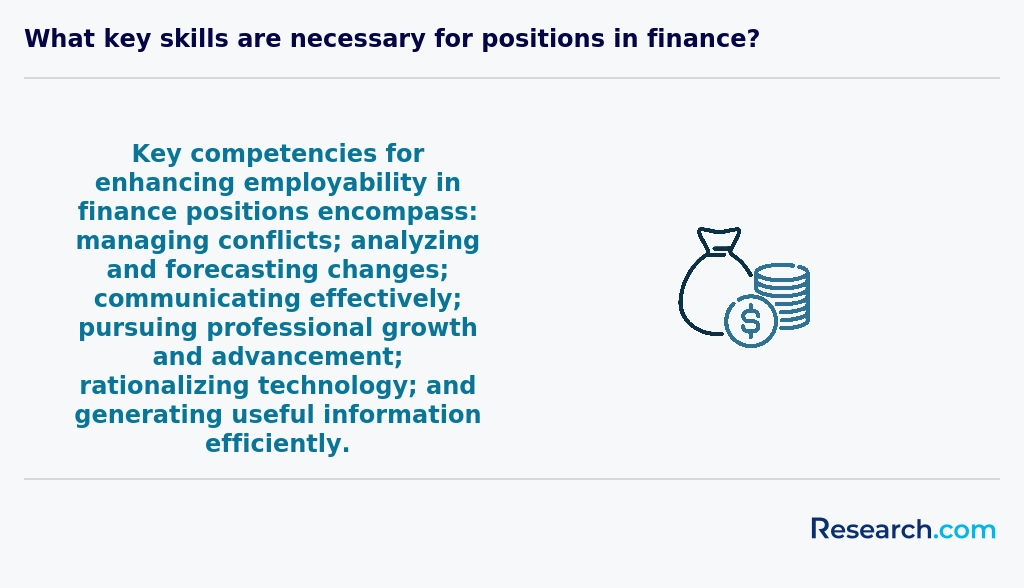
Employers in Jacksonville seek finance graduates who demonstrate strong analytical skills, including the ability to interpret complex financial data accurately. According to the Bureau of Labor Statistics, attention to detail and proficiency in financial modeling are consistently valued in this competitive market.
Communication skills also rank high, as finance professionals must clearly present insights to clients and stakeholders. Jacksonville's growing financial sector, including banks and investment firms, emphasizes teamwork and adaptability.
Technical competence with tools like Excel and financial software is essential, given the increasing reliance on technology. Additionally, understanding regulatory compliance related to finance is critical due to frequent changes in U.S. financial laws.
Local employers often prioritize candidates with internships or practical experience reflecting these skills, enhancing employability in Jacksonville's financial job market.
Finding finance internships in Jacksonville involves leveraging both local resources and national platforms. Students should start by exploring opportunities at Jacksonville-based financial institutions like VyStar Credit Union and Fidelity National Financial, which often offer internships aligned with finance degrees. Additionally, the Jacksonville Chamber of Commerce provides listings and networking events that can connect candidates with internships in finance sectors. According to the Bureau of Labor Statistics, finance-related jobs in the Jacksonville metropolitan area are expected to grow by 8% through 2030, increasing internship availability.
Utilizing college career centers from local universities such as the University of North Florida and Jacksonville University is crucial, as they maintain exclusive internship listings and partnerships. Online job portals like Handshake and Indeed also list internships specific to Jacksonville's finance market, helping students find relevant roles efficiently.
In Jacksonville, a finance degree significantly enhances career mobility and advancement opportunities. The city's growing financial sector, which includes banking, insurance, and investment firms, values formal education in finance. According to the U.S. Bureau of Labor Statistics, finance-related jobs in Florida are expected to grow about 6% through 2031, slightly above the national average.
Graduates with a finance degree often qualify for roles such as financial analysts, planners, and risk managers. These positions offer clear pathways to senior and managerial roles, contributing to upward mobility.
Local employers also prefer candidates with updated knowledge of financial regulations and technologies, often covered in accredited Jacksonville programs. This alignment between education and industry needs facilitates quicker career advancement.
Studying for a finance degree in Jacksonville equips students with skills that extend beyond traditional finance roles. Local universities integrate courses in economics, business analytics, and information technology, fostering interdisciplinary expertise. This approach prepares graduates to navigate diverse sectors such as healthcare finance, real estate investment, and corporate strategy more effectively.
Jacksonville's growing economy, ranked among the top metro areas for finance jobs by the U.S. Bureau of Labor Statistics, offers practical opportunities that complement classroom learning. Students often engage in internships with banks, insurance companies, and logistics firms, enhancing their versatility.
Additionally, collaboration with local industries exposes students to data analysis and regulatory compliance, crucial for interdisciplinary positions.
When choosing between a thesis and a non-thesis finance degree program in Jacksonville, consider your career goals and learning preferences. Thesis programs typically emphasize research skills by requiring original research and a formal paper, which can be beneficial if you plan to pursue a PhD or work in research-intensive roles. Non-thesis programs focus more on coursework and practical application, ideal for students aiming for direct entry into finance careers such as banking or asset management.
Local schools often align their offerings with Jacksonville's financial sector, which includes large banking institutions and insurance firms, highlighting practical skills in non-thesis tracks. According to the U.S. Bureau of Labor Statistics, Jacksonville's finance jobs are projected to grow by 7% through 2030, emphasizing the importance of adaptable skills. Reviewing program curriculum and faculty expertise can help decide what fits your professional aims best.
Students based in Jacksonville who wish to study finance abroad have several pathways within the US higher education system. Many local universities, such as the University of North Florida and Jacksonville University, offer study abroad programs in partnership with institutions worldwide. These programs allow students to earn credits toward their finance degrees while experiencing international markets firsthand.
Options often include summer exchanges, semester-long programs, or dual-degree agreements with schools in Europe or Asia. According to the Institute of International Education, nearly 10% of Jacksonville students participate in study abroad programs, with finance consistently popular due to global business exposure.
This international experience can enhance understanding of diverse financial regulations and practices, an asset in today's global economy.
Jacksonville offers several part-time job opportunities that can enhance finance degree education by providing practical experience. Common roles include bank teller positions, which help develop customer service and cash management skills. Internships or bookkeeping jobs at local accounting firms also offer valuable exposure to financial analysis and record-keeping.
Additionally, positions such as financial assistants in Jacksonville's growing insurance and real estate sectors allow students to understand market trends and client relations. According to the Bureau of Labor Statistics, Jacksonville's financial services employment has grown steadily by 2.5% over the past five years, providing increasing opportunities for finance students to gain relevant experience alongside their studies.
Finance students in Jacksonville benefit from a variety of networking opportunities that support career growth. Local universities like the University of North Florida and Jacksonville University host finance clubs and career fairs focused on connecting students with regional employers.
The city's role as a banking and financial hub-with institutions like Fidelity National Financial and CSX Corporation headquartered nearby-offers students access to internships and mentorships. According to the Jacksonville Chamber of Commerce, financial services contribute over $8 billion annually to the local economy, creating many professional interaction venues.
Professional organizations such as the Florida CFA Society regularly hold events in Jacksonville, providing students opportunities to meet industry experts and fellow aspiring finance professionals.
Alumni networks provide valuable support for finance degree students in Jacksonville by connecting them with professionals already established in the city's growing financial sector. These networks enable students to access mentorship, internships, and job opportunities, which are essential in a competitive market. According to the Jacksonville Economic Development Commission, the finance and insurance industry in Jacksonville employs over 27,000 people, highlighting the city's demand for skilled finance graduates.
Through alumni events and online platforms, students can build relationships that improve their professional development. Networking helps students learn about local market trends and potential employers, increasing their chances of career success in Jacksonville's finance industry.
Customizing a finance degree program in Jacksonville allows students to align their education with specific career goals. Many local institutions offer electives and concentrations such as risk management, investment analysis, and corporate finance. These options help tailor skills to industries thriving in Jacksonville, like banking, logistics, and healthcare finance.
Internships and cooperative education programs with Jacksonville-based companies provide practical experience and networking opportunities. According to the Bureau of Labor Statistics, financial analysts in Jacksonville earn a median annual wage of $80,000, highlighting the value of specialized knowledge in the region.
Additionally, students may choose certificate programs in areas such as financial planning or data analysis alongside their degree. This added expertise can increase competitiveness in the local job market and support career advancement within Jacksonville's growing finance sector.
Finance students in Jacksonville often encounter several challenges during their studies. One significant obstacle is the competitive job market. According to the U.S. Bureau of Labor Statistics, Jacksonville's financial sector is growing but remains competitive, requiring students to gain practical experience through internships or part-time roles.
Additionally, students must navigate the complexity of finance curricula, which frequently involve advanced mathematics and economics courses. Many find balancing these demanding subjects with other responsibilities difficult.
Finally, financing their education can be a concern. While Jacksonville offers affordable programs compared to national averages, students still face tuition costs and living expenses that require careful budgeting and planning.
A finance degree from Jacksonville institutions opens doors to several respected professional certifications. These certifications enhance career prospects in banking, investment, and financial planning. The most recognized credential is the Chartered Financial Analyst (CFA) designation, valued for investment management roles.
Another popular choice is the Certified Financial Planner (CFP) certification, ideal for those interested in personal finance and advising clients. The Certified Public Accountant (CPA) license is also relevant for finance graduates focusing on accounting and auditing fields.
Locally, Jacksonville's strong financial sector supports these credentials, with opportunities reported by the Bureau of Labor Statistics showing a 7% projected growth for financial analysts in Florida through 2031.
When applying for a finance degree program in Jacksonville, it is essential to demonstrate both academic readiness and a clear interest in finance. Highlight your quantitative skills, such as proficiency in mathematics or economics, which are crucial for success in finance studies. Jacksonville's local economy, centered on banking and finance industries, offers valuable context to tailor your application.
Strong letters of recommendation from professionals familiar with finance or related fields can enhance your profile. Additionally, succinctly articulate your career goals, linking them to Jacksonville's financial sector opportunities. According to the Bureau of Labor Statistics, finance roles in Jacksonville have grown by 5% over recent years, underscoring potential job prospects.
Including relevant internships or experience with local companies strengthens your application by showing practical understanding.
Finance careers in Jacksonville reflect a global trend where professionals must understand diverse markets and international regulations. With Jacksonville's growing financial sector, fueled by companies like Fidelity and CSX, local graduates are increasingly prepared for roles that require global awareness. According to the U.S. Bureau of Labor Statistics, finance jobs are expected to grow 17% nationally by 2031, highlighting strong demand.
Globally, finance professionals engage in cross-border investments, risk management, and compliance with international standards. Jacksonville's trade hub position underscores the importance of global finance skills. Institutions here often integrate global finance topics into their curricula to meet industry needs, preparing students for competitive careers both locally and abroad.
Gaining practical experience while studying for a finance degree in Jacksonville is essential for career readiness. Many local colleges and universities offer internship programs in partnership with Jacksonville's robust financial sector, which includes banking, asset management, and insurance companies. For example, the city hosts offices of major firms like Fidelity and Deutsche Bank, providing valuable opportunities for students.
Students can also participate in campus-run investment clubs or finance labs that simulate real-world financial analysis and decision-making. According to the National Association of Colleges and Employers, internships increase job offers by 66%.
Additionally, Jacksonville's large network of small businesses offers chances for part-time roles or projects that add to practical learning.
Choosing the right concentration within a finance degree program in Jacksonville involves assessing your career goals and interests alongside regional market demands. Popular specializations include corporate finance, investment analysis, and financial planning. According to the U.S. Bureau of Labor Statistics, Jacksonville's finance sector is growing by 5% annually, with strong opportunities in banking and insurance industries prevalent locally.
Students should consider concentrations aligned with Jacksonville's economic landscape, such as risk management or real estate finance, given the city's active housing market. Researching local employers and internship availability can provide practical insights. Additionally, reviewing the curriculum focus and faculty expertise at Jacksonville institutions helps ensure relevant skill development.
- 2027 Most Affordable Finance Degree Programs Ranking in Tampa
- 2027 Most Affordable Finance Degree Programs Ranking in Boca Raton
- 2027 Most Affordable Finance Degree Programs Ranking in Miami
- 2027 Most Affordable Finance Degree Programs Ranking in New Orleans
- 2027 Most Affordable Finance Degree Programs Ranking in Cincinnati
- 2027 Most Affordable Finance Degree Programs Ranking in Washington
- 2027 Most Affordable Finance Degree Programs Ranking in Columbus
- 2027 Most Affordable Finance Degree Programs Ranking in Baltimore
- 2027 Most Affordable Finance Degree Programs Ranking in Indianapolis
- 2027 Most Affordable Finance Degree Programs Ranking in Pittsburgh
See What Experts Have To Say About Studying Finance
Read our interview with Finance experts

Ekaterina Potemkina
Finance Expert
Assistant Professor of Finance
Indiana University

Andrew Karolyi
Finance Expert
Dean of the Cornell SC Johnson College of Business
Cornell University

H. Kent Baker
Finance Expert
Professor at Department of Finance and Real Estate
American University

- Finance Remains the Top Career Choice as Graduates Prepare for an Increasingly Competitive, AI-Shaped Job Market https://www.cfainstitute.org/about/press-room/2026/global-graduate-outlook-survey-2026
- Finance Internships: Find 248 Finance Intern Jobs https://internshala.com/internships/finance-internship/
- 2026 Finance Career Outlook: Top 7 Global Roles, Salaries & Skill Requirements | Saraf Academy https://saraf.academy/top-7-global-finance-careers-in-2025-skills-salaries-and-the-best-courses-to-get-you-there/
- Your Guide to Getting a Job in Finance https://www.mountunion.edu/academics/undergraduate-degrees/finance/your-guide-to-getting-a-job-in-finance
- Finance https://careersourcenortheastflorida.com/finance/
- How to write a cover letter for a finance job | Standard Chartered https://www.sc.com/en/news/careers-about-standard-chartered/cover-letter-for-a-finance-job/
- Why Alumni Networks Matter in Business School: 7 Reasons https://europe.ceibs.edu/article/why-alumni-networks-matter-business-school
- Top Ways to Leverage a Finance Degree – AP Professionals Rochester https://rochesterap.com/top-ways-to-leverage-a-finance-degree/
- Our Culture https://www.iif.com/Careers
- Trinity College of Jacksonville: Cost, Financial Aid, Scholarships, and Awards https://tcj.edu/admissions/financial-aid/