2027 Easiest Online Bachelor's in Emergency Management Degree Programs Ranking in the West

Co-Founder and Chief Data Scientist
Choosing the right online bachelor's degree in emergency management can feel overwhelming, especially with so many options available. To make things easier, our article presents the 2027 Easiest Online Bachelor's in Emergency Management Degree Programs Ranking in the West, created by the Research.com team of data scientists.
This ranking helps you quickly identify programs that combine quality and flexibility, perfect for busy students in the West. Earning an emergency management degree opens doors to meaningful careers where you can make a real difference. Explore the programs that fit your lifestyle and goals with confidence.
Key benefits of getting online emergency management degree in the West
- The average salary for emergency management professionals in the West typically ranges from $50,000 to $80,000 annually, offering a stable and rewarding income for graduates pursuing disaster response and preparedness roles.
- Career paths often include positions such as emergency planners, public safety managers, and disaster recovery specialists, with many successful graduates from universities like the University of Washington landing diverse roles in government and private sectors.
- Online emergency management degrees from institutions like Arizona State University provide flexible scheduling and access to expert faculty, making it easier for working adults to gain skills without commuting and balancing life commitments effectively.
- Key benefits of getting online emergency management degree in the West
- What can I expect from online emergency management degree in the West?
- Where can I work with online emergency management degree in the West?
- How much can I make with online emergency management degree in the West?
- 2027 Easiest Online Bachelor's in Emergency Management Degree Programs Ranking in the West
- Key Findings
- How long does it take to complete online emergency management degree in the West?
- What's the difference between online and on-campus emergency management degree?
- What is the average cost of online emergency management degree in the West?
- What financial aid is available to online emergency management degree students in the West?
- What are the prerequisites for enrolling in online emergency management degree program in the West?
- What courses are typically in online emergency management degree programs in the West?
- What types of specializations are available in online emergency management degree programs in the West?
- How do you choose the best online emergency management degree in the West?
- What career paths are available for online emergency management degree students in the West?
- What is the job market for online emergency management degree in the West?
- Top Trending Emergency Management Rankings
What can I expect from online emergency management degree in the West?
The average cost of an online emergency management degree in the Western United States varies, but students often find tuition ranging between $12,000 and $25,000 for a full bachelor's degree. Graduates from well-regarded institutions in California or Washington recall balancing affordability with quality education that prepares them for local disasters like wildfires or earthquakes. These programs emphasize practical skills tied directly to the West's unique risks, making every dollar invested feel meaningful.
Many students appreciate how the flexibility of online learning fits their lives, especially those working in emergency services or public safety roles. The cost becomes a worthwhile investment when paired with the ability to apply coursework immediately within regional disaster response frameworks. This hands-on relevance, found in colleges known for strong ties to local agencies, transforms abstract theory into confident decision-making during crises.
Ultimately, the price tag reflects more than tuition: it's about joining a network dedicated to safeguarding communities from realities that hit close to home, ensuring every graduate feels equipped and valued.
Where can I work with online emergency management degree in the West?
With an online emergency management degree in the West, career paths extend far beyond textbook expectations. Graduates from institutions like the University of Southern California or Portland State often find themselves immersed in dynamic roles within California's Office of Emergency Services or Washington's state agencies. These jobs aren't abstract tasks-they involve crafting real preparedness plans for wildfires and earthquakes that threaten their communities.
Federal agencies like FEMA, with regional offices tailored to the West Coast's unique challenges, actively recruit degree holders ready to coordinate disaster responses where every decision can save lives. Many alumni recall the adrenaline of coordinating response efforts during major floods or seismic events, experiences shaping a profound sense of purpose.
Private sector opportunities, especially with utility companies navigating wildfire risks in California or Colorado, reveal another layer of impact. Graduates serve as the unseen architects of resilience, ensuring power and water remain uninterrupted during crises.
Nonprofits and healthcare systems also eagerly seek these professionals, where graduates often share rewarding stories of strengthening hospital readiness for mass casualty incidents and community disaster relief efforts.
The West isn't just a place to study emergency management-it's where your degree transforms into vital action and meaningful connection.
How much can I make with online emergency management degree in the West?
Graduates from popular Western programs, such as those at California State University or the University of Washington, often find that their online emergency management degree opens doors to salaries reflecting the unique challenges of the region. While specific BLS salary data is limited, it's clear from regional labor reports that entry-level emergency management roles typically start around $50,000 to $60,000, which may surprise those expecting lower wages in public service careers.
With experience or additional certifications, many graduates report salaries rising beyond $90,000, especially in metropolitan hubs like Los Angeles or Seattle. Imagine coordinating wildfire response plans or earthquake preparedness strategies-skills in high demand that Western emergencies constantly call for-and earning competitive compensation for this vital work.
This upward salary trajectory highlights not just financial reward but a meaningful career path. Graduates often express satisfaction in contributing to community resilience, feeling their expertise truly impacts lives while steadily increasing their financial stability in a region known for higher living costs.
2027 Easiest Online Bachelor's in Emergency Management Degree Programs Ranking in the West
How do we rank schools?
Investing in your education is a significant decision that demands careful consideration, and the Research.com team fully recognizes the importance of making well-informed choices. To support prospective students interested in Emergency Management, we have carefully developed the "2027 Easiest Online Bachelor's in Emergency Management Degree Programs Ranking in the West." Our dedication to quality, credibility, and accuracy is demonstrated through rigorous research and analysis throughout the ranking's creation.
We utilized the following reputable data sources to ensure a thorough and reliable evaluation of online emergency management programs:
By consulting this ranking, readers will gain essential insights into accessible and quality online programs tailored to emerging professionals in emergency management, empowering them to find the best fit for their educational goals. For a detailed explanation of our methodology, please visit our Research.com methodology page.

# 2 position
Arapahoe Community College
Bachelor of Emergency Service Administration

Key Findings
- Tuition for online emergency management bachelor's degrees in the Western US typically ranges from $15,000 to $35,000, with public universities offering lower rates for in-state residents.
- Employment growth for emergency management specialists is projected at 8% nationally through 2030, with stronger demand in Western states like California and Washington.
- The average starting salary in the West is between $50,000 and $60,000 annually, increasing to $80,000-$100,000 with experience in major cities such as Los Angeles, Seattle, and San Francisco.
- Programs often follow FEMA guidelines and include practical training on disaster response, risk assessment, and crisis communication.
- Many degrees provide opportunities for remote or local internships and fieldwork to support hands-on experience.
How long does it take to complete online emergency management degree in the West?
Completing an online emergency management degree in the West typically aligns with the standard four-year bachelor's timeline, yet this common framework often oversimplifies the real student experience. Many graduates from well-known Western institutions find that their journey is deeply influenced by the region's frequent natural disasters. Balancing coursework with real-time emergency responses creates a rhythm that reshapes traditional expectations of time-to-degree.
Some students accelerate their path in programs at schools like California State University or the University of Arizona by leveraging summer sessions and heavier course loads, finishing in as few as three years. Others, juggling careers and family responsibilities, extend their studies to five or six years without feeling stalled-rather, they appreciate the flexible pacing these online options provide.
This flexibility isn't just academic convenience; it reflects the unpredictable nature of emergency management itself. Students emerge from these programs not only degree holders but adaptive problem solvers molded by their lived experiences amidst Western wildfires, floods, and quakes. Their stories reveal that completion time is less a fixed target than a personalized mission aligned with real-world demands and personal growth.
What's the difference between online and on-campus emergency management degree?
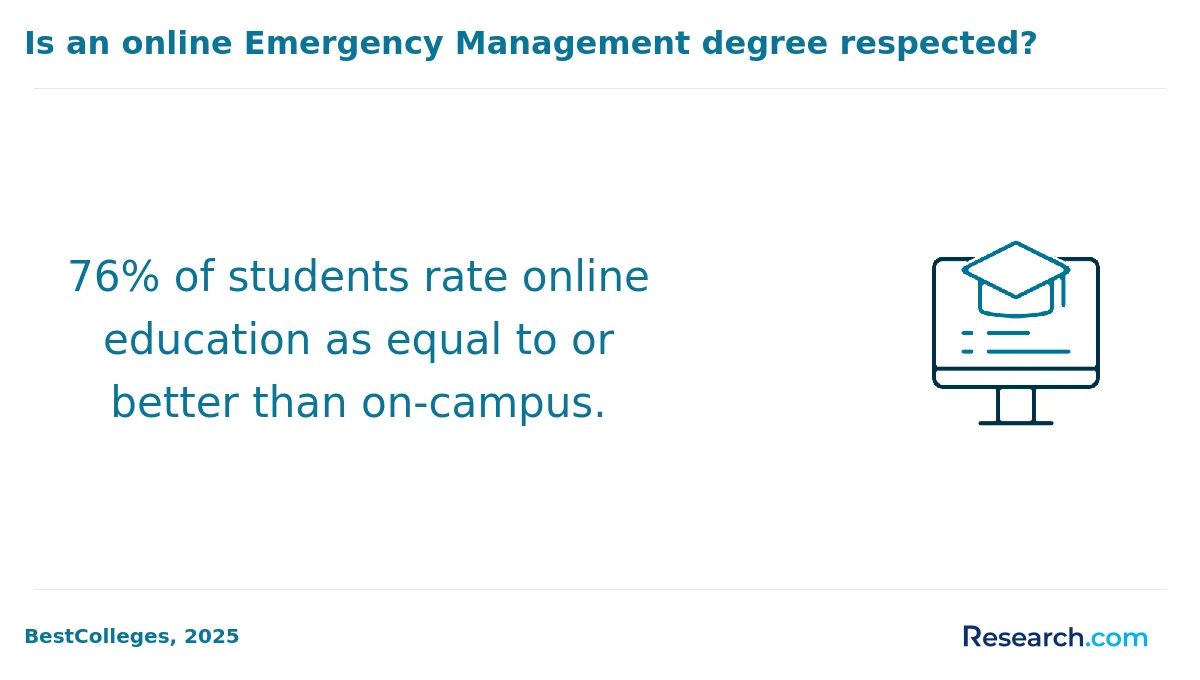
Choosing between online and on-campus emergency management degrees in the West challenges assumptions about learning quality and personal fit. Graduates from renowned Western universities often recall the convenience of online programs allowing them to juggle wildfire season volunteer shifts and family responsibilities seamlessly. The flexibility to study on their own schedule saved them commuting time through sprawling regions where distances between campuses can be vast.
Conversely, students attending on-campus programs at popular colleges value the dynamic energy of face-to-face collaboration during earthquake simulation labs and hands-on disaster response exercises rooted in local hazard scenarios. They describe the immediacy of support from professors and peers as a turning point for deepening their commitment and confidence in emergency management careers.
Both formats adhere to rigorous regional accreditation standards, yet online learners often experience notable cost savings, especially from eliminated housing costs in pricey Western cities. Still, those who thrive on direct mentorship and immersive environments find on-campus offerings priceless. The choice comes down to balancing these lived realities within the unique cultural and geographic fabric of the Western United States.
What is the average cost of online emergency management degree in the West?
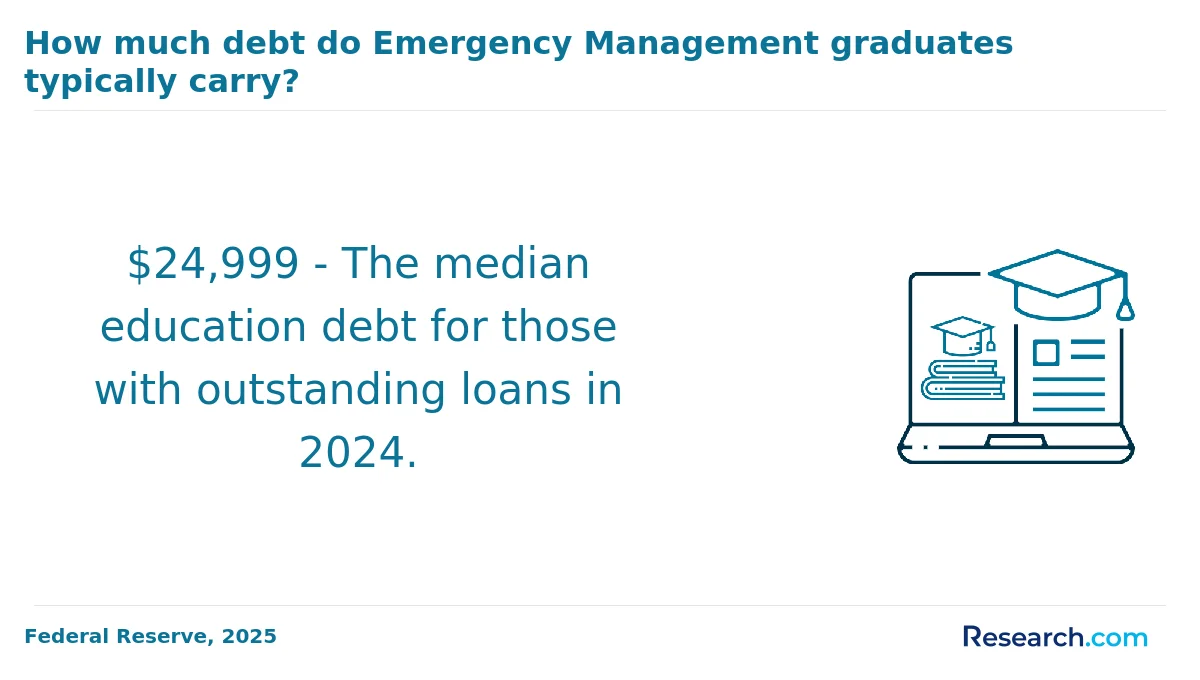
The average cost of an online emergency management degree in the West typically centers around a median total of about $51,360, with in-state students paying closer to $31,584 and out-of-state students often facing a median near $48,150. These figures challenge the common assumption that all online degrees are universally more affordable, highlighting how residency status can significantly impact a student's financial plan. Graduates from well-regarded programs at institutions like California State University often share experiences of balancing this cost with flexible schedules and the ability to maintain employment, which many find rewarding emotionally and professionally.
Exploring affordable online emergency management programs Western US reveals that public universities can be cost-effective choices, especially when compared to private institutions which may charge upward of $600 per credit hour. The choice to invest in a program at the University of Washington, for example, is often driven by trust in the school's accreditation and the perceived value from networks cultivated during studies. Students vividly recall the relief of manageable tuition combined with targeted scholarships, which made their pursuit much more accessible.
Beyond tuition, budgeting for technology fees and course materials is essential. Students often mention the importance of navigating these additional expenses within their financial aid options. For those researching options deeply, using resources like the comprehensive emergency management degree online guides can illuminate pathways that align cost with quality education, helping to avoid unexpected financial hurdles while supporting career aspirations in emergency management.
What financial aid is available to online emergency management degree students in the West?
Federal aid remains a cornerstone for many pursuing online emergency management degrees in the West, yet it's more than just filling out the FAFSA. Graduates from well-known programs like those at California State University or the University of Washington share how Pell Grants, offering up to $7,395, transformed their ability to focus on studies without drowning in debt. It's not merely about eligibility; it's about seizing these opportunities as strategic stepping stones.
State-specific grants provide a deeper, often overlooked layer of support. Consider residents attending Oregon State University-state-funded programs tailored for in-state students substantially lower financial burdens. This kind of targeted aid challenges the notion that online degrees are inherently cost-prohibitive.
Scholarships from emergency management organizations, such as the American Red Cross or IAEM, create a community of support. Graduates mention how receiving these competitive awards instilled confidence, reinforcing their career goals while easing financial stress.
Employer tuition assistance also plays a pivotal role. Local governments and public safety departments in the West often back employees' ambitions to advance their skills, turning education into a shared investment.
Each financial aid piece fits together, encouraging prospective students to look past sticker prices and imagine their own pathways to success.
What are the prerequisites for enrolling in online emergency management degree program in the West?
Enrolling in an online emergency management degree program in the West demands more than just a high school diploma; it calls for a blend of academic readiness, real-world experience, and digital fluency. Graduates from California's robust public university system often reflect on the early challenge of meeting prerequisite coursework-English composition, math, and social sciences-that sharpened their critical thinking and communication skills fundamental to managing crises.
Many felt their prior service in firefighting or law enforcement not only eased admission into community colleges but also deepened their grasp of emergency protocols beyond textbooks. This lived experience connects theory with urgency, making learning feel both relevant and empowering.
Students across Oregon and Washington frequently share that mastering the digital tools required for online learning-stable internet, learning management systems, and virtual collaboration-was as essential as any academic prerequisite. This technical competency ensures they can engage fully, simulating real-time disaster response coordination from home.
Such prerequisites redefine preparedness, encouraging students to reflect on their readiness to tackle emergencies both intellectually and practically-even before the first class begins.
What courses are typically in online emergency management degree programs in the West?
Courses in online emergency management degrees in the West often defy expectations by blending rigorous theory with hands-on skills vital for the region's unique challenges. Graduates from prominent Western universities describe immersive classes in disaster preparedness and risk assessment that go beyond textbooks; they recount simulations where imagining a wildfire racing through California foothills or an earthquake striking Oregon's Cascades is a visceral learning experience.
Core courses like emergency response coordination and crisis communication compel students to think under pressure, mirroring realities faced across Washington's urban centers and rural communities alike. The inclusion of Geographic Information Systems (GIS) training allows students to visually map hazards, a skill praised by those who have later coordinated actual disaster relief efforts.
Electives such as homeland security and health emergency management personalize education for students eager to deepen expertise tailored to Western contexts. The curriculum isn't just academic; it's a transformative journey inspiring confidence to confront unpredictable emergencies with knowledge grounded in local environmental and social realities.
What types of specializations are available in online emergency management degree programs in the West?
Online emergency management degree specializations West often challenge students to confront complex realities rather than offer simplistic solutions. Graduates from prominent programs in California and Washington frequently recount immersive experiences in Disaster Preparedness and Response, where they simulate wildfire evacuations reflecting the state's staggering 7,500 annual wildfires. This direct engagement instills a sense of urgency and resilience that book learning alone can't provide.
Within the West region emergency management focus areas, Homeland Security specialization pushes students to rethink traditional defense paradigms by equipping them with tools to address cyber threats and border vulnerabilities unique to coastal and international frontier states. Many find themselves motivated by the prospect of safeguarding communities that blend urban and rural challenges in unprecedented ways.
Environmental Hazards and Risk Management offers a sobering, yet empowering lens on climate-driven emergencies, like Pacific Northwest floods or Arizona droughts, connecting students' coursework deeply with rapidly changing local ecosystems. Those drawn to Public Health Emergency Management share stories of fulfillment charting responses shaped by the recent pandemic, highlighting how such areas demand empathy and innovative communication strategies.
Those curious to dive deeper into these transformative experiences can explore how a master's degree in emergency management online further refines their ability to lead effectively in the West's diverse crisis scenarios.
How do you choose the best online emergency management degree in the West?
Choosing the best online emergency management degree in the West demands more than scanning brochures or relying on rankings. Graduates from popular Western universities recall how the real value came from programs that integrated practical regional issues-wildfires in California, earthquakes in Oregon, and flooding in Washington-into the curriculum. This localized focus turns abstract theories into actionable skills, fostering confidence and a genuine sense of purpose.
Many assume affordability means compromising quality, but savvy students weigh tuition against accreditation and real-world outcomes. Those seeking affordable emergency management bachelor's degrees western US often find programs that balance cost and prestige, especially through scholarships or aid. Exploring resources like affordable homeland security online degree programs can uncover hidden gems that empower rather than limit career potential.
Flexibility also shapes successful paths. Students juggling jobs and families thrive in asynchronous formats, but they emphasize the need for accessible mentorship and internship connections. Programs deeply embedded in Western emergency contexts not only educate but also cultivate professional networks, essential for turning online study into real-world impact.

What career paths are available for online emergency management degree students in the West?
Graduates pursuing online emergency management careers in the West often find themselves at the forefront of disaster readiness in states like California and Washington, where the unpredictable nature of wildfires and earthquakes demands swift, skilled responses. Many who studied at public universities such as those in the California State University system report entering roles as Emergency Management Specialists, where their training becomes vital in crafting actionable disaster plans under pressure. This hands-on approach challenges the notion that emergency management is purely theoretical; instead, it becomes a dynamic, real-world problem-solving career.
Others leverage their degrees into emergency management job opportunities western US public safety departments or health agencies, responding to floods or climate-related crises with resilience and calm that arose from their intensive online coursework. Graduates have shared how the blend of academic rigor and practical scenario planning at prominent institutions helped them transform passion into impactful community leadership. For those drawn to faster career progressions, exploring accelerated homeland security online degree programs offers a compelling path to leadership in both government and private sectors.
What is the job market for online emergency management degree in the West?
The online emergency management job outlook West reveals a growing and dynamic field shaped by frequent natural disasters like wildfires and earthquakes. Graduates from well-known programs at Western colleges often share how their education enabled them to step confidently into roles coordinating disaster response for government and private sectors. These programs emphasize practical skills tailored to the region's unique challenges, empowering students to make an immediate impact.
Many graduates describe a rewarding sense of purpose as they work alongside emergency responders in California and Washington, where demand for skilled professionals continues to rise. The accessibility and affordability of online degrees allow students to balance work and study, making career transitions smoother in this rapidly evolving market. This blend of flexibility and relevancy challenges the old notion that critical public safety roles require only traditional paths.
Exploring emergency management careers in Western states also means considering certifications that boost employability. For those weighing their options, it's useful to compare programs with resources like best degrees to get for law enforcement, which highlight related fields and pathways.
Frequently Asked Questions About emergency management
Students pursuing online emergency management degrees in the Western United States can enhance their learning by engaging actively with regional case studies, such as wildfire and earthquake response efforts common to this area. Utilizing resources from organizations like the California Governor's Office of Emergency Services or Washington State Emergency Management Division provides practical insights into real-world scenarios.
Participating in virtual simulations and internships with local agencies can also build critical skills. According to the Bureau of Labor Statistics, the West Coast has high demand for emergency management professionals, highlighting the value of building strong regional knowledge.
Networking through online forums and joining professional associations tailored to Western emergency management can further support career growth.
The emergency management field in the Western United States is evolving with several emerging niches. One significant area is wildfire management, driven by the increasing frequency and severity of wildfires in states like California, Oregon, and Washington. Specialized skills in wildfire preparedness and recovery are in high demand.
Another growing niche is cybersecurity emergency management, focusing on protecting critical infrastructure from cyber threats. This area is increasingly important as more systems become digitized.
Climate resilience planning is also gaining traction. Professionals develop strategies to mitigate climate change impacts, which is critical given the West's vulnerability to droughts and floods.
According to the Federal Emergency Management Agency (FEMA), job opportunities in these areas are projected to grow steadily through 2030.
After earning an online emergency management degree in the West, graduates should focus on building practical skills to stand out in a competitive job market. Gaining certifications like FEMA's Professional Development Series or Certified Emergency Manager (CEM) can enhance credibility. Networking through regional organizations such as the Western States Seismic Policy Council may provide valuable industry contacts.
Internships or volunteer roles with local agencies help develop hands-on experience. According to the U.S. Bureau of Labor Statistics, employment for emergency management directors is projected to grow 6% through 2032, especially in western states prone to wildfires and earthquakes. Familiarity with state-specific disaster response plans is also crucial.
Employers in the Western United States highly value several key skills when hiring graduates with online emergency management degrees. Critical thinking and problem-solving stand out, as professionals must quickly adapt to natural disasters common in the region, such as wildfires and earthquakes. Communication skills are essential for coordinating between agencies and informing the public effectively.
Data analysis and the ability to use geographic information systems (GIS) are increasingly important, with many West Coast emergency programs relying on technology for planning and response. Leadership and team management skills are also in demand, given the collaborative nature of emergency response efforts in states like California and Washington.
According to the California Office of Emergency Services, proficiency in risk assessment and resource allocation is crucial for managing large-scale emergencies efficiently. Understanding state and federal regulations, including FEMA protocols, further strengthens a graduate's job prospects in this field.
Finding internships in the Western United States relevant to an emergency management degree involves targeting both governmental and private organizations. Many states such as California and Washington offer structured internship programs through agencies like Cal OES (California Office of Emergency Services) and the Washington State Emergency Management Division. These internships provide hands-on experience in disaster response, planning, and recovery.
Students should also explore local public health departments, fire departments, and NGO opportunities focused on disaster relief. Websites like USAJOBS.gov list federal emergency management internships available in the West, including FEMA placements.
Networking through university career centers and professional groups such as the International Association of Emergency Managers' Western chapter can further enhance internship prospects.
An online emergency management degree significantly enhances career mobility and advancement opportunities in the Western United States. Given the region's susceptibility to wildfires, earthquakes, and floods, employers increasingly seek professionals with specialized knowledge delivered through accredited online programs. According to the U.S. Bureau of Labor Statistics, emergency management jobs in Western states are projected to grow by 8% over the next decade, faster than the national average. Online degrees allow working adults to gain relevant skills without relocating, making it easier to qualify for leadership roles in government agencies or private firms focused on disaster response and mitigation.
Such programs often include curriculum aligned with FEMA standards and the National Incident Management System, improving graduates' qualifications for certifications like the Certified Emergency Manager (CEM). This credential is recognized by many Western employers and boosts prospects for promotions.
Furthermore, online degrees offer valuable networking opportunities through virtual internships and partnerships with regional emergency management offices, expanding professional connections essential for career growth in this sector.
Studying for an online emergency management degree in the West prepares students for interdisciplinary roles by integrating diverse fields such as public health, environmental science, and urban planning. Western states face unique challenges like wildfires, earthquakes, and floods, making this region ideal for applied learning. According to the Western Governors University and FEMA reports, programs emphasize collaboration between government agencies, nonprofits, and the private sector. Students develop skills in risk assessment, crisis communication, and resource coordination. This broad approach equips graduates to work effectively across sectors, addressing complex emergencies with an understanding of social, scientific, and logistical factors specific to the Western US.
When choosing between a thesis and a non-thesis online emergency management degree program in the West, consider your career goals and learning style. Thesis programs typically require original research and are ideal if you plan to pursue graduate studies or research roles. Non-thesis options focus more on practical skills and coursework, suitable for professionals aiming to enter emergency management directly.
In Western U.S. states, many programs emphasize practical training due to high disaster activity, such as wildfires in California. According to FEMA, 75% of emergency management jobs in the West prioritize hands-on experience over research.
Assess program structure, faculty expertise, and your time commitment before deciding.
Students in the Western United States seeking online emergency management degrees with an international focus have several options. Many U.S. universities offer accredited programs emphasizing global disaster response, often with partnerships abroad for virtual exchanges. For example, institutions based in California and Washington incorporate case studies from international emergencies to broaden understanding. According to the Federal Emergency Management Agency (FEMA), the Western region faces unique hazards like wildfires and earthquakes, encouraging curriculum tailored to these risks but inclusive of global perspectives.
Some degree programs enable students to participate in optional short-term study trips overseas or online collaborations with international peers. This hybrid approach aids students in gaining cross-cultural skills vital for global emergency management careers.
Part-time job opportunities in the Western United States that complement an emergency management degree often include roles in public safety, healthcare, and nonprofit sectors. Many students find positions as emergency dispatchers, which provide practical experience in crisis communication and coordination. According to the U.S. Bureau of Labor Statistics, California, Washington, and Oregon have above-average employment numbers for such roles. Additionally, volunteer work with organizations like the American Red Cross or local fire departments is common and valuable for gaining hands-on skills.
Internships with city or county emergency management offices also offer part-time work, exposing students to disaster planning and response. These roles help build connections crucial for post-graduation employment. The Western region's frequent natural disasters, including wildfires and floods, increase demand for this experience. Working in these capacities while studying online strengthens both practical knowledge and resumes.
Online emergency management programs in the Western U.S. often provide valuable networking opportunities through virtual events and local collaborations. Many institutions partner with regional agencies like California's Office of Emergency Services or Washington Emergency Management Division, offering students real-world connections.
Students can join professional organizations such as the California Emergency Services Association (CESA) or the Oregon Emergency Management Association (OEMA), which frequently host conferences and webinars. These groups help online students build contacts in the industry despite geographic distance.
Additionally, some programs offer internship placements within Western state agencies. This hands-on experience helps develop professional networks critical to career advancement in emergency management. According to FEMA, nearly 30% of emergency managers in the West found their initial positions through networking.
Alumni networks provide valuable support for online emergency management degree students in the West by offering connections to industry professionals. These networks often facilitate mentorship programs, allowing students to gain insights from experienced graduates. They also share local job opportunities and internships, which is crucial given the West's unique challenges, such as wildfires and earthquakes.
According to the Western Governors University report, 67% of emergency management graduates found jobs through alumni referrals. Access to these networks can also improve professional development by hosting webinars and workshops tailored for the Western region's disaster response needs.
Such engagement helps students build a strong community, enhancing both their education and career prospects in emergency management.
Customizing an online emergency management degree in the West allows students to align their studies with distinct career objectives. Many programs offer concentrations such as disaster preparedness, homeland security, or public health emergency management. These specializations help tailor skills to regional needs like wildfire response or earthquake preparedness, both critical in Western states.
Elective courses provide additional flexibility, enabling learners to deepen knowledge in areas like crisis communication or GIS mapping, essential tools in emergency planning. Additionally, some universities partner with local agencies, offering practical internships that enhance real-world experience and networking opportunities.
According to FEMA and regional workforce studies, demand for emergency management professionals is strong in the West, supporting career growth when education matches local hazards and job markets.
Online emergency management students in the West face several challenges unique to their region and field of study. One major issue is balancing coursework with unpredictable real-world emergencies, as the Western US experiences frequent wildfires, earthquakes, and floods, which can disrupt study schedules. According to FEMA, California alone sees over 8,000 wildfires annually, impacting many communities.
Connectivity is another concern, especially in rural areas where internet access is limited, affecting participation in live sessions and timely submission of assignments. Additionally, navigating practical requirements, such as internships or fieldwork, presents difficulties due to geographic dispersion of agencies.
Finally, students often encounter a lack of localized content tailored specifically for Western emergency scenarios, complicating their ability to apply knowledge contextually.
With an online emergency management degree, professionals in the Western United States can pursue several key certifications that enhance career prospects. The Certified Emergency Manager (CEM) credential, offered by the International Association of Emergency Managers (IAEM), is widely recognized and valued. It requires a combination of education, experience, and passing a rigorous exam.
Another popular certification is the Federal Emergency Management Agency's (FEMA) Professional Development Series, which provides essential training for disaster preparedness and response roles. Many Western states also support certifications like the California Specialized Training Institute's certifications for state and local emergency personnel.
These certifications improve job competitiveness in a region frequently facing wildfires, earthquakes, and floods, where trained emergency managers are especially critical. Earning these credentials affirms expertise and commitment to public safety.
To write a winning application for an online emergency management program in the West, start by clearly articulating your motivation. Explain why you want to pursue this degree and how it aligns with your career goals. Highlight any relevant experience in public safety, disaster response, or related fields. Admissions committees value applicants demonstrating practical knowledge and commitment to the field.
Include specific examples, such as volunteer work during California wildfires or internships with state emergency agencies, to showcase your hands-on skills. According to FEMA, the Western US faces diverse hazards, making local experience a strong asset.
Finally, craft a well-organized personal statement, proofread carefully, and submit all required documents before deadlines to improve your chances.
The field of emergency management is increasingly viewed through a global lens, reflecting the interconnected nature of modern crises. Professionals trained in the United States often engage with international standards and practices, especially as natural disasters, pandemics, and cyber threats cross borders. According to the Federal Emergency Management Agency (FEMA), the demand for skilled emergency managers in the U.S. is expected to grow by 8% through 2031, indicating a stable career path with global relevance.
In the Western U.S., many online emergency management degrees integrate global case studies and international response frameworks, preparing students to work in multinational environments. Institutions emphasize collaboration with agencies like the United Nations Office for Disaster Risk Reduction (UNDRR) to align with best practices worldwide.
Graduates can expect to contribute not only locally but also to global initiatives focusing on resilience and disaster mitigation. This reflects a trend where the emergency management career is both nationally important and internationally connected.
Gaining practical experience while pursuing an online emergency management degree in the Western US is vital for career readiness. Many programs encourage internships with local agencies such as fire departments, emergency medical services, or state emergency management offices. For example, California's Office of Emergency Services frequently partners with universities to offer internship opportunities.
Students can also participate in simulation exercises and virtual disaster drills provided by their schools to build hands-on skills remotely. Online degree programs often promote volunteering with organizations like the American Red Cross or local CERT (Community Emergency Response Teams).
These experiences provide direct exposure to disaster response and planning, bolstering resumes effectively.
Choosing the right concentration in an online emergency management degree program in the West depends on your career goals and local needs. Common areas include disaster preparedness, cybersecurity, and public health emergency response. According to the Western Governors University and FEMA, disaster response roles are growing by over 8% annually in Western states like California and Washington. Examining regional hazards, such as wildfires in California or earthquakes in Oregon, may help you focus on relevant skills.
Consider job market trends reported by the U.S. Bureau of Labor Statistics, which highlights increasing demand for experts in infrastructure resilience. Additionally, select a concentration aligned with professional certifications you may pursue, such as Certified Emergency Manager (CEM).
Top Trending Emergency Management Rankings
References
- Emergency Management Challenges & How to Overcome Them | CriticalArc https://criticalarc.com/emergency-management-challenges-how-to-overcome-them/
- Online Bachelor's in Emergency and Disaster Management https://www.monroeu.edu/academics/undergraduate-programs/school-criminal-justice/online-bachelors-emergency-and-disaster
- Search icon https://waldorf.edu/online/academics/online-resources/articles/careers-in-emergency-preparedness-and-response-roles-skills-and-career-paths/
- Writing an Emergency Management Plan - JAM Training Services https://jamtrainingservices.com/portfolio/writing-an-emergency-management-plan/
- ALUMNI https://www.dismedmaster.com/alumni/
- Internship Opportunities with Department of Emergency Management https://sonomacounty.gov/administrative-support-and-fiscal-services/emergency-management/internships
- How to Write a Resume That Gets You Into Emergency Management https://www.aemo.us/blog/how-to-write-a-resume-that-gets-you-into-emergency-management
- We are WFP Alumni https://alumni.wfp.org/
- 25 Most Affordable Disaster Management MPH Degrees - MPH Online https://www.mphonline.org/best-disaster-management-mph/
- The evolving field of emergency management: Perspectives from big city emergency managers | HazNet https://haznet.ca/evolving-field-emergency-management-perspectives-big-city-emergency-managers/