Choosing a marriage, couple, and family counseling degree in Oregon means looking beyond a school's name: the program must fit your budget, clinical training needs, and intended license. This guide is for prospective students and working professionals comparing those trade-offs. It features the 2027 Best Marriage, Couple, And Family Counseling Degree Programs Ranking in Oregon, created by the Research.com team of data scientists to help students make an informed choice about programs worth considering. You'll learn what to verify before applying and how to judge whether the investment fits your career goal.
Key findings about Marriage, Couple, and Family Counseling degrees in Oregon
For Oregon marriage and family therapist licensure, evaluate a graduate program's coursework and supervised clinical preparation against Oregon Board of Licensed Professional Counselors and Therapists requirements; a degree alone is not a license.
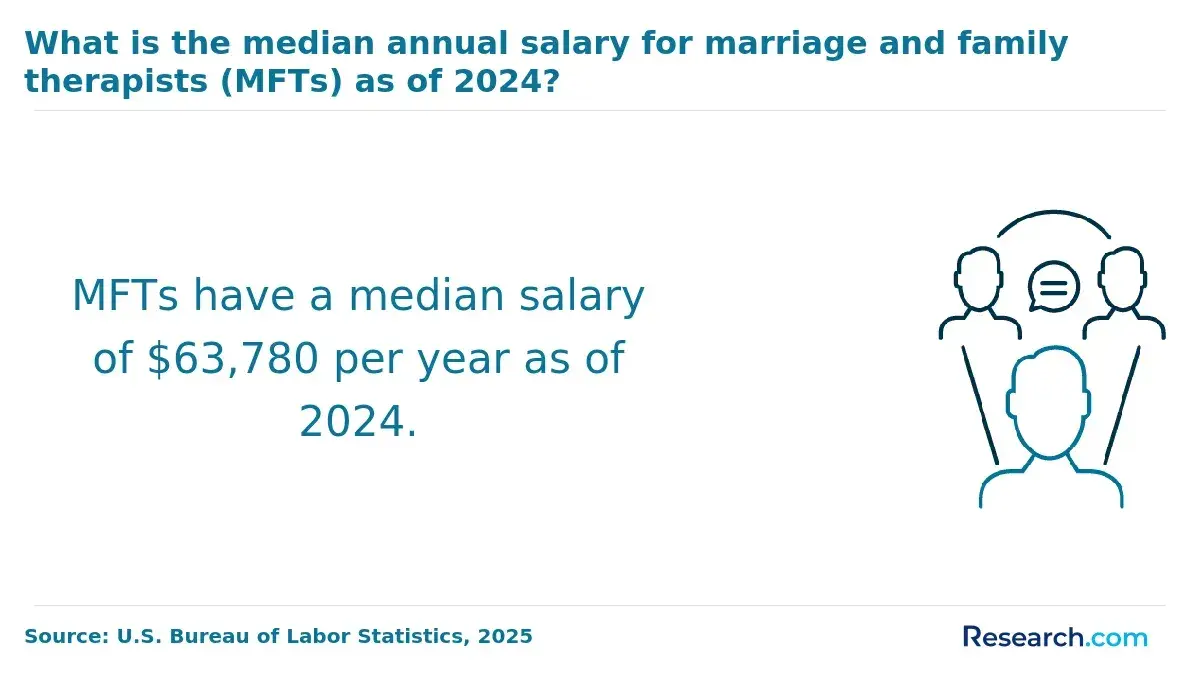
The U.S. Bureau of Labor Statistics reports a $66,940 national median annual wage for marriage and family therapists in May 2025 and projects 14% U.S. employment growth from 2025 to 2035. Neither figure predicts an Oregon graduate's earnings or job offer.
Compare Portland State University's 90-quarter-credit counseling pathway with George Fox University's 60-semester-credit program by training structure and total cost - not the raw credit totals, which use different units (Portland State University; George Fox University).
What can I expect from a Marriage, Couple, and Family Counseling degree in Oregon?
Marriage, couple, and family counseling examines relationships as part of assessment and treatment. Graduate study typically combines counseling theory, ethics, diagnosis, research, and supervised work with individuals, couples, and families. Programs may use "marriage and family therapy" or "marriage, couple, and family counseling" in their names; the label matters less than the curriculum and the license for which it prepares you.
For students seeking Oregon licensure as a marriage and family therapist, a relevant master's degree is the principal educational route, followed by the board's applicable supervised experience and examination requirements. A bachelor's degree can prepare you to apply but is not, by itself, the professional credential. If you want school counseling rather than relationship-focused clinical practice, compare that separate education and credentialing pathway instead (Oregon Board of Licensed Professional Counselors and Therapists).
This degree is most useful if you want to provide therapy and can commit to clinical placements and post-degree supervision. If your goal is a nonclinical family-services role, first check whether its employers require a less costly credential. The most popular marriage, couple, and family counseling programs can show where students enroll, but popularity does not establish licensure fit or value.
Where can I work with a Marriage, Couple, and Family Counseling degree in Oregon?
Marriage and family therapists work in settings such as outpatient mental health practices, community agencies, and private practice; available roles depend on licensure, employer requirements, and experience (U.S. Bureau of Labor Statistics, Occupational Outlook Handbook). In Oregon, compare placements near the area where you expect to work. A Portland-area site may offer a different commute and referral network from a placement serving a rural community.
Ask each program where students complete supervised training and whether those sites accept students on your schedule. That answer is more useful than a general promise of "career connections," especially if you will study outside a major metro area or need evening clinical hours.
The national median annual wage for marriage and family therapists was $66,940 in May 2025, according to the U.S. Bureau of Labor Statistics' occupational wage data. A median describes employed workers across experience levels and settings, not a starting salary or an Oregon-specific offer. Agency pay, private-practice revenue, hours worked, benefits, and the cost of supervision can produce very different financial results.
For a realistic return-on-investment estimate, compare your likely post-degree role with your current earnings. Include tuition, fees, living costs, borrowing, time away from paid work, the chance of completing the program, and the time needed to obtain a license. Do not treat a national occupational median as what you will earn immediately after graduation.
These programs both warrant a close look from Oregon applicants, but their published credit requirements use different academic units. Compare their clinical placement arrangements and degree audits alongside the features below; credit totals alone do not establish that one program is shorter or less expensive.
Portland State University: Its marriage, couple, and family counseling graduate pathway is listed at 90 quarter credits (Portland State University). For an applicant considering a public-university counseling program, the key question is how its course sequence and placements fit a planned work schedule in the Portland area.
George Fox University: Its marriage and family therapy master's program is listed at 60 semester credits (George Fox University). Applicants interested in this private university should request the current clinical-training sequence and full program cost, rather than comparing its semester-credit number directly with Portland State's quarter credits.
For either choice, ask for the current catalog, a written explanation of how graduates meet Oregon's educational requirements, and details on who arranges clinical sites. Program descriptions can change between application and enrollment.
A master's pathway commonly takes about two to three years of full-time study; part-time attendance can take longer. The actual timeline depends on course sequencing, enrollment status, and when you can complete supervised clinical training. Published credit totals are not interchangeable when one school uses quarters and another uses semesters.
Request a term-by-term plan showing the earliest possible graduation date and the likely date for someone with your work commitments. Then distinguish degree completion from licensure: Oregon's post-degree supervised experience and examination steps can extend the time before independent practice (Oregon Board of Licensed Professional Counselors and Therapists).
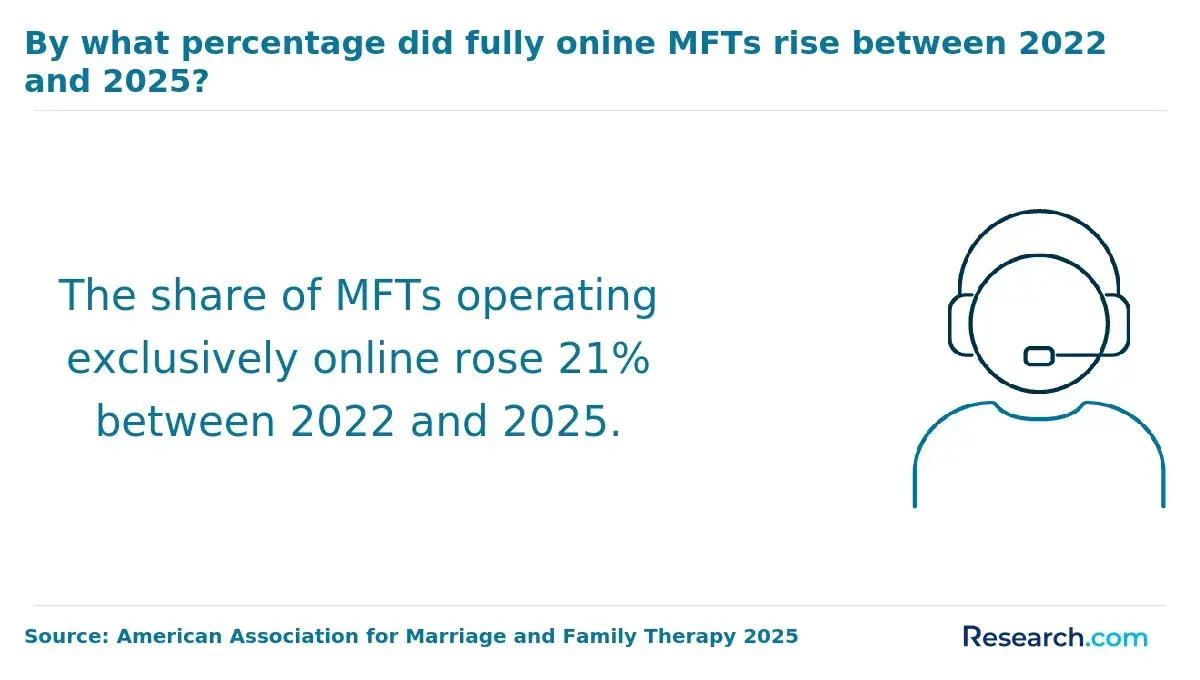
Online coursework may reduce travel and help a working student remain employed. It does not eliminate supervised clinical training, which must be arranged where the student can work with clients under appropriate supervision. Campus study may make scheduled skills practice and local faculty contact easier, but commuting can raise the time cost.
For an Oregon resident considering an out-of-state online program, the critical question is whether its curriculum and placements satisfy Oregon's requirements for the intended license. Ask the program for its Oregon licensure disclosure and ask the Oregon Board of Licensed Professional Counselors and Therapists how it evaluates the degree. Do this before paying a deposit; online availability is not proof of licensure eligibility.
There is no single reliable price for every Oregon marriage, couple, and family counseling student. A graduate program's published tuition may be charged by term or credit, and the final bill depends on credits required, enrollment pace, residency classification where applicable, and aid. A broad institutional tuition average is a poor substitute for a quote for this specific degree.
Request each school's estimated total program cost, including mandatory fees, clinical-placement expenses, books, travel, and any extra terms caused by part-time study. Check your residency classification rather than assuming a public university's lowest advertised rate applies to you. The most affordable marriage, couple, and family counseling programs can help form a shortlist, but compare net costs after aid and likely completion time before deciding.
Eligible graduate students can investigate federal Direct Unsubsidized Loans, school scholarships or assistantships, and employer tuition support. Submit the FAFSA and obtain each program's written aid offer; an advertised scholarship does not show what you will personally receive (Federal Student Aid).
Do not build a financing plan around a Graduate PLUS Loan without checking your eligibility. Under federal changes affecting new graduate borrowing beginning July 2026, access may depend on whether a student qualifies under transition rules for an existing program and prior borrowing; confirm your circumstances and current limits with Federal Student Aid and the school's financial aid office. Ask whether aid covers clinical terms when paid work may be harder to maintain (Federal Student Aid).
View the chart data as a table
Wage range - Marriage & Family Therapists in Oregon (BLS OEWS, May 2025) (Source: BLS)
Category
Value
10th percentile
60,060
25th percentile
69,140
Median
91,520
75th percentile
138,320
90th percentile
165,190
Expect to document a completed bachelor's degree and meet each graduate school's application requirements. Programs may also request transcripts, references, a statement of purpose, interviews, or prerequisite coursework; check the current requirements for your intended entry term rather than assuming the two Oregon programs ask for the same materials (Portland State University; George Fox University).
Before applying, ask whether prior graduate courses can transfer and whether accepted credits replace required courses or merely electives. A transfer policy that saves credits but not an additional term may offer little cost benefit. Applicants changing careers should also ask how the program helps students prepare for clinical placements, not just classroom admission.
Relevant master's curricula generally cover family systems and relationships, counseling skills, assessment, ethics, research, and supervised clinical practice. For Oregon licensure planning, the decisive document is the program's current course map: ask an adviser to identify which required courses address the board's educational standards and when clinical work begins (Oregon Board of Licensed Professional Counselors and Therapists; Portland State University; George Fox University).
Compare syllabi if your interests are specific - for example, working with children and caregivers rather than primarily adult couples. A course title may sound relevant without providing the depth or supervised experience you need for a particular placement.
Students can often shape their training through electives and clinical placements involving couples, children and families, trauma, or co-occurring mental health concerns. Availability varies by faculty and placement site; do not assume an interest area is a formal concentration unless the school identifies it as one in its catalog.
If you hope to serve a particular population, ask how many relevant courses are offered regularly and whether an appropriate supervised site is realistically available. Choosing a placement that fits your intended practice may matter more than a specialization name on a brochure.
Start with the license and work you want, then compare programs on requirements that could change your outcome. A ranking is a screening tool, not a substitute for checking educational fit, placement access, and your own net price. Use the most valuable marriage, couple, and family counseling programs as another comparison point, not as a promise of personal return.
Before accepting an offer, put these questions to each school and keep the answers in writing:
Which Oregon license is this curriculum designed to support, and how does the school document that fit?
What are the program's current accreditation status and clinical-placement requirements, and who secures a site?
What will I pay through graduation after confirmed aid, fees, and any added terms?
How long do students on my planned schedule typically take to finish, and what happens if a placement is delayed?
Check institutional and relevant programmatic accreditation with the accreditor and verify licensure requirements with the Oregon board. A common mistake is to treat accreditation, graduation, and licensing as the same event; they are distinct checks. Weigh any extra earnings you reasonably expect against debt, lost work time, completion risk, and the years over which you expect the investment to pay off.
View the chart data as a table
Best score by program (Source: Research.com)
Category
Value
George Fox University
90.01
Portland State Universit
93.43
The most direct path is toward marriage and family therapist practice, subject to Oregon's degree review, supervised experience, examinations, and license approval. Graduates may initially work in supervised clinical roles before qualifying for independent practice. Job titles that mention counseling can have different credential rules, so confirm the specific role with an employer and the relevant licensing authority (Oregon Board of Licensed Professional Counselors and Therapists).
If your long-term goal is private practice, ask about preparation for documentation, ethics, referrals, and working with multiple members of a family system. If you prefer agency employment, compare programs' placements in the settings where you hope to apply. Neither path makes a master's degree alone sufficient for independent licensed practice.
View the chart data as a table
Median wage by U.S. state - Marriage & Family Therapists (BLS OEWS, May 2025) (Source: BLS)
State
Value
AK
60,010
AL
49,990
AR
64,340
AZ
65,290
CA
67,300
CO
60,700
CT
86,250
DE
76,580
FL
56,400
GA
91,550
HI
141,960
IA
67,180
ID
62,700
IL
60,970
IN
56,810
KS
68,710
KY
52,420
MA
67,370
MD
69,900
ME
71,680
MI
52,270
MN
72,470
MO
60,440
MS
51,440
MT
46,960
NC
48,100
NE
62,610
NH
60,030
NJ
92,150
NM
70,630
NY
64,430
OH
70,240
OK
57,670
OR
91,520
PA
66,040
SC
55,430
SD
44,870
TN
46,700
TX
46,300
UT
84,980
VA
79,900
VT
62,780
WA
60,000
WI
37,870
WV
55,700
The U.S. Bureau of Labor Statistics projects 14% national employment growth for marriage and family therapists from 2025 to 2035. That signals a growing occupation nationally, but it is not an Oregon hiring forecast or a measure of openings for newly licensed clinicians. Local demand can differ by community, employer, specialty, and ability to serve clients in person or remotely within applicable rules.
Test the market before enrolling: review current Oregon postings for your intended setting, note which licenses or supervised statuses employers accept, and ask programs where recent students found placements. That evidence will tell you more about the practicality of your preferred location than a national projection alone.
2027 Best Marriage, Couple, And Family Counseling Degree Programs Ranking in Oregon
Investing in a counseling degree is a consequential decision, so Research.com uses multiple data sources and a consistent scoring method to make its ranking more useful and credible. The team reviews program outcomes, accreditation, eligibility for federal aid, and cost; readers can use the results to narrow their options, then verify current program and licensure details before enrolling.
The ranking draws on these sources:
IPEDS database - institutional reporting on programs, completions, and costs.
For the Best ranking, Research.com first combines program completion (40%), employment or doctoral admission (20%), applicable licensure-exam pass rates (20%), CACREP programmatic accreditation (16%), and institutional Title IV eligibility (4%). Inapplicable criteria are excluded and the remaining shares renormalized. Program cost then contributes about 7% of the final score. The method applies to online and on-campus programs; rankings named for another dimension order programs by that dimension. Because a score cannot establish that a particular curriculum meets your licensure needs, confirm that question directly with the Oregon licensing board. Read more about Research.com's methodology.
# 1 position
Portland State University
Master
Counseling: Marriage, Couple, and Family Counseling
Delivery mode: campus
93.43
/ 100
Final score
Program length
3-year minimum
Specialization
Marriage, Couple, and Family Counseling
Required credits
90 quarter credits
Program completion rate
94% (2024-25)
Employment or doctoral admission
100% (2024-25)
Licensure exam pass rate
100% (2024-25)
Application deadline
January 4, 2027
Class size
15
Application process
direct
Prerequisites
Upper-division or graduate introduction to counseling (e.g., COUN 441) and psychopathology (e.g., COUN 430) courses, completed within 7 years with a C or better; otherwise completed at the graduate level early in the program.
Additional requirements
Unofficial transcripts, English language proficiency (if applicable), resume, statement of purpose (three prompts), two letters of recommendation, and an in-person or remote group interview; criminal background check required prior to starting.
Accreditation
Accredited by the Council for Accreditation of Counseling and Related Educational Programs (CACREP), with institutional accreditation from the Northwest Commission on Colleges and Universities (NWCCU).
Portland State University earned a Research.com Counseling Program Score of 93.43/100, supported by 100% licensure exam pass rate and 94% program completion rate. The program is CACREP-accredited, valid through 2033-10-31.
# 2 position
George Fox University
Master
M.A. in Marriage, Couple and Family Counseling
Delivery mode: hybrid
90.01
/ 100
Final score
Program length
3 Years Program length
Specialization
Marriage, Couple, and Family Counseling
Required credits
64 semester credits
GPA range
3.00 - 4.00
Program completion rate
71% (2023-24)
Employment or doctoral admission
100% (2024-25)
Licensure exam pass rate
100% (2024-25)
Application deadline
Fall 2027: Mar 1, 2027
Application process
direct
GRE
no
Prerequisites
Bachelor's degree from a regionally accredited institution with a cumulative undergraduate GPA of 3.0 or above; does not have to be in psychology.
Additional requirements
Completed online application, two recommendations (one academic, one professional), a short essay, and a professional resumé; group interview by invitation; standardized test results not required.
Accreditation
Accredited by the Council for Accreditation of Counseling and Related Educational Programs (CACREP), with institutional accreditation from the Northwest Commission on Colleges and Universities (NWCCU).
George Fox University earned a Research.com Counseling Program Score of 90.01/100, supported by 100% licensure exam pass rate and 71% program completion rate. The program is CACREP-accredited, valid through 2029-10-31.
Frequently asked questions about Marriage, Couple, and Family Counseling degree in Oregon
Do I need a master's degree to become a marriage and family therapist in Oregon?
Yes. Oregon's marriage and family therapist licensure pathway requires qualifying graduate education, along with other board requirements. Have the Oregon Board of Licensed Professional Counselors and Therapists confirm how a specific program's education fits the rules.
Does graduation make me eligible to practice independently?
No. Degree completion, supervised experience, examinations, and state licensure are separate steps. Ask the board which steps apply to your circumstances before planning a practice.
Can I complete the degree entirely online?
Coursework may be offered online, but supervised clinical training still requires an acceptable placement. Verify the program's delivery format, placement support, and Oregon licensure fit.
Is a public or private university automatically the better value?
No. Compare your actual aid offers, total cost, time to completion, placement access, and intended career. Institution type alone cannot establish return on investment.
Are quarter credits and semester credits directly comparable?
No. Portland State and George Fox publish requirements in different credit systems. Ask each school for its term-by-term plan rather than using the raw credit totals to estimate duration or cost.
See What Experts Have To Say About Studying Counseling