2027 Best Computer Science Degree Programs Ranking in Missouri

Co-Founder and Chief Data Scientist
Choosing the right computer science degree program can feel overwhelming, especially with so many options in Missouri. This article features the 2027 Best Computer Science Degree Programs Ranking in Missouri, created by the Research.com team of data scientists to guide you in making an informed decision.
Exploring this ranking will help you discover programs that match your goals and interests. Pursuing a computer science degree opens doors to exciting career opportunities and personal growth. Let this guide inspire your next steps toward a rewarding future in tech.
Key benefits of getting computer science degree in Missouri
- Graduates with a computer science degree in Missouri can earn strong salaries, such as Software Engineers and Developers making around $138,110 annually, or Data Analysts earning about $119,040 per year.
- Career opportunities are broad, ranging from software development to IT support, offering flexibility to find a role that matches your skills and interests after studying at institutions like the University of Missouri.
- Completing a computer science degree online from schools like Missouri State University provides the convenience to balance work and study, making education more accessible without sacrificing quality.
- 2027 Best Computer Science Degree Programs Ranking in Missouri
- What can I expect from computer science degree in Missouri?
- Where can I work with computer science degree in Missouri?
What can I expect from computer science degree in Missouri?
The average cost of pursuing a computer science degree in Missouri is notably affordable compared to many other states. For instance, graduates from the University of Missouri often recall paying in-state tuition rates around $11,000 per year for their undergraduate studies, making it manageable to fund their education without overwhelming debt. This financial accessibility allows many students to focus fully on mastering core areas like programming, algorithms, and data structures.
Students from Missouri University of Science and Technology highlight the value of hands-on projects and research opportunities that complement their coursework, making every dollar spent a worthy investment in their future careers. Many also benefit from flexible options such as part-time and online courses, which help balance education costs with ongoing employment or personal commitments.
Additionally, the state's partnerships between universities and local tech companies often lead to paid internships, alleviating financial pressure while gaining real-world experience. These practical advantages enhance the overall return on investment for Missouri computer science students.
Where can I work with computer science degree in Missouri?
Graduates with a computer science degree from Missouri universities often find rewarding employment in dynamic industries across the state. Many alumni from institutions like the University of Missouri and Missouri S&T quickly land roles in thriving tech hubs such as St. Louis and Kansas City, working on projects in software development, cloud computing, and AI. These environments fuel excitement and creativity as graduates contribute to fintech innovations or healthcare IT solutions.
Healthcare employers value computer science skills for improving electronic health records and boosting cybersecurity, offering graduates opportunities to make a meaningful impact on patient care. Government positions are another strong path, with agencies seeking graduates to manage public technology systems and support statewide cybersecurity defenses.
Manufacturing companies also hire graduates to develop automation systems and optimize supply chains using advanced IT tools, blending engineering with technology. Missouri graduates appreciate the diverse roles available, competitive salaries, and the ability to work locally while tackling globally relevant challenges.
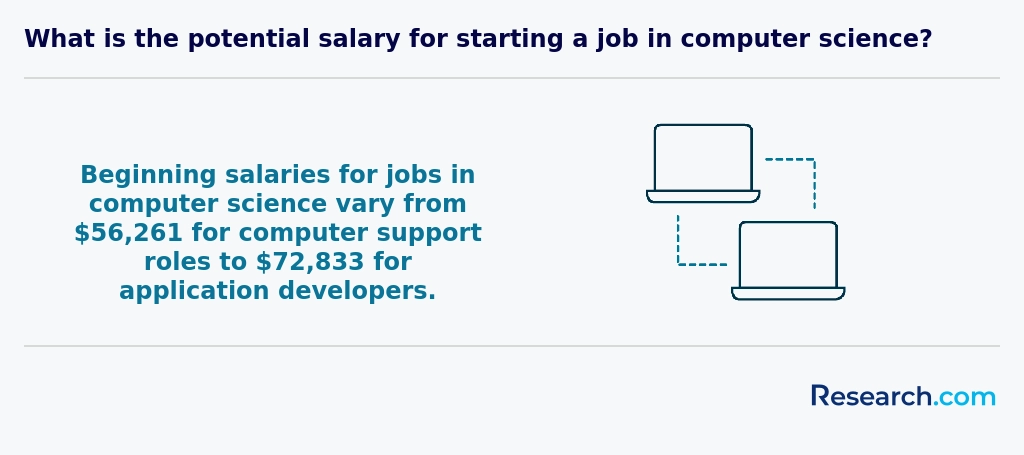
Graduates with a computer science degree from universities like the University of Missouri or Washington University in St. Louis often begin their careers earning around $63,640 as IT Support Specialists, reflecting entry-level roles. Many quickly progress to software development positions with annual salaries near $138,110, matching national standards and confirming Missouri as a solid choice for tech professionals. For those drawn to web development, starting salaries average about $95,570, providing a strong foundation for career growth.
Mid-career graduates, particularly from Missouri's thriving tech hubs in St. Louis and Kansas City, can expect higher earnings. Data Analysts, for example, earn around $119,040 annually, offering a lucrative path for those with analytical skills. These figures align well with the competitive market and show how specialized skills or certifications acquired post-graduation can boost pay.
Graduates remark on feeling confident pursuing tech careers locally, where opportunities continue expanding. By leveraging internships and networking opportunities at their Missouri colleges, they secure roles that offer stability and upward mobility in this growing industry.
- Tuition for computer science degrees in Missouri ranges from $9,000 to $12,000 per year at public universities and $25,000 to $40,000 at private institutions.
- The average starting salary for computer science graduates in Missouri is about $65,000 per year, rising to around $95,000 mid-career.
- Employment for software developers in Missouri is projected to grow by approximately 15% over the next decade, surpassing the national average.
- Major cities like St. Louis, Kansas City, and Columbia are key tech hubs offering diverse job opportunities in technology sectors.
- Many Missouri universities offer internships and co-op programs with employers in finance, healthcare, manufacturing, and government sectors.
- Specialized tracks in areas such as artificial intelligence, software engineering, and cybersecurity are available to help tailor studies to industry demands.
Completing a computer science degree in Missouri generally takes about four years for full-time students, especially at well-known public institutions like the University of Missouri system. Graduates often recall balancing core programming courses with general education requirements within this standard timeframe.
Some students choose to extend their studies by enrolling part-time due to work or personal commitments. This practical decision, while lengthening the duration, allows for maintaining income and managing expenses more effectively.
Others take advantage of cooperative education or internship programs offered by colleges such as Missouri State University. These experiences may add extra semesters but provide invaluable hands-on skills that boost confidence and employability after graduation.
For those starting with an associate degree at community colleges, transferring credits to a bachelor's program can affect total completion time but ultimately leads to the same advanced opportunities.
Smart planning around course load and financial aid can keep students on track for finishing around four years, making the journey manageable and rewarding.
Missouri’s computer science programs not only offer rigorous academics but also a vibrant campus life that can significantly enrich your overall college experience. Students frequently highlight the importance of extracurricular activities, on-campus events, and research opportunities that foster both personal and professional growth. Whether it’s joining tech clubs, participating in hackathons, or attending career networking events, the supportive campus environment is a critical component in developing real-world skills. For many, engaging with peers and faculty beyond the classroom leads to a more rounded education. Campus centers often host innovation labs, maker spaces, and startup incubators that allow students to experiment with new ideas and technologies. These environments contribute to the development of essential soft skills such as teamwork, leadership, and effective communication, all of which are increasingly valued in the tech industry. Moreover, Missouri’s institutions offer numerous student support services from academic advising to mental health resources, ensuring that every student receives personalized guidance throughout their educational journey. For prospective students evaluating their options, researching the cheapest computer science schools in missouri can also reveal affordable programs that do not compromise on campus experience and community spirit. By combining rigorous academics with dynamic campus life, Missouri’s computer science programs prepare students not only for successful careers but also for enriching personal experiences that extend far beyond the classroom.
Choosing between online and on-campus computer science degrees in Missouri depends largely on your lifestyle and career goals. On-campus programs, such as those at the University of Missouri-Columbia, offer rich, face-to-face interactions with professors and peers, hands-on access to campus labs, and chances to join tech clubs or internships in Missouri's growing industry. Graduates often share how these connections boosted their confidence and job prospects.
Conversely, online degrees from institutions like Missouri State University offer flexibility that suits working professionals or those living far from campus. Many online students find value in live virtual lectures and discussion boards that mimic real-time classroom engagement, allowing them to balance studies with family or jobs.
Costs are similar but consider travel and housing expenses for on-campus learning versus technology needs for online courses. Reflect on your preferred learning style: if you thrive in a structured environment with immediate feedback, on-campus may be ideal; if self-motivation fits you better, online could be a perfect match.
Missouri’s computer science programs emphasize hands-on experience through internships, co-ops and project-based research.
- Internship placements with industry leaders like Cerner, Centene and local startups
- Co-op programs that integrate paid work terms into your degree
- Capstone projects sponsored by tech firms, solving real-world challenges
- Undergraduate research in areas such as AI, cybersecurity and data analytics
These practical experiences bridge classroom theory with professional skills, boosting employability and expanding your network. Students seeking specialized data-driven roles can also explore flexible pathways through data science programs online to deepen their expertise.
The average cost of a computer science degree in Missouri varies, but the median total cost is around $42,338. For in-state students, the expenses are significantly lower, averaging about $14,112. This affordability makes pursuing a computer science degree in Missouri an attractive option for many local students looking to develop competitive skills.
Students at popular institutions such as the University of Missouri and Missouri State University often find that in-state tuition and fees are manageable, allowing them to focus on gaining hands-on experience through internships and campus projects. Graduates frequently share how this balanced cost helped them avoid heavy debt while benefiting from quality education and opportunities in tech-related fields.
Understanding Missouri computer science degree tuition and fees is crucial for effectively planning your education budget. Many students combine scholarships, financial aid, and the Missouri A+ Scholarship Program, especially those attending community colleges, which reduces their out-of-pocket costs substantially. For detailed options on affordability, prospective students often explore the cheapest computer science schools in missouri.
These financial strategies, paired with the state's range of public and private schools, help make earning a degree in computer science more accessible and rewarding. Missouri students enjoy a pathway where investment in education brings the promise of a thriving career in technology without overwhelming financial strain.

Missouri’s top Computer Science programs distinguish themselves through robust research initiatives and deep industry partnerships that empower students to tackle real-world challenges. At institutions like Washington University in St. Louis and Missouri S&T, undergraduates can join faculty-led labs working on cutting-edge topics such as artificial intelligence, cybersecurity, and data analytics. These research projects often receive funding from organizations like the National Science Foundation and local tech firms, providing students with hands-on experience in grant writing, experimental design, and publication. Industry collaborations further amplify learning outcomes. Through alliances with Fortune 500 companies headquartered in Missouri-such as Boeing, Edward Jones, and Cerner-students participate in co-op programs, hackathons, and capstone projects that mirror professional workflows. For example, Computer Science majors at the University of Missouri collaborate with a healthcare startup to develop machine learning models for patient data, gaining insight into data privacy regulations and software deployment. Beyond Missouri’s borders, ambitious graduates can explore advanced study options, including the best online masters in data science programs that complement undergraduate research skills with specialized coursework in big data, predictive modeling, and cloud computing. These online master’s degrees not only offer flexible schedules but also connect students with global research communities and virtual labs. By integrating academic research with industry exposure, Missouri’s Computer Science programs ensure graduates leave campus with robust portfolios, professional networks, and a proven track record of innovation-key factors that drive success in today’s competitive tech landscape.
Students pursuing computer science degrees in Missouri have access to a variety of financial aid tools that make education more affordable. Completing the FAFSA is a crucial first step, unlocking federal grants like the Pell Grant, which can provide up to $7,395 annually for eligible students. Many graduates from universities such as the University of Missouri share how this grant significantly eased their tuition burdens.
State programs like Access Missouri offer need-based assistance specifically for Missouri residents, which helps bridge gaps after federal aid. High-performing students from schools like Missouri State University often benefit from the Bright Flight Scholarship, receiving up to $3,000 toward STEM studies, including computer science.
Departmental scholarships at institutions popular for their tech programs, such as Washington University in St. Louis, further reduce costs by rewarding academic merit and financial need. Work-study jobs tied to tech companies around Missouri add valuable experience while providing extra income. Graduates frequently highlight the boost this provides in both finances and career readiness.
Exploring private scholarships through professional groups and tapping into university financial counseling helps students craft personalized aid packages that fit their unique situations, making a Missouri computer science degree accessible and rewarding.
To enroll in a computer science degree in Missouri, you'll need a high school diploma or GED as the basic requirement. Students at universities like the University of Missouri often share how a strong foundation in math-especially algebra, geometry, and calculus-made tackling their programming and algorithms courses much smoother. Many programs also appreciate prior knowledge in physics or chemistry since understanding hardware and software interactions helps clarify complex topics.
Graduates from Missouri State University recall how solid English and communication skills were essential for group projects and writing technical reports, highlighting that computer science isn't just about coding. While test scores like the SAT or ACT are less emphasized nowadays due to test-optional policies, having scores around 1050 on the SAT or above 20 on the ACT can increase admission chances, especially at more competitive schools.
Community colleges such as St. Louis Community College offer flexible pathways where students can build prerequisite knowledge gradually before transferring to a four-year university. Preparing academically with these targeted courses makes the transition more confident and rewarding.
Missouri’s top computer science programs distinguish themselves through robust research initiatives and internship partnerships that prepare students for real-world challenges. From cutting-edge labs at Washington University in St. Louis to industry-sponsored capstone projects at Missouri S&T, undergraduates and graduate students alike benefit from experiential learning, faculty mentorship, and access to state-of-the-art facilities. Many institutions collaborate with local tech firms and government agencies to offer paid internships, co-ops, and summer research fellowships. For example:
- University of Missouri’s Cybersecurity Research Center hosts annual hackathons and offers paid assistantships where students develop intrusion detection algorithms.
- Missouri State University partners with Springfield’s health-tech startups, enabling students to contribute to medical data analysis projects, often leading directly to post-graduation employment.
- Southeast Missouri State University’s Software Engineering Lab connects students with local SMEs for semester-long software development contracts, enhancing portfolios with real client solutions. In addition, online learners can access virtual labs and remote research collaborations. For those balancing work and study, exploring flexible, cost-effective options like the Cheapest Online Bachelor's in Computer Science Degree Programs Ranking in Illinois offers insight into programs that deliver rigorous hands-on experiences entirely online. By engaging in these research and internship opportunities, students not only reinforce classroom theory but also build professional networks, sharpen technical skills, and gain a competitive edge in Missouri’s vibrant tech job market.
Missouri computer science programs start with essential courses such as Introduction to Programming and Computer Science Fundamentals, where students at universities like the University of Missouri learn coding languages like Python and Java through hands-on projects. Graduates often highlight how these foundational classes build their confidence in writing and debugging code early on.
Next, courses in data structures and algorithms teach efficient ways to organize and solve problems with data. Students at Missouri State University recall applying these concepts in real-world coding challenges, which sharpened their analytical thinking crucial for tech careers.
Core classes in computer systems cover operating systems, networks, and architecture-allowing students to understand the interaction between hardware and software. This practical knowledge empowers learners to troubleshoot systems effectively, a skill praised by recent graduates from Washington University in St. Louis.
Many Missouri programs include software engineering and database management, emphasizing teamwork and project-based learning. Electives in artificial intelligence, cybersecurity, and mobile app development prepare students for cutting-edge roles, reflecting employer demands and local industry trends.
Computer science degree specializations in Missouri commonly include fields such as Artificial Intelligence (AI) and Machine Learning, Software Engineering, Cybersecurity, Data Science and Big Data, Human-Computer Interaction, Computer Networks and Systems, and Game Development. Graduates from institutions like the University of Missouri and Missouri State University often find these concentration options align well with industry demands, providing them with a competitive edge in job markets.
For example, students focusing on Cybersecurity at the University of Missouri benefit from faculty expertise and regional job opportunities, which has made the specialization especially popular. Similarly, those pursuing Data Science appreciate access to growing resources and partnerships that support practical experience. These choices reflect how Missouri computer science program concentration options are tailored to meet local employer needs and global tech trends.
Graduates often report increased enthusiasm about their career prospects, boosted by the practical skills acquired through these programs. For students interested beyond undergraduate studies, exploring the best online masters in data science programs can further enhance expertise and job readiness in this thriving sector.
To choose the best computer science degree in Missouri, start by researching universities known for strong programs, such as the University of Missouri or Missouri University of Science and Technology. Graduates often praise these schools for combining rigorous academics with hands-on projects, which build practical skills needed in tech careers.
Consider what specializations excite you-fields like cybersecurity, AI, or software development are common. Look for programs that offer internships or research opportunities, which Missouri students find invaluable for gaining real-world experience and networking within the local tech industry, home to companies like Cerner and Centene.
Affordability matters, too. Exploring affordable computer science colleges Missouri-wide can ease financial pressures. Some graduates have saved significantly by choosing in-state public universities or through scholarships and assistantships. To compare costs and options, see the Cheapest Online Bachelor's in Computer Science Degree Programs Ranking in Illinois, which might also inspire flexible learning paths through online or hybrid formats.
Graduates with a computer science degree in Missouri often find rewarding roles in software development, where skills in Java, Python, and C++ are highly valued by employers in Kansas City and St. Louis. Many alumni from well-known Missouri universities report satisfaction working on innovative projects that enhance business applications and systems software in these hubs.
For those interested in data-oriented roles, the growing demand for data analysts and data scientists reflects strong Missouri computer science degree job prospects. Recent graduates highlight exciting opportunities to analyze large datasets, helping companies make smarter decisions and driving statewide tech growth.
Cybersecurity positions are another key pathway, as Missouri businesses and government agencies prioritize protecting digital information. Graduates often take pride in contributing to vital cybersecurity initiatives, supported by programs at local colleges.
Beyond these, degree holders explore careers in systems architecture, AI engineering, web development, and IT project management-all fields supported by Missouri's expanding tech scene. For students exploring options, seeing computer science as among good college majors helps align their education with strong career opportunities Missouri offers.
The computer science job opportunities in Missouri are growing steadily, driven by expanding tech hubs in cities like St. Louis and Kansas City. Graduates from well-known programs at Missouri universities often find roles in software development, cybersecurity, and data analysis with competitive salaries around $85,000 annually. Many have shared how internships through university partnerships with local tech firms helped them secure full-time positions quickly after graduation, fueling excitement about their career prospects.
Missouri's tech industry employment outlook is positive, especially for those specializing in cybersecurity or working with government contractors. Students at popular institutions can leverage affordable in-state tuition, which keeps education costs between $9,000 and $12,000 per year, making it a practical choice. Exploring options for the easiest associates degree to get can also be a smart step toward accelerating entry into the workforce in this state.
2027 Best Computer Science Degree Programs Ranking in Missouri
Investing in your education is a significant decision that can shape your future, and the Research.com team understands the importance of making informed choices. To assist prospective students in Missouri, we have meticulously crafted the "2027 Best Computer Science Degree Programs Ranking in Missouri." Our commitment to quality, credibility, and accuracy is reflected in the extensive research and analysis conducted to compile this ranking.
We utilized the following reputable data sources to ensure a comprehensive evaluation of computer science programs:
By exploring this ranking, readers will gain valuable insights into the best computer science degree programs available in Missouri, helping them make informed decisions about their educational paths. For more details on our methodology, please visit our Research.com methodology page.


# 17 position
Central Methodist University-College of Liberal Arts and Sciences
Bachelor in Computer Science

# 19 position
Central Methodist University-College of Graduate and Extended Studies
Bachelor of Science in Computer Science


Frequently Asked Questions About computer science
Computer science degree students in Missouri can maximize their learning experience by engaging in hands-on projects and internships. Missouri hosts several technology companies, especially in Kansas City and St. Louis, providing valuable opportunities for real-world experience. According to the Missouri Economic Research and Information Center (MERIC), the technology sector in Missouri is growing, increasing demand for skilled professionals.
Students should also participate in university-led research programs, many of which focus on emerging areas like cybersecurity and data science. Joining student organizations and coding clubs offers networking and skill development. Additionally, Missouri students benefit from attending state and regional tech conferences to stay current with industry trends.
Emerging niches within computer science reflect rapid technological advancements and growing industry demands, particularly in Missouri's expanding tech sector. Areas such as artificial intelligence (AI) and machine learning (ML) are gaining traction, with Missouri universities increasingly offering specialized courses and research opportunities. Cybersecurity remains a critical focus, driven by rising digital threats in sectors like finance and health care throughout the state.
Data science and big data analytics are also prominent, as Missouri businesses seek experts to interpret large volumes of information to improve decision-making. Additionally, cloud computing and software engineering for Internet of Things (IoT) devices present innovative career paths. According to the Missouri Economic Research and Information Center, tech employment in these fields is expected to grow 15% by 2028, highlighting strong regional demand.
Graduates with a computer science degree in Missouri should focus on gaining practical experience through internships or co-op programs offered by local tech companies. These opportunities provide valuable real-world skills and improve employability in a competitive market.
Networking is equally important; joining organizations like the Missouri Technology Association can connect students with industry professionals. Missouri's unemployment rate in tech roles is below the national average, emphasizing a strong demand for qualified candidates.
Additionally, staying current with in-demand programming languages and certifications, such as cloud computing or cybersecurity credentials, increases job prospects significantly.
Missouri's universities often provide career services with resume workshops and interview preparation tailored to the tech sector, which should be utilized fully.
Employers in Missouri highly value computer science graduates who demonstrate strong programming skills, particularly in languages such as Python, Java, and C++. According to the Missouri Economic Research and Information Center, proficiency in software development and coding remains critical to meeting the state's growing tech demands.
Beyond technical abilities, problem-solving and critical thinking are essential for tackling real-world challenges in industries like healthcare, finance, and agriculture. Communication skills also rank high, with employers seeking graduates who can clearly explain complex concepts to non-technical teams.
Familiarity with data structures, algorithms, and cybersecurity fundamentals further enhances graduate employability in Missouri's competitive tech market.
Finding internships in Missouri for computer science students involves leveraging multiple resources to gain practical experience. Universities like the University of Missouri and Missouri State University often have dedicated career centers that list internships specific to tech fields.
Networking through organizations such as the Missouri Innovation Campus or local chapters of ACM and IEEE can connect students with regional employers. According to the Missouri Department of Higher Education & Workforce Development, tech internships in Missouri have grown by 12% annually, reflecting increased opportunities.
Additionally, online job portals and Missouri-based tech companies often post internships targeted at computer science students, emphasizing skills in programming, data analysis, and software development.
Obtaining a computer science degree in Missouri significantly enhances career mobility and advancement opportunities. The state hosts a growing tech industry, supported by companies like Cerner and Centene, which value candidates with strong technical skills. According to the Missouri Economic Research and Information Center, employment for computer and IT occupations is projected to grow faster than average through 2028.
Graduates often access higher starting salaries, with a median annual wage for computer professionals in Missouri around $90,000, based on U.S. Bureau of Labor Statistics data. Earning a degree can also qualify individuals for specialized roles such as software development, cybersecurity, or data analysis.
In Missouri's competitive job market, a computer science degree demonstrates both competence and commitment, facilitating promotions and role changes within various industries. Additionally, many universities offer connections to local internships and professional networks essential for career progression.
Studying for a computer science degree in Missouri prepares students for interdisciplinary roles by offering curricula that integrate computing with fields such as engineering, biology, and business. Many Missouri universities include project-based learning that emphasizes collaboration across different disciplines, reflecting workforce demands in technology-driven industries.
According to the Missouri Department of Higher Education, computer science graduates frequently engage with data analysis, software development, and systems management, skills applicable in healthcare, finance, and manufacturing sectors.
Programs also encourage internships and research opportunities with Missouri's diverse economy, enhancing real-world experience in interdisciplinary settings.
This approach equips students to adapt and innovate across various professional environments effectively.
When deciding between a thesis and a non-thesis computer science degree program in Missouri, consider your career goals first. Thesis programs prioritize research skills and are ideal if you plan to pursue a PhD or a research-driven role. These programs often require 6 to 12 credit hours of a research project culminating in a formal thesis.
Non-thesis programs focus more on coursework and practical skills, usually replacing a thesis with additional classes or a capstone project. These suits students targeting industry roles. According to the Missouri Department of Higher Education, about 60% of computer science graduates enter the workforce directly, making non-thesis pathways popular.
Cost and duration may also differ; thesis routes can extend your studies due to research demands. Finally, check the curriculum of Missouri schools like the University of Missouri or Missouri S&T to see which option aligns with your interests and schedule.
Students based in Missouri seeking to study computer science abroad have several pathways through partnerships established by state universities. Many Missouri institutions, including the University of Missouri system, offer exchange programs with universities in countries such as Germany, the United Kingdom, and Canada. These opportunities allow students to earn credits toward their Missouri degree while experiencing international academic environments.
According to the Institute of International Education, roughly 12% of Missouri college students participate in study abroad programs, with STEM fields like computer science steadily growing in popularity for these exchanges. Students should consult their home institution's study abroad office to explore specific program details and eligibility requirements.
Additionally, some Missouri institutions have dual-degree agreements, enabling students to complete parts of their computer science curriculum overseas. This can enhance technical skills and global perspectives, valuable in today's tech-driven job market.
Students pursuing computer science degrees in Missouri have diverse part-time job options that complement their education and enhance practical skills. Common roles include IT support technician positions and software development internships at local tech firms, especially in cities like St. Louis and Kansas City, where the tech industry is growing rapidly. According to the Missouri Economic Research and Information Center, tech employment in the state has increased by over 10% in recent years, creating more opportunities for students. Roles involving coding, system analysis, and network management provide hands-on experience that aligns well with academic studies. These jobs also help build professional networks and improve job prospects after graduation.
Computer science students in Missouri benefit from numerous networking opportunities that connect them with industry professionals and peers. Universities such as the University of Missouri and Missouri State University host regular career fairs and tech expos attracting top local and national companies. According to the Missouri Department of Higher Education, many programs collaborate with firms in Kansas City and St. Louis, hubs for technology and innovation.
Student organizations like the Association for Computing Machinery (ACM) chapters offer workshops, hackathons, and guest lectures. Additionally, Missouri's growing startup ecosystem provides internships and mentoring events, fostering valuable professional relationships early in students' careers.
Alumni networks offer valuable benefits to computer science degree students in Missouri by providing connections to experienced professionals and potential employers. Many Missouri universities, such as the University of Missouri and Missouri S&T, have active alumni groups that organize mentorship programs and networking events. These connections help students gain industry insights and secure internships or job opportunities.
According to the Missouri Department of Higher Education, students who engage with alumni networks have a 20% higher chance of employment within six months of graduation. Alumni also contribute to curriculum development by sharing real-world challenges faced in Missouri's tech sector.
Networking through alumni fosters career growth and opens doors within Missouri's expanding technology and cybersecurity industries.
In Missouri, students can tailor their computer science degrees to align with specific career objectives by selecting electives and specialized tracks offered by many universities. Programs often include concentrations such as artificial intelligence, cybersecurity, software engineering, or data science. These options enable students to develop expertise in growing fields that match industry demands.
Additionally, Missouri colleges frequently provide opportunities for internships and cooperation with local tech companies, which are crucial for practical experience. According to the Missouri Department of Higher Education, engaging in internships increases job placement rates by up to 20% for computer science graduates statewide.
Students may also choose to participate in research projects or certifications alongside their degree. Many institutions support customizing curricula through independent study or interdisciplinary courses, further helping students meet their unique career goals.
Computer science students in Missouri often face several challenges during their studies. One major difficulty is keeping up with the fast pace of technological changes, which requires continuous learning beyond the classroom. According to the Missouri Department of Higher Education, many students struggle with mastering advanced programming languages and complex algorithms early in their coursework.
Additionally, balancing rigorous coursework with part-time jobs or internships can be demanding. Missouri's growing tech industry creates opportunities but also raises competitiveness for internships and entry-level positions. Data from the National Center for Education Statistics highlights that roughly 30% of STEM students in Missouri report time management as a key obstacle.
Lastly, some students encounter limited access to specialized research resources outside major universities, which can impact their practical experience and networking opportunities.
With a computer science degree in Missouri, graduates can pursue various professional certifications to enhance their career prospects. Popular certifications include Certified Information Systems Security Professional (CISSP), which is valuable for cybersecurity roles increasingly in demand in Missouri's growing tech sector.
The Project Management Professional (PMP) certification is another option, helping computer science graduates move into leadership positions. Additionally, certifications like Cisco Certified Network Associate (CCNA) and Microsoft Certified: Azure Fundamentals are widely respected in Missouri's IT industry.
According to the Missouri Economic Research and Information Center, demand for IT professionals with certifications is expected to grow by over 10% by 2030, reflecting statewide industry needs.
These certifications build on academic knowledge and demonstrate practical skills to employers.
Applying to a computer science program in Missouri requires a clear and focused approach. Start by researching each university's admission criteria, as many schools seek students with strong math and science backgrounds. Highlight any relevant coursework, such as AP Computer Science or advanced mathematics. Including practical experience like coding projects or internships strengthens your application. Missouri schools, including the University of Missouri and Missouri University of Science and Technology, value evidence of problem-solving skills and collaboration.
Additionally, prepare a compelling personal statement that explains your passion for computer science and career goals. According to the Missouri Department of Higher Education, demonstrating awareness of Missouri's technology industry boosts your application. Strong letters of recommendation from teachers or mentors familiar with your technical abilities are also essential.
The global outlook for a computer science career remains highly favorable, reflecting strong demand across diverse industries. In the United States, including Missouri, computer science professionals enjoy some of the fastest wage growth and employment rates. According to the U.S. Bureau of Labor Statistics, employment for software developers and related roles is projected to grow 22% from 2020 to 2030, much faster than the average for all occupations.
Missouri benefits from a growing tech sector, with cities like St. Louis and Kansas City emerging as regional tech hubs. Here, employers value skills in artificial intelligence, cybersecurity, and data science, reflecting global trends.
Educational institutions in Missouri increasingly align their computer science curricula with international standards, preparing graduates for competition in a global job market.
Gaining practical experience while studying for a computer science degree in Missouri is essential for career readiness. Many universities encourage students to engage in internships, which provide hands-on work in local tech companies and startups. According to the Missouri Department of Higher Education & Workforce Development, internships improve job placement rates by nearly 20% for science and tech graduates.
Additionally, students can participate in cooperative education (co-op) programs, blending classroom study with paid work experience. Missouri institutions often partner with companies in Kansas City and St. Louis, two major tech hubs. Joining campus coding clubs or hackathons also helps develop real-world problem-solving skills.
Research projects led by faculty members offer another avenue to apply theory in practice. Students can access resources through programs supported by agencies like the National Science Foundation, contributing to innovative work in software development and data science.
Choosing the right concentration within a computer science degree program in Missouri depends on understanding your career goals and interests. Missouri universities often offer areas like software development, cybersecurity, data science, and artificial intelligence. According to the Missouri Department of Higher Education, demand for cybersecurity professionals in the state is growing by 9% annually, making it a strong choice for job security.
Consider the local job market, internships, and research opportunities. Schools like the University of Missouri provide tailored tracks that align with industries in cities such as St. Louis and Kansas City. Exploring coursework and faculty expertise can help you make an informed decision.
- 2027 Best Computer Science Degree Programs Ranking in Iowa
- 2027 Best Computer Science Degree Programs Ranking in Illinois
- 2027 Best Computer Science Degree Programs Ranking in Wisconsin
- 2027 Best Computer Science Degree Programs Ranking in Colorado
- 2027 Best Computer Science Degree Programs Ranking in Louisiana
- 2027 Best Computer Science Degree Programs Ranking in Ohio
- 2027 Best Computer Science Degree Programs Ranking in Alabama
- 2027 Best Computer Science Degree Programs Ranking in West Virginia
- 2027 Best Computer Science Degree Programs Ranking in Georgia
- 2027 Best Computer Science Degree Programs Ranking in North Carolina
See What Experts Have To Say About Studying Computer Science
Read our interview with Computer Science experts

Elan Barenholtz
Computer Science Expert
Associate Professor
Florida Atlantic University

Kathleen M. Carley
Computer Science Expert
Professor of Computer Science
Carnegie Mellon University

Martin Kang
Computer Science Expert
Assistant Professor
Loyola Marymount University

Imed Bouchrika, Phd
Computer Science Expert
Professor of Computer Science
National Higher School of Artificial Intelligence

- SIT Connect - Study abroad, with a local team https://sitconnect.net/programs/computer-science-missouri-university-of-science-and-technology
- Best Computer Certifications for Tech Professionals https://www.computerscience.org/degrees/certifications/
- Ada Computer Science https://adacomputerscience.org/student_challenges
- Essential Skills Every Computer Science Graduate Needs | LSBF https://lsbf.edu.my/blog/11-essential-skills-every-computer-science-graduate-needs/
- 5 Challenges Faced by Computer Science Students and How to Overcome Them https://informatika.almaata.ac.id/5-challenges-faced-by-computer-science-students/
- Getting the Most Out of a Computer Science Degree https://robkokochak.com/blog/getting-the-most-out-of-a-cs-degree/
- How to choose a bachelor's in computer science | edX https://www.edx.org/resources/how-to-choose-a-bachelors-in-computer-science
- Study Computer Science Abroad | Go Overseas https://www.gooverseas.com/study-abroad/computer-science
- Computer Science Cover Letter: How to Show You're a Top Tech Candidate https://arc.dev/talent-blog/computer-science-cover-letter/
- Top 12 Global Careers For Computer Science Degree Graduates https://womeninstemnetwork.com/careers-for-computer-science-degree/