2027 Best Online Communication Degree Programs Ranking in Maryland

Co-Founder and Chief Data Scientist
Are you searching for the best online communication degree programs in Maryland? This article introduces the 2027 Best Online Communication Degree Programs Ranking in Maryland, created by the Research.com team of data scientists. It's designed to help you make an informed decision about which programs truly stand out.
Whether you're aiming to advance your career or start fresh, earning a communication degree offers valuable skills in today's connected world. Explore top programs that fit your goals and lifestyle, and take a confident step toward a rewarding future.
Key benefits of getting online communication degree in Maryland
- Communication degree graduates in Maryland can expect competitive salaries, with roles such as public relations specialists earning an average hourly wage around $30, reflecting strong demand in the state.
- Graduates from the University of Maryland often pursue diverse careers including marketing, media relations, and corporate communication, providing many exciting paths to match your passions.
- Online communication degrees from Towson University offer flexible learning schedules and access to experienced faculty, making it easier to balance work, life, and study while gaining valuable, practical skills.
- Key benefits of getting online communication degree in Maryland
- What can I expect from online communication degree in Maryland?
- Where can I work with online communication degree in Maryland?
- How much can I make with online communication degree in Maryland?
- 2027 Best Online Communication Degree Programs Ranking in Maryland
- Key Findings
- How long does it take to complete online communication degree in Maryland?
- What's the difference between online and on-campus communication degree?
- What is the average cost of online communication degree in Maryland?
- What financial aid is available to online communication degree students in Maryland?
- What are the prerequisites for enrolling in online communication degree program in Maryland?
- What courses are typically in online communication degree programs in Maryland?
- What types of specializations are available in online communication degree programs in Maryland?
- How do you choose the best online communication degree in Maryland?
- What career paths are available for online communication degree students in Maryland?
- What is the job market for online communication degree in Maryland?
- Related Communication Rankings for Nearby States
- Top Trending Communication Rankings
What can I expect from online communication degree in Maryland?
The average cost of pursuing an online communication degree in Maryland generally falls between $300 and $600 per credit hour, depending largely on the institution. Graduates from well-regarded universities and colleges in Maryland often speak positively about the value they found, noting that the investment aligned well with the flexible, career-focused education they received.
Many students appreciate the ability to balance work and family commitments while advancing their studies, thanks to the hybrid or fully online formats common in Maryland. One graduate shared how managing coursework at a renowned Maryland university felt manageable thanks to clearly structured digital platforms and accessible faculty support.
Financial aid and scholarships frequently ease the tuition burden, making these programs more accessible without sacrificing quality. Students are encouraged to confirm accreditation to ensure their degree holds strong recognition in Maryland's diverse job market, where practical communication skills are in high demand.
Where can I work with online communication degree in Maryland?
Graduates with an online communication degree from institutions like the University of Maryland or Towson University often find rewarding opportunities across Maryland's vibrant job market. Many step into roles within public relations and corporate communications at government agencies or private companies, where clear messaging and media relations are crucial. One graduate shared how working at a government contractor near Washington, D.C., allowed them to apply their skills in managing stakeholder engagement and shaping public perception.
Others pursue careers in marketing and digital media, especially in Baltimore's growing tech and biotech hubs. There, graduates use their expertise to craft compelling social media campaigns and branding strategies that resonate with diverse audiences. Alumni from Johns Hopkins University's communication programs often highlight the satisfaction of creating content that drives real customer engagement.
The nonprofit and education sectors also offer meaningful paths. Graduates have helped run outreach and fundraising efforts at local nonprofits, drawing on their communication training to build community support. Similarly, roles in Maryland's media outlets-from radio stations to digital news platforms-appeal to those passionate about storytelling and journalism in a digital age.
For those drawn to public service, Maryland's state and local government positions provide stable, impactful careers. Strong communication skills are vital here for crisis messaging and public information dissemination, making this a respected and fulfilling choice for graduates ready to serve their communities.
How much can I make with online communication degree in Maryland?
Graduates from online communication degree programs in Maryland often find their earning potential shaped by the state's dynamic job market and proximity to Washington, D.C. Many alumni from universities like the University of Maryland and Towson University recall starting their careers with salaries in the $45,000 to $50,000 range. This entry point reflects the vibrant demand for communication professionals across public relations, media, and corporate communications sectors.
With experience and skill development, these graduates typically see their earnings climb noticeably. Public relations specialists in Maryland, for instance, earn a median annual salary around $67,000, noticeably above the national median near $62,800. One graduate shared how leveraging internships and digital media expertise opened doors to roles paying between $60,000 and $85,000 within healthcare and government contracting agencies.
Building networks and pursuing certifications in marketing analytics or multimedia production can elevate salaries even further. Many communication graduates who combine these qualifications describe the satisfaction of rising into senior roles, such as communication directors, with salaries exceeding $80,000, highlighting how Maryland's strong media ecosystem nurtures rewarding career trajectories.
2027 Best Online Communication Degree Programs Ranking in Maryland
How do we rank schools?
Investing in your education is a significant decision that can shape your future, and the Research.com team understands the importance of making informed choices. To assist prospective students, we have meticulously crafted the "2027 Best Online Communication Degree Programs Ranking in Maryland." Our commitment to quality, credibility, and accuracy is reflected in the extensive research and analysis conducted to compile this ranking.
We utilized the following reputable data sources to ensure a comprehensive evaluation of communication programs:
By exploring this ranking, readers will gain valuable insights into the top online communication degree programs in Maryland, helping them make well-informed decisions about their educational journeys. For more details on our methodology, please visit our Research.com methodology page.


# 3 position
University of Maryland Global Campus
Master of Strategic Communication

Key Findings
- Online communication degrees in Maryland offer fully remote coursework options at universities and colleges.
- In-state tuition at public institutions ranges from $9,000 to $15,000 per year, while private universities charge over $20,000 annually.
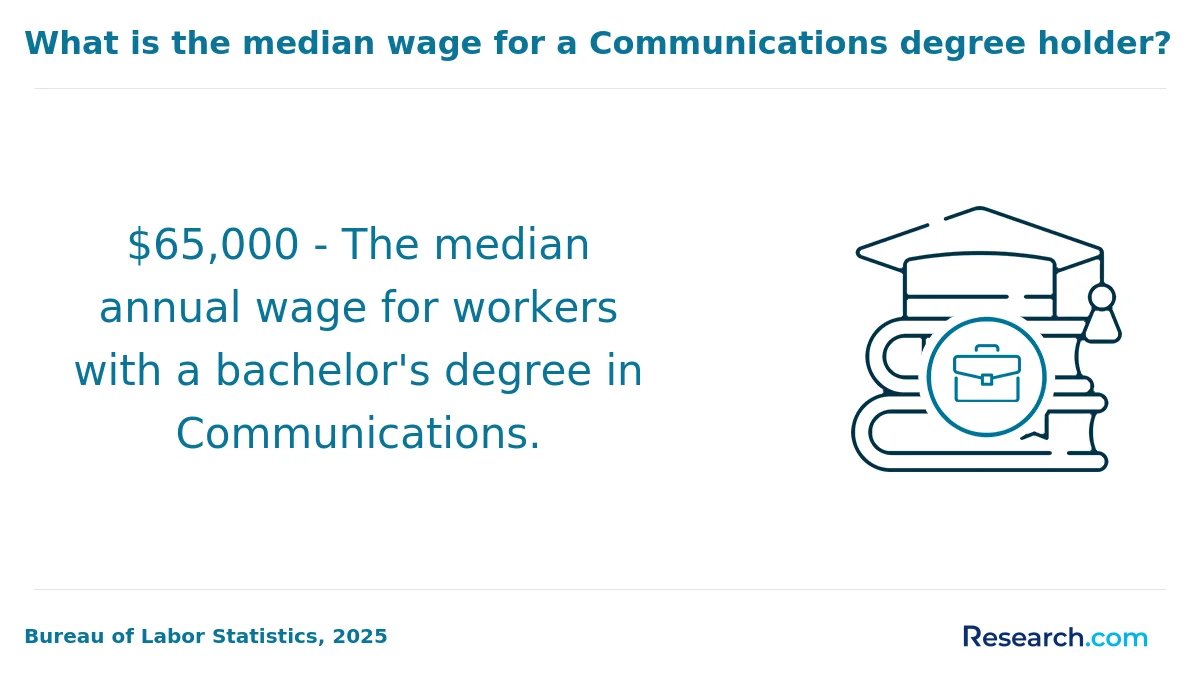
- Entry-level salaries for communication graduates start around $40,000 to $50,000, increasing to $65,000 to $75,000 with experience.
- Maryland has a strong job market for communication roles, with higher employment concentration than the national average due to federal agencies and tech growth.
- Common careers for graduates include public relations specialists, social media managers, and marketing coordinators.
- Many programs provide virtual career counseling, internship assistance, and networking to support student success.
How long does it take to complete online communication degree in Maryland?
Completing an online communication degree in Maryland usually aligns with well-established timelines but varies with each unique path. Graduates from Towson University and the University of Maryland Global Campus often share that an associate degree typically takes about two years full-time, offering a solid foundation for entry-level roles or transfer opportunities.
Bachelor's degrees, requiring between 120-130 credits, generally span four years when studied full-time. Many students balancing work find the flexibility to spread their coursework, sometimes extending completion to around six years without losing momentum. One graduate reflected that transferring previous credits helped accelerate their timeline, making the journey feel both manageable and rewarding.
Master's programs mirror the two-year full-time norm but are designed for busy professionals, with part-time students pacing through three or more years. This flexibility is a common thread among Maryland's online programs, allowing students to maintain career and personal commitments while advancing academically. Understanding how transfer credits, enrollment choices, and program demands affect duration can transform your experience from daunting to empowering.
What's the difference between online and on-campus communication degree?
The key difference between online and on-campus communication degrees in Maryland lies in how students engage with their education. Graduates from on-campus programs at institutions like Towson University often recall vibrant classroom discussions and hands-on group projects that deepened their understanding through face-to-face interaction. This environment is ideal for those who draw energy from real-time collaboration and value the immediacy of feedback from professors and peers.
Conversely, online learners appreciate the flexibility to balance study with work or family life. Graduates who pursued an online communication degree in Maryland highlight the freedom to engage with lectures and assignments on their own schedule, which fosters a strong sense of independence and self-discipline. This flexibility often makes education more accessible without sacrificing quality, especially when programs leverage asynchronous formats allowing for thoughtful reflection.
On-campus programs may provide easier access to internships and networking within Maryland's media industries, but online degrees open doors to diverse experiences from anywhere. Each path offers unique rewards shaped by personal learning styles and life circumstances.
What is the average cost of online communication degree in Maryland?
Determining the average cost of an online communication degree in Maryland involves considering a variety of factors, including whether you attend a public or private institution. Graduates from public universities, such as the University of Maryland Global Campus, often find the overall expense more manageable, with median in-state tuition around $18,504. This figure reflects a balanced approach to affordability, especially when compared to private alternatives. Many students appreciate that public tuition rates in Maryland align closely with national averages, a reassuring factor when planning finances.
Meanwhile, private colleges in Maryland, like Stevenson University or the online division of Johns Hopkins University, often have tuition rates that are significantly higher, sometimes exceeding $60,000 for the entire program. Graduates from these schools frequently mention the benefits of smaller class sizes, personalized faculty interactions, and specialized communication coursework, which can make the higher price feel worthwhile despite the sticker shock.
Prospective students navigating online communication degree tuition fees Maryland should also factor in ancillary costs like technology fees and textbooks, which add to the total investment. Many find financial aid and scholarships invaluable in bridging this gap. For anyone curious about tailoring their path or the specific credit requirements needed, reviewing detailed resources on communication major class requirements can provide clarity and aid in budgeting effectively.
What financial aid is available to online communication degree students in Maryland?
Many students pursuing an online communication degree in Maryland find financial aid essential to making their education affordable. Graduates from institutions like Towson University recall how completing the FAFSA opened doors to federal aid, including the Pell Grant, which can provide up to $7,395 without needing repayment. This kind of support often feels like a relief amidst balancing studies and personal responsibilities.
State grants are another key resource, especially the Maryland State Grant, which provides need-based funding tailored to those attending Maryland colleges. A graduate from the University of Maryland Global Campus shared that such grants helped cover tuition gaps, making online learning less stressful and more accessible.
Institutional scholarships from these respected universities also play a vital role. They often reward merit or target specific communication fields, easing the financial burden while encouraging academic focus. Many find that private scholarships, though competitive, offer unique opportunities through organizations focused on media and journalism.
Student loans remain an option but are best used cautiously, with federal loans usually preferred due to their fixed rates and flexible repayment, supporting students as they launch their careers in communication.
What are the prerequisites for enrolling in online communication degree program in Maryland?
Enrollment in online communication degree programs in Maryland usually begins with a high school diploma or its equivalent, a straightforward yet essential foundation. Many graduates from institutions like the University of Maryland or Towson University recall submitting their transcripts early in the process, knowing that these documents reflect their readiness and academic history. While some schools might ask for SAT or ACT scores, a growing number embrace test-optional policies, easing pressure on students balancing work and family commitments.
Beyond paperwork, aspiring communicators often face subtle but meaningful expectations. For example, foundational classes in English and basic communication can make a noticeable difference once courses get underway. Graduates frequently mention how early exposure to these skills better prepared them for the more complex material later in their studies.
For those aiming at graduate programs in Maryland, presenting a bachelor's degree-sometimes coupled with professional recommendations-signals commitment and capability. Reliable internet and comfort with technology also emerge as crucial, shaping positive experiences for many who've thrived in virtual classrooms while juggling busy lives.
What courses are typically in online communication degree programs in Maryland?
Students pursuing online communication degrees in Maryland commonly engage with courses that build a solid foundation in both theory and practice. Graduates from institutions like Towson University and University of Maryland Global Campus often reflect on how Introduction to Communication Theory expanded their understanding of everyday interactions, helping them appreciate the nuances behind how messages influence relationships within both personal and professional settings.
Courses such as Interpersonal and Organizational Communication are crucial, offering practical strategies to navigate workplace dynamics-something graduates frequently highlight as immediately applicable during remote internships or virtual team projects with Maryland-based companies.
Media-focused classes like Media Writing and Reporting provide skills to create compelling digital content, an asset for those aiming to work with local news outlets or nonprofits near Washington, D.C. Meanwhile, Digital Media Practices teach students to manage social platforms effectively, a vital skill in Maryland's vibrant digital economy.
Electives such as Crisis Communication or Political Communication reflect Maryland's unique access to government hubs, allowing students to tailor their education toward specialized, high-impact fields.
What types of specializations are available in online communication degree programs in Maryland?
Students pursuing an online communication degree in Maryland often find a rich array of specializations that reflect the state's diverse professional landscape. Popular tracks include Public Relations, focusing on shaping organizational reputation through strategic media engagement, and Digital and Social Media Communication, which offers skills in crafting compelling digital content and analyzing social trends. These areas resonate strongly with graduates from institutions like the University of Maryland, who share how hands-on projects in social media campaigns gave them both confidence and clarity in their career paths.
Corporate Communication is another favored concentration, emphasizing leadership messaging and internal communications-a fit for those aiming at roles in Maryland's vibrant business sectors. Media Studies draws students interested in critical thinking about media production and theory, often linked to internships in Baltimore's media houses. Health Communication uniquely aligns with Maryland's healthcare industry, equipping students to engage audiences on sensitive health topics effectively.
Many have remarked on how Maryland online communication programs with concentrations allowed them to tailor their studies deeply, balancing professional demands and personal growth. For those curious about job prospects and earnings, related data on media communication salary provide useful benchmarks, helping to align educational choices with future opportunities.
How do you choose the best online communication degree in Maryland?
Choosing the best online communication degree in Maryland means focusing on schools that blend quality with flexibility. Graduates from the University of Maryland Global Campus often share how regional accreditation assured them their credits would transfer smoothly, while affordable tuition helped ease financial stress. Many found programs offering asynchronous learning ideal for balancing work and study, especially those seeking the best online communication degree programs Maryland has to offer.
Curriculum variety plays a major role in satisfaction. Alumni recall how courses involving media production and digital marketing prepared them for real-world challenges. Considering programs with faculty who bring industry experience can deepen understanding and offer networking benefits. For instance, some students appreciated knowing their program connected them to remote internships or events, essential for building practical skills.
Cost matters too, with Maryland public universities often providing affordable online communication degrees in Maryland that helped graduates avoid heavy debt. For those interested in a public relations degree, it's wise to seek programs blending theory with applied learning in states like Maryland where media and government sectors flourish.
What career paths are available for online communication degree students in Maryland?
Graduates with an online communication degree in Maryland have diverse career opportunities that reflect the state's dynamic economic landscape. Many find rewarding roles as public relations specialists, crafting narratives that shape the reputations of organizations across sectors such as healthcare and government. Those pursuing marketing communication often thrive in Maryland's booming tech environment, managing campaigns that influence large and engaged audiences. Graduates from institutions like University of Maryland and Towson University frequently share how the practical skills gained through their programs have empowered them to excel in these roles.
In the realm of digital media and journalism, Maryland's proximity to major hubs like Baltimore and Washington, D.C. offers graduates exciting chances to work as editors, reporters, or social media managers. These positions demand creativity and adaptability-qualities fostered by the hands-on experiences provided by local colleges popular for online communication degree jobs Maryland. Many find personal fulfillment in developing digital content that resonates widely and builds community.
For those exploring salary expectations, insights from graduates highlight salaries that start from $40,000 annually, rising with experience. To learn more about the potential economic benefits tied to advanced study, prospective students can explore details about online masters in public relations degree salary. Clearly, investing in a communication degree in Maryland opens doors to roles defined by both stability and opportunity in today's evolving job market.
What is the job market for online communication degree in Maryland?
The job market for those holding an online communication degree in Maryland reflects a vibrant landscape fueled by the state's diverse industries and its proximity to Washington, D.C. Graduates from well-regarded institutions in Maryland often find themselves stepping into roles such as public relations specialists, media planners, and corporate communication managers. These positions are not only abundant but often come with competitive salaries, typically ranging from $45,000 to $75,000 annually, with exceptional professionals reaching six-figure earnings in public relations management. Many graduates share how their flexible online studies allowed them to balance work and education while tapping into Maryland's rich job opportunities, making the degree particularly appealing to working adults.
For those exploring Maryland communication degree career opportunities, gaining skills in digital communication and strategic messaging proves invaluable. Universities like Towson or University of Maryland offer programs that connect students to internships and networking events within local agencies and companies. This real-world alignment gives graduates the confidence to thrive in sectors spanning government communications, marketing firms, and non-profits. Prospective students might find the online masters degree in pr a complementary pathway to deepen expertise and enhance career prospects in this evolving market.
Frequently Asked Questions About communication
Online communication degree students in Maryland can maximize their learning experience by actively engaging with course materials and participating in virtual discussions. Research from the Maryland Higher Education Commission highlights that students who contribute regularly to online forums show a 20% higher course completion rate.
Utilizing Maryland-based internships and networking opportunities is crucial. For example, Baltimore's media and public relations sectors offer valuable hands-on experiences that complement online studies.
Students should also take advantage of state resources like career services offered by Maryland colleges, which improve job placement rates by connecting learners with local employers.
Finally, setting a structured study schedule helps maintain consistency and combats distractions common in online learning environments.
The communication field in Maryland is evolving rapidly, with several emerging niches attracting attention. Digital communication and social media management are growing due to increased online engagement across sectors. According to the Maryland Department of Labor, jobs in digital marketing and content creation are expected to grow by 12% through 2030.
Another significant niche is health communication, where professionals focus on public health campaigns and medical information dissemination. Maryland's strong healthcare industry supports demand for specialists in this area.
Additionally, crisis communication and cybersecurity communication are gaining importance as organizations prioritize information security and reputation management.
Preparing for the job market after completing an online communication degree in Maryland involves both practical experience and strategic networking. Maryland's communications sector, including public relations and digital media, is growing steadily. According to the Maryland Department of Labor, communication-related occupations are expected to grow by 7% through 2030, slightly faster than the national average.
Gaining internships or volunteer experience with local media outlets or businesses can improve job prospects. Employers in Maryland value skills in social media management, content creation, and data analysis. Joining professional organizations like the Maryland/DC Public Relations Society can provide networking opportunities.
Developing a strong portfolio of work samples and mastering tools like Adobe Creative Suite enhances employability. Additionally, Maryland offers career services through many online programs, which can assist with resume building and interview preparation, crucial for entering this competitive field.
Employers in Maryland highly value communication degree graduates who demonstrate strong interpersonal and digital communication skills. According to the Maryland Department of Labor, effective verbal and written communication abilities rank among the top requirements for over 80% of communication-related jobs in the state.
Graduates must also excel in critical thinking and media literacy to navigate the evolving digital landscape. Media professionals in Maryland emphasize adaptability to new technologies and social media platforms as essential skills.
Additionally, teamwork and project management capabilities are often sought after, with many organizations requiring graduates to collaborate across departments.
Data from the National Association of Colleges and Employers (NACE) also supports these findings, highlighting problem-solving and leadership as key attributes in the region.
Finding internships in Maryland related to a communication degree involves a combination of online research, networking, and utilizing school resources. Many Maryland institutions offer virtual internship databases specifically for communication majors. For example, the University System of Maryland's internship portal lists opportunities in public relations, media, and corporate communication.
Students should also consider Maryland's proximity to Washington, D.C., a hub for communication internships in government agencies, non-profits, and media outlets. According to the Maryland Department of Labor, nearly 60% of internships in the state occur in or near the Baltimore and D.C. metro areas.
Professional organizations like the Maryland Chapter of the Public Relations Society of America (PRSA) provide networking events and internship listings that can be valuable. Additionally, LinkedIn and Handshake platforms frequently advertise local internships specifically tailored for communication students.
Leveraging these resources can increase chances of securing internships that build relevant skills and professional connections in Maryland's communication sector.
An online communication degree can significantly enhance career mobility and advancement in Maryland's diverse job market. Maryland hosts a growing communications sector, including media, public relations, and corporate communication roles. According to the U.S. Bureau of Labor Statistics, Maryland's employment in communication-related fields is projected to grow by 9% through 2031, faster than the national average.
Graduates with online communication degrees benefit from flexible learning that fits professional schedules, enabling them to upskill without career interruption. Employers in Maryland increasingly value digital literacy and remote collaboration skills, which online programs emphasize.
With an accredited degree, candidates often qualify for higher-level positions in marketing, media planning, and organizational communication. Regional data from the Maryland Department of Labor shows that communication specialists earn a median annual wage above $70,000, with potential for increases alongside advanced credentials.
Thus, an online communication degree equips students with relevant skills and credentials recognized in Maryland, supporting career growth in a competitive market.
Studying for a communication degree in Maryland equips students with skills that extend beyond traditional communication fields. Programs often include coursework in digital media, public relations, marketing, and organizational communication, allowing graduates to operate effectively in diverse professional environments. According to Maryland's Higher Education Commission, many institutions integrate real-world projects that require collaboration across disciplines such as business, technology, and health sciences.
Maryland's strategic location near government agencies and tech companies provides students with unique internship opportunities, enhancing interdisciplinary experience. This practical exposure helps develop adaptable communication skills crucial for roles in corporate, nonprofit, or public sectors. Data from the National Communication Association highlights Maryland graduates consistently perform well in roles demanding cross-functional teamwork.
When choosing between a thesis and a non-thesis online communication degree program in Maryland, consider your career goals and learning preferences. A thesis option typically suits students aiming for research roles, doctoral studies, or academic careers, as it requires conducting original research and writing a detailed study. Non-thesis programs usually focus on practical skills through coursework and projects, appealing to professionals targeting industry roles in public relations, media, or corporate communication.
Maryland's job market for communication professionals is growing, with the U.S. Bureau of Labor Statistics projecting a 10% rise in employment by 2032. According to the Maryland Higher Education Commission, thesis tracks often take longer due to research demands. Your choice depends on whether you prefer in-depth research or hands-on experience relevant to Maryland's diverse communication sectors.
Students based in Maryland who want to study communication abroad have several options through partnerships between Maryland universities and international institutions. For example, the University of Maryland Global Campus offers study abroad programs that can complement online communication degrees. These programs may include short-term exchanges, internships, or research collaborations with universities in Europe, Asia, and Latin America.
Many Maryland schools participate in the U.S. Department of State's Benjamin A. Gilman International Scholarship Program, which supports students studying overseas to gain global communication skills. According to the Maryland Higher Education Commission, about 15% of Maryland undergraduates engage in some form of study abroad, a percentage that can also apply to communication majors aiming to enhance their intercultural competence.
Some programs allow credits earned abroad to transfer back toward online degrees, providing flexibility for students unable to relocate long-term but still seeking international exposure.
Part-time job opportunities in Maryland that complement a communication degree often focus on roles demanding strong verbal, written, and interpersonal skills. Popular options include social media management, public relations assisting, and content creation, which align well with communication curriculum.
Maryland's growing media and technology sectors provide numerous openings for student interns and part-time employees in communications, marketing, and digital content. According to the Maryland Department of Labor, the information and media industries have experienced steady growth of 3% annually, increasing demand for communications support roles.
Other suitable part-time jobs are event coordination and customer relations positions, allowing students to develop public speaking and organizational skills key to a communication career. These roles often offer flexible hours ideal for balancing work and study.
Engaging in such employment helps build a practical portfolio, essential for graduates planning to enter Maryland's competitive communications field.
Online communication students in Maryland benefit from various networking opportunities that connect them with professionals and peers. Universities often provide virtual career fairs, webinars, and alumni events tailored to remote learners. For example, the University of Maryland Global Campus offers dedicated online platforms where students can engage with faculty, industry experts, and fellow students statewide.
Additionally, Maryland hosts several communication-related professional organizations such as the Maryland Public Relations Association and the Chesapeake Chapter of the International Association of Business Communicators. These groups frequently offer virtual meetings and workshops, enhancing networking possibilities for online students.
According to the Maryland Department of Labor, communication roles in the state are projected to grow by 8% from 2022 to 2032, emphasizing the value of building professional connections early in one's career.
Alumni networks offer significant benefits to students pursuing online communication degrees in Maryland. These networks facilitate connections with experienced graduates who work in diverse communication fields such as public relations, media, and digital marketing. According to the Maryland Higher Education Commission, strong alumni ties can improve job placement rates by up to 20% for communication graduates.
Through mentoring programs and networking events, students gain insights into industry trends and career strategies. Additionally, alumni often provide internship opportunities, which are crucial for practical experience in Maryland's competitive job market. Such engagement helps students build professional relationships and access exclusive job openings.
Customizing an online communication degree program in Maryland allows students to align their education with specific career goals. Many Maryland institutions offer elective courses and concentrations such as digital media, public relations, or corporate communication. This flexibility lets students develop skills tailored to industries prominent in the state, like government, healthcare, and technology.
Students can also enhance their programs through internships or cooperative education experiences offered by universities, connecting theoretical knowledge with practical work. According to the Maryland Higher Education Commission, over 70% of communication programs provide such experiential learning options.
Choosing electives and practical experiences strategically helps graduates meet Maryland's growing demand for communication professionals with specialized expertise.
Online communication students in Maryland often face challenges related to maintaining motivation and time management. Balancing coursework with personal and professional responsibilities can be difficult, especially as many students in Maryland are working adults or parents. Technical issues, such as unreliable internet access, also pose obstacles, particularly in rural areas where connectivity remains limited. According to the Maryland Higher Education Commission, nearly 15% of online learners report struggles with technology platforms. Additionally, students may find limited opportunities for hands-on networking and group collaboration compared to traditional on-campus programs, impacting skill development in interpersonal communication.
With an online communication degree, Maryland students can pursue various professional certifications to enhance their careers. Popular options include the Certified Communication Professional (CCP) credential, which validates expertise in organizational communication, and the Digital Marketing Certification offered by reputable organizations like the American Marketing Association. These certifications are valued in industries statewide, especially in Baltimore and the Washington metro area where media and business sectors thrive.
Additionally, certifications in Public Relations such as the Accreditation in Public Relations (APR) boost job prospects. Maryland's growing demand for communication specialists means certified professionals often earn higher salaries and more job opportunities, according to the Maryland Department of Labor's latest employment reports.
To write a winning application for an online communication program in Maryland, start by clearly demonstrating your passion for communication. Highlight relevant experiences, such as internships or volunteer work that involved media, public relations, or digital content creation.
Maryland universities often require a personal statement that explains your career goals and why an online format fits your lifestyle. Be specific about how the program's curriculum aligns with your objectives. For example, Johns Hopkins University and University of Maryland emphasize practical skills and digital communication strategies.
Strong letters of recommendation are essential. Choose references who can attest to your communication abilities or academic performance related to the field. Also, check Maryland state data that suggests competitive applicants often have a GPA above 3.0 and relevant coursework in English or media studies.
The global demand for communication professionals continues to grow, driven by technological advancements and expanding digital media. In Maryland, the communication field is influenced by this trend, with many graduates finding opportunities in public relations, media, and corporate communications. According to the U.S. Bureau of Labor Statistics, employment for communication specialists is expected to grow 13% from 2022 to 2032 nationwide, reflecting robust global interest in communication careers.
Maryland's online communication degrees prepare students to work in diverse environments, including international organizations headquartered nearby, such as the World Bank and various NGOs. These roles often require skills in intercultural communication and digital strategies aligned with global standards.
Students should consider that communication careers increasingly demand adaptability to global cultures and technologies, making Maryland's online programs valuable for gaining relevant, marketable skills.
Gaining practical experience while studying for an online communication degree in Maryland is essential for career readiness. Many Maryland institutions encourage students to seek internships with local media outlets, nonprofit organizations, or government agencies in Baltimore and nearby areas. These internships often provide hands-on work in public relations, digital marketing, and media production.
Additionally, some programs offer virtual internships or project-based courses that simulate real-world scenarios. According to Maryland Department of Labor data, communication-related internships increased by 15% statewide from 2020 to 2023, reflecting more opportunities for students.
Students can also join online student media or communications clubs hosted by their schools to build portfolios and professional networks.
Choosing the right concentration within an online communication degree program in Maryland requires understanding your career goals and interests. Popular options include public relations, digital media, corporate communication, and journalism. Each specialization offers different skills aligned with Maryland's diverse job market, which is influenced by government agencies, tech companies, and media outlets.
Consider researching local industry demands; the Maryland Department of Labor reported a 5% growth in communication roles between 2020 and 2023. Additionally, look at program accreditation and available internships to enhance practical experience. Aligning concentration choices with regional opportunities will improve job prospects after graduation.
Related Communication Rankings for Nearby States
- 2027 Best Online Communication Degree Programs Ranking in Virginia
- 2027 Best Online Communication Degree Programs Ranking in Pennsylvania
- 2027 Best Online Communication Degree Programs Ranking in New York
- 2027 Best Online Communication Degree Programs Ranking in Ohio
- 2027 Best Online Communication Degree Programs Ranking in North Carolina
- 2027 Best Online Communication Degree Programs Ranking in Kentucky
- 2027 Best Online Communication Degree Programs Ranking in Tennessee
- 2027 Best Online Communication Degree Programs Ranking in Massachusetts
- 2027 Best Online Communication Degree Programs Ranking in Indiana
- 2027 Best Online Communication Degree Programs Ranking in Georgia
Top Trending Communication Rankings
References
- Global Perspectives: Media, Communication, Culture | STUDY in BRNO https://www.study-in-brno.cz/s/global-perspectives-media-communication-culture
- Top Communication Skills Employers Seek From College Grads https://www.manpower.com.sg/en/insights/blogs/2021/03/top-communication-skills-employers-seek-from-college-grads
- Top Skills Employers Look for in Mass Communication Graduates https://urbeuniversity.edu/blog/top-skills-employers-look-for-in-mass-communication-graduates
- Advice for Completing a Master's in Communication Thesis - MastersinCommunications.com https://www.mastersincommunications.com/features/advice-for-completing-masters-thesis
- How to Network with Alumni | Student Guide to Alumni Networking 2026 https://digitalrecordboard.com/blog/how-to-network-with-alumni/
- Finding Networking Opportunities as a Student | National Society of High School Scholars https://www.nshss.org/resources/blog/blog-posts/how-to-find-networking-opportunities-as-a-student/
- Why You Should Start Networking as a Student – and How to Do It https://amplifyme.com/blog/why-you-should-start-networking-as-a-student
- Online BA in Communication https://www.wiu.edu/cofac/communication/online_BA.php
- Online Communication Degree - Bachelor's https://online.maryville.edu/online-bachelors-degrees/communications/
- Best Bachelor's in Communication Degrees in Maryland 2026 https://www.mastersincommunications.org/bachelors/maryland/