2027 Best Online Communication Degree Programs Ranking in North Carolina

Co-Founder and Chief Data Scientist
Choosing the right online communication degree program in North Carolina can feel overwhelming. To help, this article presents the 2027 Best Online Communication Degree Programs Ranking in North Carolina, developed by the Research.com team of data scientists.
By exploring this ranking, you'll discover valuable insights into programs that match your goals and lifestyle. Earning a communication degree opens doors to exciting careers and personal growth, making it a smart investment in your future.
Whether starting fresh or advancing your skills, this guide supports your journey with clear, trusted information.
Key benefits of getting online communication degree in North Carolina
- Communication degree graduates in North Carolina can expect rewarding career opportunities in public relations, marketing, and social media management, with U.S. salaries for these fields typically ranging from $45,000 to $75,000 annually.
- A graduate from the University of North Carolina at Chapel Hill might pursue roles like corporate communications specialist or media planner, benefiting from diverse career paths that fit various interests and skills.
- Completing a communication degree online from a school like NC State University offers flexibility to balance work and study, allowing you to gain practical experience while earning your degree, which can accelerate job readiness and confidence.
- Key benefits of getting online communication degree in North Carolina
- What can I expect from online communication degree in North Carolina?
- Where can I work with online communication degree in North Carolina?
- How much can I make with online communication degree in North Carolina?
- 2027 Best Online Communication Degree Programs Ranking in North Carolina
- Key Findings
- How long does it take to complete online communication degree in North Carolina?
- What's the difference between online and on-campus communication degree?
- What is the average cost of online communication degree in North Carolina?
- What financial aid is available to online communication degree students in North Carolina?
- What are the prerequisites for enrolling in online communication degree program in North Carolina?
- What courses are typically in online communication degree programs in North Carolina?
- What types of specializations are available in online communication degree programs in North Carolina?
- How do you choose the best online communication degree in North Carolina?
- What career paths are available for online communication degree students in North Carolina?
- What is the job market for online communication degree in North Carolina?
- Related Communication Rankings for Nearby States
- Top Trending Communication Rankings
What can I expect from online communication degree in North Carolina?
The average cost of an online communication degree in North Carolina varies widely depending on the institution and program format. Graduates from universities like the University of North Carolina system often note tuition ranges between $7,000 and $15,000 per year for in-state online programs, which feels manageable compared to out-of-state or private options. These costs usually cover comprehensive coursework in communication theory, digital media, and public speaking, which graduates found directly applicable to their careers.
Some students mention scholarship opportunities and financial aid as essential factors that made their degrees affordable, especially at public institutions. Meanwhile, attendees from private universities often face higher prices but appreciate smaller class sizes and more personalized advising, which can enhance learning outcomes. Part-time enrollment helps many balance expenses with work commitments, softening the financial burden.
An important consideration is accreditation and program quality, as graduates stress getting value for money through transferable credits and employer-respected credentials. Ultimately, estimated costs reflect not just tuition but also resources such as tutoring and internship placements that support student success in North Carolina's competitive job market.
Where can I work with online communication degree in North Carolina?
Graduates from online communication programs at institutions like the University of North Carolina and North Carolina State University often find themselves in dynamic roles across several thriving sectors. For example, many secure positions in public relations or marketing within cities like Charlotte or Raleigh, leveraging skills in digital communication and social media management to boost company brands. One graduate described the excitement of contributing to content strategies for a tech startup in Raleigh, which illustrates the practical application of their degree in a fast-growing IT hub.
Others pursue careers in healthcare communication at hospitals throughout the Research Triangle Park, where biotech firms demand specialists who can translate complex scientific information for public audiences. This kind of work often provides a sense of meaningful impact by improving health literacy.
Communication graduates also explore journalism and media production, where they report on local news or manage multimedia projects. Some find fulfillment working for regional radio or TV stations, environments rich with hands-on opportunities and community connection.
While government roles and nonprofit organizations offer steady employment managing public information campaigns, some graduates prefer the stable, campus-centered jobs in higher education, supporting student engagement and institutional messaging. These diverse pathways reflect North Carolina's varied economic landscape, allowing graduates to tailor their careers toward both creativity and community service.
How much can I make with online communication degree in North Carolina?
Graduates holding an online communication degree in North Carolina often find starting salaries between $42,000 and $50,000, particularly in entry-level roles like public relations specialists or communication coordinators. For instance, a recent graduate from the University of North Carolina who began as a public relations specialist shared that their initial salary was near $45,000, aligning closely with regional expectations.
Experienced professionals or those moving into management can expect higher earnings. Communications managers in cities such as Raleigh or Charlotte often command salaries between $85,000 and $90,000. Graduates from institutions like North Carolina State University aiming for these roles benefit from a strong network and practical internships that enhance job prospects and salary offers.
Other paths such as social media management or corporate communication roles vary widely in pay, sometimes reaching $90,000 or more when combined with marketing skills. However, salary outcomes depend on additional certifications and experience beyond the degree itself. Graduates who leverage digital media expertise often report increased job satisfaction alongside stronger earning potential, demonstrating how continuous learning influences financial success in this field.
2027 Best Online Communication Degree Programs Ranking in North Carolina
How do we rank schools?
Investing in your education is a significant decision that can shape your future, and the Research.com team understands the importance of making informed choices. To assist prospective students in North Carolina, we have meticulously crafted the "2027 Best Online Communication Degree Programs Ranking in North Carolina." Our commitment to quality, credibility, and accuracy is reflected in the extensive research and analysis conducted to compile this ranking.
We utilized the following reputable data sources to ensure a comprehensive evaluation of communication programs:
By exploring this ranking, readers will gain valuable insights into the best online communication degree programs available in North Carolina, helping them make well-informed decisions about their educational journey. For more details on our methodology, please visit our Research.com methodology page.


Key Findings
- Online communication degrees in North Carolina are offered by multiple accredited institutions with fully online programs for flexible scheduling.
- Tuition for in-state students ranges from $7,500 to $15,000 per year, with public universities generally charging lower rates than private ones.
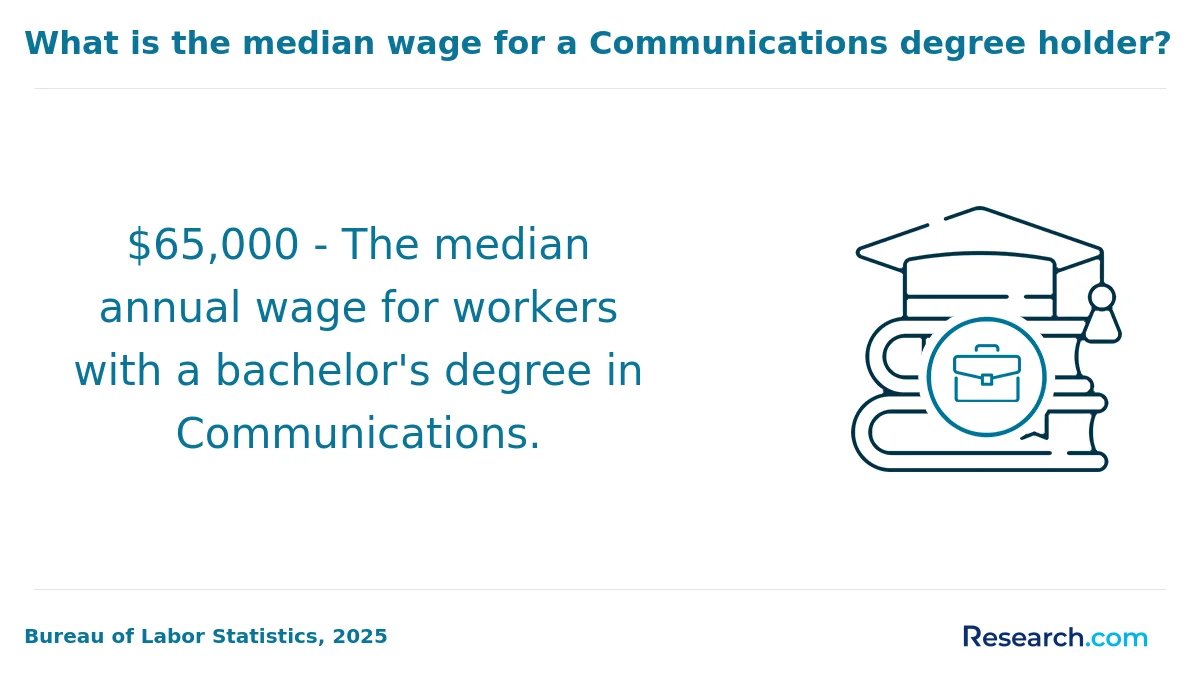
- Average starting salaries for communication degree holders in the state are about $45,000 per year, rising to $65,000-$70,000 with experience.
- The job market in North Carolina is strong, especially in the Research Triangle area, with growth rates of 7% to 9% expected annually for communication roles.
- Programs should have regional accreditation to ensure credit transferability and eligibility for financial aid.
- North Carolina institutions commonly offer career support services to online students for better job placement after graduation.
How long does it take to complete online communication degree in North Carolina?
Most students pursuing an online communication degree in North Carolina can expect to spend about four years completing a bachelor's program when studying full-time, as seen at institutions like the University of North Carolina at Chapel Hill and North Carolina State University. Graduates often share that balancing coursework with their personal lives felt manageable, thanks to flexible online schedules.
However, some students choose accelerated paths, finishing in as little as three years by taking heavier course loads or enrolling in summer sessions. For example, recent graduates from Elon University's online communication program highlight how summer classes enabled them to graduate earlier while staying engaged and motivated.
Part-time students, juggling work or family, may take five years or more. This extended timeline is common for adult learners at colleges such as East Carolina University, where the ability to pace studies provides meaningful progress without overwhelming commitments.
Master's degrees in communication typically require one to two years full-time, with some programs offering intensive 12-month options. Online learners appreciate how credit transfers from community colleges in North Carolina can shorten their study time, tailoring their educational journey to fit unique circumstances.
What's the difference between online and on-campus communication degree?
Online and on-campus communication degrees in North Carolina differ mainly in delivery and experience, though both provide strong foundational skills. For example, graduates from schools like the University of North Carolina at Chapel Hill often report that on-campus classes foster immediate, dynamic interactions with professors and peers, which can deepen understanding and create lasting networks. Meanwhile, alumni of online programs at institutions such as Appalachian State University appreciate the flexibility to study around work or family responsibilities, which reduces stress and allows learning at a personalized pace.
Cost considerations also shape the experience. On-campus students frequently pay about $9,000 annually for tuition plus housing and transportation, while online students may find lower fees and save significantly by avoiding these extra expenses. However, some online graduates emphasize the importance of carefully evaluating a program's support services to ensure access to timely advising and career resources, a factor that greatly impacts satisfaction and outcomes.
Both formats in North Carolina meet rigorous accreditation standards, but choosing depends on individual preferences-whether one values face-to-face engagement or the convenience of remote learning within a busy lifestyle.
What is the average cost of online communication degree in North Carolina?
The average cost of an online communication degree in North Carolina is roughly $66,690, reflecting a balance between more affordable in-state options and higher out-of-state tuition rates. In-state students typically face a median total tuition and fees of about $21,240, which many find manageable when attending public institutions like UNC Chapel Hill or East Carolina University. Graduates from these programs often share positive stories about how the relative affordability allowed them to focus on coursework without overwhelming financial stress.
Out-of-state students, however, may encounter a significantly higher financial commitment, with median costs reaching around $103,645. This difference highlights the importance of residency status when calculating the average cost of online communication degree North Carolina programs. Some students express a mix of excitement and caution when budgeting for their education, knowing that scholarships and financial aid from local organizations can be vital. These supports often make the costs more approachable.
Students pursuing communication degrees online in North Carolina must also consider additional fees or material costs that vary by school. Many find it helpful to explore scholarship options offered by bodies like the North Carolina State Education Assistance Authority. For those wanting to finish quickly and affordably, investigating the fastest online communication degree program options can be a valuable strategy in managing overall expenses and completing their education faster.
What financial aid is available to online communication degree students in North Carolina?
Students pursuing online communication degrees in North Carolina often rely on a mix of financial aid sources to manage costs. Federal aid, including Pell Grants and subsidized loans, forms the backbone for many, reducing financial strain without immediate repayment pressure. For instance, communication students at the University of North Carolina at Chapel Hill frequently mention how FAFSA-funded grants helped them focus more on their studies than on looming tuition bills.
State scholarships like the North Carolina Education Lottery Scholarship also play a key role, especially for those attending public universities such as North Carolina State University. These scholarships balance merit with need, offering vital support that can make pursuing an online degree more accessible.
Beyond government aid, institutional scholarships from schools like East Carolina University provide merit-based and diversity awards tailored to communication majors, often alleviating financial stress and boosting motivation.
Employers in the state sometimes offer tuition assistance, a crucial lifeline for working professionals studying part-time. Graduates recall how employer programs enabled them to gain communication skills without sacrificing family income.
Private scholarships, though less predictable, remain an important supplement, available through organizations focused on communications fields or state residency, rounding out the financial aid landscape students navigate.
What are the prerequisites for enrolling in online communication degree program in North Carolina?
Applicants aiming for online communication degrees in North Carolina typically need a high school diploma or an equivalent, such as a GED. This fundamental requirement is consistent across institutions like the University of North Carolina at Chapel Hill and Appalachian State University. Graduates often recall how submitting official transcripts enabled them to prove their readiness, sometimes uncovering a need for specific prerequisite courses in English or public speaking.
Although many public universities in North Carolina have made SAT or ACT scores optional, some private colleges still require them, reflecting differing admission philosophies. For instance, students from institutions like Elon University found this variability surprising but appreciated the clarity offered by admissions offices when explaining these expectations.
Many programs encourage a personal essay to express passion for communication, which helps applicants stand out. Positive feedback from graduates highlights that articulating career goals made the process feel personal and motivating. While prior experience in media or marketing isn't mandatory, it often gives candidates a confidence boost and practical perspective during their studies.
What courses are typically in online communication degree programs in North Carolina?
Online communication degrees in North Carolina typically offer a blend of foundational and specialized courses that reflect the state's dynamic media environment. Graduates from programs at universities like the University of North Carolina often recall the practical value of core courses such as Introduction to Communication Studies and Public Speaking, which helped them confidently convey ideas in both academic and professional settings.
Interpersonal Communication classes frequently stand out as particularly insightful, enabling students to navigate real-world conversations and leadership scenarios more effectively. Meanwhile, courses like Mass Media and Society provide a critical lens on how media shapes public opinion, a perspective valuable for careers in marketing or public relations.
Specialized classes such as Digital and Social Media Communication and Organizational Communication allow students to explore emerging trends and business-focused messaging. Many North Carolina graduates report that these courses, combined with hands-on projects, prepared them well for internships and virtual collaborations, reflecting local industry needs while keeping pace with technological shifts.
What types of specializations are available in online communication degree programs in North Carolina?
Students enrolled in online communication degree programs in North Carolina often encounter a variety of specializations designed to fit distinct career paths. Common concentrations include organizational communication, where graduates learn to navigate leadership communication and conflict resolution within companies or nonprofits, reflecting experiences shared by alumni from popular institutions like the University of North Carolina. Another prevalent focus is public relations, emphasizing media relations and strategic campaigns, which aligns well with job opportunities reported by graduates working in corporate communication in cities such as Raleigh and Charlotte. These specializations illustrate the range found within North Carolina communication programs concentrations, though it's important to consider whether they fully encompass emerging communication fields.
In addition, digital communication or social media management specializations are gaining traction, particularly given North Carolina's expanding tech industry. Students from colleges well-regarded for their communication offerings often highlight hands-on projects that mirror real-world digital marketing tasks, providing a sense of accomplishment and practical readiness. Media studies, including journalism-focused tracks, continue to be available but sometimes face scrutiny for adapting quickly enough to new media trends.
For prospective students evaluating costs and curricula, North Carolina offers diverse options. One way to identify affordable routes is by exploring the cheapest online communication degree program available, which can ease financial concerns while still providing valuable experiences linked to the state's economic sectors. These considerations come into play as students weigh the best fit among online communication degree specializations North Carolina offers.
How do you choose the best online communication degree in North Carolina?
Choosing the best online communication degree in North Carolina requires careful evaluation beyond surface-level factors. Graduates from well-known NC institutions often highlight the importance of programs that balance theory with practical skills, such as virtual internships or real-world projects, which are frequently offered to meet local industry demands in cities like Raleigh. Some find that programs emphasizing media studies or digital communication offer greater career flexibility, while others prioritize interpersonal communication for roles in organizational leadership.
Cost remains a pivotal concern; prospective students seeking an affordable online communication degree North Carolina residents often find public universities with in-state tuition significantly more accessible compared to private options. However, affordability should not overshadow accreditation and program reputation, as these impact job prospects. Many valued programs hold accreditation from SACSCOC and maintain active career services that support networking within North Carolina's market.
Flexibility is also critical. Working professionals praise asynchronous classes combined with attentive academic advising and tech support. Those interested in public relations might explore pathways that showcase strong connections to public relations jobs in the region. Ultimately, selecting one of the top accredited communication programs NC means weighing personal goals, learning styles, and regional industry ties thoughtfully.
What career paths are available for online communication degree students in North Carolina?
Graduates with an online communication degree in North Carolina find diverse career paths spanning public relations, marketing, corporate communication, and media. Those from institutions like the University of North Carolina at Chapel Hill or Appalachian State University often highlight hands-on experience that prepares them for real-world challenges, such as managing a company's public image or coordinating crisis communications. The North Carolina job market supports roles in public relations specialists who earn competitive salaries; the public relations salary with master's degree in this region reinforces the appeal of this career.
Other graduates mention opportunities in marketing and advertising, where skills in persuasive messaging and audience analysis developed through their degree prove invaluable. In metropolitan areas like Charlotte and Raleigh, corporate communication roles offer stability and growth, with salaries often exceeding $65,000. Students at popular North Carolina schools appreciate that these career options reflect the practical application of communication theories in local industries, making the online communication degree careers North Carolina presents both relevant and attainable.
Additionally, some find rewarding careers in human resources or media, fields that value clear interpersonal communication and adaptability. These diverse pathways confirm that North Carolina communication degree job opportunities are versatile, fitting various professional aspirations while fostering confidence through education delivered in flexible online formats.
What is the job market for online communication degree in North Carolina?
The job market for online communication degree graduates in North Carolina is generally promising, with steady demand in sectors like public relations, marketing, and media. Graduates from universities such as those in the University of North Carolina system often find themselves well-prepared for roles in dynamic cities like Raleigh and Charlotte, where digital communication skills are highly sought after. Many emphasize hands-on learning in social media management and strategic communication, which helps them stand out in competitive job searches for online communication degree jobs North Carolina.
This positive outlook is reflected in the variety of employers interested in communication graduates, including corporate communications departments, advertising agencies, and nonprofit organizations. Some graduates have highlighted how affordable tuition and strong industry connections in North Carolina facilitated their career entry. Yet, competition remains, especially for entry-level roles where salaries typically start near $40,000 but can grow with experience.
For students seeking advanced specialization, exploring public relations graduate programs can open additional doors by deepening expertise in strategic communication and media management.
While the growth rate for communication-related jobs in North Carolina is above average nationally, it's prudent to consider how evolving digital trends might impact specific roles, encouraging ongoing skill development.
Frequently Asked Questions About communication
Students pursuing online communication degrees in North Carolina can enhance their learning by actively engaging with course materials and participating in virtual discussions. Utilizing resources from the North Carolina Communication Association offers opportunities for networking and professional growth. Many state universities provide access to digital libraries and media labs that enrich study experiences. Internships with local organizations headquartered in vibrant hubs like Raleigh and Charlotte can provide practical experience. According to the North Carolina Department of Commerce, communication-related jobs in the state are expected to grow by 8% through 2030, highlighting the importance of practical skills. Time management and self-discipline are also key to success in online programs.
Emerging niches within the communication field reflect the evolving digital and media landscape. In North Carolina, areas such as digital content strategy, social media management, and data-driven communication are gaining prominence. According to the Bureau of Labor Statistics, roles in digital marketing are expected to grow by 13% nationally through 2032, with North Carolina following a similar trend due to its expanding tech hubs.
Specialties like public relations analytics and virtual event coordination also present new opportunities. With companies increasingly relying on online engagement, expertise in multimedia storytelling and interactive platforms is in demand. Institutions offering online communication degrees are adapting curricula to include these skills, aligning education with the state's job market needs.
After earning an online communication degree in North Carolina, graduates should focus on building a strong professional network. Joining local chapters of national organizations like the Public Relations Society of America (PRSA) can provide valuable contacts and industry insights. Completing internships or remote work experiences during studies enhances practical skills and improves employability.
North Carolina's growing media and technology sectors offer multiple job opportunities where communication skills are essential. According to the U.S. Bureau of Labor Statistics, communication-related occupations in the state are projected to grow by 8% through 2031, faster than the national average.
Graduates should also develop a portfolio showcasing writing samples, social media campaigns, or video projects. Familiarity with digital tools like Adobe Creative Suite and content management systems can increase job prospects. Additionally, utilizing statewide job boards such as NCWorks aids in finding relevant roles within communications fields.
Employers in North Carolina highly value communication degree graduates who demonstrate strong writing and verbal skills. According to the North Carolina Department of Commerce, clarity and precision in message delivery are critical in industries like public relations, marketing, and corporate communication.
Another key skill is digital literacy, particularly proficiency with social media platforms, content management systems, and multimedia tools. The rise of remote work has increased demand for professionals who can effectively engage diverse audiences online.
Critical thinking and problem-solving abilities also stand out, as employers seek candidates who can analyze complex information and develop strategic communication plans.
Finding internships in North Carolina for communication degree students involves leveraging local resources and university career centers. Many universities like the University of North Carolina and North Carolina State University maintain partnerships with media outlets, public relations firms, and marketing agencies.
Sites such as Handshake and the North Carolina Department of Commerce's job portal list relevant internships. According to the North Carolina Department of Commerce, the state's communication and media industries employed over 30,000 professionals in 2023, indicating a healthy internship market.
Networking events and professional associations like the Public Relations Society of America (PRSA) - North Carolina chapter also offer valuable connections. Applying early and tailoring resumes to highlight communication skills can increase internship opportunities.
Online communication degrees offer significant advantages for career mobility and advancement in North Carolina. The state's diverse economy-including industries like media, healthcare, and technology-values professionals skilled in digital communication and public relations. According to the U.S. Bureau of Labor Statistics (2023), employment for communication specialists in North Carolina is projected to grow by 8% over the next decade, higher than the national average. Graduates with online communication degrees gain versatile skills such as digital marketing, content creation, and strategic communication, which are highly sought after by employers statewide. These skills facilitate career transitions and promotions across sectors.
Additionally, North Carolina's strong network of universities offering accredited online programs helps employees balance education with work. This flexibility supports continuous skill development, a key factor in advancing to leadership roles or specialized positions. Professional organizations in the state also recognize online credentials, further enhancing career prospects for graduates.
Studying for a communication degree in North Carolina equips students with versatile skills applicable across multiple fields. Programs emphasize critical thinking, digital literacy, and effective messaging-key for interdisciplinary careers.
North Carolina universities often integrate courses in business, technology, psychology, and media studies, fostering collaboration and adaptability. According to the North Carolina Department of Commerce, over 15% of regional jobs require communication expertise combined with other disciplines, highlighting market relevance.
Online communication degrees also provide flexibility, allowing students to tailor electives toward emerging fields like health communication and data analytics. This approach strengthens graduates' capacity to bridge gaps between departments, industries, and audiences.
When choosing between a thesis and a non-thesis communication degree program in North Carolina, students should consider their career goals and learning preferences. Thesis programs typically focus on original research and academic writing, ideal for those planning to pursue doctoral studies or research-heavy roles. Non-thesis options emphasize practical skills and professional experience through projects or internships, suiting students aiming for immediate employment in communication fields.
North Carolina's universities offer both pathways, with the University of North Carolina system reporting that approximately 40% of communication master's students choose thesis options (North Carolina Office of Institutional Research, 2023). Understanding these differences helps align your degree with long-term objectives.
Students based in North Carolina who pursue online communication degrees have limited direct options for studying communication abroad through US institutions. Most North Carolina universities offering online communication programs focus on domestic instruction without built-in study-abroad components. However, some public universities, like the University of North Carolina system, provide exchange opportunities or short-term international programs that students can participate in separately from their online coursework.
Additionally, students may independently enroll in overseas communication courses that can transfer credit back to their North Carolina institution, though this requires careful coordination with academic advisors. According to the Institute of International Education, only around 2% of communication majors nationwide participate in study-abroad, reflecting the challenge for fully online students to engage abroad. Therefore, North Carolina students must plan strategically to integrate international experience into their online degrees.
Students pursuing online communication degrees in North Carolina can benefit from part-time roles that directly enhance their skills and resume. Popular opportunities include social media assistant positions, where students manage content and engagement for local businesses or nonprofits. These roles help develop practical marketing and communication strategies, aligning well with coursework.
Other common options are communications intern roles in public relations firms or corporate communications departments. According to the North Carolina Department of Commerce, the state's communications sector showed steady growth of 2.4% annually, indicating growing job availability.
Additionally, freelance writing and editing for regional publications offer flexible, experience-building work. These positions strengthen writing proficiency and deadlines management, crucial for communication graduates.
Online communication students in North Carolina have access to a variety of networking opportunities through professional organizations and local events. The Public Relations Society of America (PRSA) North Carolina chapters offer virtual workshops and networking sessions tailored to communication professionals statewide.
Many universities with online programs encourage participation in student chapters of national groups like the National Communication Association, which hosts conferences and webinars accessible online.
Additionally, North Carolina hosts regional media and communication mixers in cities like Raleigh and Charlotte, providing chances to connect with industry specialists.
According to the North Carolina Department of Commerce, communication-related jobs are projected to grow by 7% through 2030, supporting the value of strong networks.
Alumni networks play a crucial role for online communication degree students in North Carolina by offering access to professional connections and mentorship. Many universities in the state have strong alumni groups that help recent graduates navigate the competitive communication job market.
These networks facilitate job placements and internships, which increase employment rates for graduates. According to the North Carolina Department of Commerce, sectors related to communication, such as media and public relations, have shown steady growth, making alumni support valuable for entering these fields.
Moreover, alumni frequently provide workshops and career advice tailored to communication professionals, enhancing students' practical skills and industry knowledge. This engagement fosters a supportive community, promoting long-term career development and networking opportunities throughout North Carolina's diverse markets.
Many online communication degree programs in North Carolina offer flexible curricula that allow students to tailor their studies to specific career goals. For example, students can choose electives in digital media, public relations, corporate communication, or media production. This flexibility helps develop skills relevant to areas such as marketing, journalism, or organizational communication.
Several institutions provide internship opportunities and capstone projects focusing on local industries, which are vital for networking and practical experience.
The North Carolina Department of Commerce highlights communication-related jobs growing by 7% through 2030, emphasizing the value of targeted learning paths for career readiness.
Online communication students in North Carolina often face challenges related to balancing coursework with personal and professional responsibilities. Many learners are working adults, which can make meeting deadlines and participating in live discussions difficult. Limited access to reliable high-speed internet, especially in rural parts of North Carolina, also impacts students' ability to fully engage in digital learning platforms.
Another challenge is the lack of in-person networking opportunities, which are valuable for building connections in the communication field. According to the North Carolina Department of Commerce, about 22% of the state's population lives in rural areas where such limitations are more common. Additionally, some students report difficulty in mastering practical skills like digital media production solely through online formats.
With an online communication degree in North Carolina, graduates can pursue several professional certifications to enhance their career prospects. One notable option is the Accredited Business Communicator (ABC) certification from the Association for Business Communication, recognized nationwide. This credential validates skills in strategic communication and professional writing.
Another key certification is the Certified Professional in Learning and Performance (CPLP) offered by the Association for Talent Development, useful for those interested in training and development roles.
North Carolina's growing media and corporate sectors often value the Project Management Professional (PMP) certification, which complements communication skills by adding project management expertise.
These certifications typically require professional experience and passing an exam. According to the U.S. Bureau of Labor Statistics, the need for skilled communicators in North Carolina is projected to grow faster than average through 2031, highlighting the value of such credentials.
Applying to an online communication program in North Carolina requires careful preparation. Start by researching accredited universities that offer online degrees in communication, such as the University of North Carolina system schools.
Craft a clear and concise personal statement that highlights your career goals and explains why you want to pursue communication. Emphasize skills like writing, digital media, and interpersonal communication, which are crucial in this field.
Include relevant experience, such as internships or work in public relations or media. Many programs value applicants who demonstrate practical knowledge alongside academic achievements.
Also, ensure your application meets all deadlines and submission requirements specified by the school.
The NC Department of Commerce reports the growing demand for communication professionals, making it important to show how you can contribute to this evolving market.
Careers in communication are increasingly valued worldwide for their role in shaping public discourse, media, and organizational effectiveness. In the United States, including North Carolina, communication graduates benefit from diverse opportunities in public relations, digital media, and corporate communications. The U.S. Bureau of Labor Statistics projects a 9% growth in related fields by 2030, signaling strong demand nationally.
Globally, communication professionals adapt to cultural nuances and multilingual contexts, which expands career prospects beyond borders. For North Carolina students studying online, this means gaining skills applicable in multinational firms and international organizations.
North Carolina's economy emphasizes technology and media industries, further enhancing local job prospects for communication graduates. Universities and colleges in the state offer degrees focusing on global communication strategies and digital competencies essential for today's market.
Gaining practical experience while studying for an online communication degree in North Carolina is essential for career readiness. Many universities encourage participation in virtual internships with local businesses, media outlets, and nonprofit organizations. These internships often provide opportunities to develop skills in public relations, digital marketing, and media production.
Additionally, students can engage in class projects that involve real-world communication challenges, often supported by faculty with industry connections. North Carolina's growing media market, including hubs in Raleigh and Charlotte, offers numerous remote work possibilities in communication roles.
Joining online student organizations and professional groups like the Public Relations Society of America (PRSA) also helps build a professional network and gain hands-on experience.
Choosing the right concentration within an online communication degree in North Carolina depends on your career goals and interests. Popular areas include public relations, digital media, and organizational communication. Each concentration offers specialized skills that align with different job markets.
Consider the demand in North Carolina's job sectors. For example, public relations and marketing roles are growing steadily, with a projected 8% increase statewide by 2030, according to the North Carolina Department of Commerce.
Review program curricula carefully to ensure they cover skills like social media strategy or crisis communication, relevant to current industry standards. Also, check if the program offers internships or networking opportunities with local companies.
Ultimately, align your choice with your strengths and desired work environment to maximize success.
Related Communication Rankings for Nearby States
- 2027 Best Online Communication Degree Programs Ranking in Virginia
- 2027 Best Online Communication Degree Programs Ranking in Georgia
- 2027 Best Online Communication Degree Programs Ranking in Kentucky
- 2027 Best Online Communication Degree Programs Ranking in Florida
- 2027 Best Online Communication Degree Programs Ranking in Pennsylvania
- 2027 Best Online Communication Degree Programs Ranking in Ohio
- 2027 Best Online Communication Degree Programs Ranking in Arkansas
- 2027 Best Online Communication Degree Programs Ranking in Missouri
- 2027 Best Online Communication Degree Programs Ranking in New York
- 2027 Best Online Communication Degree Programs Ranking in Illinois
Top Trending Communication Rankings
References
- COMMUNICATION TRANSFORMATIONS IN THE DIGITAL ERA: A COMPARATIVE ANALYSIS BETWEEN TRADITIONAL AND DIGITAL CHANNELS https://www.seeci.net/revista/index.php/seeci/article/download/935/2505
- Top Communication Skills Employers Seek From College Grads https://www.manpower.com.sg/en/insights/blogs/2021/03/top-communication-skills-employers-seek-from-college-grads
- What Kind of Jobs Can You Get With a Communications Degree? https://www.belmont.edu/stories/articles/2025/what-kind-of-jobs-can-you-get-with-a-communications-degree.html
- 5 Common Barriers To Communication In Schools | Skool Loop https://skoolloop.com/news-items/5-common-barriers-to-communication-in-schools/
- Know more about thesis vs non- thesis: what is the difference? https://studyfans.com/en/blogs/816
- Where Communications Majors Earn the Most (and Least) https://www.mastersincommunications.org/where-communications-majors-earn-most-least/
- Communications Degree | Communications Major https://www.collegeadvisor.com/resources/communications-degree/
- Online BA in Communication https://www.wiu.edu/cofac/communication/online_BA.php
- Montreat College | Public Relations and Digital Media https://www.montreat.edu/on-campus/public-relations-digital-media/
- Online Degree vs. Traditional: Choosing the Right Path https://beal.edu/online-degree-vs-traditional/