2027 Best Online Master's in Communication Degree Programs Ranking in the USA

Co-Founder and Chief Data Scientist
Choosing the right online master's in communication program is a big step toward advancing your career and personal growth. This article presents the 2027 Best Online Master's in Communication Degree Programs Ranking in the USA, carefully developed by the Research.com team of data scientists.
By exploring this ranking, you'll gain valuable insights to help you make an informed decision about which programs truly stand out. Earning a communication degree can open doors to exciting opportunities and meaningful connections in many fields.
We're here to support your journey every step of the way.
Key benefits of getting online communication degree in America
- Communication degree graduates can pursue various careers such as public relations specialists, who earn a mean annual wage of around $63,000 in the US, showing promising salary potential.
- Graduates from popular universities like the University of Texas often explore diverse roles including media planning, corporate communication, and digital marketing, providing flexibility in career choices.
- Online communication degrees from schools such as Arizona State University offer the benefit of flexible schedules and accessibility, helping students balance studies with work or family life.
- Key benefits of getting online communication degree in America
- What can I expect from online communication degree in America?
- Where can I work with online communication degree in America?
- How much can I make with online communication degree in America?
- 2027 Best Online Master's in Communication Degree Programs Ranking in the USA
- Key Findings
- How long does it take to complete online communication degree in America?
- What's the difference between online and on-campus communication degree?
- What is the average cost of online communication degree in America?
- What financial aid is available to online communication degree students in America?
- What are the prerequisites for enrolling in online communication degree program in America?
- What courses are typically in online communication degree programs in America?
- What types of specializations are available in online communication degree programs in America?
- How do you choose the best online communication degree in America?
- What career paths are available for online communication degree students in America?
- What is the job market for online communication degree in America?
- Top Trending Communication Rankings
What can I expect from online communication degree in America?
The average cost of an online communication degree in America varies widely, but many students find it surprisingly manageable, especially at public universities. Graduates from popular schools like the University of Florida or Arizona State often share how in-state tuition rates helped them save thousands, sometimes completing their master's programs for around $10,000 to $20,000.
Out-of-state learners may pay a bit more, yet many institutions extend competitive pricing or special rates for online students, making financial barriers less daunting. Programs frequently offer financial aid or employer tuition assistance, which students take full advantage of to ease the burden.
Picture juggling your work emails while progressing through a strategic communication project from a campus you never physically visit - that's the reality for many who appreciate the flexibility and value these programs offer. Graduates often express excitement about not only the affordable tuition but the blend of expert instruction and hands-on experiences that felt worth every penny.
Where can I work with online communication degree in America?
Graduates with an online communication degree from American institutions like the University of Southern California or Syracuse University often find themselves stepping into vibrant roles across various dynamic fields. Imagine crafting a compelling press release as a public relations specialist, boosting a company's image while working remotely with a diverse team. Many thrive in corporate communication positions, where they develop strategies that keep multinational companies connected and informed.
Others dive into the fast-paced media world, becoming digital content creators or social media managers for entertainment outlets. With news consumption shifting online, these roles blend creativity with emerging technologies, exciting graduates eager to innovate. Marketing agencies also attract graduates, where they design targeted campaigns and analyze audience responses, bringing brands to life with strategic messaging.
Nonprofit organizations and universities offer fulfilling opportunities to those passionate about community outreach and fundraising communications. These roles allow grads to see the real-world impact of their efforts, from organizing awareness campaigns to securing grants, making everyday work feel meaningful and adventurous.
How much can I make with online communication degree in America?
Graduates from online communication programs at popular American universities often step into the workforce with promising salary prospects that reflect both their fresh skills and the dynamic world of communication careers. For example, many find entry-level roles starting around $40,000 to $50,000 per year, a thrilling launchpad that grows more rewarding as they gain experience and expertise.
Imagine a recent graduate from a well-regarded school in California beginning as a public relations specialist; as they build connections and sharpen their strategic abilities, their earnings can climb steadily.
Seasoned professionals in leadership roles, such as communications managers in vibrant cities like New York or Washington, D.C., often reach annual salaries ranging from $85,000 to over $120,000. The U.S. Bureau of Labor Statistics notes communications managers had a median wage near $120,470 in 2022, showing the exciting potential for those who advance.
Many graduates from institutions like the University of Southern California or Boston University feel a tangible boost in their career journey by pursuing advanced degrees online, opening doors to specialized positions where paychecks reflect their expertise and dedication.
2027 Best Online Master's in Communication Degree Programs Ranking in the USA
How do we rank schools?
Investing in your education is a significant decision that can shape your future, and the Research.com team understands the importance of making informed choices. To assist prospective students, we have meticulously crafted the "2027 Best Online Master's in Communication Degree Programs Ranking in the USA." Our commitment to quality, credibility, and accuracy is reflected in the extensive research and analysis conducted to compile this ranking.
We utilized the following reputable data sources to ensure a comprehensive evaluation of communication programs:
By exploring this ranking, readers will gain valuable insights into the best online communication master's programs across the USA, empowering them to make confident and well-informed educational decisions. For more details on our methodology, please visit our Research.com methodology page.


# 3 position
University of Florida
Master of Mass Communication with a specialization in Digital Strategy


# 9 position
Florida International University
Master of Mass Communication, Global Strategic Communication




# 17 position
The University of Alabama
Master of Communication Studies with a Specialization in Organizational Leadership


# 20 position
Penn State University Park
Master of Strategic Communications

Key Findings
- Online communication degrees typically take two to four years to complete and cover areas like media, public relations, and digital communication.
- Undergraduate tuition ranges from $10,000 to $15,000 per year at public universities and can exceed $25,000 at private schools; graduate tuition averages between $20,000 and $30,000.
- Graduates start with an average salary of $48,000, which can grow to a median of $67,000 with experience.
- Employment in communication fields is expected to grow 10% from 2021 to 2031, faster than the average for all jobs.
- Common jobs for graduates include public relations specialist, marketing manager, and social media coordinator, with a focus on digital skills.
- Degrees from regionally accredited programs are preferred and many offer internships and practical projects to build career readiness.
How long does it take to complete online communication degree in America?
Imagine balancing a day job while progressing part-time, turning evenings into rich learning experiences over 4 years or more. Master's degree seekers at schools such as Boston University recount how a focused 1.5 to 2-year timeline on a full-time track feels like a fast-paced adventure, while part-time options extend the voyage to 2 to 4 years, offering flexibility to explore both career and education.
Credits matter too-from about 120-130 for undergrads to 30-45 for Master's-sometimes shortened by transferring past credits. This landscape invites exploration, letting each student chart a personalized course across America's diverse online communication programs.
What's the difference between online and on-campus communication degree?
Imagine studying communication at a vibrant campus like the University of Southern California, where the energy is palpable and networking happens naturally in buzzing hallways and group projects. On-campus programs like this immerse you in face-to-face connections, immediate access to professors, and rich extracurricular events that spark creativity and collaboration. Graduates often describe the thrill of live debates and impromptu study sessions as unforgettable parts of their experience.
Now picture a different scene-a graduate from Arizona State University, navigating their online communication degree from home. They appreciate the freedom to attend lectures whenever it fits their schedule, balancing work or family without missing a beat. The self-paced nature means they dive deep into digital media tools, joining virtual teams across time zones, simulating real-world challenges in ways that feel modern and dynamic.
Both paths open doors in media, public relations, and corporate communication, but while on-campus programs buzz with personal interaction, online degrees offer unmatched flexibility and cost-effective options-perfect for adventurous learners crafting their own rhythm in America's evolving educational landscape.
What is the average cost of online communication degree in America?
Exploring the average cost of an online communication degree in America reveals a fascinating spectrum of opportunities and challenges. Graduates from public universities often share how their in-state tuition, averaging around $18,177 in total, made pursuing a communication degree feel like a manageable adventure rather than a daunting expense. Meanwhile, out-of-state students at these same institutions might encounter costs closer to $22,308, reflecting the added layers of value and flexibility that come with studying away from home.
Private colleges known for their robust communication programs, including some popular across the nation, tend to have tuition costs near or slightly above $23,000, a figure that alumni describe as an investment in both quality education and broad networking possibilities. These pricing variations highlight why it's wise for prospective students to reflect on their unique situation when considering the average cost of online communication degree USA options.
Beyond tuition, graduates often mention additional fees such as technology and course materials, which, albeit smaller, contribute to the total cost. However, the freedom from traditional on-campus fees helps balance out these expenses. This balance is especially important when calculating the total tuition and fees for communication degree online.
Many students find joy in uncovering financial aid offerings and scholarships that ease the cost, transforming their educational quest into an exciting journey. To explore pathways with a lighter financial footprint, check out some of the easiest communication programs online that have helped others embark on their communication careers with confidence.
What financial aid is available to online communication degree students in America?
Many online communication students in America embrace financial aid as the gateway to their academic dreams. Federal student aid is a lifeline, with programs like Pell Grants offering up to $7,395 yearly-enough to spark hope for students at public universities such as the University of Florida or Arizona State University. Imagine securing that grant and feeling the weight lift off your shoulders!
Loans, like the Direct Unsubsidized Loan, empower graduate students at renowned schools like Syracuse University to borrow up to $20,500 annually with manageable interest rates. Income-driven repayment plans later help ease financial pressures after graduation, turning daunting debt into a manageable journey.
Scholarships tailored for communication majors also brighten the path-merit, need, or passion-based awards from organizations like the National Communication Association often fuel success stories at places like the University of Southern California.
State programs and employer tuition assistance frequently add layers of support, especially for local students or working professionals, making the investment in education feel like a thrilling adventure rather than a financial burden.
What are the prerequisites for enrolling in online communication degree program in America?
Diving into an online communication degree in America often means starting with a bachelor's degree from a regionally accredited university-think of well-known schools like the University of Southern California or Boston University, where many graduates recall how their diverse undergraduate backgrounds, from journalism to media studies, paved the way. While not always mandatory, foundational courses in related fields boost your confidence and application strength, making you feel ready to embark on this exciting journey.
Picture submitting transcripts that reflect your academic effort, usually with a GPA around 3.0, a filter many programs use but don't see as a wall-graduates often share stories of their perseverance and how programs valued their full profile. GRE scores? Increasingly rare, freeing many from extra testing stress.
Professional experience, letters of recommendation, and a heartfelt statement of purpose further brighten your path, showing programs like those at UNC or Syracuse University your unique story and passion. Reliable tech and quiet study spaces complete the toolkit, ensuring your adventure online is smooth and empowering.
What courses are typically in online communication degree programs in America?
Diving into an online communication degree in America means exploring an exciting mix of courses that shape you into a confident, adaptable communicator ready for today's fast-evolving media world. Imagine studying at a well-known institution like the University of Florida or Arizona State University, where graduates rave about the hands-on approach to learning core communication theories and interpersonal skills that feel immediately relevant to everyday life.
You'll journey through courses like Introduction to Communication Theory, unpacking how messages travel between people, and Media Writing and Production, where you get to craft stories and learn basic audio or video creation-a favorite among students eager to tell compelling stories.
Others enjoy Public Relations and Strategic Communication classes, perfect for those dreaming of shaping a company's image or influencing public opinion, while Digital and Social Media Communication taps into online trends, prepping learners to engage audiences on platforms like Instagram or TikTok.
Graduate students in America often dive deeper with specialized classes such as Crisis Communication, training them to stay cool when breaking news or emergencies hit-a skill that graduates say feels empowering in real-world scenarios.
What types of specializations are available in online communication degree programs in America?
Diving into online communication degree specializations USA opens a world where you can carve your niche in dynamic fields. Imagine exploring corporate communication at a renowned college, mastering how to craft messages that shape a company's image and forging strong stakeholder bonds. Graduates often reflect on how this path empowered them to confidently lead teams and manage crises in real business settings.
Another thrilling route is advertising and public relations, where students at top American universities learn to design powerful campaigns that capture hearts and minds, especially through digital channels. Those who've walked this road share stories of crafting viral content and navigating the fast-paced world of media relations with ease.
For the curious explorer, media studies and digital communication offer a gateway into the ever-shifting digital landscape-a chance to become a storyteller on social platforms or a savvy digital journalist. Graduates celebrate how their skills keep them ahead in the growing digital media market.
Health communication is a heartfelt specialization where you can impact public well-being by designing crucial health campaigns. Many who studied this field in America feel proud knowing their work directly influences lives, especially during global health challenges. Other specializations that enrich students' journeys include intercultural, political, and organizational communication, each offering unique vistas to build meaningful careers. For a lively insight on careers in communication, this blend of choices makes studying communication in America an exciting adventure.
How do you choose the best online communication degree in America?
Choosing the best online communication degree in America is like embarking on an exciting journey where every step shapes your future. Graduates from well-known universities often share how accreditation plays a vital role-programs recognized by agencies like the Higher Learning Commission give you confidence in quality and access to financial aid. Imagine balancing life and study: programs offering asynchronous classes and part-time options cater to busy schedules, making it easier to fit learning around work and family.
Many find joy in discovering programs with curricula that match their passions, whether in media studies or strategic communication. Graduates from popular colleges highlight how faculty with strong industry ties opened doors to internships and networking, fueling vibrant career paths. When hunting for affordable online master's communication programs America offers, understanding tuition ranges and fees-including those at public universities-is crucial.
For those curious about future prospects, employment growth in communication fields is promising. Dive deeper into program options with resources like master's degree communications online to explore paths that excite you.
What career paths are available for online communication degree students in America?
Graduates with an online communication degree in America find themselves stepping into a world bursting with diverse career opportunities. Whether working as public relations specialists crafting compelling narratives or corporate communications managers aligning brand messages across global teams, the possibilities encourage adventurous spirits. Imagine a recent graduate from a well-known state university using their skills to develop digital strategies that resonate with millions or another from a private college diving into journalism's evolving digital landscape-both excited by the dynamic pace of their work. These roles perfectly embody the exciting range of jobs for online communication degree graduates in America.
From becoming marketing and social media specialists capitalizing on booming content budgets to exploring communication research analyst roles guiding data-driven decisions, students feel inspired by their career explorations. Online programs from top institutions equip graduates with versatile skills fit for real-life challenges like event planning for large corporate gatherings. For those eager to uncover these pathways, seeing success stories from peers adds genuine motivation. Curious learners should also explore the best online public relations degree programs available, aligning education with thriving career prospects in America.
What is the job market for online communication degree in America?
The job market for online communication degrees in the USA is vibrant and full of exciting possibilities. Graduates from well-known universities often share how their online programs prepared them for dynamic roles in marketing, media, and corporate communications, paving the way for rewarding careers. The demand for professionals who master digital messaging and brand storytelling continues to rise, especially in metropolitan hubs bustling with media firms and corporate headquarters.
Employment opportunities for communication graduates in America span public relations, social media management, and content strategy. Imagine crafting campaigns that shape public opinion or managing a brand's voice across global platforms-these are real-world scenarios graduates encounter with confidence after their studies. Salary prospects are promising too, with starting figures comfortably between $45,000 and $60,000, climbing steadily as professionals gain experience.
Curious students might find an accelerated master's degree public relations online a great way to jumpstart their journey, shortening the time to enter this expanding field. This flexibility and the robust job market make online communication degrees in America an adventurous choice for future communicators eager to thrive.
Frequently Asked Questions About communication
Online communication degree students in America can enhance their learning by actively engaging with course materials and virtual discussions. According to the National Center for Education Statistics, students who participate frequently in online forums tend to achieve higher retention rates. Scheduling dedicated study times and minimizing distractions also improves focus and comprehension.
Utilizing university resources such as virtual libraries, tutoring centers, and career services supports academic success. Networking with peers and professionals through platforms like LinkedIn helps build connections valuable in the communication field, which employs over 312,000 professionals nationwide (Bureau of Labor Statistics, 2023).
Lastly, seeking internships or project-based experiences complements theory with practical skills, enhancing employability in this competitive market.
Emerging niches within the communication field in the United States reflect the growing influence of digital technology and changing media landscapes. One prominent area is social media management, where specialists strategize content and engagement for brands, capitalizing on platforms favored by over 70% of Americans aged 18-49, according to Pew Research Center (2023).
Another expanding niche is data analytics in communication, which applies statistical tools to assess audience behavior and campaign effectiveness, a skill increasingly valued in corporate sectors. Additionally, digital storytelling and multimedia journalism are gaining traction as news consumption shifts online.
Health communication is also growing, focusing on public awareness through various media amid ongoing public health challenges in the U.S.
After completing an online communication degree in America, preparing for the job market involves several key strategies. Building a professional portfolio showcasing projects and presentations can significantly enhance employability. Networking plays an essential role; joining organizations such as the National Communication Association offers access to job resources and industry connections.
Internships, even virtual ones, provide practical experience that employers value. According to the U.S. Bureau of Labor Statistics, communication-related occupations are expected to grow by 7% through 2031, indicating steady demand. Additionally, acquiring skills in digital media, social media analytics, and public relations software will increase competitiveness in this evolving field.
Continuous learning and certification in tools commonly used by communication professionals can further improve job readiness.
Employers in America highly value strong communication skills among graduates with online communication degrees. According to the National Association of Colleges and Employers (NACE), over 75% of employers prioritize verbal and written communication abilities when hiring.
Critical thinking and problem-solving are also essential, as these skills enable graduates to develop clear messages tailored to diverse audiences. Digital literacy, including social media management and data analytics, is increasingly important due to the growing role of technology in communication.
Teamwork and interpersonal skills matter as well, as communication professionals often collaborate across departments and manage stakeholder relationships effectively.
Finding internships relevant to a communication degree in America requires strategic steps, especially for online students. Start by utilizing your university's career services, which often maintain partnerships with companies seeking communication interns.
Professional organizations like the Public Relations Society of America (PRSA) offer internship listings and networking events tailored to communication students. According to the National Association of Colleges and Employers (NACE), about 60% of communication graduates secure employment through internships.
Additionally, leverage platforms such as Handshake and LinkedIn to find opportunities in media, public relations, and corporate communications.
Finally, informational interviews and local media outlets can help uncover hidden internships that align with your degree goals.
An online communication degree in America significantly enhances career mobility and advancement opportunities. According to the U.S. Bureau of Labor Statistics, communication-related roles are expected to grow by 10% from 2022 to 2032, faster than the average for all occupations. This growth creates demand for professionals skilled in digital media, public relations, and corporate communication.
Employers value the adaptability and technical skills gained from an online program, which often focus on modern communication tools and strategies. Graduates typically find it easier to shift industries or move into leadership roles.
Moreover, holding a master's degree in communication can increase earning potential, with median annual wages reaching $75,000 for some specialized roles, as reported by the National Communication Association.
Studying for a communication degree in America equips students with skills that cross multiple disciplines, including business, technology, and healthcare. Communication programs emphasize critical thinking, digital literacy, and cultural awareness, which are essential in today's interconnected workplaces.
According to the National Communication Association, 89% of communication graduates find jobs within six months of graduation, often in diverse fields such as marketing, public relations, and organizational leadership. Many online programs integrate courses from psychology, media studies, and data analysis to foster these interdisciplinary competencies.
This breadth of knowledge prepares students to adapt to evolving industries, making them valuable in teams that require collaboration across specialties. Schools in the US often partner with industries to keep curricula current and relevant.
Choosing between a thesis and a non-thesis online communication degree in America depends largely on your career goals and learning preferences. Thesis programs typically emphasize research skills, including developing, conducting, and writing original studies. This route suits students aiming for academic roles or doctoral studies. According to the National Center for Education Statistics, about 30% of master's candidates in communication choose thesis-based tracks.
Non-thesis programs focus on practical skills and coursework, often including capstone projects or internships. They appeal to professionals seeking advancement in corporate, media, or public relations fields without the demand for research.
Consider time commitment too: thesis options often require 6 to 12 additional months. Evaluate program outcomes and faculty expertise to align with your long-term plans.
American students seeking to study communication abroad have several options through US universities offering international partnerships and exchange programs. Many accredited communication programs in the US, including online degrees, provide opportunities to take courses or complete internships with partner institutions overseas. According to the Institute of International Education, nearly 300,000 US students studied abroad in 2022, with disciplines like communication and media gaining popularity.
Some universities allow fully online communication degrees with study abroad components in countries such as the UK, Australia, and Spain. These programs help students gain global perspectives without interrupting their American degrees. Additionally, students can explore summer or semester-long study abroad options focused on communication, public relations, or digital media to enhance cross-cultural skills important in the field.
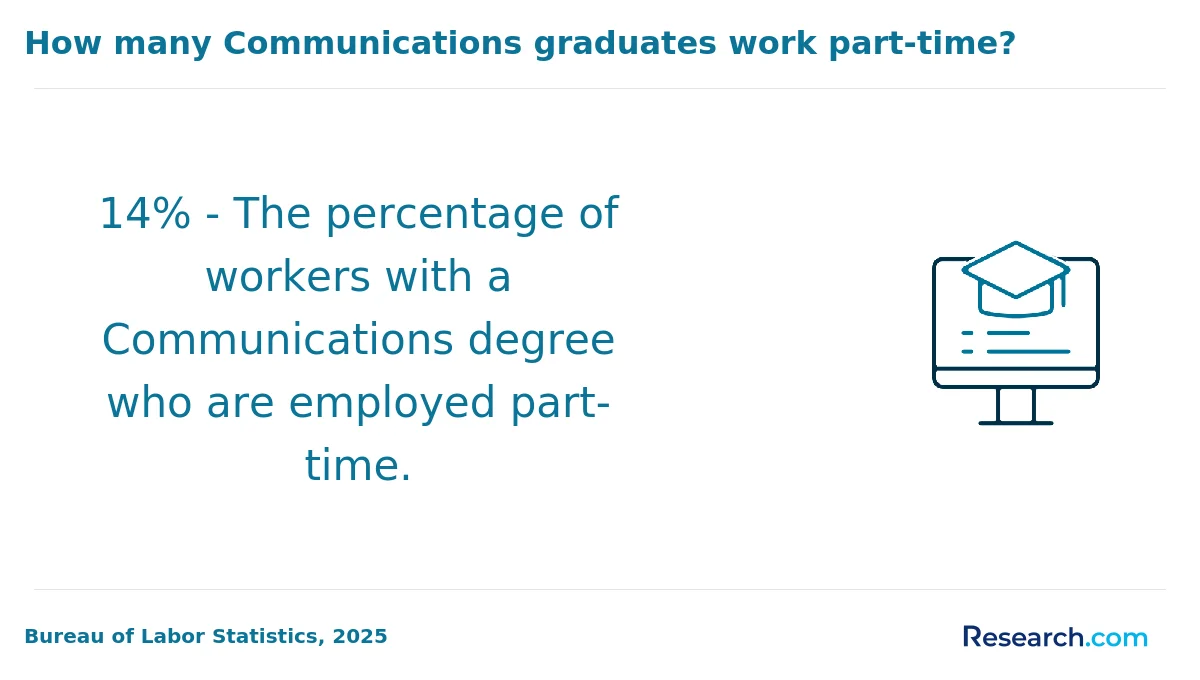
Part-time jobs that complement communication degrees in America often focus on practical experience in media, marketing, and public relations. Students might find roles as social media coordinators, content writers, or public relations assistants. These positions help develop key skills such as writing, editing, and digital communication.
According to the U.S. Bureau of Labor Statistics, roles in public relations and communications are projected to grow by 11% from 2022 to 2032, emphasizing the demand for practical experience.
Internships and freelance opportunities in local newsrooms or nonprofit organizations also provide valuable hands-on experiences that align with coursework and enhance résumés.
Overall, these part-time roles help blend academic knowledge with real-world applications in communication fields.
Online communication students in America benefit from numerous networking opportunities that help bridge the gap between virtual learning and professional connections. Many accredited programs offer access to exclusive online forums and alumni networks, where students can engage with peers, faculty, and industry professionals.
Additionally, institutions often facilitate virtual career fairs and webinars featuring leaders from sectors like public relations, media, and corporate communication. According to the National Communication Association, over 70% of communication graduates find job leads through networking activities linked to their programs.
Furthermore, students can join national organizations such as the Public Relations Society of America (PRSA) and attend regional conferences and workshops, which increasingly offer hybrid or virtual participation options.
Alumni networks offer significant advantages to students pursuing online communication degrees in America. These networks create opportunities to connect with established professionals working across various communication fields, such as public relations, media, and corporate communications.
According to a 2023 report by the National Communication Association, over 70% of graduates found their first jobs through alumni referrals. Access to these connections can provide valuable mentorship, career advice, and exclusive internship openings not widely advertised.
Additionally, alumni often host industry events and webinars that help students stay updated on current communication trends and technologies relevant to the U.S. market. This fosters both professional growth and a stronger community among graduates.
Customizing an online communication degree in America allows students to align their education with specific career goals. Many universities offer concentrations such as public relations, digital media, organizational communication, or health communication. According to the National Center for Education Statistics, over 70% of communication programs provide elective options to tailor skillsets.
Students can also select internships or capstone projects that focus on industries like marketing, corporate communication, or media production. Online formats often include flexible scheduling, letting working professionals balance study and career advancement. Accreditation by bodies such as the Accrediting Council on Education in Journalism and Mass Communications (ACEJMC) helps ensure quality and relevance.
Additionally, some programs emphasize practical tools like social media analytics or multimedia storytelling, reflecting current employer demands in the US communication sector. By choosing coursework and practical experiences strategically, students enhance career readiness in a competitive job market.
Online communication students in America often face challenges related to engagement and isolation. A 2022 report by the National Center for Education Statistics found that nearly 30% of online learners experience feelings of disconnect from peers and instructors. This can impact collaboration skills, which are vital in communication careers. Additionally, many students struggle with balancing studies and professional responsibilities, especially since communication programs demand both theoretical understanding and practical application. Technological barriers also persist; inconsistent access to reliable internet can hinder participation in live discussions and multimedia assignments. Lastly, adapting to different online platforms and tools remains a common hurdle for some learners.
Graduates with an online communication degree in America can pursue several professional certifications to enhance their career prospects. Popular options include the Accredited Business Communicator (ABC) credential offered by the Association for Business Communication, which focuses on strategic communication skills. Another valuable certification is the Certified Professional in Learning and Performance (CPLP) from the Association for Talent Development, ideal for those entering corporate training roles.
Public relations professionals often seek the Accreditation in Public Relations (APR) granted by the Public Relations Society of America. These certifications demonstrate expertise and can increase job opportunities and salary potential. According to the Bureau of Labor Statistics, communication specialists with certifications tend to have a competitive edge in the U.S. job market.
Crafting a winning application for an online communication program in America involves clear articulation of your goals and relevant experience. Admissions committees expect applicants to demonstrate strong writing skills, as effective communication is central to the field. Highlight your professional background in media, public relations, or digital content creation when possible.
Include a well-structured personal statement explaining why you want to pursue communication studies and how it fits your career objectives. According to the National Center for Education Statistics, digital media experience is increasingly valued by programs reflecting industry trends.
Additionally, secure letters of recommendation that speak to your communication abilities and leadership potential. Finally, ensure your resume is current and tailored to highlight relevant skills aligned with program requirements.
Global perspectives on a communication career emphasize the growing importance of cross-cultural skills and digital literacy. In the United States, communication roles often focus on strategic messaging, media relations, and corporate communication, reflecting a market demand shaped by globalization and technology. According to the U.S. Bureau of Labor Statistics, employment in communication-related fields is expected to grow 10% from 2022 to 2032, faster than average for all occupations.
Universities offering online communication degrees in the U.S. prepare students to engage with diverse audiences worldwide. This reflects a broader trend valuing multilingual communication and cultural sensitivity in global business and media.
Industry reports highlight rising opportunities in international public relations, social media management, and content development, all requiring a global mindset. Students pursuing these degrees gain skills aligned with international standards, enhancing their career flexibility across regions.
Gaining practical experience while studying for an online communication degree in America is essential for career readiness. Many programs encourage internships with media companies, nonprofits, or corporate communication departments. According to the National Association of Colleges and Employers (NACE), 65% of graduates with internship experiences receive job offers within six months. Online students can also participate in virtual internships, which have grown by over 30% in recent years per the U.S. Chamber of Commerce Foundation.
Additionally, many universities offer applied projects and simulations within their curricula, helping students build portfolios. Joining communication clubs and online professional networks can further enhance real-world skills and job prospects.
When choosing a concentration within an online communication degree in America, consider your career goals first. Communication fields like public relations, digital media, and corporate communication each offer different skills tailored to specific industries. According to the U.S. Bureau of Labor Statistics, jobs in public relations are projected to grow 11% from 2022 to 2032, indicating strong demand.
Evaluate program flexibility and course offerings to ensure they align with your interests. Some concentrations emphasize writing and media production, while others focus on strategic communication and leadership.
Also, check whether the program offers networking opportunities or internships, which are valuable in this competitive industry.
Top Trending Communication Rankings
References
- 10 Essential Networking Tips for Students to Help Build ... https://www.luxurystudenthomes.co.uk/networking-tips-for-students/
- 2026 Most Affordable Online Communications Degrees https://www.onlineu.com/most-affordable-colleges/communications-degrees
- Finding Networking Opportunities as a Student https://www.nshss.org/resources/blog/blog-posts/how-to-find-networking-opportunities-as-a-student/
- How a Media and Communication Degree Can Help You ... https://www.whistlingwoods.net/how-a-media-and-communication-degree-can-help-you-reach-your-goals/
- How Long is an Online Master's in Communication Program? https://www.onlineeducation.com/communication/faqs/how-long-to-earn-a-communications-masters-degree-online
- The Online Bachelor of Arts Degree in Communication https://www.wiu.edu/cofac/communication/online_BA.php
- Why You Should Start Networking as a Student https://amplifyme.com/blog/why-you-should-start-networking-as-a-student
- Communications Degree Salary Guide | Maryville Online https://online.maryville.edu/online-bachelors-degrees/communications/careers/communications-degree-salary-guide/
- The Impact of Communication & Why You Should Choose ... https://sureexpo.com.my/post/the-impact-of-communication-why-you-should-choose-communication-as-your-degree
- Importance of Networking https://www.universitylabpartners.org/student-voices/importance-of-networking