2027 Best Business Degree Programs Ranking in Delaware

Co-Founder and Chief Data Scientist
Choosing the right business degree program in Delaware can feel overwhelming. That's why this article shares the 2027 Best Business Degree Programs Ranking in Delaware, carefully developed by the Research.com team of data scientists.
This ranking helps you explore options that fit your goals and interests, making your decision easier and smarter. By reading, you'll gain insight into quality programs that open doors to exciting career paths.
Investing in a business degree can empower your future. Let this guide encourage you to take confident steps toward success.
Key benefits of getting business degree in Delaware
- Salary for business degree graduates: Graduates can earn competitive wages, such as Business Development Executives making around $83,190 annually and Business Analysts earning an average of $112,950 per year, reflecting strong financial prospects.
- Career paths: A business degree from a Delaware college opens doors to various roles, including marketing, sales, and management positions, providing a versatile foundation for exciting career growth.
- Online degree benefits: Earning a business degree online offers flexibility and access to quality education from local Delaware institutions, allowing students to balance work and study while still gaining valuable skills.
- 2027 Best Business Degree Programs Ranking in Delaware
- What can I expect from business degree in Delaware?
- Where can I work with business degree in Delaware?
What can I expect from business degree in Delaware?
The average cost of a business degree in Delaware varies depending on the institution, but public universities like the University of Delaware typically charge in-state tuition fees around $12,000 to $15,000 per year. Delaware State University also offers competitive rates for in-state students, with annual tuition close to $10,000. Graduates often highlight the value of these programs, noting that the costs align with access to strong academic resources and extensive networking opportunities within Delaware's vibrant business community.
Students describe their experience at Delaware institutions as an investment supported by real-world opportunities such as internships in Philadelphia or partnerships with local companies. These practical experiences enhance learning beyond the classroom and justify the tuition costs. Additionally, many graduates feel encouraged by the steady job placement rates and salary prospects, with the region's financial sector providing jobs corresponding well with their training and effort.
Where can I work with business degree in Delaware?
Business degree graduates in Delaware frequently find rewarding careers across several key sectors. Many who studied at popular institutions like the University of Delaware report entering the financial services industry, which employs over 25,000 people statewide. These roles often involve finance, accounting, and corporate governance within Delaware's large network of publicly traded companies, benefiting from the state's reputation as the "Corporate Capital of the World."
Graduates also pursue healthcare administration positions at major systems such as ChristianaCare and Bayhealth, applying management and finance skills to ensure efficient operations. Those from Delaware State University have noted positive experiences transitioning into supply chain and logistics roles in the state's strong manufacturing base, particularly in chemicals and pharmaceuticals.
Retail and wholesale trade offer business graduates pathways into marketing and e-commerce, with roughly 50,000 Delaware workers employed in this sector. Additionally, small business roles in project management and strategic planning appeal to entrepreneurial graduates excited to support local ventures through resources like the Delaware Small Business Development Center.
Graduates with business degrees from institutions like the University of Delaware often find rewarding salary prospects within the state. For example, business development executives typically earn a mean annual wage of about $83,190 in Delaware, reflecting solid entry-level to mid-career earning potential. More experienced graduates transitioning into analyst roles can see significant pay increases; business analysts report a mean annual salary of approximately $112,950, demonstrating the value of developing specialized analytical skills.
These figures align well with local market demand, particularly in financial hubs like Wilmington, where businesses value candidates who blend academic knowledge with practical experience. Graduates commonly share positive stories about landing roles where their Delaware-based education helped them negotiate competitive salaries in sectors such as corporate finance and development.
While salaries vary by role and experience, these data points suggest a business degree in Delaware can open doors to financial stability and career growth, especially for those who continue to build expertise in high-demand positions.
- Annual tuition for business degrees at Delaware public institutions ranges from $10,000 to $15,000 for in-state students, while private colleges charge between $25,000 and $40,000.
- Entry-level business graduates typically earn $45,000 to $55,000 per year, increasing to $65,000 to $85,000 with five to ten years of experience.
- Experienced professionals in finance, marketing, management, and entrepreneurship can earn over $90,000 annually, particularly in Wilmington.
- Delaware's economy includes finance, banking, healthcare, and chemical manufacturing, supporting strong job prospects for business graduates.
- Wilmington is a major hub for financial services, offering opportunities in corporate finance, accounting, and business administration.
- Internships and cooperative education programs are widely available, enhancing practical experience and employment chances.
Completing a business degree in Delaware generally takes about four years for full-time students pursuing a bachelor's program. For example, graduates from the University of Delaware often share how finishing around 120 to 130 credit hours within this timeline supports a strong foundation for their careers. Community colleges like Delaware Technical Community College offer associate degrees that typically require two years, making them ideal for those seeking a quicker entry into business or a stepping stone toward a bachelor's.
Graduate business degrees, such as the MBA, show greater variation. At Delaware institutions, full-time MBA students usually finish in two years, yet part-time or accelerated formats can extend this to up to four years. Many working professionals appreciate the flexibility of these options, allowing them to efficiently balance work and study. With transfer credits and program focus influencing duration, many students find customized paths that suit their individual schedules and career goals.
Many Delaware institutions now offer accelerated MBA tracks that condense the traditional two-year curriculum into 12–18 months, allowing students to gain advanced credentials and leadership experience more quickly. These intensive formats blend core business fundamentals-finance, strategy, marketing-with immersive capstone projects, enabling professionals to apply new skills to real-world challenges from day one. Graduates often report a faster return on investment, as shorter program lengths reduce tuition costs and time away from the workforce. Key features of accelerated MBA programs in Delaware:
- Streamlined curriculum: Cohort-based courses cover essential topics such as managerial economics, organizational behavior, and data analytics in an accelerated timeline.
- Flexible delivery: Options include full-time on-campus, part-time evening, and hybrid or fully online formats, catering to working professionals seeking minimal disruption to their careers.
- Experiential learning: Intensive residencies, consulting practicums with Delaware businesses, and global study tours provide hands-on insights and networking opportunities. Leading accelerated MBA offerings:
- University of Delaware’s Alfred Lerner College of Business & Economics: 12-month full-time MBA with specialized tracks in Finance and Entrepreneurship.
- Wilmington University: 15-month evening MBA designed for part-time learners, featuring a capstone consulting project with local firms.
- Delaware State University: Hybrid MBA that combines online coursework with weekend residencies, ideal for professionals balancing work and family. Prospective students interested in exploring more accelerated pathways can compare program structures, admission requirements, and tuition at mba accelerated program listings, ensuring they select the fastest route to career advancement without sacrificing quality.
Online and on-campus business degrees in Delaware differ primarily in delivery, flexibility, and costs. Graduates from the University of Delaware and Wilmington University report that on-campus programs foster immersive learning through direct interaction with professors and peers, creating opportunities for spontaneous collaboration and networking within Delaware's business hubs. This format suits students who thrive in structured environments but often involves additional living costs like housing and transportation.
Conversely, online programs appeal to working professionals and those balancing families, offering access to coursework anytime without commuting. Delaware schools have expanded these options, aligning with the 20% nationwide growth in online enrollments from 2019 to 2021. While tuition rates for online and on-campus formats are generally comparable-ranging from $12,000 to over $25,000 depending on institution type-online students save on indirect expenses.
Both formats follow rigorous accreditation standards, ensuring comparable curriculum quality. However, online students must exhibit strong self-motivation and tech skills, as interactions are virtual rather than face-to-face, influencing their overall learning experience and networking opportunities.
When considering a business degree in Delaware, one of the critical factors to evaluate is the affordability of the program. With the rising costs of tuition, finding an affordable business school in Delaware can be a challenge. Prospective students should research institutions that offer competitive pricing without compromising on the quality of education. Factors such as tuition rates, additional fees, and available financial aid options should be carefully examined. Furthermore, the potential return on investment, including job placement rates and average starting salaries for graduates, can provide valuable insights into the long-term affordability of a business degree in Delaware. By weighing these factors, students can make informed decisions that balance their educational goals with their financial situation, ultimately selecting a business program that is both affordable and aligned with their career aspirations.
The average cost of a business degree in Delaware reflects a significant range depending on residency and institution type. For in-state students, the median total cost, including tuition and fees, is approximately $13,920. This figure aligns with the more affordable offerings at public universities such as the University of Delaware and Delaware State University, where graduates often recall the accessibility of education without compromising program quality. These institutions provide a strong foundation in business disciplines while maintaining reasonable tuition fees, making it an appealing choice for local students keen to minimize debt.
Out-of-state students face a higher median cost near $33,732, reflecting the premium charged for non-resident education at these same public institutions. This gap results in a noticeably larger financial commitment, which many graduates describe as a worthwhile investment given Delaware's emphasis on practical business experience and networking opportunities. Students who choose private schools like Wilmington University experience median tuition costs that fall within a similar upper range, balancing personalized programs and accelerated options with higher price points.
Students considering the average cost of business degree in Delaware should also factor in living expenses, typically around $12,000 per year, and materials costs. Thanks to Delaware's state grants, scholarships, and federal financial aid, many business students can reduce their net expenses. For those seeking an affordable business school in Delaware, understanding these financial dynamics is essential for making an informed, confident decision about their education path.

Evaluating the return on investment (ROI) of a business degree in Delaware is essential for students seeking to balance educational costs with long-term earning potential. On average, graduates recoup their tuition expenses within 5–7 years, thanks to competitive starting salaries-Project Managers earn around $80,220 and Business Analysts approximately $108,790 annually. When you factor in median annual earnings of $69,000 for all business degree holders in Delaware, the payback period often aligns with national benchmarks, making your educational investment financially sound. To maximize ROI, consider program affordability and career services. Comparing tuition versus average salary growth can highlight programs that deliver the greatest value. For a broader perspective on cost-effective online graduate options, explore Most Affordable Online Master's in Business Degree Programs Ranking in New York, NY, which showcases institutions offering strong outcomes at reduced costs. Additionally, monitor your debt-to-income ratio post-graduation: aim for total student debt under 1.5 × your expected first-year salary. Leveraging internships, part-time roles, and merit-based scholarships can further lower borrowing requirements and accelerate breakeven. By choosing a program that combines rigorous curriculum, robust career support, and manageable tuition, Delaware students can ensure a high ROI and a clear path to financial stability.
Business students in Delaware can access a variety of financial aid options to offset the $12,000 average annual tuition at public four-year institutions. Federal aid, such as Pell Grants-offering up to $7,395 for eligible undergraduates-is a critical resource. Many recipients at the University of Delaware report that this non-repayable funding significantly eased their financial burdens while studying business.
State programs like the Delaware College Investment Plan and the SEED Scholarship specifically support Delaware residents pursuing in-state business degrees. Graduates from Wilmington University often highlight how these scholarships provided essential tuition assistance, making college more affordable without increasing debt.
- Merit-based scholarships awarded by universities, which can range from a few hundred to several thousand dollars annually, reward academic achievement among business students.
- Private scholarships from local organizations such as the Delaware State Chamber of Commerce offer competitive opportunities tailored to business majors.
- Federal and state work-study programs enable students to earn income and gain relevant experience in business fields while enrolled.
While many students rely on federal loans-often accruing $25,000 to $30,000 in debt-combining grants, scholarships, and work-study helps reduce loan dependency and stress. Completing the FAFSA early is essential for maximizing aid opportunities available to Delaware business students.
As Delaware's business programs continue to evolve, prospective students must consider not only the current curriculum and career services but also the emerging trends shaping the future of business education. Advances in technology, data analytics, and digital marketing are driving significant changes in course content and teaching methods. Traditional classroom settings are being augmented by virtual simulations, interactive dashboards, and real-time case studies that mirror the pace of today’s business environment. Institutions are increasingly integrating experiential learning opportunities with innovative tech-driven projects, ensuring that graduates remain agile and competitive. For example, many programs now offer special modules focused on artificial intelligence and blockchain, preparing students for roles that demand both technical proficiency and strategic insight. This shift not only enhances learning outcomes but also aligns student skills with the dynamic demands of a rapidly changing job market. Furthermore, the rise of flexible learning formats, including online and hybrid models, has opened up new avenues for students balancing work, family, and study. Those seeking more adaptable paths can explore alternatives such as the offerings found at https://research.com/degrees/easiest-business-degrees, which highlight programs designed with convenience and innovative delivery in mind. By staying informed about these trends, students can better anticipate future career demands and align their educational choices accordingly. Embracing these shifts today will not only improve immediate academic outcomes but also pave the way for long-term professional growth in Delaware’s competitive business landscape.
Enrolling in a business degree program in Delaware requires meeting core prerequisites designed to ensure academic readiness and future success. Most undergraduate applicants must hold a high school diploma or GED, with strong coursework in mathematics, English, and social studies. Public institutions like the University of Delaware emphasize a solid high school GPA and competitive SAT or ACT scores, although test-optional policies are becoming more common. Graduates often recall how early mastery of algebra and statistics prepared them for rigorous business analytics courses.
Applicants should demonstrate proficiency in written and oral communication since clear expression is fundamental in classrooms and internships often secured through Delaware's proximity to Philadelphia and Washington, D.C. Letters of recommendation or personal statements provide opportunities to showcase genuine interest, a factor valued by admissions committees at Delaware State University and other local schools.
For MBA candidates, possession of a relevant bachelor's degree and satisfactory GPA is critical. Many report that submitting GRE or GMAT scores strengthened their applications, while others benefited from waivers granted for professional experience, reflecting a flexible yet competitive admissions landscape in Delaware business education.

Business degree programs at Delaware institutions like the University of Delaware and Wilmington University consistently include foundational courses such as principles of management, financial accounting, marketing fundamentals, and business law. Graduates often recall how these classes provided practical frameworks for understanding how businesses run and adapt in real-world markets.
Students also engage with more specialized subjects like organizational behavior, where they explore team dynamics and leadership effectiveness through case studies and group projects, fostering effective communication skills valued by local employers. Managerial economics classes help them analyze economic decision-making within Delaware's unique business environment, where over 1 million entities are registered due to favorable corporate policies.
- Business ethics and corporate social responsibility, emphasizing real-world implications for sustainable leadership.
- Quantitative methods and statistics, essential for interpreting business data and guiding strategy.
- Courses in entrepreneurship and innovation, highly relevant given Delaware's dynamic start-up ecosystem.
Financial courses such as investment analysis and corporate finance prepare students to navigate capital markets, while marketing classes cover digital marketing and consumer behavior, reflecting the rapid evolution of commerce both locally and globally.
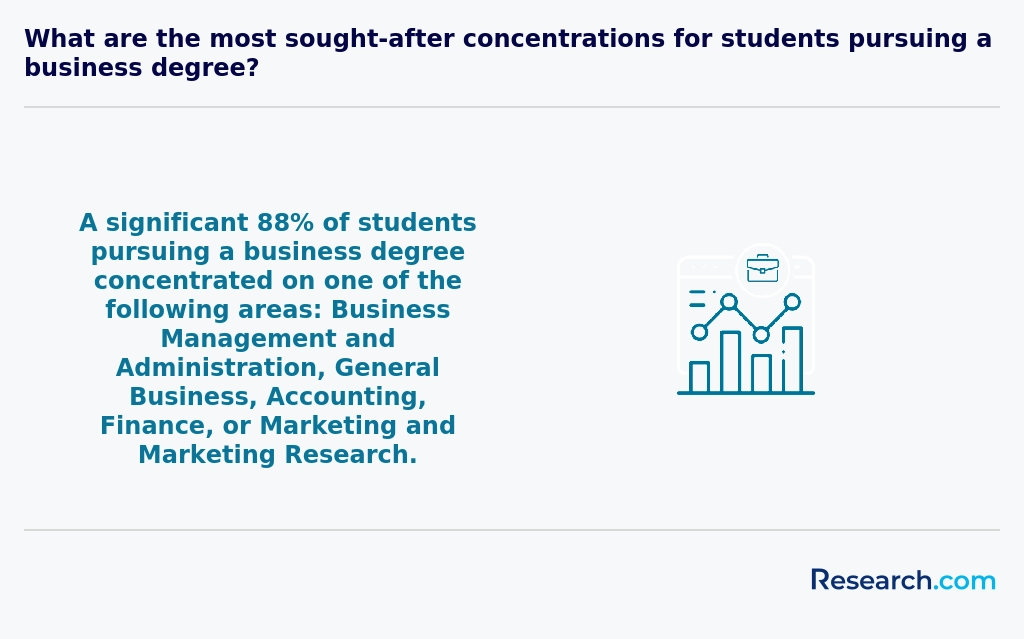
Business degree specializations in Delaware reflect the state's unique economic environment, with popular concentrations including Finance, Marketing, Management, Accounting, Entrepreneurship, and Supply Chain Management. For students at prominent Delaware universities and colleges, Finance offers a strong foundation in corporate finance and investment management, preparing many graduates for CFA certifications that leverage Delaware's status as a hub for banking and finance. Marketing pathways cover digital marketing and brand management, aligning with the state's growing e-commerce sector, while Management focuses on leadership and organizational skills vital for Delaware's diverse industries.
Delaware business degree concentration options like Accounting help students prepare for CPA exams, supporting careers in audit and corporate accounting within the state's expanding financial services arena. Entrepreneurship programs cultivate innovation through local incubators, and Supply Chain Management exploits Delaware's strategic location near major ports for logistics expertise. Graduates often share how these targeted specializations made their studies more relevant and positioned them effectively for Delaware's job market demands. For those curious about starting points, https://research.com/degrees/easiest-business-degrees offers insight into accessible pathways.
Choosing the best business degree in Delaware starts with evaluating program accreditation. Graduates from institutions with AACSB accreditation often express confidence in their education's quality and its recognition by employers. For instance, business students at popular Delaware universities with AACSB-certified programs report feeling better prepared for competitive job markets.
Cost is another crucial consideration. Affordable business colleges Delaware offer accessible tuition rates-community colleges provide around $4,500 annually, attracting students focused on minimizing debt. Conversely, graduates from private colleges sometimes reflect on the higher cost but value the specialized opportunities and networking advantages they gained.
Program variety matters as well. Business students highlight the significance of selecting schools that offer concentrations aligned with their career goals, such as finance or marketing, which are prominent fields in Delaware's economy. Those aiming for advanced credentials often explore an mba accelerated program to fast-track career advancement without sacrificing work experience.
Finally, experiential learning tied to Delaware's business sectors, including banking and logistics, is frequently mentioned by graduates as a defining factor. Smaller class sizes and faculty with industry experience enhance this practical approach, fostering confidence and deeper engagement throughout their studies.
Graduates holding a business degree in Delaware find diverse career paths shaped by the state's robust corporate environment. Popular professions include roles in financial services such as banking, investment analysis, and insurance, reflecting Delaware's strong finance sector. Many business degree holders from institutions like the University of Delaware pursue careers in marketing, focusing on brand management and digital marketing, or enter human resources managing recruitment and employee development. Operations management is also a key area, with graduates overseeing supply chains and quality control in local firms. The state's prominence in corporate law offers additional specialized roles in compliance and governance. Graduates often describe their experiences navigating Delaware's job market as rewarding, particularly due to opportunities with firms like JPMorgan Chase and Bank of America, which value skills in data analytics and financial modeling. For those interested in business degree career opportunities in Delaware, costs remain reasonable, with in-state tuition around $14,000 annually. Prospective students may also explore the Most Affordable Online Master's in Business Degree Programs Ranking in New York, NY to consider flexible options beyond the state.
Delaware business degree job prospects extend into entrepreneurship and consulting, with many graduates starting their own businesses or providing strategic advice to well-known corporate entities. Networking through local chambers of commerce and professional associations often enhances their career trajectory, delivering practical connections that complement their academic background.
Graduates with a business degree in Delaware benefit from a robust job market supported by the state's diverse economy and business-friendly policies. Delaware job outlook for business graduates remains positive, particularly for those entering financial services, pharmaceuticals, and wholesale trade sectors concentrated around Wilmington and Newark. Business graduates from institutions like the University of Delaware often find opportunities in corporate management, compliance, and financial analysis.
Entry-level salaries typically range from $45,000 to $60,000 annually, with mid-career professionals earning between $70,000 and $95,000, reflecting steady demand. Many recent graduates share experiences of leveraging their education into roles at major corporations headquartered in Delaware, where understanding local regulations and tax benefits increases employability. Budgeting for education is fundamental, as public universities provide more affordable tuition compared to private options, which may be part of the decision-making process when considering business degree employment opportunities in Delaware.
Students looking for skill enhancement often explore 6 month online certificate programs high paying jobs to complement their degree and boost career prospects in this competitive market.
2027 Best Business Degree Programs Ranking in Delaware
Investing in your education is a significant decision that can shape your career, and the Research.com team recognizes the importance of providing trustworthy guidance. To support prospective students in Delaware, we have carefully developed the "2027 Best Business Degree Programs Ranking in Delaware." Our dedication to quality, credibility, and accuracy is demonstrated through thorough analysis and use of authoritative data sources.
We utilized the following reputable data sources to create this ranking:
By consulting this ranking, readers will gain valuable insights into the leading business degree programs in Delaware, empowering them to make well-informed educational decisions. For further details on our rigorous ranking process, please visit our Research.com methodology page.


# 7 position
Strayer University-Delaware
Bachelor of Business Administration

# 8 position
Strayer University-Delaware
Master of Business Administration
# 9 position
Wilmington University
Master of Business Administration

# 10 position
Wilmington University
Bachelor of Business Administration
Frequently Asked Questions About business
Business degree students in Delaware can maximize their learning by engaging in experiential opportunities such as internships with local firms. Delaware's business environment, notably strong in finance, banking, and corporate services, offers practical experience that complements classroom theory. For instance, Wilmington hosts numerous corporate headquarters, providing students valuable networking possibilities. According to the Delaware Department of Labor, industries like financial services employ over 20% of the state's workforce, emphasizing relevant sectors for student focus.
Students should also leverage campus resources like business clubs, mentorship programs, and workshops. Active participation in case competitions and community projects enhances problem-solving and leadership skills. Additionally, staying updated on Delaware's business regulations through state resources equips students with real-world knowledge crucial for local business success.
Emerging niches within the business field in Delaware reflect broader national trends emphasizing technology, sustainability, and data-driven decision-making. Areas such as business analytics and data science are gaining traction, as companies increasingly rely on big data to improve operations. According to the Delaware Department of Labor, employment in management, scientific, and technical consulting services is expected to grow by 9% through 2028, indicating rising demand for specialized business skills.
Another growing niche is sustainable business practices. Delaware businesses are integrating environmental, social, and governance (ESG) factors into operations, creating opportunities in green financing and corporate social responsibility. Additionally, e-commerce management and digital marketing remain expanding fields due to the rise of online retail. These niches align with Delaware's diverse economy and evolving job market.
Graduates with business degrees in Delaware should focus on building practical skills and local industry connections to prepare for the job market. Internships and cooperative education programs offered by Delaware universities like the University of Delaware provide valuable hands-on experience, enhancing employability.
Networking is crucial in Delaware's growing sectors such as finance, logistics, and healthcare. Joining local business organizations or chambers of commerce can increase job prospects. According to Delaware's Department of Labor, finance and insurance roles are expected to grow 6% through 2030, reflecting strong opportunities for business graduates.
Additionally, mastering software tools commonly used in business, such as Excel and QuickBooks, improves competitive advantage. Continuing education through certifications like CPA or PMP also strengthens a graduate's profile in Delaware's job market.
Employers in Delaware value a combination of technical and soft skills when hiring business degree graduates. According to the Delaware Department of Labor, key competencies include strong communication abilities, analytical thinking, and proficiency in data analysis tools such as Excel and Tableau.
Business graduates are also expected to demonstrate leadership skills, problem-solving aptitude, and adaptability to rapidly changing market conditions. Delaware's growing financial and manufacturing sectors particularly emphasize project management and teamwork capabilities.
Furthermore, familiarity with digital marketing and financial literacy is increasingly sought after, reflecting national trends noted by the National Association of Colleges and Employers (NACE) in 2023.
Finding internships in Delaware related to a business degree involves leveraging local networks and resources. Delaware hosts several major companies, particularly in finance and chemical manufacturing, including JPMorgan Chase and DuPont, which frequently offer business internships.
Students should utilize university career centers, which maintain partnerships with local businesses and often host job fairs specifically for internships. The Delaware Department of Labor's website also lists internship opportunities and resources tailored to the state's job market.
Additionally, platforms such as Handshake and LinkedIn allow Delaware students to search for internships nearby. Networking through local business organizations like the Delaware Chamber of Commerce can open further doors.
According to the Delaware Economic Development Office, the state's finance and professional services sector employs over 50,000 jobs, providing ample internship possibilities for business students.
A business degree significantly enhances career mobility and advancement opportunities in Delaware. The state's growing sectors, including finance, healthcare, and manufacturing, value candidates with formal business education. According to the Delaware Department of Labor, individuals with a bachelor's degree in business can expect a 15% higher median salary than those with only a high school diploma.
Employers in Delaware often seek graduates with skills in management, marketing, and financial analysis, making a business degree a key differentiator. Additionally, Delaware's proximity to major metropolitan areas like Philadelphia and Baltimore increases job market access for business professionals.
Continuous education through business degrees also supports networking and leadership development, both critical for career growth.
Studying for a business degree in Delaware equips students with skills that bridge multiple disciplines, fostering adaptability in diverse professional environments. Delaware's business programs often integrate courses from economics, information technology, and communication, reflecting the state's robust corporate sector, including over 66,000 private sector jobs in finance and professional services as reported by the Delaware Department of Labor (2023).
This interdisciplinary approach encourages analytical thinking, effective problem-solving, and collaboration, essential for roles spanning marketing, finance, and operations. Many Delaware institutions collaborate with local industries such as banking and chemical manufacturing, providing practical experiences that broaden students' perspectives beyond traditional business theory.
Such hands-on learning prepares graduates to navigate complex challenges and contribute effectively across functions, a growing demand highlighted by the U.S. Bureau of Labor Statistics for cross-functional business professionals.
Choosing between a thesis and a non-thesis business degree program in Delaware depends on your career goals and learning style. A thesis program is research-intensive, ideal for students aiming to pursue doctoral studies or roles requiring strong analytical skills. It usually involves conducting original research under faculty supervision.
Non-thesis programs focus more on practical skills and coursework, appealing to professionals seeking immediate application in Delaware's growing sectors like finance and healthcare. According to the Delaware Department of Labor, the business sector contributes substantially to the state's economy, which favors practical experience.
Consider your timeline as thesis programs often take longer to complete. Also, check if your target employers in Delaware value research experience or prefer hands-on skills. Visiting local university websites or speaking with advisors can help clarify your decision.
Students in Delaware seeking to study business abroad have access to various university-led international programs. Many Delaware institutions, including the University of Delaware, offer exchange programs and study abroad opportunities with partner schools worldwide. These programs allow students to earn credits toward their business degrees while experiencing global markets firsthand.
According to NAFSA, approximately 39,000 U.S. students studied abroad in 2022, with business as one of the most popular fields. Delaware students can often participate in semester-long or summer programs in key business hubs such as London, Singapore, and Barcelona.
Financial aid and scholarships specifically for study abroad are available through both academic institutions and external organizations focused on broadening global business education.
Delaware offers several part-time job opportunities that can complement business degree education effectively. Many students find roles in financial services, as the state is home to a large number of banking and credit card processing companies. According to the Delaware Prosperity Partnership, over 20% of the state's workforce is employed in finance and business sectors.
Internships or part-time positions in marketing, sales, or business administration within local companies can provide valuable real-world experience. Additionally, positions at the Port of Wilmington or logistics firms help students understand supply chain management, a key area of business studies.
These roles develop skills in communication, data analysis, and management, which directly support academic learning and future career prospects.
Business students in Delaware have access to a variety of networking opportunities through local universities, professional organizations, and industry events. Institutions like the University of Delaware and Wilmington University host business clubs and career fairs that connect students with regional employers. The Delaware State Chamber of Commerce regularly organizes events that foster relationships between students and business leaders statewide.
Additionally, Delaware's strong focus on finance, especially with over 1,000 banks and financial institutions registered in the state, offers students unique chances to engage with professionals in these sectors. According to the Delaware Economic Development Office, many companies actively seek interns and entry-level candidates from local business programs.
Online platforms and alumni networks also play a key role by providing ongoing professional connections beyond campus, helping students secure mentorships and job opportunities in Delaware's diverse business community.
Alumni networks play a crucial role for business degree students in Delaware by offering access to valuable professional connections. Graduates from Delaware's universities often remain active in these networks, providing mentorship and job leads to current students. According to the Delaware Department of Labor, networking is a primary factor in securing employment within the state's competitive business sector.
These networks facilitate internships and job placements in local industries, including finance, healthcare, and manufacturing, which are significant contributors to Delaware's economy. Business students benefit from alumni insights into industry trends and skill requirements, helping them align their education with real-world demands. Participation in alumni events also enhances students' communication and leadership skills.
Customizing a business degree program in Delaware allows students to align their education with specific career goals. Many institutions offer a variety of concentrations such as finance, marketing, entrepreneurship, and supply chain management. By selecting relevant electives, students develop skills suited to Delaware's strong sectors like banking and chemical manufacturing.
Internships are valuable for hands-on experience, and Delaware's proximity to major corporations provides ample opportunities. Some programs also include options for dual degrees or certificates in areas like data analytics or project management, enhancing career readiness.
Advisors and career services at Delaware colleges assist students in tailoring their course plans based on labor market trends and individual ambitions.
Business students in Delaware often face challenges related to balancing rigorous coursework with practical experience. Many programs emphasize internships and networking, which can be difficult to secure given the state's smaller business market compared to larger metropolitan areas.
Another common challenge is adapting to rapidly changing technologies and digital tools essential for modern business practices. Delaware's economy includes strong finance and chemical sectors, requiring students to develop skills specific to these industries, which may limit exposure to other business fields.
According to the Delaware Department of Labor, maintaining competitiveness in local job markets requires ongoing skill development beyond classroom learning, which can put pressure on students.
Finally, the cost of education combined with limited access to scholarships in the state can create financial stress for business students trying to complete their degrees on time.
With a business degree in Delaware, you can pursue several respected professional certifications that enhance career opportunities. Popular choices include the Certified Public Accountant (CPA) for those interested in accounting and finance. The CPA credential is highly valued in Delaware's growing financial sector, including Wilmington's banking industry.
Another notable certification is the Project Management Professional (PMP), widely recognized across various business fields. PMP certification is useful for managing diverse projects in Delaware's expanding corporate environment.
The Certified Management Accountant (CMA) is also a strong option, focusing on financial management and strategy. According to the Delaware Department of Labor, demand for such financial expertise continues to rise in the state.
Additionally, sales and marketing professionals might consider the Certified Professional Sales Person (CPSP) or Certified Marketing Executive (CME) credentials, which help improve business growth skills.
Writing a winning application for a business program in Delaware starts with thorough research. Understand the specific requirements of each university or college, including GPA thresholds and prerequisite courses. Delaware's business schools, such as the University of Delaware, emphasize leadership experience and communication skills in their applications, so highlight relevant internships or extracurricular activities.
Clear, concise essays tailored to business topics are essential. Use data on Delaware's growing financial and corporate sectors to show awareness of the local economy, referencing sources like the Delaware Prosperity Partnership. Letters of recommendation should come from professionals familiar with your business potential.
Finally, prepare thoroughly for any interviews to demonstrate your motivation and fit for the program.
Business careers today are shaped by a global economy increasingly interconnected through trade, technology, and communication. For students in Delaware, understanding global perspectives is essential as many firms operate across borders and seek professionals familiar with international markets. U.S. business graduates often possess skills in management, marketing, and finance that are highly valued worldwide.
According to the Delaware Department of Labor, sectors such as finance and professional services, which employ many business graduates, have ties to international businesses and contribute significantly to the state's GDP. Gaining global competence can enhance job prospects both in Delaware and abroad.
Many Delaware universities offer courses in global business practices, preparing students to navigate cultural diversity and international regulations. These skills align with employer expectations documented by the National Association of Colleges and Employers, who report that intercultural awareness is a key attribute for business graduates entering the workforce.
Students pursuing a business degree in Delaware can gain practical experience through internships, a common pathway encouraged by many state universities. Local businesses, including financial firms in Wilmington-the state's largest business hub-regularly offer internships that provide hands-on training. According to the Delaware Department of Labor, internships increase employability by 20% in the state's competitive job market. Universities also collaborate with nearby corporations for cooperative education programs, where students alternate between classroom learning and real-world work. Additionally, business students can engage in campus clubs and case competitions, which simulate real business challenges and foster teamwork and leadership skills.
Choosing the right concentration within a business degree program in Delaware begins with evaluating your career interests and goals. Delaware's economy is diverse, with strong finance, healthcare, and manufacturing sectors, so concentrations like finance, management, and marketing align well with local job markets, according to the Delaware Department of Labor.
Consider concentrations that offer practical skills and opportunities for internships or networking in Delaware's business community. For instance, finance programs benefit from proximity to major financial institutions in Wilmington, while supply chain management ties into the state's strategic location for distribution.
Research the curriculum and faculty expertise at Delaware schools to ensure the concentration fits your learning style and industry focus.
Additionally, explore job placement rates and alumni success within each concentration to make an informed decision about your education investment.
- 2027 Best Online Business Degree Programs Ranking in Maryland
- 2027 Best Online Business Degree Programs Ranking in New Jersey
- 2027 Best Online Business Degree Programs Ranking in Pennsylvania
- 2027 Best Online Business Degree Programs Ranking in Virginia
- 2027 Best Online Business Degree Programs Ranking in West Virginia
- 2027 Best Online Business Degree Programs Ranking in New York
- 2027 Best Online Business Degree Programs Ranking in North Carolina
- 2027 Best Online Business Degree Programs Ranking in Ohio
- 2027 Best Online Business Degree Programs Ranking in Massachusetts
- 2027 Best Online Business Degree Programs Ranking in South Carolina
See What Experts Have To Say About Studying Business
Read our interview with Business experts

Ingrid S. Greene
Business Expert
Clinical Assistant Professor of Management
Loyola Marymount University


David W. Stewart
Business Expert
Emeritus President's Professor of Marketing
Loyola Marymount University

- 8 Best Places to Study Abroad for Business [+ How to Choose] https://www.semesteratsea.org/study-abroad-for-business/
- A Call for Realignment between Education and Workforce Systems in Delaware https://delawarebusinesstimes.com/supplements/a-call-for-realignment-between-education-and-workforce-systems-in-delaware/
- Business Administration Degree Salary | UE Amsterdam https://www.ue-amsterdam.com/blog/business-administration-degree-salary-how-much-can-you-earn
- A 2016 Global Perspective on Business and Career Planning https://careerproinc.com/blogging/a-2016-global-perspective-on-business-and-career
- Global Perspectives: International Opportunities for Business School Students - SBS Swiss Business School https://sbs-uae.org/global-perspectives-international-opportunities-for-business-school-students-3/
- How to Find a Job with an International Business Degree - Hunter Recruiting https://www.hirecruiting.com/newsroom/how-to-find-a-job-with-an-international-business-degree/
- Jobs after studying business administration: opportunities at a glance | JobTeaser https://www.jobteaser.com/en/advices/jobs-after-studying-business-administration-opportunities-at-a-glance
- Financial Aid - Delaware County Community College https://www.dccc.edu/admissions-and-financial-aid/financial-aid/
- How to Write the Perfect Cover Letter – EU Business School https://www.euruni.edu/blog/write-perfect-cover-letter/
- Know more about thesis vs non- thesis: what is the difference? https://studyfans.com/en/blogs/816