
2027 Most Valuable Accounting Degree Programs Ranking in Utah

Co-Founder and Chief Data Scientist
Choosing the right accounting degree program can shape your future career and financial success. This article introduces the 2027 Most Valuable Accounting Degree Programs Ranking in Utah, created by the Research.com team of data scientists.
Designed to help Utah students make informed decisions, the ranking highlights programs that offer strong value and promising outcomes. Exploring these options can bring confidence as you pursue an accounting degree, opening doors to rewarding opportunities in the field.
Whether you're just starting or considering a switch, this guide offers useful insights to support your educational journey.
Key benefits of getting accounting degree in Utah
- Graduates with an accounting degree in Utah can expect strong earning potential, such as a Staff Accountant earning a mean annual wage of $90,780 or a Bookkeeper making about $49,580 per year.
- Many career paths are available, from auditing to tax preparation, with diverse opportunities seen in Utah's universities, empowering graduates to pursue roles that fit their skills and interests.
- Online accounting degrees from Utah colleges offer flexibility and convenience, making it easier to balance work and study while gaining the same valuable skills as traditional programs.
- 2027 Most Valuable Accounting Degree Programs Ranking in Utah
- What can I expect from accounting degree in Utah?
- Where can I work with accounting degree in Utah?
What can I expect from accounting degree in Utah?
Studying accounting in Utah typically costs between $8,000 and $12,000 per year at public universities, while private colleges might charge around $20,000 annually. Graduates from popular institutions like the University of Utah or Utah Valley University often recall balancing the value of hands-on internships with tuition expenses, feeling energized by applying classroom skills in real Utah businesses. These tuition ranges cover about 120 credit hours needed for a degree, which usually takes four years full-time, creating a clear financial path students can plan around.
Many accounting students embrace the adventure of combining theory with practice, often citing the accessibility of internships and CPA exam resources as worth every dollar. One recent graduate shared how the network built through local CPA societies and career services made the financial investment feel like a well-targeted opportunity rather than a cost. This blend of education, practical experience, and state-specific support reflects a holistic approach to accounting education in Utah's vibrant economy.
Where can I work with accounting degree in Utah?
Graduates from Utah's well-known accounting programs, like those at the University of Utah or Brigham Young University, often find themselves stepping into vibrant roles across the state's bustling economy. Imagine starting your career auditing at a Salt Lake City CPA firm, collaborating with professionals who guide you through real-world tax challenges. Others dive into corporate offices at companies such as Intermountain Healthcare, where hands-on budgeting and financial analysis sharpen their skills daily.
Working in government positions offers a unique adventure too-picture yourself assessing public funds for county finance departments, contributing directly to your community's financial health. The rising field of forensic accounting also intrigues many graduates, combining curiosity and detailed investigation to uncover financial fraud alongside law enforcement.
These career journeys, fueled by Utah's economic growth and supportive industries, turn an accounting degree into a passport for exploring dynamic industries while building a fulfilling, well-paid profession close to home.
Imagine graduating with an accounting degree from a university in Utah, like the University of Utah or Weber State University, ready to dive into the bustling financial world. You could start your career as a Bookkeeper or Tax Preparer, positions where the mean annual wage hovers around $49,580. It might feel like the perfect stepping stone, offering both practical experience and a solid income right after graduation.
As you gain confidence and skills, envision moving into roles like an Associate Auditor or Accounts Payable Clerk, where salaries remain around $49,580 but open doors to specialized knowledge. Many Utah graduates share how these positions provide exciting challenges within vibrant firms based in Salt Lake City or Provo.
Then, picture yourself landing a Staff Accountant role, the sweet spot for accounting degree holders in Utah. The mean annual wage for this position climbs to approximately $90,780, reflecting your growing expertise and credentials. These figures highlight how an accounting degree in Utah can lead to rewarding and adventurous career paths, blending steady growth with engaging, hands-on opportunities.
- In-state tuition for public universities in Utah ranges from $8,000 to $10,000 per year, while private institutions may charge over $20,000 annually.
- Entry-level accounting salaries in Utah typically fall between $50,000 and $60,000 per year.
- Experienced CPAs and accounting managers can earn median salaries from $75,000 to over $90,000 annually.
- Accounting and auditing jobs in Utah are expected to grow faster than the national average through 2030.
- A 150-semester-hour education is required to qualify for the CPA exam in Utah, often requiring coursework beyond a standard bachelor's degree.
- Internships and employer connections are widely available at Utah universities, especially in Salt Lake City.
Completing an accounting degree in Utah often feels like embarking on an exciting journey with clear milestones. For many full-time students at places like the University of Utah or Brigham Young University, the adventure unfolds over about four years. Imagine diving into 120 to 130 credits filled with core business challenges and specialized accounting puzzles-financial accounting, auditing, taxation-all designed to shape you into a confident accounting professional.
But what if you want to speed things up or explore flexibility? Some graduates share how they embraced part-time or online pathways, balancing life's twists while progressing steadily. Community colleges offer a quicker path too, with associate degrees reached in about two years, perfect for those eager to get started in foundational accounting roles.
For the ambitious, Utah's Master of Accountancy programs can add one to two years, unlocking the door to CPA exam eligibility. Picture yourself tackling accelerated classes that wrap up in just 12 months, driven by pure excitement and focus.
Every step offers a unique pace-choose yours and dive into Utah's vibrant accounting education landscape!
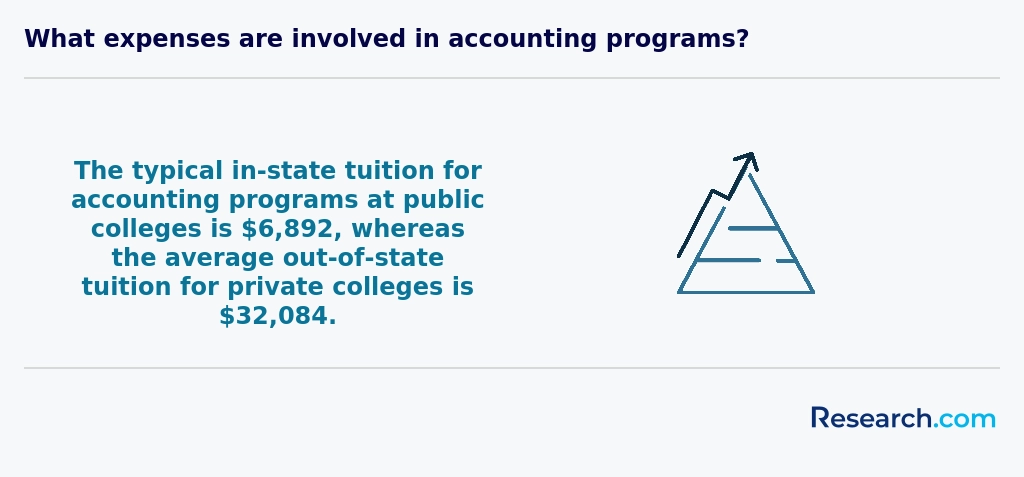
Investing in an accounting degree in Utah yields one of the strongest returns on investment (ROI) among professional fields. With in-state tuition averaging $6,892 per year and graduates commanding a mean starting salary of $86,740, most students recoup their direct educational costs within the first year of full-time employment. Even out-of-state students, who face median tuition of $32,084 annually, see payback periods under two years when factoring in accelerated career progression and CPA licensure bonuses. Beyond tuition and salary, true ROI accounts for financial aid, scholarships, and earning potential over a 10-year horizon. Assuming a conservative 3% annual salary growth and typical student debt repayment terms, Utah accounting graduates can expect a net positive cash flow exceeding $500,000 in career earnings after loan servicing. Internships and industry partnerships further amplify returns by improving job placement-students who complete at least one internship report starting salaries up to 12% higher than peers. For those weighing cost versus quality, exploring alternative affordable programs can be beneficial. For example, our Low Cost Accounting Degree Programs Ranking in Columbus, OH offers insights into high-value options outside Utah. Ultimately, when evaluating programs, consider total cost of attendance, average graduate wages, CPA exam pass rates, and career services support to maximize your ROI and long-term financial success.
Choosing between online and on-campus accounting degrees in Utah feels like setting off on two distinct adventures. Imagine attending the University of Utah or Brigham Young University, where on-campus students dive into lively group projects, engage in real-time discussions, and soak up resources like career services and accounting labs. Graduates often recall the energizing atmosphere of face-to-face networking and the instant feedback from professors that sharpened their skills.
On the flip side, picture balancing your studies with work or family while logging into a virtual classroom from home. Online programs offered by Utah institutions bring flexibility to life, letting students learn at their own pace through video lectures and discussion boards. Many find the ability to tailor study hours around their busy lifestyles both empowering and freeing.
Both paths lead to the same destination-a solid preparation for the CPA exam-but the journey differs: on-campus students thrive on connection and hands-on experiences, while online learners embrace independence and convenience.
Graduates of Utah’s most valuable accounting degree programs demonstrate impressive career outcomes, with an average job placement rate of 89% within six months of graduation. Leading public accounting firms like Deloitte and EY, along with local industry leaders such as Mountain America Credit Union and Vivint Smart Home, regularly recruit from campuses at the University of Utah, Utah State University, and Weber State University. Many students secure internships that convert directly into full-time roles, underscoring the strong pipeline between academia and industry. Salary trajectories further illustrate the return on investment for Utah accounting alumni. Entry-level staff accountants in the state earn an average salary for accountant ranging from $62,000 to $70,000, while those moving into senior roles or specialized fields-such as forensic accounting or financial analysis-see median salaries climb above $85,000. These figures reflect robust demand and highlight how Utah programs prepare graduates for competitive compensation early in their careers. Beyond immediate employment, long-term career advancement remains strong. Five-year retention rates exceed 75%, with alumni progressing to positions like senior financial analyst, audit manager, and controller. Universities support this growth through dedicated career centers offering résumé workshops, mock interviews, and networking events. By combining rigorous curricula, hands-on internships, and active employer partnerships, Utah’s accounting programs consistently deliver successful alumni outcomes and high job placement rates.
The average cost of pursuing an accounting degree in Utah offers a fascinating glimpse into balancing ambition with financial planning. Typically, in-state students attending public universities such as the University of Utah or Utah State University encounter tuition and fees around $6,962 annually. This figure surprises many graduates who expected higher prices but found it manageable enough to focus on their studies and internships. However, if you're considering private schools or coming from out-of-state, you might experience a price closer to $31,167, highlighting the significant gap that can influence your educational journey.
Imagine walking through campus at a popular Utah college, textbooks in hand, feeling confident despite the cost because you planned ahead. The average cost of accounting degree in Utah doesn't just cover tuition; it also includes expenses for books, supplies, and living costs, which students often navigate through scholarships, work-study jobs, or financial aid. Many graduates recall how local scholarships eased their burden, proving that smart financial decisions can enhance the overall college experience.
Those exploring options often find valuable guidance by consulting resources like the affordable accounting school in utah listings, helping students choose programs that fit their budget while delivering quality education. Utah accounting degree tuition and fees might seem daunting at first, but this well-rounded approach makes earning your degree feel like an achievable adventure.
To maximize the value of your accounting degree in Utah, it's essential to consider various factors, including cost, program reputation, and specialization options. For instance, if you're looking for an affordable option, you might want to explore the affordable accounting school in utah, which can provide a quality education without breaking the bank. By weighing these factors, you can make an informed decision that aligns with your career goals and financial situation, ultimately setting yourself up for success in the accounting profession.
Diving into an accounting degree in Utah opens the door to a treasure trove of financial aid opportunities that can soften the blow of tuition fees. Imagine a graduate from the University of Utah sharing how federal Pell Grants made their education feel within reach, covering crucial costs without the pressure of repayment. These grants, paired with federal student loans that offer manageable repayment plans and lower interest rates, lay a solid foundation for many students.
State pride shines through with programs like the Utah Resident Tuition Reduction, which gave another student at Weber State University an affordable pathway to earning their degree closer to home. The Regents' Scholarship, aimed at Utah's high achievers, has been a game changer for many, rewarding diligent scholars and significantly cutting their tuition bills.
- Private scholarships from groups like the Utah Association of Certified Public Accountants fuel dreams of CPA careers, adding a personal touch to financial support.
- Work-study options at institutions such as Brigham Young University allow students to gain hands-on experience while easing expenses.
Institutional merit awards, often based on leadership or academic excellence, sprinkle encouragement and financial relief into students' journeys, transforming challenges into stories of success and excitement. Here in Utah, the blend of federal, state, private, and campus-specific aid creates a vibrant safety net that invites aspiring accountants to explore, learn, and thrive.
Jumping into an accounting degree in Utah means you'll first need to meet some key prerequisites that set the stage for success. Imagine a recent graduate from the University of Utah sharing how their strong high school math background-Algebra and Statistics-made tackling accounting problems feel like solving intriguing puzzles rather than daunting tasks.
Most Utah schools require applicants to hold a high school diploma or GED, with a solid GPA around 2.5 to 3.0. Official transcripts act like your academic passport, showcasing readiness through completed coursework in business basics or math.
A few graduates from Utah State University recall how submitting SAT or ACT scores helped boost their applications, though many schools now offer test-optional policies to ease the journey.
For those transferring or aiming for advanced studies, completing prerequisites like accounting principles or microeconomics feels like unlocking new levels in the world of finance.
Passing these steps at Utah's universities isn't just a requirement-it's an exciting first venture into mastering a skill that shapes businesses and communities.
As you complete your accounting degree in Utah, your journey into the professional world is just beginning. Graduates can bolster their career prospects by actively engaging in mentorship programs, professional networking, and continuous learning initiatives. Many successful alumni stress that investing time in building relationships with industry experts and joining accounting organizations can provide valuable insights and open doors to exclusive job opportunities. Furthermore, staying updated on the latest industry trends-such as emerging financial technologies, regulatory changes, and sustainable business practices-ensures that your skills remain relevant in a rapidly evolving field. Taking advantage of career support services and alumni networks can also provide guidance on certifications and advanced training, like preparing for the CPA exam or exploring niche areas within forensic or corporate accounting. For more guidance on how to transition effectively from academia to the workforce, you might want to explore various accounting career paths, which detail strategic steps for professional growth. Embracing these post-graduation strategies not only enhances your expertise but also empowers you to navigate the competitive job market with confidence.
Diving into an accounting degree in Utah means stepping into a curriculum filled with courses that spark curiosity and build real-world skills. Imagine tackling Intermediate and Advanced Accounting at the University of Utah, where graduates recall unraveling complex financial reports that mirror actual business puzzles. These classes sharpen your ability to handle multi-step transactions and broader financial consolidations, giving you tools to decode corporate financial secrets.
Cost Accounting classes bring adventure through the challenge of analyzing and controlling business expenses-something many Utah State graduates found thrilling when applying these concepts during internships. Meanwhile, Auditing courses offer the chance to act as financial detectives, ensuring compliance and building trust.
Taxes come alive in Taxation courses, where learners at Weber State excitedly explore individual and corporate tax laws, preparing them for real tax seasons. Meanwhile, Accounting Information Systems reveal the fusion of tech and finance, helping you understand the digital engines driving today's accounting world.
This journey is anchored not just in numbers but also in ethics, business law, and finance, shaping professionals ready to navigate Utah's unique business landscape.
Diving into an accounting degree in Utah opens a gateway to specialized fields tailored for curious minds ready to explore diverse career paths. Graduates from popular institutions like the University of Utah or Brigham Young University often share how Tax Accounting captivated their interest by preparing them for real-world challenges involving state and local tax planning, making their studies feel immediately relevant to Utah's economic landscape. Others find themselves drawn to Auditing and Assurance Services, eagerly applying their skills to uncover financial truths within both public firms and private companies.
Utah accounting degree concentration options extend further into Forensic Accounting, where students develop investigative prowess to detect fraud-an adventure every graduate recalls as thrilling and highly practical. Managerial Accounting excites those fascinated by internal decision-making and business strategy, while Accounting Information Systems offers a tech-savvy twist, teaching future accountants how to innovate with modern financial technology. Many students appreciate how these options blend rigorous learning with the state's CPA licensure requirements, crafting pathways aligned perfectly with their ambitions.
For those eager to explore the possibilities and shape their future, a variety of tailored tracks ensure each student's unique journey is empowered within Utah's vibrant academic and professional settings. To map out your next steps, check out comprehensive accounting career paths available after graduation.
Choosing the best accounting degree in Utah means diving into the specifics that shape your journey. Graduates from popular universities often share how the mix of solid regional and AACSB accreditations brought confidence in their education quality, giving them a clear edge in Utah's competitive job market.
Exploring affordable accounting colleges in Utah is like charting a map where tuition costs vary widely-some public institutions offer programs around $7,000 annually, while private options can be a thrilling leap with prices above $30,000. One student's experience emphasized how scholarships and financial aid transformed these numbers from obstacles into stepping stones.
Curriculum breadth is another path to explore. Accounts from recent graduates highlight how hands-on cases and internships at Utah colleges connect textbook knowledge with real-world challenges, especially in cities like Salt Lake City where emerging fields such as data analytics add depth to their skills.
Balancing studies with life's rhythm is easier in programs offering evening or online classes. Many have found these flexible routes a vital key to completing degrees without turning their worlds upside down. Utah's vibrant accounting scene, paired with optimistic job growth, means picking the right program paves a way toward success.
Wondering about earning potential? Check out the average salary for accountant to make your choice more adventurous and informed.
Graduates diving into accounting career opportunities in Utah find an exciting array of paths to explore. From bustling public accounting firms in Salt Lake City, where new accountants sharpen their skills as auditors or tax consultants, to dynamic corporate roles in expanding tech or healthcare companies, the opportunities are diverse and rewarding. Imagine a recent graduate from a well-known Utah university confidently managing budgets and financial strategies for a rapidly growing startup, feeling the thrill of real-world impact on business success.
Many discover the appeal of government accounting, attracted by the stability and community-focused work available at local agencies. These positions offer the chance to contribute meaningfully while enjoying solid benefits. Utah's climate for accounting professionals is uniquely vibrant, encouraging graduates to aim for certified paths like CPA licensure, unlocking even greater advisory roles. Students at Utah's top colleges often share stories of how earning their degree here-affordable and tailored to this job market-sets them up for fulfilling careers.
Additionally, specialized fields such as internal auditing and financial planning beckon those craving variety and challenge. To see practical details on investing in your future, consider the Low Cost Accounting Degree Programs Ranking in Columbus, OH, which offers insight into regional education expenses comparable to Utah's.
Exploring the accounting job outlook in Utah reveals a vibrant and growing market fueled by the state's booming economy. Graduates from well-known local universities cherish the diverse opportunities spanning public accounting, government roles, and tech companies, where their skills shape budgets and compliance with real impact. Many find entry-level salaries starting around $50,000 to $55,000 quite encouraging, especially when combined with Utah's lower cost of living compared to other states.
Graduates often share how pursuing additional qualifications like the CPA transformed their career trajectory, opening doors to higher salaries and expanded roles. The steady issuance of new CPA licenses reflects a dynamic network of professionals ready to meet growing demand. For students considering tuition, public institutions in Utah offer programs typically between $5,000 and $12,000 annually, making the state a smart choice for affordable, quality education in accounting.
Curious minds might also explore 12 month certificate programs that pay well to boost their credentials quickly and dive right into the thriving Utah accounting degree job market.
2027 Most Valuable Accounting Degree Programs Ranking in Utah
Investing in your education is a significant decision that can profoundly impact your career and future success. The Research.com team recognizes the importance of making informed choices and has dedicated extensive effort to ensure the highest quality, credibility, and accuracy in creating the "2027 Most Valuable Accounting Degree Programs Ranking in Utah."
We utilized the following reputable data sources to create this ranking:
By consulting this ranking, readers will gain clear, trustworthy guidance on the most valuable accounting degree programs in Utah, enabling them to make well-informed educational decisions. For more information about how this ranking was developed, please visit our Research.com methodology page.
# 1 position
Western Governors University
Master of Science, Accounting

# 2 position
Western Governors University
Bachelor of Science in Accounting





Frequently Asked Questions About accounting
Accounting degree students in Utah can maximize their learning by combining classroom study with practical experiences. Internships with local firms, such as those in Salt Lake City's growing financial sector, provide hands-on skills valued by employers. Utah's strong network of accounting professionals offers many opportunities for mentorship and networking, which can enhance understanding of industry trends.
Students should also focus on mastering software widely used in accounting, like QuickBooks and Excel, which are often included in Utah colleges' curricula. According to the Utah Department of Workforce Services, the demand for accountants in Utah is projected to grow by 7% through 2030, emphasizing the value of relevant skills.
Joining student organizations such as Beta Alpha Psi offers access to workshops and events tailored to accounting majors, fostering professional development. Additionally, preparing for certifications such as the CPA can elevate a student's career prospects in Utah's competitive job market. Utilizing university career services for resume assistance and interview preparation is also advised.
The accounting field in Utah is evolving, with emerging niches gaining importance as businesses adapt to new technologies and regulations. One fast-growing area is forensic accounting, which focuses on investigating financial crimes and fraud. Demand for these specialists is rising, partly due to increased digital transactions. Another significant niche is environmental accounting, where professionals evaluate the financial impact of environmental policies and sustainability efforts-important in Utah's resource management sectors.
Additionally, data analytics is revolutionizing accounting practices. Accountants skilled in analyzing large datasets help companies make better financial decisions. According to the U.S. Bureau of Labor Statistics, Utah's accounting job market is growing approximately 7% through 2030, highlighting opportunities in these specialized roles.
Preparing for the job market after earning an accounting degree in Utah involves several key steps. First, gaining professional certifications such as the CPA (Certified Public Accountant) significantly improves employment prospects. Utah's demand for CPAs is growing, with the Utah Department of Workforce Services projecting a 10% increase in accounting positions through 2030.
Internships or part-time roles during college provide practical experience and networking opportunities with local firms, especially in Salt Lake City's financial sector. Joining organizations like the Utah Association of Certified Public Accountants can offer valuable resources and connections.
Developing proficiency in accounting software such as QuickBooks and Excel is essential, as is strengthening communication skills for client interaction. Utah employers often seek candidates comfortable with regulatory knowledge specific to state tax laws and compliance.
Employers in Utah seek specific skills when hiring graduates with accounting degrees. Strong proficiency in accounting principles, such as Generally Accepted Accounting Principles (GAAP), remains fundamental. Additionally, technical skills, including expertise with accounting software like QuickBooks and Excel, are highly valued. According to the Utah Department of Workforce Services, analytical thinking and attention to detail are critical due to the complex regulatory environment of the state's industries.
Communication skills also rank high, as accountants must explain financial information clearly to clients and colleagues. Familiarity with tax preparation and auditing procedures is important for many Utah employers, reflecting the demand in local firms. Adaptability and ethical judgment further distinguish top candidates in this competitive field.
Finding internships in Utah relevant to an accounting degree involves multiple practical steps. Start by exploring university career centers, as many Utah schools partner with local businesses to offer accounting internships. For example, the University of Utah and Utah State University regularly post internship opportunities tailored to accounting students.
Networking is also vital. Joining professional organizations like the Utah Association of Certified Public Accountants (UACPA) can connect you with employers offering internships.
Additionally, use online platforms such as Handshake or Utah's Workforce Services job portal, which frequently list accounting internships across the state.
Accounting firms in Utah, including regional branches of Big Four companies, commonly recruit interns during fall and spring semesters.
An accounting degree in Utah significantly enhances career mobility and advancement opportunities. According to the U.S. Bureau of Labor Statistics, Utah's demand for accountants and auditors is projected to grow about 8% from 2021 to 2031, faster than the national average. This growth reflects the state's expanding economy and diverse business sectors.
Graduates with an accounting degree are well-positioned for roles in public accounting, corporate finance, and government agencies. Utah's growing tech and energy industries also increasingly seek professionals with strong accounting skills.
Earning credentials such as the CPA license, which often requires a degree, can dramatically boost earning potential and leadership prospects.
Studying for an accounting degree in Utah equips students with skills that extend beyond traditional accounting roles, preparing them for interdisciplinary careers. Many Utah universities combine accounting curricula with courses in information systems, finance, and business analytics. This integration reflects the growing demand for professionals who can analyze financial data while understanding technology and business strategy.
Utah's employment data shows a rising trend in roles requiring both accounting expertise and technological proficiency, such as forensic accounting and auditing using advanced software. According to the Utah Department of Workforce Services, industries like technology and finance drive this multidisciplinary demand.
Additionally, Utah schools often encourage internships and cooperative programs that allow students to gain practical experience across departments, enhancing collaboration skills essential for interdisciplinary work.
When choosing between a thesis and a non-thesis accounting degree program in Utah, consider your career goals first. Thesis programs often suit students aiming for research roles or doctoral studies, requiring a significant independent research project. Non-thesis options focus more on practical skills, offering additional coursework instead of a research paper, which aligns well with those planning to enter the workforce quickly.
In Utah, institutions like the University of Utah and Brigham Young University offer both options. According to the National Center for Education Statistics, nearly 65% of accounting graduates in Utah pursue roles in public and corporate accounting, where practical experience is highly valued.
Time and resources are factors: thesis programs may take longer due to research demands. Understanding your professional aims and consulting academic advisors can help determine which path best fits your aspirations.
Students in Utah seeking to study accounting abroad have multiple pathways through exchange programs and study abroad partnerships managed by their home institutions. Utah universities such as the University of Utah and Brigham Young University often collaborate with international schools to offer accounting-focused semesters overseas.
Popular destinations include Canada, the United Kingdom, and Australia, where curricula align with U.S. accounting standards. Participating in these programs allows students to earn credits toward their degrees while gaining global perspectives.
The Utah System of Higher Education promotes these initiatives, emphasizing the value of international exposure in accounting careers. According to NACE, accountants with global experience tend to have stronger job prospects in an increasingly interconnected market.
Students pursuing accounting degrees in Utah have various part-time job options that enhance their education and practical skills. Common roles include tax preparation assistants, bookkeeping clerks, and accounting interns. These positions allow students to apply classroom knowledge in real-world settings.
Utah's growing business sector, especially in Salt Lake City and Provo, provides ample opportunities for internships and part-time work in accounting firms and corporate finance departments. According to the Utah Department of Workforce Services, accounting and auditing job openings are expected to grow by 7% through 2030, supporting students' career development.
Additionally, part-time roles in payroll or financial analysis within local businesses help students develop critical expertise and prepare for CPA certification.
Accounting students in Utah benefit from varied networking opportunities that support career growth and professional development. Many universities in Utah, including the University of Utah and Brigham Young University, host events in partnership with local chapters of the American Institute of CPAs (AICPA) and Utah Association of Certified Public Accountants (UACPA). These events give students access to experienced professionals and potential employers.
Internships are another critical way students build connections. Utah's strong economy and growing business sector offer numerous internship programs with accounting firms and corporate finance departments, enriching real-world experience alongside networking.
Additionally, statewide accounting conferences and job fairs provide direct engagement with firms actively recruiting in Utah's market. These platforms encourage students to forge meaningful, lasting relationships with industry leaders.
Alumni networks offer significant advantages to accounting degree students in Utah by providing access to experienced professionals who understand the local job market. These networks facilitate mentorship opportunities, helping students build essential skills and navigate career paths successfully. According to the Utah Association of Certified Public Accountants (UACPA), nearly 70% of internships and job placements for accounting students come through connections within alumni and professional networks.
Furthermore, alumni often share insights on Utah's specific accounting practices and regulations, which gives students a practical edge. Networking events and online platforms maintained by universities can connect students to leads at top Utah firms, boosting employment prospects.
Customizing an accounting degree program in Utah allows students to align their education with specific career goals. Many Utah universities offer flexible curriculum options, including electives in tax accounting, forensic accounting, or auditing. Students can also pursue internships or cooperative education with local firms, gaining practical experience relevant to Utah's growing economy.
Some programs provide tracks focused on public accounting, corporate finance, or government accounting, helping students tailor their skills to sectors like Salt Lake City's finance industry or Utah's government agencies. Additionally, pursuing certifications such as the CPA, supported by Utah's accounting boards, can enhance career readiness.
According to the Utah System of Higher Education, over 50% of accounting graduates secure jobs within six months, highlighting the importance of specialized and applied coursework in local markets.
Accounting students in Utah often face several challenges related to the rigor of the curriculum and the competitive job market. Mastery of complex topics like tax law, auditing, and financial reporting requires strong analytical skills and a significant time commitment. According to the Utah System of Higher Education, many students struggle to balance demanding coursework with internships or part-time jobs, which are essential for gaining practical experience.
Additionally, certification requirements for becoming a CPA in Utah add to the pressure. Students must complete 150 semester hours and pass the Uniform CPA Examination, a challenge reported by the Utah Society of CPAs. Limited local internship opportunities in rural areas also affect access to practical learning.
With an accounting degree in Utah, you can pursue several professional certifications that enhance your career prospects. The most recognized is the Certified Public Accountant (CPA) license. Utah, like other states, requires passing the Uniform CPA Exam and meeting experience and education prerequisites set by the Utah Division of Occupational and Professional Licensing.
Other valuable certifications include the Certified Management Accountant (CMA), offered by the Institute of Management Accountants, focusing on financial management and strategy. Additionally, the Certified Internal Auditor (CIA) certification is ideal for those interested in internal auditing roles.
These certifications are nationally recognized and can significantly increase your earning potential and employment opportunities in Utah's accounting job market, which the U.S. Bureau of Labor Statistics projects to grow steadily through 2030.
To write a winning application for an accounting program in Utah, begin by emphasizing your academic achievements, especially in math and business-related courses. Many Utah schools look for a minimum GPA of around 3.0, but competitive programs may require higher. Highlight any relevant experience, such as internships or part-time jobs in finance or bookkeeping.
Use a clear, concise personal statement that explains why you want to study accounting and how you plan to use the degree. Tailor your essay to demonstrate knowledge of the Utah job market, where accounting roles grew by 5% from 2019 to 2023, according to the Utah Department of Workforce Services.
Include strong letters of recommendation from teachers or employers familiar with your work ethic and skills. Finally, ensure your application meets all deadlines and requirements specified by the institutions, such as the University of Utah or Brigham Young University, to maximize your chances of acceptance.
The global perspective on an accounting career reflects its crucial role in all economies, including the U.S. Accounting professionals are vital for financial transparency, regulatory compliance, and strategic business decisions worldwide. In Utah, the Bureau of Labor Statistics reports an employment growth rate of 8% for accountants through 2031, aligning with national trends.
Professional credentials like CPA (Certified Public Accountant) hold significant value globally, enhancing career mobility. U.S. accounting standards, governed by GAAP, are increasingly harmonized with international IFRS frameworks, showing globalization's impact on the profession.
Utah's expanding tech and finance sectors create diverse opportunities for accountants, mirroring global demand for skills in auditing, tax, and data analytics. According to the Utah System of Higher Education, accounting remains one of the top majors for graduate employability in the state.
Gaining practical experience while studying for an accounting degree in Utah is essential for career readiness. Many Utah colleges encourage students to participate in internships, which provide hands-on experience with local firms. According to the Utah System of Higher Education, internships can often be secured through partnerships between universities and businesses in Salt Lake City and Provo, where accounting services are in demand.
Additionally, Utah students can join accounting clubs or honor societies, which sometimes offer networking events and workshops. Volunteering for non-profits or small businesses helps develop real-world skills. Some programs also include cooperative education (co-op) options that integrate paid work semesters into academic schedules.
Choosing the right concentration within an accounting degree program in Utah requires evaluating your career goals and interests. Common concentrations include auditing, tax accounting, forensic accounting, and managerial accounting. Each specialization offers distinct skill sets that align with different roles in the workforce.
Consider Utah's strong economic sectors, such as finance, technology, and public administration, which influence demand for specific accounting specialties. For example, tax accounting is especially relevant due to Utah's complex state tax codes, while forensic accounting is growing with increased focus on fraud detection.
Research programs that offer internships or partnerships with local firms, as practical experience is vital for career readiness. According to the Utah Department of Workforce Services, accountants in Utah have a median annual salary of about $72,000, with higher wages common in specialized fields.
- 2027 Most Valuable Accounting Degree Programs Ranking in Idaho
- 2027 Most Valuable Accounting Degree Programs Ranking in Colorado
- 2027 Most Valuable Accounting Degree Programs Ranking in Minnesota
- 2027 Most Valuable Accounting Degree Programs Ranking in Arkansas
- 2027 Most Valuable Accounting Degree Programs Ranking in Louisiana
- 2027 Most Valuable Accounting Degree Programs Ranking in Illinois
- 2027 Most Valuable Accounting Degree Programs Ranking in Indiana
- 2027 Most Valuable Accounting Degree Programs Ranking in Alabama
- 2027 Most Valuable Accounting Degree Programs Ranking in Kentucky
- 2027 Most Valuable Accounting Degree Programs Ranking in Georgia
See What Experts Have To Say About Studying Accounting
Read our interview with Accounting experts

Yaw M. Mensah
Accounting Expert
Professor and Interim Vice Dean for Strategic Partnerships
Rutgers Business School

John Wermert, Ph.D., CPA
Accounting Expert
Associate Professor of Accounting
Middle Tennessee State University

- The Diverse Skills you Gain with an Accounting Degree https://www.accounting-education.org/blog/accounting-degree-diverse-skills/
- A day in the life of an accounting major : ThisWayToCPA : AICPA https://www.thiswaytocpa.com/why-cpa/articles/why-be-a-cpa/day-life-accounting-major/
- ACCOUNTING AND AUDITING (THESIS / NON-THESIS) - Lisansüstü Eğitim Enstitüsü https://lee.nisantasi.edu.tr/en/accounting-and-auditing/
- Accountant Cover Letter Example https://www.careertoolbelt.com/professions/accountant/cover-letter-example/
- How employers can hire the best accounting students https://www.journalofaccountancy.com/issues/2025/jun/how-employers-can-hire-the-best-accounting-students/
- Networking events for accountants in 2026 | Eagle Education https://www.eagle-education.co.uk/eagle/networking-events-for-accountants-in-2026/
- How to Choose an Accounting Specialization https://freemannews.tulane.edu/2025/11/03/how-to-choose-an-accounting-specialization
- Expectations of accounting students in relation to their ... https://sevenpubl.com.br/anais7/article/download/4780/8840/19578
- Get Ahead in Accounting: Ways to Build Relevant Work Experience https://www.fctraining.org/gain-accounting-work-experience.php
- Tips for University Graduates Looking to Land Their First Accounting Job https://www.elby.ca/blog/2022/04/27/tips-for-university-graduates-looking-to-land-their-first-accounting-job/


