2027 Biology Careers Most Resilient to Automation

Co-Founder and Chief Data Scientist
Facing rapid automation in laboratory workflows, many biology professionals confront the pressing challenge of securing roles resistant to machine displacement. A 2024 National Science Foundation report shows a 35% increase in adaptive skill requirements for biology-related jobs, reflecting tightening employer demands for complex analytical and interdisciplinary expertise that algorithms cannot easily replicate. This shift complicates timing for students and mid-career changers weighing program flexibility against long-term employability.
The growing adult learner demographic, now accounting for nearly half of biology program enrollees, further intensifies competition for resilient positions. This article identifies which biology careers remain most insulated from automation and offers evidence-based guidance to optimize educational and career decisions accordingly.
Key Things You Should Know
- Automation-resistant biology careers concentrate in molecular and cellular specializations where 70% of tasks require nuanced manual dexterity and interpretation beyond current AI capabilities, prolonging workforce demand despite rising tech integration.
- Employers prioritize candidates with interdisciplinary skills combining experimental biology and data analytics, increasing hiring competition but offering sustained wage premiums amid shifting biotech industry standards per 2025 National Science Foundation labor data.
- Advanced biology roles demanding PhD qualifications incur entry barriers including 4-6 years of postgraduate education and substantial opportunity costs, pressuring mid-career pivoters to balance time-to-credential and market entry timing.
Which biology careers are least vulnerable to automation and AI-driven job displacement?
Biology careers resistant to automation in the United States hinge on specialized, context-dependent skills that currently defy AI replication. Molecular and cellular biologists, for instance, handle complex experimental designs that involve subtle biological cues and troubleshooting beyond algorithmic reach. The U.S. employs 63,700 professionals in these roles with a modest projected growth of 1.2% and an annual 4,800 job openings, reflecting steady but selective demand.
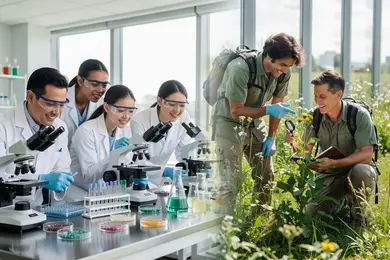
Professions demanding real-time human judgment, such as clinical biologists and ecological field scientists, remain less vulnerable due to reliance on adaptability and ethical reasoning in unpredictable environments. Such roles underscore the difference between routine automation and nuanced problem-solving, confirming why highest demand biology jobs with low AI impact emphasize interdisciplinary expertise.
Employers prioritize candidates combining hands-on laboratory skills with data science proficiency, as AI efficiently processes data volume but cannot innovate experimental interpretation. This places practical value on training in advanced laboratory techniques, bioinformatics, and experimental design while steering clear of routine procedural roles facing higher automation risk. A molecular biologist focused on pharmaceutical research will depend on bespoke protocols and experienced judgment, whereas automation handles repetitive tasks like data sorting.
Those exploring this field should consider the evolving workforce landscape carefully, as continuous learning is essential to maintain relevance alongside advancing technology. For insights on pathways that blend biology with data-driven skills, prospective students may find guidance on what to do with a bioinformatics degree.
What education and biology degree pathways lead to automation-resilient roles?
Roles in biology with the lowest risk of automation combine interdisciplinary expertise and applied judgment that AI struggles to emulate. Degrees emphasizing molecular biology, ecology, or physiology coupled with statistics and data analysis train students in critical skills like fieldwork interpretation and nuanced laboratory reasoning, essential for automation-resistant careers. For example, an environmental biologist holding a master's degree who designs tailored field experiments can make adaptive decisions employers value over routine data processing.
The measured AI replacement risk for biologists sits relatively low at 35/100, reflecting the protective effect of comprehensive education requirements for resilient biology professions. Employers in pharmaceuticals and ecological consulting increasingly seek candidates who supplement technical knowledge with strategic oversight and hands-on problem-solving, areas where AI offers limited utility.
Key pathways supporting workforce resilience include: practical internships, cross-disciplinary coursework integrating bioinformatics and data science, and training in translating biological evidence into actionable insights. Students aiming for automation-resistant biology degree pathways for automation-resistant careers should weigh programs offering dynamic experimental protocol management and effective communication skills, as these are associated with long-term employability.
Tradeoffs arise when focusing solely on theoretical or narrowly technical degrees, as AI continues to automate routine pattern recognition and analysis. Prospective students may consider combining biological sciences with quantitative analytics or project management to foster adaptability.
For those balancing practical immediate needs and strategic pivoting, exploring an accelerated computer science degree online can complement biology training, providing competitive advantages in computational biology and biotech innovation.
How does the job outlook and industry demand compare for resilient biology careers?
The resilience of biology careers amid automation hinges on complex human judgment and hands-on expertise that AI systems cannot replicate. Take nurse anesthetists, for example; with an AI-Resistant Index of 933 and a median salary of $195,263 projected for 2026, their roles demand precise, real-time decision-making in unpredictable clinical environments, limiting automation's scope. This workforce segment is expected to outpace average employment growth, fueled by an aging population and increasing healthcare needs, illustrating shifting industry demand trends for resilient biology professions.
Such roles require significant education and immersive training that act as barriers to rapid labor entry but enhance job stability. Employers seek candidates with substantive experience in laboratory protocols, clinical techniques, or ecological fieldwork, emphasizing credentials and internships over generic qualifications. Jobs in biomedical research or ecological management, for example, demonstrate moderate growth limited primarily to those continuously updating multidisciplinary skill sets.
Prospective students face tradeoffs between time and cost invested in rigorous training and the resulting job security and compensation premiums. Integrating interdisciplinary knowledge-such as genetics paired with data analytics or immunology aligned with clinical practice-improves competitiveness. For individuals considering educational options that align with this focus, online exercise science programs provide targeted pathways with practical relevance.
- Job outlook for biology careers in automation-resistant industries depends on practical judgment and adaptability.
- Industry demand trends for resilient biology professions prioritize advanced hands-on training paired with evolving technical skills.
What are the typical salary ranges for biology careers most resistant to automation?
Biology careers that resist automation generally command median salaries between $60,000 and over $110,000 annually, emphasizing roles requiring analytical judgment, AI collaboration, and experimental design instead of routine procedures. For example, bioinformatics specialists-with median pay near $95,000-actively use AI tools as part of their workflow rather than compete against automation. Meanwhile, research scientists and clinical trial managers typically earn between $85,000 and $115,000. The average income for biology jobs resistant to automation reflects growing demand: the EU projects a net increase of 290,000 life science roles by 2030 despite 42% of repetitive lab tasks becoming automated by 2027, underscoring the need for advanced analytical skills.
Entry-level technician or laboratory technology positions earning roughly $40,000 to $60,000 face higher automation risk and limited wage growth. Conversely, roles such as regulatory affairs specialists-earning $75,000 to $105,000-demand strong data interpretation and compliance management capabilities, with AI fluency increasingly viewed as essential. Geographic nuances also apply: metropolitan biotech hubs offer salary premiums of 10-20% versus national averages but come with relocation and cost-of-living tradeoffs.
Transitioning toward specializations like bioinformatics or computational biology requires substantial investment in programming and statistical knowledge but provides upward mobility. Candidates aiming for sustainable biology careers aligning with market realities will prioritize AI augmentation over routine task replacement. For those considering a shift, resources like an online electrical engineering bachelor degree for veterans illustrate how interdisciplinary skills complement biology in technology-driven fields.
Which biology specializations combine human judgment and lab skills that automation can't replace?
The demand for expertise in genomics, molecular biology, and clinical bioinformatics stems from the necessity of combining nuanced human judgment with manual laboratory proficiency-capabilities that automation alone cannot replace. Clinical geneticists, for instance, must assess variant pathogenicity by integrating patient history and phenotypic evidence, a process that defies simple algorithmic substitution. Similarly, molecular diagnostics technicians rely on manual precision and adaptability to troubleshoot variable biological samples, tasks inherently resistant to full robotic automation.
The intersection of biology knowledge and computational skill creates specialized roles like bioinformatics analysts who manage raw sequencing data inputs and refine bioinformatic pipelines using domain expertise. This skill set is increasingly critical given the European Union's €1.2 billion funding boost for bioinformatics-led healthcare innovation, reflecting a growing market need for professionals capable of bridging wet and dry lab techniques with computational workflows.
Students and professionals considering this pathway should anticipate logistical challenges including rapid protocol evolution and the requirement to maintain expertise across diverse data sources. Employers prioritize candidates with proven decision-making abilities in uncertain environments, necessitating a balanced education involving both hands-on laboratory training and computational biology. The tradeoff is a longer, more intensive educational process but one offering resilience against routine automation and stronger employability in precision medicine contexts.
What biology coursework and technical skills best prepare students for resilient careers?
Genetic counseling combines advanced genetics knowledge with interpersonal expertise, making automation a limited threat; the role carries just a 29% automation risk by 2030 in EU projections cited in Panda's 2025 report. This resilience stems from the demand for integrating complex genomic data with tailored patient communication - a skill set automation tools struggle to replicate.
Students aiming for this field must balance in-depth technical coursework in molecular biology, human genetics, and bioinformatics with training in psychology, ethics, and health communication. For instance, oncology counselors translate genetic risk data into patient-specific guidance, requiring nuanced understanding beyond technical facts.
Employers prioritize candidates with hands-on experience in genetic laboratory techniques, genomic data analysis software, electronic health record systems, and regulatory compliance knowledge. This blend ensures quality, accuracy, and clinical relevancy in decision-making contexts.
Tradeoffs arise when students emphasize either lab work or communication exclusively. Overlooking bioinformatics or patient interaction skills limits employability. Integrated programs or internships that enforce both dimensions better prepare candidates for certification pathways, which increasingly demand clinical hours and real-world patient engagement.
How do online biology programs compare to campus-based options for these career paths?
Online biology programs often lack the immersive lab experiences essential for securing roles in advanced applied biology fields such as bioengineering and biomedical engineering. These careers demand hands-on proficiency that campus-based programs provide through direct laboratory access, internships, and research collaborations-elements rarely replicable fully in an online setting.
Graduates of fully online biology degrees aiming for engineering or research-focused positions must actively seek local opportunities to build practical skills. Without demonstrable expertise in specialized techniques, they will frequently find themselves limited to biological technician jobs, which offer median salaries around $52,000, compared to over $106,000 for engineers according to U.S. Bureau of Labor Statistics data.
Employers prioritize candidates who can perform automation-resistant tasks like designing biomedical devices or managing complex biological systems. Hybrid programs that incorporate on-site labs can mitigate some gaps for working professionals, but purely online paths require careful supplemental experience to reach top pay tiers.
Key considerations for prospective students include:
- Evaluating access to internships or apprenticeships near their location.
- Recognizing the need for collaboration and mentorship usually available on campus.
- Balancing flexibility with the necessity of hands-on training for career differentiation.
Working professionals must weigh the tradeoff between convenience and the practical skills employers demand in biotechnology roles to effectively position themselves for sustainable workforce success.
What accreditation and program quality indicators should biology students look for?
Accreditation by ABET or equivalent regional bodies is a non-negotiable criterion for biology programs targeting regulated industry roles, where curriculum rigor and lab resource standards directly impact employability. Without recognized accreditation, graduates often face barriers in sectors demanding adherence to compliance protocols and validated data practices.
Specialized certifications, such as the ASQ Certified Quality Auditor, offer tangible advantages for positions focused on regulatory oversight, quality assurance, or platform-specific responsibilities that automation increasingly supports but does not replace. BiotechnologyJobs.co.uk's 2026 hiring trends signal accelerated demand for professionals skilled in navigating these intersections of biology and automated systems.
Programs emphasizing practical experience with industry-relevant lab equipment, data management tools, and regulatory frameworks like FDA compliance, GLP, and GMP better prepare students for operational realities in clinical trials and biomanufacturing quality assurance. For example, graduates trained with real-world case studies on FDA protocols are more equipped for roles where nuanced judgment complements automated data processing.
Choosing institutions with verified internship networks, active faculty industry engagement, and strong alumni placement in regulated environments reduces transition friction into complex automated biology lab workflows. Without such integration, graduates risk underperforming in emerging roles that demand both biological expertise and platform savviness.
Are there licenses or professional certifications that strengthen automation-proof biology careers?
Licenses and professional certifications provide a critical defense against automation in biology careers by validating expertise that AI cannot replicate, especially in fields requiring complex ethical judgment and regulatory accountability. Positions such as Ethical AI and Bio-Policy Specialists or AI Policy Advisors demand credentials in bioethics, AI governance, or regulatory affairs, emphasizing mastery of legal intricacies and interdisciplinary coordination. For instance, certifications like the Regulatory Affairs Certification (RAC) or specialized AI policy courses establish clear differentiation from roles vulnerable to automation.
A practical scenario involves a biologist skilled in bioinformatics who faces routine data processing automation but gains resilience by earning certifications tied to EU AI Act compliance or bioethics law. According to Panda's 2025 report on AI and life science jobs, AI Policy Advisors can earn between £75,000 and £110,000 (approximately €88,000-€130,000) annually, illustrating the financial premium linked to deep regulatory knowledge and risk management-especially given non-compliance fines can reach €35 million.
Employers prioritize professionals who combine biology expertise with regulatory qualifications as they reduce legal exposure and guide ethical technology implementation. However, pursuing these certifications entails ongoing interdisciplinary learning beyond traditional biology degrees, posing a tangible tradeoff in time and effort for students and workers. Neglecting these specialized credentials risks displacement in increasingly regulated biology sectors, where oversight and ethical complexity dictate workforce demand.
How can prospective biology majors strategically choose schools and programs for long-term career resilience?
Employers increasingly prioritize biological science graduates who bring analytical thinking and interdisciplinary problem-solving rather than those trained solely in rote memorization or lab protocols. Data from the EU's 2025 employability index, as analyzed by Panda, reveals that about 70% of biology-related roles integrating AI require strong analytical skills paired with teamwork and critical reasoning. Graduates from programs focused narrowly on technical tasks without applying data interpretation or experimental design face higher risks of automation-induced job displacement.
Practical learning tied to real industry challenges improves workforce readiness. For instance, biology students enrolled in programs with biotech or public health partners engage in collaborative projects mirroring actual employment demands. Those who combine genomics or systems biology with computational coursework gain a measurable advantage over peers limited to traditional tracks like ecology or taxonomy.
Program structure also matters. Flexible curricula allowing dual degrees (e.g., biology plus data science) help students adapt as automation reshapes roles. Conversely, graduates from schools lacking current infrastructure or cross-disciplinary content may struggle with relevant skill development. U.S. workforce reports confirm graduates from integrated, interdisciplinary biology programs maintain roughly 25% higher employment stability five years after graduation than those from narrowly specialized programs.
- Programs emphasizing analytical skills reduce vulnerability to automation.
- Industry-linked research opportunities enrich practical expertise.
- Modular or dual-degree options enhance adaptability amid shifting demands.
- Verification of program outcomes is critical for informed decision-making.
Other Things You Should Know About Biology
Hands-on lab experience remains a critical differentiator in making biology careers resilient to automation. Employers prioritize candidates who can independently design and troubleshoot complex experiments, as these skills require adaptive reasoning that automation cannot replicate. Students should prioritize programs with strong laboratory components and access to real-world research settings to develop these capabilities. Without this practical training, graduates risk being outmatched by automated processes that handle routine data collection and analysis.
Fieldwork in biology typically involves unpredictable environments and the need for real-time human judgment, which reduces vulnerability to automation. However, field roles often demand physical endurance and flexibility, which may limit long-term sustainability for some professionals. Candidates valuing career longevity should weigh this against automation resistance and consider combining field skills with data analysis or policy expertise to broaden their viable options.
Employers increasingly expect biology professionals to integrate interdisciplinary skills such as bioinformatics, statistics, and communication to complement core biological knowledge. This combination enhances resilience against automation by enabling workers to interpret complex data, collaborate across fields, and convey insights effectively. Prospective students should prioritize curricula that embed these skills alongside biology content to meet employer demands and reduce risk of job displacement.
References
- AI Proof Jobs for 2025: Careers Technology Won’t Replace https://vault.com/blogs/salary-and-benefits/ai-proof-jobs-for-2025-careers-technology-won-t-replace
- Top 15 Highest‑Paying Pharmacy Jobs in the UK 2025 (Including Salaries) https://apexlearning.org.uk/highest-paying-biology-degree-jobs-2025-2026/
- Life Sciences Careers 2026: Top Hiring Trends & Roles to Advance Your Career | EPM Scientific https://www.epmscientific.com/en-us/industry-insights/career-advice/life-sciences-careers-2026-top-hiring-trends
- 100 AI-Resistant Careers in 2026: Future-Proof Jobs Backed by Labor Market Data - Excel High School https://www.excelhighschool.com/blog/100-ai-resistant-careers-in-2026-future-proof-jobs-backed-by-labor-market-data/
- The most future-proof IT degree programs that won’t be replaced by AI. https://itcompare.pl/en-us/articles/68/the-most-futureproof-it-degree-programs-that-won-t-be-replaced-by-ai
- Certifications That Actually Boost Your AI Career in Pharma | Panda https://www.panda-int.com/insights/certifications-that-actually-boost-your-ai-career-in-pharma/
- [PDF] DOMAINS, NORMS AND INDICATORS FOR EAC REGIONAL ... https://iucea.org/
- CourseCareers https://coursecareers.com/blog-posts/college-vs-online-career-training
- Online Biology Degrees https://mycollegeguide.org/online-biology-degrees/
- 9 jobs resilient to AI & automation https://www.processexcellencenetwork.com/ai/news/9-jobs-resilient-to-ai-automation