2027 ABSN Study Tips for Intensive Programs

Co-Founder and Chief Data Scientist
Accelerated bachelor's of science in nursing students often face the relentless pressure of mastering complex clinical skills and theoretical knowledge while balancing limited time and external responsibilities. With 45% of adult learners citing scheduling flexibility as the decisive factor in program choice according to the National Center for Education Statistics in 2024, the challenge becomes not only absorbing content rapidly but also optimizing study strategies to fit compressed timelines.
This constrained cadence amplifies the risk of burnout and knowledge gaps, which can jeopardize licensure outcomes and early career effectiveness. This article presents targeted study tactics geared toward managing these unique demands and maximizing retention under intensive program conditions.
Key Things You Should Know
- Intensive ABSN programs reduce total study duration by 30-40% compared to traditional pathways, increasing upfront financial burden by 15% on average, forcing candidates to weigh immediate cost against accelerated workforce entry.
- Employers prioritize clinical readiness over academic pedigree in ABSN grads; a 2024 National Nursing Workforce Survey found 68% of healthcare facilities value hands-on simulation hours more than GPA, reshaping skill development emphasis.
- Program intensity correlates with 25% higher attrition rates in ABSN cohorts, requiring strategic time management and resilience, which directly impacts completion timelines and licensure eligibility for prospective students.
What makes ABSN programs intensive, and how do they differ from traditional BSN pathways?
Accelerated bachelor of science in nursing programs compress what traditional BSN pathways cover in four years into 12 to 24 months, creating intense demands on students. Unlike traditional BSN schedules that spread clinical rotations and coursework over longer terms with intermittent breaks, the accelerated absn program curriculum differences require continuous, overlapping didactic sessions, clinical placements, and simulation labs with minimal downtime. This rigorous pacing necessitates exceptional time management skills, especially given that the median annual wage for nurses was $86,070 in May 2024, linking efficient study habits to competitive salary prospects.
For full-time absn vs traditional bsn course structure, ABSN students typically face at least 35 to 40 contact hours weekly, not including independent study. They must rapidly master core competencies to meet employer expectations that graduates perform clinically at the same level as traditional BSN counterparts despite fewer training hours.
Students working full-time before enrollment often need to reorganize their schedules drastically, allocating approximately 25 to 30 hours per week for both formal study and clinical requirements. This accelerated pace offers faster workforce entry but demands early adaptation to high-stress environments and immediate clinical readiness.
Those weighing options should consider the tradeoff between the more gradual skill development in traditional BSN programs and the accelerated path's efficient but demanding framework. Prospective applicants aiming for the easiest ABSN program to get into should also be prepared for these challenges, balancing speed against sustained intensity.
How can I effectively manage time and balance life commitments in an accelerated ABSN?
Effective time management in an accelerated ABSN program demands more than rigid scheduling; it requires deliberate prioritization to balance academic intensity and personal life. For example, a working parent might earmark 90-minute morning sessions for active learning techniques like self-testing, which a 2024 meta-analysis in Psychological Bulletin identifies as superior to passive rereading. This approach aligns with time management strategies for intensive ABSN studies by emphasizing shorter, frequent review periods over extended sessions to improve retention.
Managing competing obligations involves setting firm boundaries around key responsibilities, such as childcare or part-time employment, and communicating these clearly to avoid conflict with study demands. Utilizing technology-automated reminders, shared calendars, and time-tracking apps-helps minimize drift and maintain oversight. Negotiating flexible clinical placements can balance workload fluctuations and prevent burnout while sustaining academic progress.
Students evaluating program options should also consider pathways like ASN online offerings, which may provide alternative timelines or formats more compatible with personal constraints.
What are the most effective study strategies for heavy ABSN coursework and exams?
Effective time management and targeted study methods directly influence success in an absn intensive program study techniques context. Allocating daily 3-5 hour blocks and segmenting content to avoid mental fatigue is essential when facing rigorous coursework and exams. Prioritizing pathophysiology, pharmacology, and clinical decision-making addresses both exam demands and real hospital workflows.
Integrating simulation early creates practical experience crucial for quick protocol internalization, a necessity as licensing timelines accelerate-supported by a roughly 20% increase in new U.S. RN licensees since 2020. Collaborative study groups sharpen clinical reasoning and help bridge gaps in complex material. Tracking progress with digital NCLEX-style questions and targeting at least 80% accuracy prevents premature advancement and builds competence.
For working students, strict time-blocking of non-academic duties and scheduled rest support sustained cognitive function, reflecting the real-world challenge of balancing employment and intensive programs. Prospective students should weigh these demands against the accelerated pace when evaluating the cost-benefit of quickest pathways, such as navigating the cheapest accelerated nursing programs.
From an employer perspective, clinical judgment demonstrated through simulation scores or mentor feedback often differentiates candidates. Emphasizing psychosocial and ethical considerations in clinical decisions is not only expected but necessary for roles in acute care or public health emergencies. Such preparation influences early-career resilience and adaptability under high-pressure conditions, central to effective learning methods for absn coursework and exams.
How should I prepare for ABSN clinical rotations and succeed in hands-on learning?
Success in hands-on learning during ABSN clinicals hinges on proactively mastering essential applied skills while managing high-pressure, time-sensitive tasks. Students who prepare by thoroughly reviewing clinical protocols, medication dosages, and patient assessments perform measurably better during rotations. Prioritizing direct engagement with these materials sharpens situational judgment, which employers increasingly demand as critical for employing new graduates.
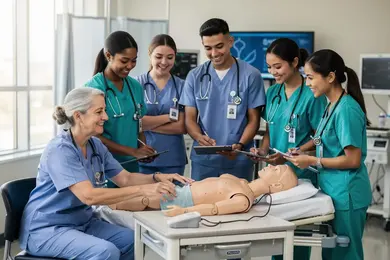
Practice scenarios with peers enhance communication and procedural fluency, replicating the complexity of real clinical environments. For example, simulation drills in emergency response improve retention of crisis management tactics vital in acute care. These exercises, combined with strategic scheduling that balances clinical hours and reflective debriefings, enable early identification of gaps and targeted remediation, improving long-term competency.
Feedback loops with instructors and preceptors bias outcomes toward technical precision and professional adaptability-traits highly valued by healthcare employers. Actively tracking and integrating feedback reduces clinical errors and builds student confidence under scrutiny.
Effective preparation for absn clinical rotations also involves careful logistical planning. Ensuring compliance with immunization and background check requirements ahead of time prevents unnecessary delays. Using digital tools to align personal and clinical schedules minimizes burnout and absenteeism in this accelerated program format.
Prospective students should weigh these demands against alternate pathways such as online DNP programs without clinicals, especially when seeking flexibility or a different professional trajectory.
What techniques help master complex ABSN subjects like pharmacology and pathophysiology?
Mastering pharmacology and pathophysiology in accelerated bachelor of science in nursing programs demands active learning strategies tailored to real-world clinical challenges rather than passive memorization. For instance, constructing concept maps that link disease processes to drug mechanisms supports critical judgment needed for Next Gen NCLEX questions, which emphasize applied reasoning over recall. Targeted spaced repetition and visualization tools help internalize complex drug classifications and pathophysiologic interactions essential for safe patient care.
Practical application through scenario-based problem solving, such as adjusting medication dosages for renal impairment or managing polypharmacy risks in multi-morbidity patients, aligns study efforts with employer expectations for nurses who can navigate unpredictable clinical environments. This clinical decision-making focus addresses the shift away from rote facts toward synthesis demanded by both exam standards and workplace performance.
Effective time allocation is a necessary tradeoff: roughly 60% of study time should prioritize pharmacology due to its breadth and impact on patient safety. Incorporating peer-led teaching mimics interdisciplinary communication, improving retention and readiness for team-based care settings. Consistent self-assessment guides remediation and prevents inefficient study, directly connecting effort to demonstrated competency thresholds established by regulatory bodies.
These methods reduce cognitive overload while enhancing practical competency in critical ABSN subjects, preparing candidates for evolving clinical expectations and workforce demands within nursing practice.
How do online, hybrid, and campus-based ABSN formats impact study planning?
Choosing between online, hybrid, and campus-based accelerated bachelor of science in nursing formats drastically influences a student's study dynamics and workforce readiness. Online students face the challenge of self-discipline without immediate instructor feedback, requiring disciplined note review often within 24 hours to maintain confidence and exam preparedness, as supported by a 2024 student-success survey from Inside Higher Ed. This format suits those needing maximum scheduling flexibility but demands proactive question tracking and time management.
Hybrid models force students to juggle in-person clinical hours alongside asynchronous digital coursework, a complex balance especially for working professionals managing variable shifts. Success here hinges on segmenting study time effectively and maintaining adaptable calendars to handle unpredictable clinical demands.
Campus-based programs provide structured daily routines and immediate access to faculty and peers, fostering hands-on skill acquisition that hospital employers often prioritize. However, this format requires a consistent presence and significant daily time commitment. Graduates from campus-based pathways frequently demonstrate stronger clinical competence due to frequent direct exposure.
Key operational tradeoffs include:
- Online: extreme flexibility countered by greater self-regulation and less real-time support.
- Hybrid: tailored for employed learners but complicated by shifting clinical/virtual schedules.
- Campus-based: immersive, skill-intensive environments demanding daily accountability.
In all formats, immediate, evidence-based note review and active synthesis align with employer expectations for ABSN graduates' clinical proficiency and adaptive capacity.
Which evidence-based learning methods improve retention in fast-paced nursing programs?
Retention of clinical knowledge in accelerated bachelor of science in nursing (ABSN) programs depends heavily on adaptive study techniques that mirror workplace demands. Active retrieval practice-such as self-quizzing or simulation under pressure-strengthens decision-making recall, a critical skill in fast-paced clinical environments. Paired with spaced repetition, which spaces out review sessions over days rather than hours, these methods address the condensed nature of ABSN curricula by preventing rapid forgetting.
Integrating interleaved practice, where students alternate between related topics during study, further builds the mental agility needed for handling unpredictable patient cases. This approach supports the synthesis of diverse concepts, a competency valued by employers seeking nurses prepared for dynamic clinical settings. Practical challenges arise, however, as students must balance these methods with demanding schedules, making digital tools essential for managing spaced and interleaved learning efficiently.
Maintaining cognitive performance also requires structured stress management strategies. Mental health concerns are prevalent among intensive program participants, and mitigating burnout through mindfulness, scheduled rest, and peer support is critical to sustaining study focus and minimizing attrition.
From a workforce perspective, ABSN students who effectively deploy these evidence-based learning strategies demonstrate readiness with reduced remediation needs. This competency translates into better novice nurse performance and greater employer confidence-a decisive advantage in competitive hiring processes and high-stakes healthcare environments.
How can I use NCLEX preparation resources throughout my ABSN to stay on track?
Integrating NCLEX preparation from the start of an accelerated nursing program significantly shapes academic persistence and clinical readiness. For example, a student balancing coursework on pediatric nursing will benefit more by immediately augmenting lectures with NCLEX-style pediatric questions than by postponing review until after course completion. This approach not only reduces knowledge gaps but also aligns tightly with employer expectations for timely proficiency in critical nursing domains.
Early intervention through targeted tutoring in complex subjects like anatomy or pharmacology prevents the accumulation of deficits that can disrupt clinical placements or delay graduation. This matters most for working professionals managing clinical hours alongside study demands, where remediation often incurs costly program extensions or workforce entry delays.
Utilizing adaptive digital NCLEX tools offers a data-driven pathway to focus study time efficiently. For instance, when adaptive learning pinpoints pharmacology as a weak area, concentrating efforts there accelerates mastery-an advantage in high-stress healthcare settings. Tracking performance analytics from these platforms supports informed academic advising, improving the odds of passing on the first attempt.
Finally, a realistic, ongoing study schedule that aligns NCLEX review with live classes fosters consistent knowledge reinforcement without last-minute cramming, a tradeoff critical to success in high-credit-load accelerated nursing tracks.
What habits support mental health, resilience, and burnout prevention during an ABSN?
Intensive accelerated nursing programs demand disciplined daily routines to prevent burnout and maintain clinical effectiveness. A healthcare administrator working through an accelerated bachelor of science in nursing (ABSN) program must regiment sleep and meal schedules to safeguard decision-making under pressure. The compressed curriculum requires balanced, focused study periods paired with strategic breaks to sustain cognitive endurance.
Financial pressures introduce additional stressors, with median tuition for private nonprofit nursing bachelor's programs surpassing $35,000 annually according to College Board 2024-2025 data. Managing the financial burden proactively is integral to maintaining mental clarity and resilience rather than letting debt anxiety erode performance.
Working students should negotiate part-time hours or flexible schedules during intensive terms, as employer expectations for licensed nurses include sustained professionalism and emotional stability. Failure to manage burnout may delay licensure and hinder long-term employability, underscoring that mental health practices tied to daily routines materially affect ABSN program success and career durability.
How can I build professional skills and networks while focused on intensive ABSN studies?
Prioritizing clinical placement quality during an accelerated bachelor of science in nursing (ABSN) program directly affects employability in a market with growing specialization demands. Clinical rotations in areas like telemetry or emergency medicine offer critical decision-making practice sought by employers, especially as registered nurse employment is forecasted to grow 6% from 2023 to 2033 according to the U.S. Bureau of Labor Statistics. Without targeted specialization, graduates risk competing for oversaturated positions.
Engagement with preceptors and clinical instructors provides mentorship and professional networking, which can lead to valuable references. Structured reflection after clinical shifts helps identify competency gaps early-an essential process often overlooked by students focused only on curriculum completion. Simultaneously, participating in state and local nursing associations grants access to exclusive job postings and continuing education resources.
Time management is a notable challenge balancing demanding coursework with networking. Practical strategies include attending one relevant event monthly or scheduling brief informational interviews with healthcare professionals through specialized digital platforms. For career changers, framing previous professional skills such as management or technology within nursing contexts strengthens differentiation.
Students who neglect active networking and competency tracking during the ABSN program face diminished hiring prospects. Emphasizing early skill immersion and measurable milestones aligns graduates with both workforce needs and employer expectations, improving the likelihood of securing competitive nursing roles immediately post-graduation.
Other Things You Should Know About ABSN
Prioritizing time in a 2027 ABSN program involves creating a structured schedule, utilizing digital planning tools, and setting specific, achievable goals. Balancing intensive coursework with personal needs requires self-discipline and proactive communication with instructors if challenges arise.
Employers recognize that ABSN graduates complete rigorous programs in compressed timeframes, which can translate into strong time management and stress tolerance skills. However, some hiring managers express concern about less prolonged clinical exposure compared to traditional BSNs, especially in complex patient care environments. When choosing programs, consider those with robust clinical hours and diverse clinical settings to offset employer hesitation and meet expectations for depth of clinical preparedness.
Adding certifications like ACLS or specialty-focused credentials during or immediately after the ABSN can concretely improve employability and starting salary potential in competitive markets. The accelerated format leaves limited time, so prioritize certifications that align with your target specialty and local employer demand. Attempting to overload your ABSN program with unrelated coursework risks burnout without proportional career benefit; focus on targeted enhancements rather than broad additions.
ABSN graduates enter the workforce faster but may face challenges acquiring advanced competencies typically developed over longer programs. This pace requires deliberate post-graduation planning to gain experience and possibly pursue graduate education for leadership or specialized roles. If your goal is rapid licensure and entry into bedside nursing, an ABSN is effective; however, for accelerated movement into advanced practice or education roles, consider whether adding graduate degrees or extended clinical training aligns better with your career timeline.
References
- How to Prepare for the NCLEX: 9 NCLEX Study Tips - UMSV https://absn.mountsaintvincent.edu/blog/how-to-prepare-for-the-nclex/
- Preventing Nurse Burnout: Strategies for Resilience and Work-Life Balance https://www.indwes.edu/articles/2025/06/preventing-nurse-burnout
- Nursing School Pharmacology: My Secret Weapon to Pass & Master Meds! https://www.lemon8-app.com/@lysia_marie/7512310392534712875
- Mastering Balance in an ABSN Program | Tips & Strategies https://blog.methodistcollege.edu/mastering-balance-in-an-absn-program-tips-strategies
- Self-Care for Nurses: Prevent Burnout - CTX ABSN https://absn.concordia.edu/blog/self-care-for-nursing-students/
- Study Tips for Nursing Students: Active Learning, Study Breaks, and Academic Resources https://blog.stanbridge.edu/study-tips-for-nursing-students/
- Hybrid-Online Accelerated Bachelor of Science in Nursing (ABSN) Program - Roseman University https://www.roseman.edu/academic-programs/college-of-nursing/accelerated-bachelor-of-science-in-nursing/online-absn/
- Preventing Burnout: Practical Tips for Work-Life Balance and Wellbeing https://www.alternaleaf.co.nz/post/simple-guide-to-preventing-burnout
- Well-Being & Resilience https://www.aacnnursing.org/our-initiatives/well-being-resilience
- Networking in Nursing: Why Every Nursing Student Should Start Early - Madonna https://absn.madonna.edu/blog/networking-in-nursing/