2027 ABSN Degree ROI Explained

Co-Founder and Chief Data Scientist
Professionals juggling full-time jobs and family responsibilities face steep challenges entering accelerated nursing programs without derailing income or caregiving obligations. Recent National Center for Education Statistics data reveals a 35% increase in adult learners opting for hybrid or flexible course formats in accelerated nursing tracks, signaling heightened demand for adaptable schedules.
This trend reflects a shift in how students weigh program length against work-life balance and financial risk. With employer preferences trending toward candidates who can demonstrate both clinical readiness and sustained workforce engagement, timing and delivery format become critical. This article examines ABSN degree return on investment, addressing these practical constraints to guide informed enrollment decisions.
Key Things You Should Know
- Accelerated BSN graduates face a 15% lower initial salary compared to traditional BSN hires, per Bureau of Labor Statistics 2024 data, constraining short-term ROI despite faster entry into nursing roles.
- Healthcare employers increasingly prefer ABSN candidates with clinical experience; the lack of extended hands-on practicum in ABSN tracks reduces hiring competitiveness in high-acuity specialties, according to the National Council of State Boards of Nursing 2024 report.
- Program costs averaging 40% above standard BSNs, coupled with concentrated curriculum duration (12-18 months), create a tradeoff between upfront debt burden and accelerated workforce entry, impacting long-term debt-to-income ratios.
What is an ABSN degree and how does it differ from a traditional BSN?
Choosing between accelerated nursing programs vs traditional bsn degrees hinges largely on balancing time, cost, and readiness for clinical practice. An accelerated Bachelor of Science in Nursing (ABSN) compresses essential nursing theory, clinical rotations, and leadership training into 12 to 24 months, delivering focused preparation for those already holding a bachelor's degree in another discipline. This pathway trades a four-year educational span for a more intense weekly workload and tightly scheduled clinical experiences.
The benefits of an accelerated bsn degree are clear for career changers needing swift entry into nursing, yet employers may weigh the limited clinical duration against the traditional model's extended exposure. ABSN graduates face compressed rotations demanding strong time-management skills and resilience, which can influence job readiness compared to peers with broader clinical training.
In terms of cost, total tuition for ABSN programs ranges from $40,000 to $80,000, with some private programs exceeding $100,000. While this upfront investment can surpass per-year costs of a traditional BSN, the shorter timeline often reduces opportunity costs and mitigates financial exposure over time.
A practical example: a business professional entering nursing via an ABSN must prepare for a concentrated curriculum and demanding clinical weeks, unlike a recent high school graduate opting for the traditional pathway that embeds foundational academic breadth.
For those seeking pathways beyond the initial BSN, including flexible advancement, exploring the cheapest RN-BSN online program options offers a cost-sensitive route post-licensure.
Is an ABSN degree worth it in terms of cost, time, and career ROI?
Choosing an accelerated bachelor of science in nursing degree (ABSN) requires weighing the tangible tradeoffs between upfront costs, condensed program length, and localized labor market conditions. Many ABSN programs cost upwards of $40,000 before living expenses, intensifying financial pressure on students without employer support or scholarships.
This cost-effectiveness of ABSN nursing programs hinges on a compressed timeline-often 12 to 18 months-that limits opportunity costs by allowing quicker entry into nursing roles with median salaries near $80,000 annually.
Employers prioritize candidates with current licensure, practical clinical experience, and resilience under pressure, attributes ABSN programs emphasize through accelerated clinical training. However, students juggling family or employment face intensified completion challenges that can erode potential return on investment (ROI). Graduates generally achieve high employment rates within six months, but regional saturation and wage stagnation remain significant variables.
Effective evaluation includes considerations such as:
- Program cost balanced against scholarships or tuition reimbursement.
- Time commitment weighed against lost wages and debt growth.
- Local nursing demand and entry-level salary benchmarks.
- Licensing exam pass rates and clinical training rigor.
For example, a midcareer professional in a metropolitan area with expanding hospital networks can expect a more rapid return on investment than a peer in a rural setting with limited immediate openings. Identifying programs known for strong state board exam results and robust clinical affiliations further improves outcomes beyond cost and duration metrics.
Those interested in alternative pathways might explore RN to BSN programs with no clinicals to match varied career goals and constraints more closely.
What are the typical admission requirements and prerequisites for ABSN programs?
Admission into accelerated bachelor of science in nursing (ABSN) programs requires navigating a complex interplay of academic rigor and practical prerequisites that directly influence students' readiness and market outcomes. A non-nursing bachelor's degree and a minimum GPA of 3.0 in prerequisite courses-including anatomy and physiology I and II with labs, microbiology, chemistry, statistics, and developmental psychology-are standard.
These prerequisites are deliberately aligned with employer expectations and licensure requirements, impacting graduate employability.
Clinically oriented requirements such as background checks, immunizations, and CPR certification are mandatory, but many programs also prioritize prior healthcare experience. Candidates lacking verified patient care hours or CNA work risk admission delays or outright denial, a reflection of the sector's demand for familiarity with healthcare environments before full clinical immersion.
Standardized entrance exams like the TEAS or HESI serve as gatekeepers, assessing essential math, reading, and science comprehension skills required to sustain the accelerated curriculum's pace. Failure to meet threshold scores commonly results in conditional admission or rejection, emphasizing the high-stakes nature of entry evaluation. This practical barrier makes preparation for these exams non-negotiable for admission success.
Financially, prospective students must account beyond tuition, budgeting an estimated $1,000 to $3,000 for textbooks, scrubs, and clinical supplies. This cost often compounds opportunity costs tied to full-time enrollment. For working professionals weighing accelerated pathways and seeking practical options, researching online nursing programs for working adults can provide alternative models with potentially lower financial and scheduling friction.
Accelerated nursing programs admission criteria in the US heavily factor in this balance of academic, experiential, and financial readiness, underscoring the strategic weighing of prerequisites when planning to enroll in accelerated BSN courses.
How long do ABSN programs usually take to complete, and how intensive are they?
Accelerated bachelor of science in nursing programs range from 12 to 24 months, reflecting institutional design and enrollment status. The typical length and workload of ABSN programs compresses comprehensive theoretical and clinical training into an intense schedule that challenges students to allocate nearly full-time effort, often forcing a pause in employment and personal commitments.
These programs combine fast-paced didactic instruction with demanding clinical hours, leaving little downtime. Students face ongoing assessments and extended clinical shifts mirroring real nursing environments, a structure aimed at rapidly equipping graduates to address workforce gaps. However, this intensity raises notable burnout risks without careful management.
Employers expect not only mastery of nursing theory but also the ability to perform effectively under pressure. ABSN graduates enter the job market faster and benefit from a significant salary advantage; BSN-prepared nurses earn an average of $98,686 annually versus $77,836 for RNs without a BSN, according to ZipRecruiter and the University of North Carolina Wilmington.
Prospective students should assess their readiness for sustained high-intensity study and plan finances and support accordingly. Evaluating the ABSN program duration and intensity alongside personal circumstances is critical to avoid compromising wellbeing or academic success.
For professionals seeking further nursing advancement without clinical requirements, exploring online DNP programs can offer additional pathways beyond the initial degree.
What does the ABSN curriculum include, and how are clinical placements arranged?
Accelerated bsn programs compress essential nursing theory and clinical practice into 12 to 18 months, presenting a tradeoff between rapid credentialing and intense scheduling demands. Clinical placements require 500 to 800 hours, distributed across diverse settings such as adult, pediatric, psychiatric, and community health, often during nights, weekends, and holidays. This rigidity can create friction for working professionals or those with family responsibilities, limiting schedule flexibility.
Clinical education offices strategically assign students to sites aligned with accreditation and learning objectives, optimizing hands-on experience but sometimes complicating personal logistics. Notably, clinical rotations act as informal recruiting grounds; approximately 30-40% of accelerated bsn graduates gain employment at their training sites, which enhances value beyond classroom instruction.
When evaluating costs, public university accelerated bsn programs typically range from $15,000 to $45,000 in-state, offering a significantly more affordable path compared to Physician Associate master's programs priced between $80,000 and $120,000. The latter rarely guarantee early clinical exposure, a factor critical for early employability and return on investment documented in workforce data.
Decision-makers should weigh program intensity, scheduling constraints, and clinical site placement as pivotal factors shaping employability and long-term career trajectory within nursing pathways.
How do online, hybrid, and campus-based ABSN formats compare for nursing students?
Choosing between online, hybrid, and campus-based ABSN formats involves balancing flexibility, cost, and employer expectations. Online programs enable professionals to maintain employment while studying but often shift costs toward out-of-pocket clinical placements and extended program durations, which can reduce overall return on investment by increasing opportunity costs. Hybrid programs offer a compromise, delivering online theory with scheduled campus labs to ensure hands-on skills without full-time relocation or daily commuting.
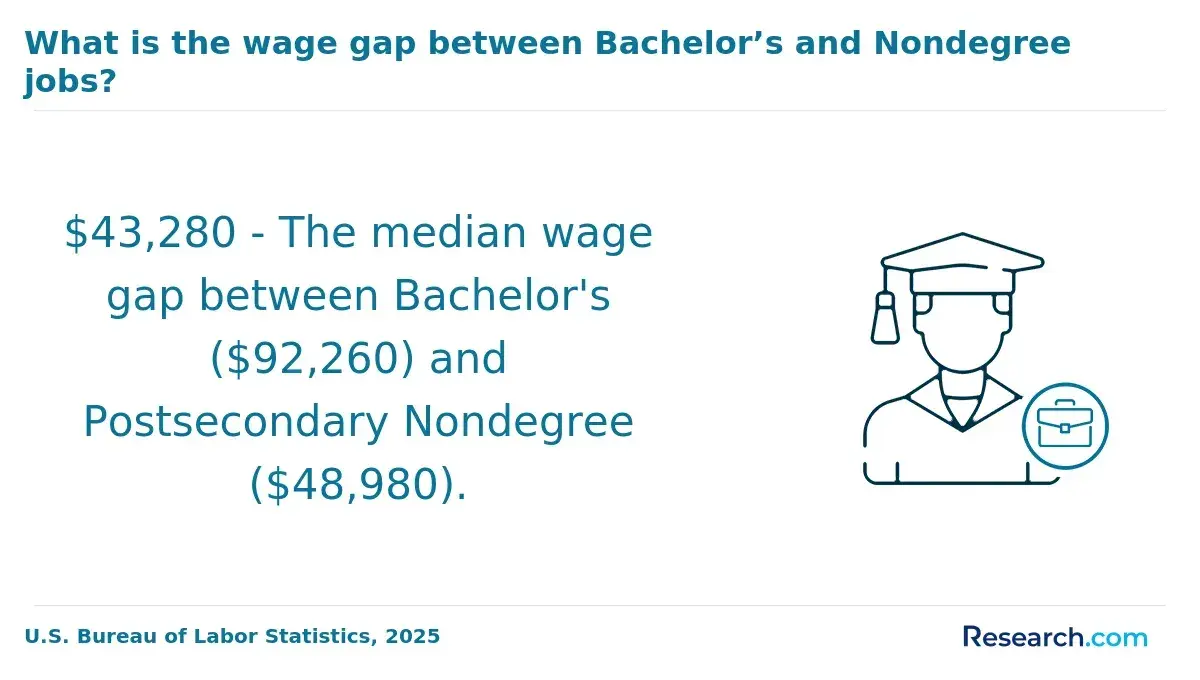
Time-to-degree typically ranges from 12 to 18 months for ABSN students, substantially shorter than traditional four-year bsn programs. This compressed timeframe lowers opportunity costs and can improve lifetime earnings, particularly given that bachelor's degrees generate a median ROI of $160,000, while many shorter-term or advanced degrees show lower returns. Extending online programs to accommodate work schedules may erode these financial advantages.
Employer preferences lean toward candidates who have completed rigorous clinical training verified through in-person experiences. Metropolitan hospitals report faster integration and retention for hybrid or campus graduates with consistent faculty oversight, though well-structured online pathways including accredited clinical practicums are gaining acceptance in some regions.
Students' personal circumstances, such as parenting responsibilities or schedule flexibility, heavily influence format choice. Those prioritizing minimal disruption might accept higher overall costs in online programs, while others may prefer hybrid or campus options for stronger employer perceptions and streamlined hiring readiness.
What accreditation and state approval should a high-quality ABSN nursing program have?
Accreditation and state board approval critically determine an accelerated bachelor of science in nursing (ABSN) program's real-world value, directly shaping licensure eligibility and employability. Only programs holding Commission on Collegiate Nursing Education (CCNE) or Accreditation Commission for Education in Nursing (ACEN) accreditation ensure graduates qualify for the NCLEX-RN exam, a non-negotiable gateway to nursing practice. A lack of these credentials often leads to ineligibility for licensure, severely limiting professional options.
State board approval further complicates decisions when students plan to work outside their program's location. For instance, enrolling in an ABSN program not approved by the nursing board in a student's target employment state can block licensure, forcing costly and time-consuming paths to compliance or additional education.
Financial analysis underscores the impact of these regulatory factors. Western Prairie Analytics' 2026 model calculates a net present value of +$308,356 and an internal rate of return of 8.7% for a state-accredited, publicly based ABSN BSN, with payback achieved within nine years compared to no-college alternatives. This confirms how accreditation and approval accelerate workforce reentry and amplify lifetime earnings.
Key operational considerations include:
- Verification of transfer credit acceptance aligned with the clinical curriculum and state rules.
- Assessment of clinical placement quality to avoid delays or substandard training.
- Program length matching state board requirements to prevent extended tuition costs.
Prospective ABSN candidates must analyze these factors proactively to avoid hidden expenses and time lost in licensure or employment barriers.
What nursing careers can you pursue with an ABSN, and how do roles differ?
Choosing an accelerated bachelor of science in nursing degree (ABSN) directs candidates toward registered nurse roles with responsibilities often exceeding those of associate-degree nurses due to broader clinical training. This trajectory suits individuals seeking rapid licensure combined with flexibility to specialize or move into management, but advancing beyond bedside care typically requires further credentials or graduate education.
In practical terms, ABSN graduates are positioned for roles including nurse educators, clinical nurse specialists, and nurse case managers. Each demands distinct skills beyond direct patient care:
- Nurse educators must combine clinical expertise with instructional ability to train staff and create curricula.
- Clinical nurse specialists balance patient care with quality improvement and evidence-based initiatives.
- Nurse case managers coordinate comprehensive care, emphasizing leadership and analytical skills.
The transition into administrative or policy positions shifts focus from hands-on care to strategic decision-making, often coming with higher salaries but greater accountability. According to U.S. Bureau of Labor Statistics data summarized by the Council of Presidents, ABSN holders earn roughly 66% more over a lifetime compared to those with only high school diplomas.
However, those targeting advanced practice roles like nurse practitioner should anticipate graduate education post-ABSN. The degree primarily expedites entry to RN licensure and foundational roles rather than immediate access to the full scope of advanced practice.
What salary ranges and long-term earnings potential can ABSN graduates expect?
Graduates of accelerated bachelor of science in nursing entering the workforce in 2026 face starting salaries typically between $65,000 and $80,000, influenced significantly by location, healthcare setting, and patient acuity. Urban and specialized hospital roles command salaries at the upper end, whereas rural or community providers tend to pay less, reflecting regional labor market disparities.
Return on investment (ROI) for this degree hinges on educational costs and post-graduation earnings trajectories. Using a conservative estimate-$50,000 in debt and a $70,000 starting salary with 3% annual growth-lifetime earnings can exceed $3 million over 40 years, resulting in an ROI near 500%. This calculation aligns with Bankrate's accepted 40-year ROI formula, confirming that moderate debt financing paired with stable employment produces substantial long-term financial benefit.
However, nurses facing employment gaps, part-time roles, or moves to lower-paying regions markedly reduce their ROI potential. Employers emphasize consistent work history and advanced skill sets as prerequisites for salary increases and benefits, adding pressure on graduates to strategically assess program investment against realistic labor market conditions.
Key considerations include:
- Geographic influence on salary ranges and job availability.
- Impact of workforce stability and full-time employment on financial outcomes.
- Long-term earnings growth via certifications and specialized roles.
Prospective students evaluating accelerated nursing programs need to weigh immediate costs alongside regional salary forecasts to optimize career and financial returns over time.
How is the job outlook for registered nurses with an ABSN across different healthcare settings?
Registered nurses with an ABSN face diverse employment landscapes that require strategic evaluation beyond basic job availability. Hospitals show a clear preference for ABSN-prepared nurses in acute care due to their comprehensive training, which supports complex patient needs and interdisciplinary teamwork.
However, outpatient settings, while often offering steadier hours and less stress, generally pay 10%-15% less than hospitals, challenging the financial return on the ABSN investment.
Long-term care facilities provide abundant openings but come with lower wages, higher turnover, and fewer opportunities for clinical growth-factors that can constrain career progression for ABSN holders. Geographic salary variations are significant; a metropolitan hospital nurse earning around $80,000 can recover tuition costs substantially faster than a counterpart working in rural or nursing home environments with salaries under $50,000.
Practical decision-making for ABSN graduates must factor in employer credential preferences, job site demands, and personal career goals. While ABSN credentials improve hiring and promotion chances in specialty and high-acuity roles, candidates must realistically assess compensation and workplace conditions to maximize the long-term return on investment.
According to Education Data Initiative, the median ROI for bachelor's degrees over 40 years is 841.7%, notably higher than associate degrees at 545%, but this varies widely by context.
Key workforce considerations include:
- Employer demand for ABSN-prepared nurses in acute and specialty care.
- Salary tradeoffs between hospital, outpatient, and long-term care settings.
- Regional cost of living impacts on financial outcomes.
- Potential limitations in skill development in lower-acuity roles.
These nuances emphasize the importance of aligning ABSN education with realistic employment expectations rather than assuming uniform opportunities.
Other Things You Should Know About ABSN
Employers typically weigh clinical experience and demonstrated competencies over program type. Since ABSN programs compress content and clinical hours into a shorter timeframe, graduates may initially face steeper learning curves on the job. Prioritizing programs with extensive, diverse clinical placements improves readiness and employability. Candidates should seek clinical experiences in varied healthcare settings to offset any perceived gaps versus traditional BSN grads.
The financial investment in a 2027 Accelerated Bachelor of Science in Nursing (ABSN) program can be substantial. However, it often leads to a quicker entry into a high-demand field, offering a strong return on investment (ROI) through potentially higher earnings in a shorter time compared to other degrees.
Yes, graduating in states or metro areas with documented nursing shortages accelerates employment prospects and increases negotiating power on salary and shifts. Regional labor markets shape demand more than program format. Prospective students should evaluate local workforce needs and select ABSN programs strategically located near high-demand regions to maximize immediate ROI.
Securing employment during clinical placements provides practical onboarding, employer familiarity, and often expedited hire post-graduation. This reduces the job search timeline and avoids income gaps. Students targeting competitive markets benefit from early networking and aligning clinical placements with preferred employers. Planning clinical rotations with hiring prospects in mind is a strategic advantage.
References
- How Long Is an Accelerated BSN? ABSN Timeline and 12-Month Option https://stmary.edu/nursing-accelerated/how-long-is-an-accelerated-bsn.html
- ROI in Higher Education - FREOPP https://freopp.org/roi-in-higher-education/
- Accelerated Bachelor of Science in Nursing (ABSN) https://www.assumption.edu/undergraduate/post-bachelors-accelerated-nursing-track
- Is College Worth it? | Return on Investment Analysis of College Degree https://educationdata.org/college-degree-roi
- Accelerated Bachelor of Science in Nursing (ABSN) https://nursing.catholic.edu/programs-admission/bsn-programs/accelerated-bachelor-science-nursing-absn
- ABSN vs Traditional BSN - Which Is Right for You? https://absn.madonna.edu/blog/absn-vs-traditional-bsn-right/
- Why Nursing School Accreditation Matters | All Nursing Schools https://www.allnursingschools.com/how-to-get-into-nursing-school/school-accreditation/
- What is an Accelerated Bachelor of Science in Nursing? | Incredible Health https://www.incrediblehealth.com/blog/accelerated-bachelor-of-science/
- ABSN vs. BSN: What’s the Difference?| University of Bridgeport https://www.bridgeport.edu/news/absn-vs-bsn-whats-the-difference/
- Accelerated BSN Programs: Who Qualifies | Betternurse.org https://betternurse.org/accelerated-bsn-program-guide/