2027 How ABSN Students Build Confidence Before Graduation

Co-Founder and Chief Data Scientist
Facing rapid shifts toward shorter nursing programs and intense clinical demands, accelerated nursing students often encounter mounting anxiety about meeting competency expectations before licensure.
The pressure intensifies as nearly 40% of nursing students enrolling in fast-track programs balance coursework with employment, according to the National League for Nursing's 2024 report, revealing a tension between hands-on skill development and academic acceleration. This dual burden challenges students' confidence in mastering clinical judgment swiftly amid workforce shortages that amplify employer scrutiny.
This article examines strategic approaches ABSN students use to build clinical and professional confidence prior to graduation, helping navigate these competing demands effectively.
Key Things You Should Know
- Clinical simulation hours averaging over 150 in 2024 programs improve ABSN student readiness but extend program duration by 15%, delaying workforce entry and increasing tuition costs, per National Council of State Boards of Nursing data.
- Employers report 62% preference for ABSN graduates with integrated leadership practicums, linking confidence to higher early-career retention rates, influencing hiring decisions amid nursing shortages, according to the American Hospital Association.
- The compressed structure of most ABSN tracks limits paid internship availability, forcing students to choose unpaid placements or delayed licensure, presenting a critical tradeoff impacting financial stability and clinical exposure per 2024 Bureau of Labor Statistics findings.
How do ABSN programs help students build clinical confidence before entering nursing practice?
Clinical preparedness in accelerated baccalaureate nursing (ABSN) programs directly influences graduate employability by rapidly building practical competence. These programs integrate extensive hands-on clinical hours across acute care, long-term care, and community health settings, allowing students to navigate complex patient cases before entering the workforce.
This immersive exposure addresses a key hiring challenge. Employers seek nurses who can independently manage real clinical scenarios from day one, reducing costly onboarding and turnover.
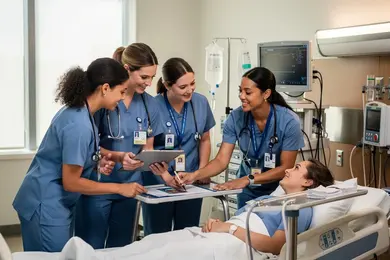
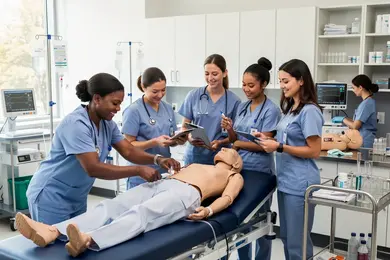
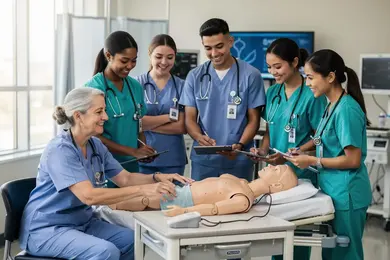
Simulation plays a significant role in how accelerated nursing students gain confidence, replicating high-pressure events like code blues to cultivate critical decision-making and procedural skills in a controlled environment. These simulated repetitions complement on-site experiences, producing graduates with measurable proficiency that traditional programs often cannot ensure due to fragmented clinical rotations.
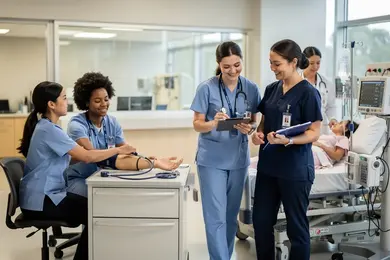
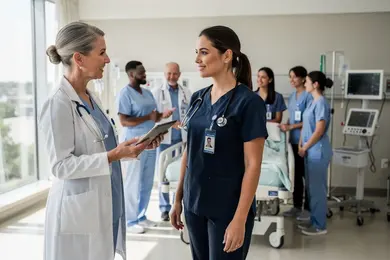
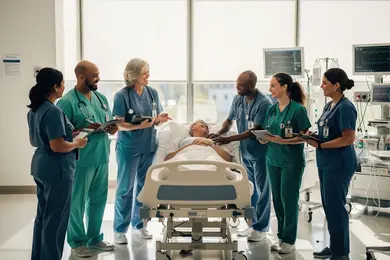
Mentorship and continual feedback sharpen clinical judgment and interdisciplinary communication, essential for patient safety and efficient workflow management. ABSN students often demonstrate stronger workload management under pressure, reflecting tangible outcomes tied to program design focused on skill development.
Enrollment growth in entry-level baccalaureate programs, including accelerated tracks, intensifies competition and elevates hiring standards. This necessitates careful evaluation of program quality and clinical rigor for prospective students aiming to pivot effectively into nursing.
Prospective candidates can explore affordability and program options through resources like RN BSN pathways to complement or extend ABSN clinical skills development.
What academic and skills preparation do ABSN students receive to feel practice-ready?
Accelerated Bachelor of Science in Nursing (ABSN) students face a compressed timeline that demands swift competency attainment, placing a premium on rigorous clinical skills training. Simulation-based exercises have shown to increase nursing students' confidence by up to 25% while sharpening critical decision-making, vital for handling scenarios like acute care or rapid triage where hesitation could compromise patient safety.
ABSN students clinical skills training integrates these high-fidelity simulations with targeted scenario practice, allowing learners to rehearse complex procedures and communication challenges before exposure to actual clinical environments.
Beyond simulation, the curriculum condenses pharmacology, pathophysiology, and nursing assessment into an intensive academic format to prepare students for varied workplace pressures found in emergency rooms, long-term care facilities, or outpatient services. The volume and pace can be a potential barrier but are necessary for equipping graduates with adaptive skills needed for dynamic healthcare teams.
ABSN academic preparation for nursing practice also includes repeated clinical practicum rotations that validate students' ability to apply theory under supervision, addressing employer concerns about readiness gaps common in accelerated tracks.
These rotations foster adaptability to fluctuating patient acuity and interdisciplinary collaboration-core workforce expectations during persistent staffing shortages. Essential procedural mastery, from intravenous insertion to wound care, is reinforced alongside communication training, improving patient advocacy and safety outcomes.
Prospective students weighing accelerated pathways can also research complementary options such as an ASN program online to better align educational demands with their career strategy.
How do simulation labs and high-fidelity scenarios strengthen ABSN student competence?
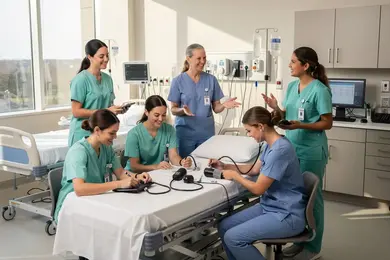
Simulation labs for ABSN student confidence reflect a strategic investment in bridging theoretical knowledge with practical, high-pressure clinical applications. High-fidelity scenarios enhancing ABSN competence simulate critical hospital conditions, such as acute patient deterioration and emergency medication administration, where decision-making speed and accuracy are paramount.
These experiences reduce the typical onboarding burden for employers by producing graduates who can competently navigate risk-intensive interventions from day one.
In realistic environments utilizing patient mannequins that exhibit authentic vital signs and responses, students refine competencies in prioritizing care and interdisciplinary communication. Such immersive practice supports improved clinical reasoning and error detection without compromising patient safety, which is particularly valuable in specialties demanding acute situational awareness.
Data from a 2024 BMC Nursing study quantifies this value. Students actively seeking structured feedback during simulations improved clinical performance by 16% and self-confidence by 21% within a semester. These metrics underscore why prospective ABSN students should assess programs for robust simulation components and feedback rigor, balancing educational affordability with resource availability and alignment to employer expectations.
Tradeoffs exist, as some programs lack frequent or varied simulation scenarios due to cost or logistics, impacting the preparedness of graduates in competitive clinical markets. Those evaluating pathways should critically consider these practicalities alongside broader educational options, including advanced degrees like PhD in nursing programs, which may provide alternative routes to clinical leadership roles.
In what ways do ABSN clinical rotations progressively build judgment and autonomy?
Progressive autonomy building through ABSN clinical experiences directly shapes a graduate's ability to function independently in demanding clinical environments.
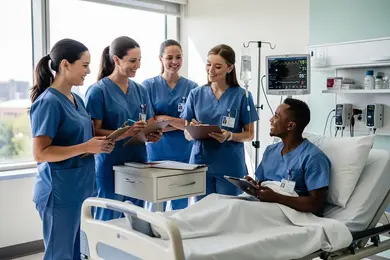
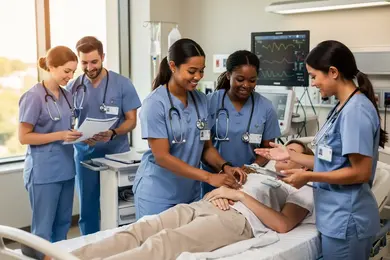
Early rotations emphasize foundational skills and protocol adherence, while later assignments entrust students with urgent decision-making, such as managing fluid imbalances on medical-surgical floors or adjusting care priorities during critical care shifts. This graduated responsibility is essential for aligning clinical judgment with real workforce expectations in frontline nursing roles.
Core to this approach is the structured escalation of clinical tasks, including medication administration and interdisciplinary communication, which cultivates accountability and critical thinking. In geriatric care rotations, for example, students balance pharmacologic interventions with psychosocial assessments, preparing for the complexities of multi-morbidity management, an increasingly frequent scenario in community or long-term care.
These ABSN clinical rotations developing critical thinking skills translate into real-world readiness, demonstrated by a rise in first-time NCLEX-RN pass rates to 89.4%, with BSN graduates notably ahead.
Maximizing clinical exposure requires navigating challenges like securing diverse sites and managing shift variability, ensuring students encounter multidisciplinary teams and varying patient acuity. These logistical complexities affect learning depth and autonomy development. For those exploring alternative entry points, consider LPN programs that don't require TEAS test as a parallel pathway into nursing practice.
How do ABSN programs use feedback and evaluation to grow student confidence?
Accelerated Bachelor of Science in Nursing (ABSN) programs demand students adapt rapidly to frequent, detailed feedback tailored to real clinical pressures. This continuous evaluation, through simulations and direct observations, targets essential technical skills and decision-making under time constraints.
For instance, students often encounter multifaceted patient cases requiring swift prioritization. Real-time, actionable critiques help bridge the gap between theoretical knowledge and effective practice, preventing overwhelm during early career experiences.
ABSN students also engage in structured reflective practice combined with peer and faculty assessments. This approach, reinforced by standardized tests and competency checklists aligned with national nursing benchmarks, allows objective measurement of readiness beyond self-evaluation.
Data from the Health Resources and Services Administration shows that nurses with a BSN have a median annual income of $84,200, about 8% higher than those with associate degrees, reflecting employer valuation of the comprehensive skillset ABSN prepares graduates to offer.
The program's intensity requires resilience to manage increasing feedback volume without burnout, often mitigated through dedicated mentorship. Graduates leave with validated clinical readiness and adaptive expertise supporting their transition into diverse healthcare settings focused on evidence-based care and leadership roles.
How do mentoring, coaching, and faculty support impact ABSN student self-assurance?
Structured mentoring, coaching, and faculty support directly impact ABSN students' ability to transition from theoretical knowledge to independent clinical practice by reducing anxiety and enhancing decision-making confidence. In high-pressure healthcare environments, such as ambulatory care, coaching tailored to rapid assessment and task prioritization is essential for adapting to fluctuating patient demands.
Without this support, students often face delayed clinical decision-making and slower skill development, which can increase stress and contribute to early burnout, a significant concern given the U.S. Bureau of Labor Statistics projects a 6% growth rate for registered nurses through 2033 with roughly 193,100 annual openings.
Key elements that improve outcomes include:
- Mentoring that exposes students to real-world challenges under supervision
- Coaching aimed at closing individual skill gaps like communication under pressure and time management
- Faculty responsiveness facilitating practical guidance and reinforcing professional standards
Implementing measurable coaching checkpoints, such as simulation assessments and reflective sessions, enables early identification of weaknesses and supports targeted performance improvements. This triad not only bolsters technical competence but also addresses psychological readiness, factors employers prioritize for retention and workforce resilience in accelerated fields.
What role do peer collaboration and cohort learning play in ABSN confidence-building?
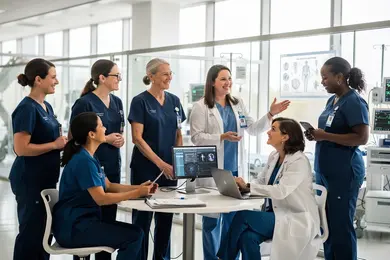
Peer collaboration and cohort learning directly influence preparedness in accelerated nursing programs by replicating the teamwork and decision-making required in acute-care settings. Real-world hiring demands favor graduates skilled at navigating high-pressure scenarios while adapting quickly to varied clinical situations. Cohort models introduce the necessary complexity early, promoting confidence through consistent exposure to diverse clinical reasoning and peer feedback.
A 2024 Journal of Professional Nursing study quantifies this impact, showing students with strong professional values cultivated in cohorts experience a 2.3-fold boost in confidence transitioning to practice. This translates into tangible employability advantages where acute-care roles demand both technical skill and workplace adaptability.
Operationally, cohort learning addresses the intensity of accelerated timelines by fostering peer-led strategies such as:
- Structured study groups for mastering challenging pharmacology or patient assessments via reciprocal teaching.
- Debriefs after simulations that enhance clinical decision-making under pressure.
- Shared time management to mitigate burnout risks and balance emotional stress.
However, logistical friction, including coordinating schedules and balancing group accountability, requires formal role assignments and digital tools to sustain engagement. Students evaluating programs should prioritize cohorts with clinical diversity to maximize adaptability across specialties, a key factor for entering competitive acute-care environments.
Avoiding peer collaboration risks isolated skill development and diminishes employer confidence in new graduates' readiness for unpredictable clinical workflows.
How do ABSN students develop communication and teamwork skills for healthcare settings?
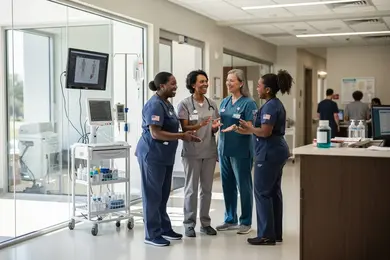
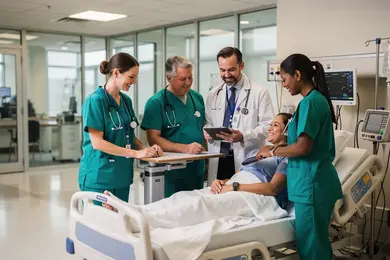
Effective communication and teamwork in accelerated nursing programs hinge on repeated exposure to interprofessional simulations that mirror the high-stakes realities of clinical practice.
These simulations demand concise, assertive communication while managing complex scenarios like patient deterioration or coordinating medication delivery. Such experiences develop critical skills in information exchange and decision-making under pressure, directly addressing common clinical errors caused by communication breakdowns.
Evidence from a 2024 multi-institutional study published in Clinical Simulation in Nursing indicates that engaging in at least three structured interprofessional simulations improves nursing students' confidence in teamwork and communication by 27%, with nearly 90% reporting better preparedness for real-world collaboration. This structured repetition also reinforces standardized communication frameworks such as SBAR (Situation-Background-Assessment-Recommendation), which health care employers prioritize to reduce misunderstandings.
Complementing simulations, team-based clinical rotations place students in authentic hospital roles requiring management of multidisciplinary rounds and patient handoffs.
These environments highlight barriers like hierarchical intimidation and information overload, making skills like closed-loop communication indispensable for confirming message accuracy. Graduates lacking such training often face delays transitioning to independent practice and require increased supervision.
Employers in intensive care and emergency units expect new nurses to navigate these team dynamics efficiently, making simulation and teamwork training integral to employability and effective patient safety outcomes.
How do ABSN programs prepare students for NCLEX success and licensure readiness?
Accelerated bachelor of science in nursing programs compress rigorous clinical and cognitive training into a condensed timeline, demanding intense focus to meet both licensure and employer standards. Real-world nursing roles require complex judgment under pressure, which these programs address through high-fidelity simulation labs combined with faculty-led debriefs designed to fine-tune clinical reasoning aligned with NCLEX frameworks.
Clinical rotations span diverse, often acute care environments, such as emergency departments and long-term care settings, where students apply theory to rapidly evolving patient conditions. This exposure reveals individual skill gaps early, allowing targeted remediation essential before sitting for licensure exams.
Resilience training is embedded to combat burnout, a critical factor linked to both attrition and lower exam performance. Studies indicate students completing structured wellbeing modules report 32% less high-level burnout and improved academic self-efficacy, which correlates with higher NCLEX success rates and sustained professional performance.
The tradeoff in absorptive capacity is steep. The accelerated format suits highly disciplined learners prepared for emotional and intellectual intensity. Failure to manage this can lead to delayed certification or dropout, critical outcomes employers consider when hiring. Graduates who effectively internalize resilience and clinical competence navigate early career demands with greater adaptability and judgment precision.
How can prospective ABSN students evaluate schools' outcomes related to graduate confidence?
Programs with first-time NCLEX-RN pass rates above 90%, notably in the 94-96% range per a 2024 Journal of Nursing Education analysis, demonstrate a level of preparedness that aligns tightly with licensure demands. This rigor translates into tangible workforce advantages.
Accelerated graduates enter nursing roles up to 15 months earlier than traditional peers, which can yield $90,000 to $110,000 more in early-career earnings. This economic impact reflects the value of compressed timelines paired with effective foundational readiness.
However, pass rates alone do not guarantee successful transitions. Prospective students should scrutinize employment rates within 6 to 12 months post-graduation to assess actual workforce integration, especially in programs connected to healthcare systems offering clinical partnerships. These affiliations often provide early and diverse practical experiences critical to building professional confidence.
Curriculum design factors such as simulation-based training and early clinical immersion strongly influence graduate self-efficacy. Programs offering multiple high-fidelity simulation sessions tend to better prepare students for complex clinical decision-making, reducing anxiety in real patient scenarios.
Evaluating alumni feedback on handling specialized settings, for example, the shift from a community health role to a high-intensity ICU position, reveals how well programs tailor clinical exposure to specific career tracks. Such qualitative insights complement licensure and employment data, providing a fuller picture of graduate readiness.
Measurable metrics, licensure success, time to employment, sustained confidence, offer a pragmatic framework for differentiating which accelerated nursing programs truly prepare students for durable, real-world success.
Other Things You Should Know About ABSN
Accreditation from bodies like CCNE or ACEN ensures a program meets national standards and affects eligibility for state licensure and employer recognition. State board approval dictates if graduates can sit for the NCLEX in that state and practice nursing legally. Prioritizing programs with both regional accreditation and state approval aligned with your intended licensure location reduces the risk of delayed licensure or limited employment options.
While ABSN graduates often benefit from strong demand for new nurses, entry-level positions may require continued skill development and adjustment to clinical workflows. Employers expect graduates to quickly adapt to variable shift schedules and multidisciplinary teams, but initial positions may not offer specialization. Prioritizing programs with established hospital partnerships can improve access to residencies or graduate training programs that ease this transition.
Clinical hours volume builds foundational hands-on skills, but exposure to diverse clinical settings better prepares students for the breadth of nursing roles in the workforce. Prioritizing programs that offer rotations in multiple specialties-such as med-surg, pediatrics, and community health-enhances adaptability and confidence in diverse environments. Students targeting specific work environments should verify clinical placement alignment with their career goals to avoid gaps in relevant experience.
References
- Teamwork in Nursing: Why It Matters and How It Improves Patient Care - Marian https://onlineabsn.marian.edu/blog/teamwork-in-nursing/
- Nursing Simulation Labs at Roseman University - Roseman University https://www.roseman.edu/academic-programs/college-of-nursing/accelerated-bachelor-of-science-in-nursing/simulation-labs/
- Simulation Based Learning in Clinical Settings https://nursingcecentral.com/lessons/simulation-based-learning-in-clinical-settings/
- From Classroom to Clinic: How Simulation Technology Prepares Nursing Students for Real-World Care | Elmhurst University Elmhurst University Blog https://www.elmhurst.edu/blog/from-classroom-to-clinic-how-simulation-technology-prepares-nursing-students-for-real-world-care/
- From student to practice: why nursing readiness cannot stop at graduation https://www.elsevier.com/connect/from-student-to-practice-why-readiness-in-nursing-care-must-continue-beyond-graduation
- NCLEX Preparation for Nursing Graduates: Your Path to Licensure - American Healthcare Institute https://amhealthinstitute.com/blog/nclex-preparation-for-nursing-graduates-your-path-to-licensure/
- Simulation-Based Learning Supported by Technology to Enhance Critical Thinking in Nursing Students: Scoping Review https://www.jmir.org/2025/1/e58744/