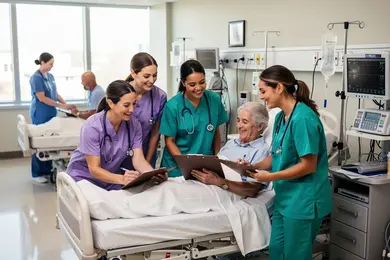
2027 ABSN Clinical Skills You'll Build Before Graduation

Co-Founder and Chief Data Scientist
Entering accelerated nursing programs presents an immediate challenge: mastering complex clinical skills within an intensely compressed timeline while competing for limited hospital placements. Current workforce data from the U. S. Bureau of Labor Statistics predicts a 15% growth in registered nurse demand over the next decade, intensifying pressure on students to become immediately competent clinicians.
Meanwhile, 2024 surveys from the National Student Clearinghouse show a sharp rise in adult learners balancing education with work and family, often selecting programs with flexible clinical scheduling. This dynamic forces students to prioritize clinical proficiencies that align with real-world hospital expectations efficiently.
This article breaks down the essential clinical skills you'll build before graduation to help navigate these time-sensitive demands and optimize career readiness.
Key Things You Should Know
- Intensive clinical skills training compresses traditional practicum hours by over 35%, increasing readiness risk where skill mastery intersects with employer expectations for autonomous decision-making, per 2024 nursing workforce analyses.
- Employers report a 22% higher onboarding duration for ABSN graduates, reflecting gaps in longitudinal patient care experience which influences retention and unit staffing stability in competitive hospital markets.
- Accelerated program timelines elevate upfront financial burdens by 18%, constraining access for working professionals and amplifying opportunity cost calculations amid projected 12% RN demand growth through 2032.
What core clinical skills does an ABSN program teach to prepare you for nursing practice?
Core nursing competencies taught in ABSN programs prioritize critical patient care skills aligned with clinical safety and immediate workforce applicability. Graduates gain proficiency in vital signs assessment, medication administration grounded in the five rights framework, and hands-on procedures such as intravenous therapy and sterile technique adherence for infection control. These programs also develop fluency in clinical documentation and electronic health records navigation, responding to healthcare digitization demands.
However, the compressed nature of ABSN clinical skills for nursing practice preparation often limits deep specialty training. For example, a nurse transitioning into critical care must acquire operating room asepsis and advanced protocols through on-the-job experience, highlighting a practical tradeoff between accelerated entry and comprehensive clinical readiness.
The rapid growth of ABSN programs, up 21% from 2014 to 2025, per the American Association of Colleges of Nursing, illustrates strong employer reliance on these core skills but suggests variability in graduate preparedness.
Practice scenarios emphasize emergency response prioritization and clear communication during handoffs to reduce errors. Patient education for chronic disease management is also integral, directly impacting readmission rates. Students must manage condensed clinical hours requiring focused time management and consistent practice outside the clinical setting, as employers expect immediate competence in clinical tasks and teamwork.
Prospective students evaluating the pathway should consider how accelerated clinical skill acquisition aligns with workplace expectations and specialty ambitions. For those seeking affordable options to advance their nursing education with flexible pacing, reviewing the cheapest online RN to BSN programs may complement an ABSN foundation effectively.
How does an ABSN build competency in patient assessment and vital signs management?
Accelerated bachelor of science in nursing programs prioritize building vital signs management competency in ABSN programs through extensive hands-on clinical practice and simulation-based learning.
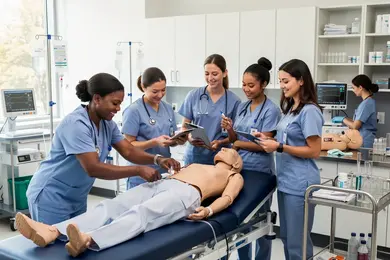
By 2023, 95.6% of U.S. RN programs had integrated high-fidelity simulation labs, a drastic increase from 72.7% in 2016, allowing students to practice pulse, respiration, temperature, and blood pressure measurement on life-like mannequins. This repetition sharpens precision and prepares students for immediate assessment challenges.
Employers expect ABSN graduates to efficiently prioritize and sequence multiple assessments, often in high-pressure settings like emergency rooms or intensive care units. Scenario-based testing within these programs trains students to adapt dynamically, a skill indispensable in managing complex patient cases. Practical application of clinical skills for patient assessment is supplemented by iterative formative feedback and peer review, aiding in identifying common errors such as incorrect cuff placement or incomplete respiratory evaluation.
Real-world implications include reduced onboarding time and increased reliability in hospitals facing fast patient turnover and acute care demands. Understanding equipment calibration, infection control, and workflow integration extends competency beyond theory, shaping workforce-ready nursing professionals.
Prospective students must weigh these training realities against their career goals. For those comparing online pathways, the Capella vs Chamberlain RN to BSN discussion offers practical insights on program structures and outcomes relevant to ABSN graduates.
Absolvent abn clinical skills for patient assessment, when combined with rigorous simulation and feedback, form the foundation for effective nursing practice in fast-evolving clinical environments.
What hands-on skills will you develop in medication administration and patient safety before graduation?
Medication administration skills in ABSN clinical training extend beyond dosage calculations to encompass rigorous simulations replicating acute care environments, where precise execution of the "five rights" directly influences patient outcomes. For example, rapid titration of cardiac medications or IV antibiotics for immunocompromised patients demands both speed and accuracy under pressure, reflecting real-world scenarios where errors bear immediate consequences.
A 2023 multi-institution study found only 62% of final-year nursing students feel competent managing complex clinical situations despite high confidence in patient communication, revealing gaps ABSN programs seek to address through hands-on training and electronic health record (EHR) proficiency. Effective EHR use for medication reconciliation and allergy checks is essential to prevent adverse drug events, especially in dynamic, multidisciplinary settings.
Patient safety techniques taught in ABSN programs emphasize integrating clinical judgment with institutional protocols amid distractions such as workflow interruptions and communication barriers. These skills prepare graduates for employer expectations that prioritize demonstrated proficiency over theoretical knowledge, especially in fast-paced trauma units.
Such training underscores tradeoffs ABSN graduates face balancing multitasking and accuracy during medication rounds. As students consider further specialization, options like a PhD in nursing education may enhance clinical and educational expertise, supporting long-term workforce impact.
How do ABSN clinical courses train you in evidence-based nursing procedures and care planning?
Clinical skills development in ABSN programs hinges on preparing nurses not just to follow protocols but to apply evidence-based nursing care planning training that adapts dynamically to patient-specific variables and emerging clinical evidence.
Programs emphasize mastering standardized assessments, decision-making models, and the practical application of differential assessments in specialized settings such as cardiology or geriatrics. This focus ensures that students move beyond rote procedures to understanding how evidence informs nuanced clinical judgments vital for chronic disease management.
Training involves supervised rotations and real-time simulations emphasizing procedural competence and outcomes-oriented thinking. Students learn to document, analyze, and iteratively improve care plans in compliance with regulatory and institutional standards, minimizing unnecessary interventions and optimizing resource use, qualities employers explicitly seek.
Language proficiency also affects communication and instructional clarity, with many programs expanding resources for non-native English speakers to enhance collaboration and patient education effectiveness.
The disconnect between educational rigor and employer expectations can hinder readiness and long-term career progression if programs do not balance technical training with adaptive care planning. Prospective students should consider these operational realities, balancing clinical skills development in ABSN programs alongside longer-term workforce trends such as compensation differences reflected in DNP salary by specialty.
In what ways do ABSN programs develop your communication and collaboration skills with patients and healthcare teams?
A critical advantage of accelerated bachelor of science in nursing (ABSN) programs lies in their focus on rigorous, realistic communication training essential for high-pressure clinical environments. Students acquire skills in delivering concise patient information during shift changes and emergency coordination, directly addressing frequent causes of medical errors in hospitals.
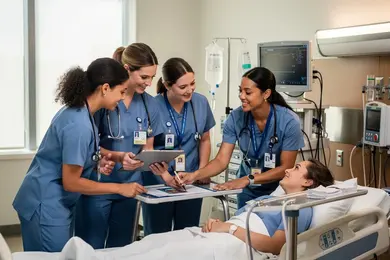
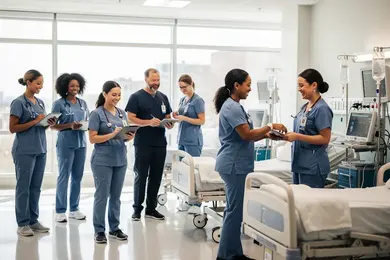
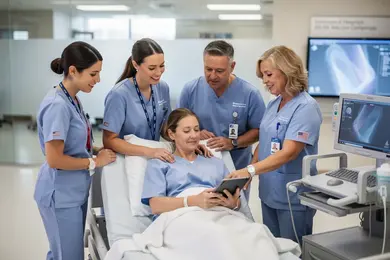
Practical team-based exercises mimic the interprofessional dynamics nurses face alongside physicians and ancillary staff. For instance, ABSN students regularly practice negotiating care plans where urgent patient conditions demand immediate, clear communication to avoid delays in treatment. This interaction develops adaptability to diverse communication styles and priorities in complex settings like intensive care units.
Assessment methods such as objective structured clinical examinations (OSCEs) verify students' competencies rather than assume proficiency, with national data showing that over 80% of medical schools employ such exams to both confirm readiness and identify remediation needs. This high-stakes evaluation underscores the workforce demand for communication skills proficiency from day one.
The practical impact of this training is a reduced risk of miscommunication-related harm and improved patient safety. Employers prioritize graduates who can contribute to seamless, multidisciplinary teamwork in fast-paced care environments. Ultimately, ABSN programs trade an intensive curriculum for early workforce readiness in communication and collaboration-key factors influencing employability in competitive healthcare settings.
How are simulation labs and clinical rotations structured to build real-world nursing readiness in an ABSN?
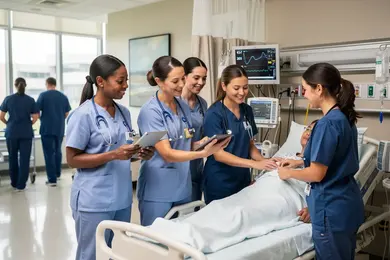
Accelerated baccalaureate nursing (ABSN) programs in 2026 impose rigorous clinical and simulation demands that closely mirror hospital realities, conditioning students for the intense pace and complexity of modern nursing roles. High-fidelity simulation labs create acute care scenarios where students practice critical interventions within strict time limits, fostering rapid decision-making that surpasses traditional classroom learning.
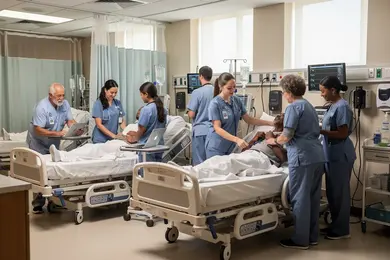
Clinical rotations significantly intensify exposure, with students managing diverse patient populations in med-surg, pediatrics, emergency, and critical care settings. For example, emergency department placements require simultaneous prioritization of multiple patients with varied acuities, replicating post-graduate staffing pressures.
These rotations reflect the approximately 1.5 times heavier course load documented by the American Association of Colleges of Nursing (AACN), demanding sustained physical stamina and cognitive endurance.
To bridge simulation proficiency and hands-on patient care, curricula advance in complexity systematically and embed real-world documentation practices such as electronic health records and interprofessional communication. However, accelerated schedules correlate with elevated stress, necessitating integrated resilience training and time management support to counter burnout risks.
The workforce values ABSN graduates for adaptability and early workflow familiarity, but successful transition depends heavily on students' capacity to manage intensive clinical demands. Prospective candidates should weigh the tradeoff between accelerated readiness and the potential for fatigue, ensuring their personal thresholds align with accelerated program expectations.
What clinical skill competencies do employers expect from new ABSN graduates entering bedside roles?
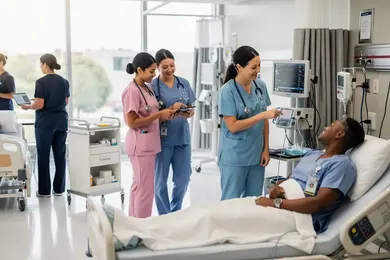
Employers demand that new ABSN graduates rapidly exhibit core clinical competencies with minimal supervision to ensure patient safety. This includes medication administration accuracy, vigilant vital signs monitoring, and precise wound care. Mastery of aseptic technique and infection control is essential, particularly in acute care where regulatory compliance and exposure risks are significant.
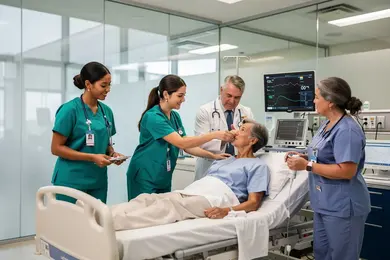
Clinical judgment grounded in early detection of patient deterioration and prompt escalation is vital in high-acuity settings. For example, a nurse in a medical-surgical unit must perform technical tasks while accurately documenting in electronic health records and collaborating effectively with interdisciplinary teams to modify treatment plans.
Data from Arkansas State University's BSN programs show NCLEX-RN pass rates between 95.2% and 100% in 2024. However, program completion rates can drop to 55%-60% in some tracks, underlining how the ability to persist through demanding clinical challenges directly affects employability and readiness.
Workforce implications include prioritizing programs with extensive supervised clinical hours and realistic simulation training, as insufficient hands-on experience delays competence and increases remediation costs. Balancing program rigor with feasibility is critical for candidates targeting bedside nursing roles in high-demand hospital environments.
How do online ABSN formats ensure equivalent clinical skills training compared to campus programs?
Online ABSN programs integrate virtual simulation with required in-person clinical rotations, ensuring students complete approximately 500 supervised clinical hours consistent with state board regulations. This hybrid approach balances skill acquisition with authentic patient interactions, allowing learners to engage in high-fidelity simulations of complex scenarios such as acute respiratory failure or post-operative care.
These exercises develop clinical judgment in controlled environments before students advance to on-site clinical placements in hospitals, outpatient clinics, or community centers, which coordinate practical experiences aligned with employer expectations.
Employment data indicates roughly 90% of ABSN graduates secure registered nurse positions within six months, confirming that online formats achieve comparable clinical readiness to traditional models.
However, securing diverse clinical sites often extends program timelines due to logistical challenges. Employer priorities focus not only on procedural competencies but also on familiarity with electronic health records and patient communication, which are reinforced through synchronous virtual labs and standardized patient encounters.
Prospective students must evaluate how programs source and supervise clinical experiences remotely since managing placement logistics can limit geographic flexibility and affect start dates. This proactive management is essential to avoid delays in hands-on training crucial for readiness in specialties like med-surg, pediatrics, or critical care.
What clinical experiences in an ABSN support readiness for the NCLEX-RN and licensure requirements?
Accelerated bachelor's of science in nursing (ABSN) programs compress the clinical hours needed for licensure into an intense, hands-on format that demands quick adaptation to high-pressure environments.
Unlike traditional BSN tracks, ABSN students face tighter timeframes with substantial clinical volume, exposing them early to acute care and complex patient scenarios that align closely with NCLEX-RN readiness. This model often benefits individuals seeking rapid entry into nursing but poses significant challenges for those balancing employment or caregiving responsibilities due to the irregular and demanding schedules.
Employers increasingly prioritize nurses who demonstrate strong communication and clinical judgment skills, and a 2020 comparative study revealed that ABSN graduates tend to outperform traditional BSN peers in interprofessional communication, especially in patient and family engagement. This reflects an intentional emphasis in ABSN curricula on relational competence alongside technical proficiency.
However, the accelerated pace leaves minimal opportunity for repetition, making mastery of medication administration, documentation, and clinical decision-making a high-stakes endeavor from the outset. Selection of ABSN programs with diverse, well-affiliated clinical sites can significantly affect exposure to varied patient populations and acuity levels, shaping employment prospects.
Prospective ABSN students must weigh the tradeoff between fast-tracked licensure and the intensive time-management, logistical demands, and personal sacrifices inherent in these programs. Those who navigate these pressures effectively may gain a pragmatic advantage in both exam preparation and workforce readiness.
How can you evaluate and compare ABSN programs based on the clinical skills training they offer?
Clinical skills training in accelerated BSN programs varies significantly, impacting readiness for real-world nursing demands. Programs that prioritize early, repeated patient interaction across diverse specialties such as acute care and pediatrics provide a distinct advantage.
Simulation labs, while useful, rarely match the complexity and unpredictability of rotations in accredited hospitals where students manage genuine clinical workflows. Clear minimum clinical hour requirements and established partnerships with high-volume healthcare systems serve as important markers of program rigor.
Consider this scenario: a graduate targeting intensive care roles will face gaps if their accelerated BSN program compresses or limits exposure to critical care protocols and advanced assessments. Programs incorporating standardized patient interactions and evidence-based procedural competencies better align with the expectations of high-acuity employers, reducing onboarding friction.
Geographic flexibility in clinical placement also shapes the diversity of patient populations students encounter. A broad clinical site network enhances cultural competence and adaptability, traits highly valued by employers and linked to long-term success.
According to AACN data, accelerated BSN graduates report median starting salaries often exceeding $70,000, typically after 12-18 months of study. This reflects a compressed timeline to earning potential but depends on balancing program intensity with practical skill depth, which affects job market competitiveness and career trajectory.
Other Things You Should Know About ABSN
The clinical workload in an ABSN program is substantially more demanding compared to traditional pathways due to its accelerated pace. Students must balance multiple clinical rotations, simulation labs, and coursework simultaneously, often requiring 30 to 40 hours per week of clinical practice alone. This intensity leaves little room for part-time work or significant personal commitments, so prioritizing time management and preparation before enrolling is essential to avoid burnout and maintain performance.
Yes, clinical experiences can differ widely depending on the program's partnerships with healthcare facilities and geographic location. Some ABSN programs offer access to high-acuity hospitals with diverse patient populations, which enhances exposure and skill development. Others may rely more on lower-acuity or outpatient settings, limiting hands-on experience in critical care scenarios. When choosing a program, prioritizing those with strong clinical affiliations aligned with your desired nursing practice area improves readiness and employability.
Before graduating in 2027, ABSN students will develop essential clinical skills including patient assessment, medication administration, critical thinking, and effective communication. These skills will be cultivated through both real-world clinical rotations and advanced simulation labs, ensuring graduates are well-prepared for diverse healthcare settings.
While simulations play an important role, ACSN students must engage extensively in real patient care to develop practical competencies that employers value. Excessive reliance on simulation can limit exposure to unpredictable clinical situations, reducing readiness for fast-paced hospital environments. Prospective students should verify that their ABSN program provides ample supervised patient interactions during clinical rotations to ensure comprehensive skill development before graduation.
References
- Accelerated Path to RN: Exploring Full-Time BSN Program Options https://blog.stanbridge.edu/accelerated-path-rn-exploring-full-time-bsn-program-options/
- What Do You Do in Nursing School? - Madonna ABSN https://absn.madonna.edu/blog/what-is-nursing-school-like-how-to-prepare/
- Accelerated Bachelor of Science in Nursing (ABSN) https://nursing.catholic.edu/programs-admission/bsn-programs/accelerated-bachelor-science-nursing-absn
- Accelerated BSN vs BSN: What’s the Difference? https://stmary.edu/nursing-accelerated/acclerated-bsn-vs-bsn.html
- How Do BSN Programs Prepare Students?| University of Bridgeport https://www.bridgeport.edu/news/how-do-bsn-nursing-programs-prepare-students/
- Online Accelerated BSN https://onlinedegrees.elmhurst.edu/programs/accelerated-bsn-online
- What is an ABSN program? | WCU Nursing Glossary https://westcoastuniversity.edu/glossary/absn-program
- Essential Skills Every Nursing Student Should Develop Before Graduating ~ Skill Up https://www.skill-up.org/essential-skills-every-nursing-student-should-develop-before-graduating/
- Interdisciplinary Collaboration: The Nurse's Role in Team-Based Healthcare https://www.indwes.edu/articles/2025/08/nurse-role-in-team-based-healthcare