2027 Best Public ABSN Programs

Co-Founder and Chief Data Scientist
Healthcare candidates shifting careers face a daunting dilemma: how to efficiently secure nursing credentials in compressed timeframes without sacrificing quality or licensure eligibility. Accelerated Bachelor of Science in Nursing (ABSN) pathways promise fast-track routes but vary widely in clinical access, curricular rigor, and admissions flexibility.
According to the U. S. Department of Education's 2024 data, programs offering hybrid or fully online options saw 35% enrollment growth, driven by adult learners balancing work and family obligations. This trend signals growing demand for adaptable yet accredited programs that align with evolving workforce demands. This article evaluates top public ABSN programs by their alignment with real-world constraints and career trajectories to aid informed choices.
Key Things You Should Know
- National Council of State Boards of Nursing data shows that accelerated bachelor's programs average a 75% NCLEX pass rate on first attempt-significant tradeoff versus traditional BSN programs' 90%, forcing candidates to weigh speed against licensure risk.
- Employers increasingly prioritize clinical simulation hours over program length, per 2024 AACN workforce reports, pressuring prospective students to select ABSN programs with integrated high-fidelity simulation to optimize employability.
- The median ABSN program cost rose 12% from 2021 to 2024, outpacing regional income growth, creating access barriers that prolong workforce entry timelines especially for undercapitalized career changers.
What are the best public ABSN programs?
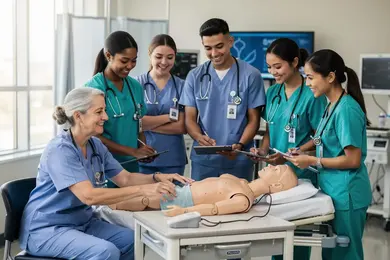
Top accelerated BSN programs at public universities achieve distinction by aligning clinical training intensity with tangible workforce demands, especially in states with diverse healthcare needs. For example, the best public ABSN nursing programs in the United States often emphasize immersive rotations tailored to critical areas like emergency care or geriatrics, equipping graduates for immediate integration into specialized hospital environments.
Choosing among the 330 active ABSN programs nationwide requires attention to variables beyond licensure preparation. Prospective students should evaluate cohort size, clinical site access, and scheduling flexibility. A working professional seeking a strategic pivot must often prioritize programs offering evening or weekend clinicals, balancing program duration against essential hands-on exposure.
Key decision factors include:
- Clinical rotation relevance to regional healthcare priorities
- Program schedule compatibility with work-life constraints
- Healthcare technology integration and employer network strength
Employer expectations now extend to proficiency in electronic health records and interprofessional communication, favoring ABSN programs with established hospital affiliations. This creates a practical tradeoff: programs within less resourced states may lag technologically, reducing graduates' urban employability. Another consideration involves program format; students exploring advanced RN pathways can assess options like the easiest RN to BSN online program to streamline transitions.
How do public ABSN programs differ from private ABSN programs?
Public ABSN programs distinctively prioritize scalable, cost-effective training aligned with regional healthcare workforce demands. Their publicly funded tuition dramatically lowers financial barriers, enabling a larger socioeconomic spectrum of career changers to enter nursing. With 27,706 students enrolled and 17,629 graduates in 2024, these programs illustrate a volume-driven model that reliably supplies employers with a consistent talent pipeline.
In contrast, private ABSN programs generally operate smaller cohorts at higher tuition rates, often investing in enhanced facilities or more personalized instruction. However, these additional resources do not necessarily translate to superior employment outcomes.
Public versus private accelerated nursing programs advantages hinge on more than cost; public programs leverage extensive hospital partnerships to secure clinical placements critical for timely completion and job readiness. Private programs may struggle with costly or limited clinical site access in oversaturated urban markets, complicating scheduling for students.
For working professionals balancing time-to-completion with financial and logistical constraints, public ABSN programs typically demand early, structured application timelines due to intense demand, whereas private programs might offer more flexible admissions but at a premium.
Career pivoters must consider the tradeoff between cost, cohort size, and clinical access in deciding their path. Those pursuing comparative insights on accelerated tracks can reference the best value nursing education online WGU for additional context.
What accreditation should a public ABSN program have?
Choosing an accelerated BSN program without verified accreditation from the Commission on Collegiate Nursing Education (CCNE) or the Accreditation Commission for Education in Nursing (ACEN) carries immediate risks to licensure and employment eligibility.
These recognized accrediting bodies for public accelerated BSN programs serve as gatekeepers, ensuring curricula align with national standards necessary for passing the NCLEX-RN exam and meeting clinical expectations. This accreditation directly influences whether graduates can obtain state nursing licenses, with state board of nursing approval being mandatory to legally practice.
For example, completing a publicly funded ABSN program accredited by CCNE or ACEN and approved by the California Board of Registered Nursing enables access to licensure pathways essential for practice in California. Without this, graduates face barriers that reduce workforce mobility and career flexibility. Employers often explicitly require candidates from accredited programs, reflecting preferences tied to rigorous academic and clinical preparation.
The financial tradeoffs between public and private ABSN programs underscore the practical value of accreditation combined with cost-efficiency. California State University San Marcos offers in-state tuition near $18,000, substantially lower than private institutions exceeding $98,000, without sacrificing accreditation standards or program quality. Prospective students looking for nursing programs online should verify these credentialing benchmarks alongside affordability metrics.
Ensuring accreditation and state approval is a critical early step in evaluating public ABSN programs that balances regulatory compliance, realistic employment prospects, and long-term career outcomes within the competitive nursing labor market.
Are public ABSN programs offered online or on campus?
Public accelerated BSN programs in the U.S. maintain an on-campus core because clinical competence cannot be validated remotely-a factor that sharply distinguishes these options from typical online degrees.
While some campus-based accelerated ABSN programs in the US incorporate online didactic coursework to ease scheduling conflicts, the essential clinical practicum, simulation labs, and direct patient care require physical presence. This mandatory hands-on training aligns with employer demands and state board licensure criteria, underscoring a practical barrier to fully remote accelerated public online ABSN programs.
For working professionals, this hybrid versus on-campus tradeoff demands strategic planning. Those who opt for hybrid formats still face significant commuting or temporary relocation for clinical rotations, factors that influence employer readiness and licensure timelines.
California State University Los Angeles's 96.12% NCLEX-RN pass rate in 2026 exemplifies how a rigorous, clinically immersive curriculum supports marketable graduate outcomes in public accelerated BSN programs. Students must complete extensive supervised clinical hours, a prerequisite that directly influences exam success and employment qualifications.
Decision-makers must evaluate whether the limited flexibility of public accelerated BSN programs offsets the critical value of authentic clinical training. For those seeking alternative advanced practice paths, considering specialized options like PMHNP programs could provide more online coursework, though practical hours remain vital. Understanding these operational realities shapes realistic expectations for licensure progression and workforce integration.
What prerequisites do ABSN programs usually require?
Employers hiring accelerated bachelor of science in nursing graduates expect immediate clinical readiness, making prerequisite mastery a critical hurdle rather than a simple formality. Applicants must hold a bachelor's degree in a non-nursing field and demonstrate competence in core sciences such as anatomy, physiology, microbiology, chemistry, and statistics.
These prerequisites are foundational for clinical proficiency and often require grades of C or better within a recent 5 to 7-year window, ensuring knowledge aligns with current medical standards.
The necessity to complete these courses can impose logistical challenges, especially for working professionals balancing job commitments. Evening, weekend, or online course options become essential but may extend the time before ABSN program application, delaying workforce reentry and salary advancement.
Students with STEM backgrounds might waive some prerequisites, but policies vary significantly across institutions, requiring careful verification. Key workforce implications include employers' expectations for strong critical reasoning and laboratory skills developed through these courses, directly influencing employability.
By 2024, ABSN programs became available in all 50 states plus D.C. and Puerto Rico, eliminating geographic restrictions for students planning prerequisite completion to match local program requirements and career objectives. This expansion supports strategic planning but does not reduce the inherent time and resource demands of preparing for accelerated nursing education.
How long does a public ABSN program take to complete?
A compressed ABSN program typically demands 12 to 18 months of intense full-time study, with considerable variation influenced by clinical placement logistics and state licensing rules. Students balancing part-time work often experience longer timelines closer to 18 months, while those fully committed can finish around a year. This condensed format requires managing 40 to 60-hour weeks, which limits flexibility and increases the risk of burnout if not planned carefully.
From a workforce perspective, completing an ABSN program swiftly can improve job market entry during ongoing nurse shortages, but employers simultaneously expect well-developed clinical skills despite the accelerated pace. Programs must therefore navigate the tradeoff between speed and depth of experience, which impacts graduate readiness and employer confidence.
Current trends reflect an expanding landscape: approximately 330 accelerated baccalaureate programs coexist with 10 entry-level accelerated master's options, plus 16 new accelerated master's programs developing. This diversification offers candidates choices aligned with specific career goals, including longer-term specialization and advancement potential typically associated with master's degrees.
Prospective students should evaluate ABSN duration relative to lifestyle constraints and career impacts, recognizing that while shorter programs enable rapid workforce re-entry, master's-level options may better position nurses for leadership roles despite lengthier training.
How much do public ABSN programs cost?
Public accelerated Bachelor of Science in Nursing (ABSN) programs present a significant upfront financial commitment, often costing between $30,000 and $55,000 for the full curriculum. While this is more affordable than private alternatives, it requires students-especially career changers or working professionals-to carefully strategize funding due to the condensed 12-to-18-month duration of study.
Those without access to employer tuition support or savings should anticipate tightening budgets during this intensive period.
Beyond tuition, candidates must factor in additional expenses such as lab fees, textbooks, and clinical placement costs, which often include transportation or childcare. For example, a part-time worker juggling an ABSN program might see reduced income due to scheduling conflicts, effectively increasing total attendance costs.
Admission competitiveness is rising, typically demanding a minimum 3.0 GPA on a 4.0 scale. Applicants with marginal grades should consider augmenting their credentials through related coursework or healthcare experience to improve acceptance chances and minimize financial risk.
Deciding between financial outlay and accelerated degree completion requires weighing employer demand against personal economic capacity. The quicker pathway offered by public ABSN programs can fast-track workforce entry, but only if candidates align financing plans with realistic job market prospects and personal circumstances.
What courses are included in an ABSN curriculum?
An accelerated nursing curriculum requires students to rapidly assimilate complex scientific content while developing clinical skills aligned with employer standards for entry-level RNs. Core subjects such as anatomy, microbiology, chemistry, and pathophysiology establish the biological and pharmacological foundation necessary for safe patient care. These courses are critical because gaps in foundational knowledge can limit clinical decision-making, especially in acute care scenarios.
Specialized nursing courses emphasize health assessment, adult and maternal-child nursing, mental health, and community care, pairing theory with skills essential for real-world practice. Students must exhibit critical thinking under pressure during clinical rotations, which typically encompass 500 to 800 supervised hours in diverse settings like intensive care units and emergency departments.
This breadth prepares graduates to handle high-acuity patients and fluid hospital environments, addressing employer demands for nursing flexibility and reliability.
Program availability-approximately 235 nationwide-enables candidates to weigh geographic convenience, program intensity, and clinical placement quality. Such decisions can profoundly impact completion likelihood and job readiness. Selecting programs without sufficient clinical exposure or poorly matched scheduling risks underpreparing students for workforce realities.
Ultimately, navigating ABSN pathways requires balancing accelerated learning with practical skill acquisition, a crucial tradeoff for adults pivoting careers while aiming to meet workforce expectations efficiently.
What jobs can you get with an ABSN degree?
An accelerated bachelor of science in nursing (ABSN) degree is primarily valued for its ability to fast-track entry into registered nurse (RN) roles, but this speed comes with practical tradeoffs rooted in market dynamics and program cost.
Graduates become eligible for RN licensure upon passing the NCLEX-RN and typically find positions across hospitals, outpatient clinics, and specialized units such as intensive care or pediatrics. Urban hospital employers facing acute RN shortages in emergency and surgical units often prioritize ABSN-prepared candidates.
Yet, the ABSN's accelerated curriculum means less time for clinical exposure compared to traditional routes, which can limit early specialty placement without strong local clinical partnerships. Students relocating to saturated metropolitan markets may struggle with job placement despite the fast completion, while rural or underserved areas offer more immediate demand and competitive hiring for newly licensed nurses.
Cost variability is significant. Tuition per semester at public universities ranges from roughly $7,000 to $20,000, whereas private institutions may exceed $80,000 total. This financial outlay must be measured against median starting salaries between $60,000 and $75,000, depending on geography and healthcare setting.
Beyond initial licensure, ABSN graduates aiming for advanced nursing roles like nurse practitioner or anesthetist must pursue further education. Meanwhile, entry-level leadership roles such as charge nurse become feasible sooner due to the program's combined foundational and clinical training.
What are the salary and job outlook for ABSN graduates?
Accelerated Bachelor of Science in Nursing graduates enter a job market demanding clinical readiness within a compressed timeframe. Their salaries start between $70,000 and $85,000 annually but vary significantly by region and specialty.
For example, nurses in metropolitan areas like Boston or San Francisco, where living costs are high, earn closer to $90,000, while rural locations offer lower salaries but often more openings. Specialized fields such as critical care or emergency nursing can boost earnings by 15% to 20% within five years.
The pathway's intensity presents a key challenge: clinical rotations squeezed into 12 to 18 months require swift skill acquisition, often demanding exceptional time management and resilience. Programs that offer online or hybrid formats-like University of Massachusetts Boston's fully online 12-month option-expand access but increase student responsibility for balancing accelerated coursework and rigorous clinical requirements.
Workforce considerations extend beyond salary; licensing mandates NCLEX-RN passage, typically within six months, and the quality of clinical placements influences employability. ABSN students must weigh these factors along with local hiring climates and employer networks to avoid underemployment risk and optimize long-term returns.
Other Things You Should Know About ABSN
Most accelerated nursing programs require full-time commitment due to their intense and condensed schedules, leaving little to no time for part-time or full-time employment. Attempting to work while enrolled can compromise academic performance and clinical competency. Students should prioritize program demands to avoid burnout and ensure readiness for licensing exams and employer expectations.
Clinical placements vary by program and heavily influence exposure to diverse patient populations and healthcare settings. Programs with strong hospital partnerships in urban or specialized settings may offer broader skills applicable to high-demand fields. When choosing an ABSN, prioritize programs that align clinical sites with your desired nursing specialization or employment region to maximize practical learning and job networking.
Accelerated programs cover traditional nursing curricula in a compressed timeframe, typically 12 to 18 months, demanding rapid absorption of complex material. This pace can challenge time management and stress levels, making personal resilience and support systems critical. Choose programs with realistic workload expectations and resources such as tutoring or counseling when you anticipate balancing external responsibilities.
References
- ABSN Curriculum - Mercer University Accelerated Nursing https://absn.mercer.edu/accelerated-nursing/curriculum/
- CCNE Accreditation https://www.aacnnursing.org/ccne-accreditation
- Is an Accelerated BSN Worth It? Salary, ROI, and Career Outlook https://stmary.edu/nursing-accelerated/is-an-accelerated-bsn-worth-it.html
- ABSN vs Traditional BSN - Which Is Right for You? https://absn.madonna.edu/blog/absn-vs-traditional-bsn-right/
- Accelerated Nursing School Checklist| University of Bridgeport https://www.bridgeport.edu/news/what-to-look-for-in-accelerated-nursing-program/
- What is an ABSN program? | WCU Nursing Glossary https://westcoastuniversity.edu/glossary/absn-program
- What Can You Do with a BSN? 15 Career Paths - UST https://absn.stthom.edu/blog/learn-what-can-you-do-with-a-bsn/
- How Many Credits Do Online Accelerated BSN Programs Require? https://www.nursingcolleges.com/faq/rn-bsn-program-credit-requirements
- 14 Best Accelerated Nursing Programs in California - Better Nurse https://betternurse.org/accelerated-nursing-programs-california/
- Accelerated Bachelor of Science in Nursing (ABSN) https://www.assumption.edu/undergraduate/post-bachelors-accelerated-nursing-track