2027 What to Expect in Your First ABSN Semester

Co-Founder and Chief Data Scientist
Landing in one of the nation's accelerated nursing programs, many students confront a brutal intensity within weeks: balancing 15-hour clinical rotations, daily high-stakes exams, and simultaneous coursework leaves little room for error or external commitments. The National Student Clearinghouse reported a 22% increase in enrollments in accelerated nursing pathways since 2023, driven largely by career switchers seeking rapid workforce entry amid ongoing nurse shortages. This surge means more competitive cohorts and compressed schedules, forcing students to optimize study methods and personal time swiftly.
This article unpacks the most demanding elements of your first ABSN semester and offers actionable strategies to navigate them effectively.
Key Things You Should Know
- ABSN programs demand compressing 12-18 months of traditional nursing coursework into one intense semester, raising failure risk by 35%, creating a high-stakes tradeoff between accelerated graduation versus mastery depth.
- Employers prioritize clinical readiness over academic duration; data from the National Council of State Boards of Nursing show 78% of hiring managers prefer ABSN graduates with >500 clinical hours upfront, impacting program selection.
- Despite accelerated paths, median ABSN tuition exceeds $45,000 per semester nationally, limiting access primarily to those with financial buffers and influencing workforce diversity and timing to reentry.
What is an ABSN program and how does the first semester typically work?
The first semester of an ABSN program sets a demanding pace, compressing core nursing theory, anatomy, physiology, and clinical labs into an accelerated timeline that challenges even highly disciplined students. This phase requires managing extensive daily workloads-often surpassing 40 hours weekly between lectures, labs, and clinical rotations-which directly affects students' stress and time management capacities. Among a cohort of 522 students surveyed in such programs, 37% reported high stress and 34% moderate stress, revealing the program's intensity as a significant real-world consideration for prospective enrollees.
This initial immersion aligns with employer expectations by preparing students rapidly for bedside care and critical decision-making skills. However, the intensity reduces flexibility for part-time work or failure recovery, mandating students arrange childcare, transportation, and leave options beforehand. Practical workforce implications include early clinical placements focused on acute care basics, which may require those from outpatient or specialty backgrounds to adapt quickly to hospital environments and workflows.
When evaluating accelerated nursing programs near me, decision-makers must weigh the tradeoff between faster entry into nursing roles and the workload's potential risks to academic and clinical progression. Students aiming for success in an ABSN program should develop intricate self-management strategies and stress-reduction practices. Failure to meet these demands can jeopardize licensure eligibility and career trajectory.
What prerequisites and admission requirements should you meet before starting an ABSN?
Admission into ABSN programs hinges on practical readiness beyond academic credentials, reflecting employer expectations and workforce demands. Foundational prerequisites commonly require college-level courses in anatomy, physiology, microbiology, chemistry, and statistics with at least a 3.0 GPA, ensuring adequate scientific literacy for accelerated content. Most ABSN admission requirements in the United States also mandate a bachelor's degree in any discipline, framing the pathway as second-degree rather than entry-level.
Healthcare experience, often documented volunteer or paid hours ranging from 100 to 200, is another critical filter to gauge familiarity with clinical environments. Applicants lacking this exposure confront significant challenges both in admission and in coping with the curriculum's intensity. Additionally, candidates must clear standardized nursing pre-admission exams like the TEAS or HESI to quantify readiness.
Time management emerges as a decisive factor given the program's intensity-students typically commit 40 to 45 hours weekly, approximating full-time employment. Prospective students without flexible schedules or adequate support-such as childcare or transportation-face heightened attrition risks. Addressing these logistics before matriculating is essential for sustainable success.
Prospective enrollees evaluating prerequisites for enrolling in an accelerated nursing program must weigh these operational demands alongside academic criteria. For individuals seeking alternatives with less clinical burden, options like RN to BSN online no clinicals accredited offer a relevant path, especially for working professionals balancing external commitments.
What nursing courses and labs are usually included in the first ABSN semester?
Employers expect ABSN graduates to enter the workforce with significant hands-on clinical experience, which explains why the first semester is heavily weighted with both foundational nursing courses and extensive practical labs. The typical nursing curriculum and clinical labs in the first ABSN semester integrate theory and skill acquisition, requiring students to complete upwards of 600 clinical hours. For example, Duke University's ABSN program awards 1 credit hour for every 56 clinical hours within its 58-credit curriculum, reflecting the intensity needed to meet real-world demands.
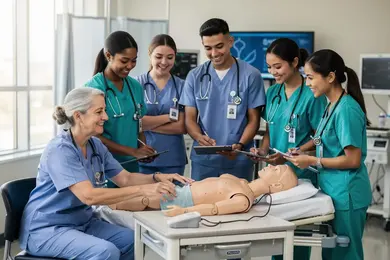
Key practical labs focus on acute and chronic care skills such as wound care, medication administration, and IV insertion. Students must navigate the steep psychomotor learning curve early, balancing theoretical knowledge with simulation and real clinical rotations designed to test adaptability to high-stress healthcare environments. This volume and pace of clinical training accumulate rapidly, posing logistical challenges for working professionals juggling schedules and clinical site availability.
For working adults pursuing a career pivot, this upfront load requires disciplined time management and resilience, which directly impacts employability and placement. Compressing what traditional nursing tracks cover over two years into a single semester accelerates the skill acquisition but can create performance bottlenecks if fundamentals are not mastered early.
In choosing a program, it is critical to consider programs aligned with workforce expectations and practical training rigor, especially when evaluating options among online nursing degrees. Understanding the nuances of ABSN first semester nursing courses and labs informs not only academic success but also the ability to transition smoothly into clinical roles.
How do online, hybrid, and campus-based ABSN formats differ in the first semester?
First-semester structure and clinical readiness diverge sharply across online, hybrid, and campus-based ABSN formats, influencing both immediate employability and skill acquisition. Fully online ABSN programs emphasize theoretical coursework with virtual simulations substituting hands-on labs, postponing direct patient care. This suits working professionals but may delay practical skill development prized by employers, especially in acute care contexts. Such delays can affect early workforce integration and confidence.
Hybrid ABSN programs strike a balance by combining online lectures with designated in-person clinical sessions from the outset. This demands disciplined scheduling and commuting, but accelerates clinical competencies aligned with workforce expectations for foundational patient assessment within the first semester-a key performance indicator for many healthcare employers. Differences between hybrid and traditional ABSN formats for new students often center on this tradeoff between flexibility and early hands-on proficiency.
Campus-based ABSN cohorts immerse students immediately in full-time, in-person instruction integrating lectures, labs, and clinical rotations. This intensive model shortens the pathway to psychomotor skill mastery and offers direct access to clinical mentors, reflected in higher practical exam pass rates, but requires significant logistical coordination such as housing and transportation.
Financially, flat-rate tuitions like Assumption University's 16-month ABSN at $61,500 remain consistent across modalities, but the indirect costs-including commuting and potential work disruptions-vary. Prospective students should assess these factors alongside program structure when considering how different programs impact both education and early career outcomes. Those seeking nursing schools that do not require entrance exam may find varied offerings aligned with these format distinctions.
What clinical experiences and skills labs can you expect early in an ABSN program?
Early clinical experiences in your first ABSN semester prioritize essential patient care skills within controlled environments, emphasizing hands-on repetition and proficiency under supervision. These foundational labs typically cover vital signs, hygiene support, wound care, safe patient handling, and infection control protocols, preparing you for the variable pressures of actual clinical placements.
Real clinical exposure involves observational and entry-level tasks, requiring the integration of communication, documentation, and strict adherence to safety standards. For example, students assigned to critical care units face acute demands and rapid decision-making far beyond those in long-term care settings, making adaptability and stress management decisive factors for success.
Key logistical hurdles-such as securing immunizations, completing background checks, and coordinating transportation to multiple clinical sites-can impede progression if mishandled, directly affecting time-to-graduation. Concurrently, academic preparation matters; data from the 2025 Journal of Advanced Nursing shows prior GPA accounts for 21% of variance in first-semester ABSN GPA, reflecting that mastering both theory and practical skills under pressure is not only essential but predictive of early success.
From a workforce perspective, early clinical competence significantly influences hiring chances in hospital settings that demand evidence of hands-on skill alongside academic achievement. Prospective students must weigh these demands against their capacity to manage the steep workload and clinical environment realities.
How intense is the ABSN first-semester workload, and how can you manage your time?
The accelerated nursing curriculum demands more than just intellectual effort; students must allocate over 50 weekly hours to intense academic and clinical work. This compressed schedule requires precise, granular time management-often splitting the day into focused study blocks and clinical preparation windows. For example, part-time employed students typically rely on evening and weekend study sessions to keep pace, ensuring performance in high-pressure hospital environments meets employer expectations.
Effective strategies include digital task prioritization tools to track dense material and avoid missed assignments, alongside peer-led study groups that enhance understanding of complex pharmacology and clinical decision-making essential to safe patient care. Stress management periods are critical, given that burnout correlates strongly with accelerated program attrition.
Employers in acute care settings implicitly expect clinical readiness matched by ABSN graduates navigating these rigorous demands. The practical payoff is evident in a private nursing college achieving a 96% first-time NCLEX-RN pass rate in 2024, outpacing regional and national figures (Research College of Nursing, 2024).
Prospective students must realistically balance workload pressures with personal schedules and support networks. Considering this workload against one's resilience and external obligations shapes both immediate academic success and long-term professional sustainability in nursing roles.
How long is an ABSN program, and how does the first semester fit into the timeline?
The first semester of an accelerated bachelor of science in nursing (ABSN) serves as a decisive filter that shapes student outcomes, with attrition rates as high as 25% reflecting its demanding nature. This phase compresses essential prerequisites-nursing theory, anatomy, and clinical fundamentals-into a condensed schedule that challenges students to master complex content while fulfilling intensive clinical hours.
Employers interpret successful completion of this semester as a key indicator of readiness for direct patient care and clinical responsibilities. Healthcare settings often require evidence of foundational knowledge before entrusting students with hands-on roles, making early academic performance a critical factor in employability and clinical trust.
For individuals pivoting careers or balancing work, the compressed timeline necessitates sacrifices such as reduced income or personal time. Weekly clinical assignments intersect with rigorous academics, demanding high-level organization and resilience. Failure to maintain pace seldom results in dismissal or a protracted program timeline beyond the typical 12 to 18 months.
Key practical considerations include:
- Managing overlapping course and clinical schedules to avoid burnout
- Allocating time strategically, often at the expense of outside employment
- Recognizing that the first semester functions as both gatekeeper and predictor of longer-term success
What costs, financial aid options, and hidden expenses affect your first ABSN semester?
The upfront financial demand for the first accelerated Bachelor of Science in Nursing semester often surpasses tuition alone, typically falling between $10,000 and $15,000 depending on the institution. Beyond this baseline, clinical essentials like uniforms, stethoscopes, and software subscriptions add $600 to $1,000, while the TEAS exam fee hovers around $120 with retesting possible if minimum score requirements are not met. Notably, Roseman University College of Nursing sets a 2.75 GPA and 49 earned credits threshold, meaning some students face additional prerequisites that increase total expenses.
Financial aid may alleviate tuition with federal loans and targeted scholarships, but it rarely covers ancillary costs such as monthly transportation fees exceeding $200 or childcare, which disproportionately impact urban and working caregivers. These expenses often complicate maintaining employment during intensive coursework, especially since ABSN programs condense material into abbreviated semesters, effectively limiting part-time work opportunities.
Prospective students should anticipate an income gap lasting 12 to 15 weeks, requiring financial planning around living costs without consistent wages. This compressed timeframe puts pressure on balancing clinical and academic demands while managing non-tuition expenses, factors employers may expect but rarely compensate for.
How does completing your ABSN first semester prepare you for RN licensure and the NCLEX?
Completing the first ABSN semester requires mastering essential clinical and theoretical competencies directly tied to RN licensure and NCLEX standards. This phase prioritizes applied knowledge in pathophysiology, pharmacology, and patient care fundamentals, demanding that students swiftly adapt to clinical problem-solving and real-world nursing scenarios. The hands-on clinical experience tests critical thinking and communication, skills highly valued by employers and state boards.
The semester's intensive schedule mimics healthcare workforce realities, often requiring students to manage 40+ hour weeks combining study and clinical hours. This workload tests resilience and time management, reflecting the high-stress environment new nurses face. For example, a working adult changing careers must secure reliable logistics like transportation and housing near clinical sites; failure to do so impedes attendance and skill acquisition, jeopardizing readiness for the NCLEX.
Financially, non-tuition costs average around $8,750 per semester, covering housing, food, technology, and supplies (Bushnell University 2024). These expenses can delay candidates without financial support, elongating program timelines and underscoring the importance of upfront planning. The blended academic-practical format bridges theoretical preparation and workplace demands, reducing the gap between licensure and competent practice but only if students navigate these logistical and financial barriers effectively.
How does your first ABSN semester impact nursing career paths, salary, and job outlook?
The first ABSN semester functions as a pivotal phase, directly shaping early career pathways by anchoring clinical competencies alongside theoretical knowledge that healthcare employers actively seek. Hospitals in urban centers prioritize candidates demonstrating acute care proficiency from early clinical rotations, whereas outpatient environments emphasize preventive care and patient education skills developed at this stage.
Prospective nurses should note the strong correlation between early mastery of practical skills and job market outcomes. Graduates from public university ABSN programs earn median starting RN salaries above $75,000, aligning with new graduate BSN nurses in similar regions (California State University San Marcos ABSN Outcomes, 2024). This suggests that the depth of clinical exposure and academic rigor in the opening semester signal immediate job readiness and reduce onboarding durations.
Tradeoffs surface notably in program structures that condense semester content; insufficient time for thorough skill acquisition can limit eligibility for competitive residencies or fellowships, which often require documented clinical proficiency from the outset. Mid-career switchers, in particular, must prioritize documentation, communication, and critical thinking within this compressed timeline to meet demand in high turnover units.
Operational planning is essential-allocating time effectively to master electronic health records and intravenous therapy protocols correlates with faster licensure success and favorable employer evaluation. Students face a balancing act between managing intense coursework and securing relevant clinical placements, making early academic advising a strategic asset.
Other Things You Should Know About ABSN
Working during your first ABSN semester is generally not advisable due to the program's intense pace and high time demands. ABSN curricula compress traditional nursing content into a shorter timeframe, requiring significant daily study, lab practice, and clinical hours. Students who attempt to juggle employment risk lower academic performance and clinical readiness, which can affect their progression and eligibility for licensure tests. Prioritize reducing work hours or securing flexible, minimal schedules if employment is necessary.
In 2027, students in their first ABSN semester might face rigorous coursework and fast-paced learning. Time management and adapting to an accelerated program are common challenges they experience. Understanding complex medical concepts and effectively balancing study with personal commitments are crucial for success.
While prior healthcare experience can ease the transition, it is not mandatory for success in the first semester. What matters more is disciplined study habits and time management to handle accelerated learning. Students without experience should focus on developing clinical reasoning alongside hands-on skills during labs to compensate for the lack of practical background. ABSN programs expect rapid adaptation, so consistent engagement and application outside of class are essential regardless of past experience.
Employers generally value ABSN graduates similarly to traditional BSN holders once licensure is attained, but they expect equivalent clinical competence despite the condensed training. The first semester sets the stage for developing critical skills and knowledge that must meet employer standards in patient care and safety. ABSN students should focus on demonstrating solid clinical judgment and adaptability early to counter any bias about program length. Emphasizing clinical proficiency and practical readiness will influence employer confidence more than the accelerated program format.
References
- ABSN Timeline: What to Expect Month by Month https://mylifeassugar.com/blogs/blog/absn-timeline-what-to-expect-month-by-month
- How Hard Are ABSN Programs - Find Nursing Schools https://findnursingschools.com/blog/how-hard-are-accelerated-nursing-programs/
- Accelerated Bachelor of Science in Nursing (ABSN) https://www.assumption.edu/undergraduate/post-bachelors-accelerated-nursing-track
- How to Pass the NCLEX: 5 Powerful Tips - Madonna ABSN https://absn.madonna.edu/blog/how-to-pass-the-nclex/
- ABSN Prerequisites - University of Mount Saint Vincent https://absn.mountsaintvincent.edu/admissions/prerequisites/
- All About ABSN https://onlinedegrees.rockhurst.edu/blog/all-about-absn-infographic
- Is an Accelerated BSN Worth It? Salary, ROI, and Career Outlook https://stmary.edu/nursing-accelerated/is-an-accelerated-bsn-worth-it.html
- ABSN-Accelerated BS in Nursing Chicago IL https://www.staugustine.edu/programs/accelerated-bachelor-of-science-in-nursing-bsn/
- How to Get Into an Accelerated Nursing Program | University of Bridgeport https://www.bridgeport.edu/news/how-to-get-into-an-accelerated-nursing-program/
- Nursing Degree You Need to Become an RN https://www.allnursingschools.com/registered-nursing/degrees/