2027 What Makes ABSN Programs Feel So Intense?

Co-Founder and Chief Data Scientist
Jumping into an accelerated nursing program with prior healthcare experience often means navigating an unrelenting schedule that leaves little margin for error or personal obligations. Students must rapidly assimilate extensive clinical skills and complex theory within months, not years, while juggling work or family demands. The National Student Clearinghouse revealed a 27% rise in enrollment in accelerated programs since 2022, driven largely by adult learners seeking swift career mobility. This surge escalates competition and compresses available resources, intensifying pressure on both academic and emotional bandwidth.
This article analyzes the structural and pedagogical factors that create this intensity and offers strategies to help prospective students manage and thrive under these conditions.
Key Things You Should Know
- The compressed curriculum demands sustained 60-80 hour weekly commitments, with 67% of cohort withdrawals linked to burnout-forcing candidates to weigh accelerated entry against mental health and completion risk.
- Employers increasingly prefer ABSN hires for acute care settings, as National Council data shows 45% faster clinical competency achievement, yet this narrows postgraduation options to high-intensity hospital roles over community or outpatient paths.
- Median ABSN tuition surged 22% from 2020-2024 per Department of Education stats, heightening financial strain and elongating repayment timelines despite the 12-18 month course length, complicating access for mid-career changers.
What makes accelerated BSN programs feel more intense than traditional nursing degrees?
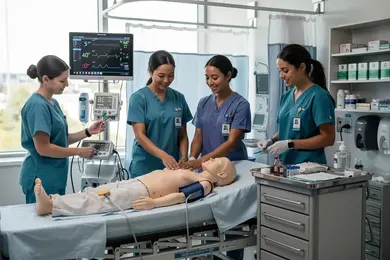
The accelerated BSN program workload intensity stems from compressing a traditional four-year nursing curriculum into 12 to 18 months, demanding sustained, full-time focus with virtually no breaks. Students encounter overlapping coursework, clinical rotations, and exams, requiring rapid integration of complex knowledge and skills. This pace sharply reduces margin for error and creates a learning environment far more strenuous than segmented traditional degrees.
Practically, ABSN students manage 40 to 60 hours weekly combining lectures, labs, and clinical practice. Such intensity significantly drains time for employment, rest, or family, forcing many working adults to forgo outside jobs entirely. This dynamic reflects critical factors contributing to the fast pace of accelerated BSN degrees, where mastery of pharmacology, pathophysiology, and patient care must occur simultaneously rather than sequentially.
Employers expect ABSN graduates to match the clinical competence of traditional BSN holders despite the condensed training, elevating stress and demanding immediate professional readiness. The American Association of Colleges of Nursing reports that accelerated programs constitute roughly one-third of all entry-level BSN graduates nationwide, signaling a workforce pivot aimed at alleviating nursing shortages through expedited routes.
Prospective students should carefully weigh this tradeoff: quicker market entry against intensified workload and logistical challenges. For those balancing commitments or seeking more flexible options, exploring affordable RN to BSN online programs may provide alternative pathways better suited to individual circumstances.
How fast-paced is the typical ABSN curriculum and weekly time commitment?
The pace and workload in accelerated ABSN programs demand a sustained weekly commitment typically ranging from 40 to 60 hours, compressing what would traditionally be spread over four years into just 12 to 18 months. This intensive ABSN program weekly schedule requires students to complete 600-800+ supervised clinical hours, often immersing full days multiple times per week in clinical settings, which limits flexibility and affects outside employment or personal obligations.
For working professionals pivoting careers, this often means significant lifestyle adjustments, including reducing or pausing outside jobs due to overlapping clinical rotations and inflexible schedules. Employers expect ABSN graduates to demonstrate immediate clinical competence, with little tolerance for extended orientation periods; readiness to apply skills rapidly is a must.
Time management becomes critical as students must juggle continuous coursework, lab practice, and clinical immersion, navigating heightened stress and burnout risk without the typical downtime found in traditional programs. The pace and workload in accelerated ABSN programs create distinct challenges, including limited bandwidth for extracurricular or personal activities.
Prospective students should anticipate minimal downtime and actively plan support structures such as childcare or workplace flexibility. Unlike part-time pathways, the ABSN track demands full engagement and resilience against personal and professional friction.
Those exploring alternatives may consider online associate nursing programs as a less compressed path with different balancing challenges.
Why do ABSN programs feel emotionally and mentally demanding for many students?
The emotional demands of accelerated nursing courses reflect a deliberate intensity designed to rapidly produce nurses capable of immediate, high-pressure patient care. Condensing a traditional multi-year curriculum into fewer semesters means students often juggle up to 19 credit hours at once, as exemplified by the University of Tennessee at Chattanooga School of Nursing ABSN Clear Path. This workload surpasses the conventional semester load, amplifying cognitive strain and elevating the risk of burnout, particularly among adult learners balancing employment and family.
Accelerated nursing programs mental challenges stem from simultaneous requirements for clinical competence, critical judgment, and adaptability. Employers expect graduates to function with minimal transition time, but this expediency reduces flexibility during the program and correlates with higher attrition rates, especially for students lacking structured support. For instance, a working professional undertaking 60+ hours weekly of study, clinicals, and possible employment faces significant exhaustion risks that warrant preemptive attention.
Students managing these demands benefit from practical strategies such as:
- Strict time-blocking to prevent workload overlaps
- Advance arrangements for childcare or workplace flexibility
- Early engagement with counseling and peer-support networks
Those evaluating accelerated nursing courses should weigh intensity against career goals and support systems. For candidates interested in cost-effective options aligned with these realities, researching the cheapest ADN online programs can help frame financial and logistical planning.
What prior education and prerequisites are required to qualify for an ABSN program?
Applicants aiming for accelerated Bachelor of Science in Nursing (ABSN) programs must have a bachelor's degree, ensuring academic maturity to handle the intensive curriculum. However, meeting the prior education requirements for ABSN programs in the US extends beyond this baseline. Candidates face prerequisites including anatomy, physiology, microbiology, chemistry, nutrition, and statistics, all typically requiring grades of C or better. Many programs additionally require standardized tests such as the TEAS or HESI to assess academic readiness objectively, particularly in biology, math, and reading comprehension.
Competitive admissions reflect the growing demand for second-degree nurses. For instance, a 2024 ABSN cohort at a California public university had an acceptance rate of about 17%, with over 300 applicants vying for only 50 seats. This dynamic pressures candidates to surpass minimum prerequisites and showcase relevant healthcare experience to stand out. Meeting these ABSN program prerequisites and eligibility criteria can be especially challenging for students from non-science backgrounds, often necessitating 6-12 months of extra coursework before admission. For working adults or career changers, this represents a significant time and financial trade-off.
Employers expect graduates to quickly integrate complex scientific knowledge and clinical skills, so thorough preparation impacts both licensure success and employability. Those considering entry should also evaluate long-term workforce outcomes, including compensation. For example, understanding how much do DNP nurses make offers insight into potential earnings following advanced nursing degrees, informing strategic educational and career decisions.
How do clinical rotations in ABSN programs contribute to the program's intensity?
Accelerated clinical rotations in ABSN programs concentrate intense hands-on experience into 12 to 18 months, demanding students manage 36 to 40-hour clinical weeks alongside academic work. This compressed schedule creates physical exhaustion and heightens stress compared to traditional four-year BSN pathways, narrowing margins for error in high-stakes, real-world settings.
For instance, a student beginning an ICU rotation with minimal acute care background must rapidly acquire and apply complex protocols under significant pressure, demonstrating the workforce's expectation for immediate competence. This environment tests critical thinking and multitasking abilities that early-career nurses must master quickly.
Financially, tuition for leading private ABSN programs ranges from $60,000 to $80,000 over the condensed period, imposing concentrated economic strain without extended payment options available in traditional programs. Combined with variable clinical schedules-such as last-minute shift changes and multiple hospital sites-students face logistical challenges affecting study time and rest, both vital for licensing success and sustainable employment.
Prospective ABSN students should weigh these tradeoffs: accelerated skill acquisition and workforce readiness against the demands of compressed timelines, financial burden, and limited personal stability.
How do online, hybrid, and campus-based ABSN formats compare in rigor and workload?
Choosing between online, hybrid, and campus-based accelerated bachelor of science in nursing (ABSN) programs hinges on managing the balance between time investment, learning environment, and practical skill acquisition. Online ABSN formats minimize commute but demand 40-50 hours per week of disciplined, largely self-directed study and local clinical hours without direct faculty presence. This suits self-motivated learners able to independently navigate clinical placements.
Hybrid programs combine remote lectures with regular on-campus labs and clinical rotations, requiring around 45+ weekly hours that test adaptability to multiple learning modes and complex scheduling. Employers often value hybrid-trained nurses for their blend of practical skills and theoretical grounding, reflected in comparable job placement rates.
Campus-based ABSN tracks enforce the most rigid schedules, with 50+ hour weeks of consecutive classes and supervised clinical experiences simulating the pace of frontline nursing roles. The immersive setting supports immediate feedback and peer collaboration, benefiting students transitioning from less structured academic backgrounds.
Prospective students must weigh these formats against work-life realities and clinical accessibility. Despite structural differences, all paths yield consistent employer demand, with job placement rates above 90% within six months of licensure-an important benchmark from the AllNurses 2026 Best Accelerated BSN Programs graduate outcomes summary.
What accreditation and NCLEX licensing requirements should ABSN applicants verify?
For accelerated bachelor of science in nursing programs, accreditation from bodies recognized by the U.S. Department of Education-such as the Commission on Collegiate Nursing Education (CCNE) or the Accreditation Commission for Education in Nursing (ACEN)-is not optional but foundational. Employers and state boards demand graduation from accredited programs before considering licensure applications, reflecting a hard boundary in workforce entry.
The NCLEX-RN exam stands as the definitive gatekeeper for registered nurse licensure, with state-specific prerequisites narrowly shaping eligibility. Students must confirm their program's preparation rigor, particularly in clinical and theoretical training, since inadequate readiness often translates to delayed or failed licensure, a costly setback given typical ABSN investments between $60,000 and $80,000.
Hospitals-especially in competitive urban markets-prioritize candidates from programs with strong NCLEX pass rates and reliable accreditation to reduce onboarding risk and ensure workforce competence. Balancing an accelerated timeline while meeting mandated clinical hours is a critical tradeoff; insufficient clinical exposure can undermine exam performance and readiness for complex patient care demands.
Key considerations for prospective students include:
- Verifying accreditation status aligned with national standards.
- Examining state board NCLEX eligibility criteria carefully.
- Weighing program length against clinical hour depth.
- Anticipating employer preferences where stronger accreditation correlates with greater hiring prospects.
Given the median registered nurse salary of $86,070, failing to graduate from an accredited program or pass NCLEX promptly risks both financial return on investment and long-term employability.
How much do ABSN programs cost, and what funding options are available?
Accelerated Bachelor of Science in Nursing programs impose a significant financial and time burden that extends beyond tuition alone. With costs ranging from $40,000 at public institutions to upwards of $90,000 at private universities, the price tag reflects a compressed, full-time commitment of 12 to 18 months that limits earning potential during study. For over 80% of students entering with non-nursing bachelor's degrees, this represents a period of near-total income interruption combined with ongoing personal expenses.
Funding gaps are widespread due to FAFSA loan limits and scarce employer tuition reimbursement, pushing many to rely on higher-interest private loans or highly competitive scholarships. This financial pressure often necessitates delaying major life investments, such as homeownership or family planning, for several years. Students with caregiving responsibilities confront compounded challenges, balancing childcare costs with reduced income during the program.
Geographic factors further complicate affordability as state-specific grants and workforce incentives vary and are not uniformly accessible. Without careful budgeting and realistic projections of post-graduation salary trajectories, students risk exceeding sustainable debt levels or withdrawing prematurely, forfeiting both time and money invested.
- Public universities typically range $40,000-$60,000
- Private schools often exceed $80,000
- Program duration compresses typical work timelines to 12-18 months
- Financial aid caps frequently leave significant coverage gaps
Decisions to pursue accelerated nursing pathways should weigh immediate financial strain against long-term career prospects within healthcare labor markets, acknowledging the tangible tradeoffs required by an intensive, front-loaded educational trajectory.
What nursing careers, salary ranges, and advancement paths follow an ABSN degree?
Nursing roles following an accelerated Bachelor of Science in Nursing (ABSN) typically start within high-intensity settings such as emergency departments, intensive care units, and surgical wards. Starting salaries range from $65,000 to $80,000, influenced heavily by geography and institution. The work environment demands rapid clinical competence acquisition, with employers expecting ABSN graduates to adapt quickly to complex patient care.
However, this fast-track pathway entails significant challenges. The attrition rate approximates 20% in the first year, a reflection of the rigorous academic and clinical demands. For example, a career-changer pursuing this degree will face limited scheduling flexibility and intense time management pressures compared to traditional BSN students, impacting their ability to balance work and study.
Long-term professional development often requires additional certification or graduate education. Many advance through clinical specialization, nursing management, or become advanced practice registered nurses (APRNs), typically earning a Master of Science in Nursing (MSN) or Doctor of Nursing Practice (DNP). Practical tradeoffs include navigating shift work while pursuing these qualifications and weighing immediate salary gains against ongoing development needs.
How can prospective students assess whether an ABSN program's intensity is a good fit?
The accelerated nature of ABSN programs demands that students realistically assess their capacity for sustained, intense engagement. These programs require 40 to 60 hours weekly over 12 to 18 months, a load that challenges those balancing full-time jobs or family responsibilities. A hospital-employed parent, for instance, must arrange dependable childcare and negotiated work absences before committing-failure to do so risks falling behind or burnout, undermining both educational and employer expectations.
Program rigidity further complicates this balance. Inflexible clinical rotations and compressed exam schedules leave limited room for extensions or remediation, pressing students to master clinical skills and critical thinking rapidly. This intensity reflects workforce needs for nurses ready to perform efficiently in high-pressure environments immediately upon graduation.
Between 2020 and 2024, ABSN programs expanded to 330 nationwide, embedding rapid pacing as a standard rather than an exception. To evaluate fit, prospective students should:
- Map weekly course and clinical hours against personal commitments to anticipate potential overload.
- Request detailed syllabi and clinical timelines to understand scheduling inflexibility.
- Consult alumni or mentors for candid accounts of workload stress points.
- Review program attrition and NCLEX pass rates as indicators of achievable pace and support.
Effective self-assessment aligned with program demands and employer realities is essential to navigating ABSN's rigorous pathway without compromising endurance or career timing.
Other Things You Should Know About ABSN
Burnout risk is significant in ABSN programs due to compressed timelines and heavy cognitive load, which can impair both academic performance and mental health. Managing workload by setting clear personal boundaries and securing external support, such as counseling or peer groups, can mitigate negative outcomes. Students planning to work part-time or maintain other commitments should prioritize programs with flexible scheduling or strong student support services to reduce burnout potential.
The program's intensity can accelerate entry into nursing but does not hinder long-term advancement if foundational knowledge is solid. However, ABSN graduates may need extra time post-graduation to deepen specialty skills compared to traditional BSN peers. Prioritizing programs that incorporate leadership training or elective specialties during the ABSN can give graduates a competitive edge in career growth within complex clinical environments.
Evaluating ABSN programs should emphasize clinical placement diversity, faculty qualifications, and NCLEX pass rates rather than just time or price. Programs partnered with reputable healthcare providers typically offer better real-world experience and networking opportunities. Candidates should prioritize programs demonstrating transparent outcome data including graduate employment rates and employer satisfaction to ensure the intensity translates to practical career readiness.
References
- The Rising Demand for Accelerated BSN Program Tracks | Brookline College https://www.brooklinecollege.edu/blog/the-rising-demand-for-accelerated-bsn-program-tracks/
- Your Essential Guide to Thriving in an Accelerated Nursing Program - Woman Around Town https://womanaroundtown.com/contributed/your-essential-guide-to-thriving-in-an-accelerated-nursing-program/
- All About Bachelor of Science in Nursing (BSN) https://www.allnursingschools.com/bsn/career-paths/
- Understanding NCLEX Exam Requirements for Candidates. MedPro International https://medprointernational.com/general/understanding-nclex-exam-requirements-for-candidates/
- How To Become a Nurse Fast with an Accelerated BSN Program - Marian https://onlineabsn.marian.edu/blog/become-a-nurse-fast/
- How Many Credits Do Online Accelerated BSN Programs Require? https://www.nursingcolleges.com/faq/rn-bsn-program-credit-requirements
- What to Know About Becoming a Nurse Online - Madonna https://absn.madonna.edu/blog/becoming-a-nurse-online/
- University of Mount St. Vincent ABSN Requirements https://absn.mountsaintvincent.edu/admissions/requirements/
- What Is a Hybrid BSN Program? How Online and Clinical Nursing Education Work https://stmary.edu/nursing-accelerated/what-is-a-hybrid-bsn-program.html
- ABSN Admission Requirements - Bushnell University https://www.bushnell.edu/absn-admission-requirements/