2027 What to Expect in ABSN Clinical Rotations

Co-Founder and Chief Data Scientist
Midway through an accelerated nursing program, students often confront an unsettling reality: clinical rotations that demand rapid adaptation to diverse healthcare settings while juggling intense coursework and time constraints. This high-pressure environment strains both practical skills and critical decision-making, with 42% of accelerated nursing students citing clinical placement scheduling conflicts as a top reason for delayed graduation, according to a 2024 National Center for Education Statistics report.
Such trends reveal systemic challenges in aligning clinical availability with adult learners' complex schedules and career transitions. This article examines what to expect during clinical rotations in accelerated nursing programs and offers guidance to navigate these pivotal hands-on experiences effectively.
Key Things You Should Know
- Accelerated clinical hours compress skill acquisition, increasing burnout risk and limiting time for advanced competencies, thereby impacting readiness for high-intensity settings as shown by 2024 NCLEX pass rate fluctuations linked to clinical hour variance.
- Employers prioritize clinical rotation sites with electronic health record exposure and diverse patient demographics; 62% of surveyed hiring managers report these directly influence job placement outcomes per 2024 nursing workforce analysis.
- Cost and scheduling constraints compel many ABSN students to prioritize rotations aligned with geographic job markets, with 47% of programs reporting student dropouts when required to travel beyond 100 miles, per recent educational throughput data.
What are ABSN clinical rotations and how do they fit into the accelerated curriculum?
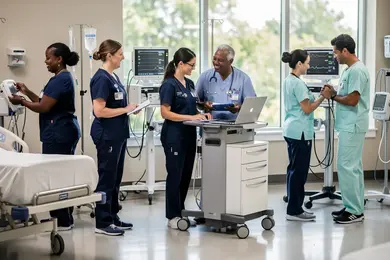
Accelerated bachelor of science in nursing (ABSN) clinical rotations condense essential hands-on experience into 40-50% of an already shortened curriculum, demanding students quickly adapt to high-acuity settings across pediatrics, maternity, mental health, and acute care. This intensive exposure requires rapid development of clinical prioritization and time management skills, as students often manage full patient loads much earlier than in traditional BSN programs. Employers prioritize graduates with verified clinical rotation performance, as this serves as a key indicator of immediate job readiness despite the program's compressed schedule.
High-quality clinical placement is a critical challenge within ABSN clinical placement in accelerated nursing programs, with limited geographic and specialty options often restricting exposure diversity. Students should assess program affiliations with reputable hospitals to maximize placement quality and align clinical rotations strategically with their career goals.
Given the average RN salary in the U.S. was $93,600 in May 2024, there is significant financial incentive to complete rotations efficiently. However, inadequate clinical preparation can delay employability and lengthen job searches. Practical steps to mitigate risk include early mentorship engagement, leveraging simulation labs, and focusing on relevant specialty areas to deepen competency within the accelerated timeline. Prospective students interested in further educational pathways might explore RN to BSN no prerequisites to continue their qualifications without traditional entry barriers.
What skills and nursing competencies will you develop during ABSN clinicals?
Clinical rotations within ABSN programs are a decisive filter for employability, emphasizing practical readiness over theoretical knowledge. Students develop essential nursing competencies in ABSN clinical rotations, including patient assessment, clinical judgment, and proficiency in routine but high-stakes tasks such as medication administration, wound care, and electronic health record documentation. This hands-on exposure demands swift adaptation to diverse settings-from intensive care units requiring complex life support skills to community clinics focused on prevention and education-forcing students to balance technical mastery with situational flexibility.
Communication and teamwork skills are equally critical during these rotations, as ABSN clinical skills development includes coordinating care among interdisciplinary teams. Efficient interaction with physicians, therapists, and families is necessary to meet real-world employer expectations and reduce safety risks linked to communication failures. Given the competitive landscape of 3.3 million licensed registered nurses, graduates must demonstrate not only clinical capability but also situational awareness and prioritization in fast-paced environments.
Adjusting to varied clinical site protocols challenges students to apply infection control consistently under pressure, reinforcing skills beyond academic settings. For career pivoters evaluating advanced nursing degrees, these clinical experiences directly influence job readiness and licensure outcomes. Detailed program comparisons-such as Capella vs WGU RN to BSN-highlight the nuances in practical training that shape employability trajectories.
How are ABSN clinical rotation schedules structured and how many hours are required?
Accelerated bachelor of science in nursing (ABSN) clinical rotation schedules compress extensive hands-on training into tightly arranged periods of 6 to 12 weeks, requiring between 500 and 700 clinical hours depending on state regulations and program specifics. This intensity demands students commit to 32 to 40 hours weekly of clinical practice, simulating a full-time nursing workflow to rapidly build competency in varied care settings, including medical-surgical, pediatrics, obstetrics, and psychiatric nursing.
The required clinical hours for ABSN programs vary significantly with state board mandates and accreditation standards, compelling programs to secure diverse clinical placements-from high-acuity urban hospitals with consecutive 12-hour shifts to rural clinics offering a broader scope of practice. This variation affects not only skill acquisition but also the physical and scheduling demands placed on students, often necessitating readiness for weekend or evening shifts and proactive management of immunization, background checks, and transportation.
Employers value these compressed clinical experiences for producing graduates who can demonstrate immediate, practical proficiency. The U.S. Bureau of Labor Statistics projects a 6% growth in registered nurse employment from 2023 to 2033, reinforcing the competitive importance of navigating ABSN clinical rotation schedule structure effectively. Prospective students should weigh the tradeoffs between accelerated timeframes and the physical and logistic challenges that accompany such programs.
For those investigating the financial and logistical aspects of these pathways, exploring the cheapest PhD nursing programs can provide comparative insights into long-term educational investment and career trajectory alignment.
What types of healthcare settings and patient populations do ABSN students typically experience?
Clinical rotations in accelerated nursing programs expose students to contrasting healthcare settings that require rapid adjustment to varied workflows and patient needs. Hospital rotations often involve complex adult cases in acute or intensive care where decision speed and clinical accuracy are critical. Meanwhile, long-term care placements focus on geriatric populations with chronic illnesses, demanding thorough assessment and relational skills tailored to sustaining quality of life over time. These types of healthcare settings for ABSN clinical rotations reflect deliberate exposure to diverse operational tempos and patient acuity.
Ambulatory care environments and community health rotations provide ABSN students experience with preventative care and underserved populations, including homeless individuals or those facing access barriers. This enriches cultural competence and resource navigation skills necessary for current healthcare ecosystems. Patient populations commonly served by ABSN students thus span high-acuity hospital cases, chronic management in long-term care, and outreach-focused community health.
Students must balance technical nursing proficiency with adaptable communication strategies while managing shift variability and differing team dynamics-a practical challenge often influencing clinical performance and scheduling feasibility. Given the median wage near $93,600 annually for registered nurses, rotations in high-demand settings offer direct workforce relevance by aligning skill development with employer preferences for versatile clinicians.
Those evaluating educational pathways should also consider alternative credentials such as the shortest post master's PMHNP online programs that may complement or pivot nursing careers depending on long-term goals and timing constraints.
How do clinical placements work for online versus campus-based ABSN programs?
Clinical placements represent a pivotal variable in differentiating online and campus-based accelerated bachelor of science in nursing (ABSN) programs, influencing licensure timelines and employability. Online ABSN students frequently navigate a decentralized system that requires proactive site identification near their residence, often resulting in longer commutes, less site variety, and scheduling complexities. In contrast, campus-based students benefit from established clinical partnerships with local hospitals, which streamline placement and align clinical hours with coursework to minimize disruptions.
Delayed or fragmented placements in online programs can extend time-to-completion beyond typical public nursing school costs of around $30,000 annually, ultimately affecting a graduate's marketability due to perceived inconsistencies in clinical exposure. Employers prioritize seamless clinical training to ensure readiness in real-world patient care, a factor more reliably met through coordinated campus placements.
Online students face additional burdens managing compliance elements such as background checks and immunizations independently, while campus-based students receive centralized support that mitigates administrative delays. A practical approach for online ABSN candidates includes:
- Securing clinical sites early to circumvent bottlenecks.
- Maintaining open communication with clinical coordinators to synchronize expectations.
- Budgeting for possible travel or housing near distant sites, which may raise overall program costs.
Evaluating ABSN pathways thus requires critical attention to clinical placement logistics, which directly impact educational quality, cost-efficiency, and workforce preparedness.
What should you expect from clinical preceptors, faculty supervision, and performance evaluations?
Clinical preceptors in ABSN rotations serve as frontline evaluators who assess not only technical skills but also critical thinking and adaptability under pressure-competencies employers demand for new nurses. Unlike faculty, whose oversight integrates clinical practice with theory and accreditation standards, preceptors provide continuous, hands-on supervision directly influencing patient outcomes and workflow efficiency.
Students face structured evaluations that quantify their performance in areas like safe medication administration, clear communication within interdisciplinary teams, and strict adherence to safety protocols. These assessments carry significant weight for clinical placement decisions and future employability, requiring a careful balance between independent judgment and protocol compliance.
Financially, prospective students should consider that average annual tuition and fees at private nonprofit four-year institutions for nursing exceed $43,000, intensifying pressure to successfully navigate rotations and complete the program on schedule.
Preceptor responsibilities shift daily across diverse specialties-from critical care to outpatient settings-creating inconsistent supervision intensity that demands proactive communication and meticulous feedback documentation from students. Employers prioritize candidates who demonstrate consistent clinical competence paired with emotional resilience, proven through rigorous, real-time evaluations during clinical experiences.
How do ABSN clinical rotations prepare you for NCLEX-RN licensure and entry-level practice?
ABSN clinical rotations are designed to bridge theoretical knowledge with immediate workplace demands, emphasizing critical competencies such as medication administration, patient assessment, and interdisciplinary communication. These rotations expose students to diverse care settings-from acute care to long-term and community health environments-ensuring practical adaptability beyond textbook scenarios.
Newly licensed nurses face expectations to deliver sound clinical judgment from the first shift. ABSN clinicals replicate this pressure by placing students in realistic, time-sensitive scenarios. For example, managing post-operative pain and infection control in a hospital ward aligns directly with both NCLEX-RN test frameworks and frontline employer protocols, preparing graduates for practical challenges rather than abstract situations.
However, the intensity and scheduling of these rotations present significant tradeoffs. Students must balance rigorous clinical hours with academic requirements, which can strain retention and readiness. Despite these challenges, this demanding structure correlates positively with higher licensure pass rates and smoother workforce integration.
Facing an average annual RN job opening number near 194,500 from 2023 to 2033 according to the U.S. Bureau of Labor Statistics, the pressure on programs to deliver quality clinical experience is substantial. Meeting these workforce demands means clinical rotations are not simply academic exercises but essential preparation for entry-level nursing roles.
What are the typical requirements and background checks for participating in ABSN clinicals?
Clinical rotations in accelerated bachelor of science in nursing (ABSN) programs demand rigorous compliance with institutional policies shaped predominantly by hospital standards, where approximately 61% of registered nurse employment occurs. Students must navigate complex requirements including thorough criminal background checks with fingerprinting, mandatory drug screenings, and detailed immunization proof covering influenza, MMR, varicella, hepatitis B, along with a recent tuberculosis test or chest X-ray.
Beyond documentation, students face operational challenges such as securing HIPAA certification to manage patient data privacy and maintaining current CPR credentials, which are non-negotiable for clinical participation. A notable real-world friction point arises when students transferring between clinical sites must re-submit repetitive paperwork, sometimes leading to placement delays and extended program timelines.
These demands translate into direct costs, typically between $50 and $150 for screenings, and practical burdens that require meticulous record-keeping to avoid jeopardizing rotation access. Employers in hospital systems expect candidates to present consistently updated compliance records, reflecting acute care environments' heightened scrutiny and patient safety priorities.
Prospective students should proactively verify vaccination status early and budget accordingly, recognizing these prerequisites as gatekeepers within ABSN pathways. Neglecting such details risks disrupted clinical progress and delayed entry into a competitive job market heavily reliant on hospital-based experience.
How can you balance ABSN clinical rotations with work, family, and personal obligations?
Balancing accelerated bachelor of science in nursing clinical rotations with work and family demands presents significant logistical hurdles that require early, rigorous planning. Clinical commitments typically consume 30 to 40 hours weekly with variable shifts, making consistent part-time employment difficult. For instance, a nurse aide scheduled on evenings may struggle to attend daytime rotations, whereas roles with flexible telehealth shifts could better accommodate clinical hours. Prospective students often must reduce work to 10-15 hours weekly or secure flexible employers to mitigate conflicts. Family caregiving responsibilities also demand clear negotiations, since unexpected obligations commonly arise during intensive clinical periods.
Strategic time-blocking and use of digital tools like shared calendars and reminders are essential to avoid overlap among study, clinical practice, and personal time. Students lacking strong support networks should explore campus or community services for childcare and counseling tailored to adult learners.
Employer expectations reflect the demand in a tight nursing job market, where resilience and consistent clinical performance are critical. However, burnout risk intensifies due to ABSN program pressures combined with external obligations. Students must weigh the financial necessity of working against the imperative to meet intensive clinical requirements.
Open communication with clinical coordinators about scheduling conflicts can occasionally allow flexibility, but such adjustments are rare. The tradeoff between sustained income and clinical dedication depends heavily on individual financial and family circumstances.
How do clinical experiences influence nursing career paths, specializations, and job prospects?
Clinical rotations directly influence a nurse's employability by shaping both skill sets and employer perceptions. For instance, ICU placements equip students for high-stakes hospital environments and certifications like CCRN, whereas community health rotations emphasize prevention and outpatient care, aligning with different hiring priorities. Employers often weigh clinical site reputation and the depth of hands-on experience more heavily than the quantity of clinical hours.
Graduates focusing clinical experiences on targeted specialties improve their chances of securing competitive roles. Clinical exposure that is too generalized or insufficiently rigorous can diminish immediate job prospects, especially where hiring demand and candidate volume intersect, such as the 194,500 annual registered nurse openings reported by the U.S. Bureau of Labor Statistics for 2024.
Students navigating accelerated ABSN programs face challenges in fitting multiple diverse rotations into condensed schedules while ensuring experiences translate into marketable competencies.
Clinicals are strategic investments that affect career trajectory and recruiter evaluations in a saturated, competitive market.
Other Things You Should Know About ABSN
ABSN clinicals demand a significant, inflexible time commitment, often including nights and weekends, making part-time work difficult to sustain alongside the program. Clinical schedules rarely allow for shifts that accommodate outside employment, increasing the risk of burnout and compromised learning if students attempt both simultaneously. If maintaining income is necessary, prioritize programs with clear scheduling policies or part-time ABSN options designed to align better with work obligations.
Clinical site variability directly impacts skill development and networking opportunities. Sites with active nurse educators and diverse patient populations provide more meaningful practical experience and better prepare students for complex care scenarios. Conversely, placements with limited staff engagement or low patient acuity may hinder competency growth and weaken clinical confidence. Prospective students should research clinical partner reputations and program affiliations to ensure optimal placement quality.
Employers recognize that ABSN programs compress hours but expect graduates to compensate with demonstrated clinical acumen and critical thinking during interviews and probationary periods. Despite shorter hours, strong performance in rotations and references from clinical preceptors weigh more heavily than raw clinical time. However, students should actively seek supplemental volunteer or internship experiences to strengthen practical skills and ease transition into demanding roles.
References
- Online vs In-Person ABSN Programs: Pros and Cons https://mylifeassugar.com/blogs/blog/online-vs-in-person-absn-programs-pros-and-cons
- Managing clinical placements for online programs https://corehighered.com/en/blog/managing-clinical-rotations-for-online-programs
- Finding A School/Work/Life Balance in Nursing | Lecturio Nursing https://www.lecturio.com/blog/finding-a-school-work-life-balance-in-nursing-is-it-possible/
- How Diverse Specializations Expand Opportunities Within a Nursing Career https://www.onrec.com/news/news-archive/how-diverse-specializations-expand-opportunities-within-a-nursing-career
- Nursing School Clinical Experiences: All You Need to Know With Elmhurst University's Online Nursing Programs https://onlinedegrees.elmhurst.edu/blog/nursing-school-clinicals-elmhurst-university-online
- How To Become a Nurse Fast with an Accelerated BSN Program - Marian https://onlineabsn.marian.edu/blog/become-a-nurse-fast/
- ABSN (Accelerated Bachelor of Science in Nursing) https://www.bridgeport.edu/glossary/absn
- A key factor in experiential learning: Assessing preceptor and clinical site fit | PeopleGrove https://www.peoplegrove.com/blog/assessing-preceptor-and-clinical-site-fit-a-key-factor-in-experiential-learning/
- ABSN Nursing School: Essential Skills I Mastered in Session 1 https://www.lemon8-app.com/@ms.boothe/7476064228420633134
- What Is an Accelerated BSN? (ABSN Degree Guide + Timeline) https://stmary.edu/nursing-accelerated/what-is-accelerated-bsn.html