2027 ABSN Careers in Acute Care

Co-Founder and Chief Data Scientist
Facing compressed clinical rotations and intense acute care placements, accelerated nursing students must navigate steep learning curves with little margin for error. The 16% surge in accelerated nursing program enrollment reported by the National Student Clearinghouse highlights a trend toward faster entry into high-demand clinical roles but also signals amplified competition for scarce hospital preceptorships.
This bottleneck forces candidates to scrutinize program structure, clinical site partnerships, and timing to secure both licensure eligibility and valued acute care experience. Understanding these operational constraints is essential for making informed decisions about program selection and career trajectory.
This article explores the acute care career pathways available to accelerated bsn graduates and provides actionable guidance for optimizing clinical training and employment outcomes amid evolving workforce demands.
Key Things You Should Know
- The accelerated absn pathway's intense 12-18 month duration compresses clinical skill acquisition, reducing opportunities for specialization pre-employment, which can limit initial hiring options despite workforce demand, per 2024 Nursing Workforce Supply data.
- Employers in acute care prefer candidates with targeted acute clinical rotations; absn grads lacking specialized acute experience often face longer onboarding and mentorship, increasing costs and affecting retention rates reported by the American Hospital Association in 2024.
- Rising tuition averaging $45K nationally for absn programs creates significant financial barriers, delaying entry into high-demand acute care roles and amplifying student debt burdens; cost-to-earnings ratios delay long-term career financial stability.
What is an ABSN and how does it prepare nurses for acute care careers?
Accelerated bachelor of science in nursing programs for acute care are tailored to quickly prepare professionals from non-nursing backgrounds for hospital environments demanding immediate clinical competence. By condensing traditional curricula into 12 to 18 months, these programs target critical care readiness through intensive pharmacology, pathophysiology, and evidence-based decision-making courses paired with hands-on rotations in emergency and intensive care units.
This focus aligns with employer expectations, where candidates must swiftly apply skills managing complex patient scenarios with minimal onboarding. For example, a graduate placed in a trauma unit gains experience in rapid patient deterioration response during training-advantages not typical in standard nursing routes. With the nursing workforce growing by over 8% recently, there remains high demand for nurses prepared to perform in acute settings without prolonged orientation.
However, this intensity comes with tradeoffs. Candidates must balance a substantial workload and limited flexibility for part-time work, requiring strong time management and financial planning. Such realities make absn suited for motivated career changers who can sustain rigorous study alongside other commitments.
Exploring online RN programs for non nurses in Florida reveals similar accelerated models emphasizing acute care skill sets, expanding options for geographic and scheduling needs. Prospective students should weigh fast-track gains against cognitive and financial strains inherent to this path.
What acute care nursing roles can you pursue with an ABSN degree?
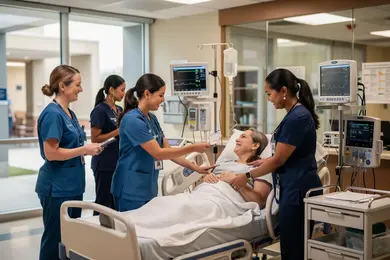
Accelerated nursing (ABSN) graduates entering registered nurse roles in acute care settings face high operational demands that shape their initial professional experience and career trajectory. Critical care nurse roles require rapid assessment and technical proficiency with life-support and monitoring equipment, often in high-stress environments where seconds matter.
Emergency room nursing similarly demands quick clinical judgment under pressure, balanced with thorough patient evaluation in trauma and triage situations. Medical-surgical nursing offers broader patient care exposure but can entail managing highly variable caseloads, complicating workload and time management for novice nurses.
ABSN graduates aiming for specialized paths such as telemetry or neonatal nursing must anticipate additional certifications beyond their foundational training. The requirement for credentials like ACLS or PALS highlights institutional credentialing complexities and the need to navigate unit-specific competencies early in their careers.
This credential layering often delays autonomy and contributes to frequent department rotations during onboarding, impacting work-life balance and professional development.
The U.S. Bureau of Labor Statistics notes a 5% employment growth for registered nurses through 2034, with about 189,100 openings annually, reflecting steady demand but also increasing competition. Employers prioritize ABSN-prepared nurses who demonstrate early mastery of evidence-based practice and interdisciplinary collaboration, underscoring the practical importance of clinical readiness beyond academic achievement.
Students evaluating acute care nursing career options with an ABSN degree should also consider pathway length and flexibility, where programs offering online direct-entry MSN programs can present strategic alternatives for expedited advancement while balancing workforce realities.

How does an ABSN for acute care compare to traditional BSN pathways?
Accelerated nursing programs for acute care careers offer a condensed alternative to the traditional bsn pathway, compressing foundational nursing science and clinical rotations into 12 to 18 months rather than the usual four years. This intensification demands rapid mastery of complex acute care topics such as critical care nursing and emergency response, positioning graduates for roles where hands-on clinical readiness often outweighs cumulative hours.
Employers in fast-paced acute care settings, like pediatric intensive care units, often favor those with targeted acute care experience from accelerated tracks, as these nurses integrate more efficiently with emergency protocols despite fewer overall clinical hours. However, this route reduces flexibility for working students and limits exposure to electives, which some advanced certifications may prefer for eligibility.
Comparing abbreviated bachelor of science in nursing versus traditional bsn programs highlights tradeoffs: accelerated bsn graduates benefit from quicker workforce entry and competitive wages-the median annual registered nurse salary stands at $93,600-but face greater cognitive load and potentially fewer long-term leadership opportunities.
Prospective students should carefully evaluate these practical implications alongside their personal circumstances. For those considering alternate pathways, exploring online nursing degree programs can offer flexible options unmatched by many accelerated or traditional campuses.
What admission requirements do ABSN programs with an acute care focus typically have?
Admission to absn programs with an acute care specialization demands not only academic readiness but also clear evidence of clinical aptitude to meet employer standards in high-stakes environments. Prospective students must hold a bachelor's degree outside nursing with at least a 3.0 GPA and recent completion of prerequisite courses, including anatomy, physiology, microbiology, chemistry, and statistics, to establish a solid scientific foundation.
These absn acute care admission requirements reflect the rigorous entry point necessary for success in accelerated, complex curricula.
Standardized test results from exams like the TEAS or HESI are pivotal for gauging readiness. Clinical observation hours-typically 50 to 100 in acute care or hospital settings-are either mandatory or strongly advised to demonstrate familiarity with the pace and intensity of acute care units. This experiential element is critical given the increasing emphasis employers place on nurse graduates who can quickly adapt and improve patient outcomes.
Background checks, immunization records, and sometimes stress resilience assessments further ensure candidates can manage clinical responsibilities safely. Hospitals have reported statistically significant improvements in patient outcomes-including reduced mortality and fewer readmissions when employing nurses with acute care BSN training-informing admission committees' focus on candidates aligned with these measurable benefits.
From a workforce perspective, evaluating eligibility criteria for absn programs with acute care specialization is a strategic decision balancing the time and effort to complete prerequisites against faster program entry. Postponing admission to enhance grades or accumulate focused acute care experience may significantly enhance placement prospects in critical units like intensive care or emergency departments.
For those considering a swift educational pivot, the spectrum of program options includes selections based on time efficiency and focus. Exploring options such as shortest post master's PMHNP online programs can offer insights into program structures that meet distinct professional goals.
How long do ABSN programs take and what do they cost for acute care preparation?
Accelerated baccalaureate in nursing (ABSN) programs for acute care compress essential nursing education into 16 to 24 months, with some enabling licensure readiness as soon as 16 months. This pace suits individuals shifting careers who need swift workforce entry but imposes a rigorous intensity that can strain students' capacity and increase financial costs.
Program costs vary dramatically-from roughly $17,000 at public in-state schools to beyond $100,000 at private or out-of-state institutions. Lower tuition may correspond with fewer simulation hours and group clinical placements that can limit exposure to complex acute care scenarios. Conversely, pricier programs often provide enhanced acute care rotations and advanced simulation labs but require a higher financial commitment and risk greater debt accumulation.
Employers in acute care environments emphasize both swift theoretical mastery and robust clinical experience. Shortened clinical hours in fast-tracked absn programs may restrict practical preparedness for demanding units like intensive care, where nuanced patient management skills are critical. This tradeoff between rapid completion and hands-on depth challenges students to balance urgency against clinical competence.
Prospective candidates should assess duration, cost, and clinical rigor while considering financing strategies such as employer tuition assistance or federal aid, which may prolong debt repayment. Navigating these variables is essential for aligning absn pathways with acute care employment realities and long-term career sustainability.
What acute care clinical rotations and hands-on experiences are included in ABSN programs?
Accelerated bachelor of science in nursing programs integrate acute care clinical rotations designed to meet pressing hospital demand, especially in areas facing severe workforce shortages. Candidates encountering 19,000 job vacancies in Massachusetts hospitals will find programs that partner with local health systems to secure placements in high-acuity units such as medical-surgical, telemetry, emergency, critical care (ICU), and perioperative rotations.
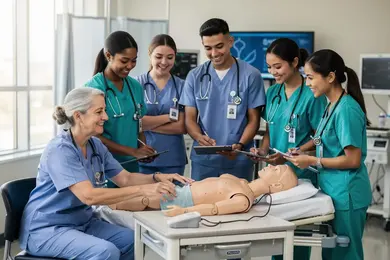
The compressed clinical hours-often between 500 and 700 within 12 to 18 months-require students to rapidly develop competencies including cardiac rhythm interpretation and critical intervention techniques like ventilator management and vasoactive drug titration. This intensity reflects real hospital workflows but demands advanced preparation and resilience, as abbreviated timelines limit gradual skill acquisition.
Students must navigate logistical challenges such as competitive clinical site placements and balancing rigorous coursework with demanding shift-like rotations. Those aiming for specialty acute care roles should prioritize programs offering structured critical care exposure and hands-on practice rather than more generalized clinical experiences, as this directly impacts employability and readiness for rapid onboarding.
How do online and campus-based ABSN programs differ for acute care training?
Campus-based absn programs provide significantly more direct acute care experience, typically requiring 600+ in-person clinical hours in hospital settings. This immersive training better equips graduates for high-acuity roles, enabling faster competency with unstable patients and real-time interventions.
In contrast, online absn programs often rely on virtual simulations plus fewer than 300 local clinical hours, which can disrupt continuity and reduce hands-on exposure crucial for employer expectations in emergency and intensive care units.
Employers explicitly value the depth of clinical immersion when hiring for critical care, frequently favoring campus graduates for roles demanding rapid independent decision-making. This preference illustrates a workforce reality where intense, hospital-based practice translates to smoother onboarding and earlier proficiency. Students must balance this against practical constraints:
- Campus programs require geographic relocation and fixed schedules, limiting flexibility but offering richer acute care immersion.
- Online programs provide theory access with scheduling adaptability but face challenges securing high-quality local acute care sites.
Given recent shifts in RN licensing numbers-with growth from 182,599 new RNs in 2020 to 250,264 in 2023, then a slight decline-acute care employers are increasingly selective. Strong clinical exposure remains a decisive factor for employability in high-acuity settings. Candidates should weigh program format tradeoffs carefully, recognizing that clinical volume and setting materially impact career trajectory in acute care nursing.
What licensure, certifications, and credentials are needed for acute care nursing practice?
Acute care nursing demands a layered credentialing path that balances foundational nursing licensure with advanced specialty certification, reflecting real-world demands for clinical precision in critical settings.
Simply holding RN licensure via a BSN or accelerated BSN program and NCLEX-RN passage is insufficient for acute care nurse practitioner roles. Employers require graduate degrees—Master of Science in Nursing (MSN) or Doctor of Nursing Practice (DNP)—focused on acute care and validated by national certification.
Failure to obtain certifications from organizations like the American Nurses Credentialing Center (ANCC) or the American Association of Critical-Care Nurses (AACN) can restrict employment opportunities and salary potential. For example, a nurse pivoting from general medical-surgical work to ICU environments must secure credentials specific to managing high-acuity challenges such as ventilator use and complex pharmacology.
Additional complications include variability in state-specific nurse practitioner licenses, which affect prescriptive authority and autonomy. Nurses relocating between states face the added step of verifying licensure reciprocity. Maintaining specialty certification requires ongoing education-typically 75 to 100 contact hours every five years-posing practical considerations for work-life balance and financial planning.
Market projections anticipate 5.6% growth through 2032 in acute care nurse practitioner demand, signaling steady opportunity for credentialed professionals but also highlighting the importance of strategic education and continuous certification maintenance aligned with employer standards.
What is the salary outlook and demand for nurses in acute care settings?
Nursing roles in acute care demand a blend of rapid clinical decision-making and specialized skill sets, directly impacting compensation and job stability for absn graduates. The national average hourly wage for acute care nurses reaches $47.32, ahead of many other nursing sectors, reflecting targeted demand fostered by workforce shortages and intensified healthcare needs.
Employment expansion projected at 14.59% indicates a faster growth pace than the average for all jobs, making acute care nursing a sector with tangible hiring momentum.
In practical terms, hospitals and emergency units value candidates with proven acute care proficiency, which often triggers pay incentives such as shift differentials, overtime, and performance bonuses. Geographic location further influences pay structures; areas like Texas provide added incentives including relocation and retention bonuses to offset challenging work conditions and staffing deficits.
Key factors influencing employment value in acute care nursing include:
- Competitive wages surpassing many nursing specialties
- Projected employment growth of 14.59%
- Employer preference for certified, experienced clinicians
- Variable schedules with implications for lifestyle and earnings
- Regional incentives in high-shortage states
For ABSN graduates transitioning into these roles, tradeoffs include variable, extended shifts that demand physical and emotional resilience and affect work-life balance. Earning potential correlates closely with certification levels and experience in intensive or emergency nursing, emphasizing the need for strategic upskilling. Candidates must weigh immediate market accessibility against these environmental factors when planning career moves.
How can you evaluate and choose an accredited ABSN program for acute care careers?
Choosing an accredited absn program based on tangible outcomes reshapes the route to acute care nursing. Graduate employability-particularly programs reporting 85% or higher job placement within six months-directly signals market alignment and employer demand. Candidates must assess not only program accreditation by CCNE or ACEN but also the diversity and quality of clinical rotations, as broad exposure to acute care settings readies nurses for complex, varying hospital workflows.
Consider how local labor market saturation affects hiring windows: in states with shortages, graduates often enter the workforce more quickly, whereas competitive regions require enhanced specialization or residency supports to gain traction.
Practical program design influences student experience and readiness. Accelerated in-person formats immerse students in critical hands-on training but often exclude those balancing employment, whereas hybrid frameworks offer flexibility at the cost of scheduling complexity and potential clinical hour gaps.
Employment trends further suggest that a BSN in acute care is increasingly expected; a National Nursing Workforce Survey found a 15% increase in BSN-prepared nurses over a decade, reflecting employer preference for comprehensive education tied to resilience in evolving care environments.
Other Things You Should Know About ABSN
The condensed format of ABSN programs demands intense, full-time study that leaves little room for outside responsibilities. Working adults who must maintain employment or significant family duties should prioritize programs with flexible scheduling options, such as part-time cohorts or evening/weekend clinical placements, to avoid burnout. Without such accommodations, the pace can negatively impact performance and retention.
While ABSN programs cover core nursing competencies, the lack of extended elective time can limit exposure to specialized acute care areas before entering the workforce. Employers may expect new ABSN grads to complete additional on-the-job specialization training or certifications. Students aiming for niche acute care roles should select ABSN programs offering focused clinical placements or consider pursuing certifications immediately after licensure.
Employers recognize that ABSN graduates have compressed clinical experience but value their rigorous academic background and prior degree maturity. However, hospitals with high-acuity units often prefer nurses with some prior healthcare experience or post-licensure residency programs to bridge the skills gap. Applicants should prioritize ABSN programs with strong hospital partnerships and structured transition-to-practice support to improve employability.
References
- What Is an ABSN, and Are You an Ideal Candidate? - Madonna https://absn.madonna.edu/blog/learn-what-is-an-absn/
- How to Become an Acute Care Nurse Practitioner (ACNP) https://nursinglicensemap.com/advanced-practice-nursing/nurse-practitioner/acute-care-acnp/
- Clinical Rotations and Practical Experience in BSN Programs https://everynurse.org/clinical-rotations-practical-experience-bsn-programs/
- How to Get Into an Accelerated Nursing Program | University of Bridgeport https://www.bridgeport.edu/news/how-to-get-into-an-accelerated-nursing-program/
- How to Become an Acute Care Nurse https://www.allnursingschools.com/specialties/acute-care-nursing/
- Accelerated BSN vs. Traditional BSN - ABSN@CTX https://absn.concordia.edu/blog/accelerated-bsn-vs-traditional-bsn/
- ABSN vs. BSN: Is an Accelerated Nursing Program Worth It? https://onlinedegrees.elmhurst.edu/blog/absn-vs-bsn-is-an-accelerated-nursing-program-worth-it
- All About ABSN https://onlinedegrees.rockhurst.edu/blog/all-about-absn-infographic
- How to Choose the Right Nursing School for Your Career Goals | Archer Review https://www.archerreview.com/blog/how-to-choose-the-right-nursing-school-for-your-career-goals