2027 What Prior Academic Background Helps Most in ABSN Programs?

Co-Founder and Chief Data Scientist
Facing a compressed timeline, many career changers entering accelerated nursing programs struggle to determine which prior academic credentials effectively streamline their transition. With admissions flexibility expanding-over 40% of ABSN enrollees now hold degrees in non-nursing fields according to a recent AACN survey-applicants must discern which backgrounds reduce prerequisite hurdles and support academic success. This shift signals growing employer acceptance but also heightens competition among candidates balancing full-time jobs and family obligations.
Navigating these trade-offs requires careful evaluation of course equivalencies and science preparation. This article will clarify which academic foundations best position prospective ABSN students for enrollment, progression, and workforce readiness in accelerated nursing pathways.
Key Things You Should Know
- Students with a prior STEM degree perform 15% faster in ABSN programs due to advanced science coursework, reducing tuition and lost income costs but risking narrower clinical skill diversity critical in patient care.
- Employers prioritize applicants with completed anatomy and physiology prerequisites, aligning with 2024 Nursing Workforce reports showing 72% higher early-career retention, directly impacting long-term job placement probabilities.
- Non-science bachelor's degree holders face a median 6-month program extension, increasing financial burden and delaying full RN licensure, which exacerbates workforce shortages in high-demand urban hospitals.
What prior degrees and coursework best prepare students for ABSN programs?
Prior degrees in biology or health sciences correlate strongly with higher first-time NCLEX-RN pass rates among accelerated bachelor of science in nursing (ABSN) students, improving outcomes by 12-15%. This advantage arises from essential coursework to prepare for ABSN studies, including anatomy, physiology, microbiology, and chemistry, which accelerate comprehension of nursing concepts and clinical application.
Candidates from non-science backgrounds face tangible challenges: they often must complete prerequisite science courses, lengthening program duration and intensifying workload. This steeper learning curve can affect both clinical performance and student retention, creating practical barriers to timely graduation.
Healthcare employers expect licensed nurses to demonstrate immediate clinical competence. An ABSN graduate with a science-intensive degree is more likely to meet these demands early, reducing orientation time and on-the-job training expenses. For example, a student with prior biology knowledge can interpret lab results and pharmacology data more swiftly in acute care, making them immediately valuable to employers, unlike peers who require additional learning to reach comparable proficiency.
Individuals pivoting from unrelated fields must therefore balance the benefits of prior science preparation against the cost and time required to complete prerequisites. Moreover, exploring cheapest online RN to BSN programs could offer strategic pathways post-ABSN graduation.
How does a non-nursing bachelor's degree impact ABSN admission and success?
A non-nursing bachelor's degree affects admission and success in ABSN programs primarily through prior science coursework. Applicants with at least two college-level anatomy/physiology or microbiology classes gain a tangible advantage, manifested in a 1.4-point higher nursing GPA on a 4.0 scale and a 9% lower course failure risk, according to a 2025 Nurse Education in Practice study. This reflects how foundational science knowledge eases academic transition and sharpens clinical decision-making.
Degrees in biology, chemistry, or health sciences typically position students to meet the rigorous memorization and comprehension demands of ABSN curricula more easily. Conversely, students with humanities or business backgrounds often face prerequisite science courses that prolong program length and increase financial burden. Employers generally expect this preparation; ABSN graduates with stronger science foundations tend to perform better in early clinical placements, a key evaluation metric.
Integrating the impact of non-nursing bachelor's degrees on absn program admission, prospective students should audit transcripts to identify gaps in relevant science coursework. Prioritizing accredited anatomy, physiology, or microbiology classes accelerates acceptance and improves long-term academic outcomes. This upfront effort mitigates failure risk within ABSN's accelerated framework and improves readiness for clinical challenges.
Those interested in pathways with fewer clinical requirements may explore options like the easiest RN to BSN online program, balancing time and workload differently.
Which science prerequisites most help students handle ABSN curriculum intensity?
Natural science prerequisites such as human anatomy, physiology, microbiology, and pharmacology form the core foundation enabling accelerated baccalaureate nursing (ABSN) students to manage the intensity of the curriculum effectively. These courses provide essential clinical frameworks for patient assessment, infection control, and medication management-key competencies frequently tested in clinical rotations. However, a focus solely on these sciences overlooks a critical dimension: social and behavioral sciences.
Evidence linking key academic backgrounds supporting absn curriculum shows that students entering ABSN programs with prior psychology or social science degrees achieve better outcomes in patient communication and therapeutic relationships, with an 18% higher likelihood of exceeding clinical expectations during initial terms. This advantage translates into real-world employability, as healthcare employers increasingly prioritize nurses who combine scientific expertise with communicative agility.
Practical implications include challenges faced by candidates with a strictly natural science foundation, who may struggle with rapid interpersonal demands in clinical settings. Programs might consider supplemental communication training to address this gap. Decision-makers must balance these tradeoffs: natural sciences build critical technical competence, while social sciences foster the nuanced communication skills vital in patient-centered care and teamwork under accelerated timelines.
For those weighing educational pathways, exploring resources on cheapest online nursing PhD programs can offer fiscal context. Understanding science prerequisites for absn program success alongside the broader spectrum of academic preparation improves strategic decision-making for long-term nursing careers.
Do healthcare or patient-care work experiences strengthen readiness for ABSN programs?
Healthcare experience benefits for ABSN readiness primarily through the development of practical clinical familiarity and soft skills essential for accelerated nursing environments. Roles such as CNA, EMT, or medical assistant equip candidates with patient interaction and workflow insights that reduce initial adjustment challenges in fast-paced programs. However, superficial patient-care positions with limited clinical responsibility provide marginal advantage compared to sustained hands-on practice, which is critical for success.
For example, an EMT with frontline emergency response exposure typically integrates more effectively into acute care rotations than candidates with primarily observational experience. Yet, patient care work enhancing ABSN program success hinges on bridging this experience with strong academic preparation, particularly in anatomy and pharmacology, since accelerated nursing demands rapid absorption of complex theoretical material.
Employers also value complementary skills beyond direct care. Registered nurses with backgrounds in business or management show a higher likelihood of progressing into leadership roles and earn notably more over time, reflecting the advantage of diversifying expertise. Candidates without healthcare experience should seek targeted shadowing or volunteer opportunities to develop clinical insights, while supplementing their readiness with relevant coursework or certifications.
Candidates exploring accelerated pathways might also consider program duration as a factor. Resources like the shortest DNP program online can offer insights into streamlined options that balance practical and academic demands.
How do GPA and academic study skills from past college work affect ABSN outcomes?
Prior college GPA correlates strongly with success in accelerated Bachelor of Science in Nursing (ABSN) programs, particularly in foundational sciences and critical thinking, but it is an incomplete predictor. Admissions committees rely on GPA as a measure of academic discipline and rigor, which impacts retention and licensure exam outcomes. However, clinical adaptability and stress management, integral in intense ABSN clinical environments, are not reflected in GPA alone.
Students holding prior healthcare credentials like CNA or EMT certification often complete clinical competencies 23% faster and experience 30% fewer high-stress clinical days during their first semester, as found in a 2024 multi-site study published in the Journal of Nursing Education. This advantage mitigates the risk of burnout amid accelerated clinical demands and shortens ramp-up time for real-world performance.
Strong study habits-such as time management, effective note-taking, and critical reading-are essential due to the compressed curriculum. Those lacking these skills face higher dropout risks while juggling coursework with clinical duties.
For career switchers without healthcare backgrounds, bridging clinical exposure gaps through targeted prep courses or simulation labs is necessary to accelerate acclimation and reduce stress-driven performance decrements. Employing a balanced admissions approach that weighs GPA, cognitive skills, and prior clinical experience is crucial for selecting candidates capable of managing ABSN's rapid, high-pressure trajectory.
Is a previous major in biology, psychology, or public health advantageous for ABSN?
Students entering accelerated Bachelor of Science in Nursing (ABSN) programs with prior biology majors gain a measurable advantage due to their solid grounding in anatomy, physiology, microbiology, and biochemistry. This scientific foundation enables them to assimilate core ABSN content more efficiently, reducing the need for remediation and expediting clinical readiness.
By contrast, psychology majors often face notable hurdles because their experience focuses on behavioral concepts rather than intensive biomedical science. This gap necessitates additional preparatory work in chemistry and anatomy, especially to meet acute care employer expectations for clinical rigor. Public health majors contribute valuable knowledge in epidemiology and population health but frequently lack the detailed cellular and molecular background critical for ABSN success, potentially slowing progression without targeted science refreshers.
Employers prioritize candidates who demonstrate both strong clinical skills and foundational science competence, particularly in hospital or acute care environments. Biology-trained students typically require less bridge training after graduation, translating into faster workforce entry. Psychology and public health majors who bypass remedial science risk longer program durations and delayed employment.
Realistically, working professionals pivoting from these backgrounds should invest in intensive science preparatory courses before ABSN enrollment. Data from Nurse Education in Practice (2025) shows STEM-background students graduate on time 19% more often than non-STEM peers, with this gap shrinking to 4% if non-STEM students complete structured pre-entry science refreshers.
Addressing these science proficiency gaps early aligns student readiness with employer criteria and mitigates attrition risk, a critical consideration when weighing ABSN pathways for rapid career transitions.
How does prior online learning experience influence success in online ABSN formats?
Prior online learning experience significantly improves success in accelerated bachelor of science in nursing programs by cultivating crucial skills for handling the intensive, remote nature of these studies. Students familiar with asynchronous coursework, digital collaboration, and autonomous study adapt faster to the demanding absn pace, leading to better retention and exam outcomes. Employers increasingly seek graduates who excel in hybrid learning environments, as clinical training often integrates virtual components.
Among 195 absn programs reviewed, nearly half require a minimum 3.0 GPA, but less than 10% demand 3.25 or above. Research indicates every 0.1 GPA increase boosts first-time NCLEX-RN pass chances by 7%, placing students with prior online experience-who typically have stronger academic discipline-at a clear advantage. This edge is vital in cohort-based, accelerated formats where falling behind can impede licensure and workforce entry.
Challenges such as digital fatigue and balancing clinical and online demands prove easier for those with relevant online backgrounds. Conversely, professionals transitioning from onsite degrees often face steeper adjustment curves juggling simultaneous virtual and hands-on obligations.
Applicants without online learning history should develop time management tools, virtual communication skills, and note-taking strategies in advance to mitigate risks of attrition, delayed graduation, and reduced employability.
What general education and writing background helps with ABSN theory and research courses?
Proficiency in academic writing and critical reading, often cultivated through humanities or liberal arts education, directly influences success in accelerated bachelor of science in nursing (ABSN) theory and research courses. Students without this foundation typically experience challenges in synthesizing complex research, hindering progress through theory-heavy content. Conversely, skills like analytical thinking, ethical reasoning, and clear communication provide essential advantages for interpreting clinical studies and producing coherent care plans that align with evidence-based standards.
For example, nurses frequently draft incident reports and patient education materials where nuanced writing and sound reasoning impact interdisciplinary collaboration and patient outcomes. Data from a 2024 survey showed that second-degree ABSN students with humanities backgrounds demonstrated a 34% higher likelihood of remaining in bedside nursing beyond five years compared to those holding solely science degrees, suggesting that these skills also relate to greater long-term retention and adaptability in clinical settings.
Because many ABSN students come from STEM fields, programs investing in targeted writing support and preparatory coursework in research methodology can improve early academic performance and reduce attrition related to theoretical coursework. Prioritizing these skill sets before clinical theory begins addresses a practical gap, accelerating student readiness while bridging differences in qualitative versus technical content mastery.
How do previous time-management and accelerated program experiences support ABSN pacing?
Sustaining the accelerated pace of an Accelerated Bachelor of Science in Nursing (ABSN) program demands rigorous time-management skills and prior exposure to compressed academic environments. These programs, condensed into 12 to 18 months, layer continuous coursework, clinical rotations, and licensure exam preparation with minimal breaks, creating a uniquely demanding rhythm. Students without prior experience in accelerated learning or professional certifications often struggle with content saturation and balancing clinical responsibilities.
Successful students apply disciplined scheduling techniques that prioritize high-yield study blocks around clinical hours and reduce disruptions. For example, a working professional balancing part-time employment while enrolled must leverage previous experience in managing competing demands and fixed routines to maintain progress and prevent burnout.
Admissions data reveals that about 10.1% of ABSN programs require standardized tests like the TEAS alongside GPA. Applicants scoring in the top 15% on the TEAS test have admission odds 1.7 times greater than peers with similar GPAs, indicating admissions committees prize demonstrated cognitive endurance and organizational aptitude essential for navigating compressed curricula.
Ultimately, candidates lacking accelerated coursework experience confront operational tradeoffs, including rapid information assimilation and limited recovery time. Early development of structured daily schedules and targeted learning strategies, emphasizing rapid comprehension over extended study sessions, are critical for long-term success and employability in demanding clinical settings.
How can applicants with unrelated academic backgrounds build a stronger ABSN profile?
Accelerated bachelor of science in nursing programs attract candidates with non-nursing degrees by demanding a targeted approach to prerequisite fulfillment and competency demonstration. Applicants must complete essential foundational coursework-anatomy, physiology, microbiology, chemistry, and statistics-to bridge knowledge gaps that can stall progress in condensed curricula.
Healthcare exposure outside of nursing roles-such as EMT, medical assistant, or clinical research coordinator positions-provides crucial context for patient care concepts and sharpens clinical communication skills. For instance, someone shifting from finance should prioritize volunteering or healthcare support roles to validate their commitment and grasp of clinical environments.
Admissions committees emphasize quantitative and science-related academic performance, with strong GPAs and relevant test scores enhancing credibility. Furthermore, a well-crafted personal statement linking prior professional experiences-like data analysis or communication-to nursing competencies strengthens candidacy.
While some employers value diverse professional backgrounds, absn programs are selective about demonstrated readiness due to their intensity. Candidates who align transferrable skills to nursing demands improve their odds of success in this accelerated pathway.
From a workforce perspective, absn graduates in California can earn an average registered nurse salary exceeding $133,000 and enter the workforce about two years earlier than traditional BSN graduates. This accelerated trajectory often translates into a substantially improved lifetime financial return, particularly for those transitioning out of lower-paying fields.
Other Things You Should Know About ABSN
Experience in standardized exams can affect how efficiently students prepare for the NCLEX licensing exam, a key milestone post-ABSN. Students familiar with rigorous testing strategies tend to allocate study time more effectively and manage exam stress better. Prior exposure to licensure or certification processes can guide students to seek targeted review courses early, improving pass rates and shortening time to professional employment.
Clinical sites differ widely in case mix, patient acuity, and preceptor quality, which affects skill development and job readiness. Programs with diverse and high-acuity clinical placements better prepare students for a range of employer expectations and improve confidence in fast-paced care environments. When choosing ABSN programs, prioritizing those with established partnerships in varied clinical settings is advisable to enhance practical competence.
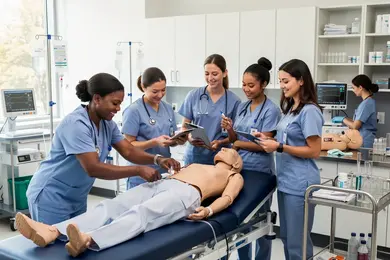
Simulation labs increase exposure to clinical scenarios for students lacking real-world patient care backgrounds, helping bridge gaps in practical judgment. However, reliance on simulations alone cannot fully replicate live clinical complexity or interpersonal dynamics. Non-healthcare professionals should seek ABSN programs that offer a balanced mix of high-fidelity simulations and extensive supervised clinical hours to build both technical skills and situational adaptability.
References
- Is an Accelerated BSN Worth It? Salary, ROI, and Career Outlook https://stmary.edu/nursing-accelerated/is-an-accelerated-bsn-worth-it.html
- Your Essential Guide to Thriving in an Accelerated Nursing Program - Woman Around Town https://womanaroundtown.com/contributed/your-essential-guide-to-thriving-in-an-accelerated-nursing-program/
- Student nurses’ perspective on readiness for clinical practice post-COVID-19 in South Africa https://hsag.co.za/index.php/hsag/article/view/2790/5588
- Accelerated Nursing Programs: 10 Helpful Tips to Fast-Track Your Nursing Career - Prereqcourses https://www.prereqcourses.com/accelerated-nursing-programs/
- What is an ABSN program? | WCU Nursing Glossary https://westcoastuniversity.edu/glossary/absn-program
- What Is an ABSN? A Guide to Accelerated Nursing Programs - CTX https://absn.concordia.edu/blog/what-is-an-absn/
- What Do Nursing Schools Look for in Applicants? - Mercer ABSN https://absn.mercer.edu/blog/what-do-nursing-schools-look-for-in-applicants/
- How to Become a Nurse with a Bachelor's - Madonna https://absn.madonna.edu/blog/how-to-get-a-nursing-degree-if-you-already-have-a-bachelors/
- The Impact of Education on Nursing Practice https://www.aacnnursing.org/news-data/fact-sheets/impact-of-education-on-nursing-practice
- 5 Tips on How to Survive an Online ABSN Program https://onlinedegrees.elmhurst.edu/blog/tips-surviving-accelerated-nursing-programs