2027 ABSN Careers in ICU

Co-Founder and Chief Data Scientist
Facing the demanding ICU environment without a tailored accelerated nursing background can leave students struggling to meet critical care competencies on time and under high stakes. Programs offering online or hybrid accelerated nursing pathways have grown by nearly 35% since 2022, according to the National Center for Education Statistics, reflecting a decisive shift toward accessible, flexible routes for career changers. This growth matters because adult learners balancing work and family increasingly prioritize programs that combine speed with clinical rigor, yet not all ABSN ICU tracks deliver the depth or speed necessary for seamless workforce entry.
This article clarifies the realistic challenges and opportunities ABSN graduates encounter pursuing ICU careers and guides decision-making toward optimal program selection and career progression within this acute care domain.
Key Things You Should Know
- Intensive ABSN candidates face compressed clinical hours, risking limited ICU exposure; AACN data indicates 40% less specialty rotation time than traditional BSN, potentially delaying full critical care competency.
- Hospitals increasingly prefer ABSN hires with critical care bridge certifications, as Vizient reports 25% higher retention in ICU roles, reshaping early career pathways and employer onboarding investments.
- Average ABSN tuition rose 12% since 2023, per NCES, amplifying financial pressure on mid-career students and often forcing tradeoffs between program length, debt load, and time-to-ICU employment.
What is an ABSN career in the ICU?
Accelerated BSN nursing roles in intensive care units require nurses to quickly apply advanced clinical judgment in environments where seconds impact patient outcomes. ICU nurses managing critical care cases must integrate rapid assessments with sophisticated use of medical technology like ventilators and infusion pumps, often juggling multiple acute patients simultaneously under demanding staffing ratios.
In trauma ICUs, for example, nurses need to assimilate diagnostic data and maintain seamless communication with interdisciplinary teams to maximize survival chances. This intensity reflects practical tradeoffs: longer, unpredictable shifts paired with heightened stress and burnout risks. Employers frequently mandate or prefer additional critical care certifications, emphasizing that theoretical knowledge from an accelerated BSN program alone seldom suffices for ICU readiness.
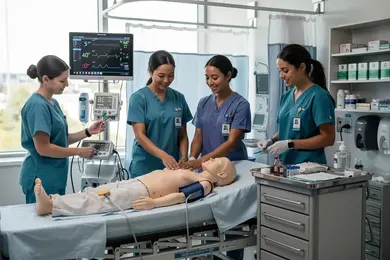
The transition from accelerated BSN education to ICU practice highlights the gap between classroom instruction and hands-on critical care nursing careers for ABSN graduates. Programs that embed clinical rotations in intensive care settings better prepare nurses to handle real-world operational pressures and patient acuity demands.
Financially, ICU roles compensate for these challenges: the median annual ICU nurse salary was $85,205 in May 2025 according to ZipRecruiter. Prospective ICU nurses should assess this earning potential against the occupational intensity and long-term sustainability concerns inherent in critical care.
For those evaluating nursing education pathways, options like BSN online programs may offer flexible academic routes, but candidates must weigh convenience against the necessity for extensive practical experience and certification to succeed in ICU settings.
What education and licensing do ICU nurses need?
Accelerated Bachelor of Science in Nursing (ABSN) pathways for ICU nurse education requirements in the United States demand more than just academic completion. Employers increasingly expect graduates to hold the critical care certification, such as the Critical Care Registered Nurse (CCRN), within two years of hire, not only to comply with hiring standards but also to ensure clinical competence in intensive care environments. This credential becomes a decisive factor in competitive ICU staffing decisions given the specialty's high-stakes nature.
Licensing depends on passing the NCLEX-RN exam, but licensing alone is insufficient to guarantee employability in critical care unless supplemented by robust clinical experience. ABSN programs that embed substantial, hands-on ICU clinical rotations better position their students to meet the practical demands and employer expectations. Nurse residency programs specific to ICU care address skill gaps absorption between accelerated degrees and workforce readiness, potentially reducing early-career burnout and performance issues common among new ICU nurses.
The projected 5% growth in registered nurse employment intensifies competition, particularly for ICU roles, making thoughtful evaluation of ABSN ICU nurse education requirements, including clinical exposure and certification pathways, essential. Prospective students should weigh program duration, cost, employer reputation, and certification pass rates before enrollment. For those exploring educational options, RN to BSN programs might serve as alternative routes to bridge practice gaps and enhance long-term career sustainability.
Maintaining licensure entails continual education aligned with evolving critical care protocols, creating an enduring obligation that impacts financial and time management strategies for ABSN ICU nurses.
Which ABSN programs best prepare nurses for ICU jobs?
Choosing ABSN programs with ICU clinical training significantly influences readiness for critical care nursing roles. Graduates holding such targeted clinical experience enter high-acuity environments with practical competence in ventilator management, hemodynamic monitoring, and multi-organ support-skills that employers directly seek.
An ABSN graduate completing rotations at a Level I or II trauma center's cardiovascular ICU typically advances faster in hiring and assumes responsibilities with greater confidence compared to peers without specialized ICU placements. Effective programs often incorporate simulation labs emphasizing crisis management and interprofessional communication, essential for reducing onboarding periods and dependence on supervision in ICU settings.
Recognizing tradeoffs is crucial. ABSN tracks offering accelerated ICU electives might extend beyond the usual 12-15 months, compelling candidates to balance faster graduation against comprehensive critical care preparation. Without this focused experience, graduates may face longer job search timelines or require supplemental employer training to meet ICU demands.
Financially, BSN-prepared RNs, including those from ABSN routes, earn a median wage of $86,070 annually; ICU-specialized careers can reach $110,000 to $130,000 depending on geographic and specialty factors. Prospective students should also compare curriculum depth and clinical networks when assessing the best accelerated nursing programs for ICU careers to optimize employability and earnings.
For those concerned with affordability while pursuing these pathways, exploring the cheapest online nursing programs can provide viable alternatives without sacrificing clinical relevance.
Do online ABSN programs qualify for ICU careers?
Graduates of online accelerated Bachelor of Science in Nursing (ABSN) programs can qualify for ICU careers in the United States only if they complete all required in-person clinical practicums and pass the NCLEX-RN licensure exam. For ICU roles, employers prioritize candidates with robust acute care clinical experience-knowledge gained solely through online coursework lacks the hands-on rigor essential for intensive care environments.
To meet state board requirements, online ABSN students must secure hospital affiliates or approved simulation labs locally to fulfill 500+ clinical hours. Missing these practical components delays licensure, undermining immediate access to critical care positions demanding expertise in ventilator management and hemodynamic monitoring.
The reputation and clinical coordination of accredited online ABSN programs for ICU nursing roles directly influence job prospects. Graduates from well-connected programs benefit from demonstrated clinical oversight and employer networks, while those from poorly managed programs face entry barriers due to insufficient acute care exposure.
In economic terms, ICU nurses earn an average annual salary of $114,864 or $66.71 hourly, reflecting premiums tied to critical care proficiency. Prospective ABSN candidates should ensure their online education incorporates comprehensive clinical training to qualify for these higher-paying roles without delay.
For those evaluating mental health nursing pathways, exploring the best PMHNP programs offers another dimension of advanced nursing opportunities.
What ICU courses and clinical experiences should ABSN students expect?
Securing a role in an intensive care unit (ICU) through an ABSN program hinges on completing in-depth critical care coursework alongside extensive, specialty-focused clinical hours. Critical care education in these programs covers advanced hemodynamics, ventilator management, cardiovascular pharmacology, and organ failure management-content directly tailored to employer demands for handling complex ICU interventions such as arterial line management and vasoactive medication titration.
Clinical exposure is often compartmentalized into adult and pediatric ICUs, trauma units, and neurological critical care, requiring hands-on patient care under supervision. This experience is not just academic; the American Association of Critical-Care Nurses sets minimum direct care hours for CCRN certification eligibility that most programs must align with: 1,750 hours over two years or 2,000 hours over five years. Without meeting these thresholds, credentialing and subsequent job entry can be delayed.
Many ABSN students confront limited ICU placements due to scarce preceptors and facility constraints, forcing reliance on external clinical sites or extended internships, which may prolong time to employment. Employers prioritize candidates who can document substantial, verified ICU care hours, making early planning for the required clinical volume essential.
Prospective students should rigorously evaluate programs' ability to provide diverse ICU exposures and sufficient clinical hours. Balancing demanding coursework with intensive clinical schedules is a pragmatic challenge that directly affects workforce readiness and credential trajectory.
What admissions requirements do ABSN programs usually ask for?
The admissions criteria for accelerated Bachelor of Science in Nursing (ABSN) programs reflect an intersection of academic rigor and workforce specificity, especially for those targeting critical care roles like ICU nursing. Applicants must hold a bachelor's degree unrelated to nursing, which signals both intellectual maturity and the ability to manage a fast-paced curriculum. Meeting prerequisite coursework standards-such as anatomy, physiology, microbiology, chemistry, and statistics-with grades generally at or above a "B" serves as a gatekeeping measure to ensure candidates can handle the scientific demands of accelerated study.
Beyond academics, clinical readiness assessments using standardized tests like the TEAS or HESI quantify aptitude in essential areas, helping programs identify students likely to succeed under pressure. Prior healthcare or patient care experience, although not universally mandatory, substantially improves practical competency and increases employability in intensive care settings immediately after graduation.
Financially, the upfront cost is considerable. Manchester University's estimate of about $52,000 for a 65-credit accelerated BSN program typifies the investment second-degree students must weigh against future ICU employment prospects, which may include delayed income due to full-time study and clinical rotation commitments.
Applicants should also consider geographic and institutional differences in program demand and capacity. Admission competitiveness often correlates with regional ICU staffing shortages, making early applications and research into NCLEX pass rates and ICU placement outcomes vital for those whose priority is a swift, reliable employment trajectory.
How long does an ABSN program take and what does it cost?
Accelerated BSN programs compress traditional nursing education into 12 to 18 months, demanding full-time dedication that often precludes part-time work. This intensity creates a significant challenge for individuals balancing family responsibilities or current employment, as financial strain mounts from tuition and lost income.
Costs for accelerated BSN programs generally range between $30,000 and $70,000, covering tuition, fees, and required materials. Additional living expenses-especially relocation-can elevate total costs beyond tuition, making financial planning essential. Some students may mitigate expenses through employer tuition reimbursement, state grants, or loans, but those options vary by location and employer.
From a workforce perspective, mid-career ICU nurse salaries often exceed $100,000, suggesting a favorable return on investment if graduates quickly secure critical care roles. However, critical care employers expect accelerated BSN graduates to perform competently and independently from day one. The rigorous clinical training within a compressed timeline challenges learners who benefit from slower knowledge absorption or more gradual skill development.
Prospective students should weigh these tradeoffs:
- Program length versus clinical readiness under pressure
- Financial outlay against potential salary trajectories
- Personal capacity to manage intensive scheduling and reduced income
Careful comparison of program structure, cost components, and clinical support resources is crucial. Mapping costs to realistic employment outcomes helps avoid financial hardship during and after the program.
What ICU job roles can ABSN graduates pursue?
Intensive care unit nursing roles available to ABSN graduates demand specialized clinical skills beyond initial licensure, with distinct expectations across units like neuro ICU and cardiac ICU. For instance, an ABSN nurse in a neuro ICU must quickly develop expertise in neurological assessments and intracranial pressure management, whereas cardiac ICU roles prioritize acute coronary syndrome interventions and managing mechanical circulatory support. These nuanced clinical demands influence hiring decisions and can affect early workplace success.
Projected workforce growth for registered nurses, particularly in critical care, signals a steady long-term demand. However, securing and excelling in ICU roles often requires more than foundational ABSN training: employers typically expect new hires to pursue certifications such as CCRN within two years, adding pressure to maintain ongoing professional development.
The practical challenge of working in ICUs includes coping with intensive shift schedules and high-acuity patients. Programs offering transition-to-practice residencies that mirror ICU settings can be crucial for building confidence and competence, making clinical partnerships and residency opportunities important considerations for prospective ABSN students targeting ICU positions.
Career trajectories for ABSN graduates with ICU experience often extend into advanced practice roles like acute care nurse practitioner or clinical nurse specialist in critical care, which require graduate education and build on initial ICU expertise.
How much do ICU nurses with an ABSN earn?
Entry-level ICU nurses with an ABSN typically start with annual salaries between $70,000 and $85,000, varying significantly by region, facility type, and institutional size. Midwestern regional hospitals might offer starting pay around $72,000, while smaller community hospitals often begin as low as $65,000. However, salary growth is strongly tied to ICU-specific experience, with nurses usually needing two years or more of direct critical care work before earning advanced certifications such as CCRN, which can push compensation into the $90,000 to $110,000 range.
This progression reflects workforce realities where ABSN graduates do not immediately enter specialized critical care roles but instead accumulate relevant skills gradually, often starting with general nursing duties. Employers in high-cost urban centers or academic medical centers offer higher wages to address shortages of experienced ICU nurses, incentivizing faster skill acquisition and certification.
Key factors influencing ICU nurse pay beyond the degree itself include demonstrated ICU competency, certification status, shift differentials, and the acuity level of the unit. For ABSN graduates, understanding that compensation growth is experience-driven helps to set realistic expectations when selecting initial employers or considering early ICU assignments despite potentially compressed starter pay.
What job outlook do ICU nurses with an ABSN have?
The ICU nursing job market for ABSN graduates reflects a nuanced balance between demand and credential expectations. Projected RN growth rates of 12% through 2032 signal expanding opportunities, especially in critical care areas impacted by aging populations and complex cases. ICU roles increasingly prioritize candidates with bachelor's qualifications, positioning ABSN graduates favorably-yet geographic and institutional hiring preferences vary substantially, affecting job accessibility.
Salary data indicate that ABSN-trained ICU nurses in competitive states and specialized units can earn $110,000 to $130,000 annually, which may allow them to recover educational investments faster. However, reaching these pay levels often depends on navigating rigorous onboarding environments and acquiring certifications like CCRN, which require additional time and effort beyond initial licensure.
Key considerations include:
- Variability in credential requirements between community hospitals and large academic centers
- The necessity of ongoing education to sustain ICU career growth beyond entry-level
- The enhanced practical readiness and critical thinking expected from bachelor-prepared nurses in complex care settings
Graduates should assess local demand and institutional preferences critically, recognizing that while ABSN programs accelerate entry into critical care nursing, long-term success demands strategic certification and skill development aligned to employer standards.
Other Things You Should Know About ABSN
In 2027, ABSN programs incorporate extensive hands-on training, simulation labs, and clinical rotations in high-stress environments to prepare students for ICU work. These experiences aim to build critical thinking, adaptability, and stress management skills necessary for ICU careers.
Employers in critical care favor candidates who pursue certifications such as the CCRN shortly after entering ICU roles to demonstrate commitment and competence beyond entry-level licensure. While not always mandatory for initial hires, obtaining certifications early can influence hiring speed, salary, and advancement prospects. Graduates aiming to work in ICUs should plan to allocate time and resources for these certifications within the first 1-2 years post-graduation.
The compressed structure of ABSN programs skips much of the extended skill reinforcement seen in traditional BSN tracks, potentially leaving some graduates less acclimated to the emotional and cognitive demands of ICU nursing. This can translate into higher burnout risk and adjustment difficulties under sustained stress. For those considering an ICU career, investing in stress management training and seeking mentorship during early employment is advisable to build resilience while gaining practical confidence.
Lower-cost ABSN programs often have fewer clinical hours and weaker hospital partnerships, which can limit early ICU job placement and readiness. Conversely, programs with higher tuition that emphasize intensive clinical experiences and strong employer networks typically yield better initial ICU placement and smoother transitions into high-acuity roles. Prospective students prioritizing ICU careers should weigh upfront expenses against longer-term benefits of clinical quality and employer connections, with clinical robustness generally taking precedence for career sustainability.
References
- Critical Care Nursing: How to Become an ICU Nurse - Madonna https://absn.madonna.edu/blog/critical-care-nursing/
- Accelerated Nursing Programs: 10 Helpful Tips to Fast-Track Your Nursing Career - Prereqcourses https://www.prereqcourses.com/accelerated-nursing-programs/
- How Much Do Critical Care Nurse (ICU Nurse) Make? | Shiftmed Blog https://www.shiftmed.com/professionals/blog/how-much-do-icu-nurses-make/
- ICU Nurse Salaries: How Much Do Registered Nurses Working in Intensive Care Units Earn in Every State? https://nightingale.edu/blog/icu-nurse-salary.html
- ABSN (Accelerated Bachelor of Science in Nursing) https://www.bridgeport.edu/glossary/absn
- How to Become a Critical Care Nurse | NursingEducation https://nursingeducation.org/careers/critical-care-nurse/how-to-become/
- How to Become an Intensive Care Unit (ICU) Nurse https://nursinglicensemap.com/nursing-specialties/registered-nurse/icu-nurses/
- Accelerated BSN Programs: Who Qualifies | Betternurse.org https://betternurse.org/accelerated-bsn-program-guide/
- Accelerated B.S. in Nursing: 12 Month https://www.une.edu/wchp/nursing/accelerated-bs-nursing-12-month
- Is an Accelerated BSN Worth It? Salary, ROI, and Career Outlook https://stmary.edu/nursing-accelerated/is-an-accelerated-bsn-worth-it.html