2027 ABSN Programs for Students With Healthcare Experience

Co-Founder and Chief Data Scientist
Healthcare professionals seeking accelerated nursing degrees often confront a clash between urgent workforce demand and rigid program structures that limit credit transfer and flexibility. Recent data from the National Center for Education Statistics reveals a 20% rise in enrollment among adult learners pursuing second-degree nursing pathways, signaling a shift toward more adaptable education models.
This trend reflects growing pressure on institutions to accommodate candidates with prior healthcare experience without extending time-to-degree unnecessarily. For prospective students, navigating program prerequisites, clinical hour requirements, and scheduling options profoundly impacts career mobility and job market timing.
This article outlines current absn program features tailored to students with healthcare backgrounds to streamline decision-making and optimize pathway efficiency.
Key Things You Should Know
- Employers prefer ABSN graduates with prior healthcare experience due to 15% shorter onboarding times reported by the National Council of State Boards of Nursing, influencing hiring speed but limiting options to programs with clinical integration.
- Accelerated program cost averages rose 12% in 2025 per the College Board, pressuring candidates with healthcare backgrounds to balance upfront expense against faster workforce entry and salary recovery timelines.
- Limited seat availability in accredited ABSN programs for students with healthcare experience creates a 25% admission rate gap compared to traditional applicants, prolonging career pivots despite workforce demand spikes.
What is an ABSN program for students with healthcare experience?
Accelerated nursing degree options for experienced healthcare workers exploit prior clinical expertise while demanding a compressed, intense study schedule, often lasting 12 to 18 months.
These abbreviated nursing programs for students with healthcare experience allow paramedics, respiratory therapists, and comparable professionals to bypass foundational nursing coursework, focusing instead on advanced clinical practice and leadership. For example, a paramedic shifting to nursing will move directly into complex patient care and assessment, shortening the timeline but increasing academic and clinical rigor.
This pathway expects rapid absorption of nursing-specific competencies such as medication administration and care planning in diverse environments ranging from hospitals to community health. Employers reflect this value by employing roughly 95% of graduates within three months, signaling confidence in these candidates' ability to integrate prior healthcare skills with nursing demands.
Yet, student realities include aggressive time management, balancing clinical rotations often requiring relocation or travel, and managing potential financial strain during this condensed training.
To navigate these challenges, candidates must verify their experience aligns strictly with program prerequisites and ensure robust support systems to maintain well-being amid high stress. For those exploring options, online accelerated nursing programs for non nurses can offer a flexible alternative, allowing some mitigation of logistical barriers without sacrificing program intensity.
What admission requirements do ABSN programs usually require?
Admission to accelerated nursing programs demands a strategically timed academic foundation, often requiring a bachelor's degree with at least a 3.0 GPA, though competitive programs push for a minimum of 3.2.
For prospective students with healthcare experience, meeting prerequisites in anatomy, physiology, microbiology, chemistry, and statistics, usually completed within 5 to 7 years, is non-negotiable, as outdated or missing coursework can force retakes and delay entry. This academic rigor reflects the growing employer expectation for both technical competence and evidence of recent mastery before advanced clinical training.
Healthcare work history distinctly influences admission prospects and long-term outcomes. BSN-prepared RNs typically earn approximately $17,000 more annually than those holding associate degrees, highlighting the tangible returns of combining prior clinical roles with accelerated academic pathways.
Positions like certified nursing assistant (CNA) or paramedic not only improve practical readiness but may also qualify candidates for prerequisite waivers or advanced placement, especially relevant for students balancing job responsibilities.
Competitive ABSN admission criteria often include:
- Standardized test scores from TEAS or HESI evaluating reading, math, science, and English
- 50-100 observation or volunteer hours to evidence healthcare commitment
- Letters of recommendation from supervisors familiar with clinical skills
- Personal statements or interviews assessing motivation and communication
Applicants pivoting from healthcare roles face a dual challenge: maintaining clinical experience while updating academic records and completing testing. Those programs with rolling admissions favor candidates who can demonstrate consistent patient care expertise alongside timely academic compliance. Understanding these ABSN admission requirements for students with healthcare experience optimizes preparation and competitiveness.
Those interested in nursing pathways with less emphasis on clinical requirements might explore options such as RN to BSN with no clinical hours programs, broadening flexibility for professionals shifting into nursing without extensive direct patient care experience.

How do online and campus ABSN programs differ?
Accelerated nursing programs for healthcare professionals differ significantly in delivery and integration of clinical training, shaping program accessibility and relevance to workforce demands.
Online ABSN programs leverage virtual coursework to accommodate working professionals through asynchronous classes, yet require about 500-700 in-person clinical hours at approved healthcare sites. This hybrid approach suits students balancing employment or caregiving but hinges on local preceptor availability and state board standards for clinical rotations.
In contrast, campus ABSN programs embed clinical experiences within affiliated hospitals or on-site simulation labs, ensuring consistent access to clinical settings and potentially stronger employer connections. For example, a paramedic pivoting to nursing might opt for a campus ABSN program in an urban center to maximize clinical exposure and networking with healthcare employers. Meanwhile, a rural medical assistant may find online ABSN programs more viable, combining remote study with clinical hours at nearby clinics.
Employer priorities emphasize graduates' proven clinical aptitude and teamwork in real healthcare environments, often better ensured through campus programs. Yet, online ABSN options expand accessibility for nontraditional students. Decision-makers must weigh such tradeoffs alongside financial considerations. Baylor University reports average salaries near $68,000, with top earners exceeding $133,000 and some gaining sign-on bonuses up to $20,000.
Prospective students evaluating easy nursing programs should critically assess these factors to select pathways that align with their logistical realities and workforce goals.
Is ABSN accreditation important for RN licensure?
Accreditation is a non-negotiable threshold for ABSN program completion when pursuing RN licensure in the United States. State nursing boards uniformly deny licensure eligibility for the NCLEX-RN exam without graduation from an accredited ABSN program, regardless of a candidate's prior healthcare background. This stipulation ensures consistency in foundational clinical skills and theoretical knowledge across graduates.
The importance of accredited ABSN programs for registered nurse licensing extends beyond licensure itself. Hospitals and healthcare systems often require graduates from approved programs to comply with Joint Commission and federal funding standards.
Consider a paramedic entering an unaccredited ABSN program. Their licensure approval may be delayed or denied, forcing repetition of coursework or supplemental programs, which increases time and expense. Additionally, credits from non-accredited programs seldom transfer, restricting flexibility for students facing financial or personal changes.
Students with healthcare experience must verify accreditation by recognized bodies like CCNE or ACEN to protect licensure prospects and maintain eligibility for advanced nursing roles that mandate a BSN from an accredited institution. ABSN graduates now help fill national nurse shortages, underscoring the workforce's preference for credentials reflecting verified competencies.
Those weighing accelerated nursing paths should also assess related professional doctorates. For instance, exploring the best online DNP program offers insight into advanced nursing degrees without clinical requirements.
What coursework is included in an ABSN program?
Accelerated BSN programs condense essential nursing education into an intense 12 to 24-month timeframe, requiring students to absorb complex material rapidly while developing clinical competence. These programs integrate foundational courses like anatomy, pathophysiology, pharmacology, and nursing ethics with applied clinical reasoning designed for acute and community care contexts. The compressed format often limits flexibility, demanding rigorous time management, especially for those balancing employment.
More than 70% of accelerated BSN students arrive with prior healthcare experience, which significantly shapes program delivery. This background allows reductions in redundant competency training and shifts focus toward advanced interventions, leadership challenges, and complex patient management. Students without this experience may face steeper learning curves and fewer tailored clinical opportunities, impacting preparedness for demanding clinical rotations.
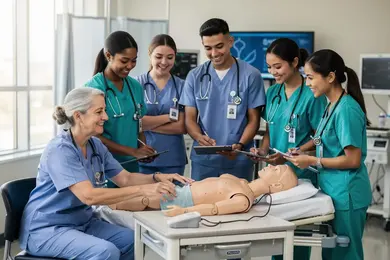
Clinical practicums expose students to diverse populations, including medical-surgical, maternal-child, psychiatric, and geriatric nursing. Programs commonly use simulation labs to foster emergency response skills and interprofessional collaboration. However, accelerated timelines restrict the ability to absorb experiential learning leisurely, presenting a tradeoff between speed and depth of training.
Prospective students must weigh how these factors affect employability and clinical readiness. Leveraging prior healthcare roles can be decisive, enabling earlier engagement with complex cases and potentially smoother transition into nursing roles. Applicants should evaluate their capacity to manage intensive schedules and carefully assess how program demands align with their professional goals and personal circumstances.
How long does an ABSN program take to complete?
Accelerated BSN programs condense the nursing curriculum into 12 to 18 months, demanding full-time commitment and significant weekly hours, often between 40 and 60. This pace typically suits students with healthcare backgrounds who benefit from waived prerequisites but still must meet rigorous clinical hour requirements aligned with state licensing boards.
For instance, a certified paramedic transitioning to hospital nursing must balance intensive coursework and clinical placements, often year-round, with minimal breaks. These constraints can impose logistical challenges including limited clinical site options, reduced employment hours during study, and the need for strong time management skills—critical factors employers assess when hiring accelerated BSN graduates.
Licensure outcomes offer an important benchmark. Data from Michigan State University indicates that accelerated second-degree BSN candidates maintain NCLEX-RN pass rates near 90%, rising to 92% after one year. This suggests accelerated curricula, while compressed, do not necessarily undermine exam readiness or professional entry standards.
Prospective students should weigh the tradeoffs between rapid program completion and potential financial or scheduling pressures, understanding that institutional support for clinical placement and academic advising directly impacts retention and on-time graduation.
How much do ABSN programs cost?
Accelerated BSN programs cost roughly $40,000 to $50,000 in tuition, often concentrated within 12 to 18 months. For instance, University of Massachusetts Boston's ABSN charges about $700 per credit, making a 60-credit program near $42,000 before fees and aid. The condensed timeframe lowers living and opportunity costs but requires significant upfront payment or rapid financing, which can strain students without employer support or scholarships.
Healthcare professionals shifting careers face distinct financial calculus. Shorter programs reduce total time out of the workforce but accelerate tuition debt accrual. Additional expenses, like clinical supplies, uniforms, licensing exam prep, can add thousands more. Geographic location plays a major role, with urban programs generally costing more than rural or state options, influencing net affordability.
Employers tend to prefer candidates with minimal educational debt, as heavy financial burdens correlate with higher turnover risks. Students must factor in the full financial impact, not just tuition. The loss of regular income during study often amplifies effective costs. This dynamic is particularly critical for career pivoters who are balancing existing financial obligations.
Such granular evaluation underpins a realistic projection of return on investment when pursuing an ABSN as a practical step toward nursing employment.
What nursing jobs can ABSN graduates pursue?
Graduates from accelerated baccalaureate nursing (ABSN) programs with prior healthcare experience encounter a pragmatic balance of opportunity and challenge when entering the nursing workforce.
Their compressed coursework, typically 11-18 months, leverages existing knowledge but often results in fewer clinical hours compared to traditional routes, requiring additional on-the-job training or structured residency programs to reach competence in high-acuity settings. This tradeoff is particularly relevant for roles in critical care units where hands-on exposure is essential.
Registered nurse positions in diverse settings, acute care hospitals, outpatient clinics, home health agencies, and skilled nursing facilities, are common entry points for ABSN graduates. Specialty areas such as emergency departments, intensive care, and labor and delivery often recruit these candidates for their transferable skills as former medical assistants, paramedics, or therapy aides. Employers expect rapid adaptation under pressure, reflecting the accelerated program's reliance on prior academic and professional foundations.
Graduates holding prior healthcare licenses can expedite transitions into advanced roles like nurse case managers or clinical educators, but must navigate varying state licensure regulations. Beyond bedside care, there are emerging opportunities in healthcare informatics, quality improvement, and population health, where clinical insight intersects with analytic demands.
What salary can ABSN graduates expect?
Prior healthcare experience can significantly impact starting salaries and workforce integration for accelerated BSN graduates. Typical entry-level registered nurse positions in urban hospitals offer $65,000 to $75,000 annually for those with clinical backgrounds, compared to around $60,000 for graduates without healthcare exposure. This gap reflects employer preferences for candidates who require less onboarding and remediation, reducing training costs and accelerating deployment.
For example, an ABSN graduate entering a high-demand ICU role in New York may earn over $80,000, enhanced by shift differentials and signing bonuses. Meanwhile, rural or long-term care facilities often present lower wages but greater scheduling flexibility, illustrating a tradeoff between compensation and work-life balance.
Geographic location, facility type, and specialty area remain key salary determinants. Prior clinical experience also compresses the timeline to earn specialty certifications, speeding up salary progression. Candidates who clearly document healthcare roles on their resumes position themselves better in negotiations by evidencing clinical proficiency and self-sufficiency.
Employers value these qualifications because they translate into quicker workforce readiness and lower supervision needs, especially important where acute care demands stress staff capacity. Strategically, prospective ABSN students should weigh local labor market conditions against personal career goals and lifestyle preferences when assessing expected returns on program investment.
How do you choose a reputable ABSN program?
Certification from either the Commission on Collegiate Nursing Education (CCNE) or the Accreditation Commission for Education in Nursing (ACEN) is essential when selecting an accelerated Bachelor of Science in Nursing (ABSN) program. These accreditations confirm that the curriculum aligns with clinical competencies demanded by employers and ensures programs maintain graduation and NCLEX-RN pass rates above 85%, critical benchmarks that affect job prospects in competitive healthcare markets.
Clinical placement quality significantly influences practical readiness. Programs offering diverse hospital affiliations, covering specialties like critical care, pediatrics, and community health, better equip students for the realities of varying nursing roles. Additionally, ABSN candidates benefit from career services that facilitate connections with employers, crucial for transitioning from clinical experience to employment.
The trade-off between program duration and intensity also requires close consideration. Accelerated programs under 18 months minimize income disruption but may compress essential skill development, raising the risk of burnout. Students working part-time in healthcare shifts must balance endurance and financial security against program demands.
Faculty expertise and student-to-instructor ratios materially impact learning quality; high ratios reduce personalized mentorship, which is especially important in rigorous ABSN tracks. Graduates seeking advancement into APRN, educator, or leadership roles should prioritize programs with clear pathways to graduate education or professional specialization.
Reviewing graduate employment data offers insight beyond initial licensure, revealing long-term integration into the nursing workforce-information prospective students must weigh against short-term program appeal.
Other Things You Should Know About ABSN
The workload in ABSN programs is exceptionally demanding due to their accelerated nature and compact timeline. Students must balance heavy clinical hours, rigorous coursework, and frequent exams, which leaves minimal time for work or personal commitments. Prioritizing programs with structured support and clear pacing can mitigate burnout and improve retention, especially for those with prior healthcare experience who may underestimate the academic intensity compared to their former roles.
Yes, ABSN students benefit most from programs that offer direct clinical placements over those relying heavily on simulated experiences. Employers value real-world clinical exposure, which builds practical skills and confidence that simulations cannot fully replicate. Prioritizing programs with strong hospital partnerships and diverse clinical opportunities will improve readiness for licensure exams and job performance.
Shorter absn programs condense comprehensive nursing content, often sacrificing depth in areas like research application, leadership, and specialty nursing practices. While they offer rapid entry into the workforce, the compressed format can limit opportunities for deeper critical thinking and mastery. Students should weigh their career goals; if leadership or advanced practice roles are the objective, choosing slightly longer ABSN options with enriched curricula is advisable.
In 2027, students with prior healthcare experience often benefit from accelerated learning in ABSN programs, as their foundational knowledge allows them to grasp complex concepts more quickly. This familiarity can improve performance in clinical settings, fostering confidence and enhancing skill application.
References
- Is an Accelerated Nursing Program Right for Me? https://www.iona.edu/blog/accelerated-nursing-program-admissions-guide
- ABSN vs. BSN: What’s the Difference?| University of Bridgeport https://www.bridgeport.edu/news/absn-vs-bsn-whats-the-difference/
- Accelerated BSN Admission - MSMU https://www.msmu.edu/admission--aid/nursing-admission/absn-admission/
- Accelerated Nursing Program in NYC - UMSV ABSN https://absn.mountsaintvincent.edu/accelerated-nursing/
- What is an Accelerated Bachelor of Science in Nursing? | Incredible Health https://www.incrediblehealth.com/blog/accelerated-bachelor-of-science/
- ABSN Admission Requirements - Bushnell University https://www.bushnell.edu/absn-admission-requirements/
- Accelerated Bachelor of Science in Nursing (ABSN) | York College of Pennsylvania https://www.ycp.edu/academics/programs/accelerated-nursing
- What is an ABSN program? | WCU Nursing Glossary https://westcoastuniversity.edu/glossary/absn-program
- Are Nursing Graduates Getting Jobs? | ABSN Student Stories https://onlineabsn.marian.edu/blog/are-accelerated-nursing-graduates-getting-jobs-three-graduates-tell-their-stories/
- What’s the Deal with Accreditation? https://nursingcas.org/resources-for-current-schools/whats-the-deal-with-accreditation