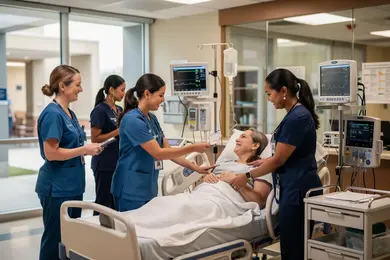
2027 ABSN Programs With On-Campus Labs

Co-Founder and Chief Data Scientist
Balancing accelerated nursing education with hands-on clinical skill development poses a critical challenge for aspiring nurses aiming for swift workforce entry. Nearly 60% of accelerated nursing students reported in a 2024 National Center for Education Statistics survey that limited on-campus lab availability influenced their program choice, revealing a broader tension between remote coursework convenience and tangible clinical proficiency.
This gap complicates readiness for state licensure exams and employer expectations in high-pressure care settings. Addressing the logistics and quality of on-campus labs is pivotal for maintaining skill standards while accommodating diverse schedules. This article evaluates ABSN programs featuring on-campus labs, guiding prospective students through key factors that affect clinical training quality and career-readiness outcomes.
Key Things You Should Know
- ABSN programs with on-campus labs incur 20-30% higher tuition and fees on average, per 2024 NCES data, forcing students to weigh accelerated timelines against acute upfront financial strain and limited financial aid availability.
- Hospitals in regions with nursing shortages prioritize hires from ABSN cohorts demonstrating extensive in-person clinical lab experience, linking facility retention rates to hands-on competencies observed during lab-intensive curricula.
- Transitioning into nursing via ABSN programs compresses licensure readiness into 12-18 months, but on-campus lab access often restricts enrollment capacity, causing waitlists that delay workforce entry despite high demand reported by bureau labor statistics.
What is an ABSN program with on-campus labs, and who is it designed for?
Accelerated nursing programs with on-campus labs demand that students allocate significant time for practical skill development, which many employers prioritize over theoretical knowledge alone. For example, a candidate holding a non-nursing bachelor's degree transitioning into nursing must commit 20+ weekly hours to in-person labs to master essential competencies like IV insertion and patient assessment-a commitment absent in fully online tracks.
This intensive hands-on training directly influences initial job readiness and can accelerate early career adaptability in high-demand healthcare markets.
Students should weigh the logistical and financial implications of on-campus lab requirements for accelerated nursing students, especially when balancing work or family. These programs typically condense nursing curricula into 12 to 18 months, combining rigorous in-person and didactic learning. The tradeoff is a loss of scheduling flexibility compared with fully virtual options, but graduates often experience superior clinical preparedness, which employers value highly.
Median annual wages for registered nurses reached $86,070, outpacing the overall U.S. median by nearly double, underscoring the economic benefit tied to practical proficiency attained through on-campus labs. Absence of this training can result in delayed specialization or require costly remedial education. For students planning further advancement, exploring MSN programs online can leverage ABSN experience into advanced clinical or leadership roles.
How do ABSN programs with on-campus labs differ from fully online or hybrid options?
Accelerated bachelor nursing programs demonstrate a clear divide in how clinical competency is developed compared to hybrid and online formats. Abbreviated nursing programs with on-campus clinical labs focus on repeated hands-on experience that sharpens psychomotor skills.
Employers in high-demand areas such as acute care and emergency departments consistently favor graduates whose training included substantial supervised work on real equipment and standardized patients. This focus addresses critical nursing functions that virtual simulations alone cannot reliably replicate.
Prospective students must weigh tradeoffs: on-campus lab requirements impose fixed schedules and commuting challenges, yet they typically lead to faster proficiency during clinical rotations and smoother employer onboarding.
Those prioritizing immediate skill mastery-such as career-changers targeting critical care nursing-should consider these programs despite logistical constraints. Conversely, students with significant obligations or remote living situations might opt for hybrid or fully online RN programs, accepting that limited tactile training can delay readiness for physically intensive roles.
The projected 6% growth in RN employment through 2032, reflecting roughly 193,100 annual openings, intensifies employer scrutiny of hands-on experience. Decision-making benefits from understanding that convenience offered by hybrid or fully online formats often results in skill gaps that affect job placement and performance.
For those evaluating options, comparing hybrid or online RN structures with on-campus alternatives is crucial; detailed assessments of tradeoffs can be found in online RN to BSN programs.
What accreditation and state licensure requirements should ABSN programs with labs meet?
Choosing an accelerated nursing program requires careful attention to accreditation standards for ABSN programs with on-campus labs and state licensure requirements for accelerated nursing programs, as these directly affect licensure eligibility and job placement. Accreditation by the Commission on Collegiate Nursing Education (CCNE) or the Accreditation Commission for Education in Nursing (ACEN) guarantees that curriculum and lab quality meet national standards.
However, state boards of nursing impose specific regulations, especially concerning the amount and type of clinical hours permissible. For instance, California mandates that at least 50% of clinical hours involve direct patient care, limiting how much simulation can substitute, whereas other states allow up to 25% simulation. Failure to comply can delay or prevent sitting for NCLEX exams, impacting workforce entry.
Programs integrating high-fidelity simulation labs consistent with accreditation and state rules demonstrate measurable improvements, with studies showing a notable increase in clinical judgment scores. Students should verify explicit program compliance with their desired state's requirements to avoid licensing setbacks. Additionally, clinical site placements must align with these mandates to ensure hours count toward licensure.
For applicants weighing options and cost considerations, exploring the cheapest online nursing PhD programs may offer further educational pathways beyond ABSN credentials, but understanding upfront licensing boundaries remains critical for practical outcomes.
What are the typical admission prerequisites for ABSN programs that include campus lab work?
Accelerated bachelor of science in nursing (ABSN) programs with on-campus labs impose stringent admission requirements that both reflect and enforce readiness for intense clinical demands. Candidates must have a bachelor's degree in a non-nursing field and maintain a minimum 3.0 GPA in prerequisite science and general education courses, including anatomy, physiology, microbiology, and statistics completed recently-typically within five to seven years.
These prerequisites guard against remedial setbacks and attrition during the condensed curriculum. Programs often mandate healthcare experience, such as roles like certified nursing assistant or medical scribe, to ensure familiarity with patient care prior to hands-on labs.
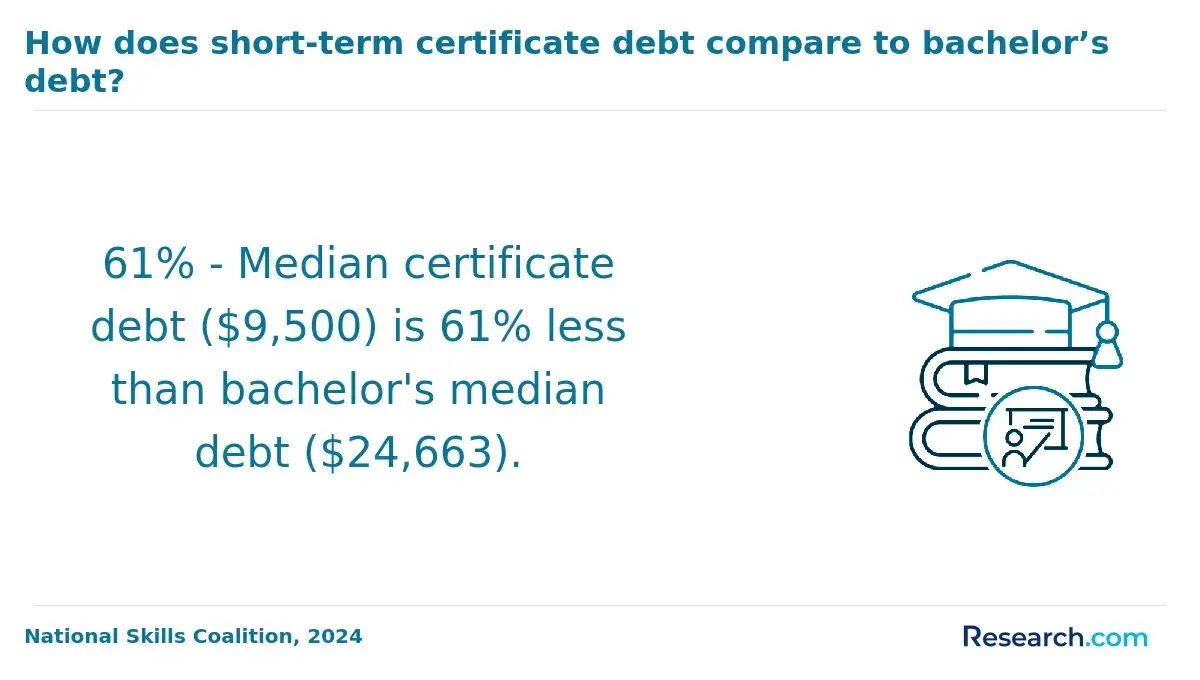
Applicants should weigh the financial challenge: tuition can vary widely, with rates ranging from $700 to $1,442 per credit between CCNE-accredited programs. This more than doubles cost considerations, especially when paired with in-person housing or transportation needs tied to rigorous clinical schedules. The intersection of full-time work or caregiving and mandatory multi-day lab attendance often forces a prioritization of flexible or clustered clinical sessions to manage feasibility.
Accelerated nursing program prerequisites including campus clinical components stress immunizations, background checks, and current CPR certification to meet essential regulatory requirements for clinical placement. These factors collectively influence student capacity to meet employer expectations for clinical competence.
For those strategizing a long-term nursing career, understanding how much does a DNP make can inform decisions about investment and trajectory beyond accelerated nursing programs admission requirements with on-campus labs.
How long do ABSN programs with on-campus labs usually take, and how are they structured?
Accelerated Bachelor of Science in Nursing (ABSN) programs with on-campus labs demand students navigate an intensive, tightly scheduled curriculum designed to expedite clinical competency. These programs typically span 12 to 18 months, mixing immersive didactic instruction with mandatory hands-on lab and clinical sessions, where skills such as IV insertion and patient assessment are practiced under faculty supervision.
The sequencing leaves little room for setbacks-failure or delay in any course often disrupts the entire progression due to the highly sequential skill-building. Clinical rotations follow consecutively with minimal breaks, posing a significant challenge for working adults who must negotiate employer flexibility or unpaid leave to meet daytime lab requirements.
For example, mid-career professionals aiming for a nursing pivot often face tradeoffs between steady income and fulfilling demanding attendance obligations.
The 2024 AACN survey reported over 79,000 qualified applicants turned away due to capacity constraints, highlighting the importance of on-campus labs in maximizing skill acquisition and graduate readiness. Hiring managers prioritize candidates demonstrating timely clinical competence, meaning any extension or delay can undermine employability in an already competitive market.
What core nursing courses and hands-on lab experiences do students complete in these ABSN programs?
Accelerated bachelor of science in nursing (ABSN) programs with on-campus labs create a distinct advantage by integrating intense theoretical coursework with immediate practical skills training that translates directly to clinical competence.
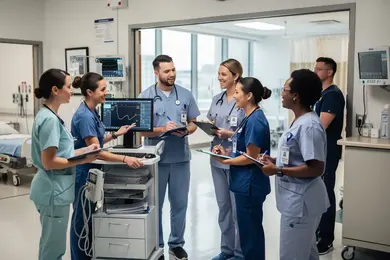
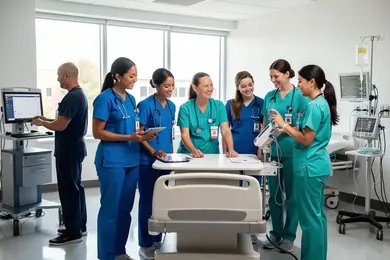
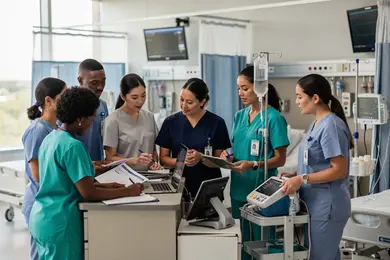
Unlike programs relying heavily on remote or simulated learning, these on-campus sessions allow students to practice core nursing procedures-such as IV insertions, catheterization, and cardiac monitoring-with high-fidelity mannequins and live scenarios before patient exposure.
This hands-on approach is critical as healthcare employers demand nurses who can perform under pressure from day one. Clinical practicums, typically requiring 500 to 700 hours in diverse medical settings like emergency departments and outpatient clinics, expose students to real-world complexities that build decision-making agility. For example, rapid triage skills gained during emergency rotations enhance employability by demonstrating readiness for high-stakes environments.
Students face a tradeoff between the accelerated pace of these programs and the depth of clinical mastery needed to ensure patient safety and job market competitiveness. The technical and interpersonal skills developed through on-campus labs and extensive practicum hours mitigate risks associated with accelerated learning curves.
Financially, nurses with a BSN earn approximately 7-9% higher median wages than those without, warranting serious consideration of curriculum design when evaluating ABSN pathways. Prospective students should critically assess how such program components align with their career objectives and workforce demands.
How much do ABSN programs with on-campus labs cost, and what financial aid is available?
Programs combining on-campus labs with accelerated bachelor of science in nursing (ABSN) pathways cost between $40,000 and $85,000 in total tuition by 2026, reflecting variations in institutional prestige, geographic location, and program length. This broader investment includes expenses tied to direct clinical practice, simulation labs, and faculty supervision-components that underwrite measurable competency gains employers prioritize.
These programs impose ancillary costs beyond tuition, such as commuting, housing near campus, and elevated facility fees. Financial aid streams offset some of this but vary widely: federal loans through FAFSA provide up to $20,500 annually, while grants like the Nursing Workforce Diversity Grant offer targeted, non-repayable support. Employer sponsorships exist but remain uncommon and typically require service commitments.
A 2024 systematic review in Nurse Education Today highlights a notable 10-15% improvement in clinical skill outcomes for hybrid and on-campus lab pathways versus fully online routes. For hiring managers emphasizing real-time clinical competence, these performance differentials translate into faster job placement and improved salary trajectories. However, prospective students must weigh these gains against the financial and scheduling rigors posed by on-site requirements.
- Costs range from $40,000 to $85,000 depending on multiple factors
- Federal financial aid caps at $20,500 annually with grants supplementing
- On-campus clinical training yields 10-15% better skills than fully online formats
- Higher upfront costs may lead to quicker employment and better wages
- Logistical and financial constraints require strategic planning to avoid delayed workforce entry
Effective decision-making involves balancing tuition and related costs with financial aid availability and career timelines. Delays from working to finance attendance may erode the advantage of enhanced training quality, making coordinated financing and clinical scheduling essential in workforce integration strategies.
What nursing roles and clinical settings can graduates of lab-based ABSN programs pursue?
Graduates of lab-based ABSN programs enter nursing roles where hands-on clinical proficiency directly impacts patient outcomes and career trajectory. Unlike programs relying solely on clinical rotations, those with on-campus labs accelerate readiness by providing controlled practice in procedures like IV insertion, catheterization, and EKG interpretation before entering fast-paced care settings.
For example, an ABSN graduate working in a metropolitan hospital emergency department must immediately manage complex patient loads, applying technical skills refined in simulation to real emergencies. Employers expect hires to demonstrate competence in patient safety protocols, clinical assessments, and care coordination from day one; inadequate lab experience risks a steep initial learning curve that can delay advancement or limit specialty opportunities.
Practical training environments often vary in quality and availability, influencing outcomes significantly. Students should evaluate the rigor of labs and clinical partnerships when selecting programs to avoid gaps in applied skill development. This scrutiny is crucial for those balancing external commitments, as structured lab sessions provide consistent, supervised skill acquisition not guaranteed in irregular clinical rotations.
Overall, lab-based ABSN programs equip graduates to integrate swiftly into diverse healthcare settings, fulfilling employer demands for operational readiness while navigating workforce supply challenges.
What salary ranges and job outlook can ABSN graduates expect in nursing careers?
Starting salaries for accelerated Bachelor of Science in Nursing graduates generally range from $65,000 to $85,000 annually, with regional labor market conditions significantly shaping both compensation and job access.
Registered nurses' median wage is approximately $77,600 per U.S. Bureau of Labor Statistics 2024 data, but ABSN graduates often encounter notable differences by location. For instance, graduates from higher-tuition programs such as Duke University ($79,107 tuition) frequently pursue metropolitan roles where wages exceed this median, whereas those attending lower-cost programs like Roseman University ($65,600 tuition) may find employment in more affordable, less competitive areas.
Employment growth for registered nurses is projected at 6% through 2032, yet job availability and quality vary widely by state and specialty. Choosing urban hospitals often yields more openings but introduces higher living expenses that erode net income. Alternatively, relocating to underserved regions can unlock financial incentives like signing bonuses and loan repayment but involves challenges such as licensure transfer and personal logistics.
Key tradeoffs to consider include:
- Higher starting salaries in costly metropolitan areas versus greater disposable income in lower-cost regions
- Specialty roles with premium pay demanding additional certification and experience
- Relocation benefits weighed against logistical and licensure hurdles
Maximizing long-term return on investment requires aligning program cost, regional wage potential, and personal mobility with continuing education focus to effectively compete and secure sustainable nursing positions.
How can students evaluate and choose a reputable ABSN program with strong on-campus labs?
Programs featuring well-equipped on-campus labs and sustained accreditation from bodies like the Commission on Collegiate Nursing Education (CCNE) or the Accreditation Commission for Education in Nursing (ACEN) offer measurable advantages in clinical skill development. Employers prioritize graduates with hands-on experience derived from supervised simulation environments, directly affecting patient safety and job readiness.
Key evaluation criteria include NCLEX-RN pass rates above 85%, indicating strong practical instruction rather than theory alone. Prospective students should assess student-to-instructor ratios and faculty expertise during campus visits to gauge the intensity and quality of lab training.
A working professional balancing employment and study needs programs offering flexible lab schedules and adequate simulation hours to develop confidence without compromising job duties. Recent graduates may opt for programs emphasizing immersion in diverse clinical scenarios replicating acute care, addressing different learning curves and market expectations.
Considering long-term return on investment, data from a 2024 New York Federal Reserve analysis shows that bachelor's graduates in health fields earn over $500,000 more over their lifetimes than those holding only a high school diploma. Thus, selecting a program with strong clinical labs is a strategic decision influencing employability, sustained performance, and career longevity.
Other Things You Should Know About ABSN
Maintaining employment during an ABSN program with on-campus labs is challenging due to the program's intensity and fixed lab schedules. These programs often require full-time commitment, including daytime clinical and lab hours that cannot be shifted easily. Students should prioritize program attendance and study time because missing in-person lab sessions typically cannot be made up online, impacting competency and progression.
In 2027, ABSN programs with on-campus labs offer hands-on clinical training, providing students practical experience essential for nursing careers. These labs simulate real-world healthcare settings, which enhances learning and builds competence in critical nursing skills, making graduates well-prepared for the demands of the profession.
Employers favor graduates from ABSN programs with extensive on-campus labs because these programs produce clinicians with stronger hands-on skills and clinical judgment. When choosing a program, prioritize one with robust lab hours and clinical placements in varied settings to align with employer expectations for readiness. Graduates from weak lab programs face longer orientation periods and may be considered less competitive for high-demand specialties.
On-campus lab ABSN programs suit learners who perform best with structured, supervised skill practice rather than self-directed study. Professionals with limited patient care experience benefit from the immediate hands-on training that these labs provide. Conversely, learners who require flexible schedules or remote learning options should reconsider, as these programs demand physical attendance and intensive time management.
References
- How Long Does It Take to Earn a Bachelor's Degree in Nursing? https://www.chamberlain.edu/blog/how-long-does-it-take-to-earn-a-bsn
- What is an ABSN program? | WCU Nursing Glossary https://westcoastuniversity.edu/glossary/absn-program
- Accelerated Nursing Program Prerequisites | University of Bridgeport https://www.bridgeport.edu/news/accelerated-nursing-program-prerequisites-requirements/
- Accelerated BSN (ABSN) Program at Avila – Fast-Track Nursing Degree https://www.avila.edu/accelerated-bachelor-of-science-in-nursing/
- 7 Factors to Consider When Choosing a Nursing School - Marian https://onlineabsn.marian.edu/blog/choosing-a-nursing-school/
- How Much Can I Earn With a BSN? https://www.allnursingschools.com/bsn/salary/
- ABSN vs. BSN: Is an Accelerated Nursing Program Worth It? https://onlinedegrees.elmhurst.edu/blog/absn-vs-bsn-is-an-accelerated-nursing-program-worth-it
- Accelerated BSN Programs: Who Qualifies | Betternurse.org https://betternurse.org/accelerated-bsn-program-guide/
- How Long Is an Accelerated BSN? ABSN Timeline and 12-Month Option https://stmary.edu/nursing-accelerated/how-long-is-an-accelerated-bsn.html
- Learn the Prerequisites for an Accelerated Nursing Program https://absn.madonna.edu/blog/importance-of-prerequisites-for-accelerated-nursing-program/