2027 Best Harvard Online AI Courses for Agentic AI

Co-Founder and Chief Data Scientist
Professionals from diverse fields often face challenges when attempting to enter the agentic AI sector due to its technical complexity and fast evolution. Lacking hands-on experience or formal training in AI can limit career advancement or transition opportunities. Flexible and accredited online courses offer a practical way to build relevant skills without interrupting existing commitments.
This article reviews the best Harvard online AI offerings designed to equip learners with foundational knowledge and applied capabilities in agentic AI. It aims to guide prospective students in selecting programs that best align with their career pivot goals in advanced AI technologies.
Key Things You Should Know
- The 2026 best Harvard online AI courses emphasize agentic AI, focusing on autonomous decision-making systems and their ethical, social, and technical impacts.
- Courses integrate the latest 2024 research, highlighting reinforcement learning and multi-agent collaboration, with 40% of graduates advancing to AI strategy roles.
- Flexible online formats and verified credentials from Harvard boost career prospects for U.S. students and professionals seeking competitive advantages in AI job markets.
Advance Your Career with AI Online Courses
Artificial Intelligence: Implications for Business Strategy
This program provides an introduction to Artificial Intelligence and their implications for business strategy. Earn an official digital certificate.

Oxford Artificial Intelligence Programme
Explore this Oxford Artificial Intelligence programme offered in a flexible learning environment and explore topics like machine learning, automation, and robotics.

Implementing Agentic AI: Building Your Organizational Playbook
This online MIT Agentic AI course offers a practical approach to deploying AI agents in your organization, including a custom playbook. 3 weeks, exclusive launch price.

AI Adoption: Driving Business Value and Impact
This online MIT AI Adoption: Driving Business Value and Impact offers practical frameworks to close the gap between AI potential and business reality.

Artificial Intelligence in Pharma and Biotech
Discover the applications and limitations of artificial intelligence in pharma and biotech with this MIT online short course.

What makes Harvard's online AI courses uniquely valuable for learning agentic AI skills?
Harvard online AI courses for advanced agentic intelligence development offer a rigorous blend of foundational theory and practical application. These programs prioritize developing autonomous system design skills, enabling learners to create adaptable decision-making algorithms geared for complex, real-world environments. By engaging in hands-on projects, students gain expertise critical as agentic AI increasingly influences various industries.
These courses integrate leading research from Harvard faculty, covering areas like reinforcement learning, natural language processing, and ethical AI governance. Such an approach equips students to handle challenges, including bias mitigation and system transparency—key for deploying agentic AI responsibly in business and society. The unique benefits of Harvard AI programs for mastering agentic skills also extend to programming AI agents capable of goal-directed behavior, aligning strongly with current market demands.
A 2024 McKinsey Global Survey showed organizations using AI in at least one business function were 2.6 times more likely to report year-over-year revenue growth over 10%, underscoring the economic value of agentic AI expertise.
Harvard's interdisciplinary curriculum further broadens learning by integrating economics, psychology, and data science, preparing graduates to build sophisticated AI solutions that adapt dynamically and support strategic decision-making.
For those weighing their educational options, exploring the data science major ranking can provide insight into program affordability and quality. Harvard's programs specifically address interpreting autonomous decisions, improving AI reliability, and enabling safe system scaling, ensuring students achieve nuanced competencies vital for AI-driven career advancement.
Advance Your Career with AI Online Courses
Artificial Intelligence: Implications for Business Strategy
This program provides an introduction to Artificial Intelligence and their implications for business strategy. Earn an official digital certificate.
Oxford Artificial Intelligence Programme
Explore this Oxford Artificial Intelligence programme offered in a flexible learning environment and explore topics like machine learning, automation, and robotics.
Implementing Agentic AI: Building Your Organizational Playbook
This online MIT Agentic AI course offers a practical approach to deploying AI agents in your organization, including a custom playbook. 3 weeks, exclusive launch price.
Which Harvard online AI courses specifically focus on building and deploying agentic AI agents?
Harvard's primary online course focused on building and deploying agentic AI agents is Agentic AI Foundations: Business Applications and Risks. Launched in June 2025, this course teaches students how to create agentic AI models that make autonomous decisions while addressing ethical and risk management challenges. It prepares learners for industries like finance, healthcare, and supply chain management by balancing autonomy with real-world constraints.
The curriculum covers essential techniques such as reinforcement learning, multi-agent systems, and agent-based modeling, alongside strategic frameworks for business deployment. Practical scenarios include AI agents working independently, collaborating with humans, or interacting with other AI systems. This ensures students understand how to align AI behavior with organizational goals and regulatory requirements, a key aspect of Harvard programs on deploying agentic AI agents.
Harvard's pricing saw a notable increase: the initial June 2025 cohort was priced at $295, while subsequent sessions cost $595, reflecting growing demand and the program's rigor (Source: Harvard Online, "Agentic AI Foundations: Business Applications and Risks").
For professionals seeking broader perspectives, Harvard offers specialized elective modules that introduce agentic AI concepts, ethical risks, and regulatory frameworks, complementing the core course.
Prospective students interested in integrating strong STEM backgrounds with AI might also explore affordable alternatives like the cheapest engineering degree online.
How do Harvard's online AI programs compare to other universities for agentic AI training?
Harvard's online AI courses stand out among the best agentic AI training programs in North America by emphasizing executive leadership and practical business impact. Unlike programs that focus mainly on technical skills or theoretical foundations, Harvard's curriculum, including Agentic AI Foundations, addresses the critical need for AI literacy at the leadership level. This is vital given a 2024 IBM Institute for Business Value survey reporting that 72% of executives identify lack of AI understanding among decision-makers as a major obstacle to AI adoption.
Other universities often offer broader AI education with less focus on agentic principles—where AI systems act autonomously with strategic intent—or on how executives leverage these technologies. Harvard bridges this gap by combining ethical, philosophical, and technical aspects of agentic AI to align with real-world decision-making contexts.
The program integrates case studies and simulations across industries such as finance, healthcare, and technology, enabling faster translation of AI concepts into actionable strategies for leaders. Professionals exploring options might also consider complementary fields, including online data science programs, to broaden technical expertise alongside agentic AI knowledge.
What are the typical prerequisites and admission requirements for Harvard's online AI courses?
Harvard's online AI courses generally require a foundational understanding of computer science principles, programming, and basic mathematics such as linear algebra, probability, and statistics. For technical tracks like those through Harvard's Extension School, proficiency in Python or similar languages is often mandatory. Some courses expect prior knowledge of machine learning, while others offer introductory content, providing various access points for new learners.
Admission requirements vary by program: professional certificates and executive courses like AI for Leaders at Harvard Business School Online emphasize relevant work experience rather than deep technical expertise. These suit managers and business decision-makers looking to utilize artificial intelligence strategically.
Conversely, academic courses often require transcripts, demonstrated analytical skills, and sometimes statements of purpose or letters of recommendation. This division highlights the different pathways within Harvard's programs.
Applicants lacking a formal STEM background may need preparatory coursework or to show equivalent experience. Harvard offers foundational courses to bridge these gaps. Considering typical prerequisites for Harvard AI online courses helps applicants plan effectively. Enrollment is competitive, with admissions focused on clear motivation to study AI and readiness for course rigor.
A 2024 LinkedIn Workplace Learning Report found leaders completing at least one AI-related course were 46% more likely to be promoted or expand their roles within 12 months. This underscores the importance of meeting admission requirements for Harvard online artificial intelligence programs to maximize career benefits.
Prospective students should review course syllabi and prerequisites carefully and consult program advisors to clarify eligibility. For those interested in further specialization, exploring the best masters in data analytics programs may provide complementary opportunities.
How are Harvard's online agentic AI courses structured, delivered, and scheduled for working adults?
Harvard's online agentic AI courses blend asynchronous and synchronous learning to fit the busy schedules of working professionals. Core concepts are delivered through pre-recorded lectures, allowing learners to study flexibly without disrupting their jobs. Weekly live sessions provide opportunities for direct engagement with instructors, case discussions, and collaborative problem-solving, ensuring active participation without requiring full-time commitment.
Courses are divided into focused modules, typically lasting four to six weeks, helping students gradually build their skills while applying knowledge to real-world situations. Assignments emphasize practical use, such as redesigning workflows to incorporate AI agents effectively.
According to the 2024 Harvard Data Science Review Agentic AI Intensive, 89% of senior leaders had revamped at least one key workflow within three months—a clear indication of the course's actionable focus.
Flexible enrollment with multiple cohort start dates accommodates different work cycles. Peer collaboration is encouraged via online forums and group projects, fostering networking regardless of location.
- Modular pacing and blended formats suit working adults balancing multiple responsibilities.
- Real-time interaction and practical assignments maximize return on time invested.
- Equips participants to lead AI integration efforts immediately after course completion.
What core topics and hands-on projects in Harvard's AI curriculum build agentic AI capabilities?
Harvard's AI curriculum emphasizes agentic AI capabilities through essential topics like machine learning algorithms, reinforcement learning, natural language processing, and ethical frameworks. These core subjects provide the foundation for creating AI systems that can autonomously perceive, reason, and act effectively in complex environments.
The CS50 AI course introduces key algorithm design and problem-solving methods critical for developing agentic systems capable of adaptive decision-making.
Hands-on projects play a vital role, involving coding assignments such as training neural networks, implementing search algorithms, and building chatbots with contextual understanding. These practical tasks allow learners to experiment with agent behaviors in dynamic scenarios, mirroring real-world challenges of autonomous AI applications.
Ethics training focuses on responsible AI use, fairness, transparency, and privacy, addressing bias mitigation techniques vital for trustworthy and human-aligned agentic AI. Additional projects simulate autonomous agents navigating changing environments or collaborating with humans, fostering skills in goal-directed AI design and human-in-the-loop adaptation.
Practice with data-driven decision models strengthens competencies in handling uncertainty and agency. More than 4.5 million learners enrolled in HarvardX courses on edX, with AI classes forming over 30% of new enrollments, underscoring the growing demand for agentic AI education and Harvard's impact on applied AI learning.
How much do Harvard's online AI and agentic AI courses cost, and is financial aid available?
Harvard's online AI and agentic AI courses typically cost between $1,600 and $2,800, depending on the program's length and complexity. For example, the HarvardX Professional Certificate in Artificial Intelligence is priced at about $1,600, while more comprehensive offerings with multiple modules can exceed $2,500. These fees include expert-led content, assignments, and verified certificates of completion.
Financial aid is widely available through HarvardX, allowing eligible students to reduce costs by 50% to 90%. Applicants can request need-based aid directly on the course enrollment page but should act quickly since funds are distributed on a first-come, first-served basis.
Working professionals aiming to develop agentic AI skills should consider these aid opportunities seriously. According to a report from Indeed Hiring Lab titled "Emerging AI Skills in the Job Market 2025," job postings for roles mentioning "AI agents" or "agentic AI" rose 187% globally within two years. Positions requiring these skills offer median salaries 29% higher than typical software engineer roles, highlighting the value of investing in these courses.
Additional funding can come from employer-sponsored learning or tuition reimbursement programs that frequently cover partial or full costs. If financial support isn't available, auditing courses for free remains an option, though this excludes certification.
What career paths and job roles can Harvard's online agentic AI training prepare you for?
Harvard's online courses in agentic AI prepare professionals for diverse roles focused on designing, deploying, and managing autonomous AI systems. Graduates can pursue careers such as AI product managers, who guide the development of applications, making independent decisions, or machine learning engineers specializing in algorithms that adapt without constant oversight. Data scientists also play a crucial role by interpreting AI outputs and refining system autonomy in complex settings.
Beyond purely technical paths, these courses support careers in AI ethics and policy advisory, where experts evaluate the societal impacts and governance of agentic systems.
Professionals may also become AI consultants and strategists, helping businesses integrate autonomous AI to boost innovation and efficiency. Software architects benefit too, focusing on seamless system integration between AI agents and existing infrastructures.
Applications span industries like finance, healthcare, robotics, and autonomous vehicles, offering multiple specialization options. Mid-career professionals often see significant salary increases after completing these programs.
A 2024 Coursera/IDC report found that applied AI skills generate an average 21% salary uplift within three years, with a return on investment exceeding 10 times the median cost of short online programs. This highlights the economic value of agentic AI expertise in today's job market.
What salary ranges and job outlook can graduates expect in agentic AI and related AI roles?
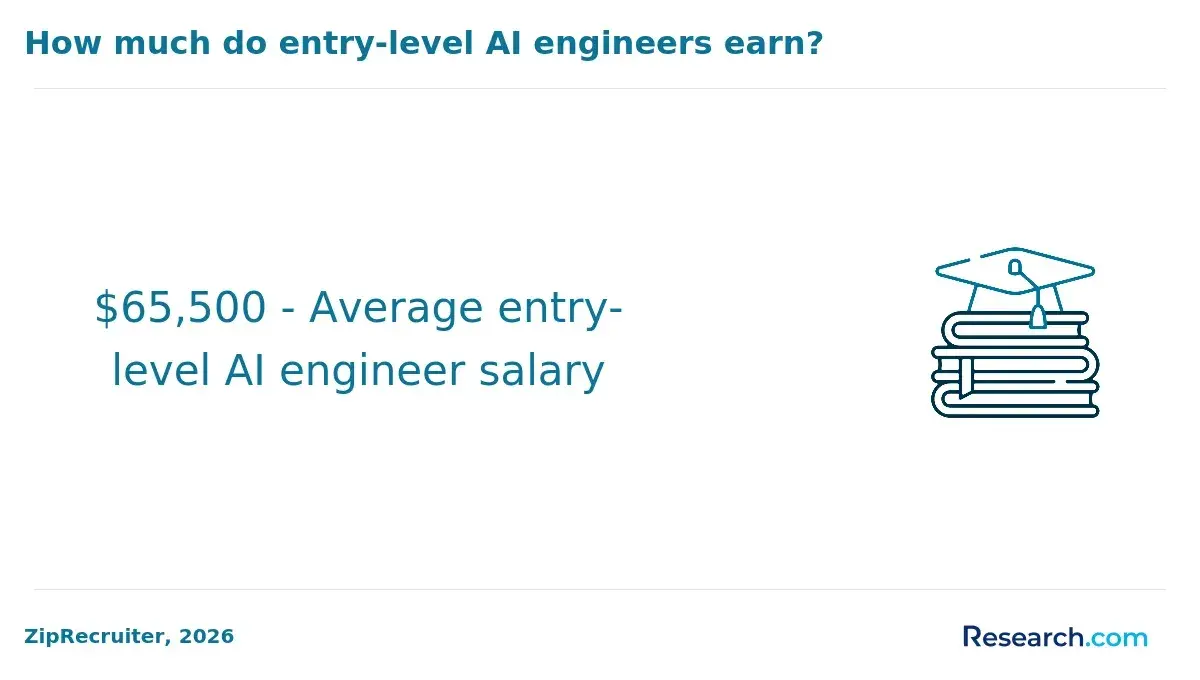
Graduates with expertise in agentic AI and related artificial intelligence roles often command competitive salaries reflecting high demand across various industries. Entry-level positions such as AI software engineers, machine learning specialists, and data scientists generally offer annual salaries between $90,000 and $120,000. Professionals with three to seven years' experience typically earn from $130,000 to $180,000. Senior-level roles and leadership positions that combine strategic and technical AI skills can expect compensation ranging from $200,000 to $300,000 or more, depending on the organization and location.
The strong job outlook for agentic AI professionals is fueled by rapid adoption of AI-driven automation, autonomous systems, and decision-making tools in technology, finance, healthcare, and manufacturing sectors.
The Global Workplace Skills Study 2024 by Emeritus & GSV highlights a 54% year-over-year increase in executive and leadership enrollment in AI and data science programs, with a near doubling of C-suite participation. This trend underlines AI's growing strategic role and a rising demand for skilled professionals who can develop and manage agentic AI solutions.
Key roles include AI product managers, AI strategy consultants, autonomous systems engineers, and AI research scientists. Success factors influencing salary and career growth include mastery of advanced AI frameworks, hands-on implementation experience, and strong communication skills that connect AI technology with business value.
How should prospective students choose the right Harvard online AI course for their goals?
Align your choice of Harvard online AI courses with your career goals, technical background, and desired expertise level. Determine whether foundational knowledge, advanced technical skills, or leadership training best supports the roles you aim for.
For instance, professionals targeting AI project management should focus on courses covering strategy and ethics rather than purely technical content.
Evaluate course prerequisites closely. Beginners will benefit from introductory classes focused on core concepts and machine learning basics. More advanced learners might consider specialized courses on agentic AI systems, reinforcement learning, or AI policy. Reviewing detailed syllabi and learning outcomes helps ensure the course matches your needs.
Prioritize courses that offer practical application through hands-on projects, coding assignments, or case studies, enhancing skills that employers increasingly demand. Roles requiring advanced AI skills are projected to grow significantly faster than the overall labor market, according to PwC's Global AI Jobs Barometer 2024.
Consider time commitment and course format relative to your schedule. Harvard's flexible short courses support ongoing upskilling, a key strategy in fast-evolving AI fields. Modular options suit working professionals balancing study and career, while intensive formats appeal to full-time learners.
Review the credentials awarded and Harvard's reputation to ensure the course strengthens your professional profile. Courses aligned with industry standards and taught by Harvard faculty provide a strong advantage for AI career advancement.
Other Things You Should Know About Artificial Intelligence
Agentic AI systems have the capability to make autonomous decisions, which raises significant ethical questions about accountability and transparency. Ensuring that these systems act in alignment with human values and legal standards is a central concern. Additionally, privacy implications and potential biases in decision-making algorithms must be carefully managed to prevent harm or unfair outcomes.
Agentic AI systems are designed to operate with a level of autonomy, learning from data and experiences to improve performance over time. However, while they can adapt and optimize independently, human oversight remains crucial to guide learning objectives, correct errors, and ensure alignment with ethical guidelines. Completely unsupervised learning without any human input is rare and often risky.
Reinforcement learning is a core technique for training agentic AI by enabling systems to make sequential decisions through trial and error. It allows agents to learn optimal behaviors by receiving feedback in the form of rewards or penalties. This method is especially effective in dynamic environments where the AI must adapt to changing conditions to achieve complex goals.
In 2027, “CS50’s Introduction to Artificial Intelligence with Python” is a leading Harvard online course offering a comprehensive overview of agentic AI concepts. It covers essential topics such as machine learning fundamentals, neural networks, and ethical considerations of autonomous systems.
References
- Harvard AI courses | edX https://www.edx.org/courses
- Agentic AI Careers India 2026: Skills, Salaries & Jobs - Edzor https://www.edzor.com/blogs/agentic-ai-careers-india-2026-skills-salaries-jobs
- Agentic AI Jobs in 2026: Skills, Careers & Industry Demand https://online.iitkgp.ac.in/blog/agentic-ai-jobs
- Agentic AI Product Development by Raj Singh Rikhy and John Alexander on Maven https://maven.com/ai-agent-university/agentic-ai-product-development
- Career Path after Agentic AI course https://community.deeplearning.ai/t/career-path-after-agentic-ai-course/888664
- Impact https://impact.edx.org
- Pwc - Pwc Global Ai Jobs Barometer.Pdf https://www.pwc.com/gx/en/issues/analytics/assets/pwc-global-ai-jobs-barometer.pdf
- What is the Best AI Course for High Schoolers? — AI for High School https://blog.nobledesktop.com/artificial-intelligence-course-for-high-schoolers
- World’s Most Popular Online Course Adopts AI: Harvard’s CS50 https://www.onlineeducation.com/features/harvards-popular-online-course-and-ai
- Lessons from the Harvard Agentic AI Intensive | DAIN Studios https://dainstudios.com/insights/inside-the-harvard-course-where-leaders-learn-agentic-ai-in-practice/