2027 Best AI Courses for Government Program Managers Using Generative AI

Co-Founder and Chief Data Scientist
Government program managers face increasing pressure to integrate generative AI technologies into public sector initiatives while managing tight budgets and ensuring compliance with regulatory standards. Many struggle to identify suitable educational pathways that offer both practical skills and flexible scheduling to balance work demands. Acquiring relevant expertise quickly is critical to driving innovation and improving service delivery.
This article evaluates the best AI courses designed specifically for government professionals seeking to master generative AI applications efficiently. It aims to guide readers through accredited, adaptive programs that align with their career pivot goals and professional responsibilities.
Key Things You Should Know
- Generative AI courses for government program managers focus on ethical use, data privacy, and policy development, reflecting a 42% increase in government AI training initiatives in 2025.
- Top 2026 courses emphasize practical skills in AI-driven decision-making, with 65% of programs including real-world simulations for enhanced strategic planning.
- Government-focused AI training aligns with federal priorities, preparing managers for AI governance challenges amid a projected 30% rise in AI-related public sector projects.
Advance Your Career with AI Online Courses
Artificial Intelligence: Implications for Business Strategy
This program provides an introduction to Artificial Intelligence and their implications for business strategy. Earn an official digital certificate.

Oxford Artificial Intelligence Programme
Explore this Oxford Artificial Intelligence programme offered in a flexible learning environment and explore topics like machine learning, automation, and robotics.

Implementing Agentic AI: Building Your Organizational Playbook
This online MIT Agentic AI course offers a practical approach to deploying AI agents in your organization, including a custom playbook. 3 weeks, exclusive launch price.

AI Adoption: Driving Business Value and Impact
This online MIT AI Adoption: Driving Business Value and Impact offers practical frameworks to close the gap between AI potential and business reality.

Artificial Intelligence in Pharma and Biotech
Discover the applications and limitations of artificial intelligence in pharma and biotech with this MIT online short course.

What makes an AI course valuable for government program managers using generative AI?
Valuable AI courses for government program managers using generative AI blend technical knowledge with practical applications tailored to public sector challenges. Managers gain insights into how generative AI models function and learn to integrate them into policy development, resource allocation, and program evaluation within government frameworks.
Courses featuring real-world case studies and hands-on projects help build understanding of AI solutions, supporting everyday managerial tasks like automated report generation and predictive budget forecasting. Such skills are key in effective AI training programs for government program managers.
Ethical and regulatory issues are critical components, with courses covering data privacy, algorithmic bias, and compliance with government AI standards. Exploring AI governance frameworks and oversight offers practical ways to reduce operational risk and foster stakeholder trust, especially important as public sector AI adoption grows.
Strategic decision-making skills that include AI tool evaluation and cost-benefit analysis increase program impact. Federal spending on AI and machine learning is expected to rise significantly, underscoring the importance of acquiring key skills in generative AI for public sector leadership. Managers trained to collect and interpret AI data can better justify program improvements and expansions.
Customized learning paths accommodate varying technical backgrounds, from introductory AI fundamentals to advanced algorithm tuning. Offering both synchronous classes and flexible online options supports diverse schedules. For those interested, a 2 year computer science degree online can be a convenient way to build foundational skills and advance in this growing field.
Advance Your Career with AI Online Courses
Artificial Intelligence: Implications for Business Strategy
This program provides an introduction to Artificial Intelligence and their implications for business strategy. Earn an official digital certificate.
Oxford Artificial Intelligence Programme
Explore this Oxford Artificial Intelligence programme offered in a flexible learning environment and explore topics like machine learning, automation, and robotics.
Implementing Agentic AI: Building Your Organizational Playbook
This online MIT Agentic AI course offers a practical approach to deploying AI agents in your organization, including a custom playbook. 3 weeks, exclusive launch price.
Which types of AI credentials best fit government program managers (degrees, certificates, badges)?
Certificates offer government program managers practical AI skills tailored to address public sector challenges efficiently. They are shorter and more focused than degrees, making them ideal for working professionals seeking rapid upskilling. With 73% of federal executives citing insufficient in-house AI expertise to meet mission goals, certificates provide a timely solution.
Specialized certificates often emphasize generative AI in government operations or policy analysis, delivering targeted knowledge that traditional degrees may not cover immediately. These credentials are among the best AI certification programs for government professionals aiming to enhance their applied skill set swiftly.
Badges serve as micro-credentials validating proficiency in specific AI tools or areas like natural language processing or ethical AI governance. They enable a modular learning approach, allowing managers to accumulate expertise over time without enrolling in full programs. This flexibility supports ongoing professional development aligned with evolving federal priorities.
Degrees remain the most comprehensive AI education option but may be less feasible for midcareer managers due to time and resource constraints. However, master's programs that integrate AI ethics, data science, and public administration continue to attract those targeting leadership roles with strategic AI focus. For those exploring options, reviewing the best online AI degree programs can provide valuable insights.
Government managers should select credentials balancing foundational AI knowledge with applications in accountability, transparency, and mission effectiveness. Credentials from accredited universities or government-backed platforms typically align better with these needs than generic offerings.
How do you compare online vs. campus AI programs tailored to public-sector professionals?
Accessibility, interaction, and practical application are key when comparing online versus campus AI courses for public sector managers. Online programs provide flexibility crucial for government professionals managing busy schedules, allowing learners to progress at their own pace and review complex topics as needed.
These programs effectively deliver foundational AI literacy, with 83% of U.S. government employees reporting increased confidence in identifying AI use cases at work, according to the OPM evaluation summary. This makes online learning ideal for those new to coding or looking to integrate AI knowledge quickly into projects.
Campus programs, on the other hand, foster immersive peer interaction and in-person mentorship, which can be essential for understanding nuanced policy implications of generative AI applications. They often offer hands-on labs with real-world datasets and collaborative opportunities that develop advanced technical and strategic skills.
Factors to consider include:
- Flexibility and self-directed learning favor online options.
- A preference for direct networking supports campus enrollment.
- Foundational AI concepts suit virtual platforms, while specialized workshops benefit from on-site presence.
- Budget and travel constraints often make online learning more accessible.
- Accreditation and curriculum relevance to public-sector challenges matter most, regardless of delivery mode.
For those seeking the best generative AI training programs for government professionals, combining online literacy courses with selective campus workshops can be highly effective. Prospective students interested in advanced AI education may explore masters in data science online as a flexible pathway that balances career growth and technical expertise.
What curriculum topics should AI courses for government managers cover, especially generative AI?
Courses on AI policy development for government managers should include foundational concepts of generative AI models, such as transformers and diffusion models, to enable effective evaluation and application. Ethical considerations, including data privacy, algorithmic bias, and transparency, are crucial for public sector governance frameworks.
Integrating generative AI into operational workflows-like automated reporting and resource allocation-can lead to significant efficiency boosts. For example, Microsoft's Work Trend Index Special Report on Generative AI at Work documented a 27% decrease in time spent on project documentation by program managers using these technologies.
Practical skills in AI tools tailored to the public sector support drafting policy documents and simulating scenarios with natural language generation. Project management training that incorporates AI-specific methodologies, including oversight of AI ethics boards and collaboration across cross-functional teams, further enhances leadership in technology-driven initiatives. Risk management topics must address vulnerabilities such as data poisoning and adversarial attacks to safeguard AI implementations.
Effective communication of AI-driven decisions to stakeholders and adherence to federal AI regulations are essential competencies. Additionally, implementing generative AI strategies in the public sector requires understanding these compliance issues. Professionals looking to enhance their technical skills may also explore military friendly online cybersecurity degree programs that complement AI expertise with robust security knowledge.
How do you evaluate accreditation and institutional quality for AI programs serving government workers?
Accreditation by a recognized U.S. regional or national body, such as the Higher Learning Commission or the Middle States Commission on Higher Education, is essential when evaluating programs designed for government employees in artificial intelligence. This accreditation signals that the institution meets academic and organizational standards crucial for career development in federal roles.
The curriculum should explicitly address federal AI compliance, risk management, and ethics. Given that most federal AI applications require stringent risk mitigation, programs including these topics better prepare students for real-world government challenges.
Faculty experience and government collaboration are key indicators of program quality. Look for instructors involved in federal AI initiatives or partnerships with government agencies, as well as evidence of guest lectures or joint projects with government labs or oversight entities.
Practical training components, such as hands-on labs or case studies centered on government scenarios like procurement and defense, improve applied learning. Additionally, checking if the program supports government-recognized certifications can be advantageous for federal employment.
Program outcomes-including graduation rates, student satisfaction, and alumni placement in government AI roles-offer critical insight into institutional effectiveness and alignment with federal workforce needs.
What admission requirements and prior experience are typically needed for these AI programs?
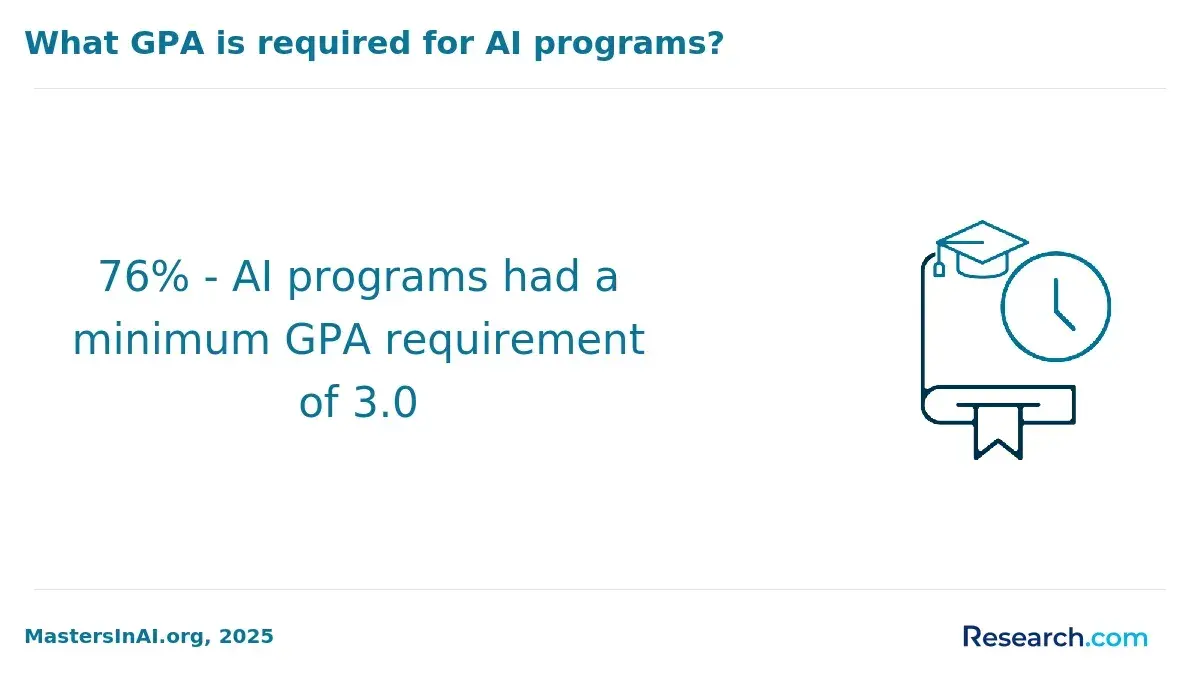
Most AI courses aimed at government program managers expect applicants to hold a bachelor's degree in areas like computer science, engineering, public administration, or related fields. Typically, candidates with 2 to 3 years of experience in government work, project management, or tech roles are preferred.
Some familiarity with data analytics or programming languages such as Python can be advantageous, though not always required. Advanced programs might ask for a foundational understanding of machine learning or statistics.
Applicants often need to demonstrate strong quantitative reasoning and problem-solving skills. For instance, executive AI courses for government leaders may require a statement explaining how AI will enhance their agency's workflow. Technical programs could request academic transcripts showing relevant coursework in algorithms or data science.
Certificate programs focusing on generative AI and prompt engineering commonly accept professionals from various backgrounds. These programs usually recommend completing self-paced modules on AI fundamentals to prepare students for practical training in prompt creation, automation, and ethical AI applications.
Admission decisions frequently emphasize alignment with career goals. Research from MIT, Stanford, and Boston University highlights a 45% productivity boost among employees trained in prompt engineering and workflow automation compared to those without such training. This data supports why many programs value applicants eager to apply AI tools effectively.
How long do AI courses for government managers take, and what do they cost?
AI courses for government program managers vary from 4 to 12 weeks, depending on specialization and depth. Shorter 4 to 6-week courses focus on foundational concepts and basic generative AI applications, ideal for quick upskilling. Longer programs of 8 to 12 weeks emphasize sector-specific applications, such as health, defense, and transportation, reflecting the growing need for mission-domain expertise in federal AI initiatives.
Costs depend on format and provider: entry-level online courses typically range from $500 to $1,500, suitable for busy professionals seeking flexible pacing. In-person or hybrid programs with a government focus often cost between $2,000 and $5,000. Executive education or certification courses tailored for federal managers may exceed $10,000, especially when involving expert instructors and hands-on workshops.
Since 61% of federal AI pilot projects involve mission-domain-specific work, managers benefit from courses aligned with their operational field. For instance, AI-driven logistics optimization suits transportation managers, while healthcare-related AI courses address patient data management and predictive analytics.
When selecting courses, consider time commitment, budget, and relevance to federal challenges. Combining foundational programs with targeted sector modules offers the best value in cost, time, and applicability.
What job roles, promotions, and career paths can generative AI training unlock in government?
Training in generative AI opens advanced career paths for government program managers by providing essential technical and strategic skills. Positions like AI program leads, data strategy officers, AI ethics compliance managers, and machine learning integration specialists are increasingly common in public-sector agencies.
Mid-level managers with expertise in generative AI often advance to director-level or chief innovation officer roles, overseeing AI adoption and digital transformation efforts. These positions require skills in AI model evaluation, risk mitigation, and coordinating across departments.
Career growth often involves shifting from traditional program management to specialized AI governance roles, which focus on establishing ethical AI protocols and transparency in government use.
Other expanding areas include managing AI-powered citizen service platforms and automating regulatory compliance. Professionals with generative AI skills also frequently progress into AI policy development and operationalizing AI to enhance public sector decision-making.
Certifications and micro-credentials in AI for public managers have become increasingly popular. Data from Lightcast shows a 288% increase in U.S. public-sector job listings requesting AI skills between January 2022 and December 2024, with many employers preferring candidates holding AI-related certifications. This trend highlights the value of formal generative AI training in boosting employability and promotion potential in government roles.
Prospective learners should focus on courses that build practical AI implementation skills, ethical understanding, and leadership tailored to public administration. Key areas include AI project management, data-driven policy design, and AI system audit practices to prepare for evolving digital innovation roles in government.
What are the salary impacts and job outlook for public-sector managers skilled in generative AI?
Public-sector managers with generative AI expertise receive significant salary increases and enjoy stronger job stability. Labor market studies indicate that government managers skilled in AI can earn 10% to 25% more than peers without these capabilities. This salary premium reflects the strategic advantages they deliver by optimizing workflows, automating routine tasks, and improving citizen services.
For instance, a government program manager adept at using generative AI for data analysis or automated reporting can shorten project timelines and reduce expenses, warranting higher pay.
Demand for AI-proficient managers is growing rapidly as federal and state agencies adopt AI-driven tools to meet regulatory requirements and enhance operational efficiency. The U.S. Bureau of Labor Statistics forecasts a 12% growth in management roles requiring technical skills through 2030, outpacing average occupational growth.
Investing in AI training boosts both career prospects and organizational returns. According to the IDC "Worldwide AI and Automation Adoption and ROI Survey" (2024), agencies offering over 20 hours of AI training per employee realize a 3.4x higher return on those investments. This underscores the importance of upskilling managers in generative AI to improve outcomes and attract talent.
Managers who tackle challenges like integrating AI with legacy systems or ensuring ethical AI use benefit from focused education. Combining AI technical skills with government policy knowledge creates a competitive advantage in the public sector job market.
Which professional certifications, policies, and compliance standards matter for AI use in government?
Critical certifications for managing AI projects in government settings include the Federal Risk and Authorization Management Program (FedRAMP), ensuring cloud product security compliance. Professionals often pursue credentials like Certified Information Systems Security Professional (CISSP) and Certified Information Privacy Professional (CIPP), which focus on cybersecurity and data privacy. These certifications are crucial when working with sensitive government data and AI systems.
Policy frameworks such as the U.S. Executive Order on AI (EO 13859) and the National AI Initiative Act enforce transparency, fairness, and accountability in AI adoption. Compliance with federal standards like the Federal Information Security Management Act (FISMA) and the NIST AI Risk Management Framework helps mitigate risks related to bias, privacy, and operation.
Government managers should pay attention to the Algorithmic Accountability Act proposals that require impact assessments before deploying AI solutions. Continuous training in these evolving policies helps maintain compliance and avoid legal risks.
Practical certification options include courses in AI ethics, data governance, and risk management designed for public sector professionals, such as offerings from the Defense Acquisition University (DAU) that address AI supply chain risks and software assurance.
Studies show that professionals spending over five hours weekly on AI-related learning or work were 2.3 times more likely to receive a salary increase than those who did not, underscoring the career benefits of certification and policy expertise.
Other Things You Should Know About Artificial Intelligence
Ethical concerns in artificial intelligence for government include issues of bias, transparency, and accountability. Governments must ensure AI systems do not perpetuate discrimination and that decisions made by AI are explainable to stakeholders. Privacy protection and avoiding misuse of citizen data are also critical ethical priorities in public sector AI deployments.
Generative artificial intelligence can assist government program managers by automating the creation of reports, forecasting project outcomes, and generating communication drafts. It enables more efficient data analysis and scenario planning while reducing manual workload. This application improves decision-making speed and supports innovative policy development.
Key challenges include integrating AI with legacy systems, managing data quality, and overcoming workforce skill gaps. Additionally, government agencies face regulatory and compliance hurdles that require careful navigation. Ensuring transparency and public trust while maintaining security are ongoing obstacles for successful AI adoption.
In 2027, AI courses focus on practical applications of generative AI in government settings, offering case studies, policy integration strategies, and insights into regulatory frameworks. These courses help managers harness AI's potential for efficiency and innovation in public sector projects.
References
- 11 AI certifications to grow your career https://www.cio.com/article/4175403/11-ai-certifications-to-grow-your-career.html
- Assessment of AI capabilities and the impact on the UK labour market https://www.gov.uk/government/publications/assessment-of-ai-capabilities-and-the-impact-on-the-uk-labour-market/assessment-of-ai-capabilities-and-the-impact-on-the-uk-labour-market
- New Use of Artificial Intelligence Accreditation Policy and Procedures - Middle States Commission on Higher Education https://www.msche.org/2025/07/02/new-use-of-artificial-intelligence-accreditation-policy-and-procedures/
- AIPA- AI in public administrations | AI Campus https://ki-campus.org/en/courses/ai-pub
- AI Education Partnerships for Universities https://www.becomeaicertified.com/learning-solutions-for-individuals/for-government
- Generative AI for Project Managers and Project Teams - PM-Partners https://www.pm-partners.com.au/course/generative-ai-for-pm/
- Artificial Intelligence for the Public Sector - InnovateUS https://innovate-us.org/workshop-series/artificial-intelligence-for-the-public-sector/
- Webinar-Confronting the Unspoken: The Impact of AI Adaptation on Institutional Policy and Accreditation | Council for Higher Education Accreditation https://www.chea.org/webinar-confronting-unspoken-impact-ai-adaptation-institutional-policy-and-accreditation
- An AI governance certification will boost your career | The Corporate Governance Institute https://www.thecorporategovernanceinstitute.com/insights/guides/an-ai-governance-certification-will-boost-your-career/
- AI Drives Demand for Credential Programs in Higher Ed https://www.govtech.com/education/higher-ed/ai-drives-demand-for-credential-programs-in-higher-ed