2027 Best AI Courses for Back-End Developers With Certificates

Co-Founder and Chief Data Scientist
Back-end developers seeking to integrate artificial intelligence into their skillset often face challenges in identifying credible, flexible courses that offer certification to validate their expertise. Many available options lack industry recognition or fail to provide practical knowledge tailored to server-side development. This gap can hinder career advancement or transition into AI-focused roles without a strong foundation or accreditation.
This article discusses top AI courses designed specifically for back-end developers, emphasizing programs that deliver certificates, flexibility, and relevant content. The goal is to guide readers toward effective educational pathways that enhance their career prospects in the evolving tech landscape.
Key Things You Should Know
- Back-end developers benefit from AI courses that focus on machine learning algorithms, data processing, and API integration, critical for enhancing server-side intelligence and automation in 2026.
- Courses offering certificates from accredited institutions increase employment prospects; 72% of tech employers in 2025 preferred candidates with verified AI back-end expertise.
- Top AI curriculums in 2026 incorporate hands-on projects using Python, TensorFlow, and cloud platforms to meet industry demand for practical, scalable AI solutions in back-end development.
Advance Your Career with AI Online Courses
Artificial Intelligence: Implications for Business Strategy
This program provides an introduction to Artificial Intelligence and their implications for business strategy. Earn an official digital certificate.

Oxford Artificial Intelligence Programme
Explore this Oxford Artificial Intelligence programme offered in a flexible learning environment and explore topics like machine learning, automation, and robotics.

Implementing Agentic AI: Building Your Organizational Playbook
This online MIT Agentic AI course offers a practical approach to deploying AI agents in your organization, including a custom playbook. 3 weeks, exclusive launch price.

AI Adoption: Driving Business Value and Impact
This online MIT AI Adoption: Driving Business Value and Impact offers practical frameworks to close the gap between AI potential and business reality.

Artificial Intelligence in Pharma and Biotech
Discover the applications and limitations of artificial intelligence in pharma and biotech with this MIT online short course.

What makes an AI course valuable specifically for back-end developers seeking certificates?
AI courses with certificates for back-end developers are most valuable when they focus on skills directly applicable to server-side development. These courses emphasize integrating AI models to optimize data processing, automate system maintenance, and enhance database management.
Certificates carry weight when they prove a developer's ability to apply AI in real-world scenarios such as predictive analytics, recommendation engines, or anomaly detection within APIs and microservices.
Practical skills in AI for back-end development certification include hands-on experience with AI frameworks compatible with languages like Python, Java, or Node.js.
Developers should learn deployment strategies in cloud environments, containerization, and scalable infrastructure. Training often covers secure integration of AI APIs and creating machine learning pipelines that support complex business logic efficiently.
Advanced topics such as natural language processing (NLP) for server-side chatbots, AI-driven code refactoring, or intelligent data workflows add further value. Research shows 92% of developers use AI coding tools, with 70% reporting significant productivity gains, underscoring the importance of certifications that demonstrate measurable improvements.
Back-end developers should seek courses that simulate real project deployments, include AI component testing, and address ethical considerations. This ensures certificates reflect mastery of AI as a back-end tool rather than just theory. Those interested can explore more in data science undergraduate rankings to find quality pathways into AI and backend development careers.
Advance Your Career with AI Online Courses
Artificial Intelligence: Implications for Business Strategy
This program provides an introduction to Artificial Intelligence and their implications for business strategy. Earn an official digital certificate.
Oxford Artificial Intelligence Programme
Explore this Oxford Artificial Intelligence programme offered in a flexible learning environment and explore topics like machine learning, automation, and robotics.
Implementing Agentic AI: Building Your Organizational Playbook
This online MIT Agentic AI course offers a practical approach to deploying AI agents in your organization, including a custom playbook. 3 weeks, exclusive launch price.
Which AI certificates are most recognized by U.S. employers hiring back-end engineers?
The most recognized AI certification programs for back-end developers in the U.S. are those issued by leading institutions and accredited platforms. Certificates from Stanford University's AI Professional Program, MIT's Machine Learning for Engineers, and IBM's AI Engineering Professional Certificate are highly valued by employers.
These credentials focus on practical skills in machine learning frameworks, data structures, and AI model deployment essential for back-end development.
Certificates promoting hands-on projects using Python, TensorFlow, PyTorch, and cloud-based AI services hold particular importance. For example, the IBM AI Engineering certificate includes real-world tasks like building scalable AI pipelines, closely aligned with common back-end duties.
Additionally, Google's Professional Machine Learning Engineer certification validates expertise in designing scalable models that integrate with back-end systems.
Top AI certificates valued by U.S. employers hiring back-end engineers also include professional certificates from Coursera and edX, backed by prestigious universities.
The 2024 Coursera Learner Outcomes Report shows that 77% of learners achieve career advancements such as promotions or new jobs within 12 months, underscoring the effectiveness of these programs.
Employers seek certifications demonstrating both theoretical knowledge and practical application, especially those featuring verified assessments and project portfolios.
Candidates may also consider industry-recognized certificates like Microsoft Certified: Azure AI Engineer Associate, which blends AI expertise with cloud infrastructure skills. Those exploring options might find the best online master's in artificial intelligence a useful resource for further education pathways.
How do AI courses for back-end developers differ from general AI or data science programs?
AI courses tailored for back-end developer skills focus on integrating AI models and algorithms directly within server-side applications and infrastructure, differing significantly from general AI training for back-end developers and data science programs.
Instead of emphasizing broad concepts like machine learning theory and data analysis, these specialized courses prioritize practical skills such as API development, database optimization for AI workloads, and scalable model deployment.
Key aspects include:
- Use of programming languages and frameworks common in back-end development, like Python, Java, and Node.js, along with AI libraries such as TensorFlow and PyTorch.
- Expertise in cloud platforms and containerization tools (Docker, Kubernetes) to manage AI services efficiently at scale.
- Applying AI to enhance server-side logic with systems like recommendation engines, anomaly detection, and automated resource management.
- Emphasis on interoperability between AI components and existing infrastructure, which may be less highlighted in general AI courses.
For instance, Andrew Ng's "AI for Everyone" course, attracting over 1.6 million learners, highlights the importance of semi-technical understanding for back-end developers to effectively collaborate with AI teams.
A survey by DeepLearning.AI found that 88% of completers improved their communication with technical AI specialists, emphasizing the value of tailored education for back-end roles.
Back-end focused AI education equips developers with strategies needed to embed solutions efficiently in live systems considering scalability, security, and performance challenges. Those interested in advancing their knowledge can explore masters in data science online programs for broader expertise in AI integration and data handling.
What are the typical admission requirements for AI certificate programs for working developers?
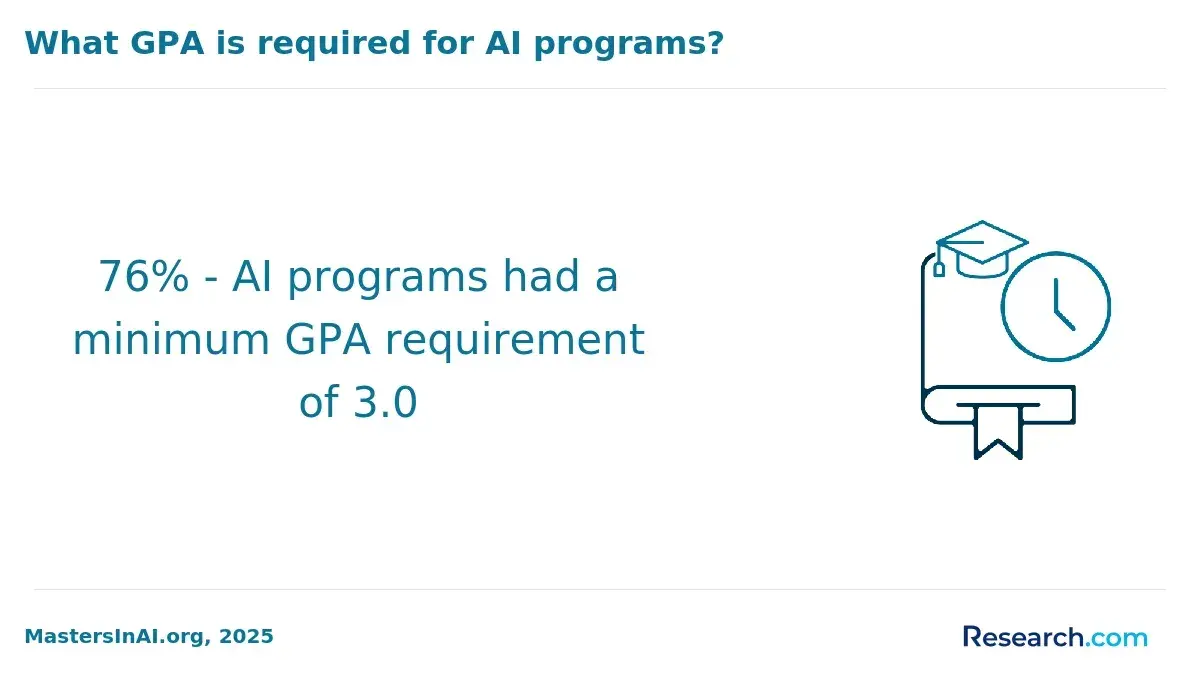
Typical admission criteria for artificial intelligence certificate programs for developers emphasize a strong programming background and relevant technical skills. Most courses expect applicants to prove proficiency in at least one programming language, commonly Python or Java, which are essential for AI implementation and data handling.
A bachelor's degree in computer science, engineering, information technology, or a related field is preferred but not always mandatory, especially for professional certificate courses designed for upskilling.
Eligibility requirements for artificial intelligence certification courses for working back-end developers often include practical experience in software development or back-end programming. This experience helps candidates grasp AI concepts more quickly.
Additional expectations may include familiarity with data structures, algorithms, database management, and a basic understanding of statistics and linear algebra, as these subjects form the mathematical foundation for machine learning and AI techniques.
Many programs use online applications requiring submission of prior coursework, work experience, or coding assessments. Some schools offer preparatory modules to help bridge gaps in required skills before formal admission.
Given the rapid enterprise adoption of AI-informed by IBM's Global AI Adoption Index showing significant organizational use-certificate programs stress applied skills and industry relevance. Professionals interested in related fields may explore military friendly online electrical engineering degree programs as an additional pathway.
In summary, admission usually requires demonstrated programming skills, a relevant academic or professional background, and foundational math and statistics knowledge, aligning with the practical demands faced by today's developers pursuing AI education.
What core AI skills and tools should back-end-focused courses and certificates cover?
Back-end AI courses and certificates should equip learners with skills to support the growing use of generative AI and large language models (LLMs) in server-side development. Nearly half of professional developers are already integrating generative AI applications and APIs, highlighting the importance of proficiency in this area.
Core skills include:
- Working with natural language processing (NLP) frameworks to build AI-powered APIs that handle complex queries and data transformations.
- Deploying models via platforms such as TensorFlow Serving, TorchServe, AWS SageMaker, and Google Cloud AI.
- Managing versioning, scaling, and monitoring of AI models in production.
- Programming mainly in Python, leveraging libraries like Hugging Face Transformers and frameworks such as FastAPI or Flask for API development.
- Applying prompt engineering and fine-tuning LLMs for specific domains.
- Managing data pipelines, integrating with SQL and NoSQL databases, caching, and message queue systems like Kafka or RabbitMQ.
- Addressing security and ethical considerations, including data privacy, model bias, and compliance.
Acquiring these skills ensures developers can build responsible, efficient artificial intelligence solutions that operate seamlessly within enterprise back-end environments.
How do online, hybrid, and campus AI programs compare for back-end developers?
Online AI programs provide back-end developers with flexible learning options that fit around busy work schedules. These programs often feature specialized courses in AI-enhanced backend architecture, including modular curricula and real-world projects focusing on system design.
Gartner predicts generative AI will be integrated into 70% of enterprise software by 2027, up significantly from under 5% recently, making these skills essential. However, online formats may lack the immediate collaboration and networking found in other methods.
Hybrid programs blend online coursework with scheduled in-person sessions, offering a balance of flexibility and direct mentorship. This approach supports complex problem-solving and group projects on AI algorithms and system design, ideal for developers who want structured learning without leaving their jobs. Participants also benefit from campus facilities while minimizing commute time.
Campus-based AI programs offer immersive experiences with hands-on lab work, real-time feedback, and access to advanced infrastructure. These programs foster collaborative environments vital for mastering AI integration in backend systems and provide strong professional networks through faculty and industry expert interaction.
Choosing the best format depends on your learning style, career goals, and professional commitments. Online suits self-driven learners, hybrid benefits those needing some face-to-face engagement, and campus programs fit developers seeking intensive, collaborative training. Each path prepares backend developers for the growing demand in AI-aware system design roles.
How long do AI certificate programs for back-end developers take, and what do they cost?
AI certificate programs for back-end developers typically vary in length from 3 to 6 months, depending on their format and depth. Intensive bootcamps usually last about 3 months, emphasizing rapid skill-building.
Meanwhile, part-time or self-paced courses extend up to 6 months, accommodating professionals balancing work and study. Costs range widely, generally between $500 and $3,000, influenced by the provider and curriculum focus.
Courses specializing in AI integration with databases and vector search technology often come at a premium due to advanced content and high industry demand. According to Pinecone's "State of Vector Databases" report, enterprise spending on vector databases is projected to grow at a 35% compound annual rate through 2028, highlighting the strategic importance of mastering these skills.
Many programs include hands-on projects, mentorship, and career support, which can justify higher prices. Employers are looking for candidates who understand both AI model deployment and efficient database querying, especially retrieval-augmented generation systems. Program formats commonly include:
- Short courses (3 months): Cover foundational AI concepts and back-end integration.
- Extended programs (4-6 months): Address advanced topics such as vector search, model optimization, and scalability.
When planning your budget, factor in potential costs for software licenses or cloud services needed for practical exercises. Verified certificates from reputable providers bolster job prospects by validating expertise in fast-evolving AI and back-end technologies.
What accredited universities and platforms offer high-quality AI certificates for back-end work?
Several accredited universities and online platforms offer specialized AI certificates designed for back-end developers. Notable institutions like Stanford University and the University of California, Berkeley provide programs focusing on scalable model deployment, data pipeline development, and essential back-end skills such as MLOps, cloud integration, and API design.
Platforms such as Coursera and edX host professional certificate courses from these top universities, making AI education accessible to a wider audience.
For instance, Stanford's Machine Learning Certificate on Coursera emphasizes algorithmic foundations vital for AI backend systems, while MIT's AI and Cloud Computing certificate on edX targets AI infrastructure development. These certificates validate abilities in data management, workflow automation, and AI model lifecycle maintenance.
Industry-recognized certifications like Google Cloud's Professional Machine Learning Engineer and Microsoft's Certified: Azure AI Engineer Associate are also valuable, concentrating on deploying AI solutions at scale and integrating with enterprise systems.
The MLOps field is increasingly important for back-end roles. With the global MLOps market projected to grow from $1.7 billion to $13.7 billion by 2030 at a CAGR of 41.2%, investing in programs that teach automation of CI/CD pipelines, AI performance monitoring, and scalable deployment strategies is critical.
These diverse certificate options support practical learning and career growth in AI back-end engineering through reputable universities and platforms.
What AI-enhanced back-end roles, salaries, and job outlook can graduates expect?
Graduates skilled in AI-enhanced back-end development are in high demand for roles such as AI systems engineer, machine learning infrastructure developer, and AI security specialist.
Annual salaries typically range from $95,000 to over $140,000, varying by experience and location. As companies increasingly embed AI into server-side architecture and data management, the need for experts in scalable AI frameworks and secure model deployment grows rapidly.
The U.S. Bureau of Labor Statistics projects 15% job growth in software development fields related to AI by 2031. Employers seek professionals proficient in developing APIs that connect machine learning models to databases and securing AI-integrated back-end systems.
AI security skills are particularly crucial; IBM's 2024 Cost of a Data Breach report notes breaches involving AI or cloud APIs cost an average of $5.45 million-15% more than other breaches.
Back-end developers with AI certification strengthen their competitiveness by mastering:
- AI model integration in server logic.
- Data pipeline automation using AI tools.
- Security protocols tailored for AI-powered services.
- Compliance with AI-related data protection laws.
How should back-end developers evaluate and choose a reputable AI course and certificate?
Back-end developers aiming to advance in artificial intelligence should prioritize courses with strong project-based learning. A LinkedIn Workplace Learning Report highlights that candidates showcasing real projects and GitHub portfolios alongside certificates are 2.3× more likely to attract recruiters for AI-related software roles.
This indicates that practical experience is more valuable than theoretical knowledge alone.
Essential evaluation criteria for AI courses include:
- Hands-on projects: Look for courses offering real-world assignments and portfolio-building tasks that demonstrate applied AI skills relevant to back-end development.
- Curriculum relevance: Ensure the syllabus covers key topics like machine learning algorithms, data engineering, model deployment, and API integration that align with back-end workflows.
- Instructor expertise: Opt for programs led by recognized professionals or academics with strong AI and software engineering backgrounds.
- Certificate credibility: Favor certifications from accredited institutions or respected industry platforms accepted by employers.
- Career support: Choose programs with mentorship, resume reviews, or job placement assistance targeting AI roles in software development.
Reviewing course feedback, alumni outcomes, and available learning resources such as peer forums and code repositories further helps identify high-value programs that enhance both knowledge and marketability in the AI field.
Other Things You Should Know About Artificial Intelligence
Yes, back-end developers with strong programming and data handling skills can transition into AI roles by undertaking focused AI courses and certifications. Gaining foundational knowledge in machine learning principles and experimenting with AI frameworks can accelerate this transition. Practical projects and continued learning are essential for developing expertise.
Most reputable AI certificate programs now include modules on ethics, fairness, and bias mitigation. Understanding these issues is crucial for developers to build responsible AI systems that avoid unintended consequences. These courses teach how to identify bias in data and models and implement strategies for ethical AI deployment.
Back-end developers often encounter difficulties in managing large data volumes, optimizing AI model performance, and integrating AI services into existing systems. Additionally, ensuring scalability and maintaining system security with AI components can be challenging. Addressing these requires combining AI expertise with robust software engineering practices.
References
- (25) Top AI IT Software Jobs - Updated for 2026 | Murray Resources https://murrayresources.com/25-top-ai-it-software-jobs/
- Is AI Taking Over Jobs? Backend Developer Career Insurance https://zenvanriel.com/ai-engineer-blog/ai-taking-over-jobs-backend-developer-career-insurance/
- Which Course do you recommend after AI For Everyone? https://community.deeplearning.ai/t/which-course-do-you-recommend-after-ai-for-everyone/834556
- Certificate Program in Generative AI for Professionals https://certifications.iitpatna.com/
- 11 Best AI Certifications in 2025 to Deepen Your Technical Knowledge | DigitalOcean https://www.digitalocean.com/resources/articles/ai-certifications
- Why Backend Engineers Should Learn AI - Mastering Backend https://blog.masteringbackend.com/why-backend-engineers-should-learn-ai
- Ultimate Guide: How to Choose the Right AI Training Course to Boost Your Career - ONLC https://www.onlc.com/blog/how-to-choose-ai-training-courses/
- What AI Really Means for Graduate Jobs | Newswise https://www.newswise.com/articles/what-ai-really-means-for-graduate-jobs
- Become an AI Engineer in 3 Months | Turing College https://www.turingcollege.com/ai-engineering
- Generative AI for Software Development https://www.deeplearning.ai/specializations/generative-ai-for-software-development