2027 Best AI Courses for Private Equity Operating Partners Managing AI Adoption

Co-Founder and Chief Data Scientist
Private equity operating partners often face challenges integrating emerging technology like artificial intelligence into portfolio companies without sufficient expertise. The rapid evolution of AI tools and strategies demands a clear understanding to drive value and operational improvements confidently. Without targeted education, decision-makers risk missed opportunities or costly missteps during adoption.
Flexible, accredited courses geared toward professionals transitioning from non-technical backgrounds can bridge this gap effectively. This article identifies the best AI courses designed for private equity operators to master adoption processes, enabling strategic leadership in AI-driven transformations across diverse industries.
Key Things You Should Know
- Leading AI courses for private equity operating partners emphasize practical application of AI in portfolio management, with 68% of programs updated in 2025 to reflect latest AI adoption challenges.
- Curricula increasingly cover AI-driven due diligence and automation tools, crucial for improving investment decision speed and accuracy amid a 45% rise in AI integration across private equity firms.
- Programs blend technical AI understanding with strategic leadership skills, addressing the $1.2 trillion market impact expected from AI adoption in private equity by 2030.
Advance Your Career with AI Online Courses
Artificial Intelligence: Implications for Business Strategy
This program provides an introduction to Artificial Intelligence and their implications for business strategy. Earn an official digital certificate.

Oxford Artificial Intelligence Programme
Explore this Oxford Artificial Intelligence programme offered in a flexible learning environment and explore topics like machine learning, automation, and robotics.

Implementing Agentic AI: Building Your Organizational Playbook
This online MIT Agentic AI course offers a practical approach to deploying AI agents in your organization, including a custom playbook. 3 weeks, exclusive launch price.

AI Adoption: Driving Business Value and Impact
This online MIT AI Adoption: Driving Business Value and Impact offers practical frameworks to close the gap between AI potential and business reality.

Artificial Intelligence in Pharma and Biotech
Discover the applications and limitations of artificial intelligence in pharma and biotech with this MIT online short course.

What are AI courses for private equity operating partners?
AI training programs for private equity operating partners focus on applying artificial intelligence to dealmaking, portfolio management, and operational value creation. These specialized courses address unique challenges facing executives who must integrate AI tools into decision-making, due diligence, and growth strategies for portfolio companies.
A KPMG survey of 400 global dealmakers reported that 72% anticipate AI becoming a top value creation lever in due diligence and portfolio optimization within two years. This highlights the critical need for AI adoption courses tailored for private equity executives to build relevant literacy and management skills.
Typical course topics include:
- AI fundamentals and technologies relevant to financial analysis and operations.
- Case studies showing how AI automates data extraction, risk assessment, and market analysis during due diligence.
- Methods for incorporating AI-driven insights into portfolio monitoring and strategic decisions.
- Risk management and ethical considerations in investment-facing AI use.
- Hands-on training with AI platforms for financial modeling and predictive analytics.
Emphasizing practical AI applications, these programs help align integration with portfolio strategies to accelerate adoption and measurable results. Courses often encourage collaboration among operating partners, data scientists, and AI vendors to maximize return on investment.
For professionals interested in advancing quickly, a 1 year computer science degree online can complement AI knowledge and skills in this field.
Advance Your Career with AI Online Courses
Artificial Intelligence: Implications for Business Strategy
This program provides an introduction to Artificial Intelligence and their implications for business strategy. Earn an official digital certificate.
Oxford Artificial Intelligence Programme
Explore this Oxford Artificial Intelligence programme offered in a flexible learning environment and explore topics like machine learning, automation, and robotics.
Implementing Agentic AI: Building Your Organizational Playbook
This online MIT Agentic AI course offers a practical approach to deploying AI agents in your organization, including a custom playbook. 3 weeks, exclusive launch price.
Which AI skills do operating partners need for portfolio companies?
Operating partners in private equity drive portfolio company transformation with AI capabilities by mastering a precise set of skills that align AI strategy with business goals. These skills span assessing AI readiness, identifying optimization opportunities, and leveraging AI-driven data analytics for actionable insights. Proficiency in model governance and ethical deployment is essential for compliance and risk management throughout AI integration.
Expertise in tools like machine learning platforms, natural language processing, and automation software enables partners to evaluate vendor solutions and oversee implementation effectively. Interpreting AI performance metrics in real time supports measuring value delivered. Success also depends on managing cross-functional teams and communicating AI benefits to both technical and non-technical stakeholders.
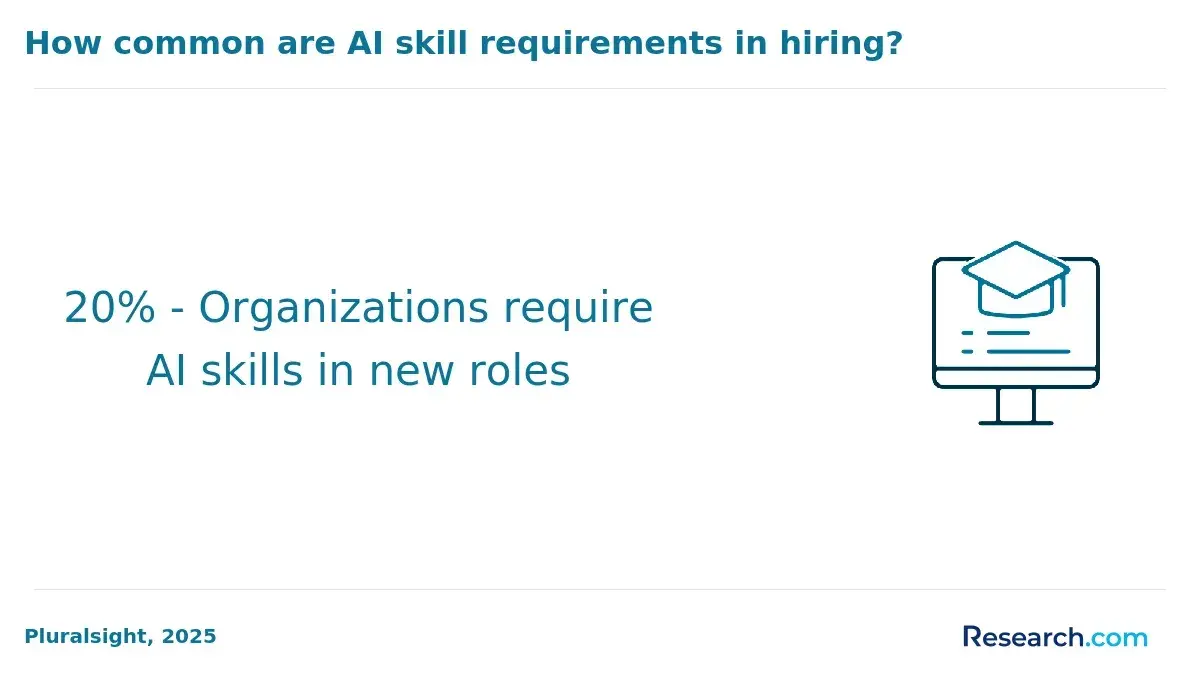
Addressing resistance through change management tailored to AI initiatives ensures smooth scaling of AI capabilities across portfolio companies. Case-based learning on AI-driven transformations offers frameworks to replicate success in diverse industries. With 58% of large private equity funds (>$10B AUM) now recruiting AI operating partners, the demand for these advanced skills is rising.
Prospective students seeking to develop AI integration skills for private equity operating partners should prioritize programs offering hands-on AI project experience, governance protocols, and integration strategies adaptable to varied portfolio contexts. For those exploring educational pathways, a cheap online engineering degree can provide accessible training to build foundational technical expertise.
What curriculum should a strong private equity AI course include?
A strong private equity operating partner AI adoption curriculum must include practical integration and strategic leadership training. It should cover foundational AI concepts like machine learning models, natural language processing, and data analytics to provide technical literacy essential for evaluating AI opportunities accurately.
This curriculum also needs to address AI deployment challenges such as data quality, model bias, and scalability concerns, enabling leaders to anticipate operational hurdles. Strategic modules should provide frameworks to prioritize AI initiatives based on portfolio companies' value drivers, including cost reduction and revenue growth. Risk management involves ethical considerations, regulatory compliance, and cybersecurity risks linked to AI implementation.
Key skills for private equity AI management courses include building and managing cross-functional AI teams, encouraging collaboration between technical experts and business stakeholders to speed adoption. Case studies analyzing successful AI transformations in private equity-backed firms offer insight into measurable outcomes and common pitfalls.
Hands-on projects that involve real data analysis and developing investment theses on AI-driven business models sharpen practical skills. Training on change management and communication equips operating partners to overcome resistance and embed AI into organizational culture effectively.
Studies show organizations with leaders trained in AI have significantly better financial results. For prospective students interested in complementary fields, some online colleges for game design also integrate AI applications in their curriculum, reflecting the growing demand for AI knowledge across industries.
Are online or campus AI programs better for operating partners?
Operating partners in private equity are increasingly turning to online programs for AI adoption training programs for operating partners due to their flexibility and accessibility. These programs fit well within demanding schedules, allowing immediate application to active deals and operations. Wall Street Prep's data highlights a 250% increase in enrollment for their AI-for-Finance courses from 2023 to 2025, with 41% of participants being private equity and venture capital professionals in 2025.
Campus-based courses offer immersive settings and networking opportunities valuable for foundational learning, but their fixed schedules and location constraints make them less practical for operating partners managing multiple portfolio companies. Time away from active deal execution is often a risk many cannot afford.
Online curricula often include modular content tailored to private equity workflows, such as case studies, simulations, and up-to-date tools. Certifications from programs like Wall Street Prep's AI-for-finance series provide industry recognition that enhances credibility without disrupting professional duties. These offerings are especially suited for those seeking the best AI courses for private equity operating partners who prioritize hands-on skills and immediate implementation.
When choosing the right program, operating partners should consider their learning goals, whether seeking technical depth, applied tools, or leadership in digital transformation. For additional options, exploring a veteran friendly online cybersecurity degree may also provide flexible examples of successful online education models.
What admissions requirements do AI courses usually require?
AI courses for private equity operating partners usually require a blend of professional experience, education, and relevant skills. Most programs expect 3 to 5 years of management or leadership experience, especially in sectors where AI influences business strategy. This background helps participants apply AI concepts directly to operational and investment decisions.
Educational prerequisites typically include a bachelor's degree in business, engineering, computer science, or related fields. Some executive programs may also ask for prior knowledge of data analytics or machine learning basics.
Applicants often submit a detailed resume and a statement of purpose outlining how the course fits their career goals and organizational needs. Letters of recommendation from senior executives or industry experts are common, verifying leadership ability and readiness for rigorous study. Selective programs might require interviews to assess communication and problem-solving skills related to AI challenges.
Executive AI courses prioritize practical application. For example, MIT Sloan's 2024 outcomes data shows 67% of participants launched at least one AI initiative within six months after completing their AI for Business program, underscoring the importance of relevant experience.
Some programs offer tiered admissions, allowing those with less traditional backgrounds but strong motivation or technical aptitude to enroll, often with preparatory modules to bridge knowledge gaps.
How long do AI courses for operating partners usually take?
AI courses for private equity operating partners vary widely in duration, typically lasting from a few days to several weeks. Most programs span between two days and six weeks, with shorter courses focusing on fundamental AI concepts, strategic implications, and practical applications relevant to investment decisions. Longer programs often incorporate hands-on projects, data analysis techniques, and strategies for integrating AI across portfolio companies.
Condensed courses usually cover essentials such as machine learning basics, AI-driven value creation, and risk assessment, making them suitable for those seeking quick, actionable tactics without deep technical detail. More extensive programs provide case studies, operational frameworks, and roadmaps for AI adoption to help partners manage pilots and scale AI initiatives.
Course length is frequently customized based on participant expertise and portfolio needs, with some programs for venture-backed startups emphasizing scenario-based learning over four to six weeks, while others offer targeted one-week accelerators for established funds.
According to NU Advisory Partners, 74% of funds completing its AI Training for PE & VC Teams launched AI value-creation pilots within three months, demonstrating the rapid impact of well-structured training. Key factors in selecting a course include time availability, prior AI knowledge, portfolio complexity, and whether post-training support is provided to enhance long-term adoption.
How much do private equity AI courses cost?
Private equity AI courses vary significantly in price, generally ranging from $1,000 to $7,500 based on course depth, duration, and provider. Short workshops or applied tool training often begin around $1,000 to $2,500, while comprehensive certificate programs or executive education designed for operating partners and portfolio teams can cost $4,000 to $7,500.
Pricing depends on factors like curriculum complexity, availability of live coaching, and access to proprietary AI platforms or datasets.
Many courses employ tiered pricing, separating fees for on-demand video content, live sessions, and hands-on labs. Subscription models offering ongoing access to updated AI frameworks and community support may exceed initial fees but deliver long-term value.
Employer sponsorship is common for private equity operating partners, helping offset costs and encouraging adoption within firms. According to Softmax Data's "AI as a PE Operating Advantage" client survey, portfolio ops teams completing its applied LLM tooling course reduced manual reporting and analysis time by a median of 32% over six months, validating the value of mid-to-high price tiers.
When budgeting, prospective learners should match course selection with their AI adoption goals. Basic options cover foundational AI concepts at lower costs, while advanced courses focus on automation and AI-driven decision-making tailored specifically for private equity needs.
Which certifications matter for AI adoption in private equity?
Certifications valuable for AI adoption in private equity operating partners emphasize practical expertise in AI strategy, data science, and change management. Certifications like the Certified AI Practitioner highlight aligning AI initiatives with business objectives, a critical skill for overseeing AI-driven transformations in portfolio companies.
Technical proficiency is also essential. Data science certifications such as Microsoft Certified: Azure AI Engineer Associate and IBM's AI Engineering Professional Certificate provide knowledge on data pipelines, model deployment, and scalability, enabling partners to assess AI tools critically and ensure measurable outcomes.
Change management credentials, including Prosci's Change Management Certification, equip operating partners to handle workforce transitions and promote user adoption of AI solutions. Effective AI integration requires strong leadership to meet organizational resistance.
Research shows firms with formal AI training programs, like internal AI academies, experience significantly higher productivity growth. This underscores the importance of verifiable AI expertise tailored to operational roles within private equity.
Multi-disciplinary programs combining AI with finance or business analytics, such as CFA Institute's AI and Machine Learning Certificate or MIT's Professional Certificate in AI and Business Strategy, offer a comprehensive perspective bridging technical skills and financial insight.
- Certified AI Practitioner
- Microsoft Certified: Azure AI Engineer Associate
- IBM AI Engineering Professional Certificate
- Prosci Change Management Certification
- CFA Institute AI and Machine Learning Certificate
- MIT Professional Certificate in AI and Business Strategy
What jobs do AI-trained operating partners qualify for?
Operating partners trained in artificial intelligence qualify for advanced roles that blend strategic decision-making with technical expertise in private equity firms and portfolio companies. They often advance into leadership positions such as Chief AI Officer, AI Strategy Lead, or Digital Transformation Officer. These positions require a deep understanding of AI tools along with the ability to use AI-driven insights to enhance innovation, operational efficiency, and deal optimization.
Key job functions include managing AI adoption programs that improve due diligence, performance monitoring, and value creation during portfolio management. Operating partners with AI skills are also instrumental in AI governance, ensuring ethical implementation and effective risk mitigation. They may serve as AI integration consultants, helping firms embed AI across their investment processes.
AI competencies enable these professionals to identify data-driven growth opportunities and cost-saving strategies. For instance, predictive analytics can forecast financial performance more accurately during acquisition evaluations. Additionally, AI experts can lead AI-driven operational turnarounds in underperforming assets.
According to LinkedIn's 2025 Workplace Learning Report, finance and investing professionals who added AI skills between 2020 and 2024 experienced a 49% higher likelihood of promotion compared to peers without such expertise. Practical experience in AI project management, machine learning applications, and data analytics, along with strong finance and operational knowledge, are essential to thrive in these roles.
How do you choose a reputable AI course provider?
Evaluating AI course providers involves several key factors that enhance the value of your learning experience. Start by confirming accreditation or endorsements from reputable organizations, as top providers often collaborate with leading universities or companies to ensure high standards and practical relevance.
Look closely at course content and instructor qualifications. Courses that detail advanced subjects like machine learning algorithms, AI ethics, and deployment strategies tailored to private equity operations offer deeper insights. Instructors with extensive industry experience or academic credentials add significant value.
Consider learner outcomes supported by reliable data. For example, a 2024 survey by Coursera showed that 70% of business professionals completing an AI specialization gained new roles, increased responsibilities, or higher salaries within a year, demonstrating the potential ROI of such programs.
Flexibility in delivery is important: options such as self-paced learning, live sessions, and hands-on projects enable you to match your schedule and work style. Programs featuring case studies or capstone projects relevant to private equity boost applicability.
Authentic reviews from former students, especially those with similar backgrounds, provide valuable insight into program strengths and limitations beyond promotional materials.
Finally, post-completion support like networking, career services, and continuous learning resources enriches the long-term benefits of your education.
Other Things You Should Know About Artificial Intelligence
Implementing artificial intelligence in private equity firms often involves challenges such as data quality and availability, integration with existing systems, and change management within portfolio companies. Operating partners must address issues related to data privacy and regulatory compliance while ensuring their teams have the capability to work with AI-driven insights effectively.
Operating partners can measure the impact of artificial intelligence adoption by tracking key performance indicators (KPIs) such as operational efficiency, revenue growth, cost reduction, and customer satisfaction improvements. Additionally, evaluating the acceleration of decision-making processes and the accuracy of predictive analytics provides tangible metrics to assess AI's effectiveness in portfolio companies.
Data governance ensures the accuracy, security, and compliance of data used in AI systems. For private equity operating partners, maintaining robust data governance is crucial in executing successful AI strategies, optimizing investment analyses, and safeguarding sensitive information efficiently in 2027.
Ethical considerations influence artificial intelligence use by enforcing transparency, fairness, and accountability in AI algorithms and their outcomes. Operating partners must prioritize unbiased data and avoid discriminatory practices, ensuring AI deployment aligns with corporate social responsibility and regulatory expectations.
References
- AI Training | Enhance Your Investment Workflow Today — EquityEdge Studio https://www.equityedgestudio.com/ai-training
- AI in Private Equity: Top Use Cases You Need To Know https://smartdev.com/ai-use-cases-in-private-equity/
- AI in PE Training Program https://aioperatingpartners.ai/peai-training/
- How Can PE Firms Train Portfolio Operations Teams to Identify High-Impact AI Opportunities? https://neurons-lab.com/articles/ai-opportunity-identification-private-equity/
- Eligibility Criteria for AI Courses in Germany https://www.yesgermany.com/eligibility-criteria-for-ai-courses-in-germany/
- The AI Operating Partner: The Latest PE Portfolio Value Creation Role? https://www.kornferry.com/institute/the-ai-operating-partner-the-latest-pe-portfolio-value-creation-role
- AI 101 Guide for Private Equity https://www.ontra.ai/resource/guide/ai-101-for-private-equity/
- How Long is an Average AI Course? A Complete Guide for Learners https://emeritus.org/in/learn/how-long-is-an-average-ai-course/
- How AI Is reshaping the Private Equity operating model - Artefact https://www.artefact.com/blog/how-ai-is-reshaping-the-private-equity-operating-model/
- Harnessing AI for Private Capital: From Origination to Value Creation https://www.ukprivatecapital.co.uk/training/listing/course/harnessing-ai-for-private-capital-from-origination-to-value-creation.html
- MastersInAI.org. (2025). 2025 AI Degree Report: The Landscape of AI Degrees in the United States. https://www.mastersinai.org/ai-degree-report